
Walvis Bay, Namibia
On our first visit to Namibia, we focused on the brilliant natural world of Walvis Bay and embarked on a lagoon tour that showcased salt pans, lagoon scenery, and a multitude of birds.

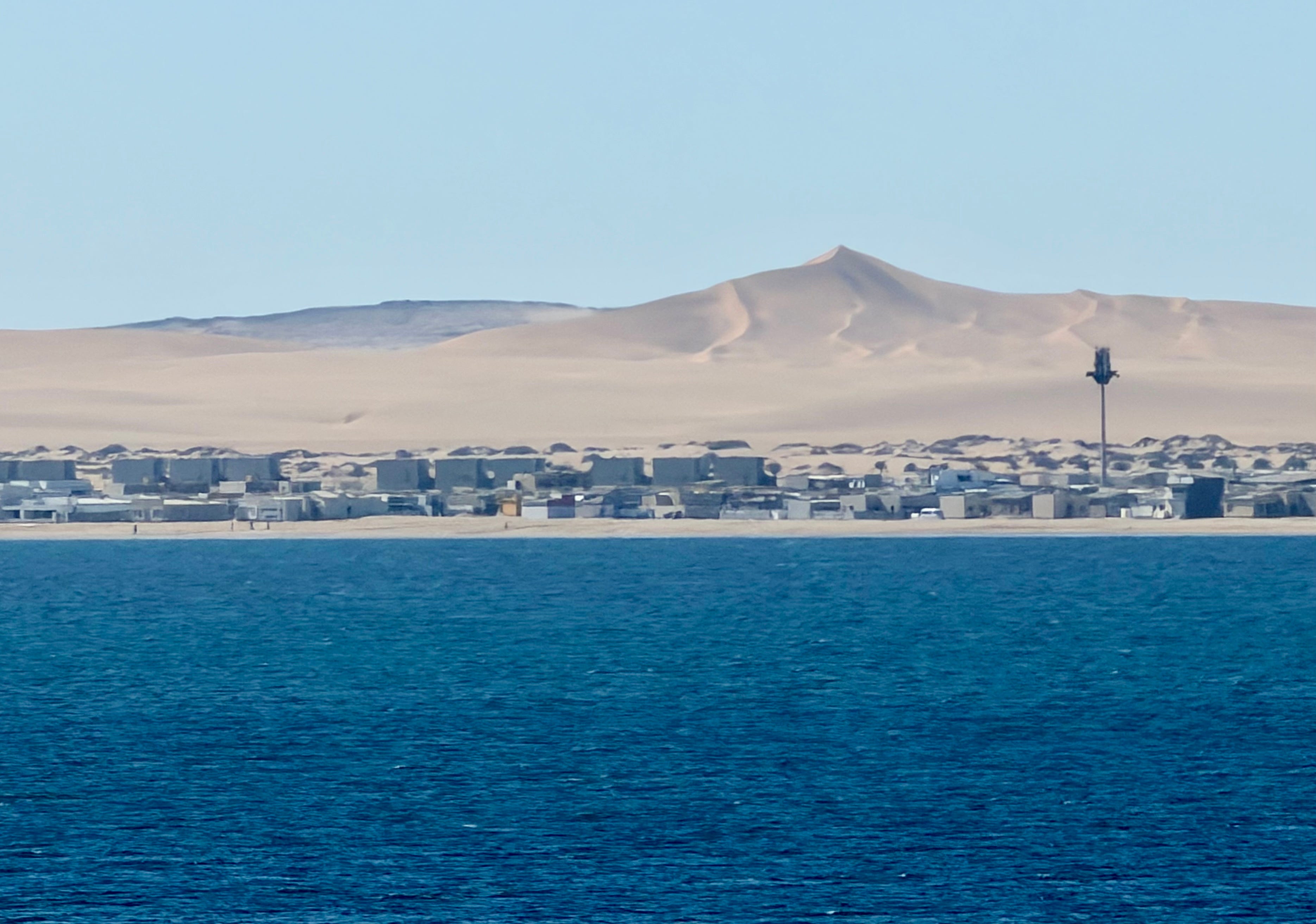
Unspoiled Walvis Bay, a natural lagoon and the only deep-sea harbor on the Namibian coast, offers something for everyone, with spectacular bird-watching being a keynote, as thousands of migrating species make their way here annually to join the local flamingos and pelicans. “Dune 7,” at the outskirts of town, towers over the scenic bay and offers excellent photo ops. The city is also a good starting point for a number of exciting day trips into the timeless beauty of the desert region, including off-road explorations and fly-over dolphin and whale sightings. — Regent
We got a peek at Namibia’s dunes as we pulled into the harbor. The Walvis Bay dunes form a spectacular part of the ancient Namib Desert, and are famous for being one of the few places in the world where sand dunes plunge directly into the ocean, in this case, the Atlantic Ocean. Where the dunes met the city, the buildings blocked the sand dunes’ descent into water, but it was still quite a sight — the dunes towering over every other structure.
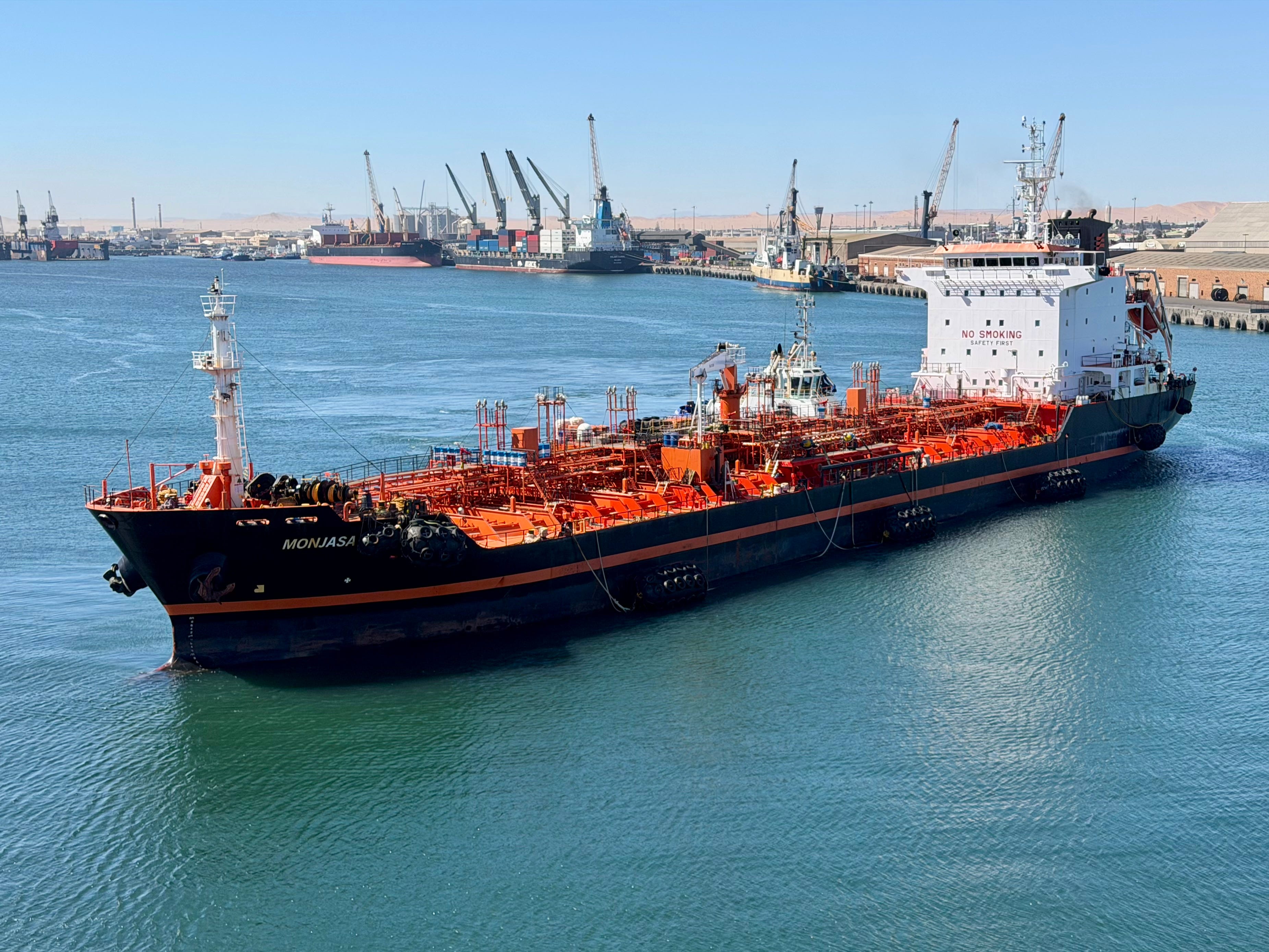
Our Pre-Cruise Research:
Daytime High: Approximately 72°F to 75°F. The weather generally feels pleasantly warm and breezy.
Nighttime Low: Around 52°F to 55°F. Nights can be chilly.
Rainfall: The chance of rain is extremely low, effectively 0% in May.
Humidity: Low and comfortable, typical of a desert climate.
Activities: May is an excellent time for outdoor exploration, with comfortable weather.
General: Walvis Bay is known for its flamingos and salt mines, which can be viewed on local tours.
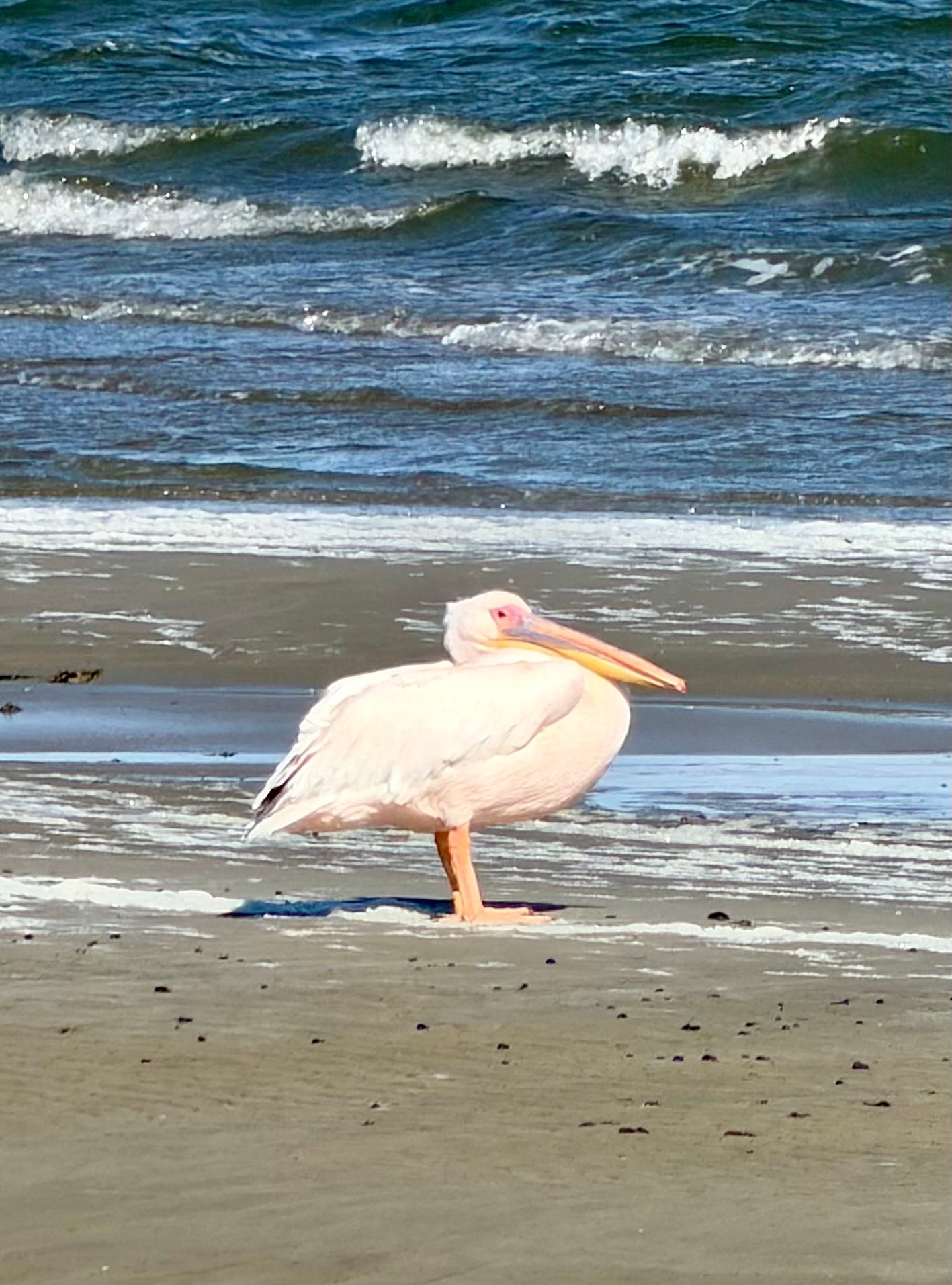
Pelican - First Bird of the Tour
We lucked out in the weather department. The Walvis Bay dunes and surrounding coastline experience 180 to 200 days of thick fog every year. Because the region is hyper-arid and receives less than 20 millimeters of actual rainfall annually, this marine fog serves as the primary source of moisture for the entire ecosystem. Still, we were happy to see the sun shining when we visited. We’d sailed through fog before reaching Walvis Bay, so we were relieved when the fog cleared in the early morning, hours before we were scheduled noon arrival.
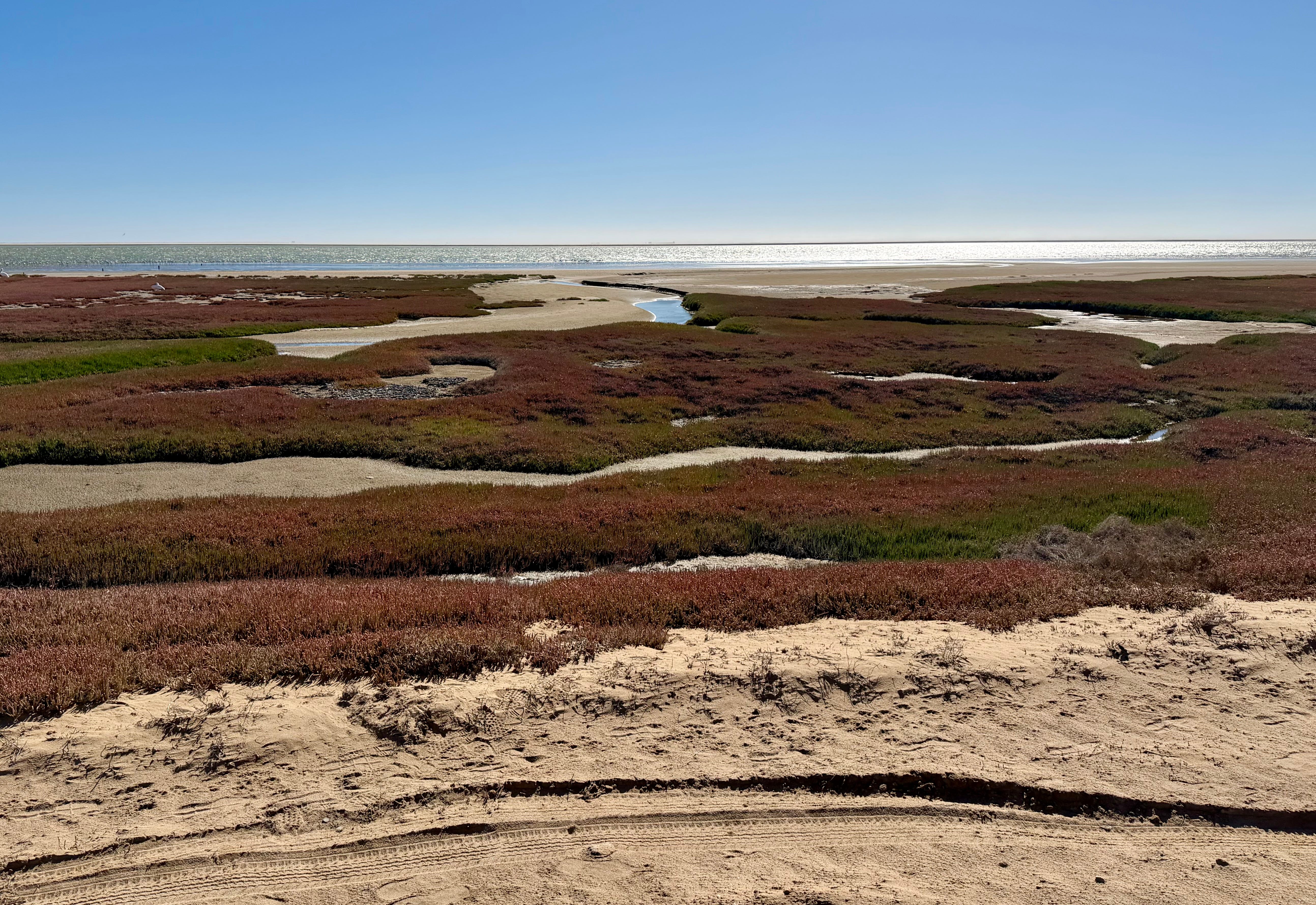
Since one of our interests is birding (on an amateur scale) we happily signed up for a guided BIRDING TOUR, and even better, it was a Regent-included tour. The tour’s description was so much more than just birding!
Thrill to sightings of a profusion of bird species during this tour to the rich feeding grounds of the Walvis Bay Lagoon and salt mine. Journey to the ecologically indispensable Walvis Bay Lagoon, declared a Wetland of International Importance, and begin your quest to identify the wide variety of shore birds and waders who congregate there, including sandpipers, plovers, pelicans, and herons, depending upon the season. You’ll enter the sedimentation pans of the expansive Walvis Bay Salt Holdings, the largest producer of solar sea salt in sub-Saharan Africa, and enjoy a close-up view of the many resident birds, perhaps even seeing phalaropes, grebes, and terns, including the rare Damara tern. Travel farther along the beach to Pelican Point and discover a large Cape fur seal colony, along with osprey and exotic African black oyster-catchers. — Regent
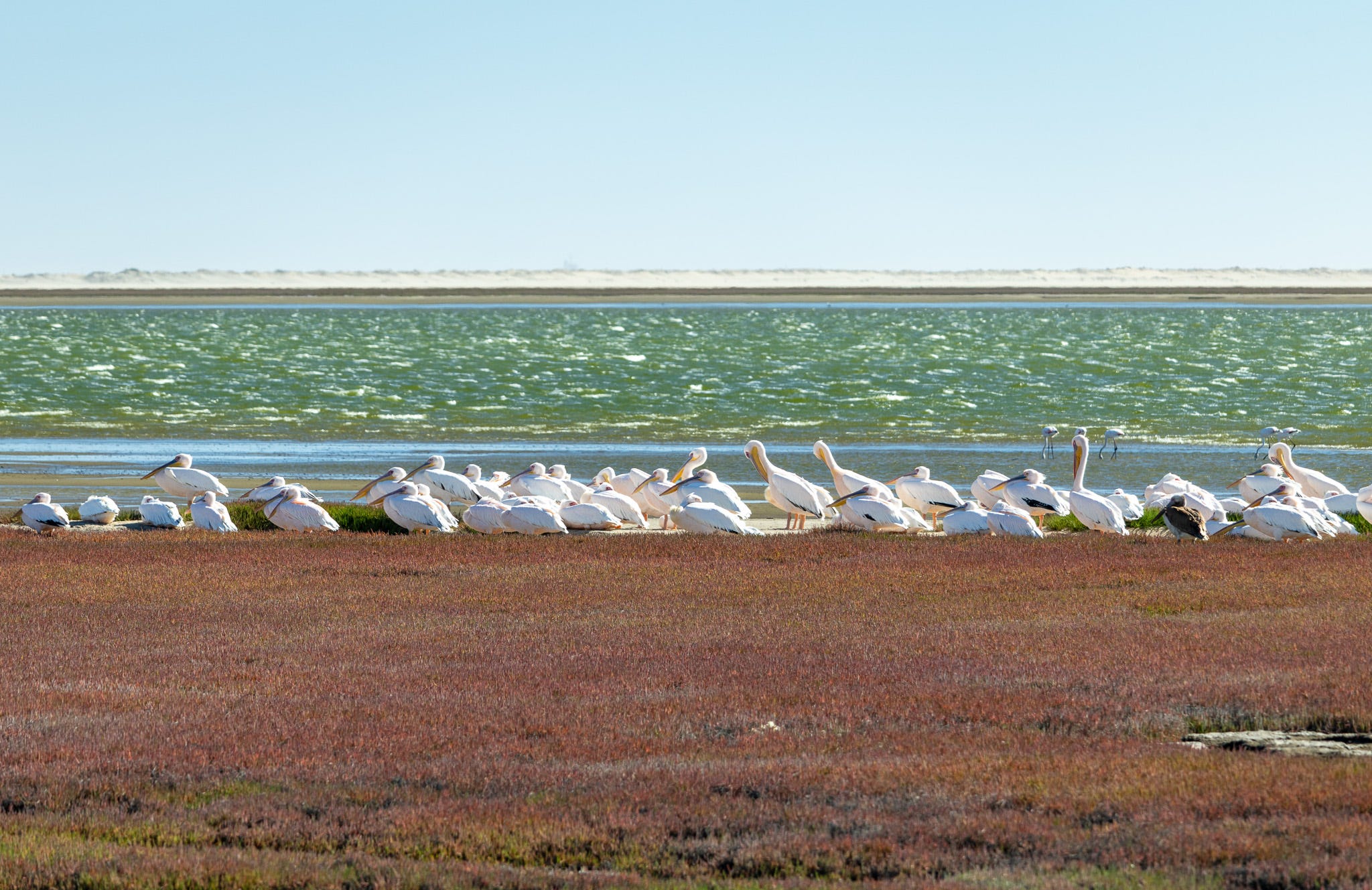
“Journey to the ecologically indispensable Walvis Bay Lagoon.”
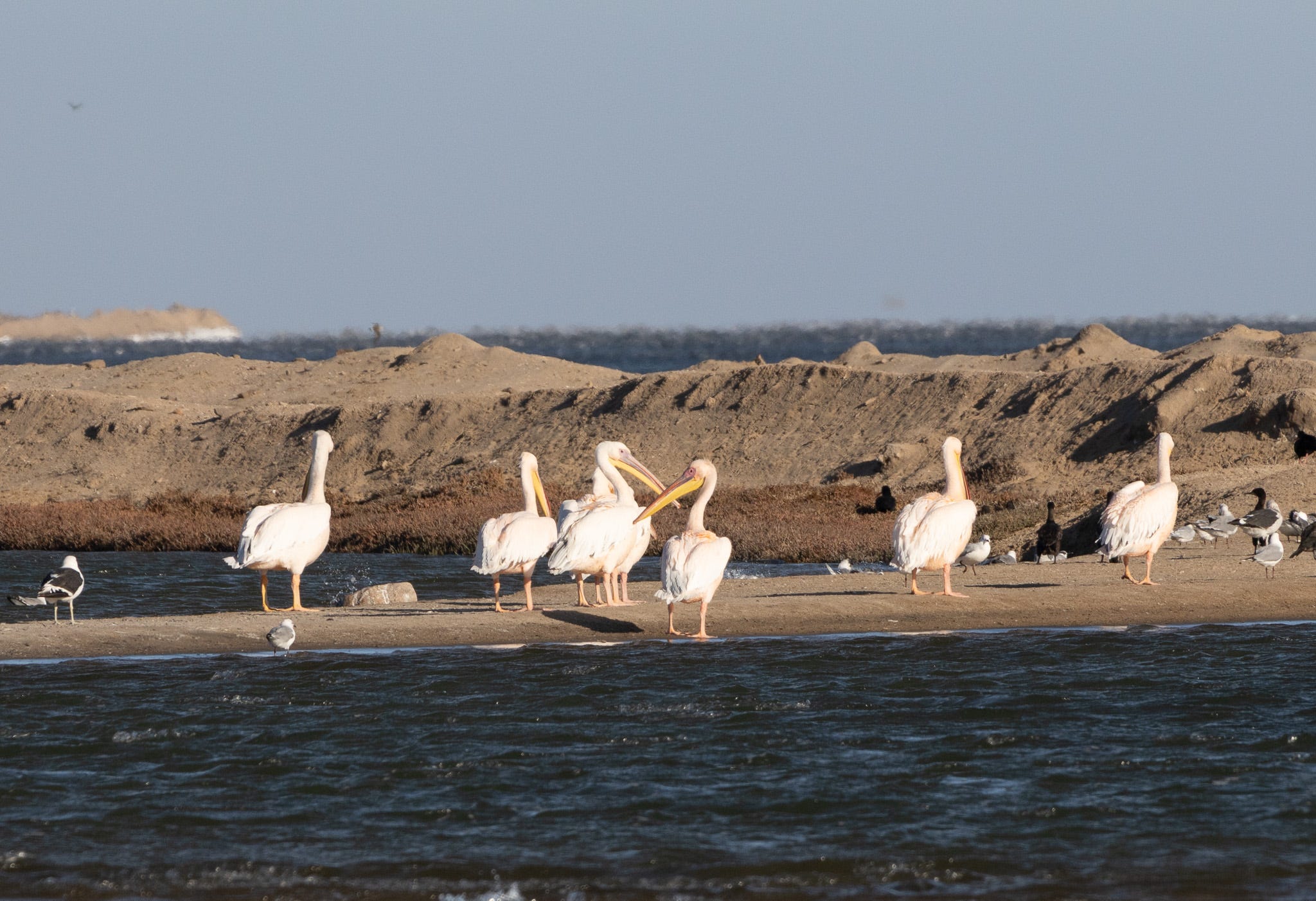
Our first stop only minutes from the ship’s berth, this wetland site of global importance is widely regarded as the most important coastal bird sanctuary in southern Africa. It provides a wildlife-rich contrast to the towering sand dunes that loom nearby. When we arrived around 4 PM, a decent time to begin bird watching, we were treated to close-up views of a flock of White pelicans on the nearby shore.
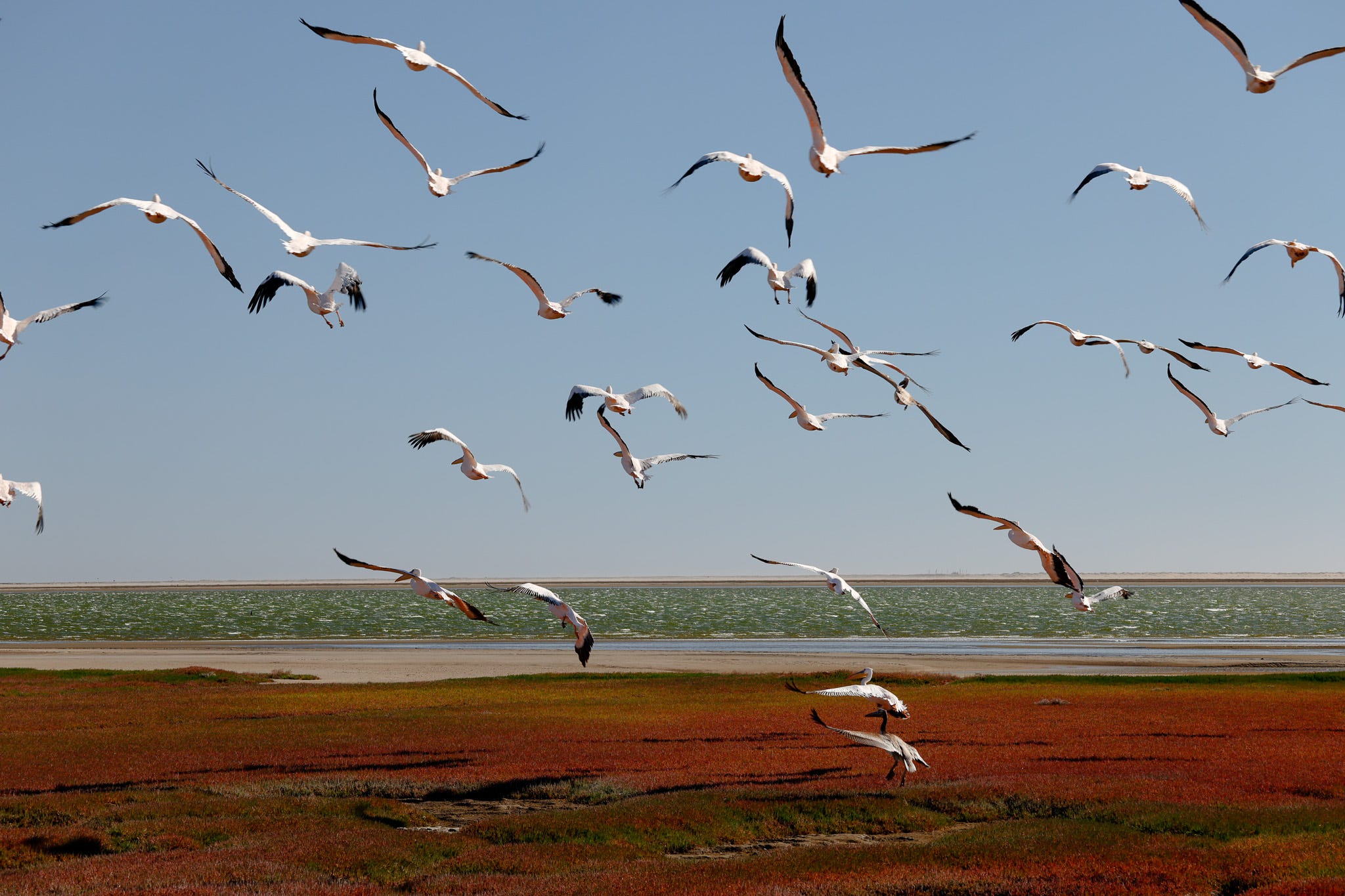
White Pelican: A large white waterbird with a hefty bill and a yellow-orange throat pouch. Note the pink bare skin around eye that extends towards the bill. Young birds have browner overall plumage relative to adults with brown upper wings and a brown head. Legs are pink. In flight shows dark flight feathers which contrast with the rest of the wing. Often seen fishing cooperatively, swimming in a wide arc to round up the fish and then scoop them into their pouch. —eBird
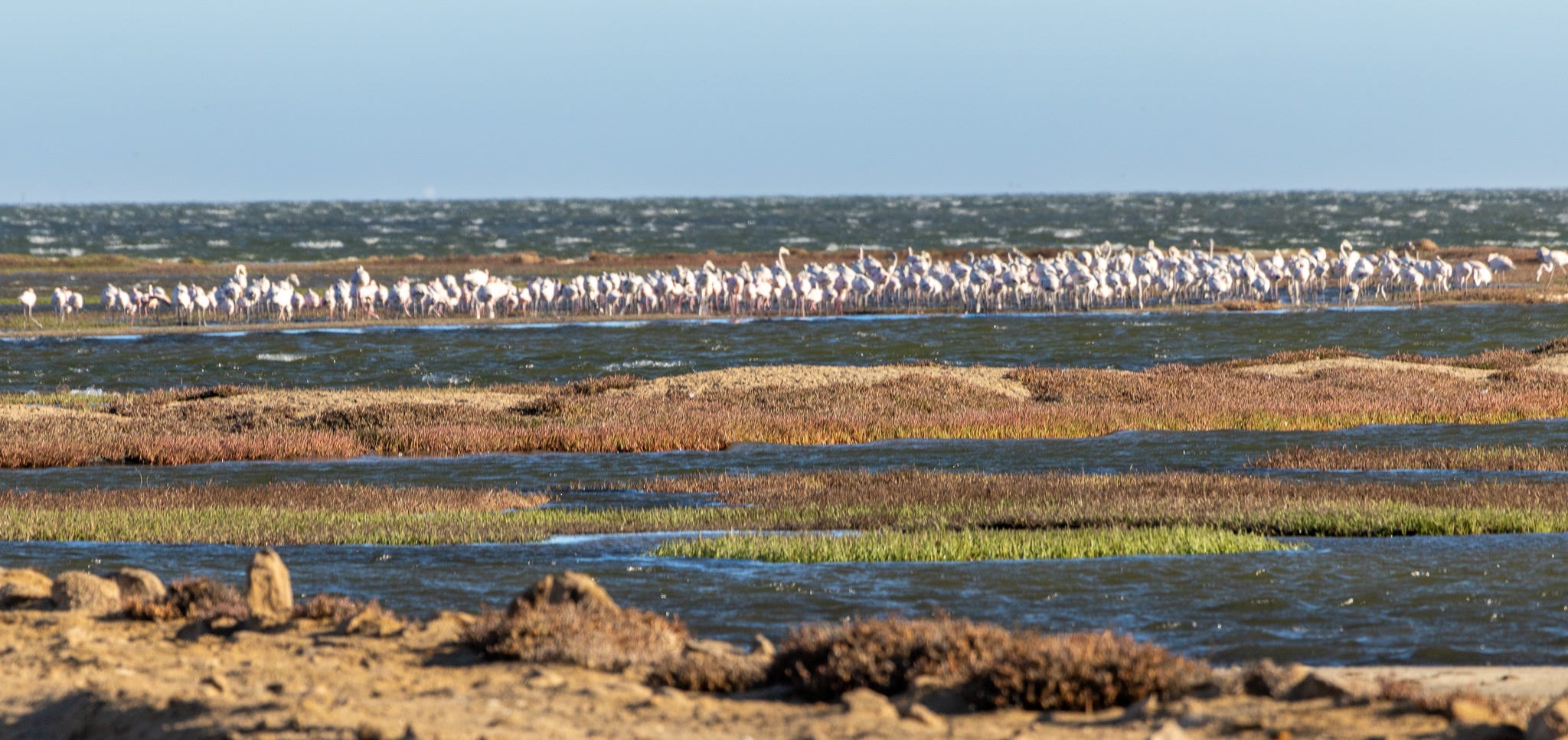
Further out, a hundred plus Greater flamingos fed in the shallow waters.
Distributed from Africa and southern Europe through West Asia to South Asia. Very large, with long, "coat hanger" neck, big kinked bill, and very long pinkish legs. Plumage at rest whitish with pale pink blush and some deep pink often visible on closed wings. Flies with long neck and legs extended, when deep pink-and-black wing pattern striking. — eBird
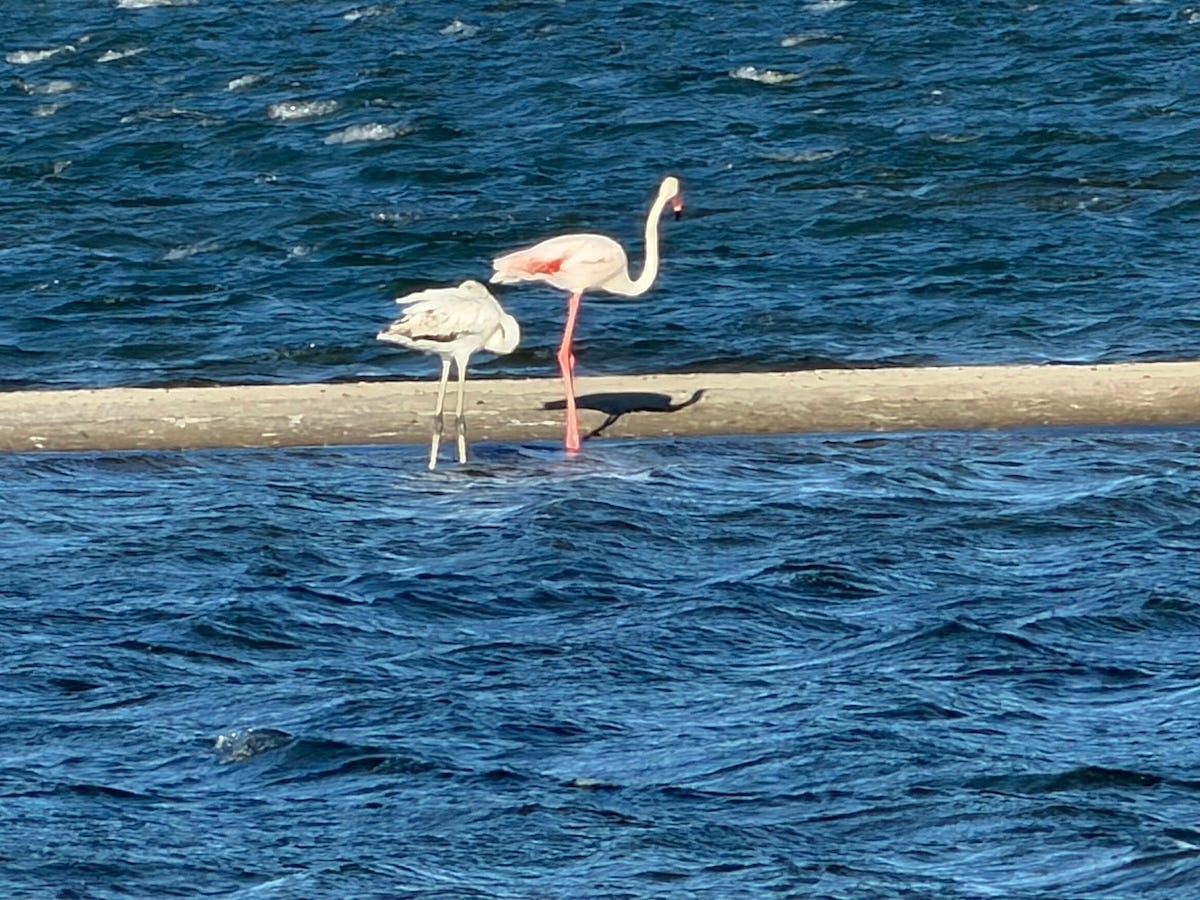
Because the young cannot digest the present algae and brine shrimp directly, their feathers do not immediately take on a pink coloration. It takes two to three years for the pigments to accumulate in their bodies and turn their feathers vibrant pink.
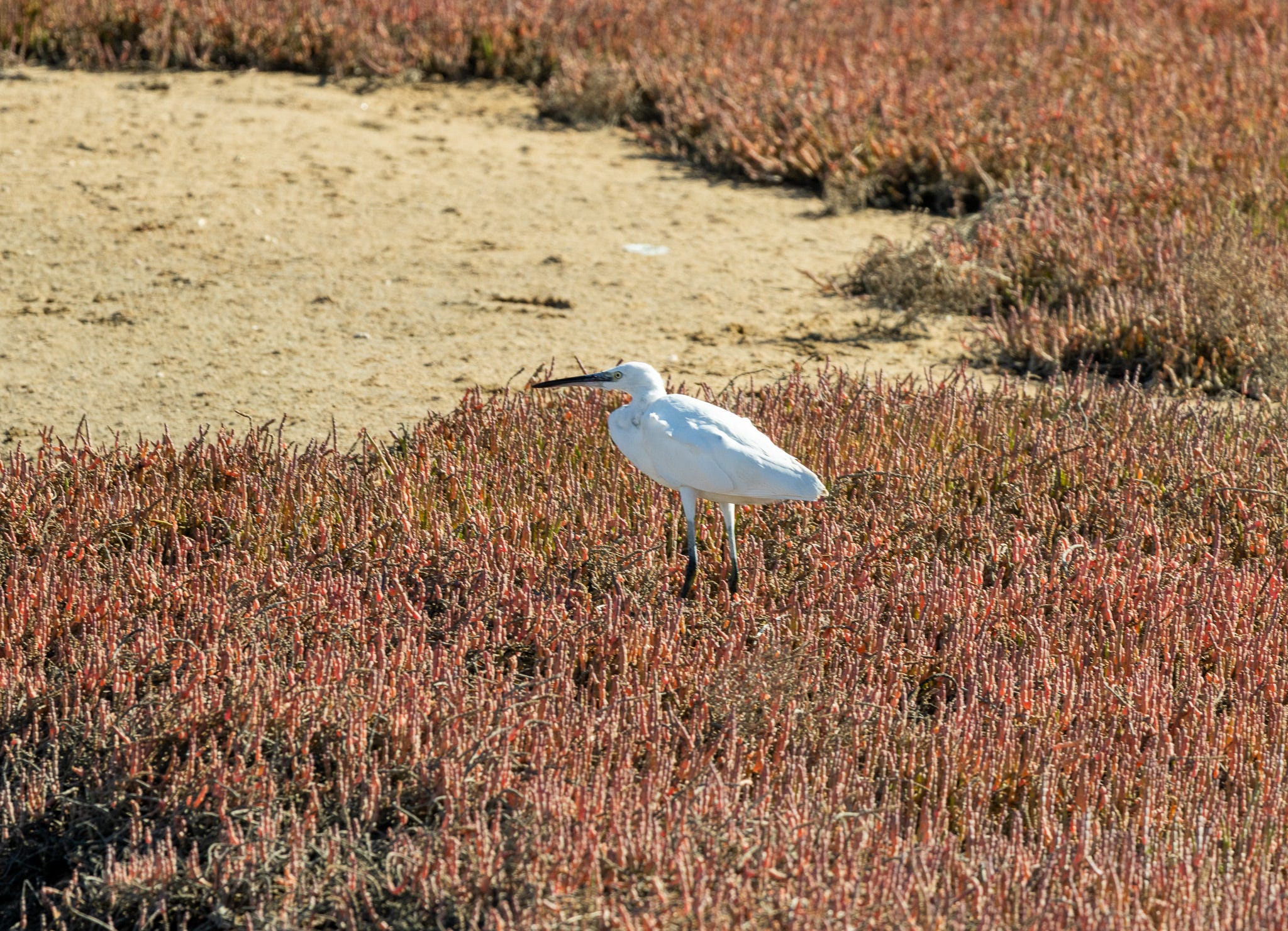
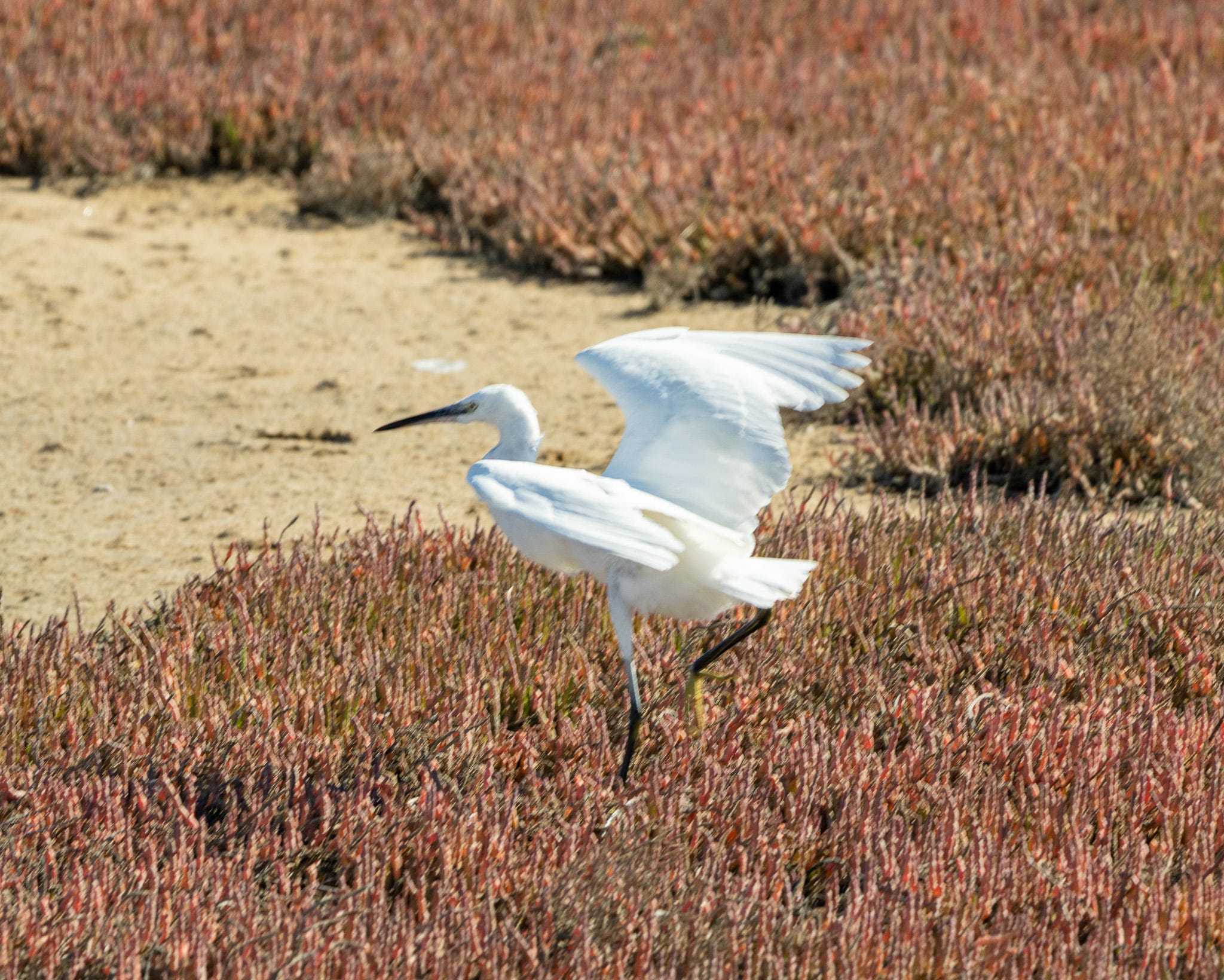
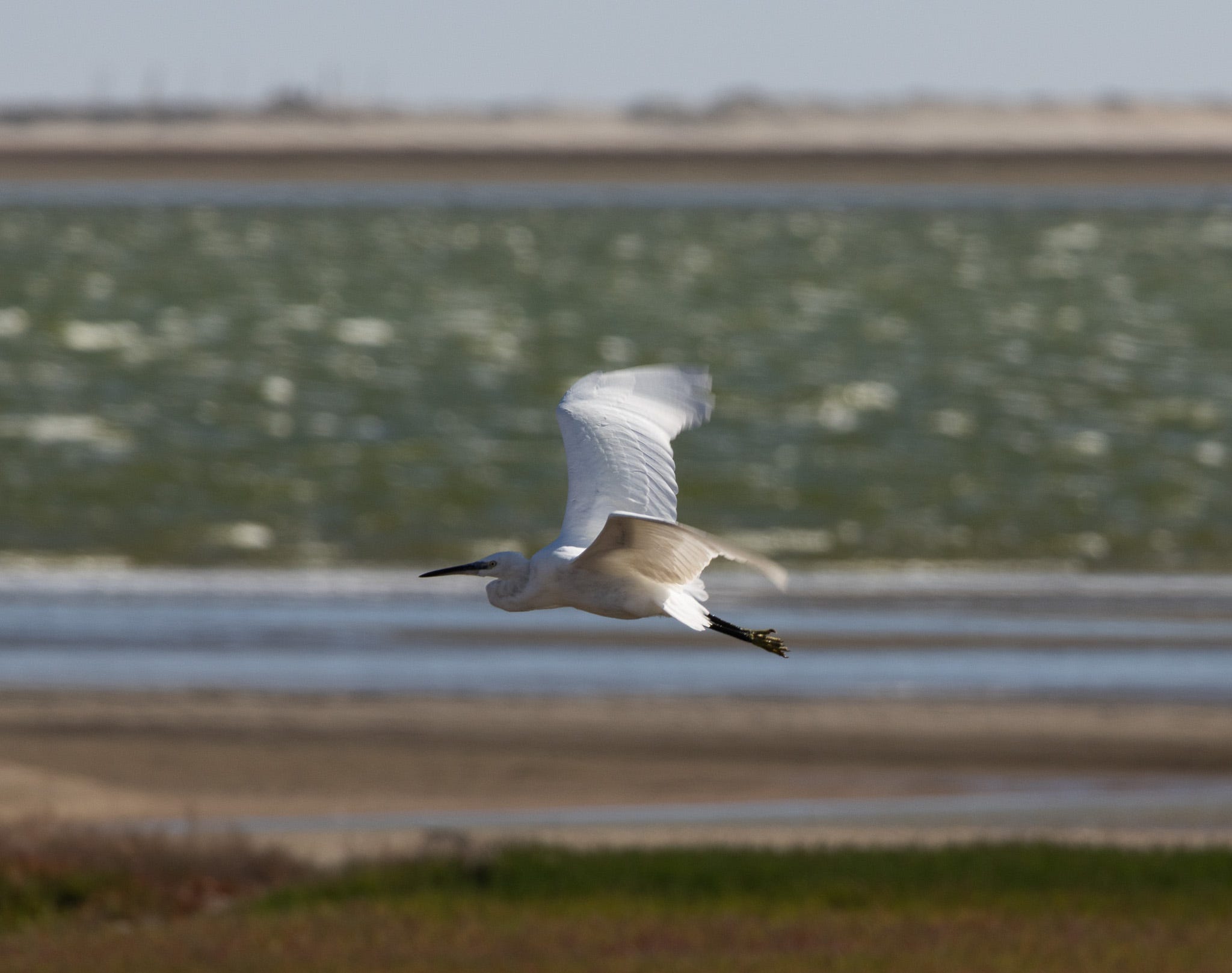
A Little Egret posed for us, before taking flight.
Small snow-white heron with slender dark bill, blackish legs, and yellowish feet ("golden slippers"). Breeding adult has 2 long wispy head plumes and a spray of white plumes ("aigrettes") on the lower back. Inhabits a wide variety of wetlands: lakes, rivers, marshes, estuaries—almost anywhere with small fish. Occurs as singles or small loose groups; nests and roosts communally. — eBird
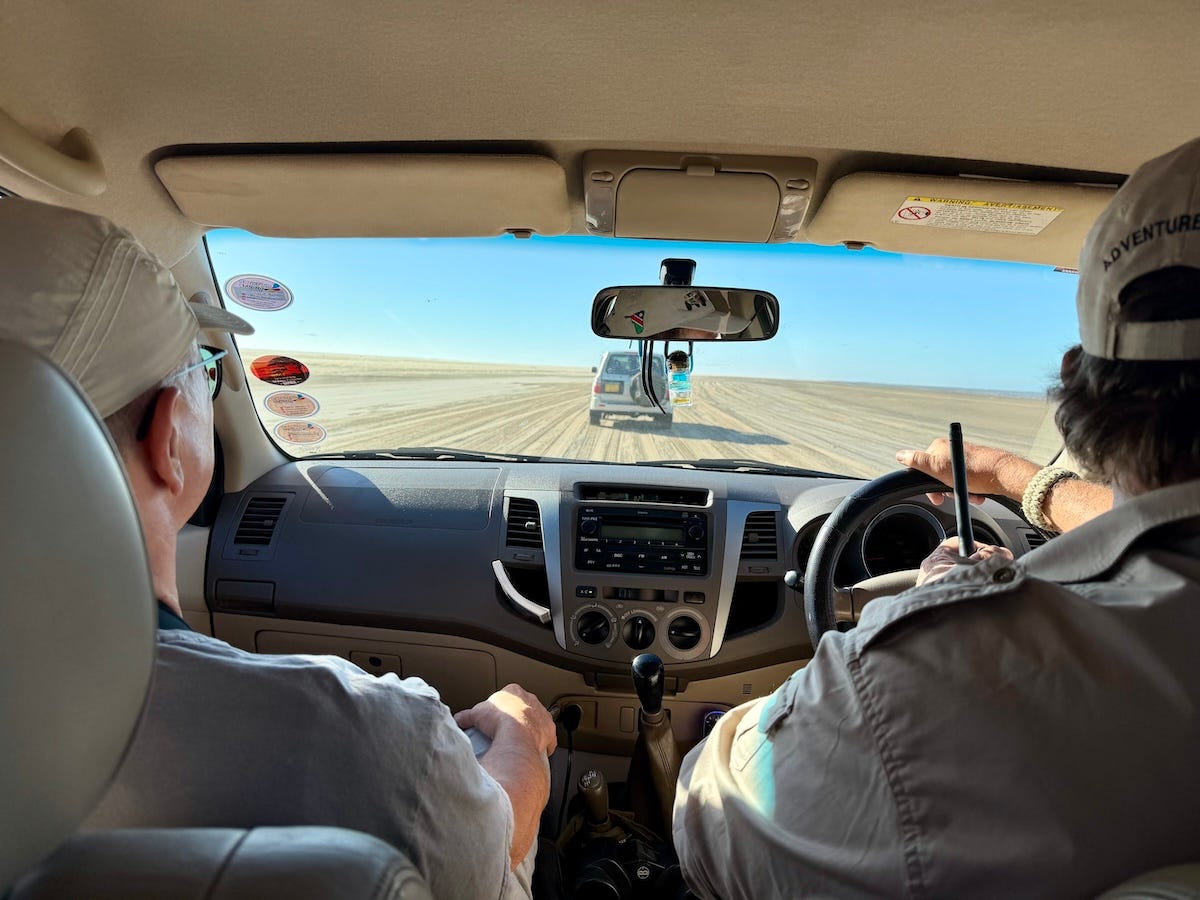
Our tour was unusual in that it took place in private SUVs or Jeeps, two couples per vehicle with a driver/guide. Our driver admitted that he was more of an expedition guide than a birding expert, but all the vehicles had continuous radio contact with the main birding guide, and so we had up-to- the-minute bird sighting information. It worked fine, and we liked having an on-going conversation with our third-generation Namibian guide who offered us tons of information about his country’s customs, and history.
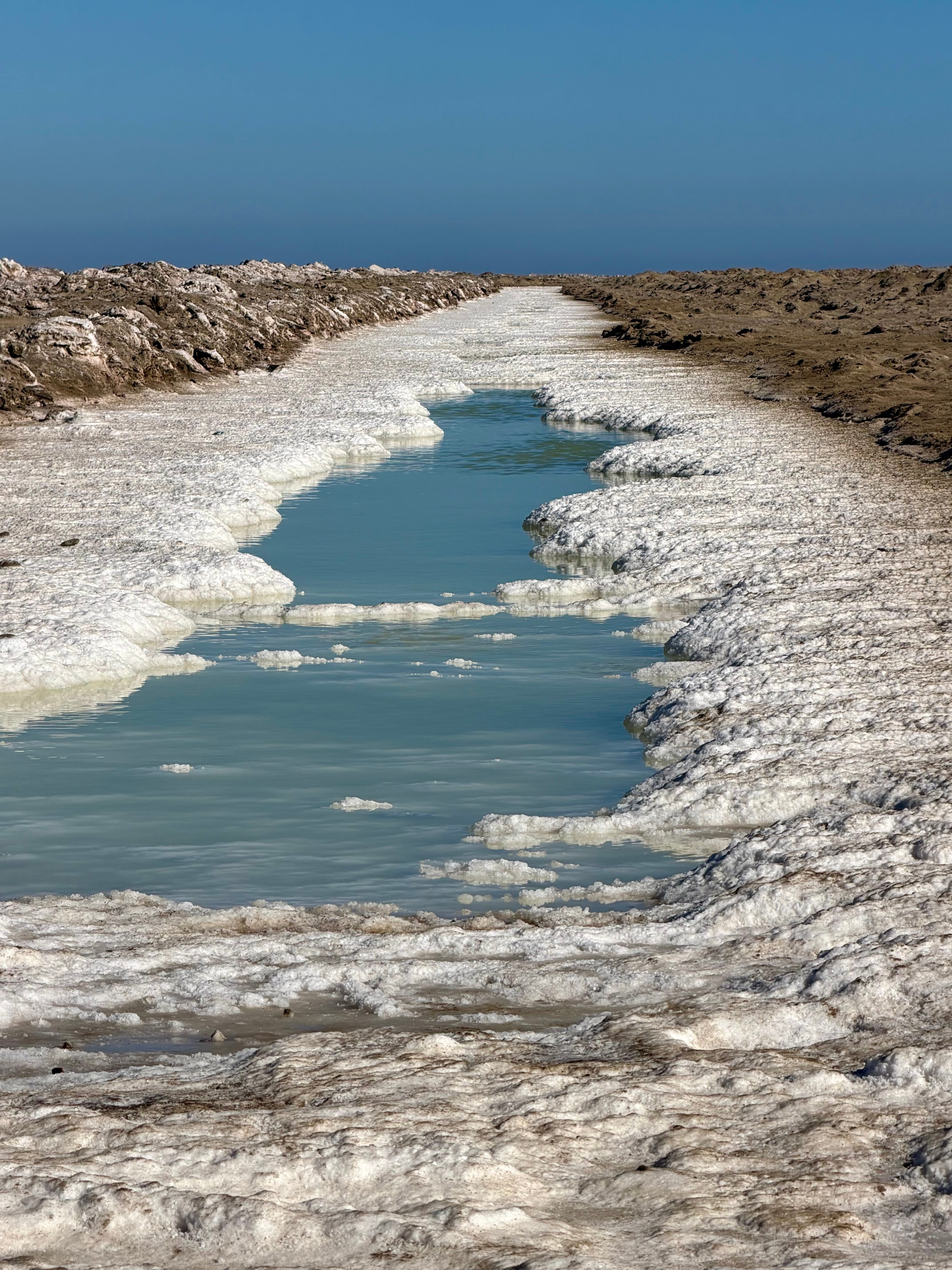
“Enter the sedimentation pans of the expansive Walvis Bay Salt Holdings.”
Walvis Bay Salt Holdings operates the largest solar sea-salt production facility in southern Africa. Covering over 12,350 acres at the southern tip of the Walvis Bay Lagoon, this industrial site combines the intense Namib Desert sun and persistent Atlantic coastal winds to naturally evaporate seawater into high-quality salt.
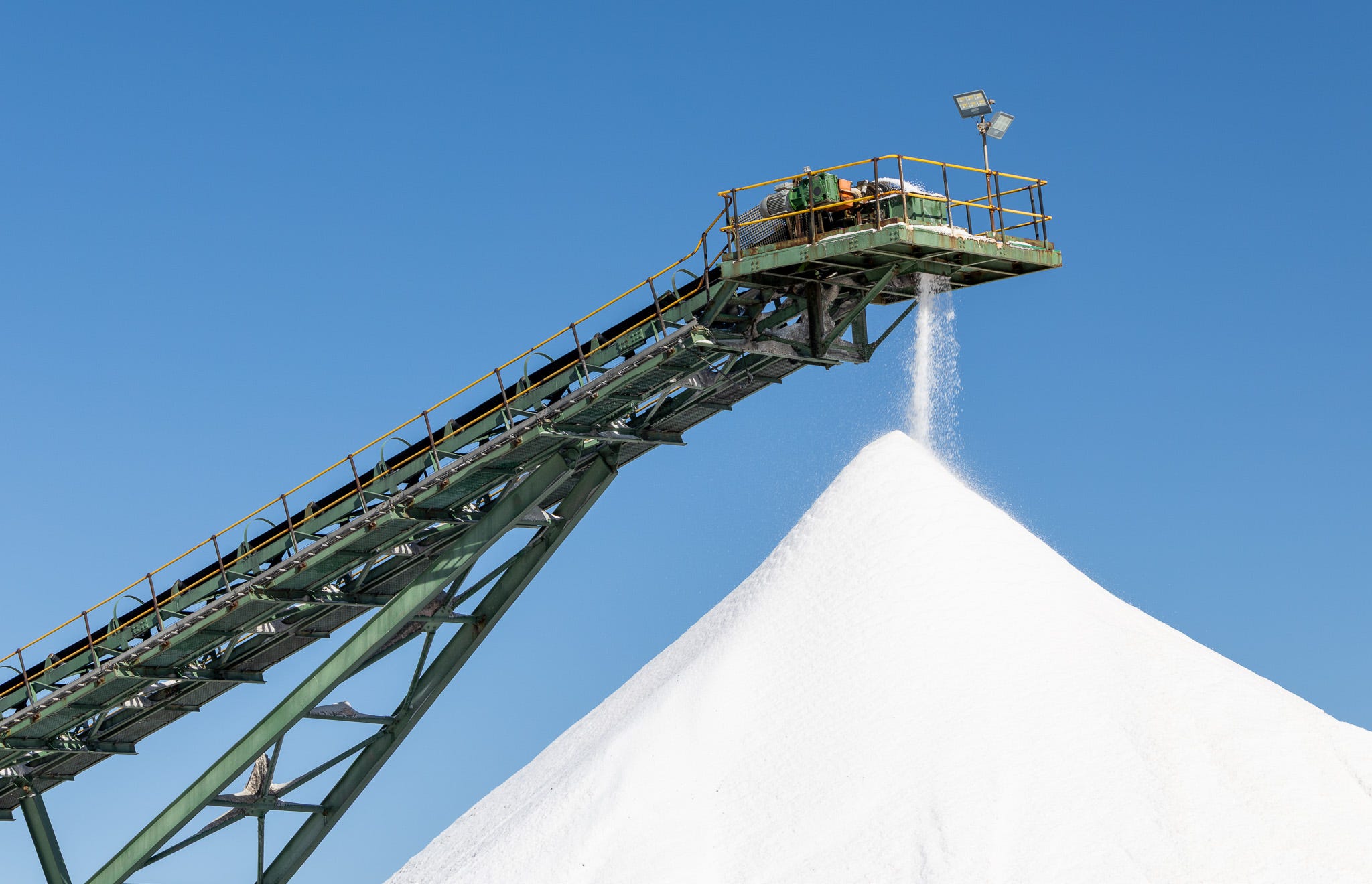
The company pumps roughly 100 million cubic metres of seawater into artificial pans annually and produces over 1 million tons of raw sea salt per year. This single facility supplies over 90% of South Africa’s entire salt demand and also exports industrial and consumer-grade salt to Europe, North America, Nigeria, Cameroon, and across Southern African.
The large scale operation was mind boggling. It was hard to fathom this amount salt, even while we were looking at the facility. At one point, we had “balls of salt” blowing from the ocean and rolling across the road on which we were traveling. We could have sworn we were in the midst of a winter blizzard back home in the US Midwest — except the sun was shining and it was warm!
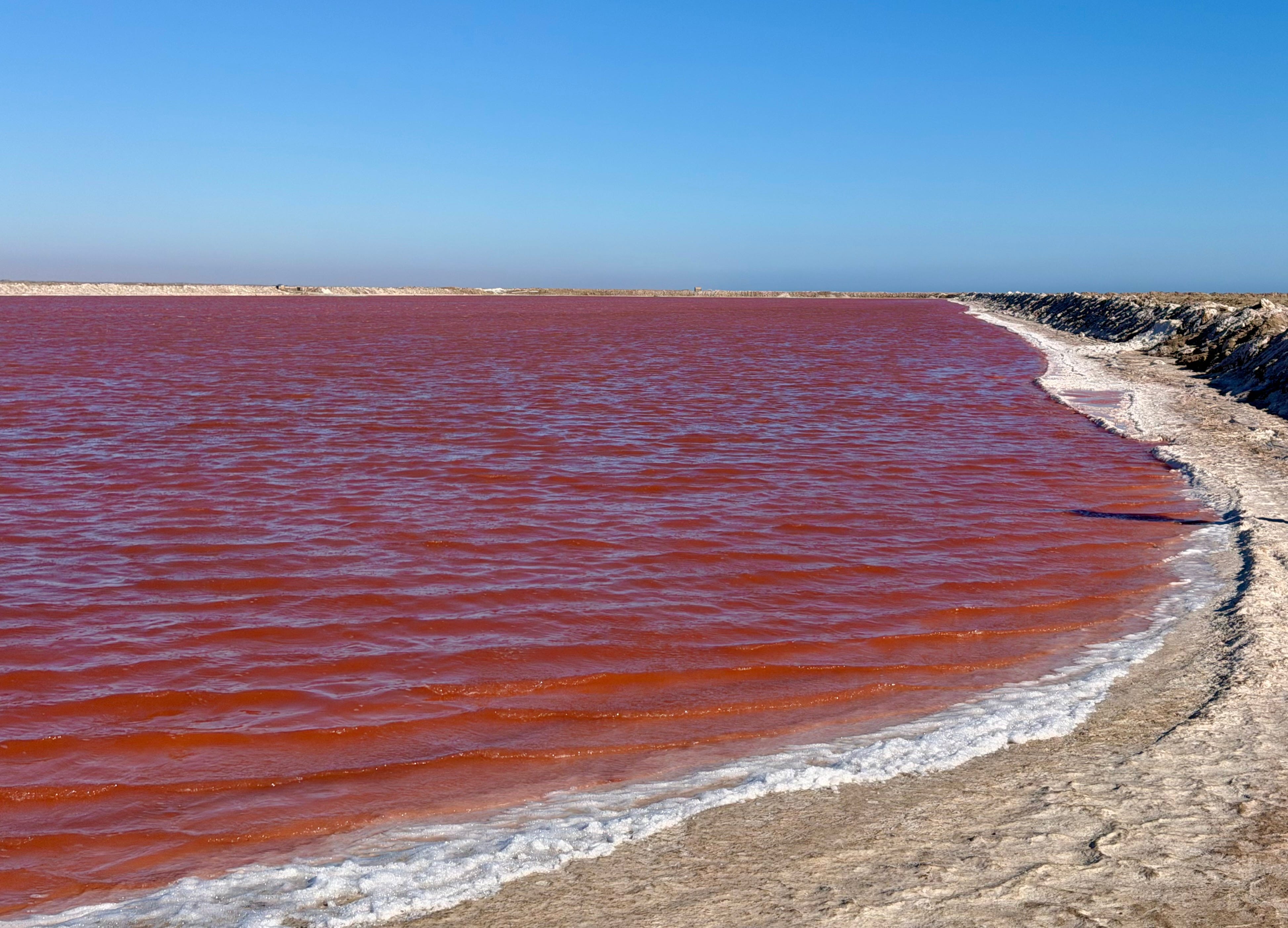
This site is also famous for its striking, multi-colored evaporation pans. The deep red colors of the pans are caused by high concentrations of salt-loving microorganisms that multiply rapidly as the water evaporates. They produce massive amounts of reddish-orange beta-carotene and for a good evolutionary reason. The pigment acts like a sunscreen, shielding the algae from the ultraviolet radiation of the desert sun. You’ve got to be impressed by nature’s adaptations to harsh climates!
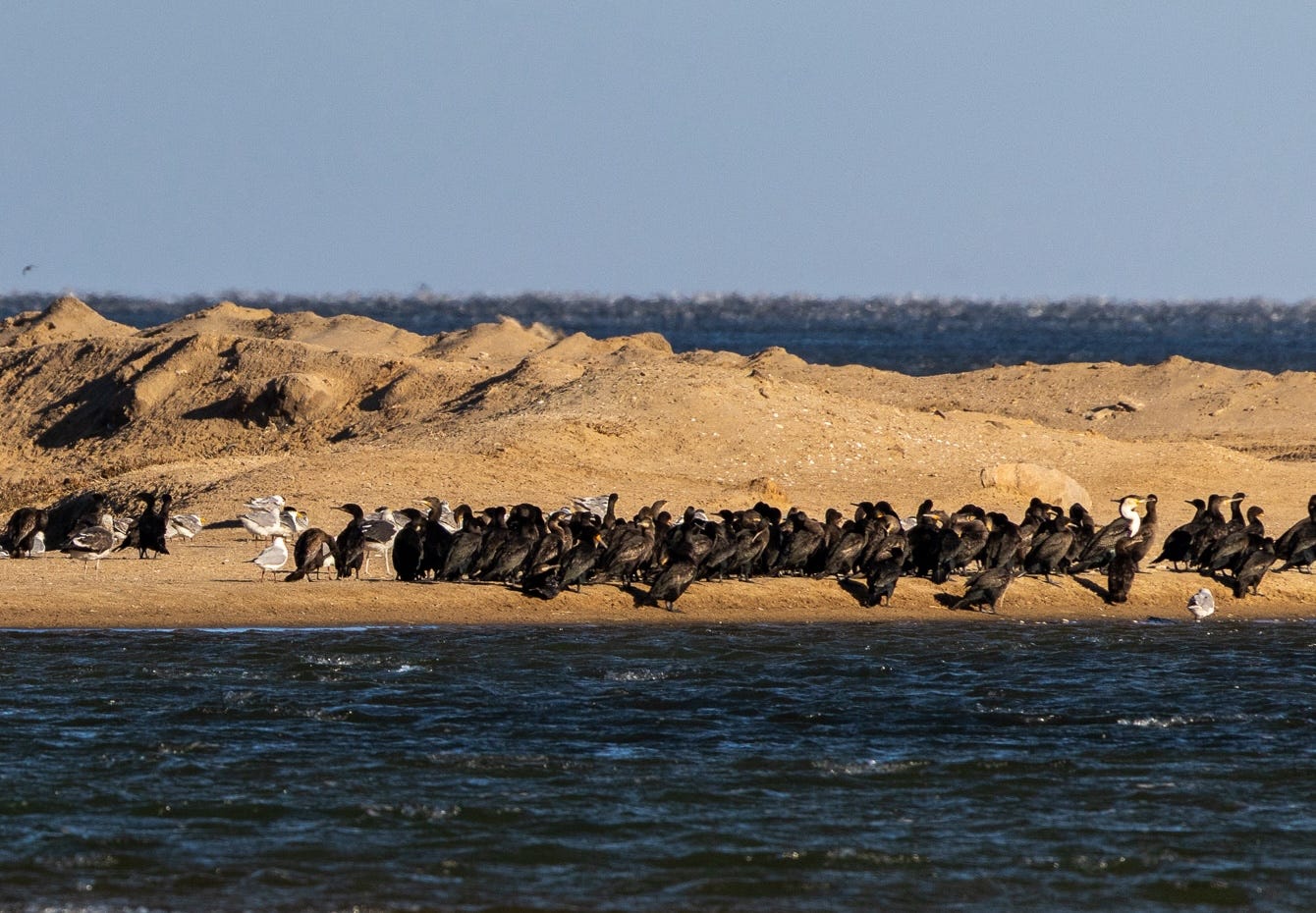
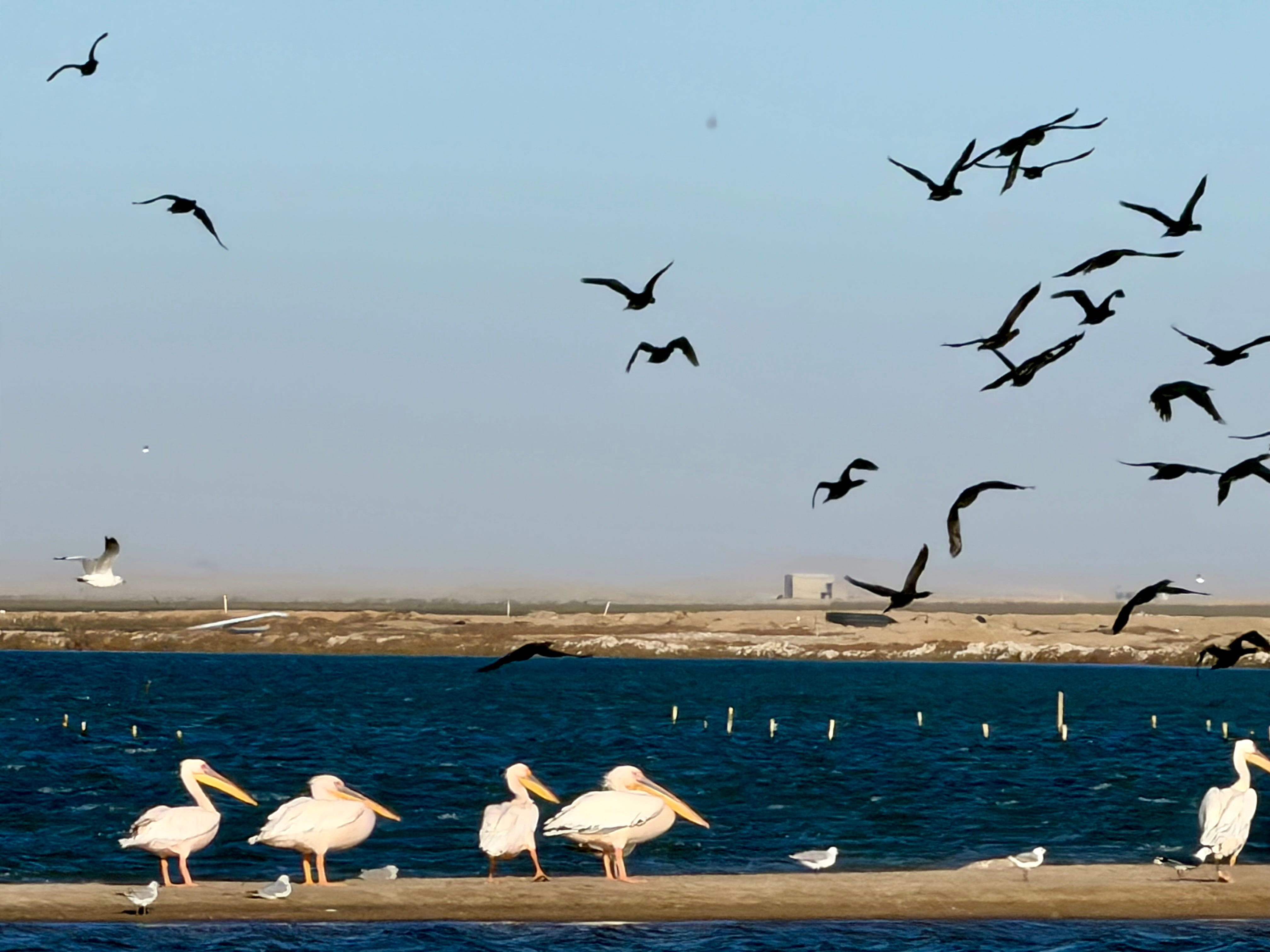
A flock of Cape Cormorants, considered an endangered species, but plentiful on this strip of coast land.
A medium-sized, glossy, marine cormorant that is frequently seen in enormous foraging flocks offshore; also dominates rocky coastal roosting sites. Combination of its rounded crestless head, orange throat pouch, and stunning turquoise eye easily identifies adults. — eBird
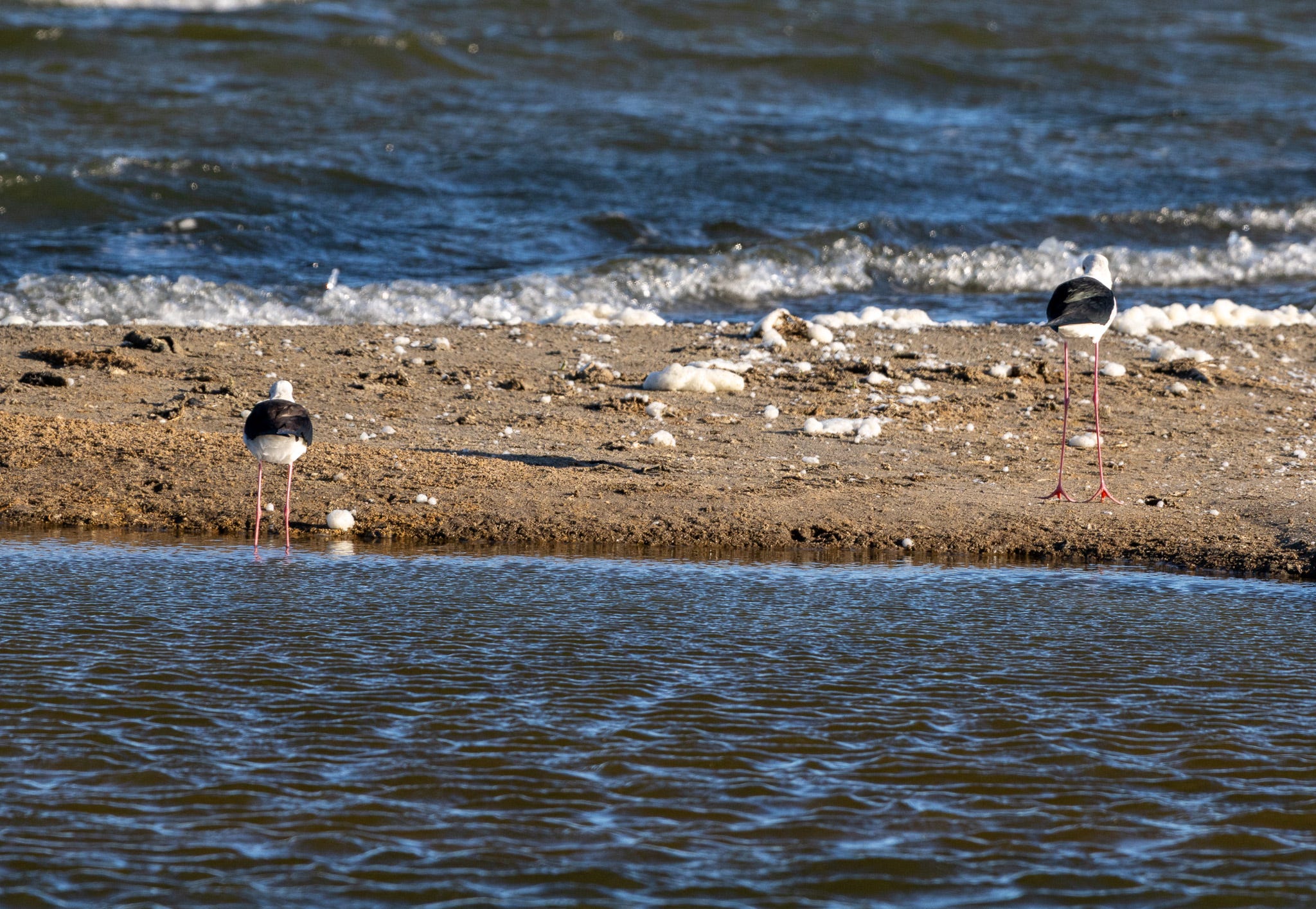
These Black-winged Stilts aren’t showing us their best sides. Still, the photo is noteworthy for the “salt balls” accumulating along the shore.
Striking large black-and-white wader with a thin, straight bill and bright pink legs, found in wetlands with open shallow water throughout much of Africa and Eurasia, often in brackish habitats. Often forms noisy colonies on bare ground near water. Feeds by wading in water, picking from the water surface with its needle-like bill. — eBird
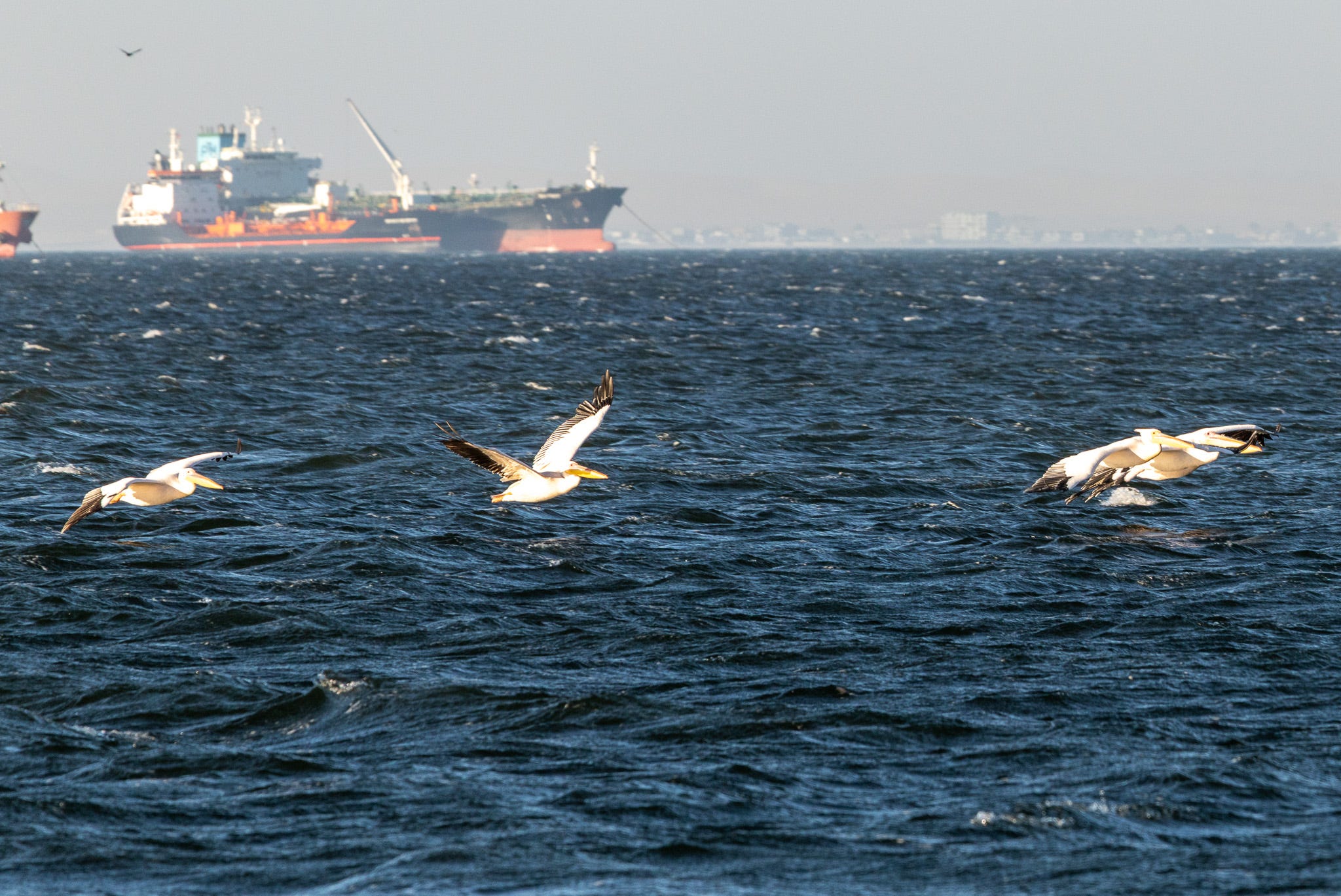
White pelicans were everywhere. They’re so ungainly, they become quite photogenic!
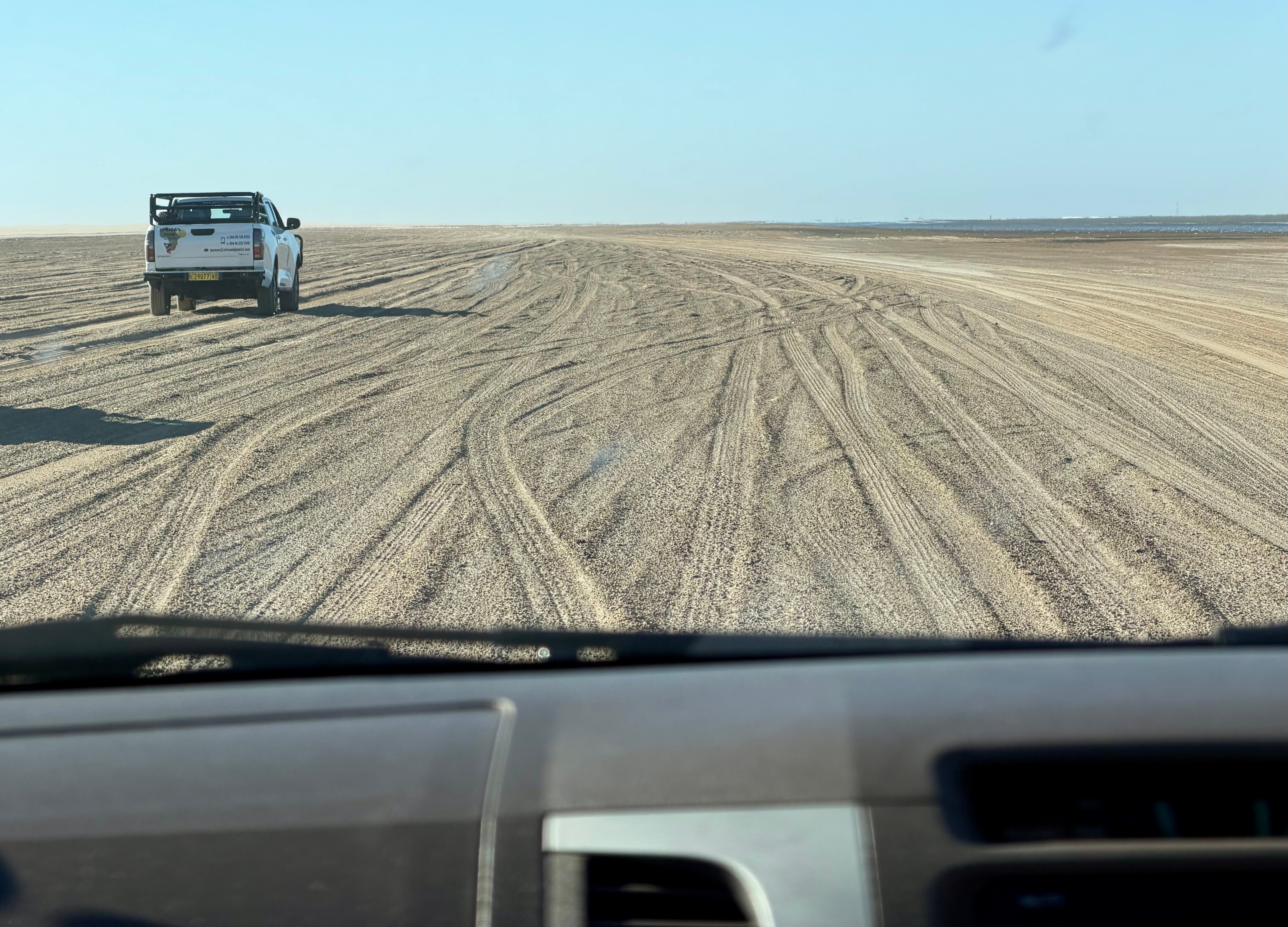
Traveling the flat sand dunes by SUV was nearly as much fun as seeing nearly forty new species of birds. Almost! The drivers let air out of their tires before driving on the sand; when they return home, they must meticulously wash their cars, including the engine, to remove that day;s accumulation of sand!
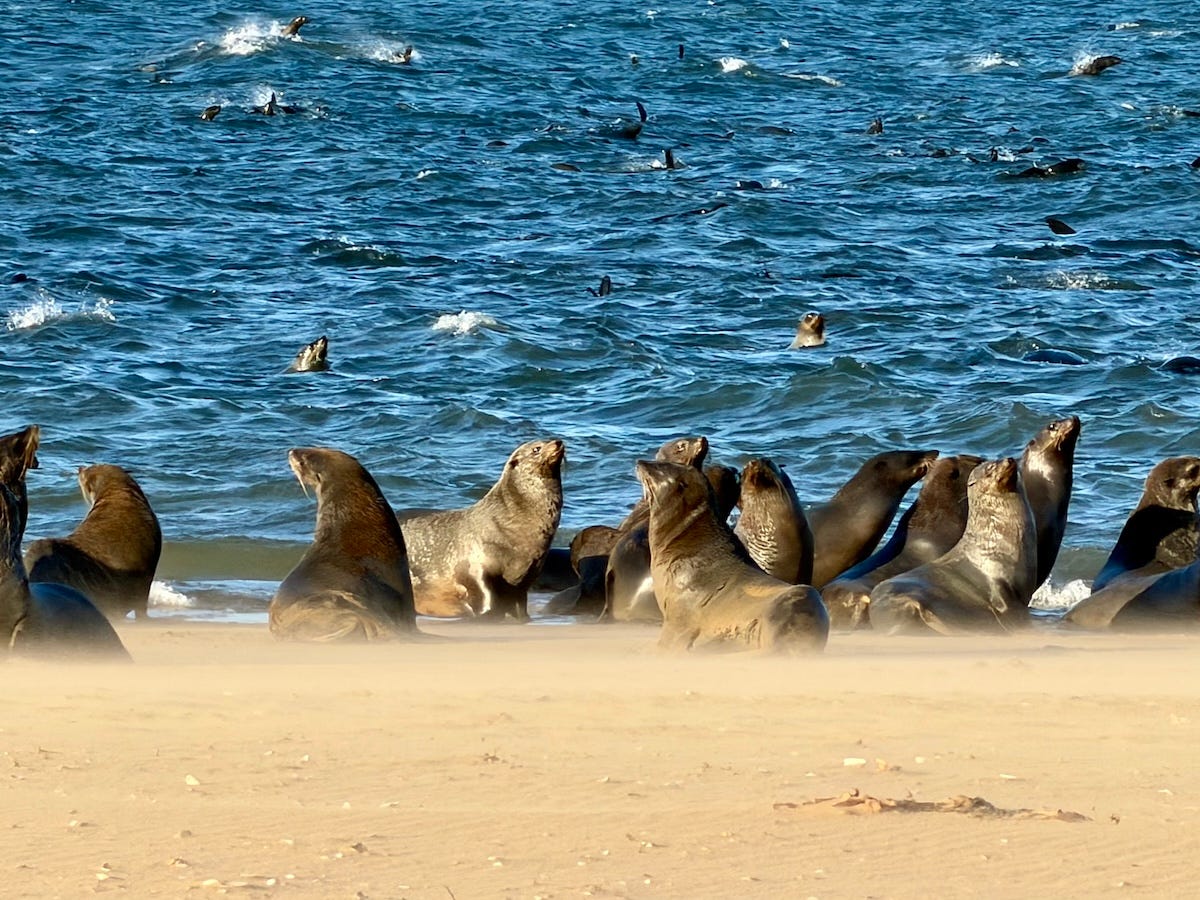
“Travel farther along the beach to Pelican Point and discover a large Cape fur seal colony.”
Pelican Point, a protective sand spit near Walvis Bay Lagoon, holds a resident colony of over 50,000 Cape fur seals. Not only can you hear them and see them, but they also add a characteristic smell to the surrounding area.
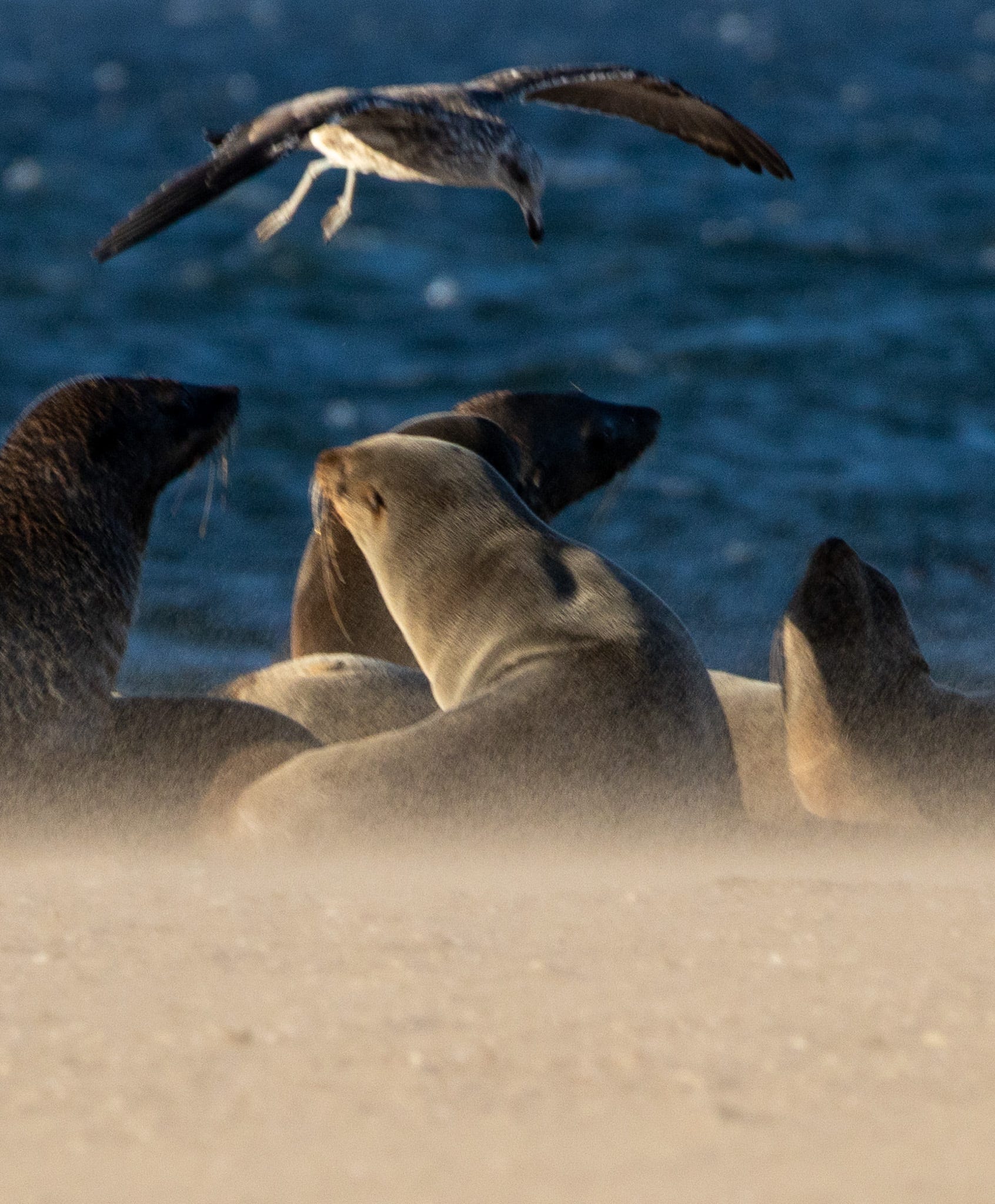
You’ve got to admire the audacity of this Kelp Gull, taking on this colony of Cape fur seals.
Large dark-backed gull. Few similar species in much of its range. Usually coastal. Adults have black backs and wings with very little white in the flight feathers. The bill is very strong and robust and the legs are greenish-yellow. Juveniles have a dark brown back mottled with white, a black bill, and a dark band on the tail. — eBird
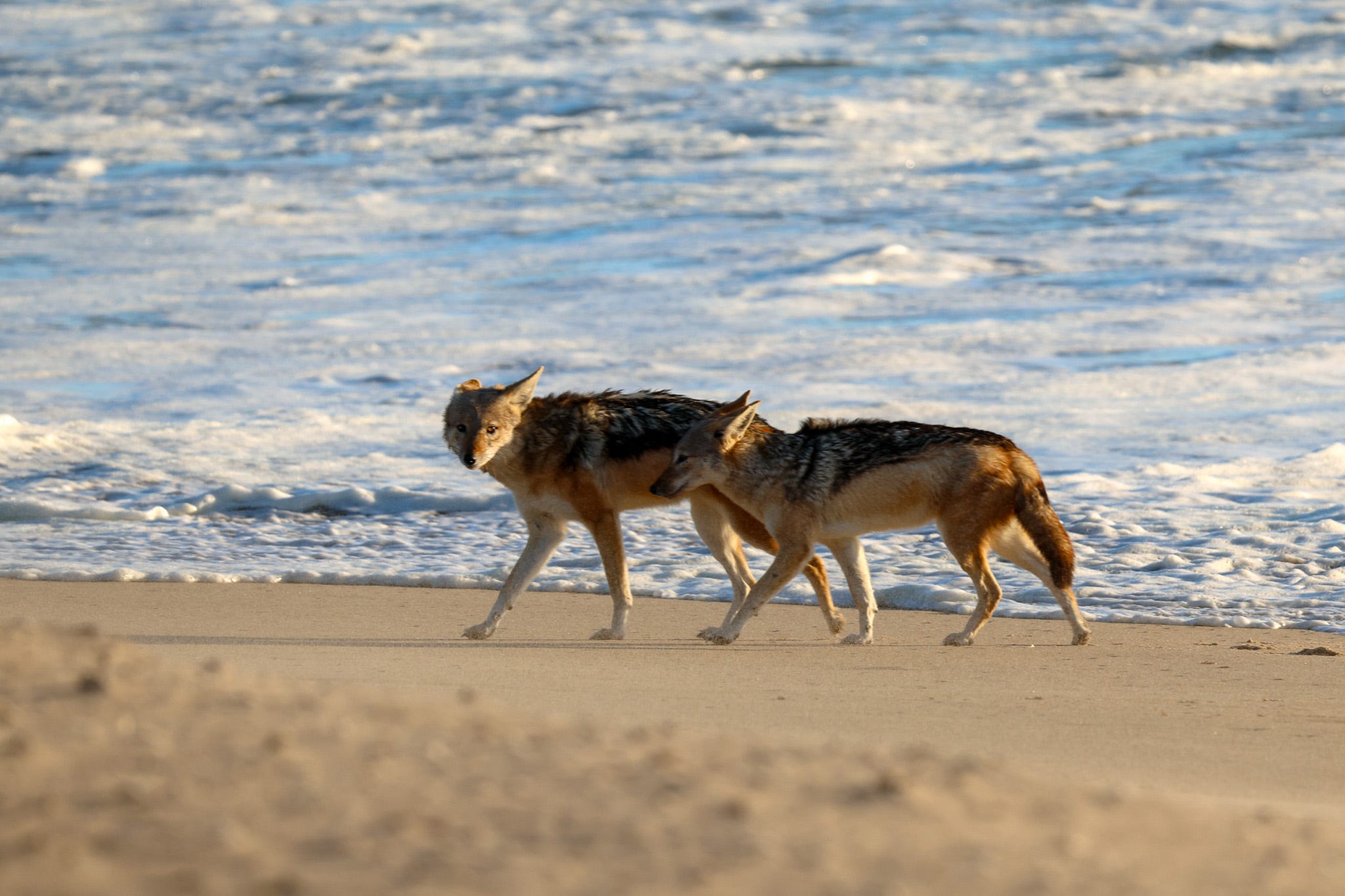
We saw this pair of Black-backed jackals on the beach of Pelican Point. They are clever, highly adaptable predators that have learned to exploit the coastline as a massive buffet. Jackals comb the tide lines for dead fish, marine birds, crabs, and whales that wash ashore, plus they are eager to scavenge any seals that are injured or dying.
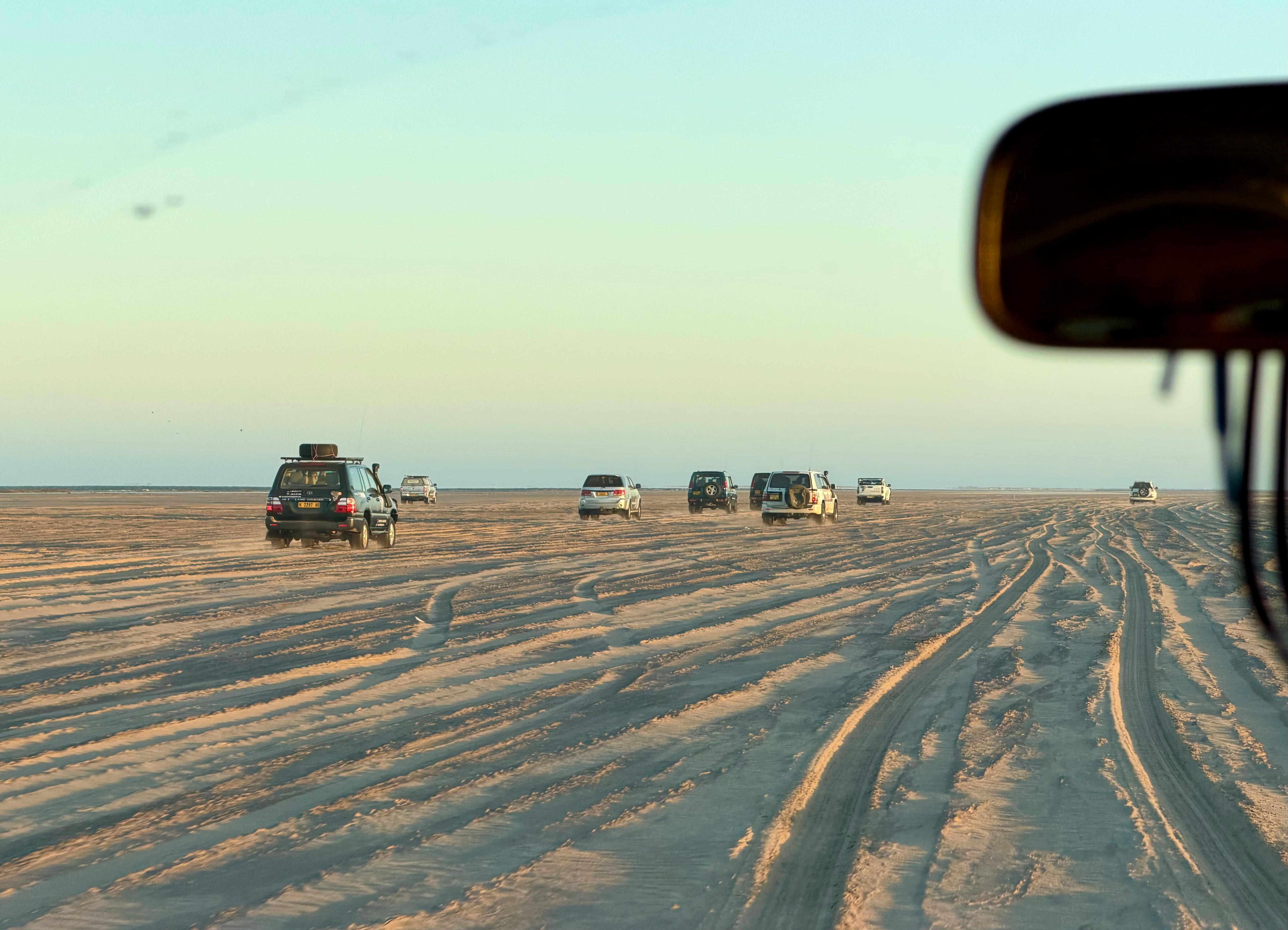
All too soon, our three hour tour drew to a close, and we headed across the sand dunes for our return to town and the ship.
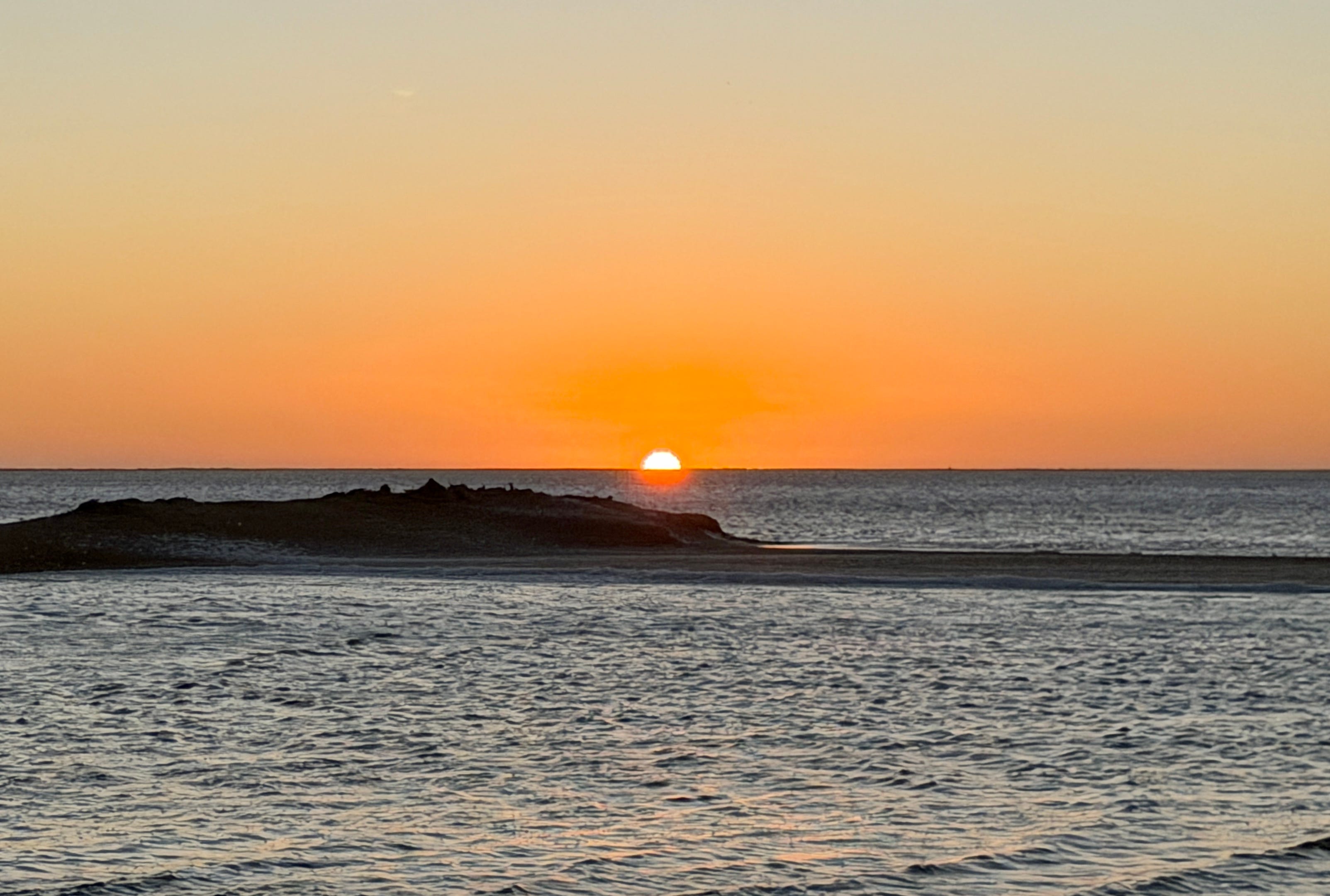
Just before leaving the dunes, we were treated to a Namibian sunset!
What a perfect tour — an intimate guiding experience, interesting subject matter, a beach dune drive, and 28 new-to-us bird species to add to our bird lists.
Tomorrow? We spend a second day in Walvis Bay.
I can't begin to imagine how many hours you put in creating your wonderful narratives! Thank you.