
Takoradi, Ghana
Our afternoon excursion collided with a rainstorm!

The Portuguese explorers who landed in the country in 1471 named it the Gold Coast. English, Danish, Dutch, and German built their forts (castles ) here to reap the abundant riches. In the 17th century, Frederick William, the Great Elector of Brandenburg, built a fort called Taccarary, which later became known as Takoradi. — Regent
We chose to go on the Twin City of Sekondi-Takoradi excursion, a 3.25-hour, Regent-included tour.
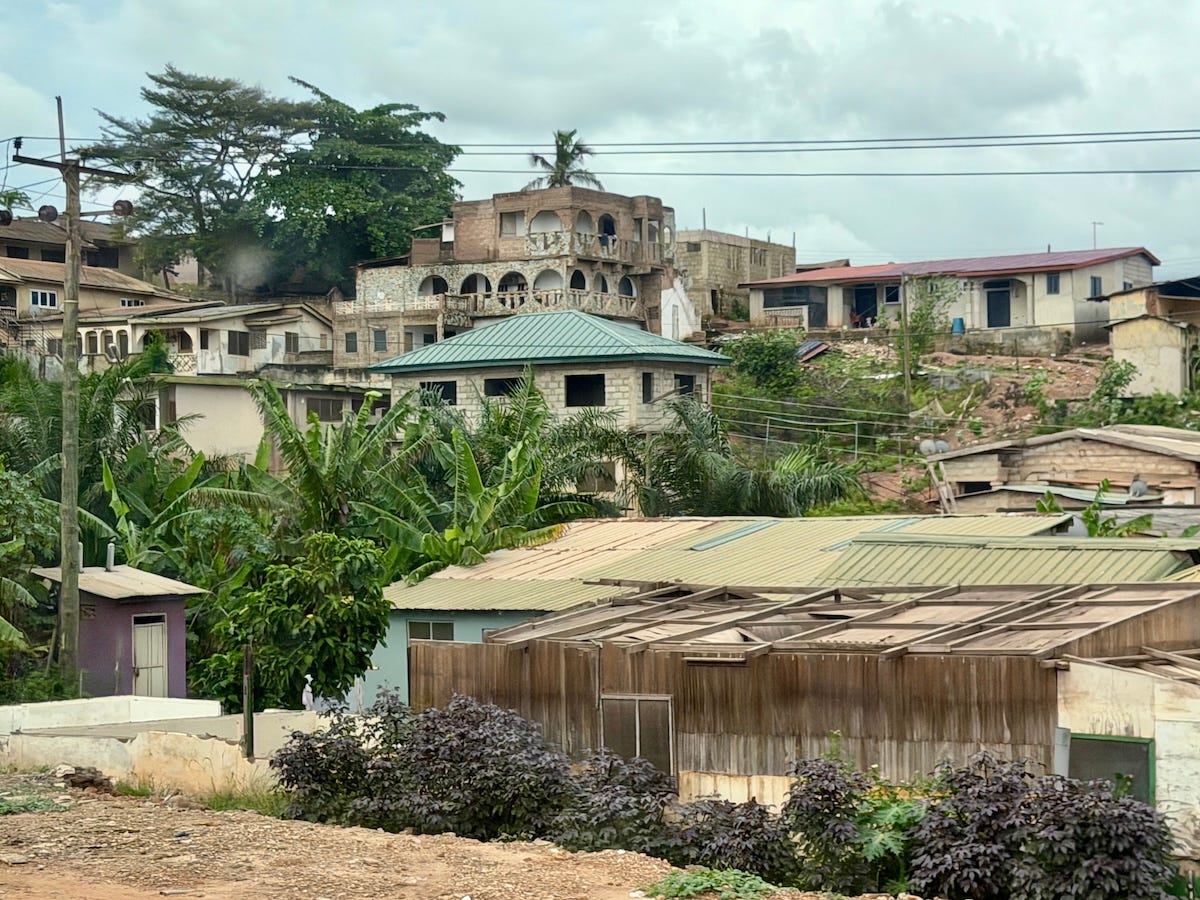
Description: Explore bustling markets, cultural landmarks, and historic sites on this scenic tour of Sekondi and Takoradi, which have been combined as one since 1946. Learn about Ghana’s main exports as you cross the harbor to Takoradi’s Western Gate. Drive through the European-style town of Sekondi, passing aged colonial buildings, the stately High Court, and tree-shaded residential areas. During a stop at the bustling Albert Bosomtwi-Sam Fishing Harbor, watch women buying and preparing the fish and watch nets being repaired. You’ll view Fort Orange’s impressive lighthouse and the Takoradi Market Circle, Western Ghana’s commercial and economic hub. Stop for a spirited cultural show with refreshments at a local hotel and reflect on the distinct personalities of Western Ghana’s thriving twin cities. — Regent website
Our research prior to cruising proved, sadly, true:
Daytime High Temperature: Approximately 86°F.
Nighttime Low Temperature: Around 78°F.
The perceived temperature will be higher due to the high humidity, making it feel “muggy” or oppressive.
Precipitation: May is the wettest month of the year for Takoradi. There is a high probability of rain on an average day in May (around 75% chance). Expect significant rainfall; the average is over 5 inches for the month. The rain usually occurs as heavy downpours or thunderstorms. (So true!)
Sunshine: The weather will be mostly cloudy due to the rainy season.
Attire: A waterproof jacket or umbrella is essential due to the frequent rain.
Activities: Given the heavy rains, this month holds little appeal for outdoor activities. Focus on planning around potential downpours. (Did we pay attention to this? There really weren’t other excursion options…)
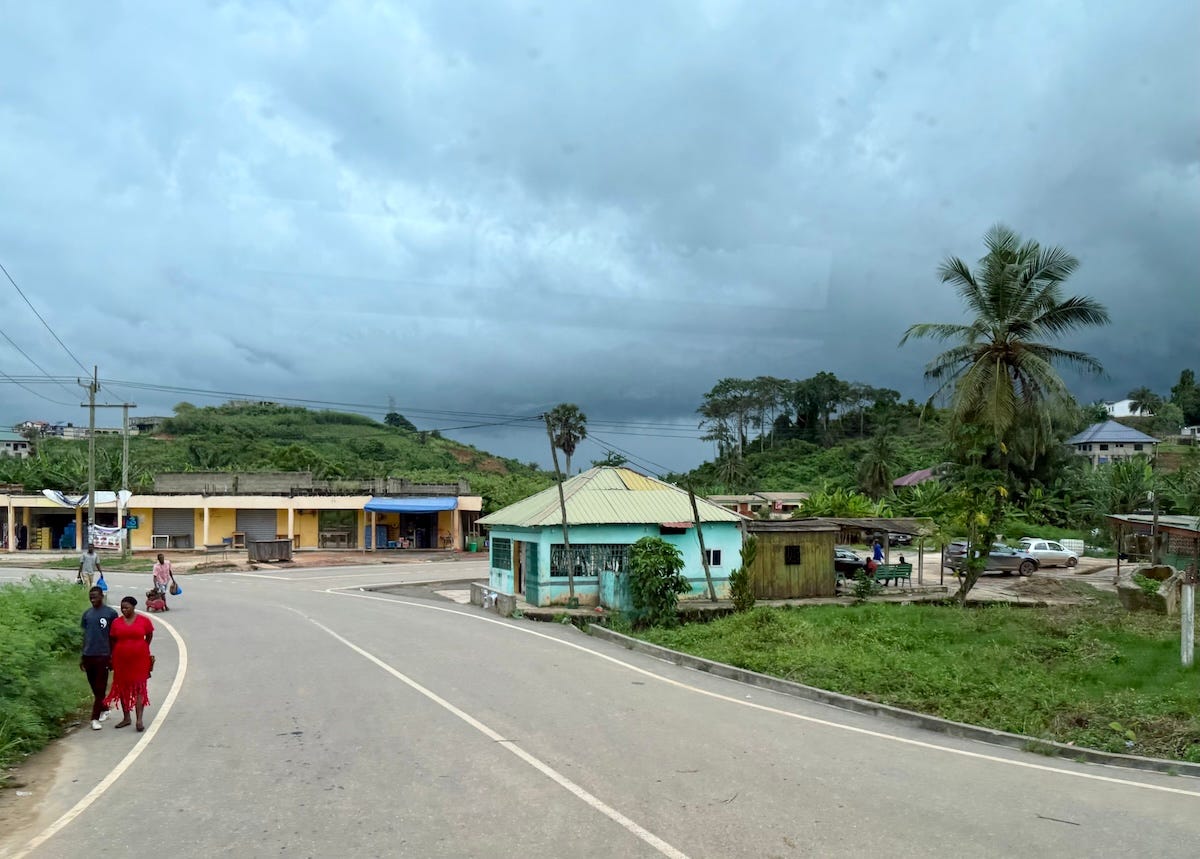
As we drove towards the Albert Bosomtwi-Sam Fishing Harbor, we watched the dark clouds gather on the horizon. We had to take a detour around the city as Ghana has embarked on a massive urban road construction project.
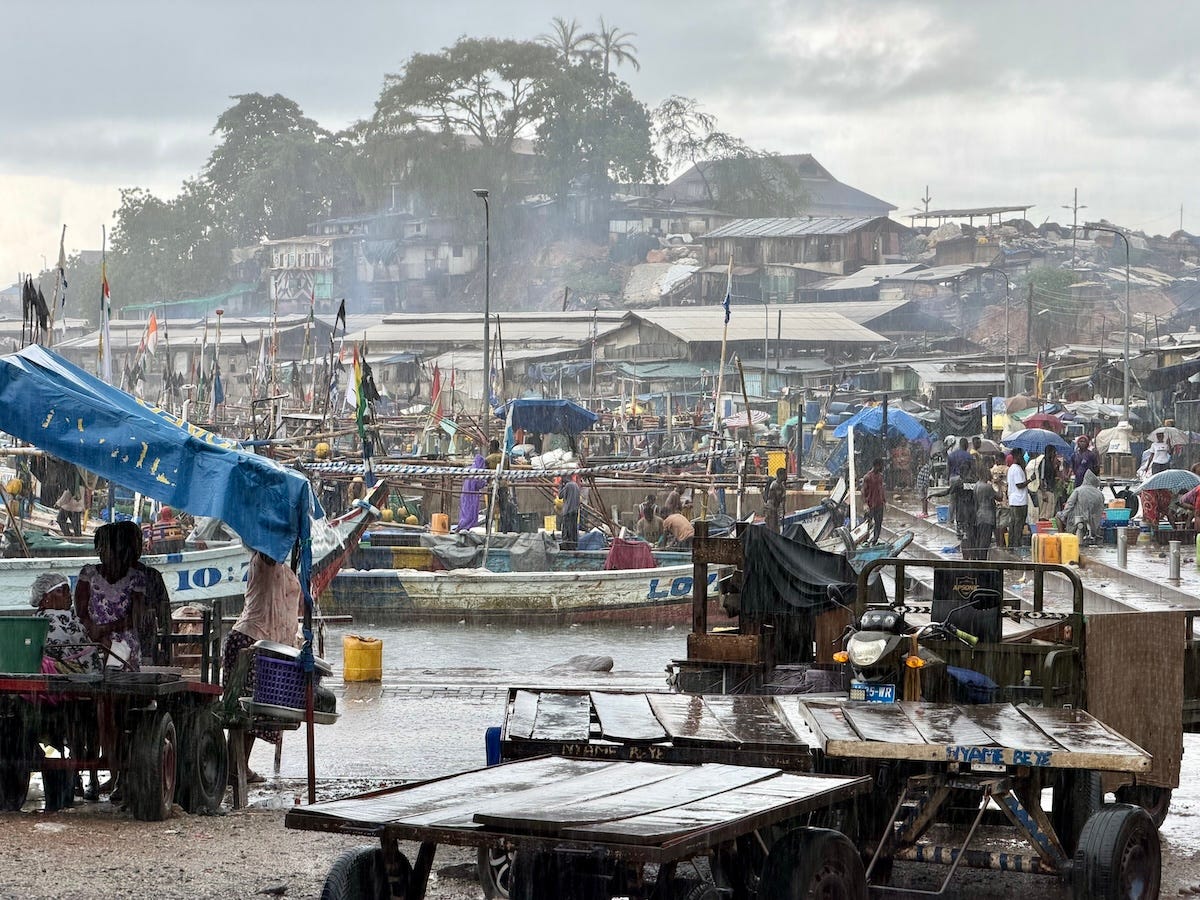
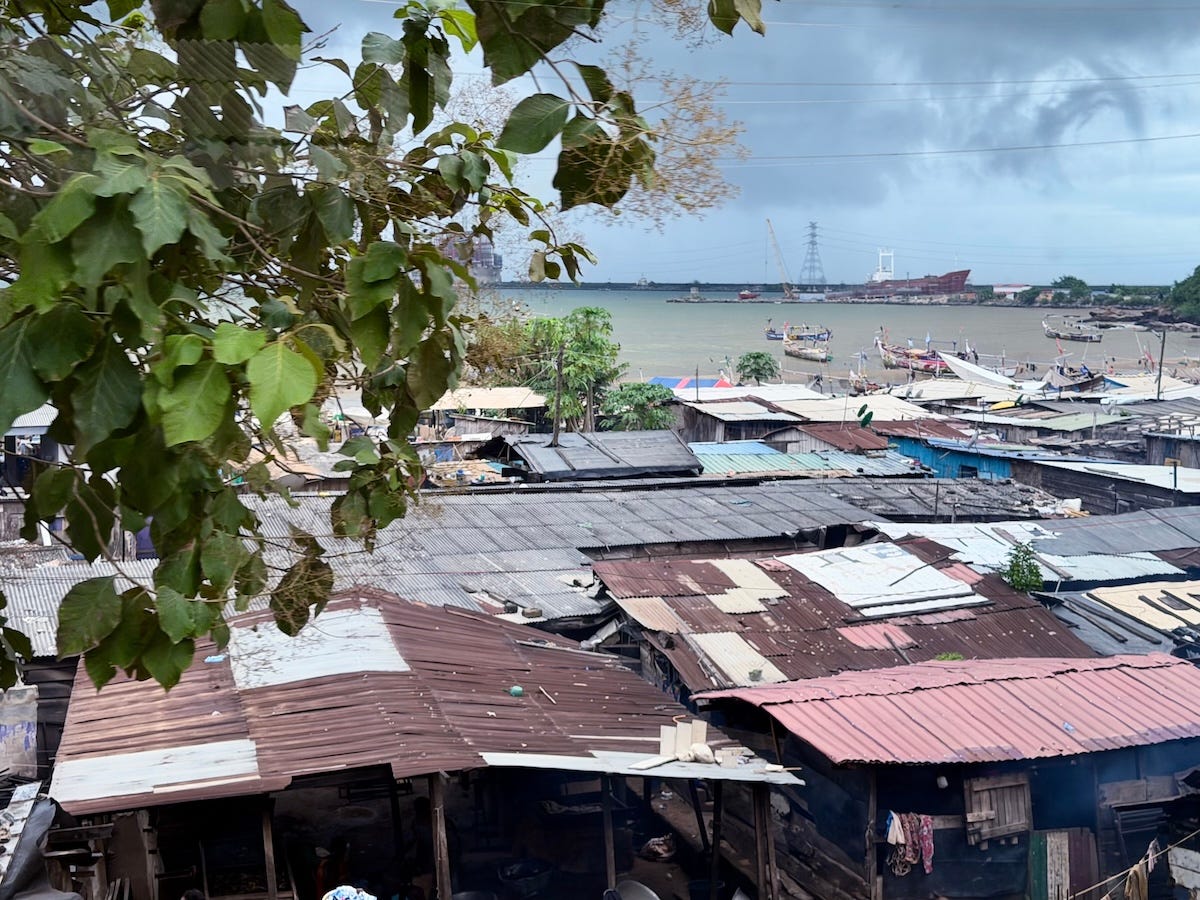
The Albert Bosomtwi-Sam Fishing Harbor is one of only two dedicated fishing harbors in the entire country. It plays a critical role in Ghana's fishing sector, supporting the livelihoods of over 10,000 fishermen and fish traders in the nearby coastal communities. By the time we arrived at the harbor, the rain had begun in earnest.
How hard was it raining? This hard!
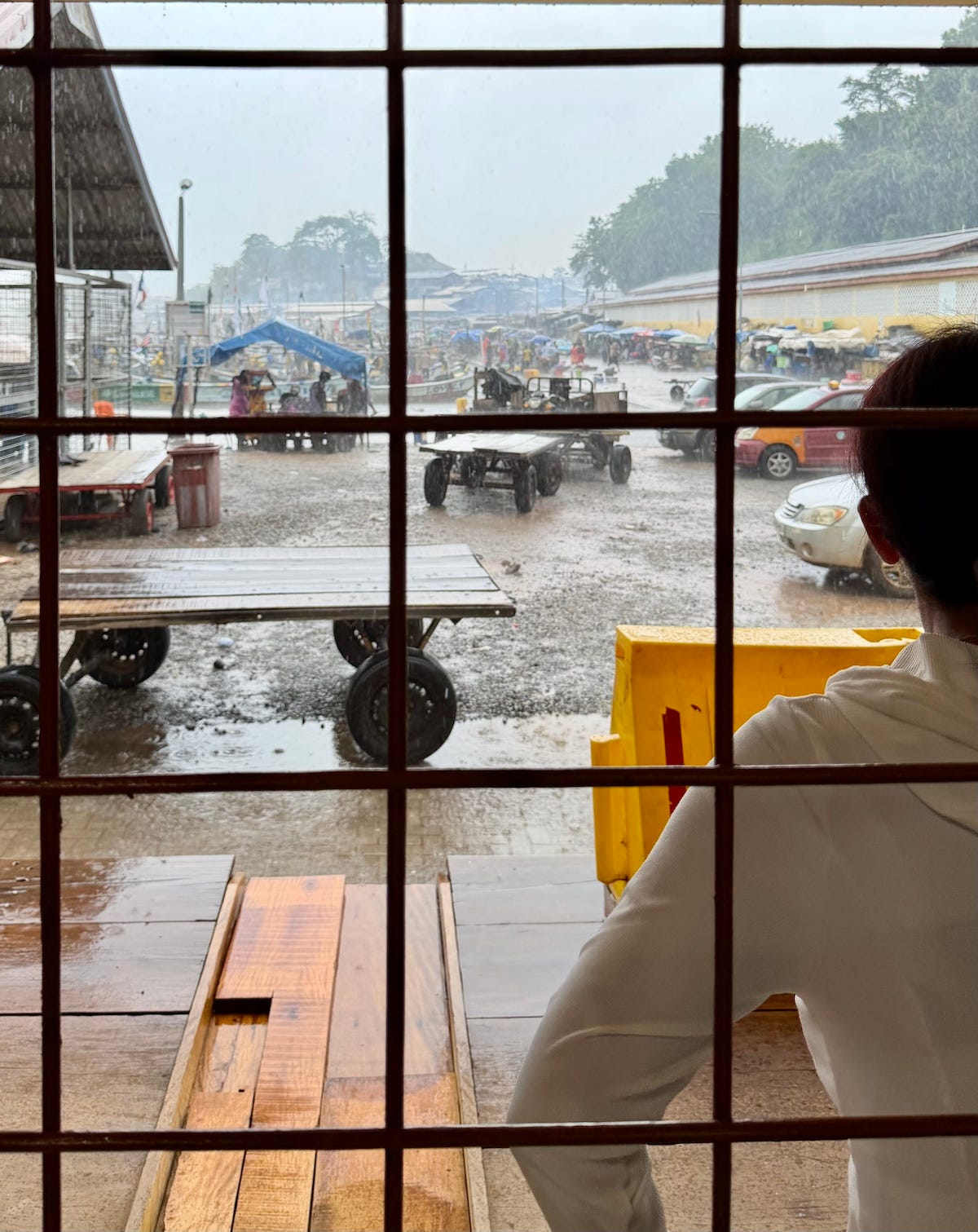
Our behind-the-scenes tour of the fish market was cut short. There were no women buying and preparing the fish, no nets being repaired. Everyone had called it quits due to the storm.
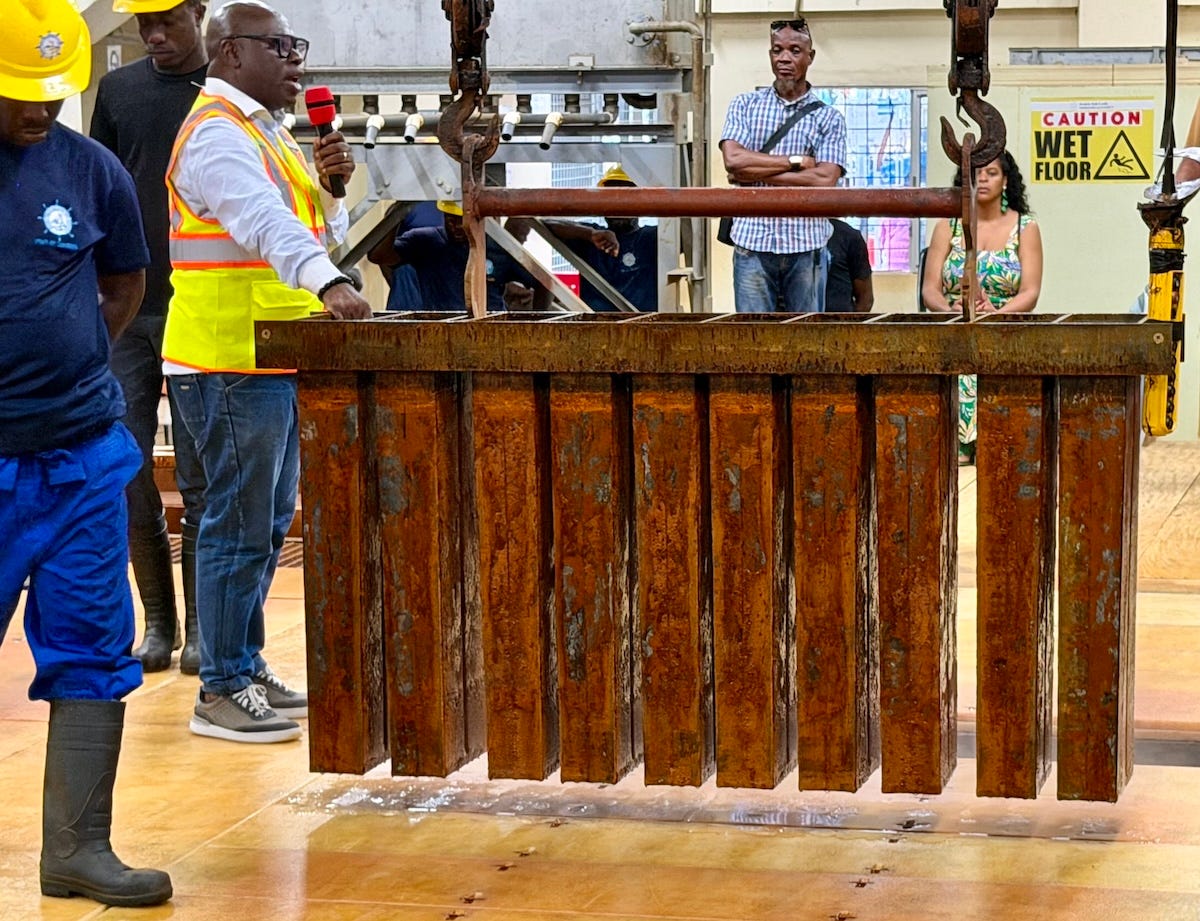
The ice-making facilities at the Albert Bosomtwi-Sam Fishing Harbor are a cornerstone of the port’s operations, and are designed to eliminate fish losses and keep catches fresh.
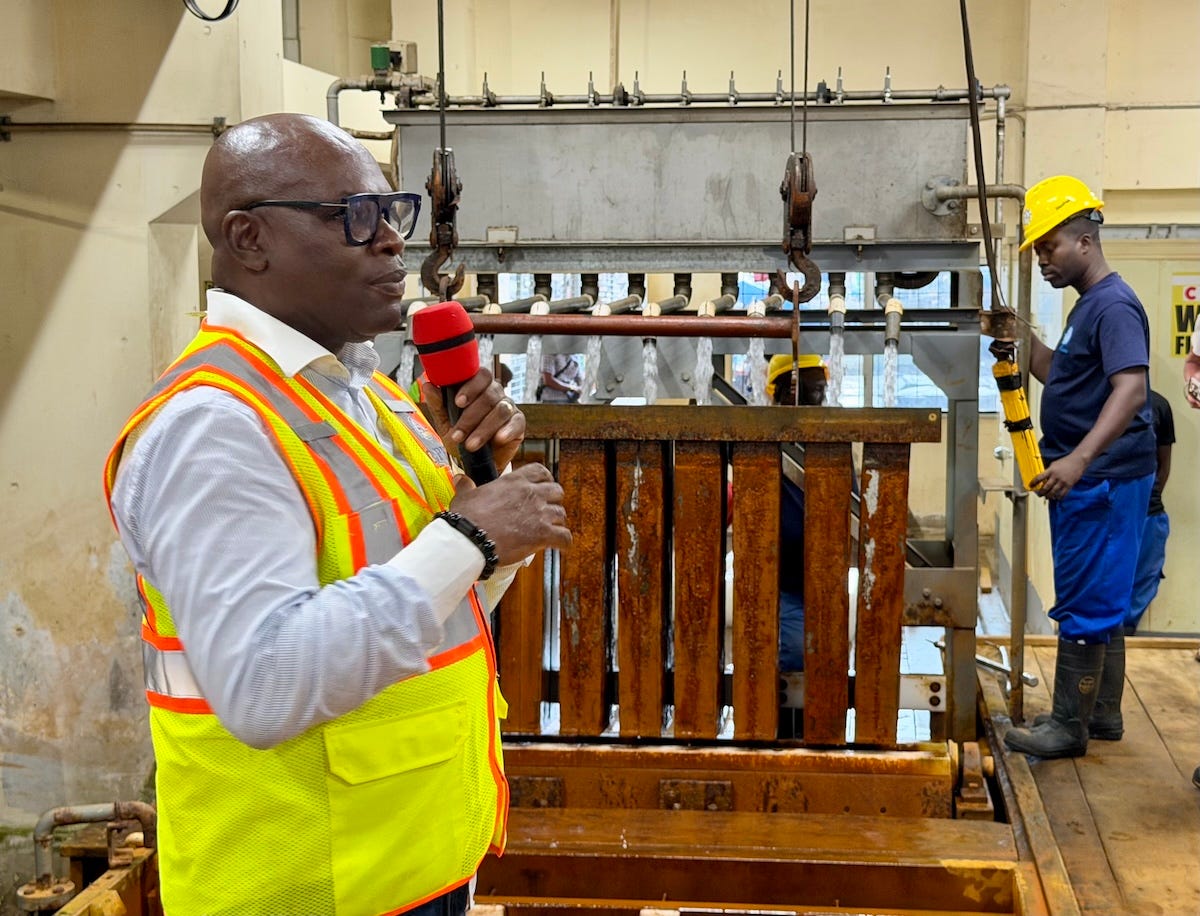
The facility functions as a block-ice plant. Large blocks of ice are manufactured, stored in adjacent insulated units, and then crushed or loaded directly into fishing vessels before they head out to sea.
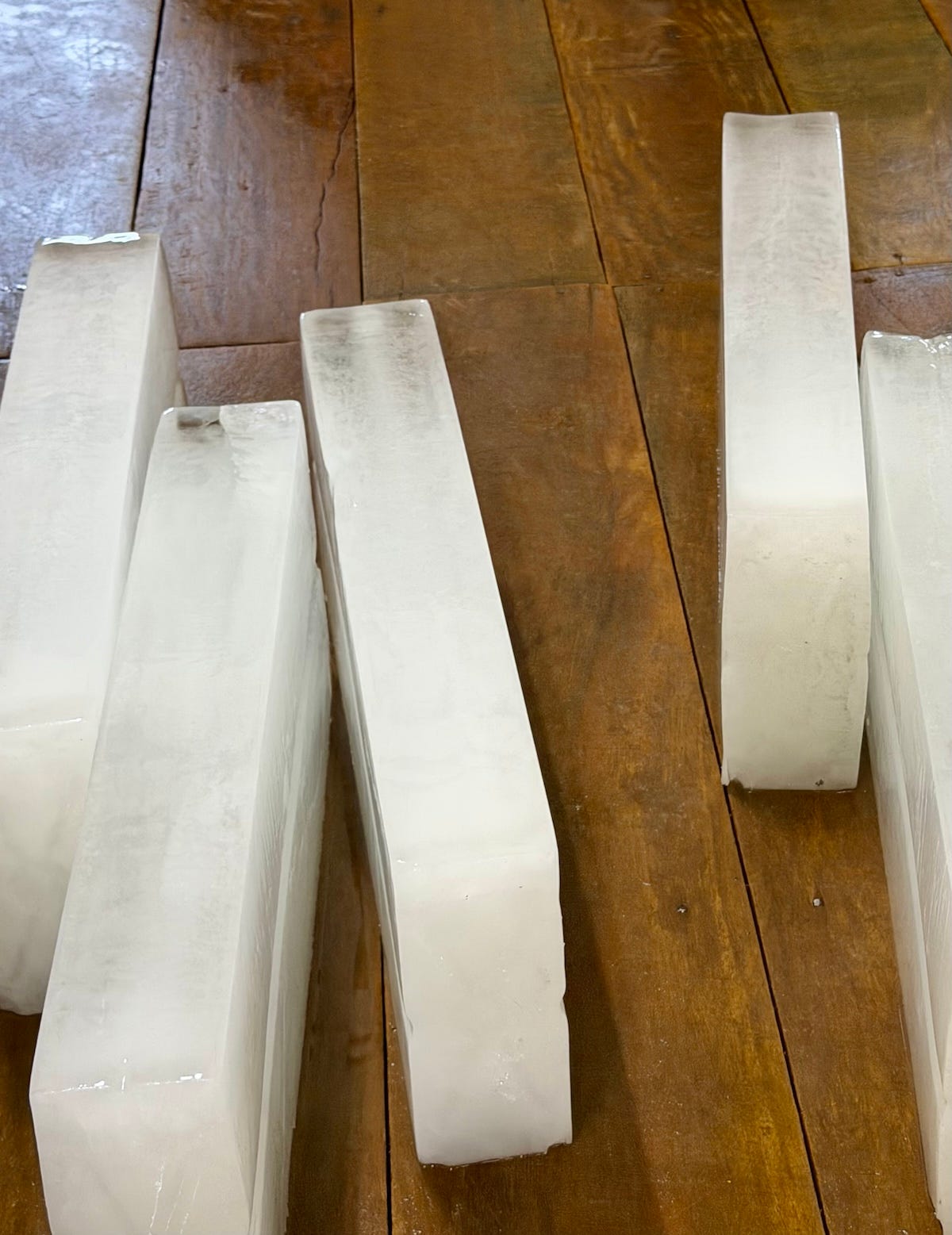
Although the plant can produce 30 tons of ice daily, the port still experiences ice shortages during peak fishing season. The whole process seems laborious, but it has proven critical to keeping fish as fresh as possible. Since the freshest fish command a higher price, demand for ice is always high.
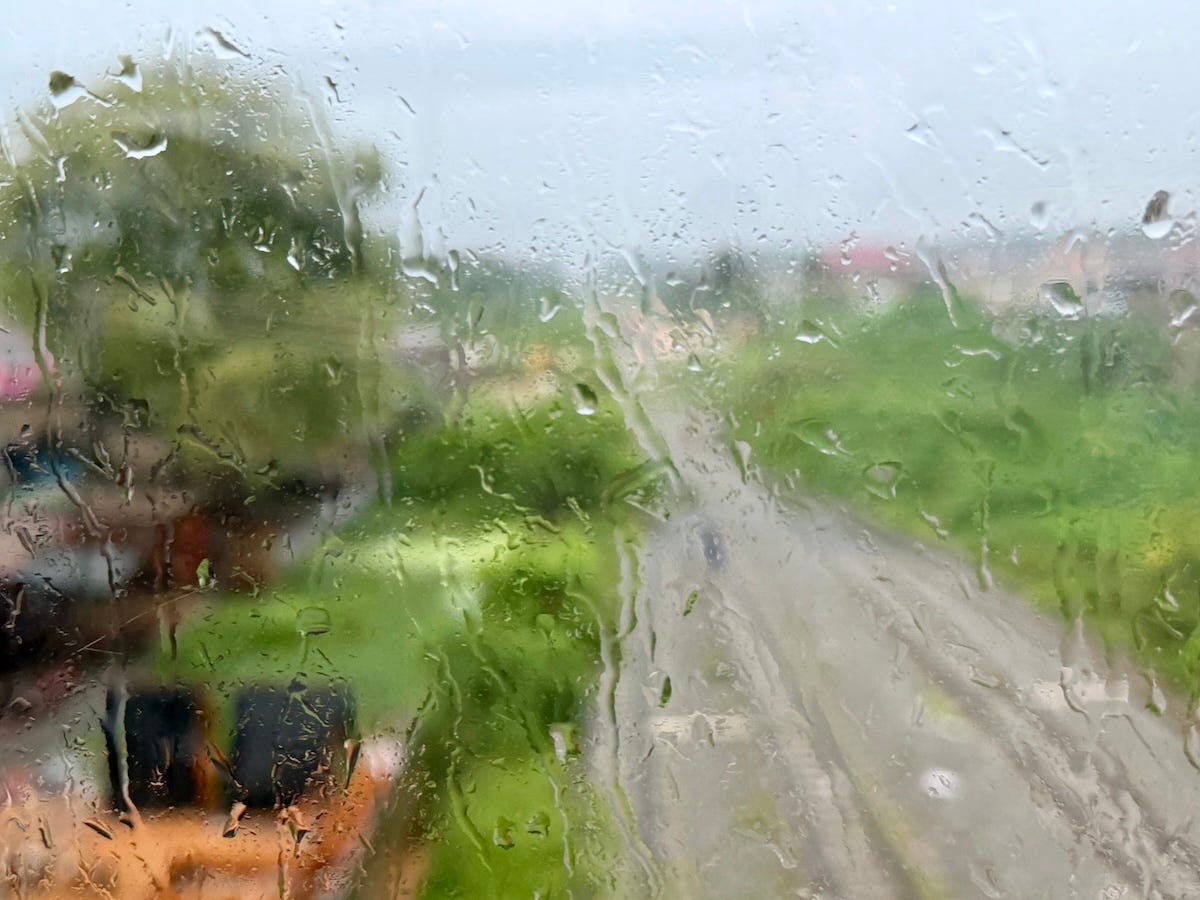
We passed one of the only sets of railroad tracks in the country. Following Ghana’s independence in 1960, the government focused its limited resources on expanding the roads rather than maintaining the railways. The railways fell into disrepair, and by the early 2000s, almost the entire system had ground to a halt.
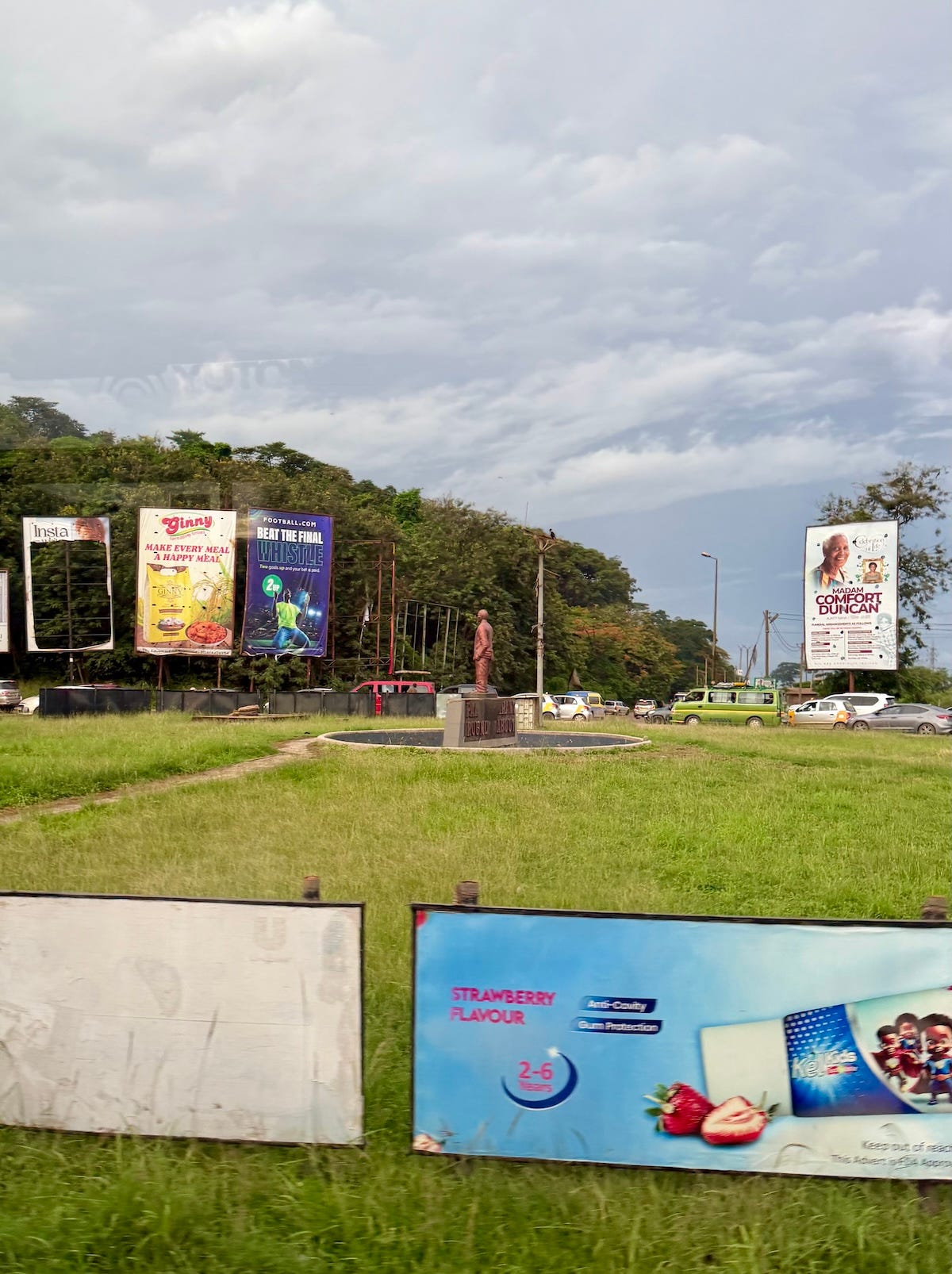
The Paa Grant Roundabout is a major intersection and historical landmark. The roundabout featured a statue dedicated to George Alfred “Paa” Grant, an influential merchant, politician, and the founding president of the United Gold Coast Convention.
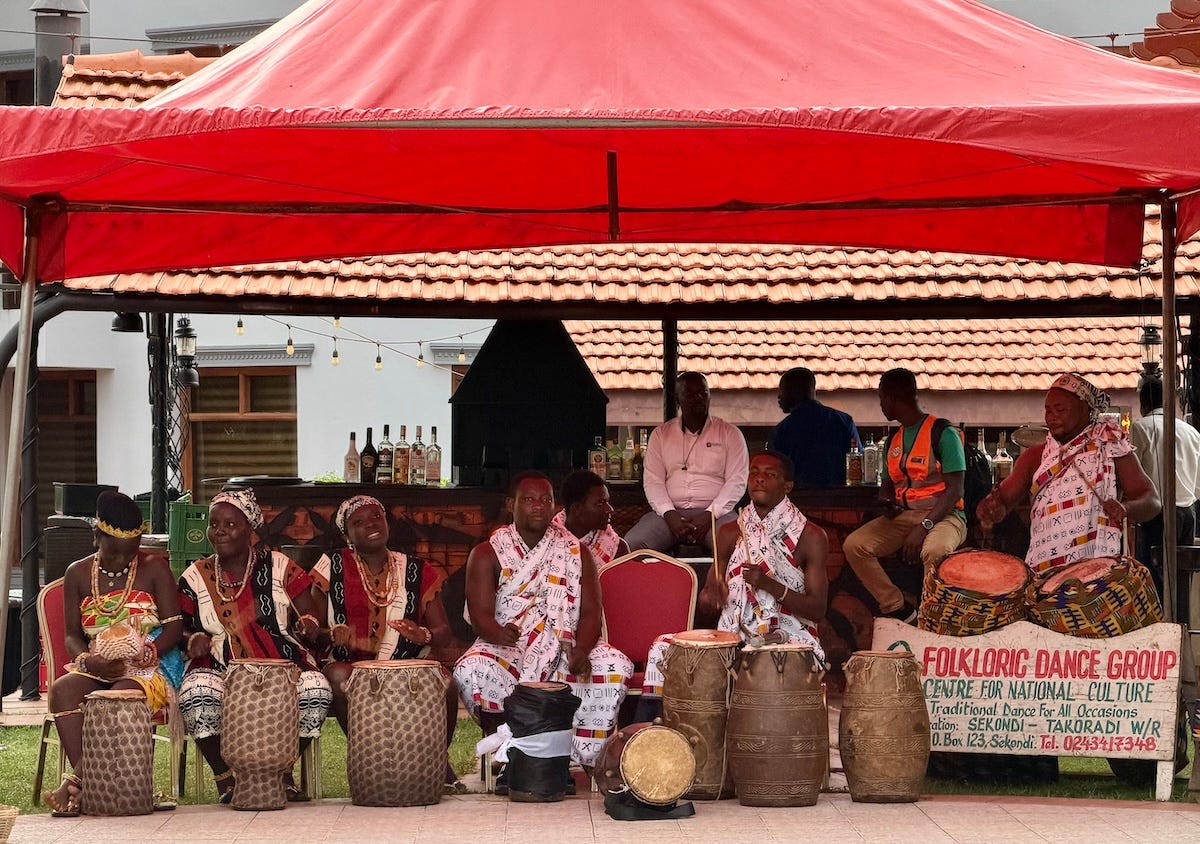
Our final stop was at the Raybow International Hotel where we enjoyed an outdoor performance by the traditional Folkloric Dance Troupe from the Center for National Culture. (Fortunately, by this time the rains had stopped!)
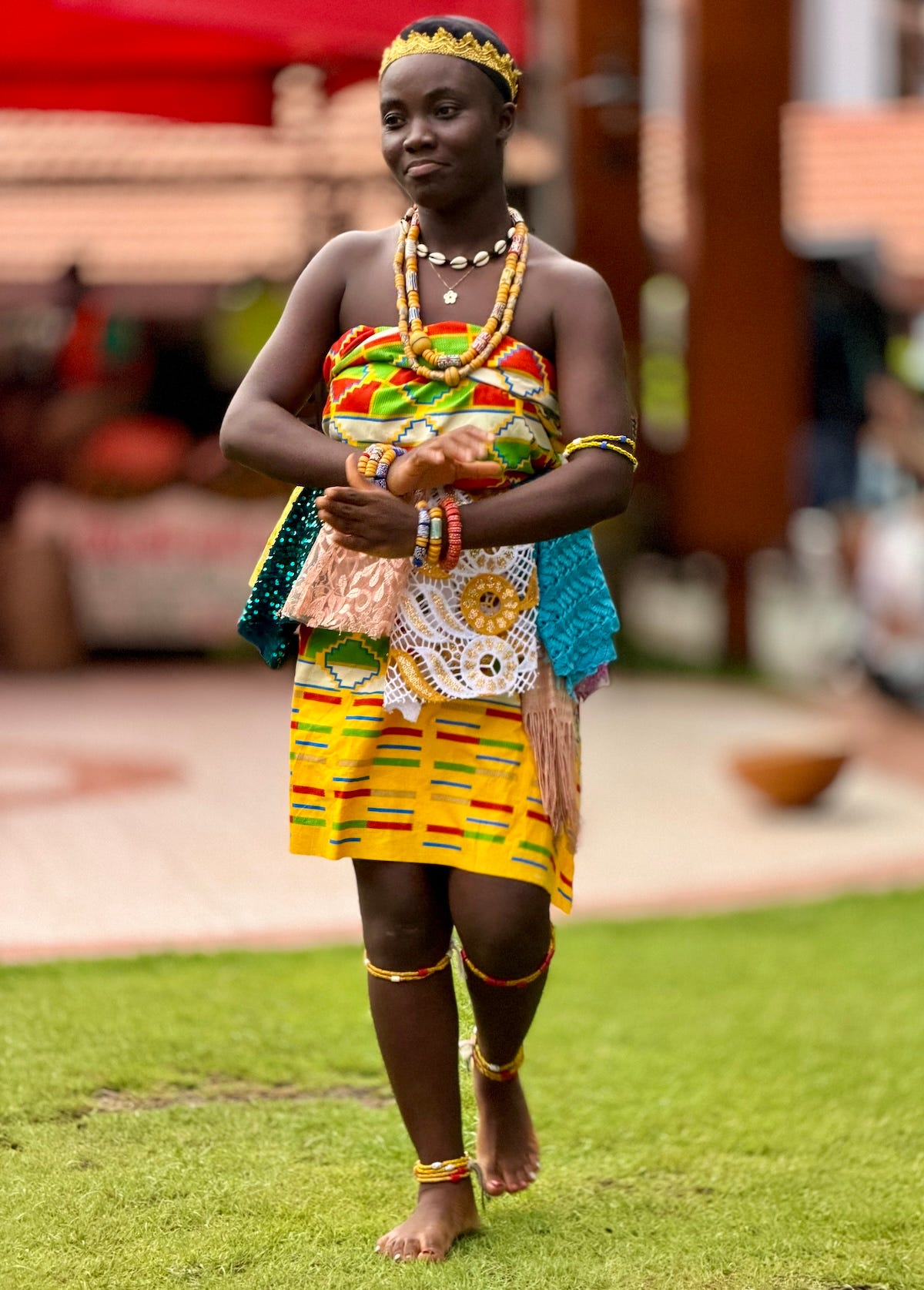
This troupe, the official regional custodian of Ghanaian folkloric dance, performed regional dances indigenous to the Fante people, as well as traditional music and dance styles belonging to the Akan people of Ghana. Their show was the highlight of the excursion!


We were offered beverages — water or beer — and small cups of plantain chips. Sherpa, of course, took advantage of scoring an easy Destination Beer!
Club Premium Lager is a highly popular light, crisp, refreshing pale lager. Brewed with Danish malt and German Hops, widely known as the “Nation’s Favorite.”
Brewed by Accra Brewery Ltd, this pale lager has 5% ABV. Sherpa’s Take: “Light-bodies. Malty, bright, and crisp, slightly bitter. A bit acidic. Went well with salty snacks.” 5.5/10
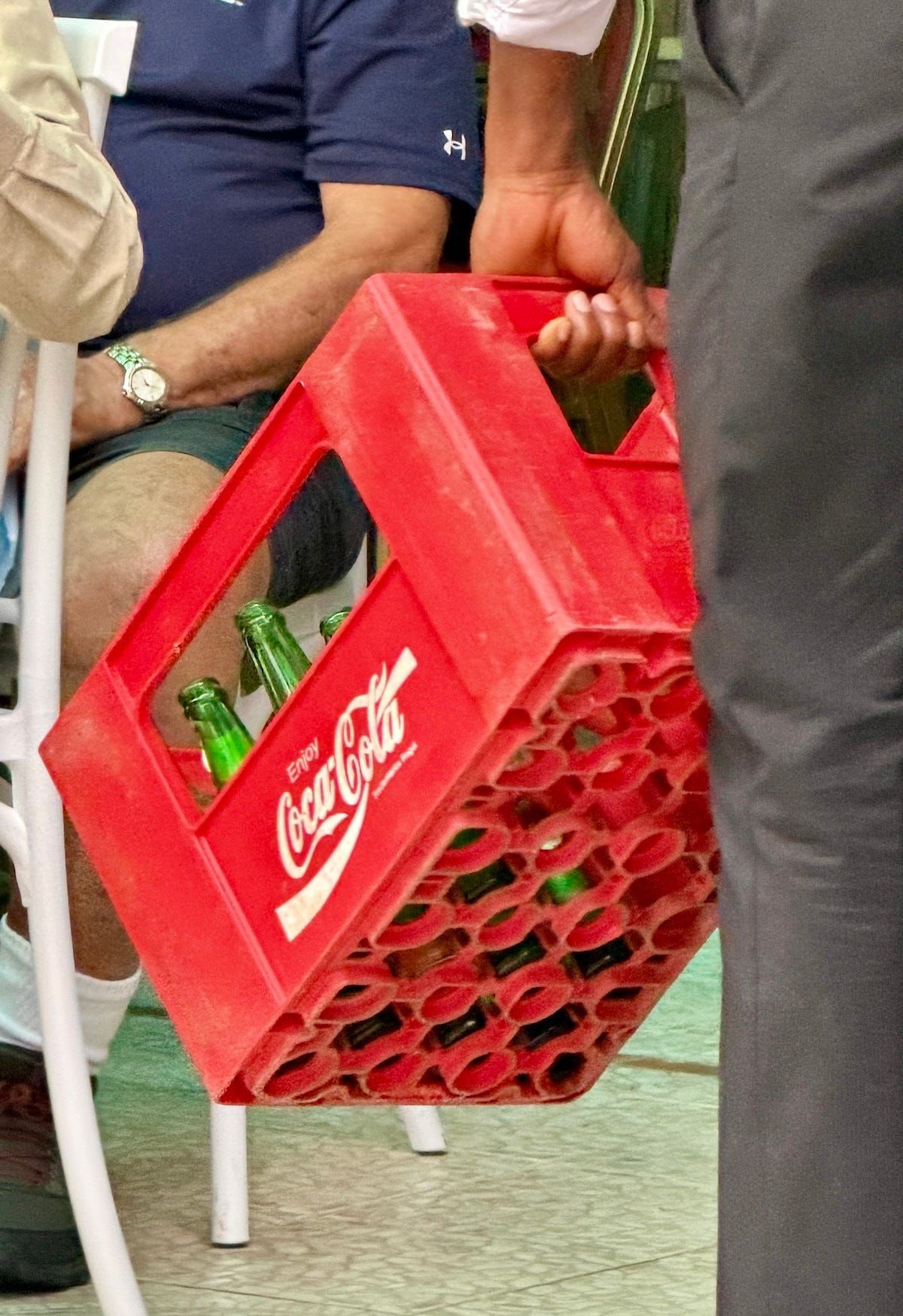
And while Sherpa is always on the hunt for a Destination Beer, I’m always looking for signs — small ads on buildings, trucks, bottling plants, vendors, even billboards — of the global monster, Coca-Cola. And I usually find at least one!
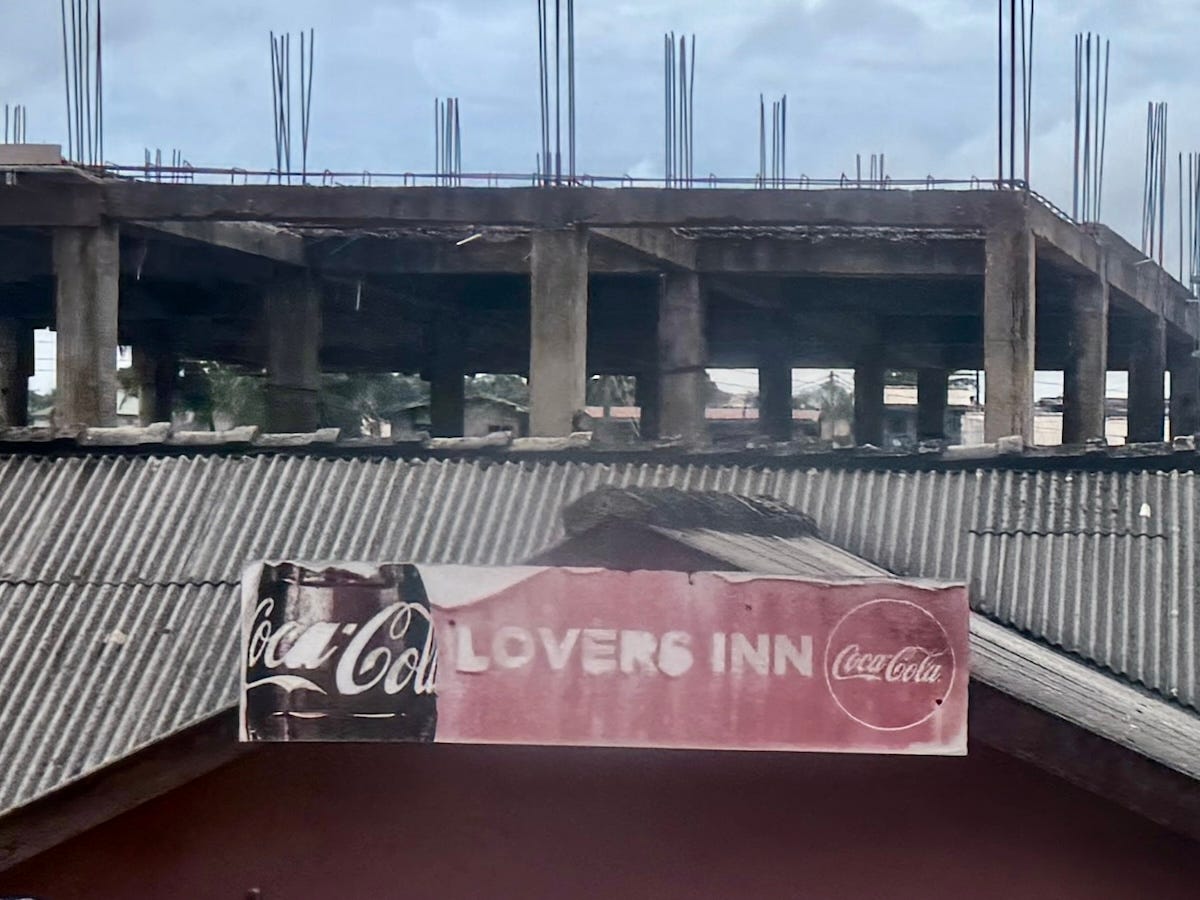
In Ghana, I not only found Coca-Cola being served at the hotel where our folkloric show was performed, but I also saw a single sign on our hour-plus return drive to the ship — this “Lovers Inn” sign with Coca-Cola enhancements.
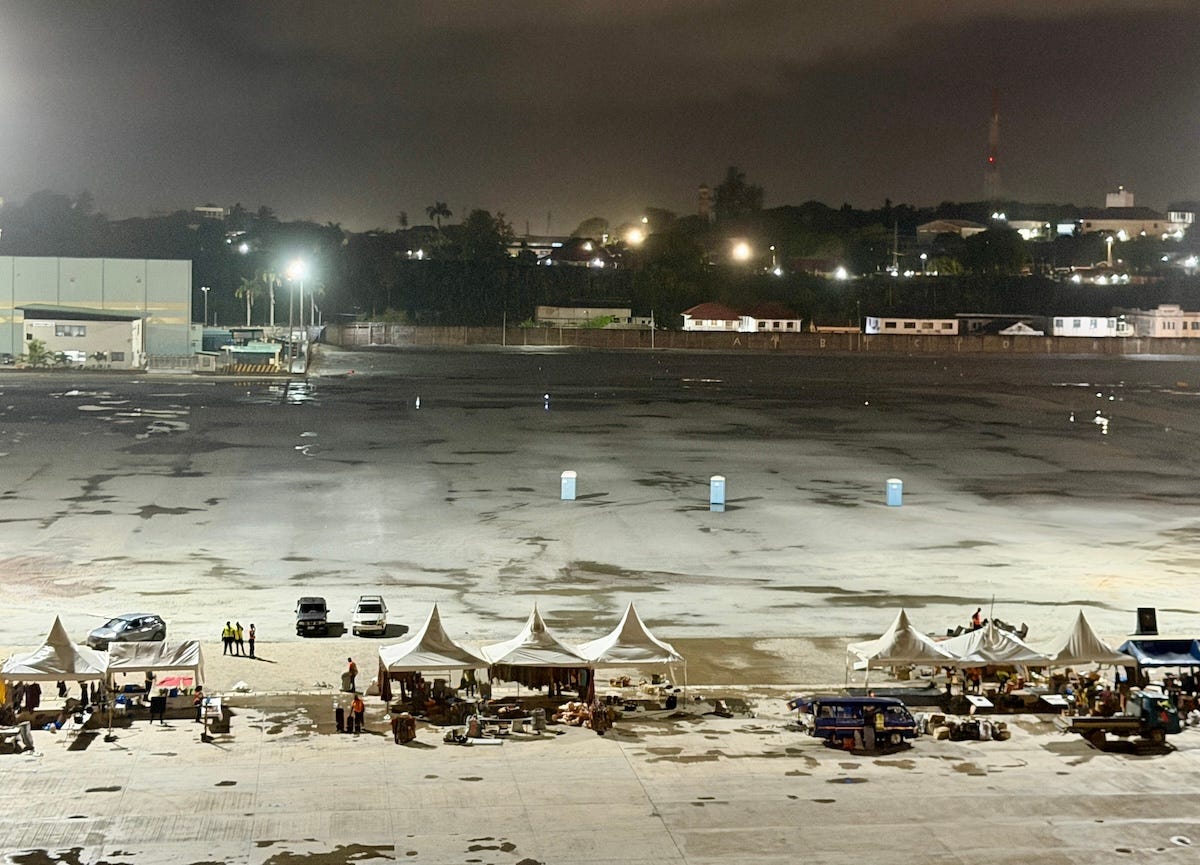
We returned to the ship after nightfall; the deluge that had accompanied most of our tour had abated. After we’d returned to our stateroom and hung all of our wet belongings in the shower to dry, we opened the balcony door and stepped out into the sultry night air. The glow of the lit parking lot cast an eerie pall on the artists and craftsfolk who had been plying their wares all day. We watched many of them pack their tents, tables, and boxes into pick-ups, vans, and station wagons. Sherpa and I recalled the many times we packed our show tent and belongings after a weekend art fair, and our hearts went out to these hardworking souls. It’s never an easy job, the business of selling your art (and heart), but it’s even harder when it’s been a day filled with tumultuous weather.
My past as an art fair artist has certainly influenced my (and Sherpa’s) practice of seeking out artists and their art. We’ve found unusual and inexpensive art almost everywhere we’ve traveled; we’ve supported artists and their practices; and we have a house filled with art sourced from around the globe. Plus, our art collection gives us endless pleasure. It’s a win-win-win!