
Raiatea, French Polynesia--Another Day in Paradise
A visit to a pearl farm, a regional botanical garden, and the World Heritage site, Marae Taputapuatea, a sacred, ancient Polynesian site.

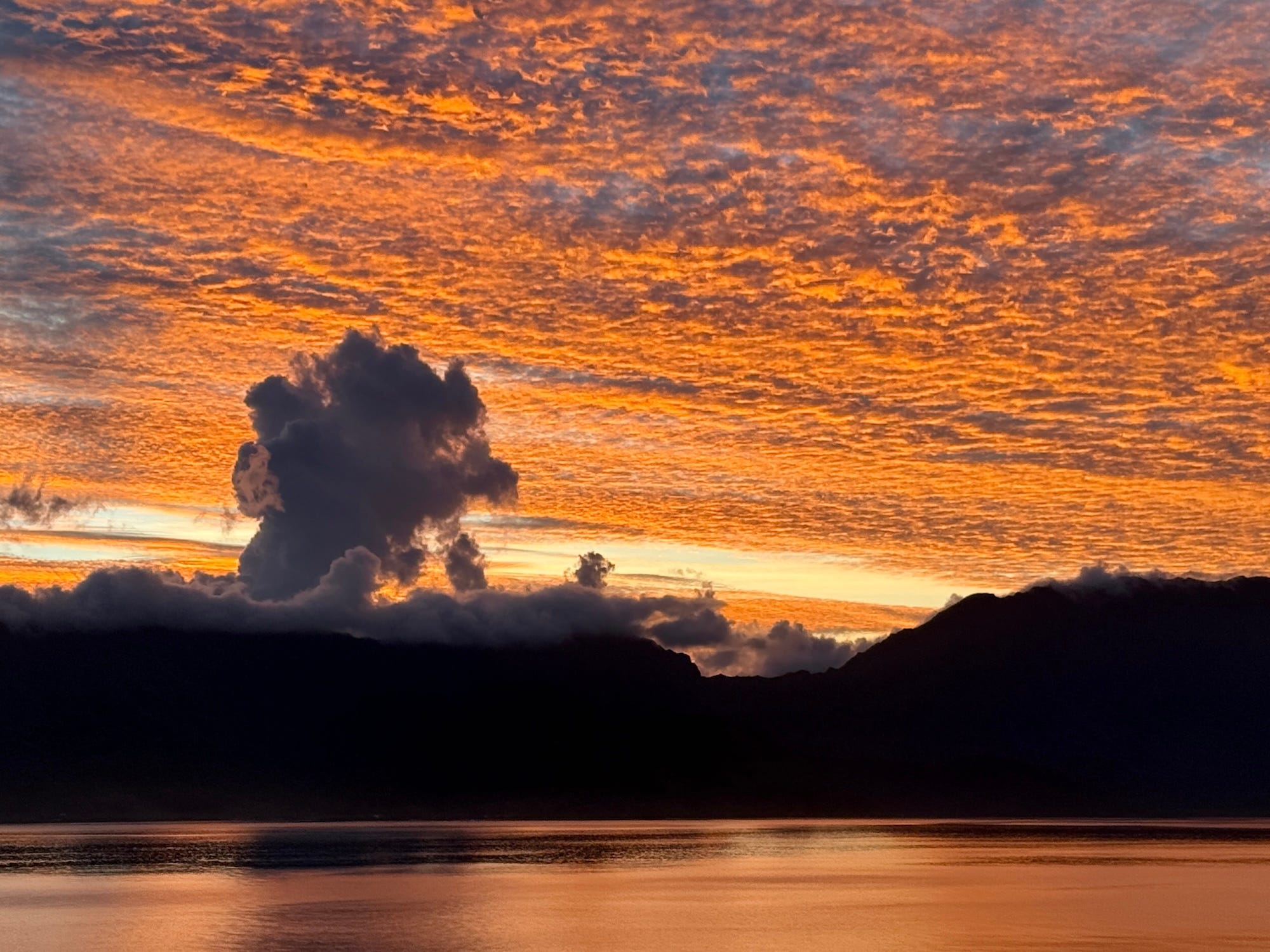
Sunrise is one of our favorite times of the day. Captain Abhi gave us a heads-up yesterday—we’d be scenic sailing near the Leeward Islands beginning around 6:00 AM this morning. Lucky for us, we headed up to the Observation Deck just in time to witness this extraordinary sunrise.
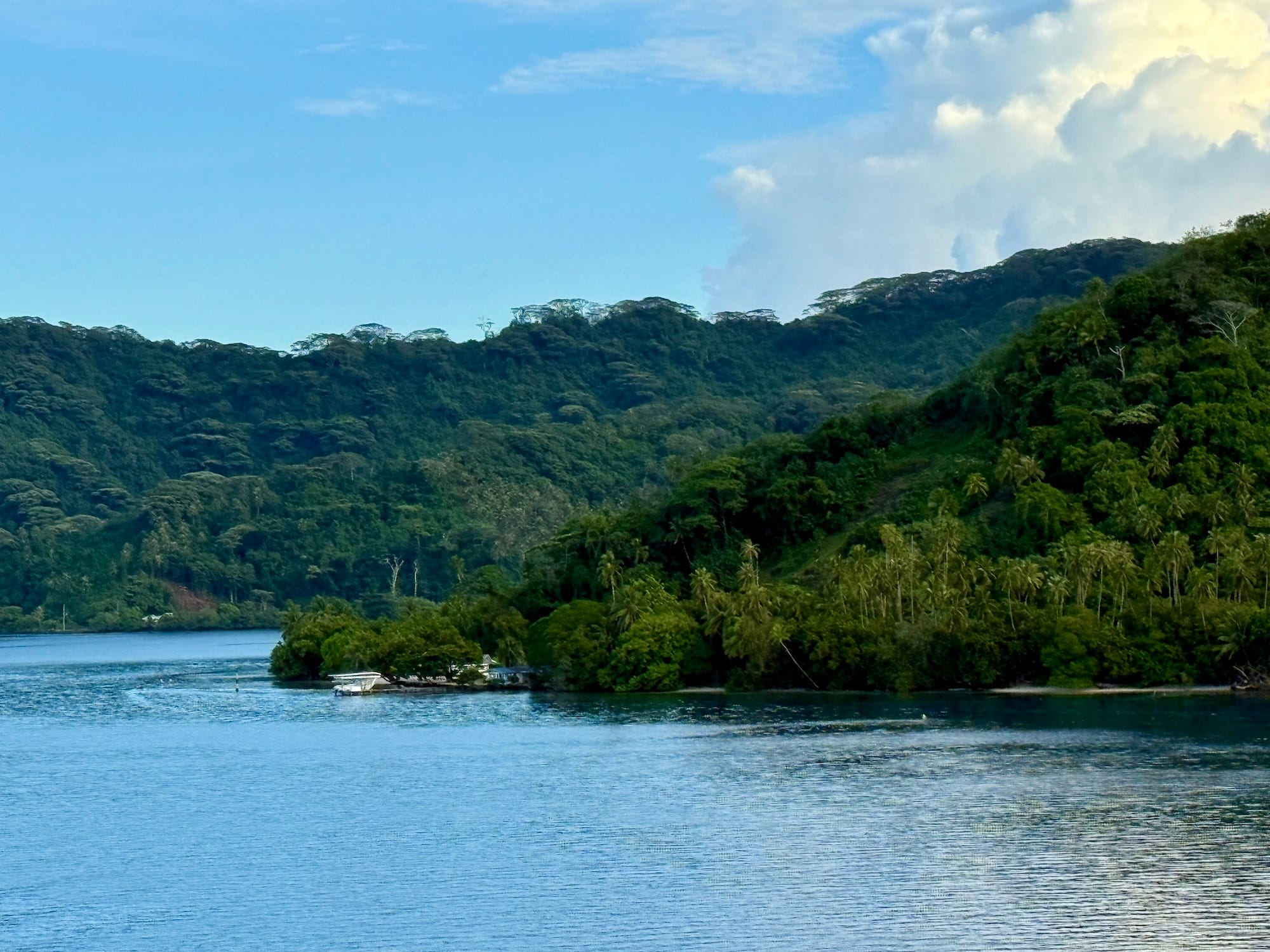
We followed the shoreline of Raiatea closely as we headed towards the town of Uturoa, and we had views of lush palm trees, narrow fringes of sandy shoreline, and houses perched along the shore.
Sherpa and I are fascinated by the houses in French Polynesia — many are large, single-story squares, usually constructed of cement block, with large sets of double doors in the center of each of the four walls. When we’ve passed the homes midday, the doors and windows are open, and a large table is often centered in the home. The windows are louvered, allowing for plenty of breeze while also providing some privacy. They seem so well suited to the climate—hot, humid, with rain at least once a day.
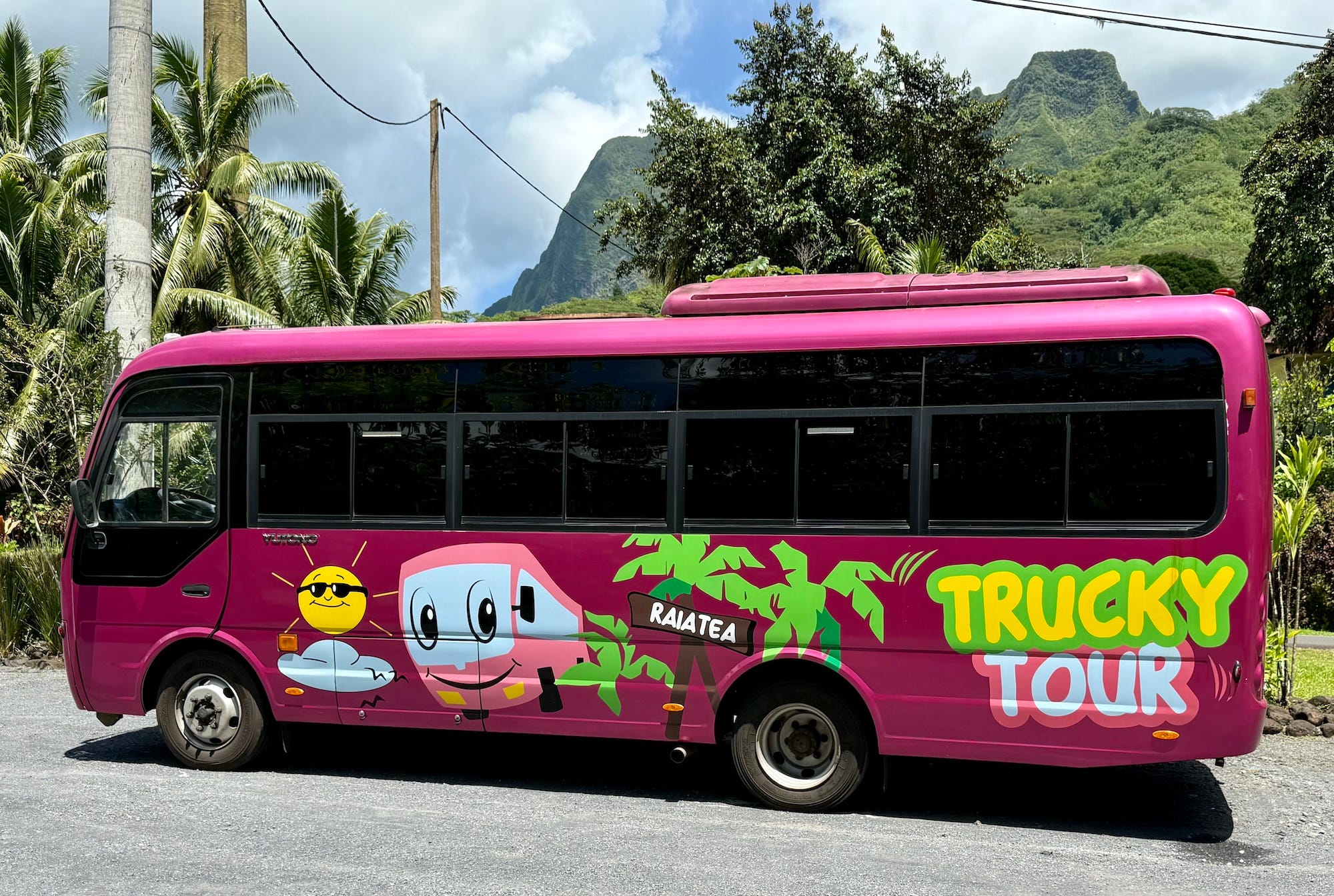
We chose a 3.5-hour, Regent-included tour called Opoa & Taputapuatea. We boarded this cozy bus and made three stops on Raiatea:
Observe how pearls are cultivated in the surrounding turquoise seas while visiting a pearl farm.
Enjoy the region’s botanical garden, which showcases both indigenous and exotic plants.
Visit the World Heritage site, Marae Taputapuatea, a sacred communal site where ancient Polynesians held religious ceremonies.
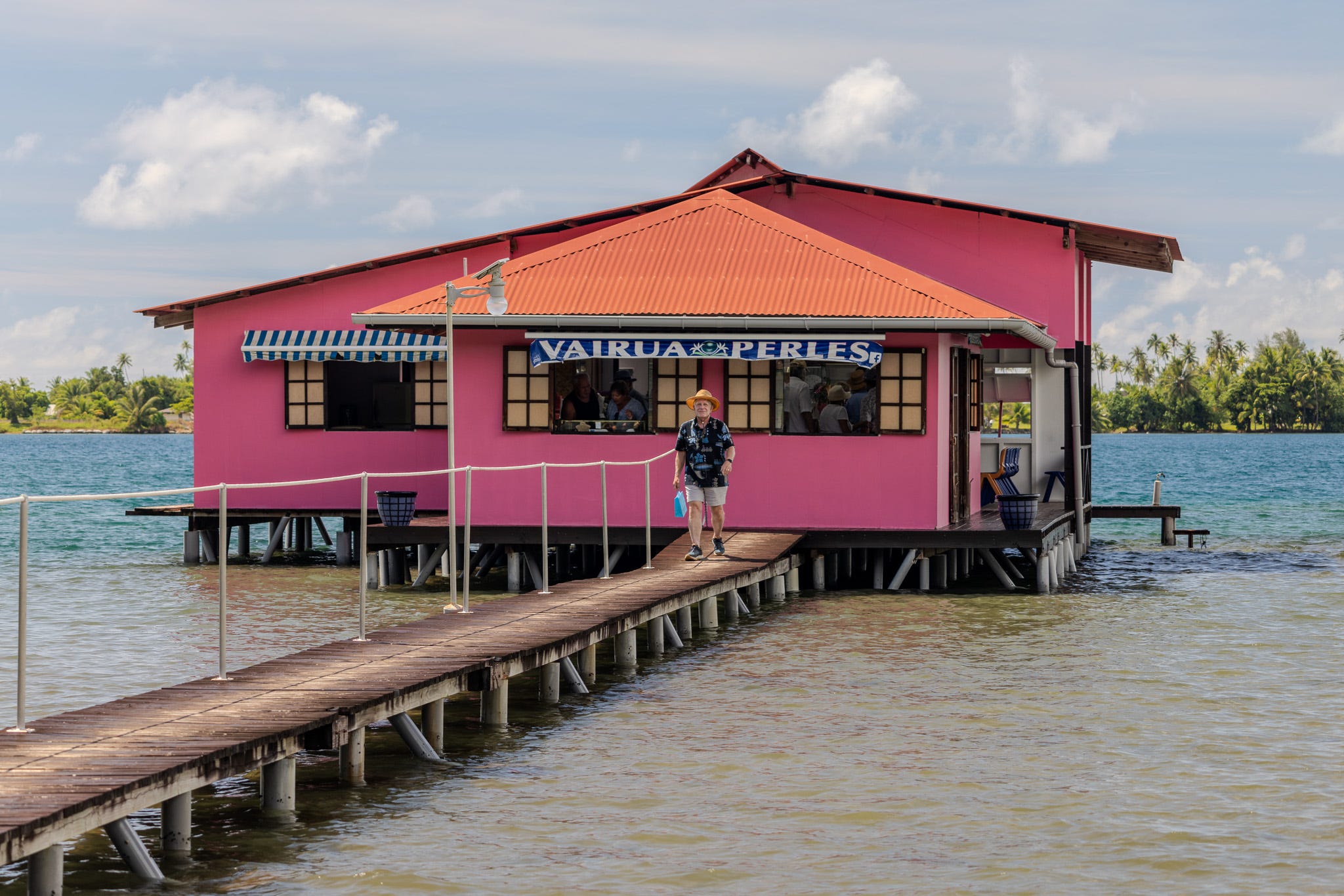
Our first stop was Vairua Perles, an aquatic pearl farm not far from Uturoa. We walked out to a small house on the water to experience a pearl farm up close. As this was our first time learning about pearl farms, both Sherpa and I were impressed by the complex process.
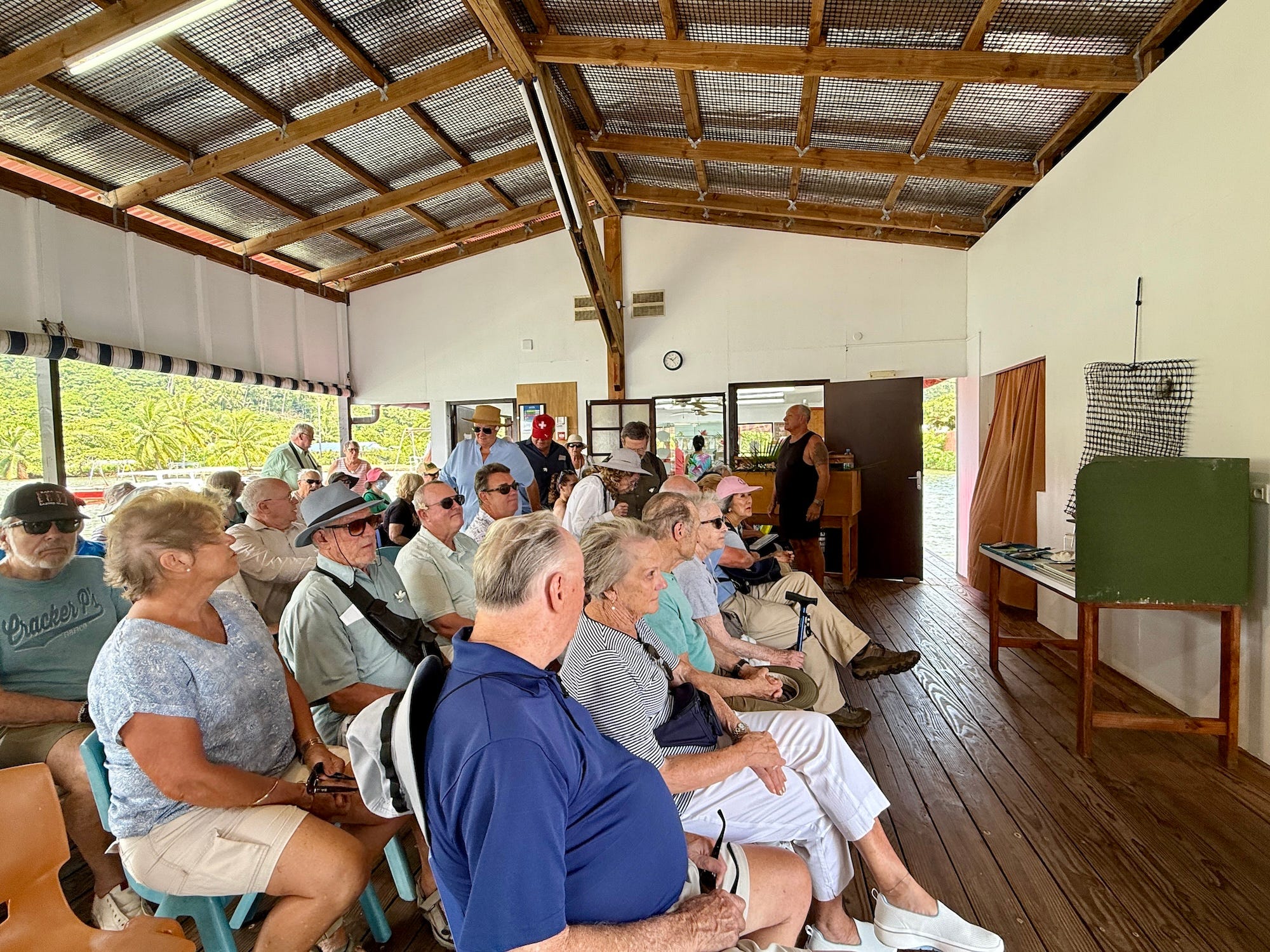
We squeezed into this small room—two busloads of visitors—and the owner of the pearl farm shared with us the numerous steps needed to create a black pearl. This is a family operation, and his daughter is a “master surgeon of pearls.”
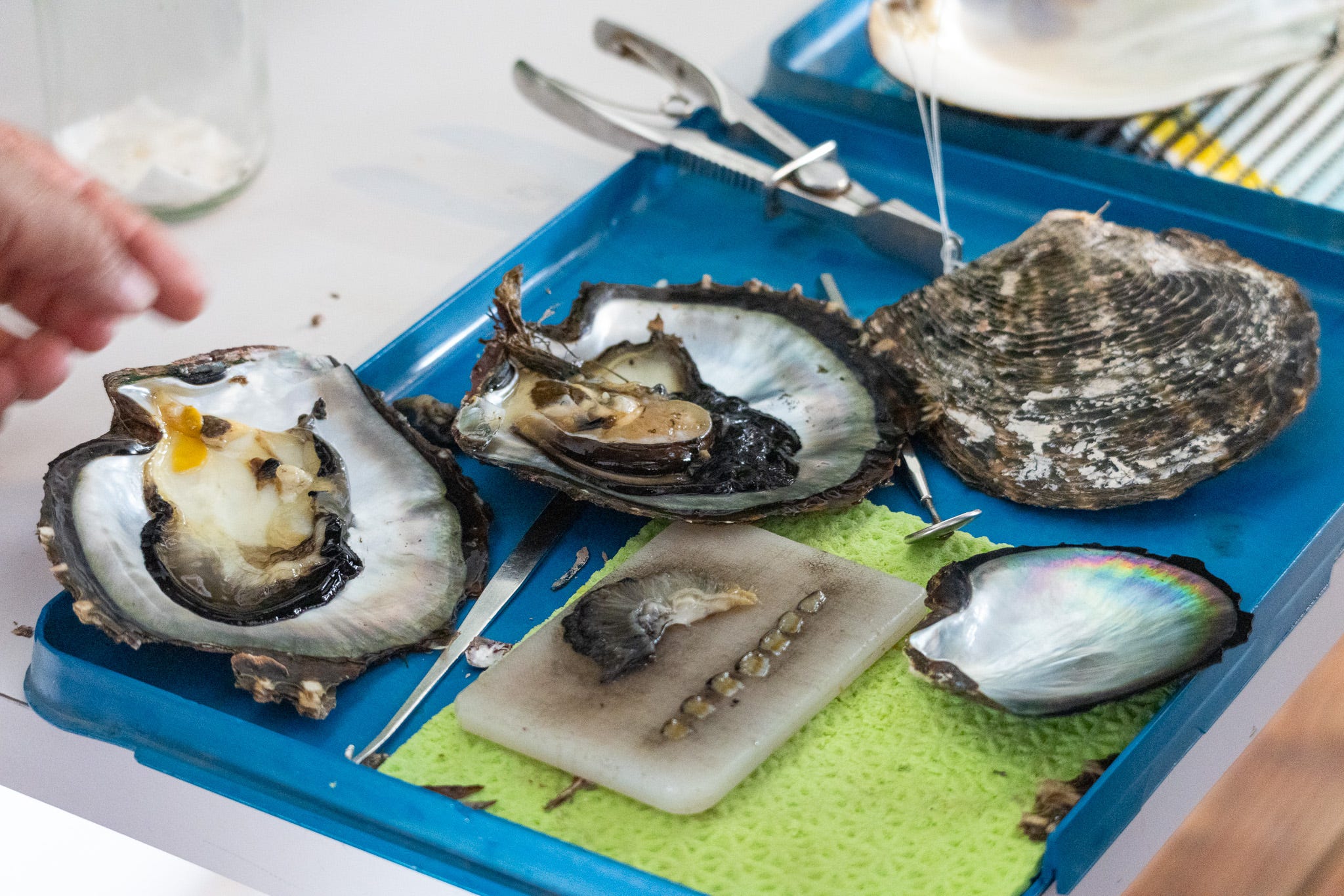
This tray is filled with the oysters and tools he used for his demonstration—a time-intensive process. Each oyster requires eighteen months to produce a mature pearl. His family harvests 60,000 pearls a year!
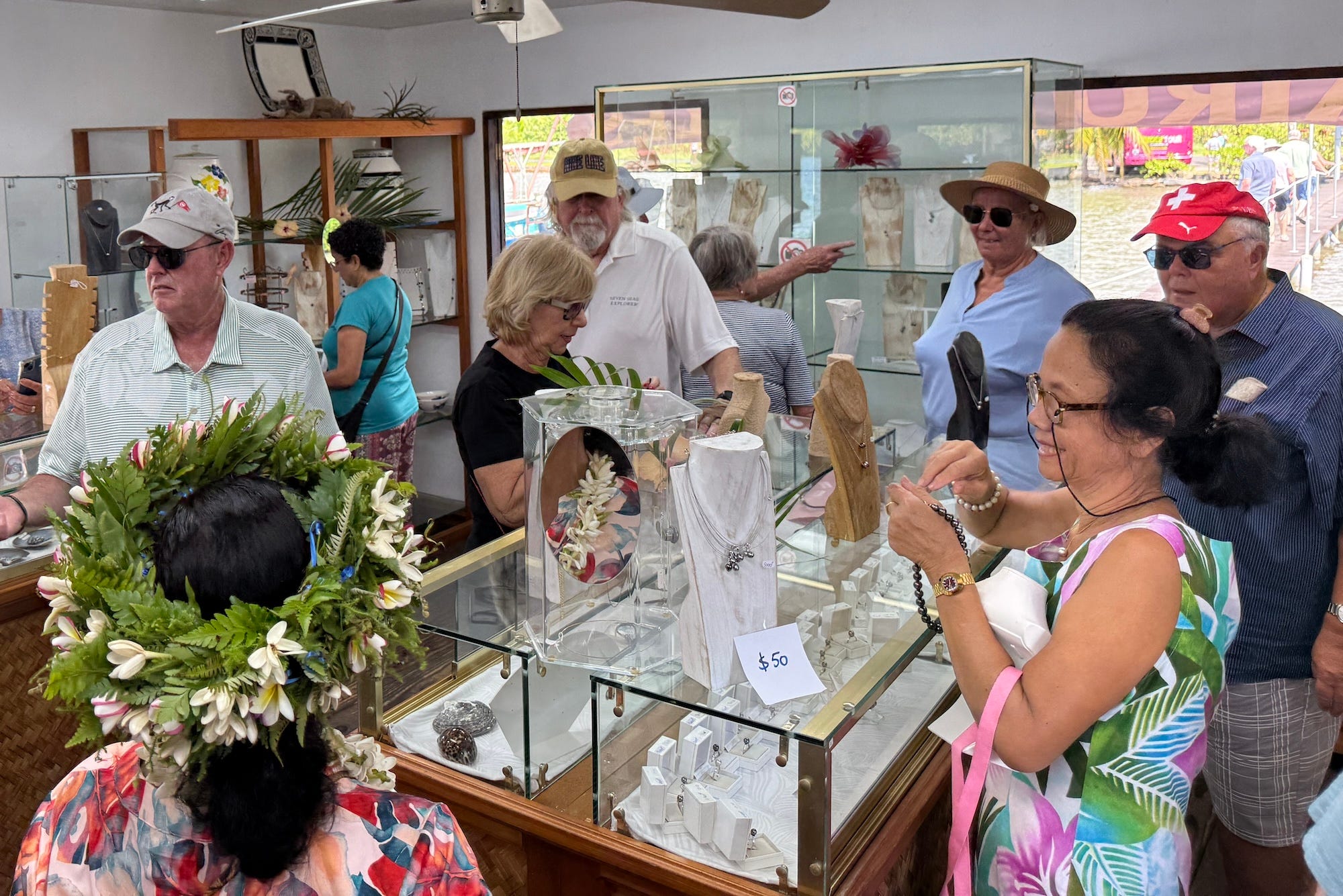
After we learned about the pearl farming process, we went to the store. There, enthusiastic shoppers examined the lovely black pearl jewelry, and some of us made purchases.
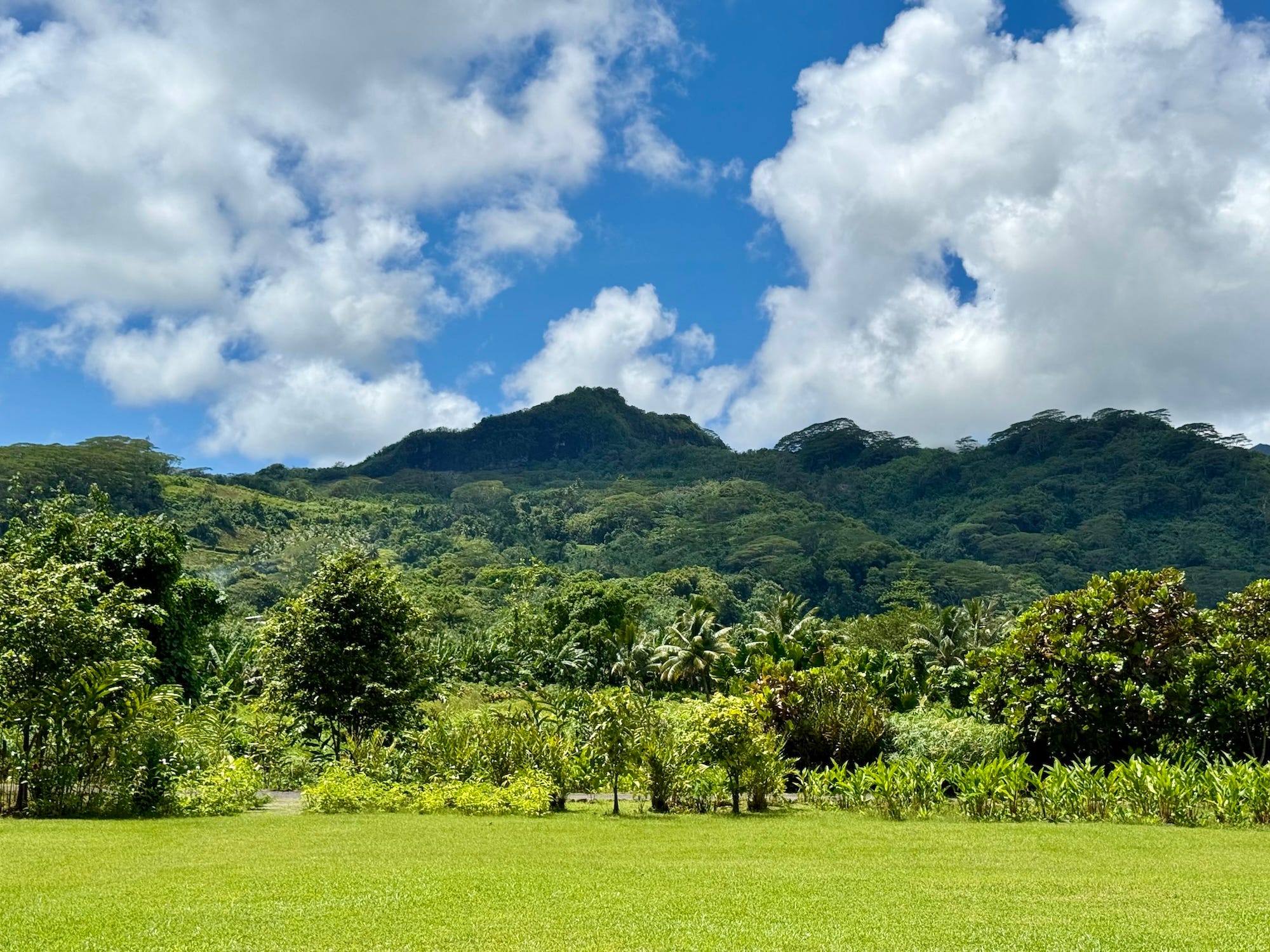
Our next stop was the Botanical Gardens, meticulously maintained gardens featuring winding paths through native and exotic species. After descending 40 steps from the parking lot to the garden entrance, we had only a brief time for our visit. It was more of a taster tour—a short loop through a section of native flowers and then woodlands.
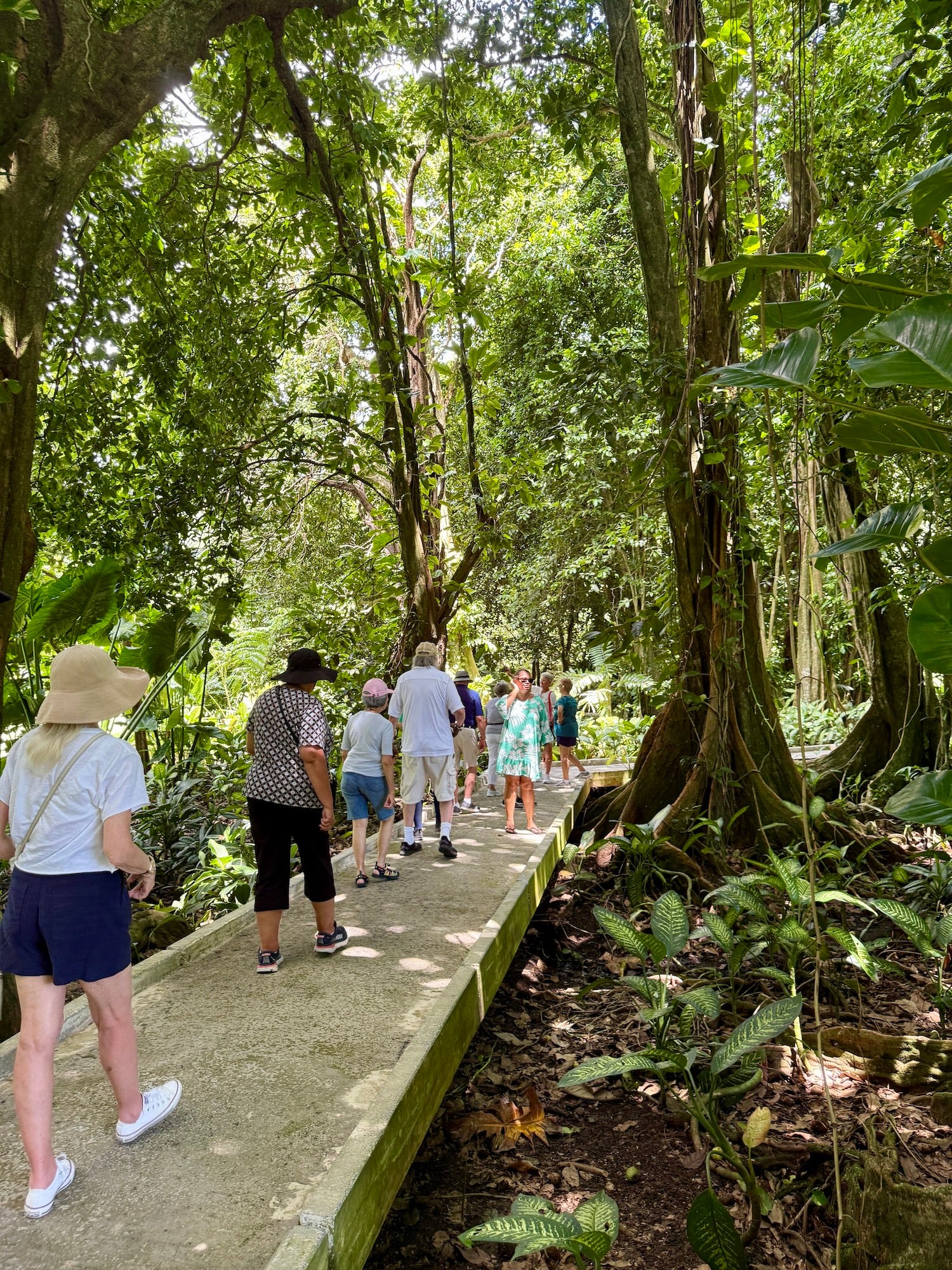
It was probably enough of nature for most people, but Sherpa and I could have easily spent the entire morning in these gardens, wandering the intricate paths and studying the plants more closely.
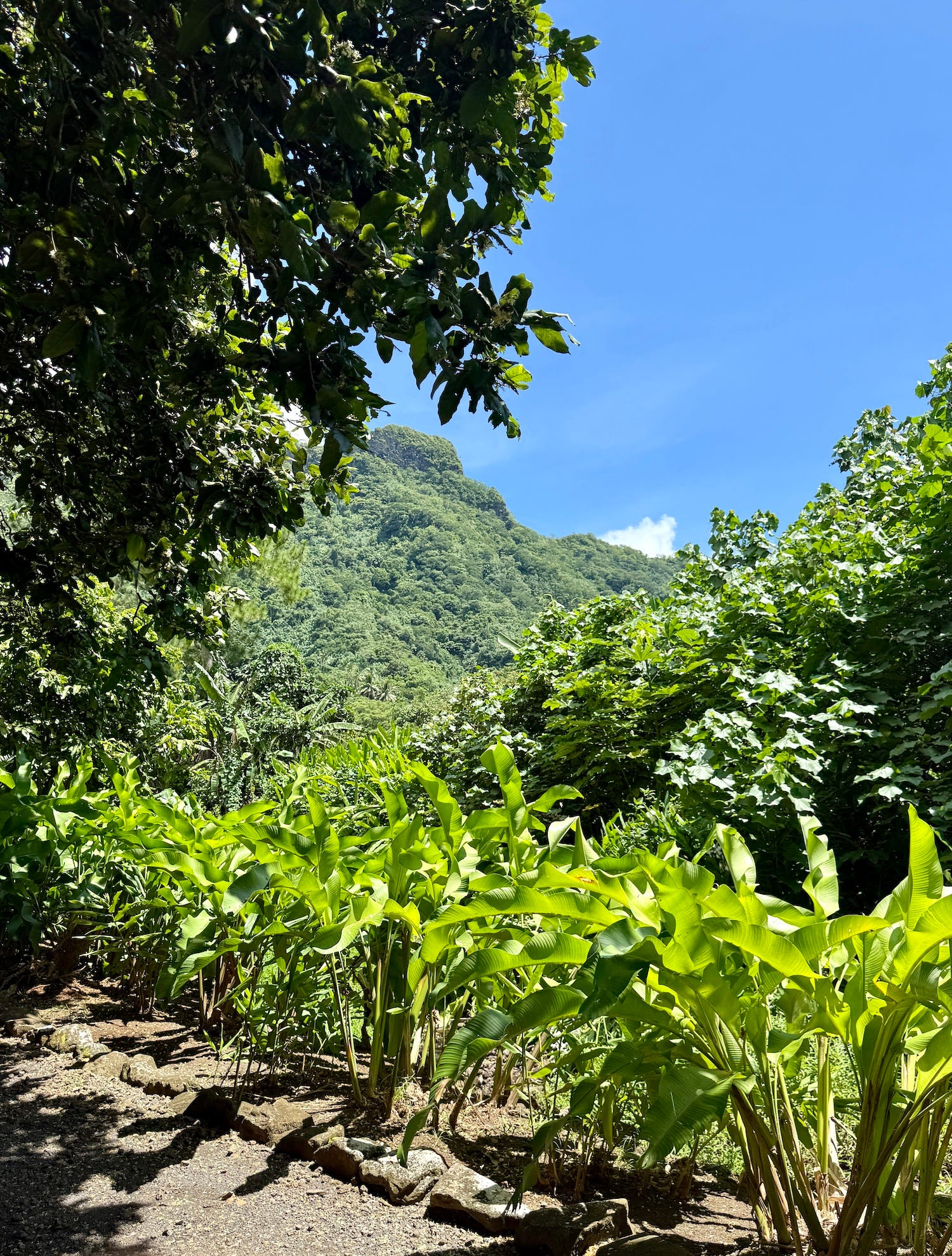
It’s easy to see that the island receives a tremendous amount of rain—everything is lush and green. Our guide, Tara, an excellent storyteller, showed us a six-foot-tall plant by the side of the path. “How old do you think this plant is?” Our guesses varied: “100 years,” “10 years,” “3 years.”
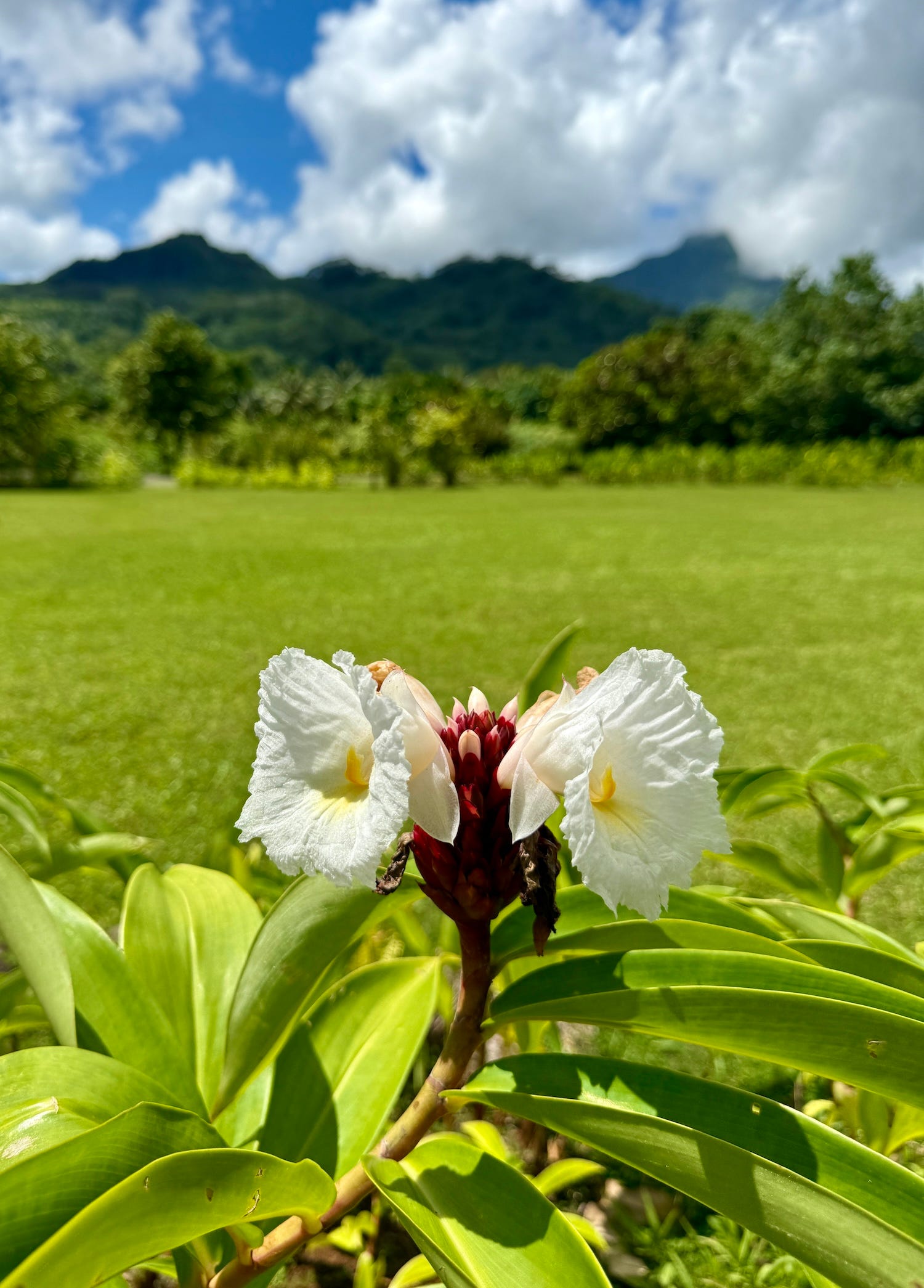
“No,” Tara laughed. “It’s three months of growing.” Given the hot and humid climate year-round, along with daily rainfall, it’s clear that everything grows rapidly. The island is dotted with plantations that cultivate a diverse range of fruits, including bananas, breadfruit, coconuts, mangoes, pineapples, and more.
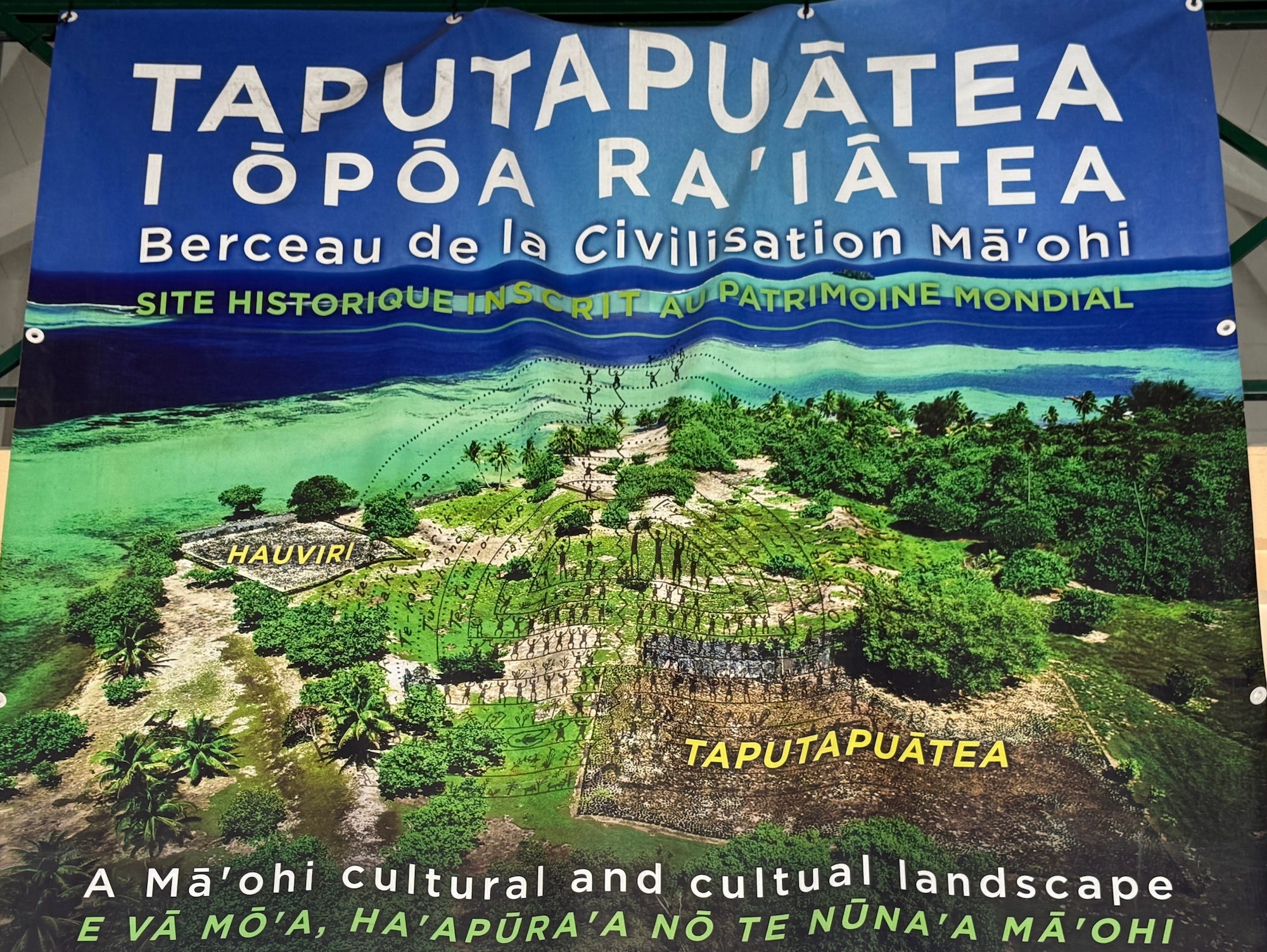
After we visited the gardens, we made our final stop of the morning. For many, the highlight of the trip was the Marae Taputapuatea, a sacred communal site where the ancient Polynesians held religious and social ceremonies.
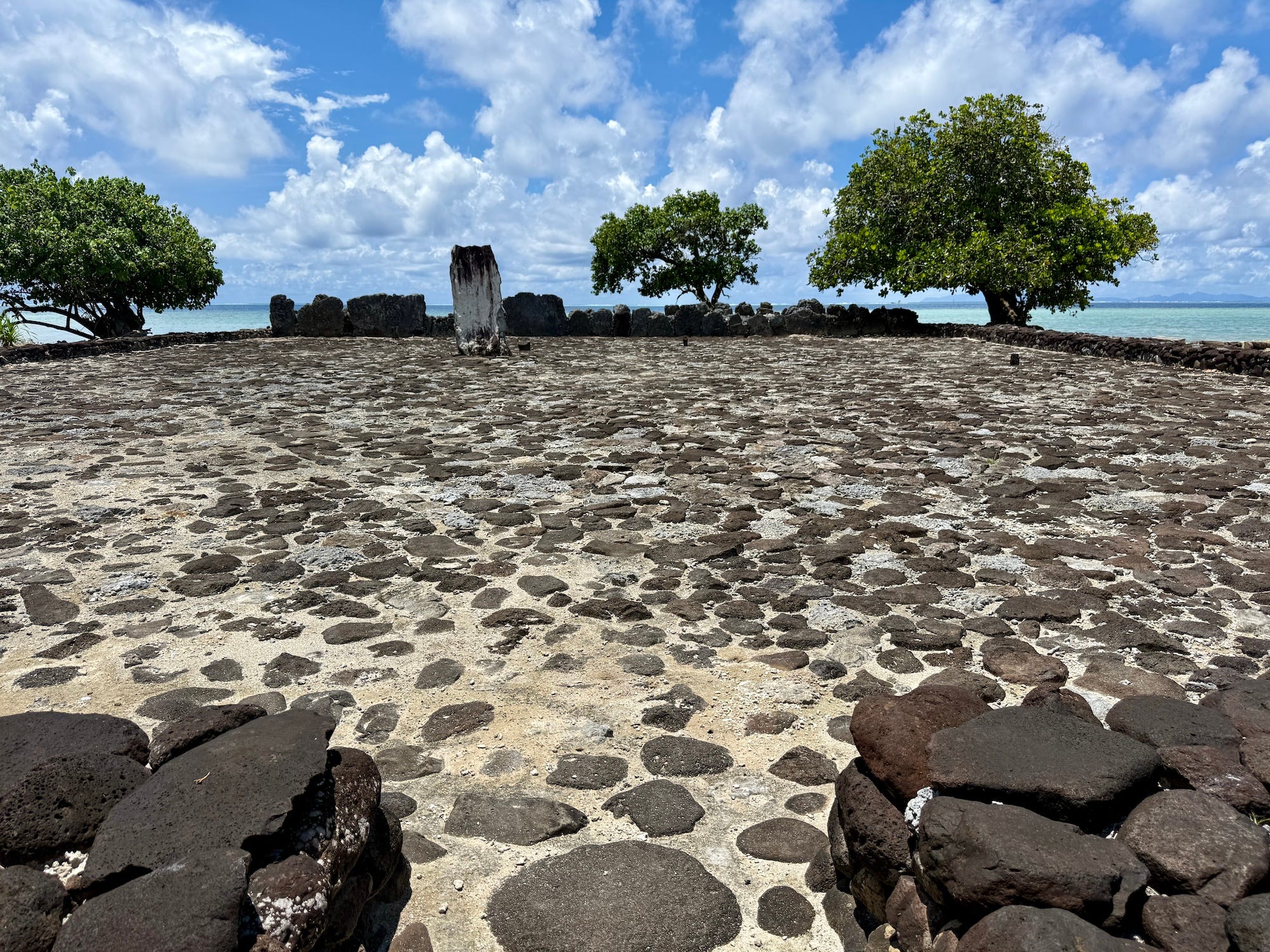
Tara provided us with a fantastic overview of the historical site, including a demonstration of the welcoming ceremony or ritual. A ceremony of some sort is held at this site approximately 300 times a year.
Taputapuatea is an active site for Polynesians who practice their traditional ways of life. Just yesterday, Tara participated in a welcoming ceremony. She sang the name of the temple we were standing in front of and gave us permission to record and share her song.
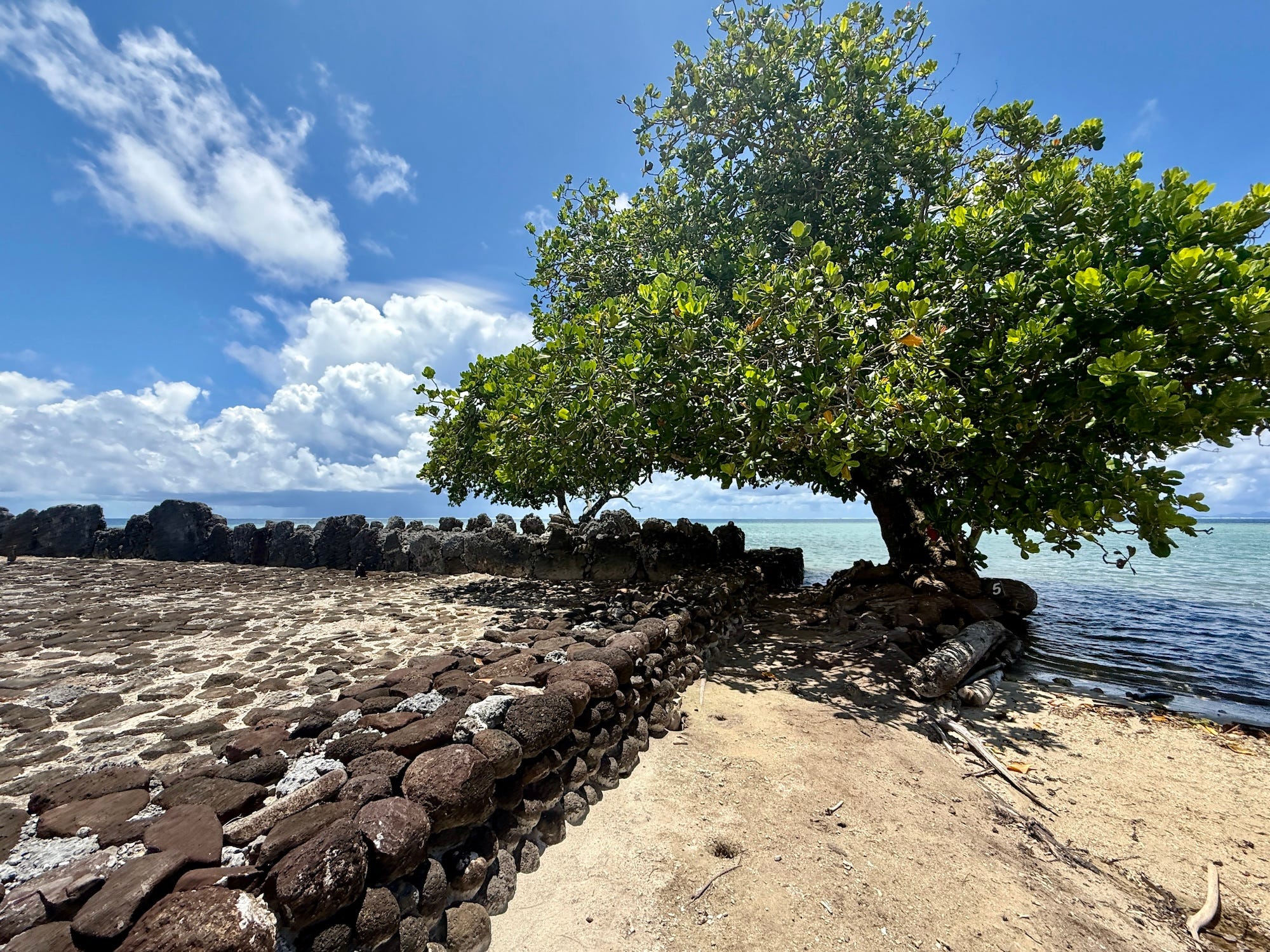
We walked along the stone-paved platforms and shrines, which UNESCO has declared a World Heritage site. These marae are places where ancient Polynesians believed that the living world intersected with the world of their ancestors and gods. The marae have no walls or roofs—the Polynesians believed the sky, the wind, and the shimmering trees were as much a part of the sacred site as the lava stones and coral from which they were constructed.
This was the last stop on our tour, so we boarded our cozy bus, where we were treated to a plate of fresh fruit—delicious! We were among the last few to return to the bus since we tried to see as much as possible in the 10 minutes (!!!) we were allotted to explore on our own. Since this was the highlight, we’d have enjoyed more time to visit the site, but we were probably in the minority. When we boarded the bus, everyone else had already eaten their snack and was ready to return to the ship. Different strokes…


Once back in town, Sherpa and I tried to find a local restaurant for lunch, but Tara shook her head. “Sorry. We only have two here in town—Chinese or pizza.”
“Never mind,” Sherpa and I said in unison as we laughed with her. We returned to the ship for lunch, a routine we usually try to avoid. Once fed and rested, we headed back to town, exploring a few of the tourist stalls—shell jewelry and flowy dresses—before wandering further into town. We’d visited a couple of stores and were just about to return to the Mariner, having not found anything of interest, when we passed Galeria d’Art Anuanua. Bingo!
The art gallery showcased Tahitian art, and after extensive searching and digging, we discovered several pieces we liked enough to purchase. These included a small giclée of a Tahitian home on the coast, rendered in delicate watercolors, a three-inch-tall wooden sculpture, a gauzy art print cotton top for me, and a few postcard-sized original watercolors. Sherpa took a moment to appreciate the painting of a local brew’s can floating in the ocean and speculated that if he still had a physical office, it would make a fantastic addition. Thankfully, there is no office! Whew! Additionally, the painting had been created on an old wooden door, complete with hardware, making it challenging to pack in our suitcases. Ha!
We are always happy when we discover a gallery featuring local artists. This is our preferred way to support the local economy—support the artists!—and so we were happy with our little excursion into town.
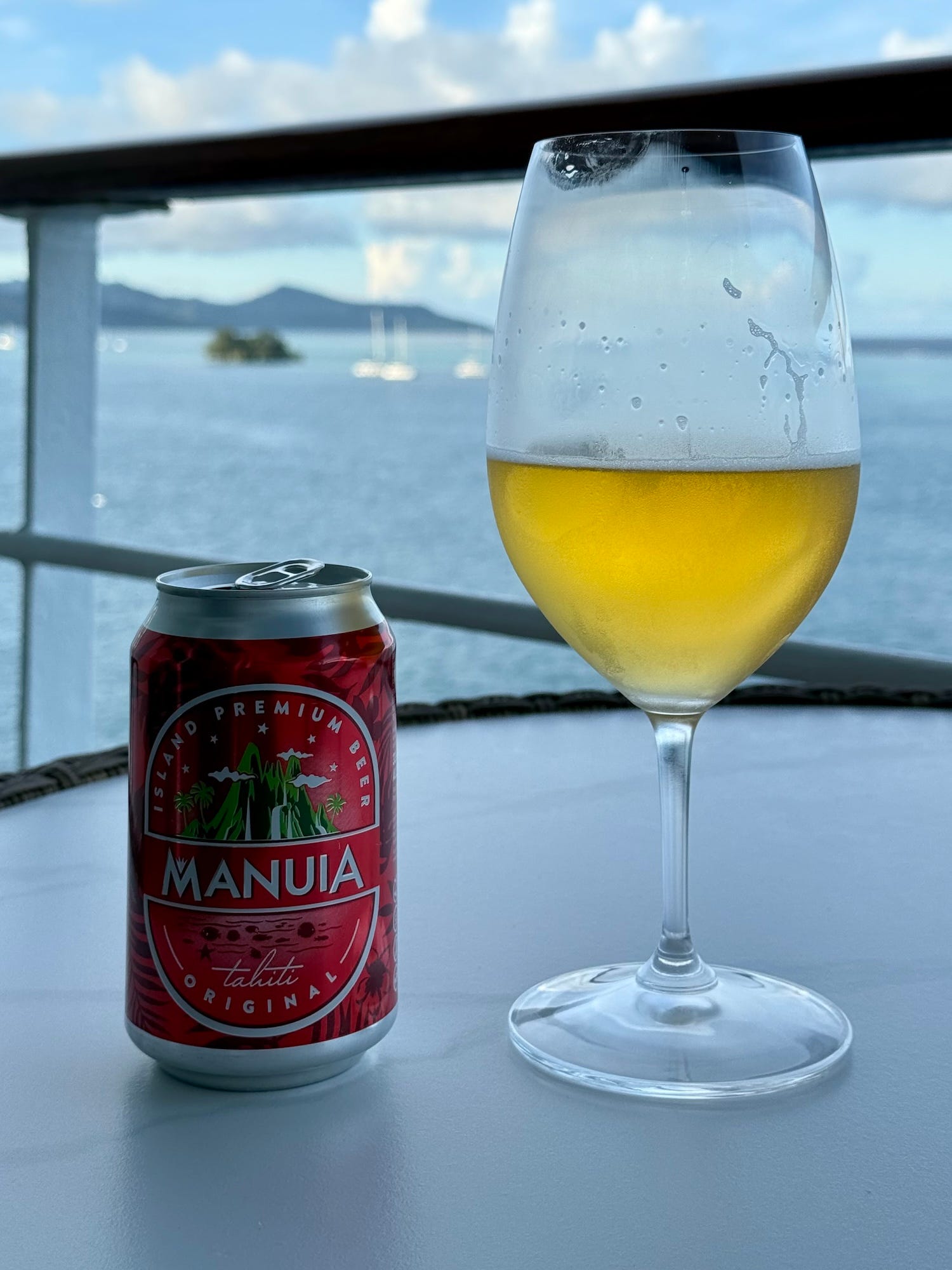
Back on board, we relaxed on our veranda and cooled off with cold drinks. Once again, Sherpa opted for a local beer, Manuia Island Premium Beer, brewed by Brasserie de Tahiti.
Sherpa’s Take: (5% ABV) “Definitely in the Beach Beer category. It has a light, golden color and is delicately carbonated, with a mild, malty flavor and aroma, and a smooth mouthfeel. Unfortunately, it has no distinctive character—just mild and bland. I wouldn’t buy it again. I much prefer their Bier Deluxe.” 3.5/10.
Next port of call: Moorea, French Polynesia.
So wonderful. All of it. Thanks for recapping it for us.
Love hearing the Taputapuatea chant; thanks for recording it!