
Pitcairn Islands! Where? Here!
In the middle of the South Pacific, there's a tiny island with a storied history and a population of 47. It's Pitcairn!

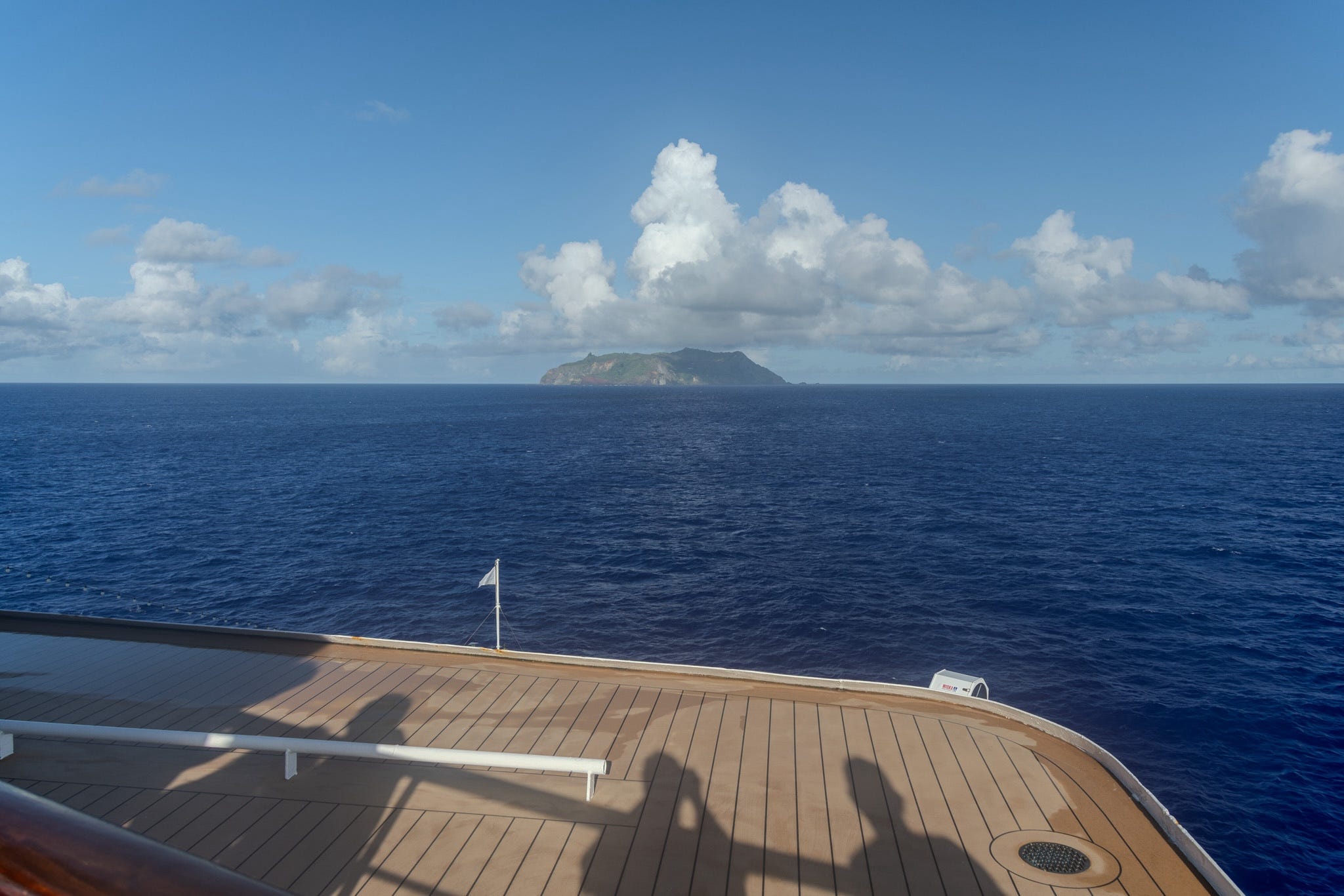
As we approached this tiny island in the middle of the South Pacific, we tried to take in its remoteness, its history—famous for the Mutiny of the Bounty—as well as the story of the 47 islanders (and contract employees) who live here today.
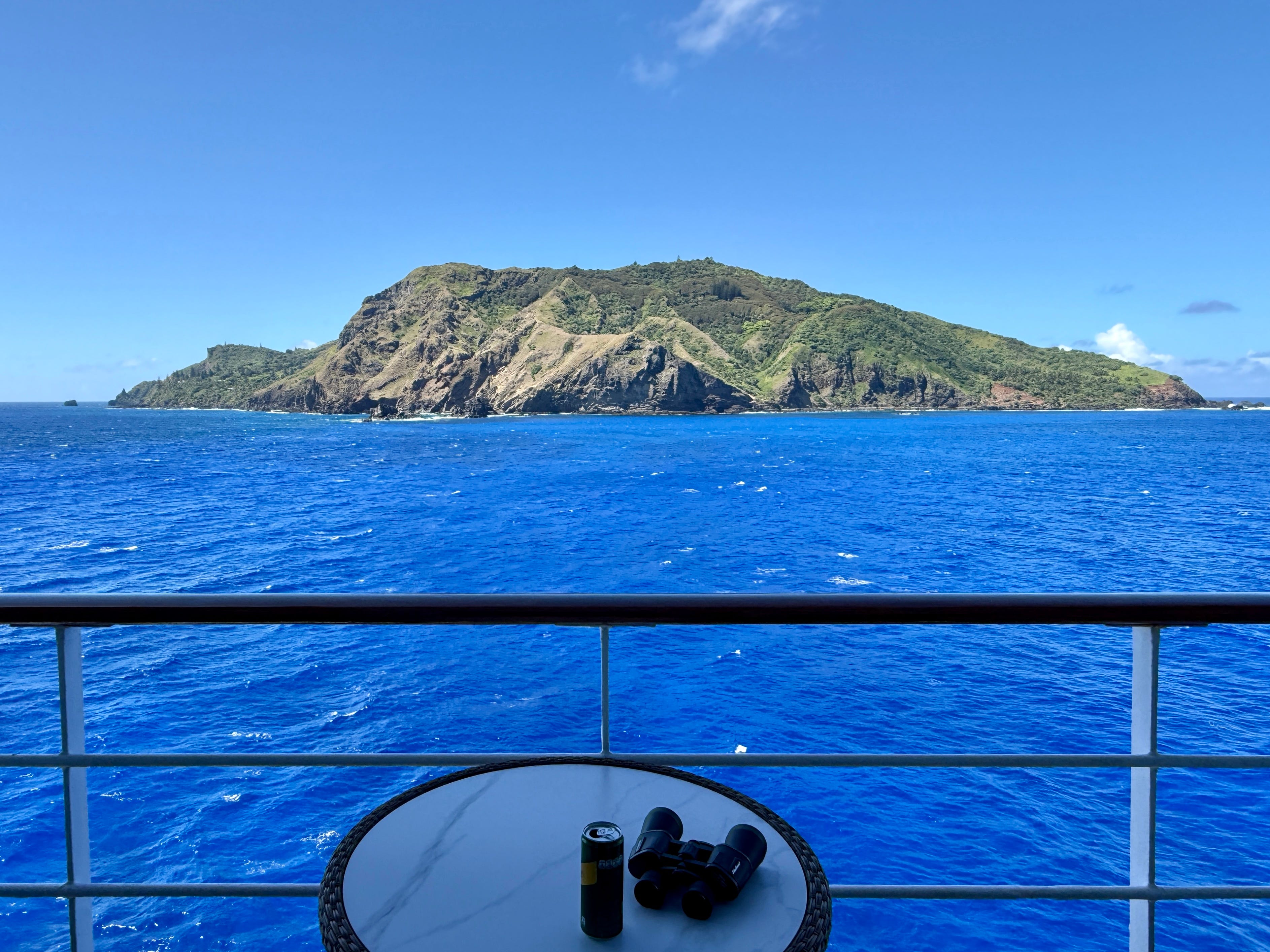
If you’re unaware of Pitcairn’s place in maritime history, this is the small island to which Fletcher Christian, nine of his mutineers, and seven Tahitian women escaped after leaving Tahiti. The mutineers had been on the ill-fated Bounty with Captain William Bligh. If you’re unfamiliar with the tale, read the book Mutiny of the Bounty or watch one of the several movies with the same title. Most citizens of Pitcairn are descendants of these inhabitants.
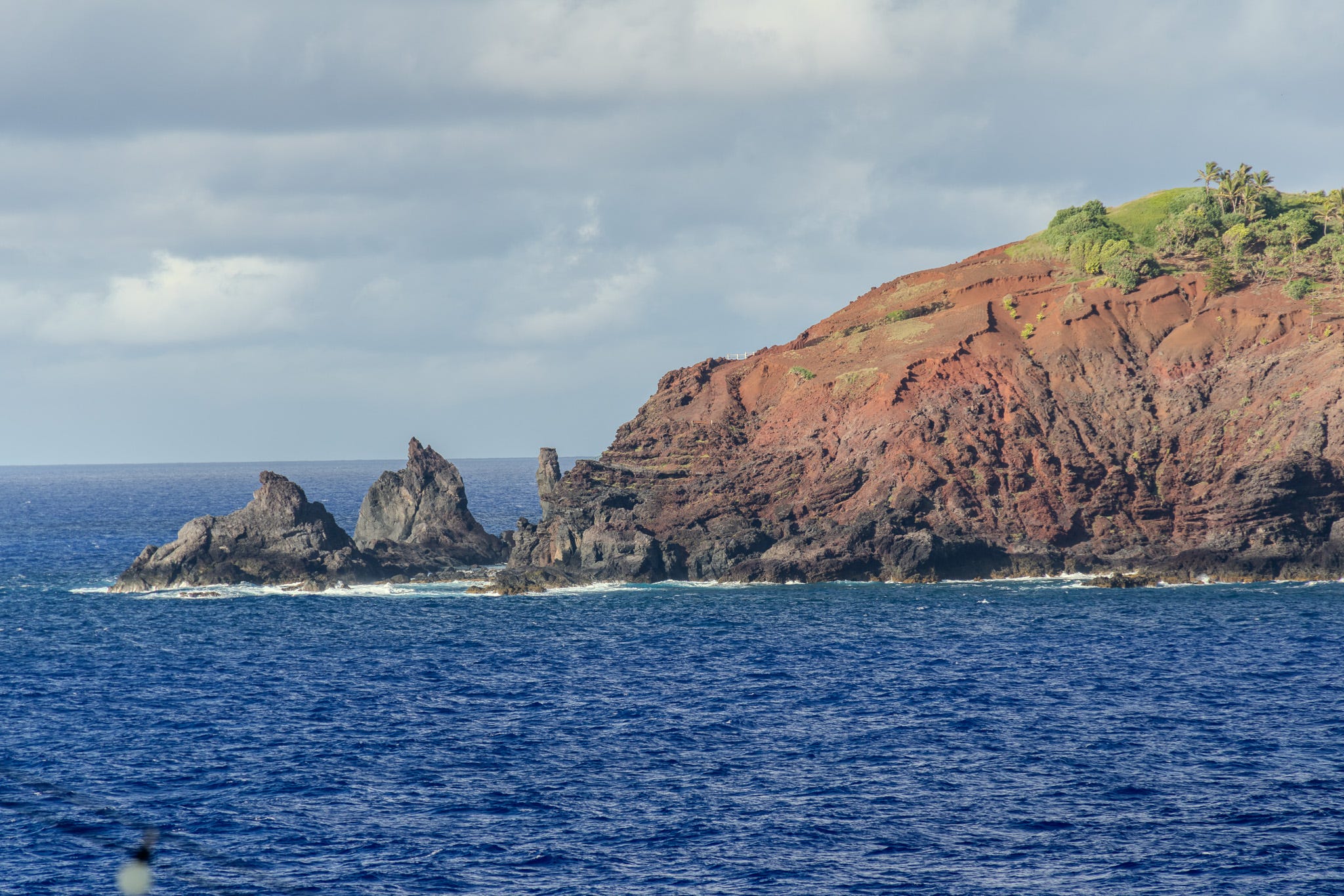
When the mutineer’s hiding place was finally discovered, John Adams was the only one still alive. He bargained for amnesty in exchange for the true story of what had happened since the mutineers had left Tahiti. Thus, we know the details of the mutiny and their subsequent journey.
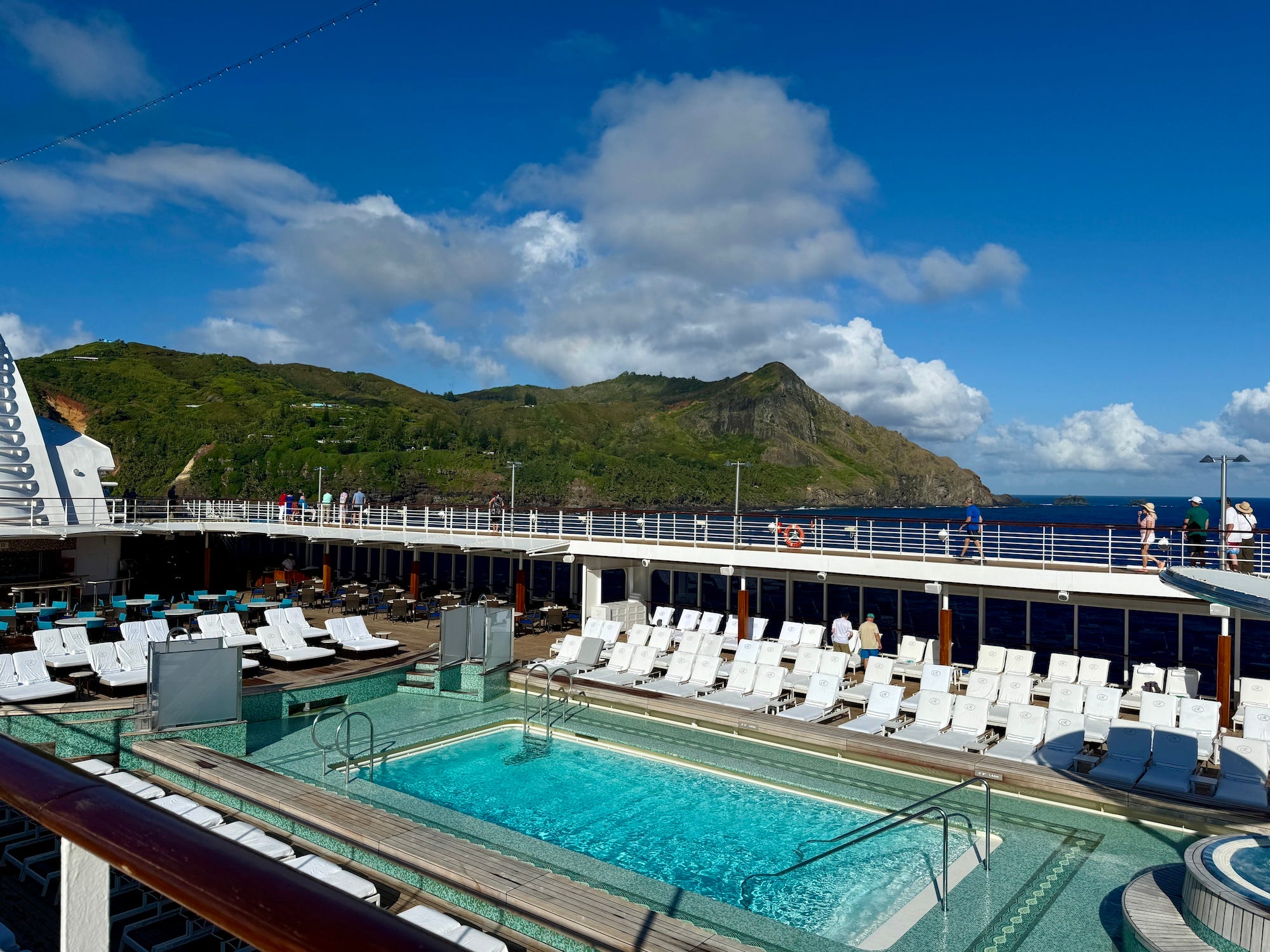
The ship stopped a half mile from Bounty Bay, close enough to get a good look at the island. We arrived at 0830.
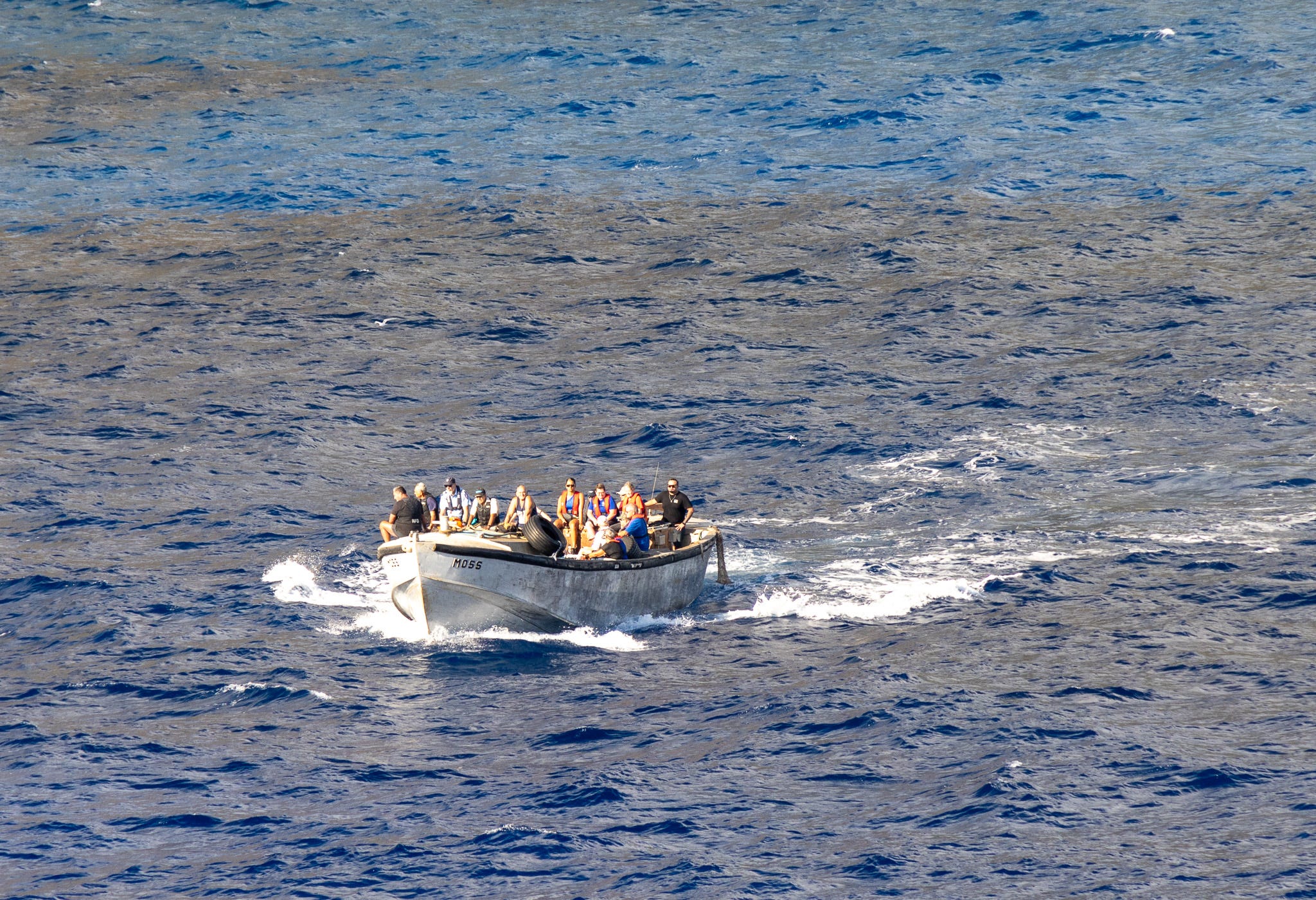
Shortly after our arrival, nineteen Pitcairn Island citizens sailed to our ship in their longboat, then boarded, bringing their handiwork to sell.
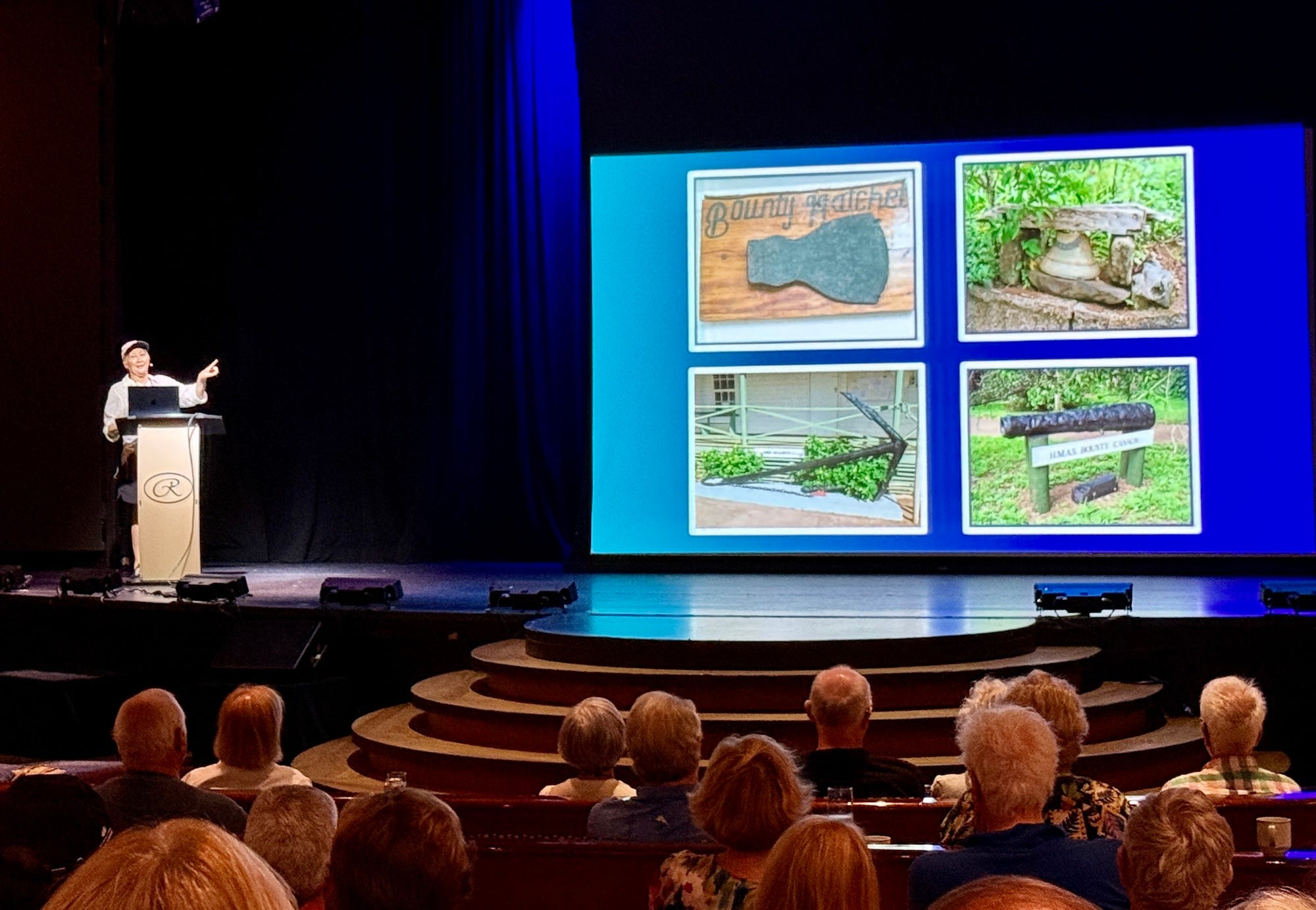
Melva, who is a sixth-generation descendant of Fletcher Christion, presented a 45-minute photo show with commentary. She lived on the island in her youth, then married and moved to Alaska, where she spent 40 years. She returned to Pitcairn twelve years ago and now lives here full-time. She is the cruise ship liaison for tourism and is also on the island’s council.
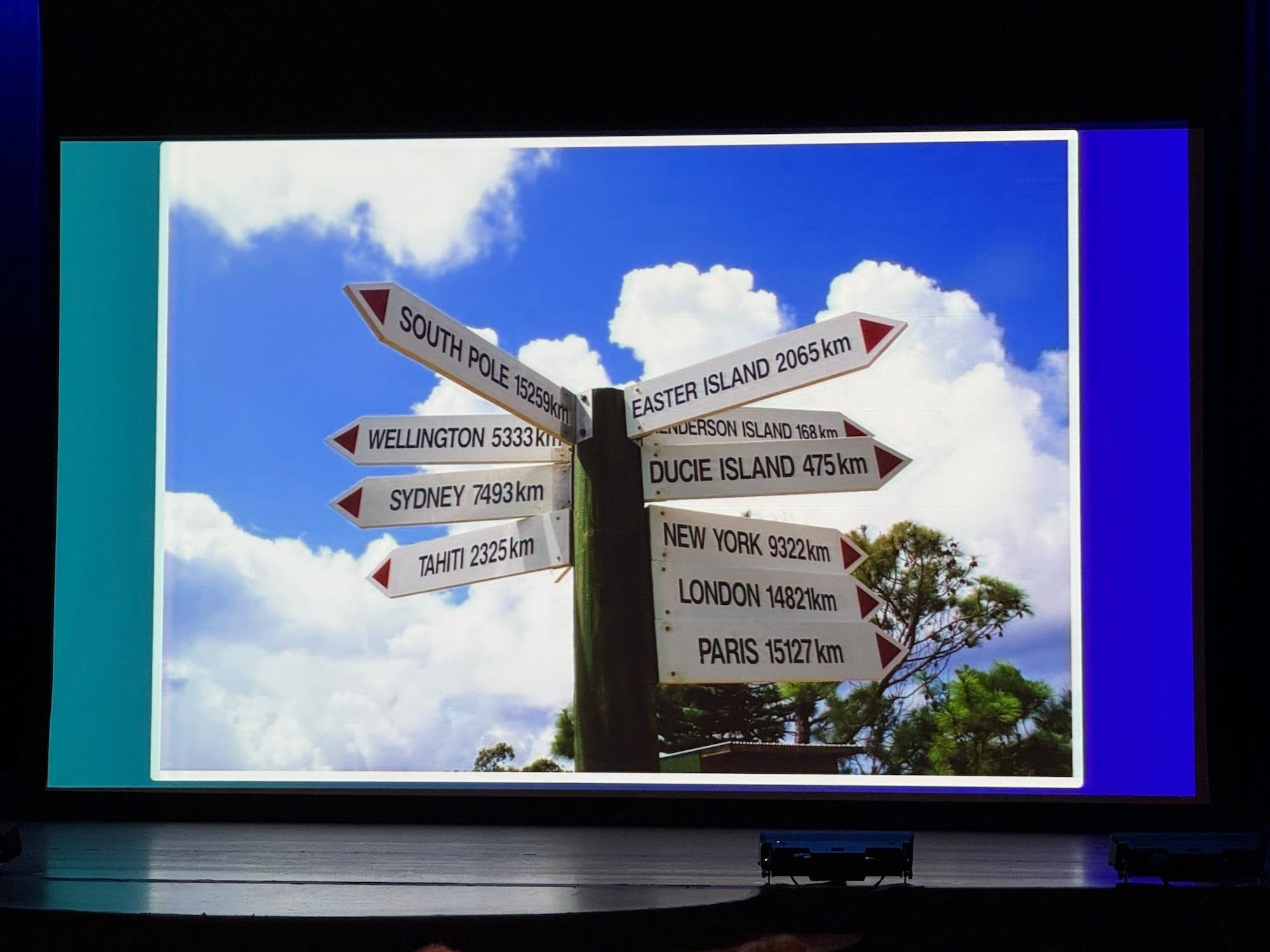
She tells us that the citizens are extremely proud of their home. The Pitcairn Islands, a British overseas territory, have received multiple awards and recognitions. They are the largest Marine Protected Area in the world, have received a Blue Park Platinum Award, and are designated as a Dark Skies Sanctuary.
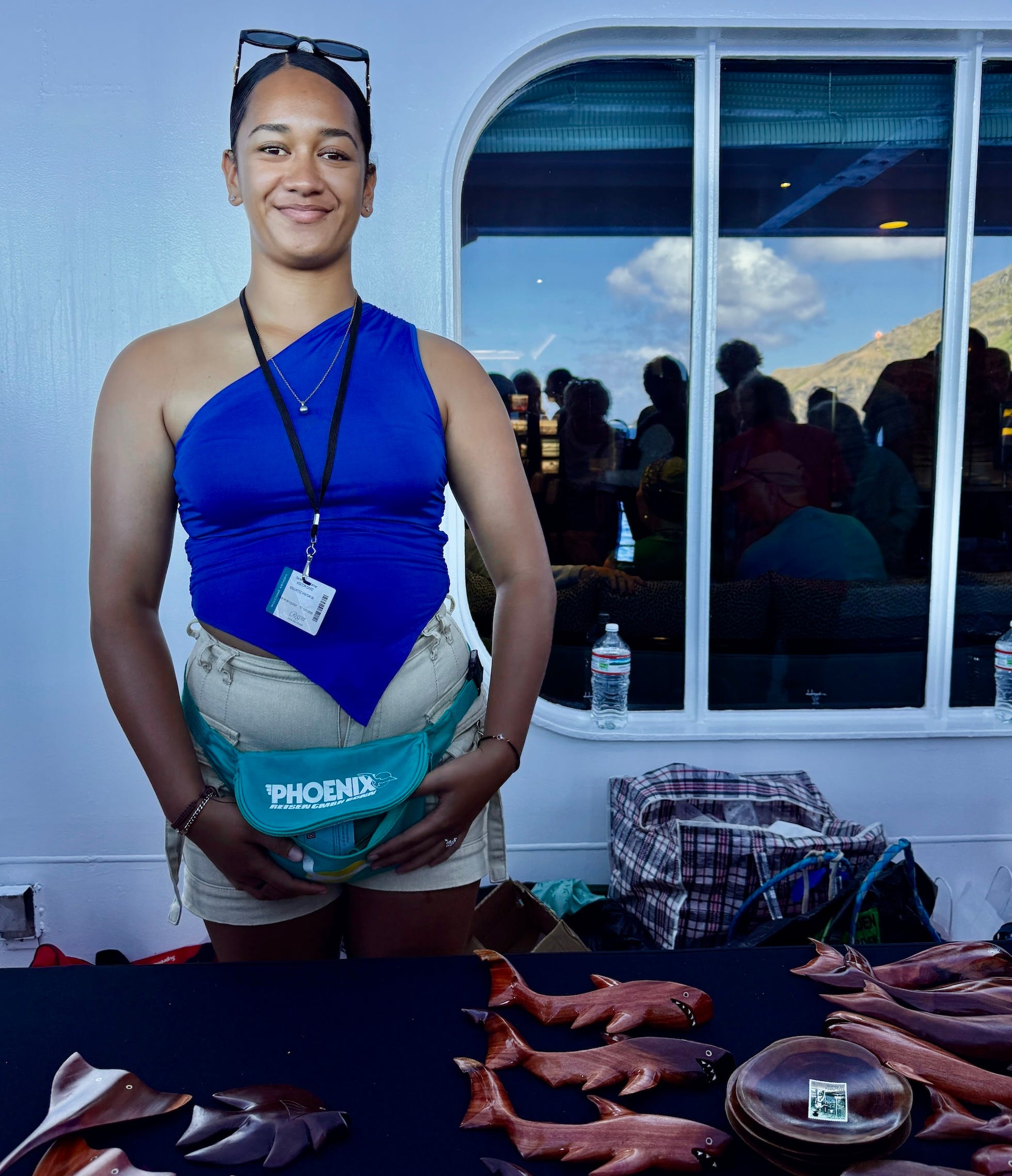
The Islanders set up a marketplace on the deck, selling carved wood crafts, T-shirts emblazoned with Pitcairn logos, beaded jewelry, local honey, postcards, stamps, maps, books, and woven bags. There was quite a crowd, as cruisers eagerly invested in Pitcairn souvenirs. Selling handiwork to passing cruise ships accounts for about 50% of the Pitcairn economy, so our purchases were deeply valued.
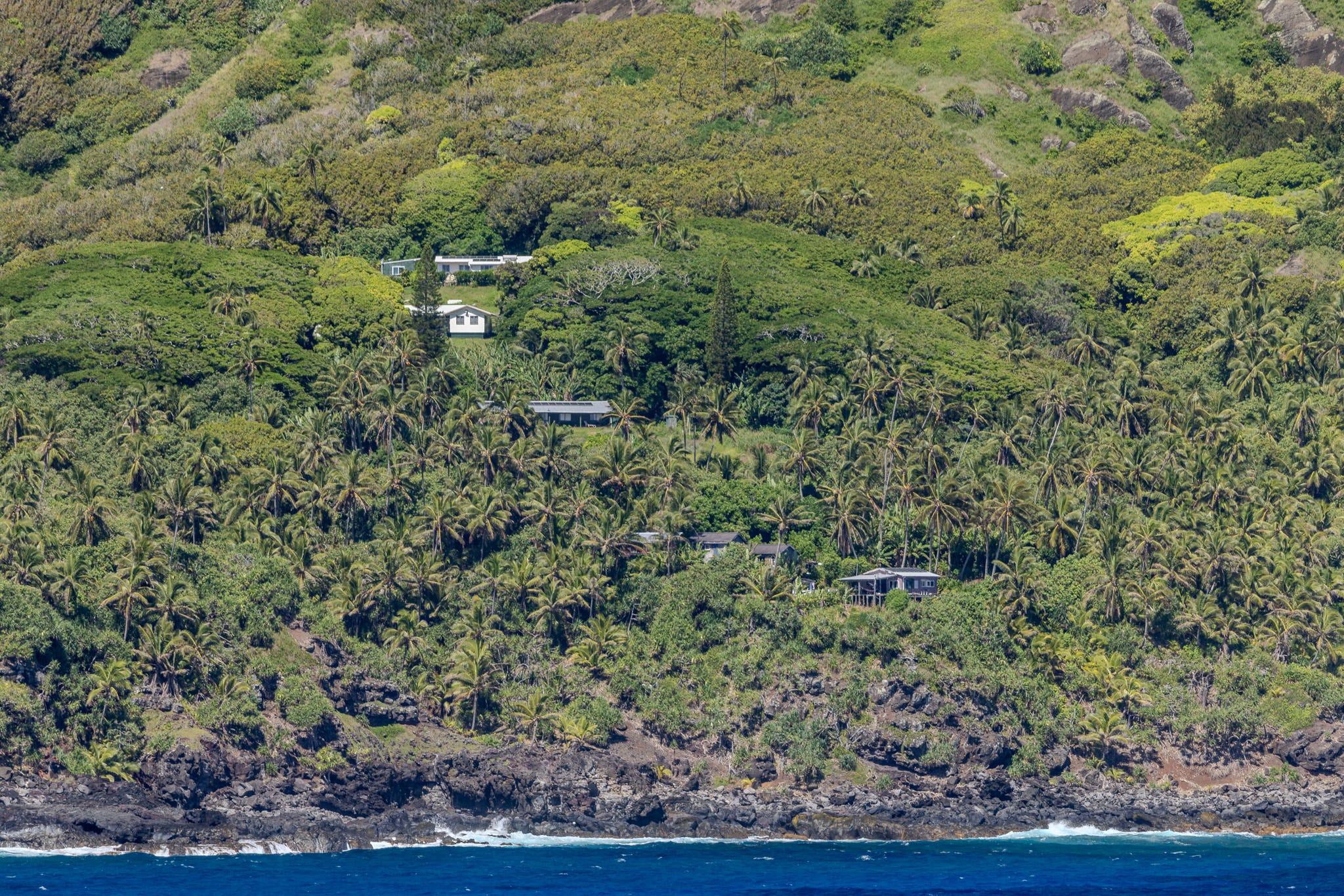
The only town on the island, Adamstown, is named for John Adams. You can see a few of the buildings of Adamstown hidden in the trees. In addition to homes, the area features a church, a school (although it is currently unoccupied), a medical center with a contracted physician, a museum, a grocery store (complete with a gossip bench), a community center, and a scientific marine research facility.
Dirt roads accommodate the citizens’ quad bikes— the chief mode of transportation. The island has internet access thanks to Starlink and is completely solar-powered, although a backup generator is available for extended periods of cloudy days.
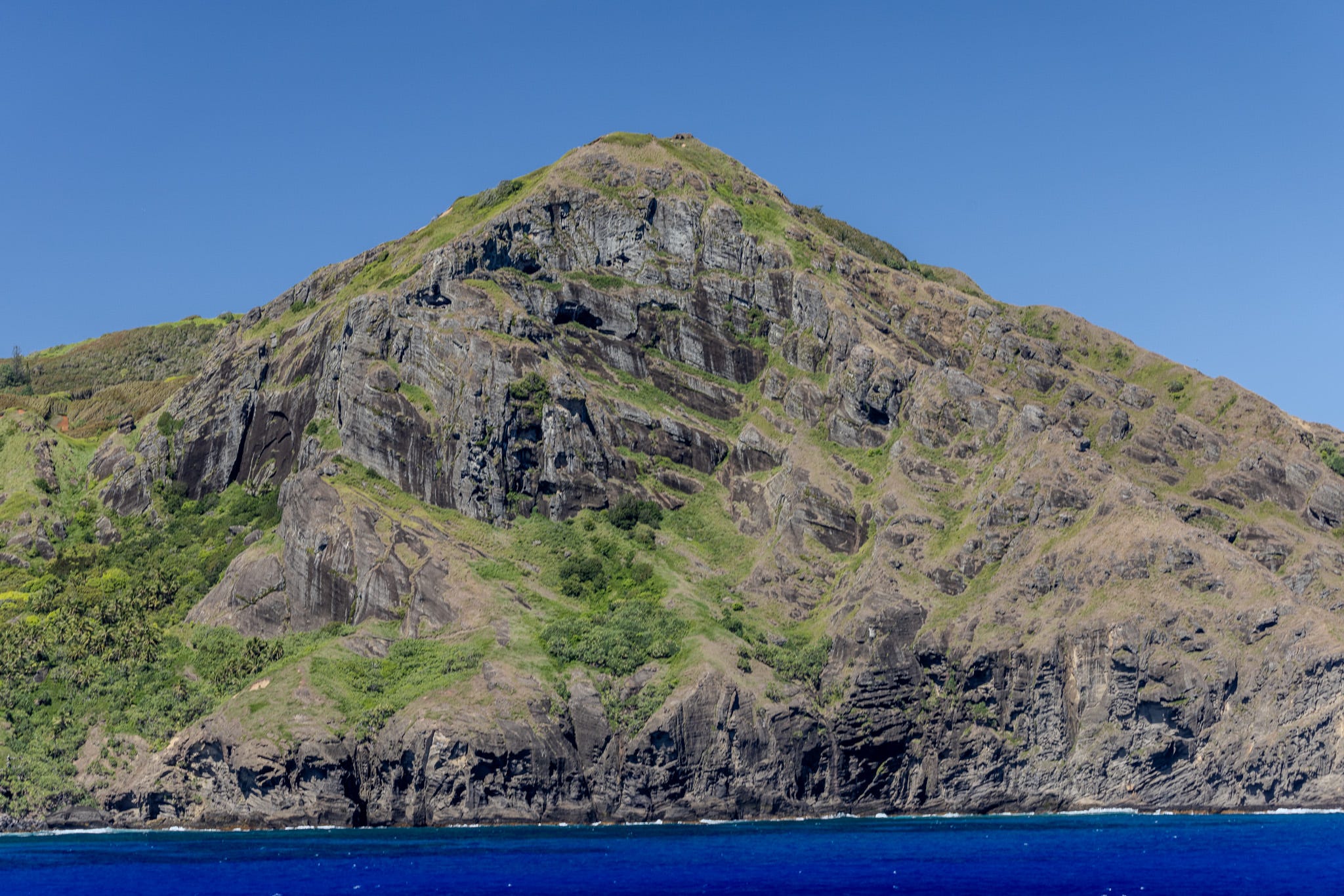
Somewhere on this mountain is the cave that Fletcher Christian used as a retreat for contemplation, reflection, and getaways. Now it is a campout destination, but it is rarely visited.
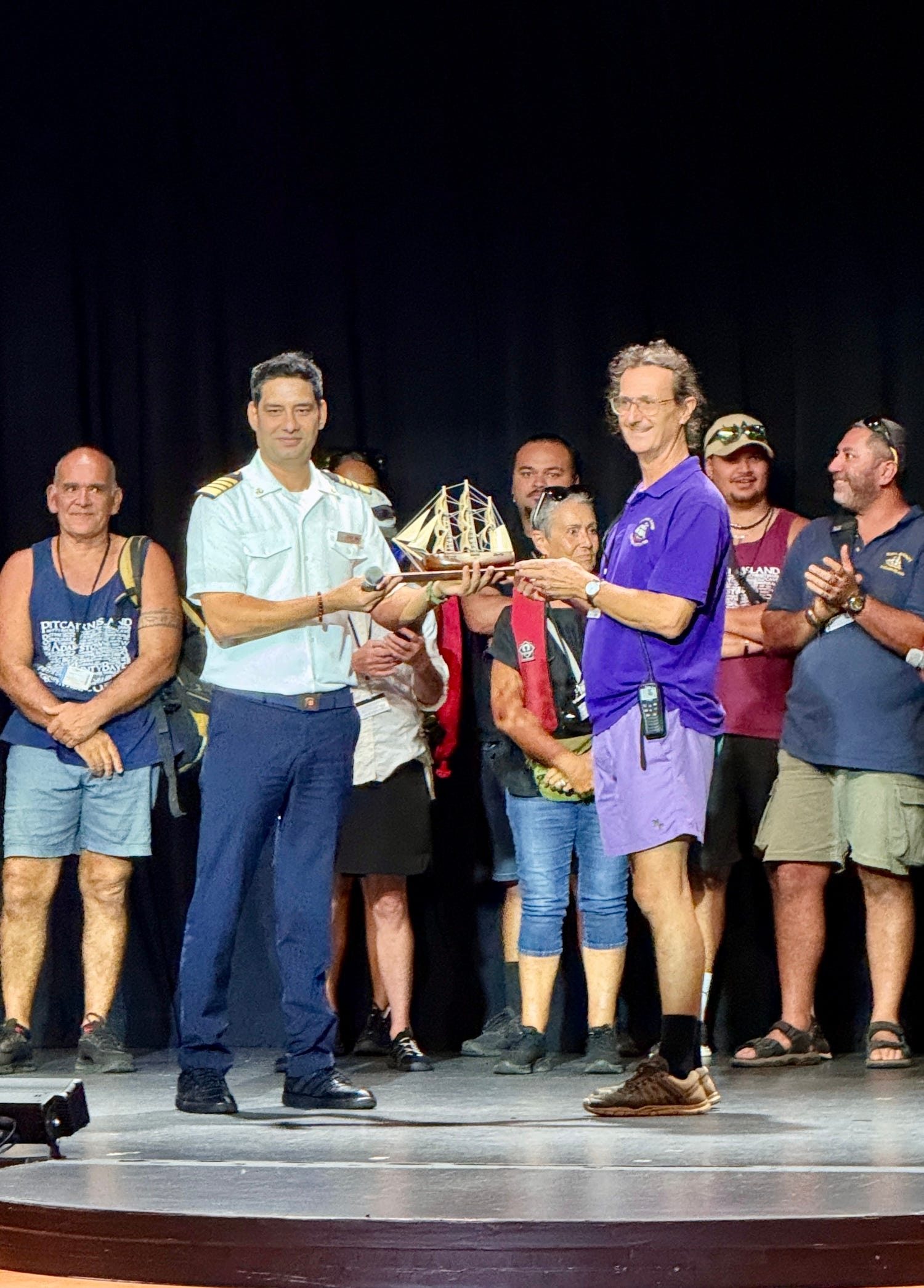
After the ship circumnavigated the island, we met again in the theater for a few closing remarks. Captain Abhi was particularly enthusiastic since this was his first time visiting the islands; he was rewarded not only with memories that will last a lifetime, but also with a model ship of the Bounty presented to him by the mayor.
The Pitcairn Island Community then entertained us with several songs. They were excellent ambassadors for their island!
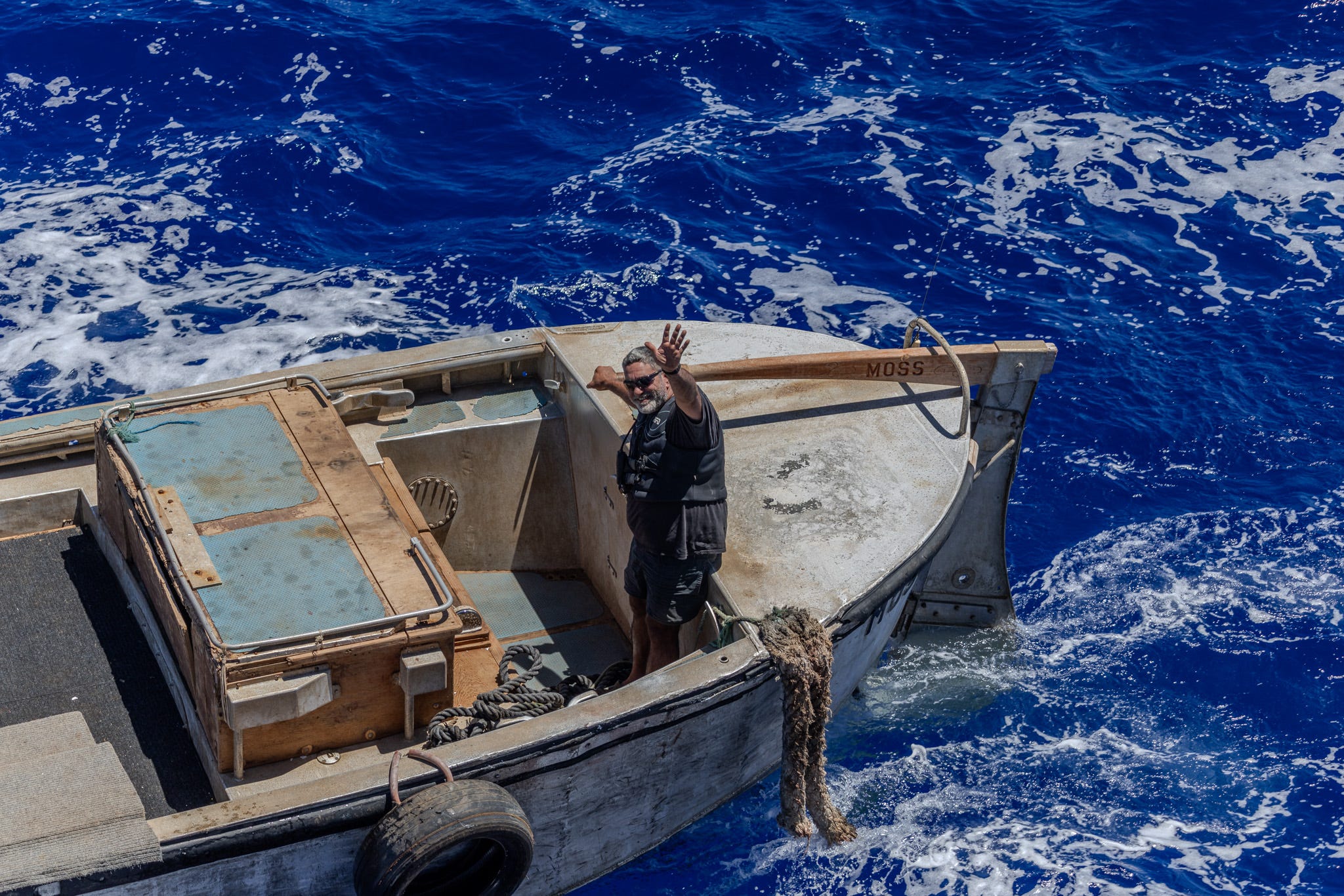
The pilot of the longboat returned at the scheduled hour to ferry the islanders, their crafts (and maybe a few pails of ice cream) back to their homes. We watched in fascination as he navigated the boat with a large, metal-reinforced wooden rudder.


By their expert maneuvering, we can tell this is an activity they’ve done repeatedly—or at least about twelve times a year. Once the longboat was in position next to the Mariner, several folks jumped aboard. Then, they formed a baggage brigade to transfer all their gear from the Mariner’s porthole to their boat. The last folks scrambled down the Mariner’s rope ladder, and everyone waved and cheered goodbye.
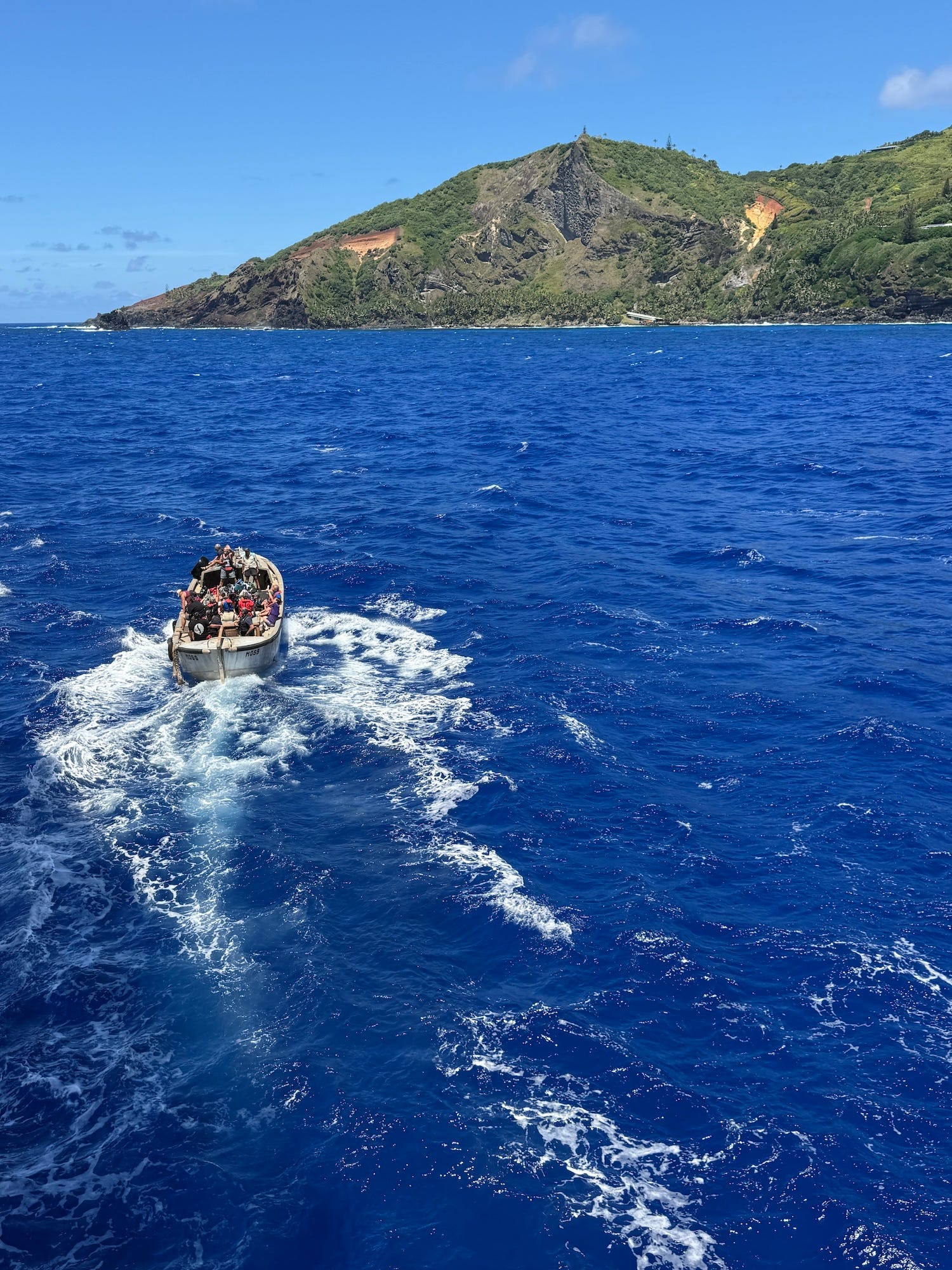
And off the nineteen citizens of Pitcairn went as they returned to their tiny island and their unusual way of life.
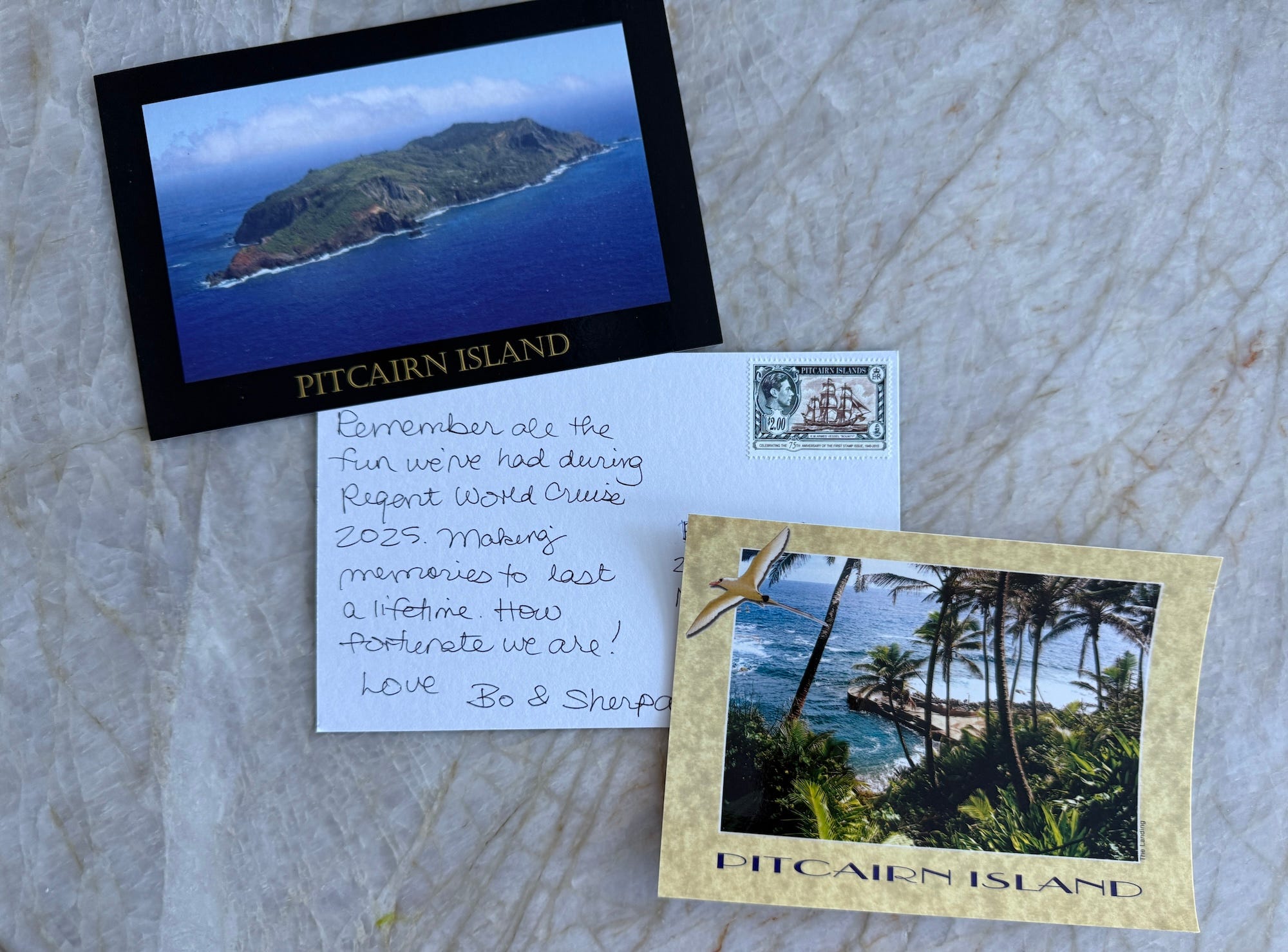
Now we await the postcards we sent our grandchildren and ourselves. The Pitcairn Islands postal service often takes six months for delivery! Likely, we’ll be home before these reminders of our Pitcairn Islands day arrive in our mailboxes!
Oh my goodness, what a fun day! So much to learn, experience, and discover. It’s so wonderful that they can make this connection with travelers!
Wow! Such an adventure!