
Ouidah, Benin
A continuation post detailing our excursion, Ouidah, The City of Voodoo. Part two focuses on local daily routines, a Sakpata dancing demonstration, and our stops along the historic Slave Route.

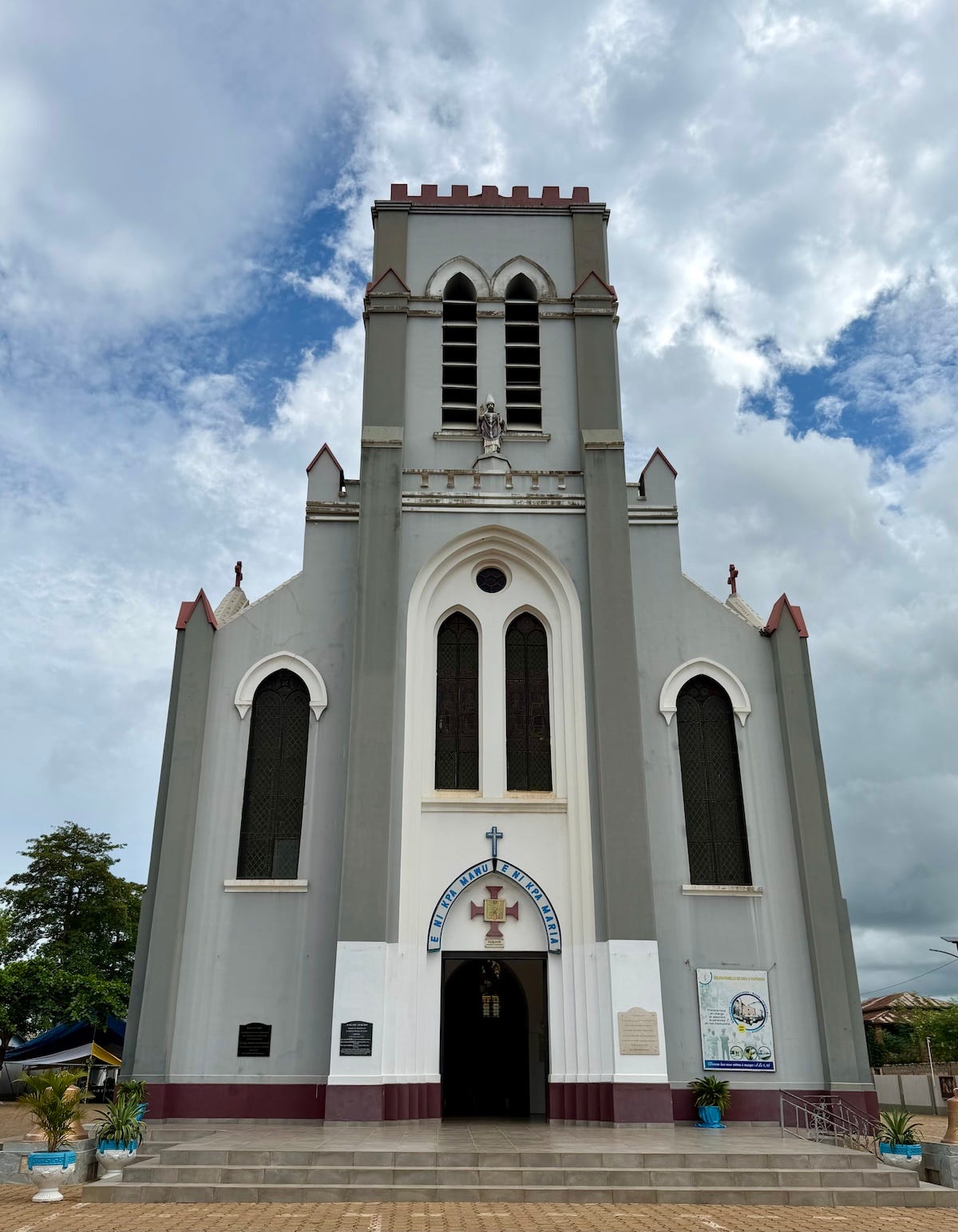
After we visited the Sacred Forest and the Temple of Pythons, we had a brief moment to take exterior photos of the Basilica of the Immaculate Conception, the most famous church in Ouidah. The Basilica is best known for being directly across the street from the Temple of Pythons. Constructed between 1903 and 1909, it was the first major Catholic cathedral in Benin and is still one of the oldest churches in West Africa. The Basilica’s proximity to the Temple of Pythons serves as a powerful symbol of religious tolerance and peaceful coexistence, with locals frequently participating in Voodoo practices and attending Catholic mass side by side.
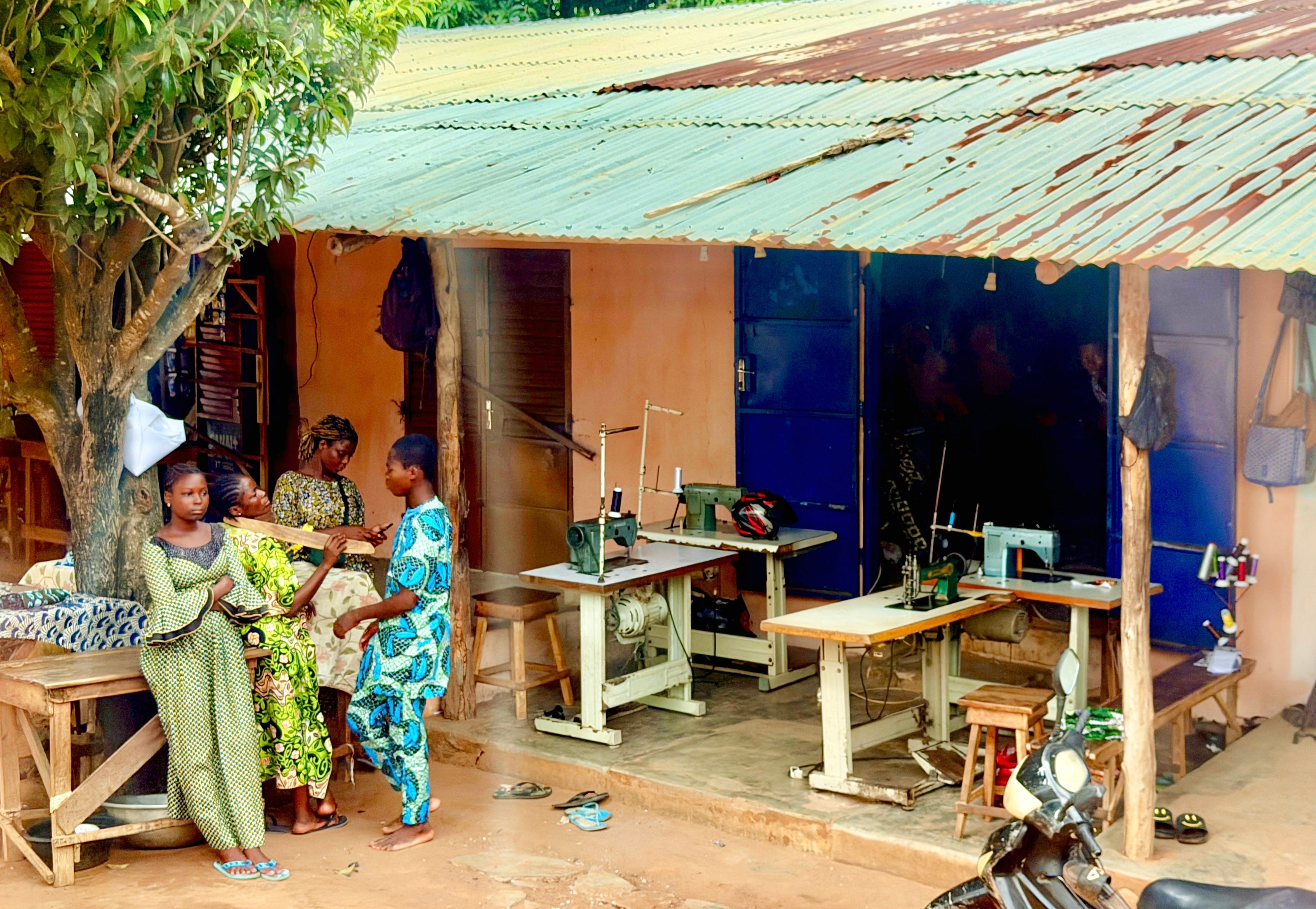
We drove through the roads of Ouidah on our way to Casa do Brasil and enjoyed the opportunity to take in snippets of Beninese daily life from the bus windows. This small room with multiple sewing machines caught our attention. Instead of indoor industrial factories, the local sewing scene is dominated by open-air workshops and street-front tailors. These small enterprises use outdoor setups to take advantage of natural light and breeze while crafting exquisite custom garments. Locals purchase raw textiles from the market — the same kinds of textiles we’ve purchased over the last week — and bring them to these open-air tailors to have fully personalized garments made.
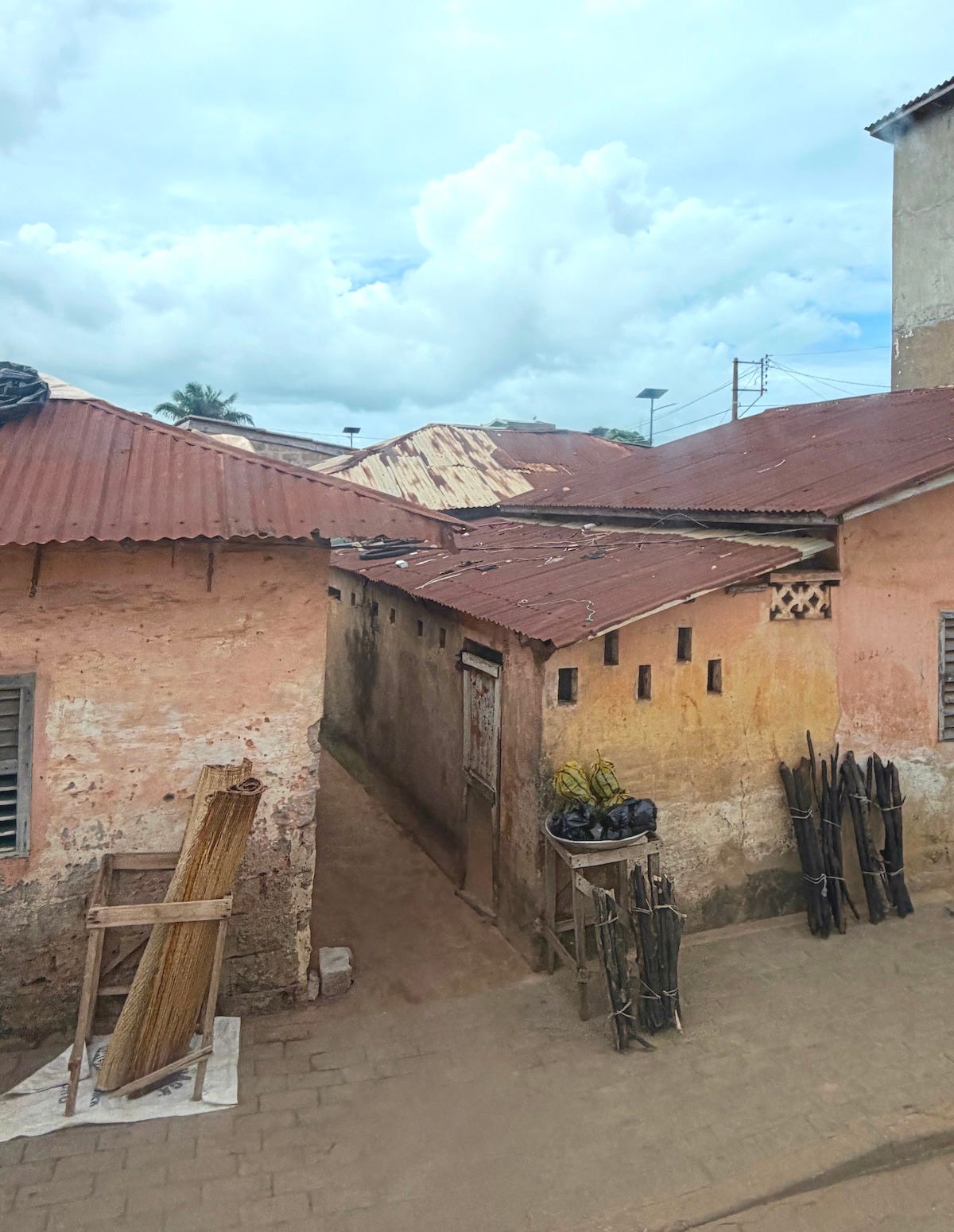
Street-side goods are propped along many of the buildings — firewood for smoking fish, fresh fruits and vegetables, even lumber for small construction projects.
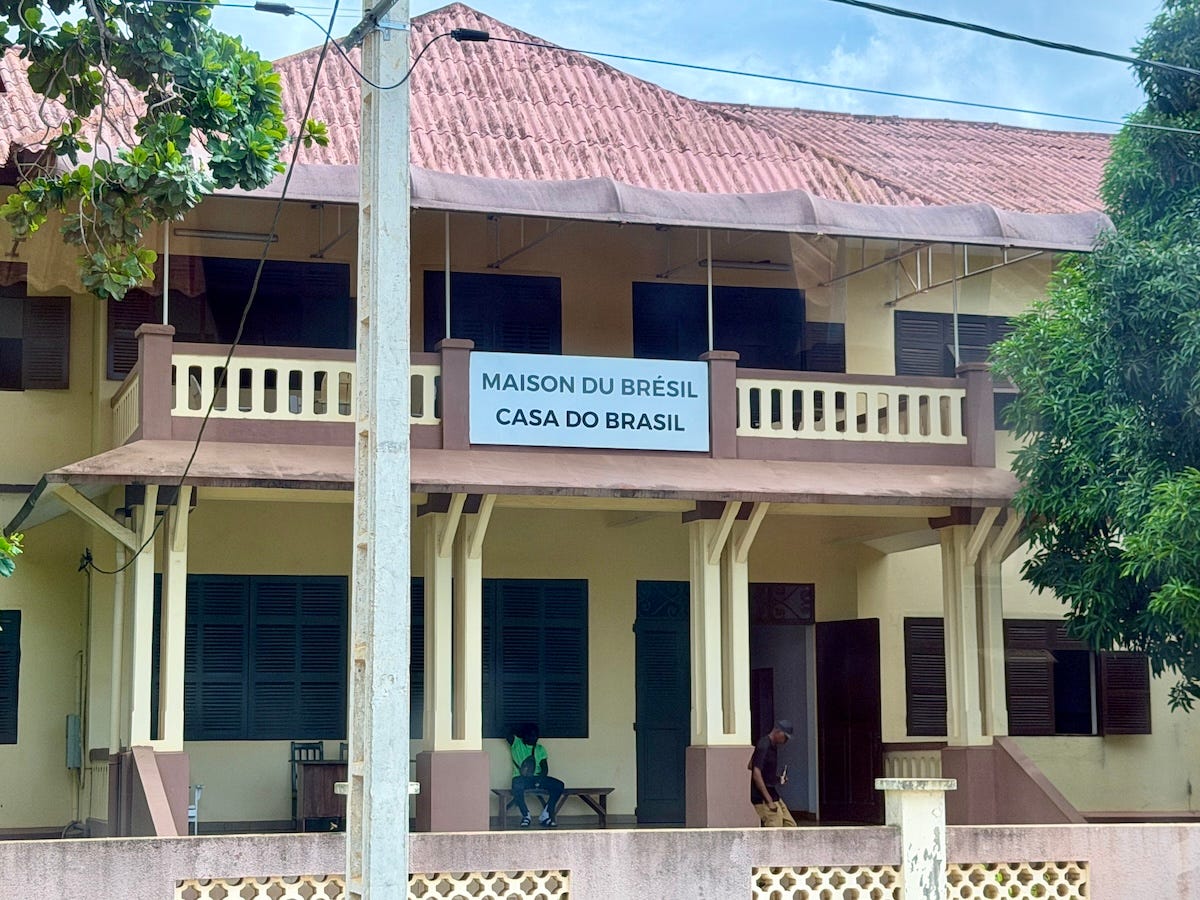
The next stop on our excursion itinerary was the Casa do Brasil, a historic museum and cultural landmark dedicated to preserving the memory of the transatlantic slave trade. (Because the main Ouidah Museum of History, located inside the historic Portuguese Fort, is closed for renovations, the Casa do Brasil has stepped in as an alternative.) We were asked not to take photos of the interior exhibits, but the small museum mostly displayed documents and physical relics from the era of the slave trade.
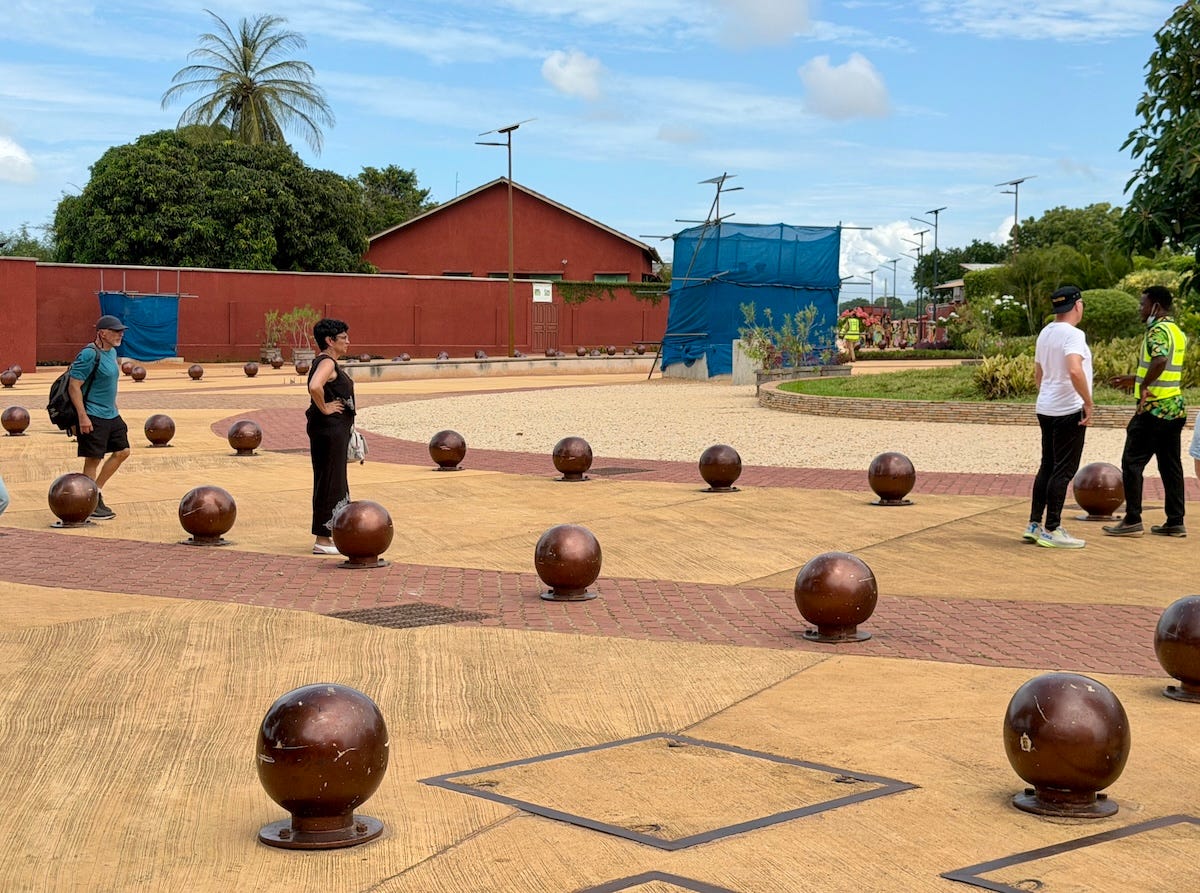
The Slave Route (Route des Esclaves) is a historic 2.5-mile memorial trail in Ouidah. It traces the path that over two million enslaved Africans were forced to walk from the auction markets down to the Atlantic beach where ships waited to transport them to the Americas. Today, the route is lined with monuments, statues, and sacred trees, serving as a solemn open-air museum. We stopped at four of the six stops: The Slave Auction Square, including the Historic Tree of Oblivion, The Tree of Return, and The Gate of No Return.
The Slave Auction Square is a public square that marked the official starting point of The Slave Route. Between the 17th and 19th centuries, the site served as one of West Africa’s primary auction hubs, where human beings were publicly evaluated and bartered like raw commodities. The bronze balls on the square symbolize the balls and chains once used to restrain the enslaved people as they awaited their fate.
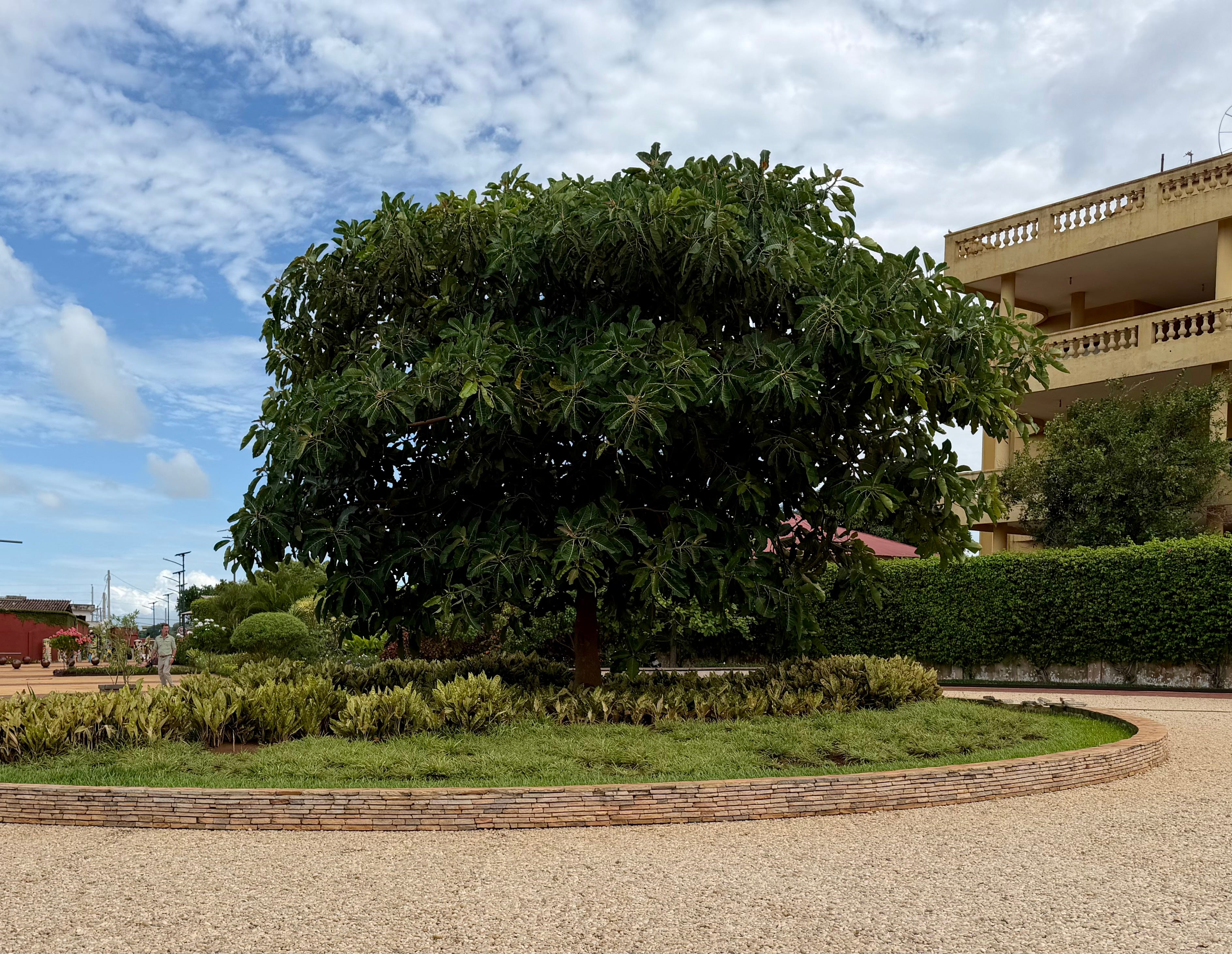
A large tree, the Historic Tree of Oblivion, stands in the center of the square. Its lineage is traced back to a tree planted in 1747 by the Dahomey King. Historically, male captives were forced to march around the tree nine times, and women were marched around the tree seven times, in a ritual intended to strip away their memories of Africa. This identity erasure was performed as an attempt to crush the captives’ will to rebel.
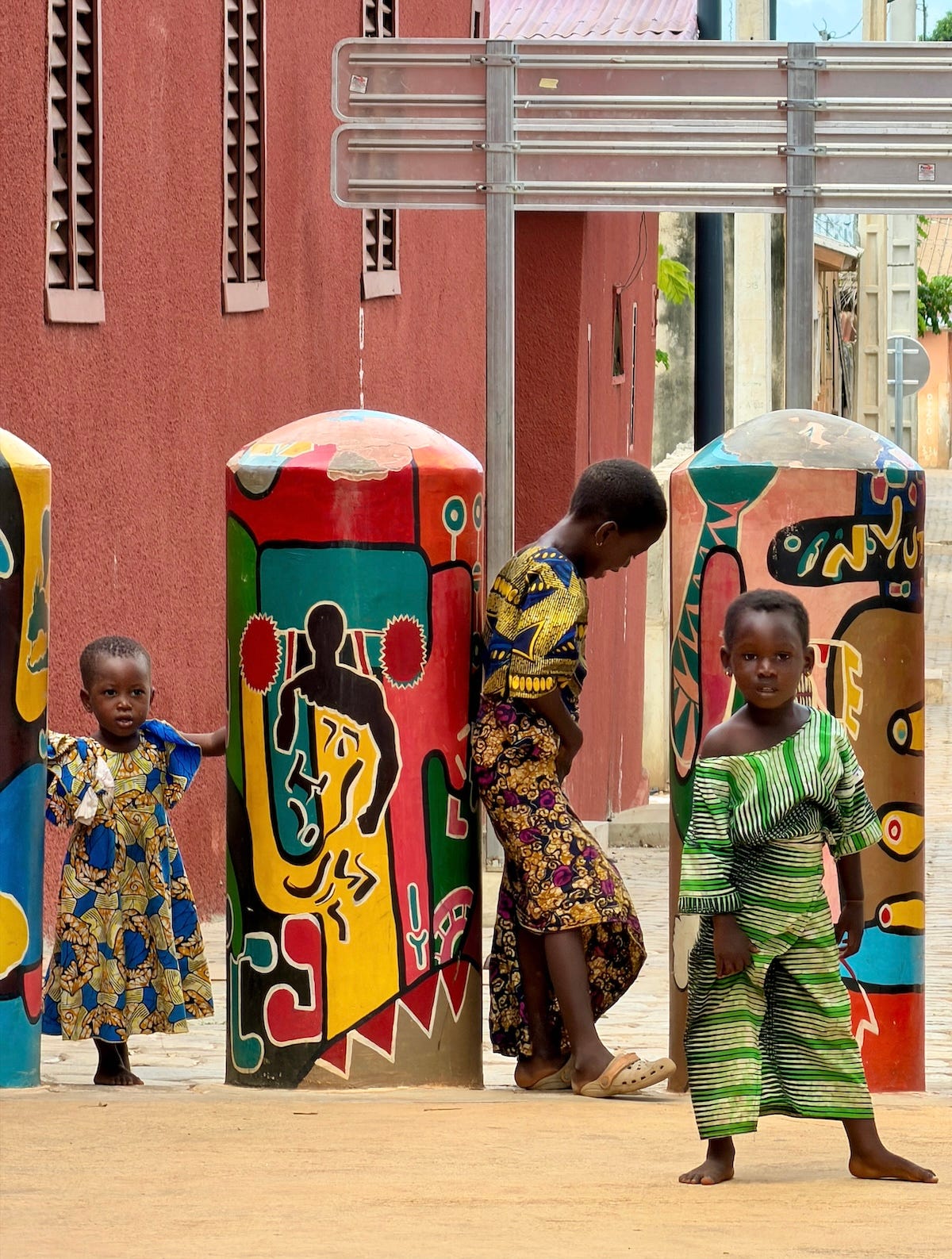
These children watched from the perimeter of the square, offering smiles and waves. Like children everywhere, they were curious about our presence and friendly, calling “Yoyo bonsour.” (Our guide said they were calling, “Foreign person, hello.”) The plaza serves as the primary playground for these neighborhood children — they were probably waiting for us to leave so they could resume their running games.
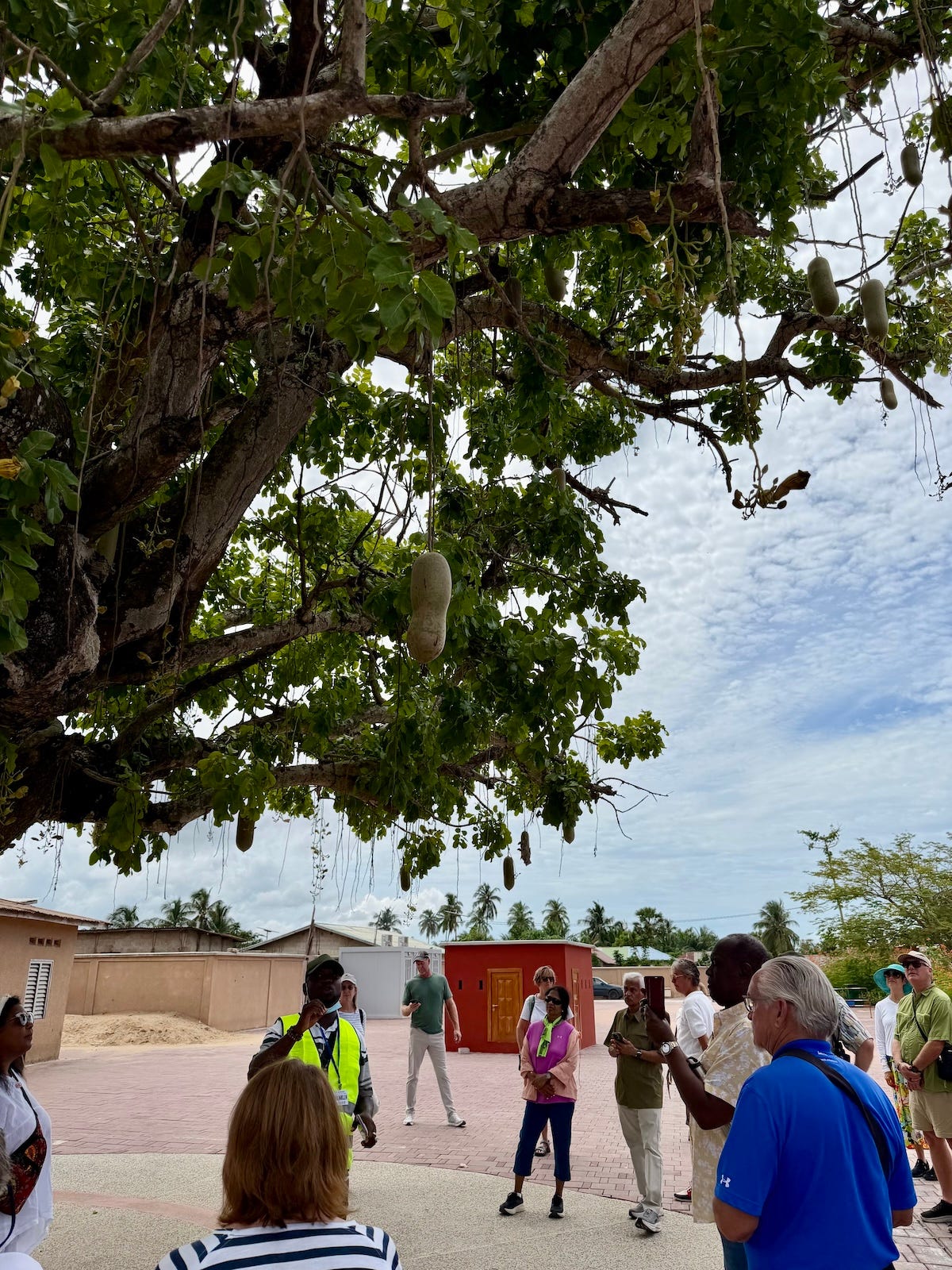
Our next stop was at the secondary sacred tree, the Tree of Return, where captives performed a counter-ritual to ensure that their spirits would return to Africa after death.
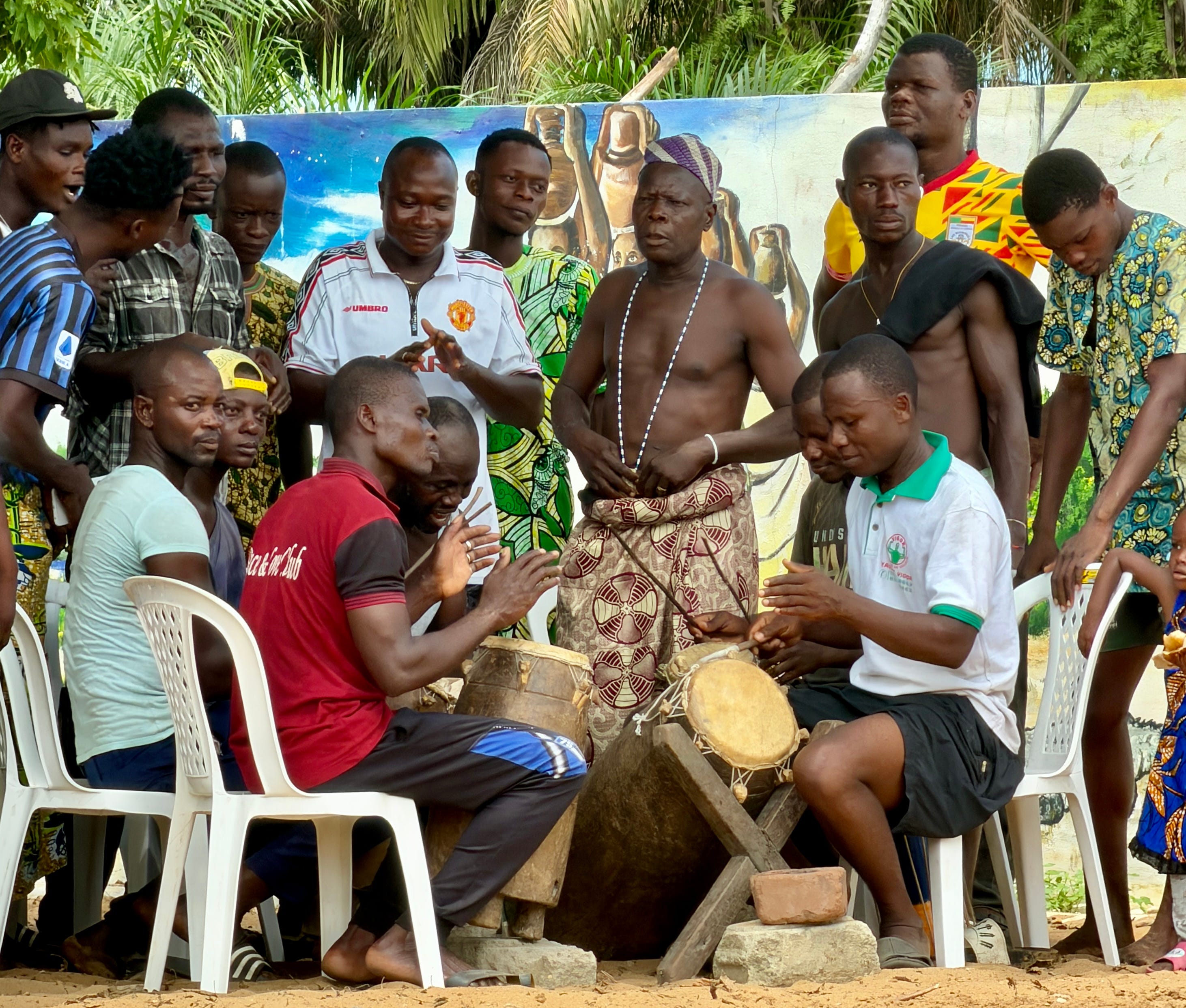
We then walked a short distance to Voodoo Sakpata Square to witness a Sakpata dance. The Sakpata dance is an energetic, vigorous ritual performance dedicated to Sakpata, the Vodun deity of the Earth.
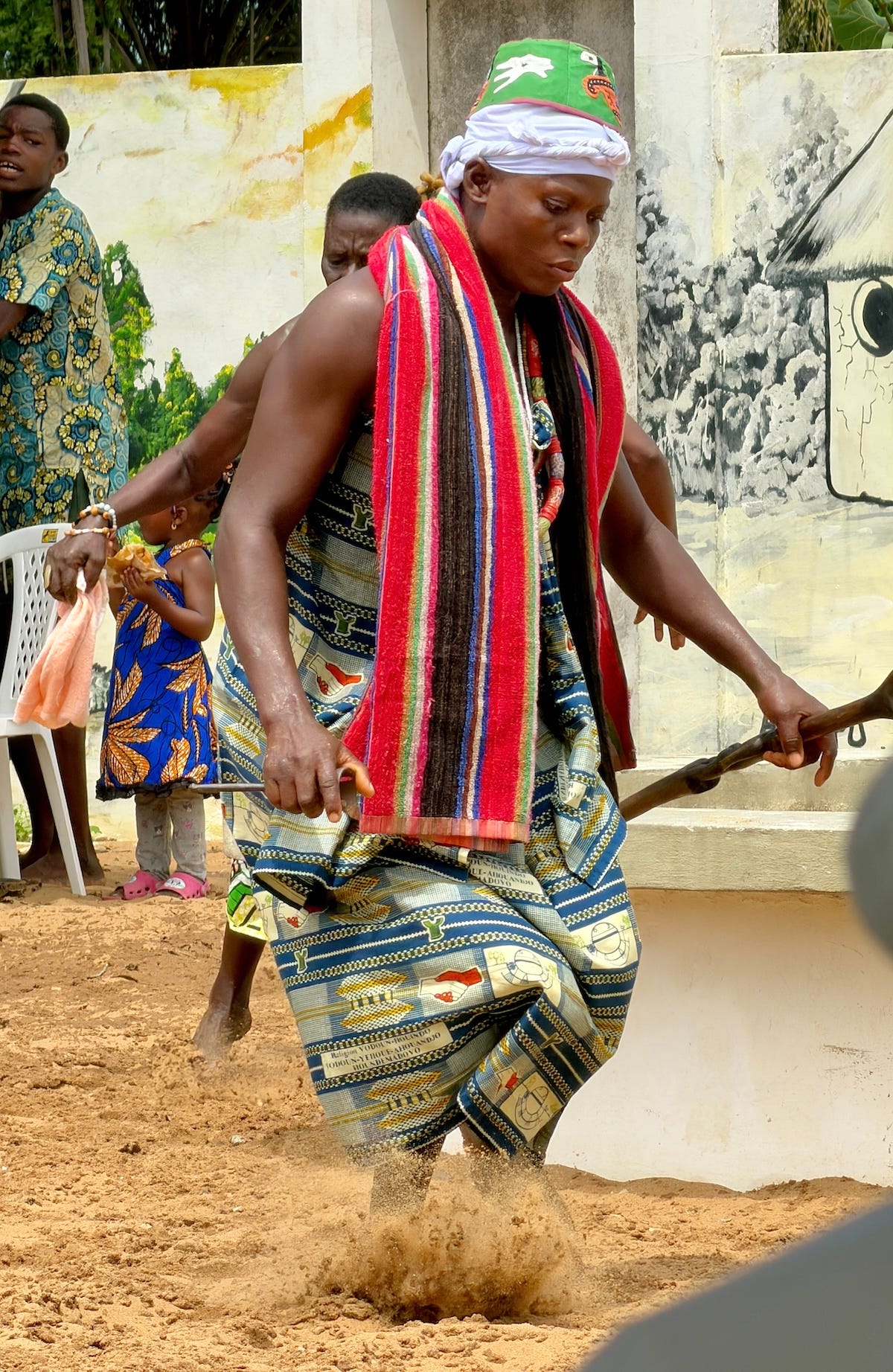
Because Sakpata is the deity of the Earth and soil, these ritual dances are performed barefoot, low to the ground, and focus on grounding elements, such as foot stomping and dirt kicking.
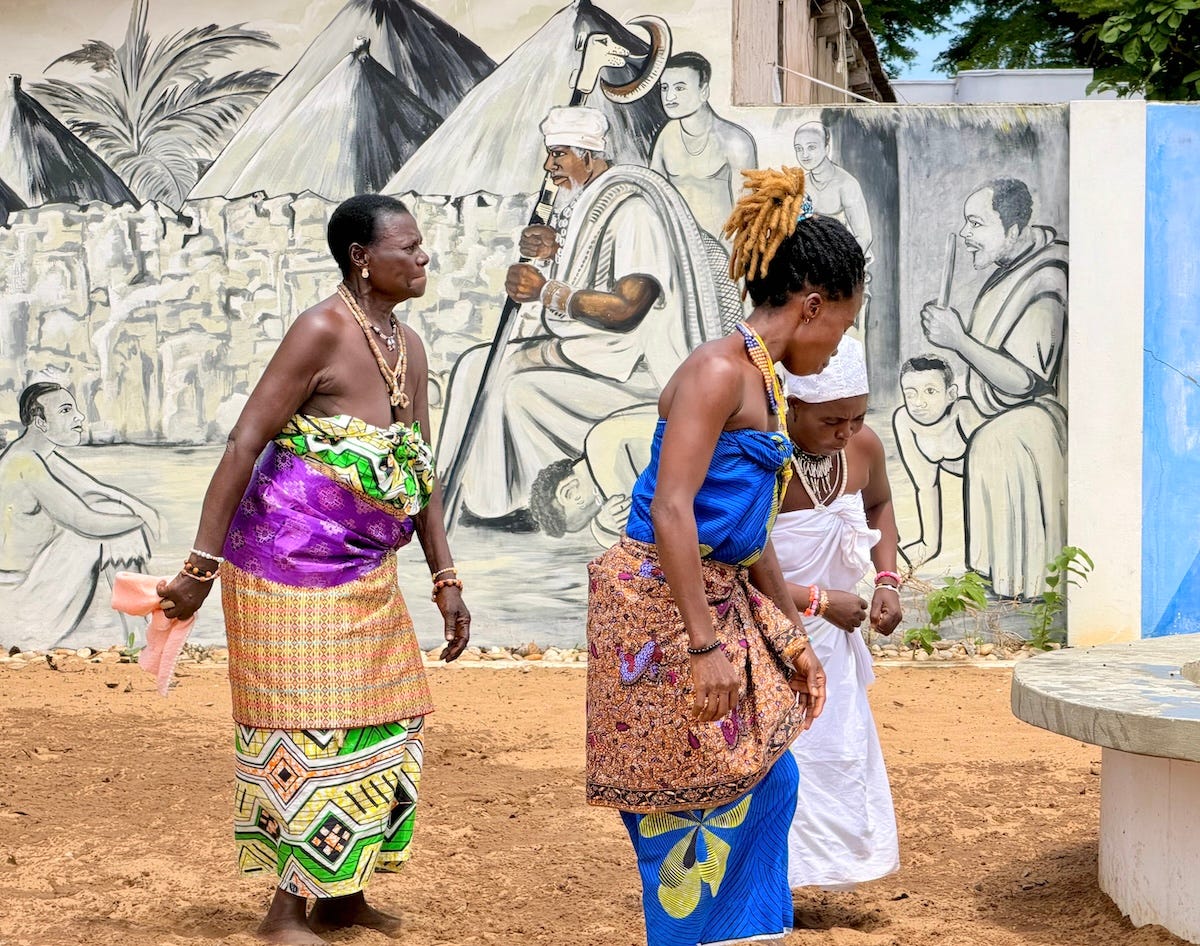
In Beninese culture, the dance serves as both a sacred religious rite and an evocative form of physical storytelling. Every movement has a purpose.
In Benin’s Vodun pantheon, Héviosso is the direct counterpart to Sakpata. While Sakpata rules the Earth, Héviosso rules the sky and fire. During Héviosso dances, intense dancing showcases the manipulation of fire. The young man in the short video danced with a lit basket of fire, often raising the smoky flames over the heads of those visitors seated in the front row.
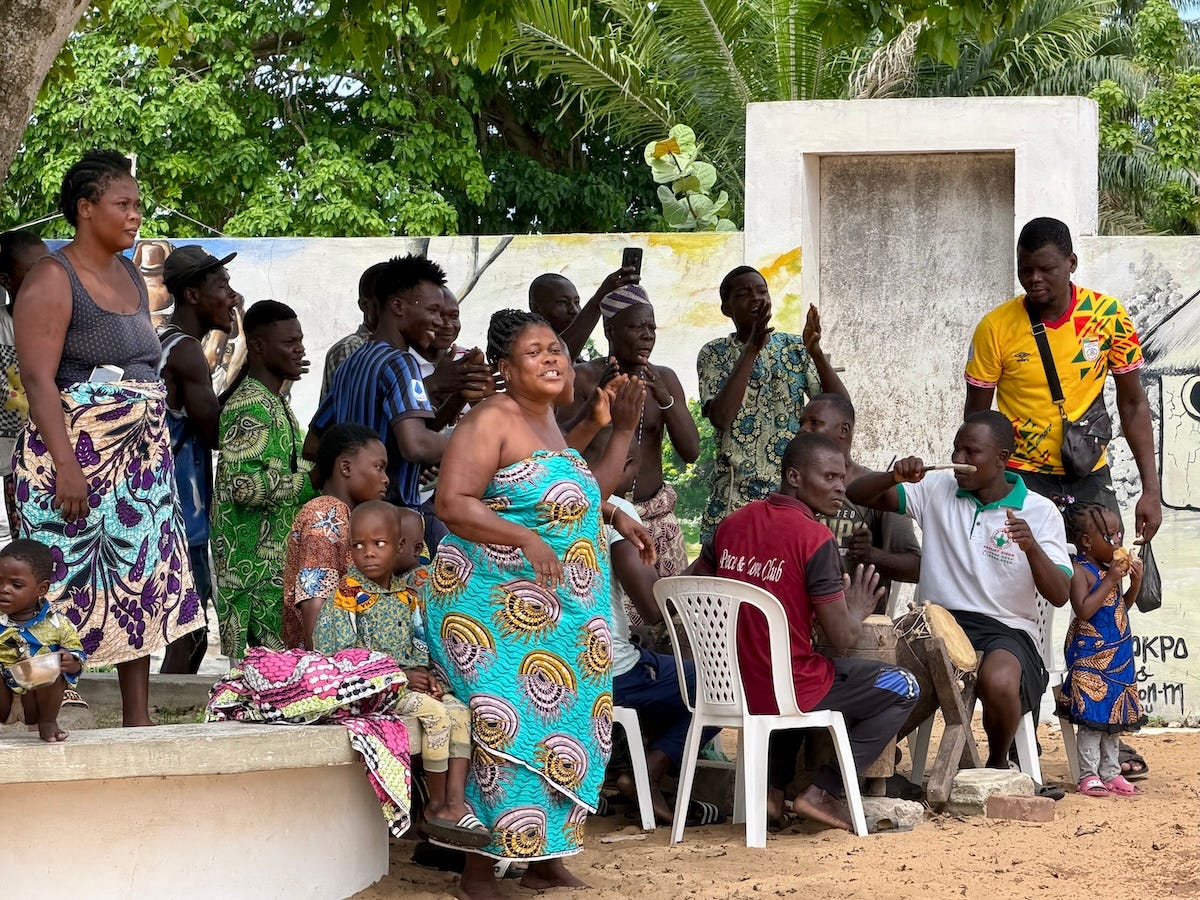
This seemed to be a close-knit community affair. Adults of all ages sang, danced, and/or played drums or other percussion instruments. Small children freely wandered near their adults, while babies hung from the backs of mothers or older siblings.
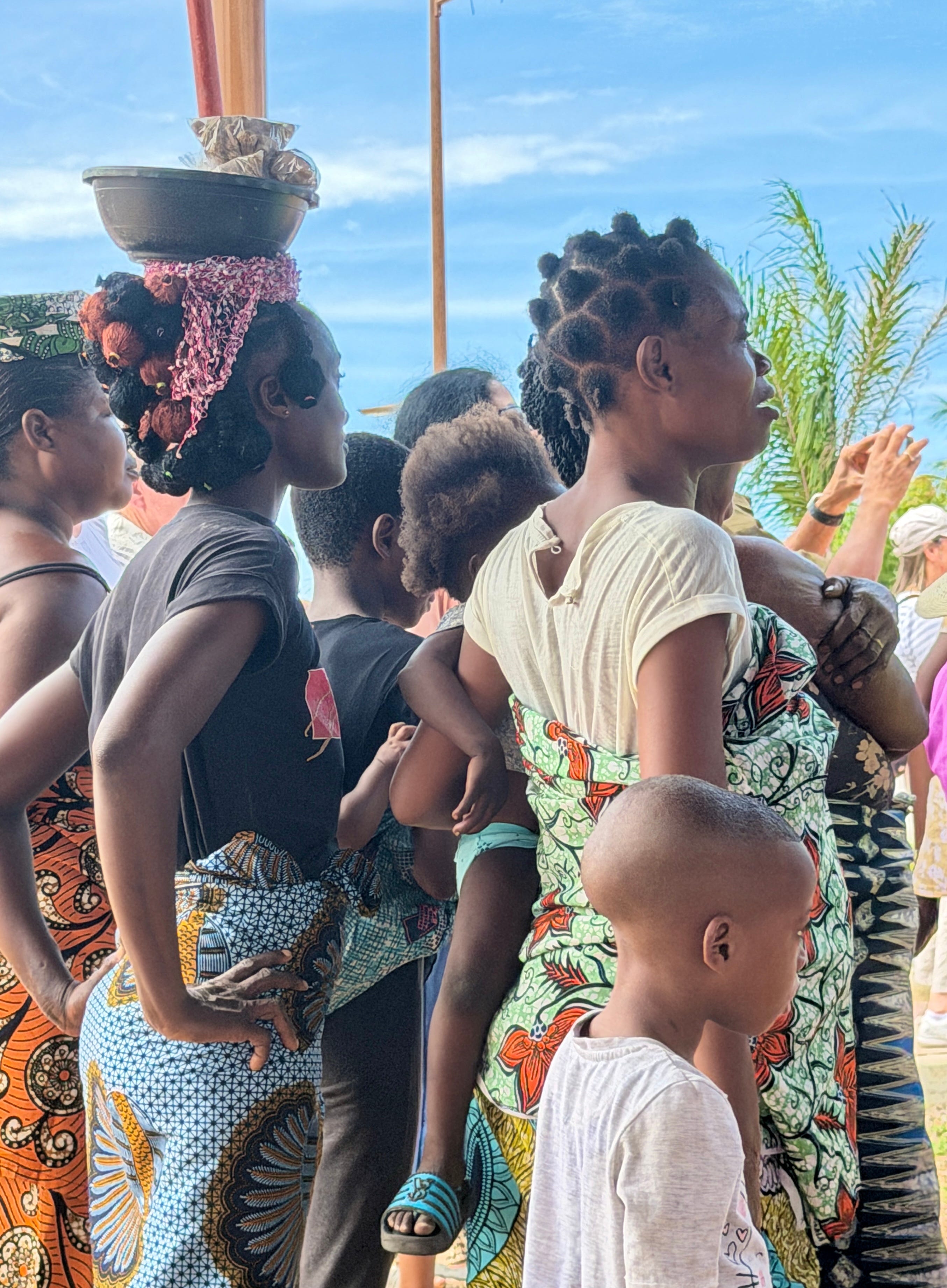
We were not the only observers! Quite a crowd of neighborhood women and children gathered along the sidewalk and watched intently. The younger children were especially enthralled by the erratic movements of the fire-carrying dancer.
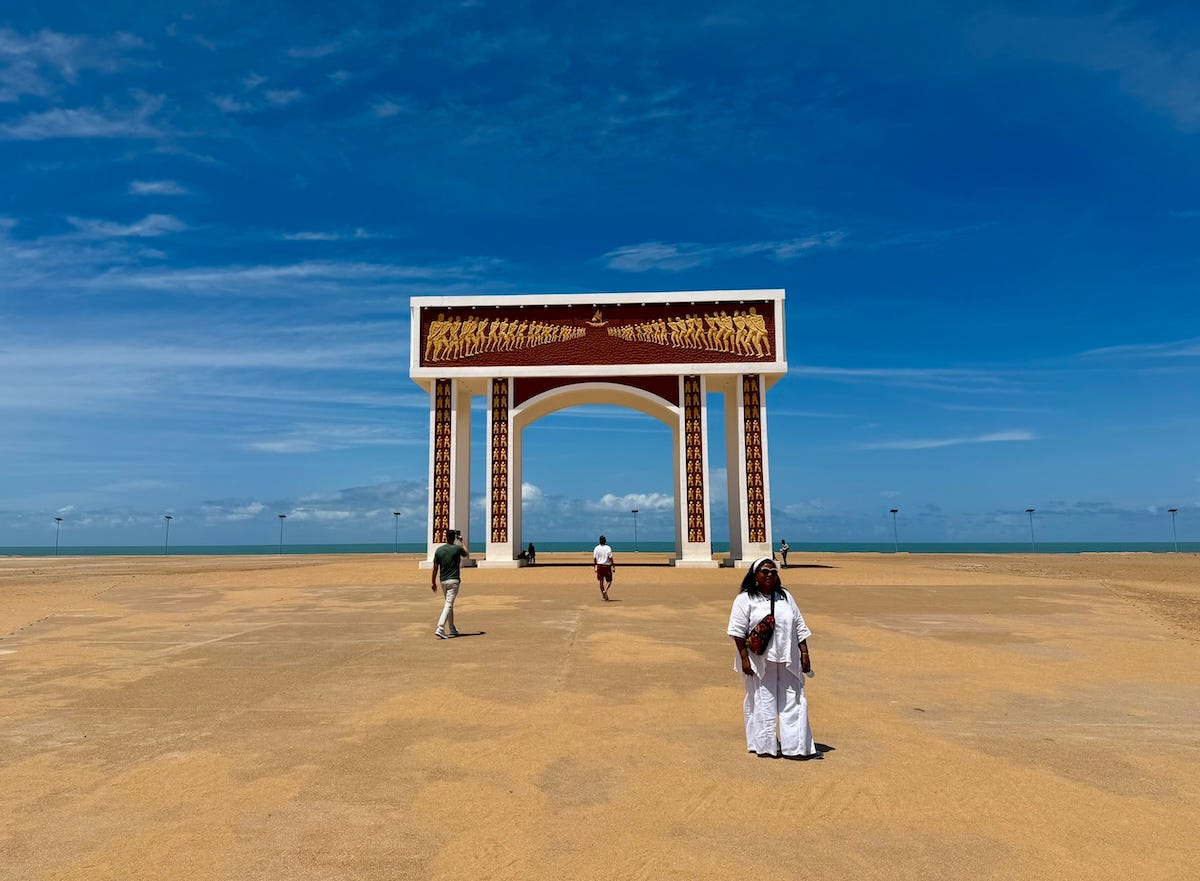
Our excursion’s final stop was at the Gate of No Return. Here, a massive monument rises from the sandy beach and marks the end of the Slave Route for an estimated two million enslaved Africans who were forced onto transatlantic ships from this shoreline.
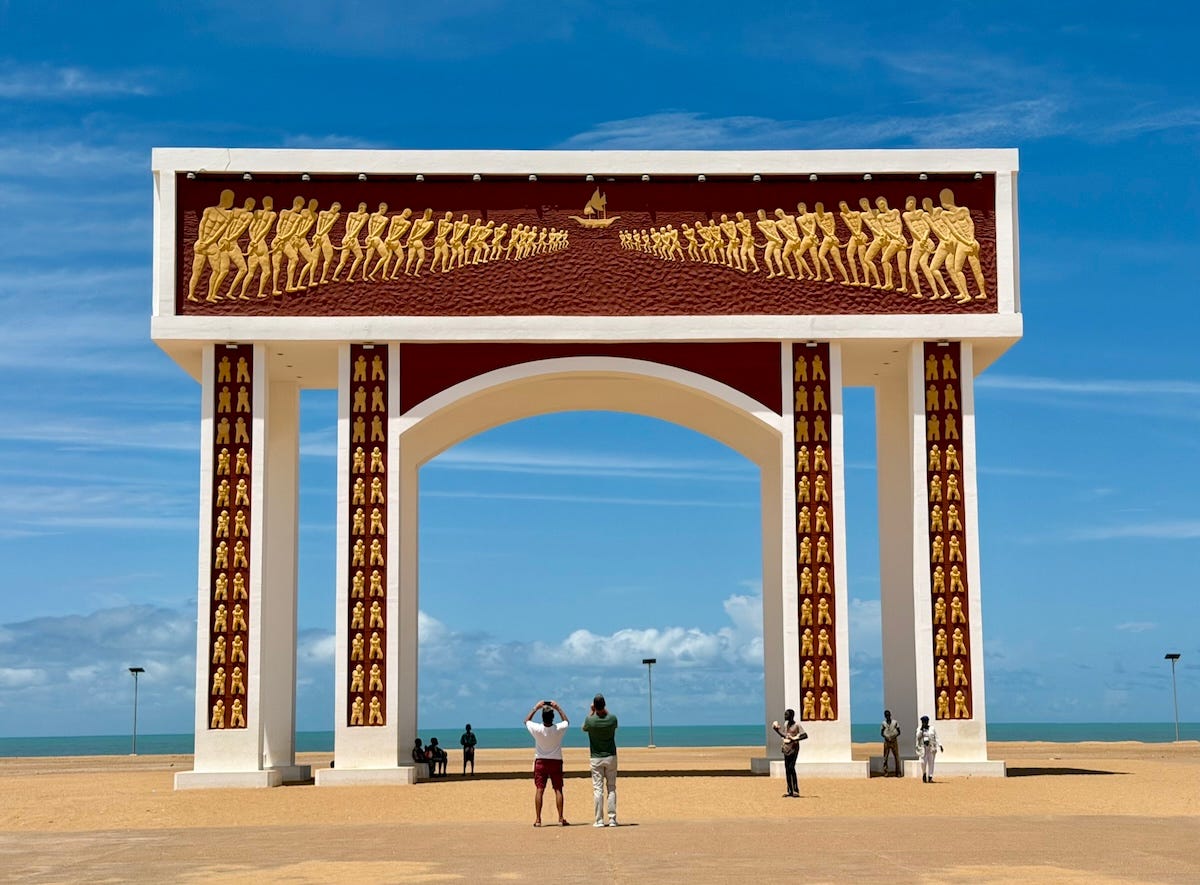
The original 1995 UNESCO monument was replaced last year. The newly reconstructed and expanded monument has an ochre-and-gold facade that towers nearly 56 feet over the Atlantic Ocean waterfront. It is hauntingly beautiful…and forever memorable.
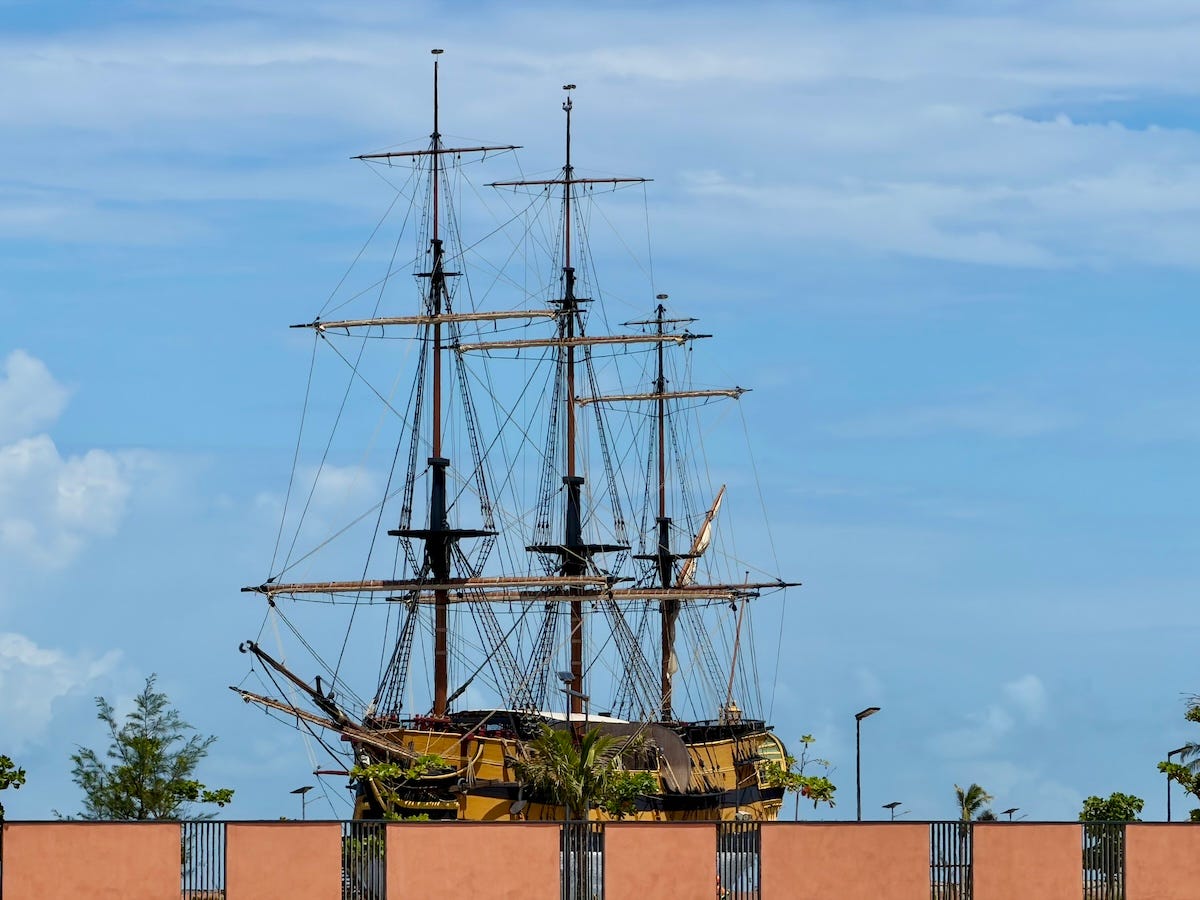
Near the Gate of No Return is the Ship of Departure, a life-size historical replica of a transatlantic slave ship. The design was inspired by the ship L’Aurore, which was one of the last documented slave ships to depart Benin. It sailed to the plantations in Cuba in 1860.
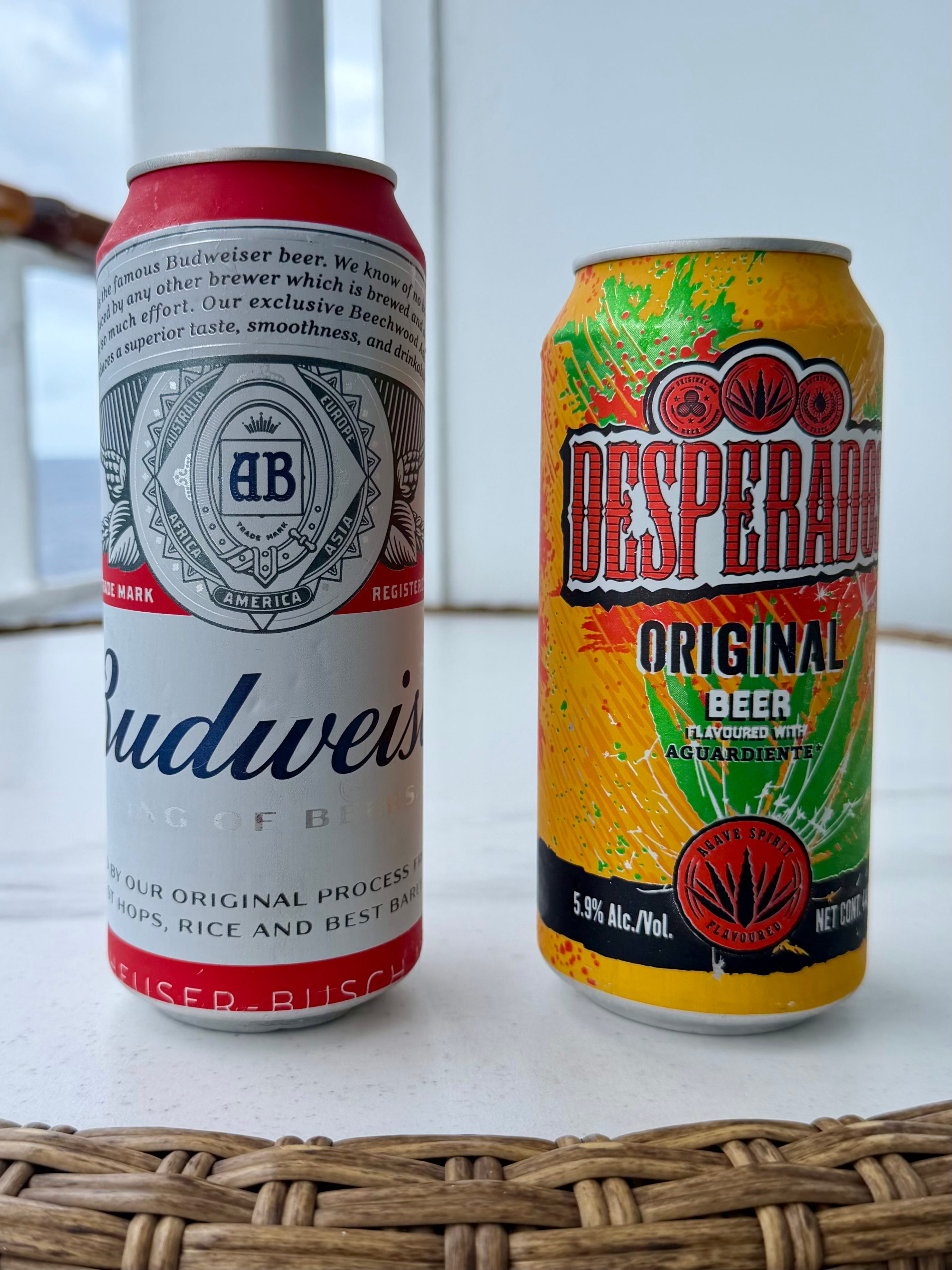
And now our excursion headed down a different path. Sherpa had asked our very attentive and engaging tour guide, Larenna, whether it would be possible to purchase a “local beer” during any of our planned stops, explaining that he tried to sample a locally brewed beer at every port of call. She assured him that there would be vendors at our last stop, across the street from the beach, and that she could help him. After our visit to the Gate, Larenna offered to take Sherpa to the shopping stalls. At some point, she bargained for beer in the local language, and, pleased, said two beers would cost about 4 USD. She made the exchange, using her personal stash of local currency in a complicated exchange for Sherpa’s USD, then happily handed Sherpa the two beers.
Sherpa was very surprised to see which local beers she had obtained on his behalf — a Desperado and a Budweiser! Now, to be fair, both cans were brewed in nearby Nigeria, so they are “almost local,” and they may taste completely different from Desperado, brewed in the Netherlands (a 4/10 at a previous port of call) or a Budweiser brewed in the US (not yet rated). Time will tell — Sherpa is planning a beer tasting gathering on an upcoming sea day.
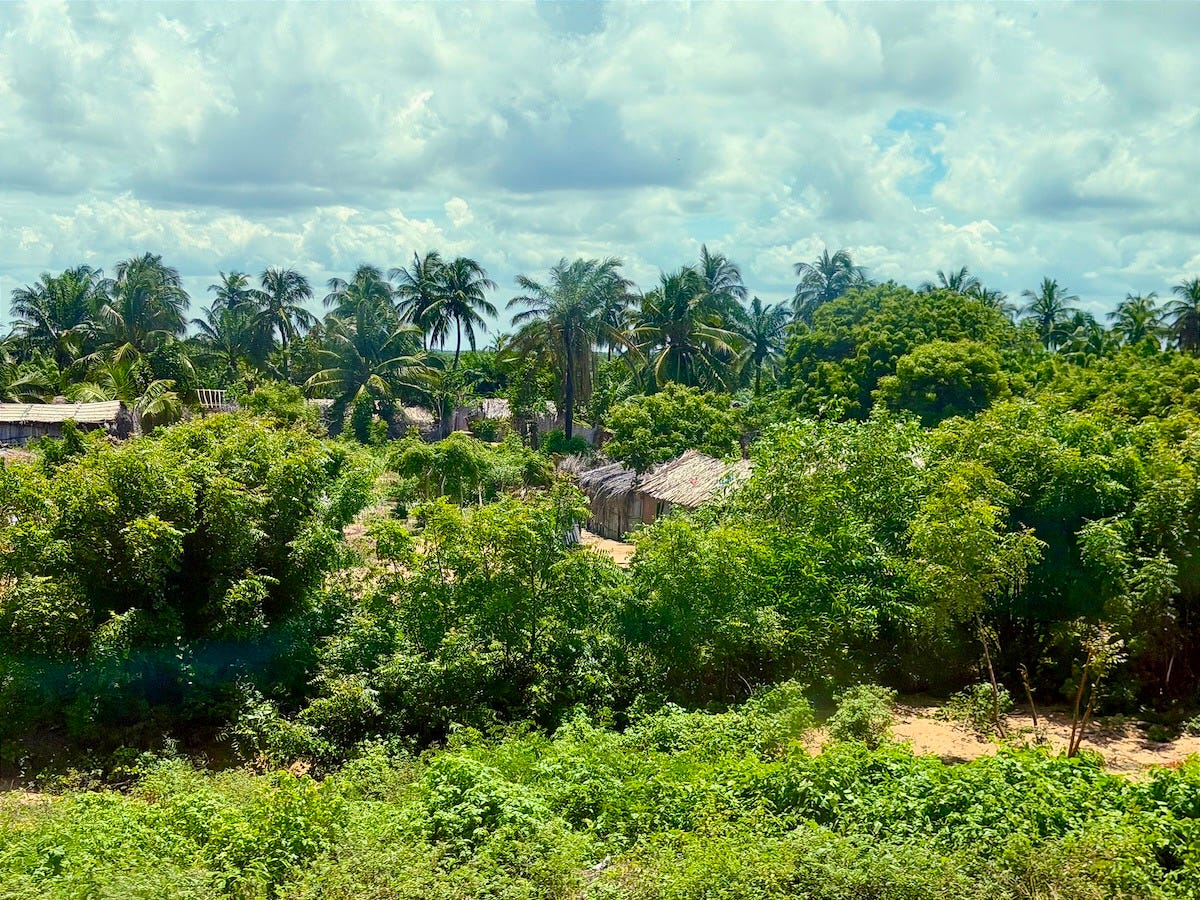
After our tour, we returned to Cotonou, speeding along the highway again, courtesy of our police escort. Along the way, while many in our group nodded off after our busy excursion, my eyes were peeled to the passing scenery.
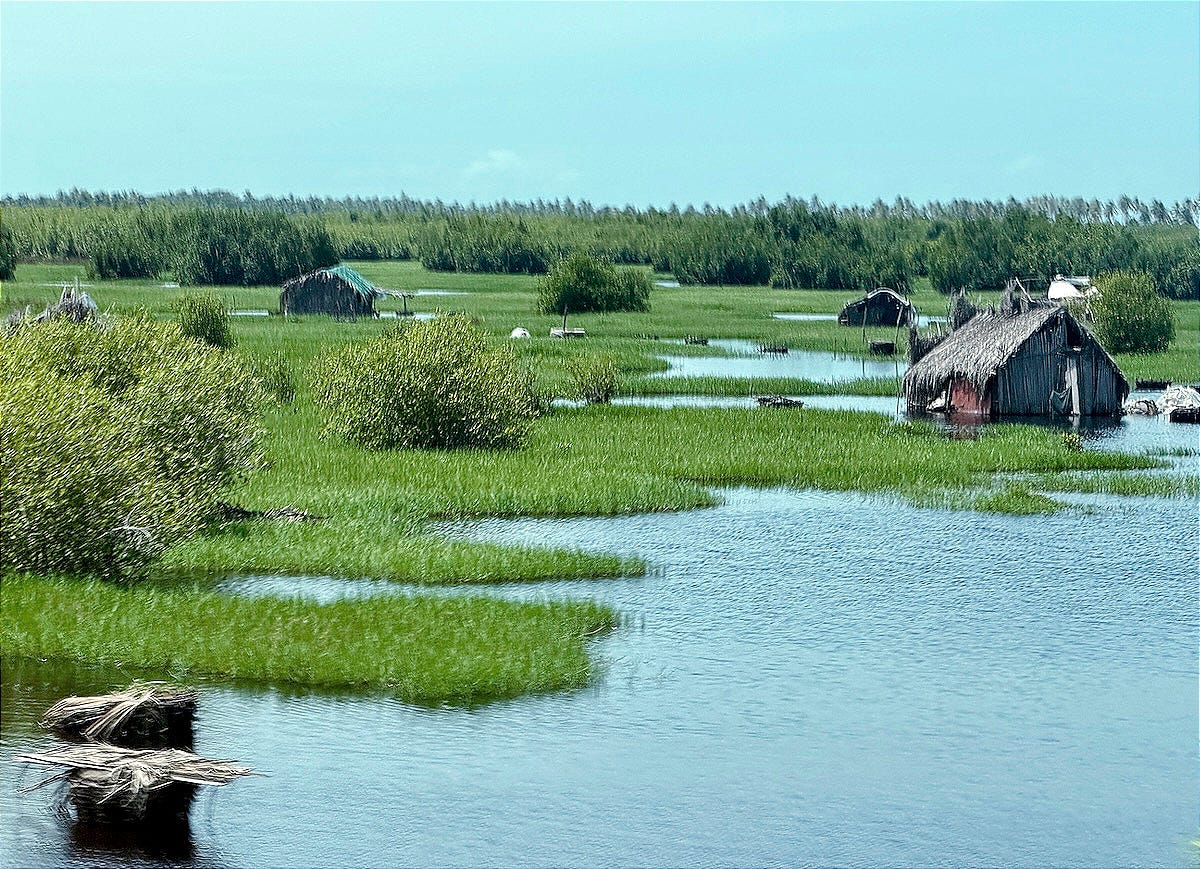
I just couldn’t take in enough of what I was seeing. Will I ever be back in this extremely interesting and friendly country? It seems unlikely!
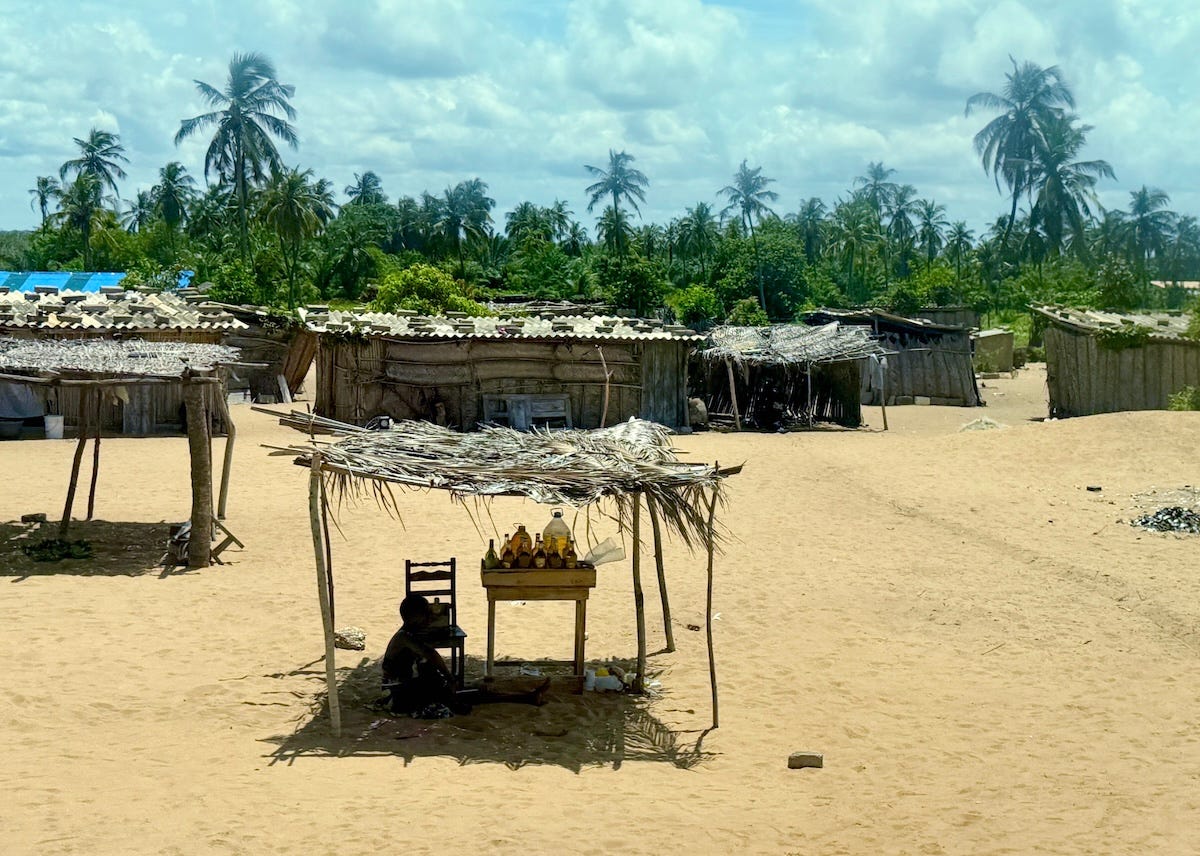
We kept noticing stalls that were selling bottles of a pale yellow liquid. Was it a home-brewed liquor? Was it a fruit juice or palm oil bottled in recycled containers? No, it was illegal gasoling, smuggled across the Nigerian border. The rows of recycled glass bottles filled with gasoline are measured out for motorcycle taxis (Zémidjans). Drivers purchase one or two bottles (each bottle is a liter), and the seller pours the gas into the fuel tanks using a plastic funnel! The government looks the other way because petrol stations outside Cotonou are few and far between. The informal market fills a necessary gap.
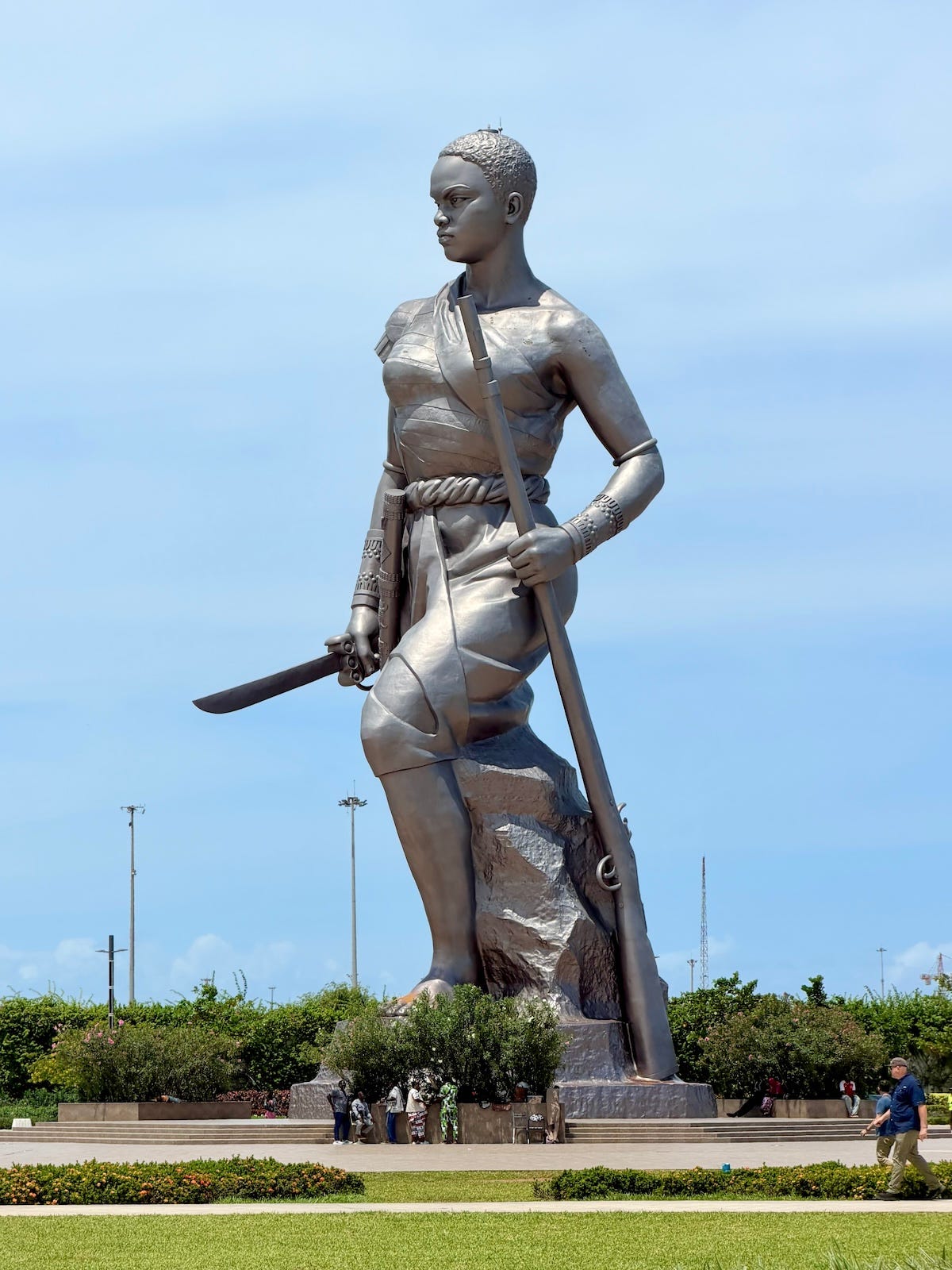
And finally, we were back in the busy city of Cotonou, whose larger urban area extends into neighboring districts and is home to over 2.5 million people. We paused briefly at the base of the Amazon Monument for photos, and then returned to the port and the awaiting Seven Seas Mariner.
Ouidah has a distinctly rural feel when compared to its much larger nearby sister city. We were really interested in learning about and exploring the Voodoo experience at the Sacred Forest and the Temple of Pythons, and, at the same time, we were sombered by the realities we encountered on our stops along the Slave Route. This was a five-star excursion, and well worth our time and money!