
Mindelo, Cape Verde
Our last African port of call was a unique Creole melting pot where the worlds of Africa and Europe have fused together over centuries.

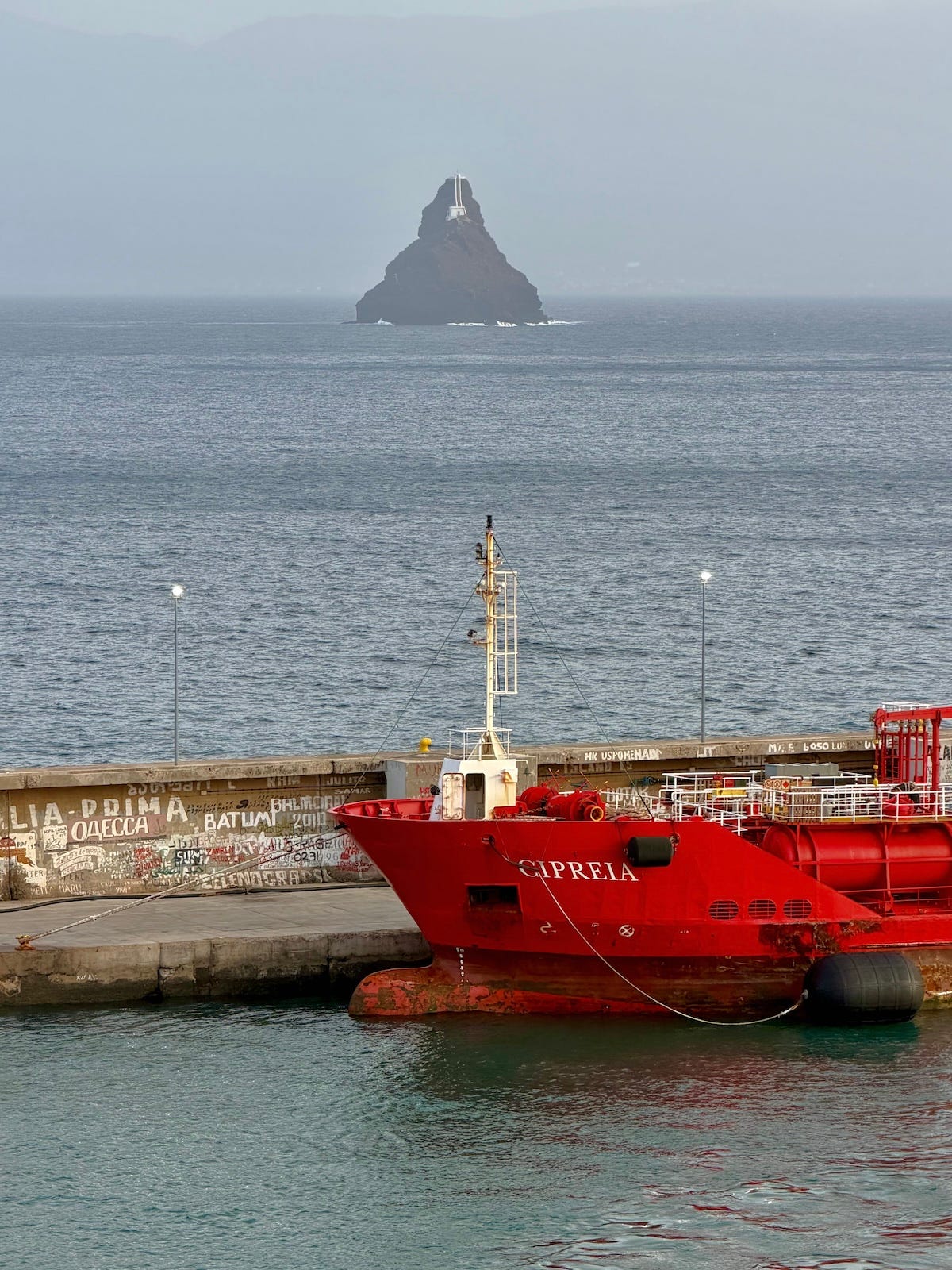
Nestled in a bay ringed by mountains, Mindelo is the pride and joy of the island of São Vicente. Delight in a scene enlivened by music that is certain to move you. For an auditory experience, visit the new Floating Music Hub, a project by the visionary architect-designer Kunlé Adeyemi. Art lovers can stroll along the picturesque harbor of Porto Grande, which offers a diverse collection of paintings, ceramics, and woodwork, or climb Monte Verde to enjoy sweeping views of the bay. Experience the vibrant Mercado Municipal or the historic Fortim d’El-Rei, which shimmers with glimpses into the city’s past. — Regent
Expected Conditions from Pre-cruise Research:
Daytime High Temperature: Approximately 77°F to 81°F. (Our actual high temperature was a toasty 86°F.)
Nighttime Low Temperature: Around 68°F to 70°F.
Rainfall: The chance of rain is virtually 0%. The islands are very arid during this season. (The island had a decided desert feel.)
Humidity: The relative humidity is moderate, typically around 68%, making the air feel comfortable and dry. (Yes, to comfortable.)
Sunshine: Expect ample sunshine with predominantly clear or partly cloudy skies. (Yes, to sun, but it was windy, and so the air was hazy with dust.)
Ideal Weather: May offers excellent weather for outdoor activities, combining warmth, comfortable humidity, and cooling trade winds.
Sun Protection: The UV index will be high; use sunscreen and protective clothing when outdoors.
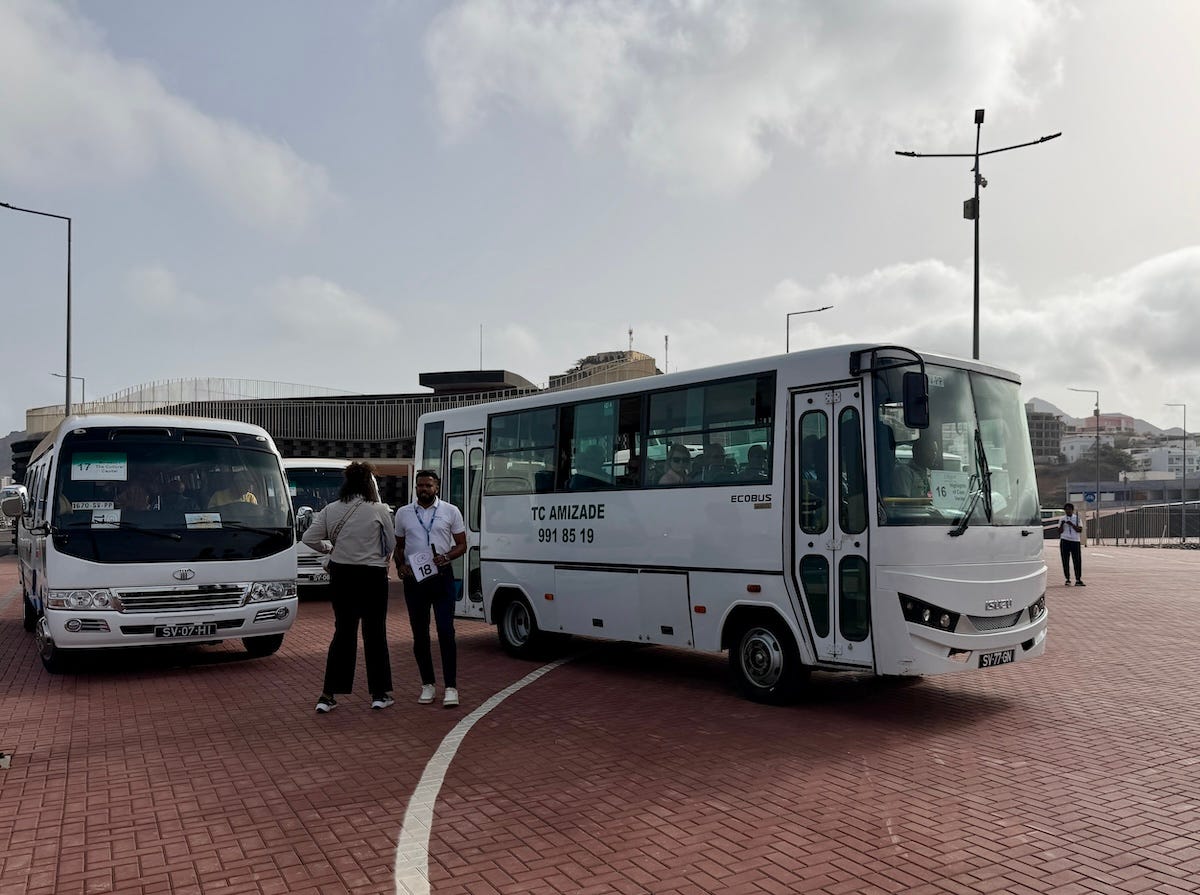
We booked the MINDELO - THE CULTURAL CAPITAL excursion, a 3.50-hour, Regent-included excursion.
Experience the historical and folkloric heartbeat of Mindelo on this enriching coach and walking tour through its cultural museum, open-air market, historic quarter, and in a traditional dance performance. You’ll stop at charming Praça Nova, a colonial square that offers a glimpse into the city’s casual social life. Notice Mindelo’s well-preserved colonial buildings and monuments commemorating key historical events, and see the striking Belem Tower, a replica of the famed Lisbon original, that pays homage to the island’s discovery in 1642 on Saint Vincent’s Day. You’ll browse Praça Estrela, a thriving marketplace where West African merchants display wares ranging from handmade crafts to fine jewelry, and the historic quarter where each street cradles more architectural wonders and surprising national treasures. Cap off your adventure by watching a traditional dance performance complemented with a glass of ponche, a traditional island cocktail, presented with great pride by these socially diverse islanders. (Because the Cape Verdean Cultural Center was damaged in last year’s hurricane, a substitution was made — a visit to the Centro Nacional de Artesanato e Design (CNAD), which is a prominent cultural institution and museum, renowned for its striking, colorful facade made from 2,500 recycled barrel lids.)
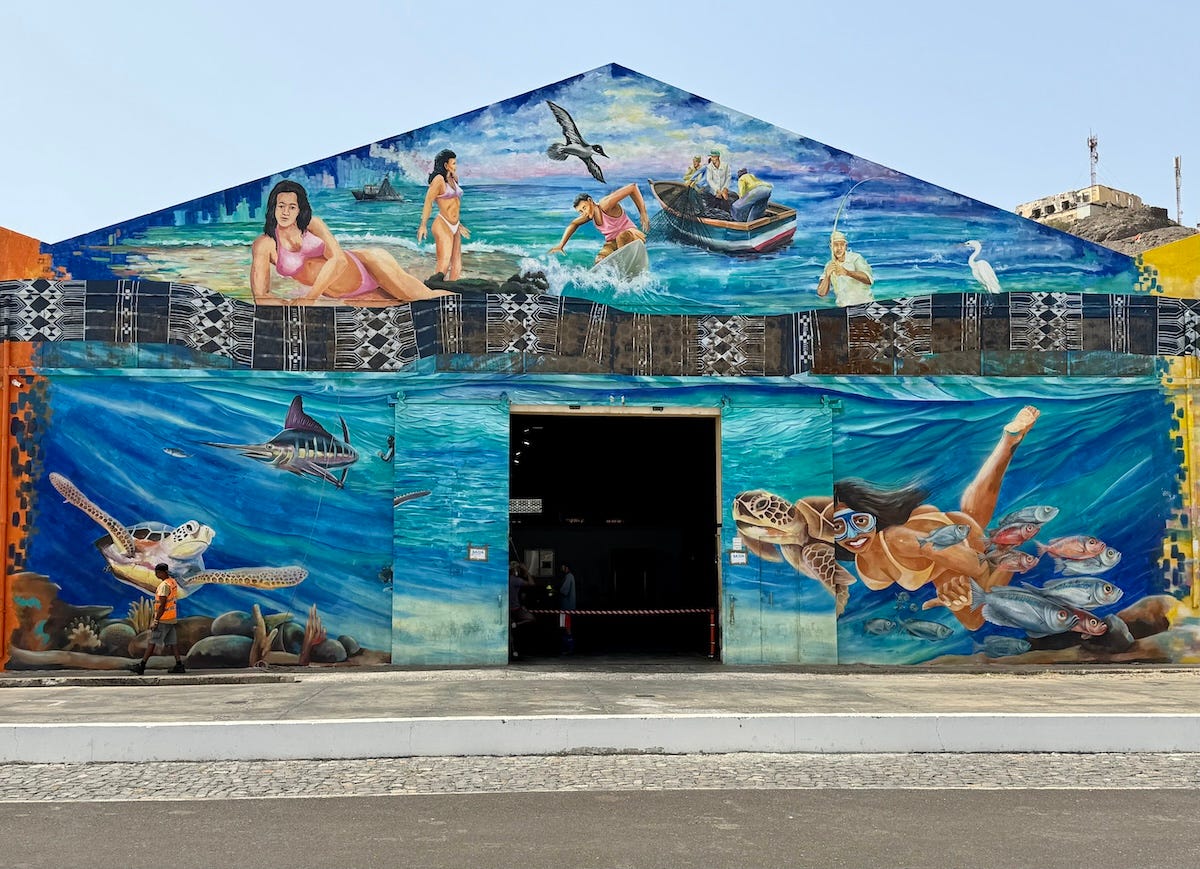
The pedestrian walking path connecting the cruise ship dock to the city center was lined with public art, including murals featuring Cape Verdean themes that covered several walls of the nearby warehouses. We boarded small buses here and headed towards the city.
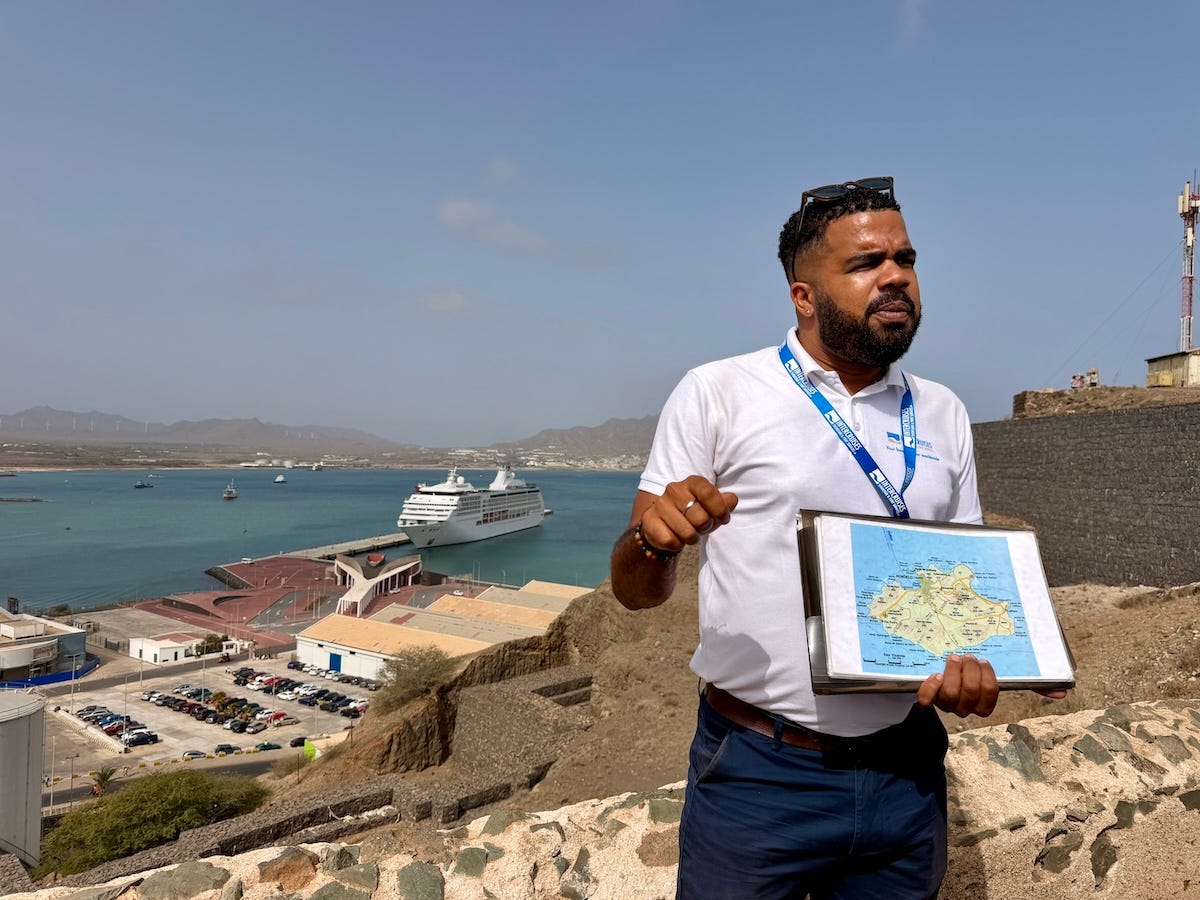
We first drove from the port to a nearby panoramic lookout, Fortim do Rei, the ruins of a 19th-century colonial fort, which offered unobstructed views of Porto Grande Bay, the Mindelo Marina, and the colorful city rooftops below. Our guide used several visual aids throughout the tour to help explain geography, history, local currency, and the symbolism of their flag.
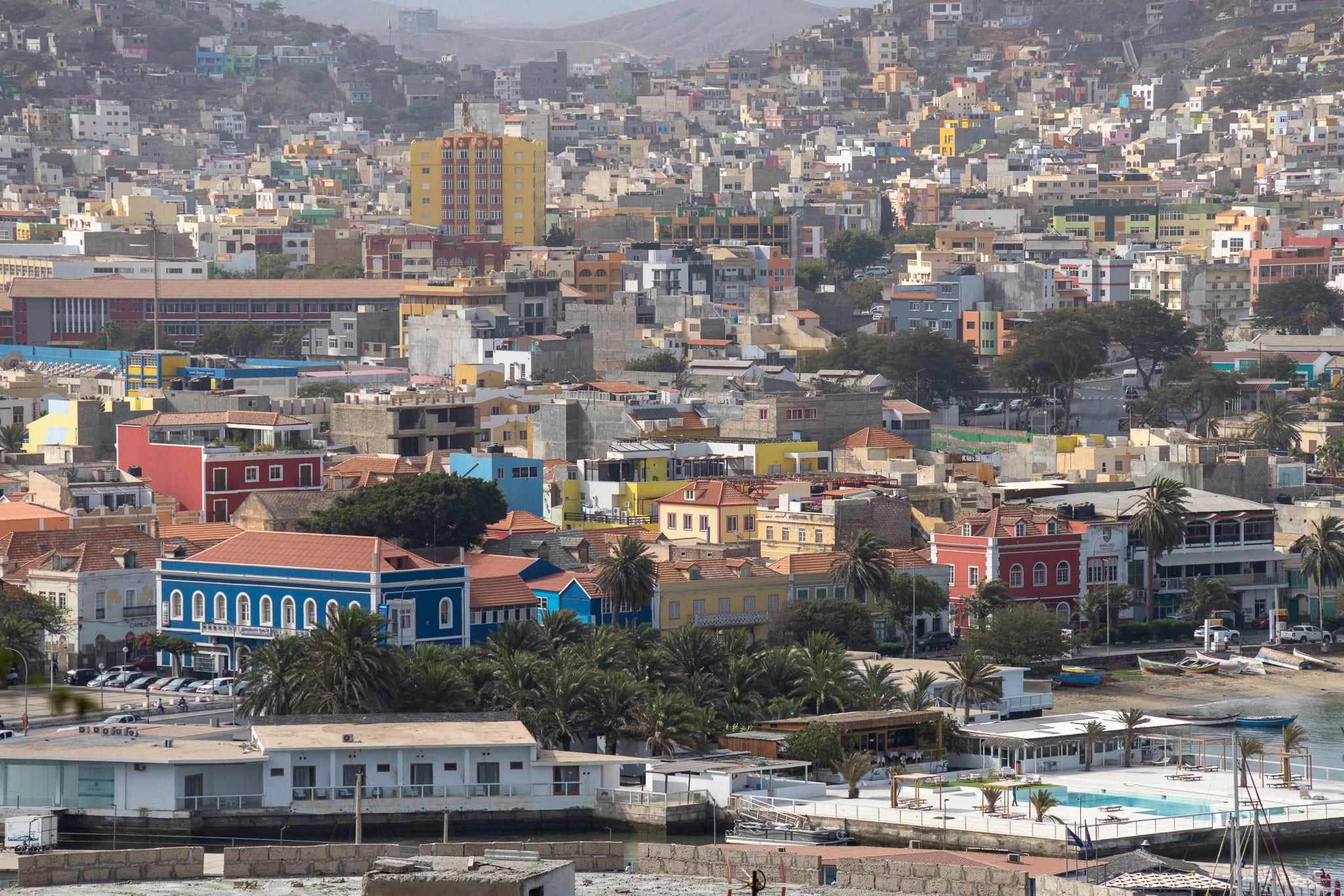
Mindelo does have its share of beautifully constructed colonial buildings, many painted in bright, vibrant colors.
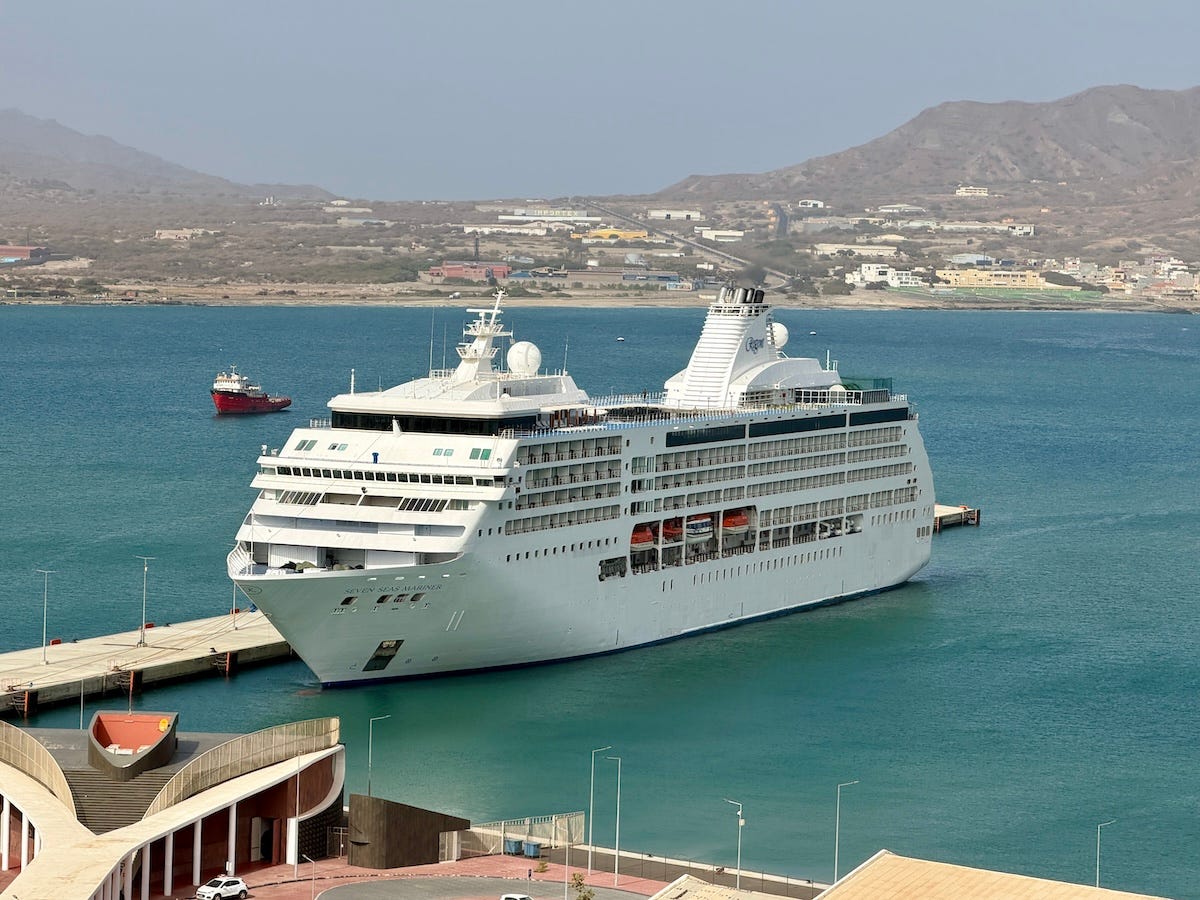
We had a great view of the Mariner, docked in the harbor, considered one of the finest and safest natural harbors in the Atlantic Ocean. The harbor, Porto Grande, owes its unique geography to an ancient volcanic crater that collapsed and filled with seawater. This created a perfect, crescent-shaped bay spanning more than a mile in radius.
Our guide explained that the British Empire stored major coal deposits here in the mid-1800s. Because Porto Grande sat at the crossroads of many transatlantic shipping lanes, it became an indispensable refueling stop for fleets traveling between Europe, South Africa, and South America. This single-handedly transformed Mindelo from an isolated island into a booming port city.
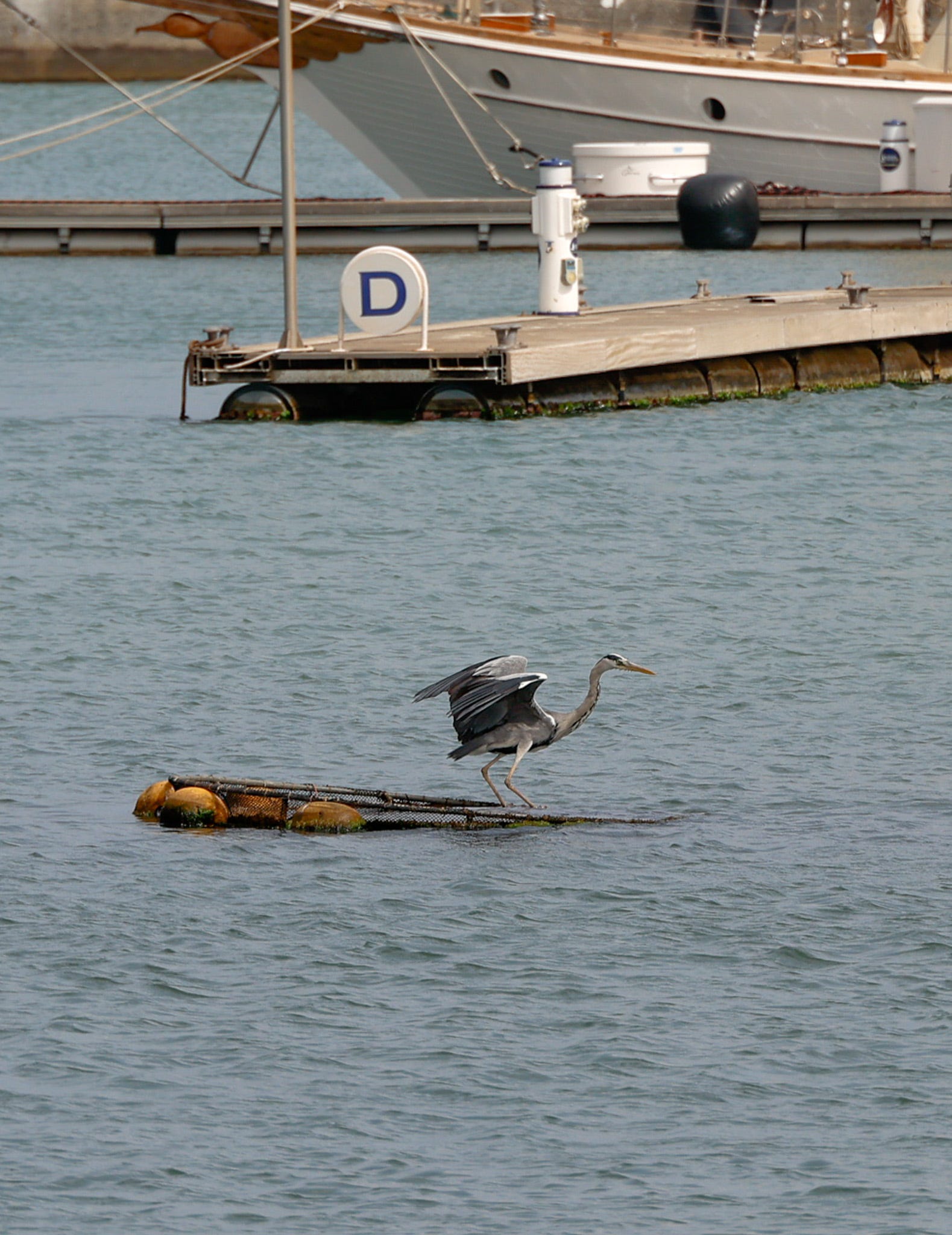
After the lookout stop, we returned to the waterfront by bus, then began the walking part of our tour. The pedestrian route along Avenida Marginal was packed with cultural and historical monuments and unique architecture. Not to mention, lots of boats and birds. Several gray herons were intently fishing from submerged and floating boats, and were quite successful in their endeavors.
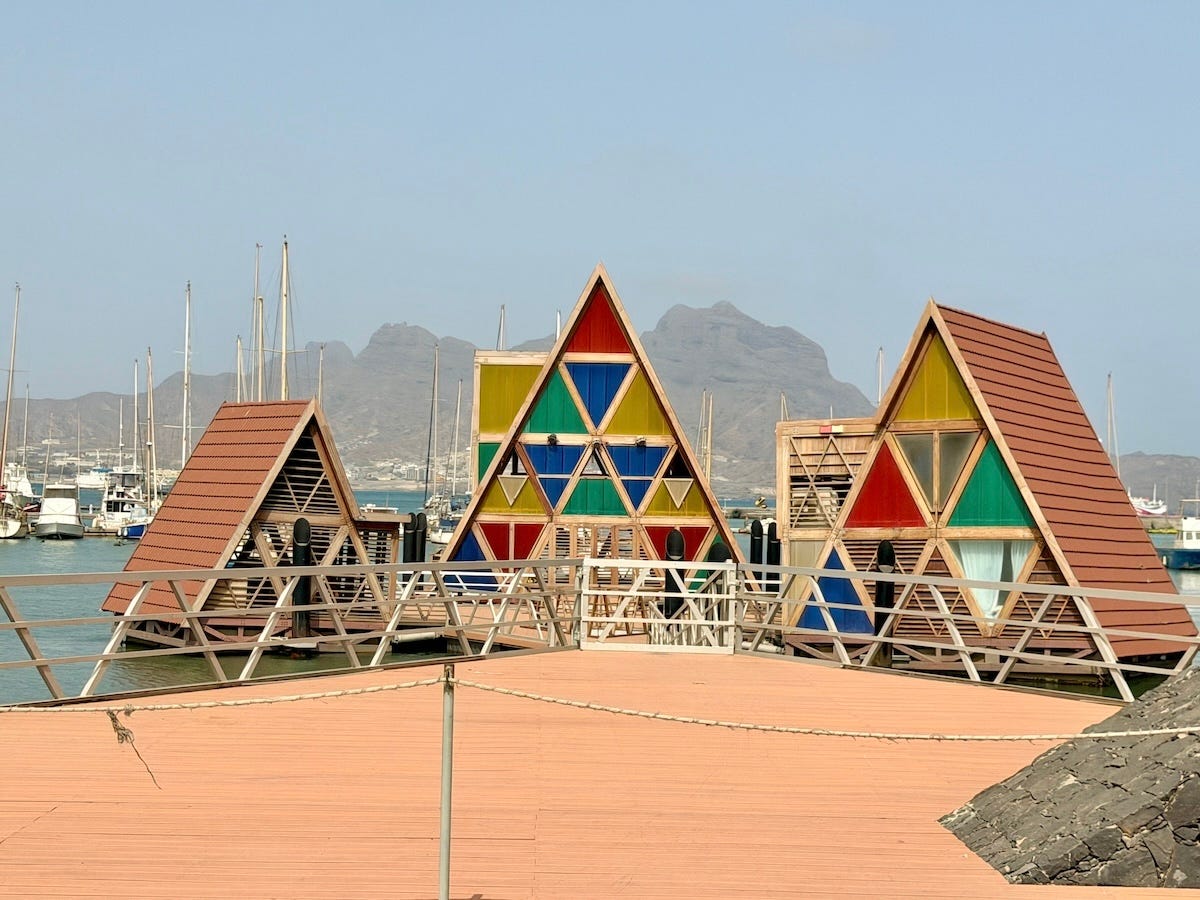
We walked past these “triangle buildings,” the Mansa Floating Hub, which is a colorful, eye-catching landmark anchored directly in the water. Traditional African nautical architecture, sails, and woven geometric patterns inspired the sharp roofs of the three overlapping triangular structures. It’s a cultural center, featuring a live music venue, a recording studio, and a floating bar/restaurant. (Closed when we went past.)
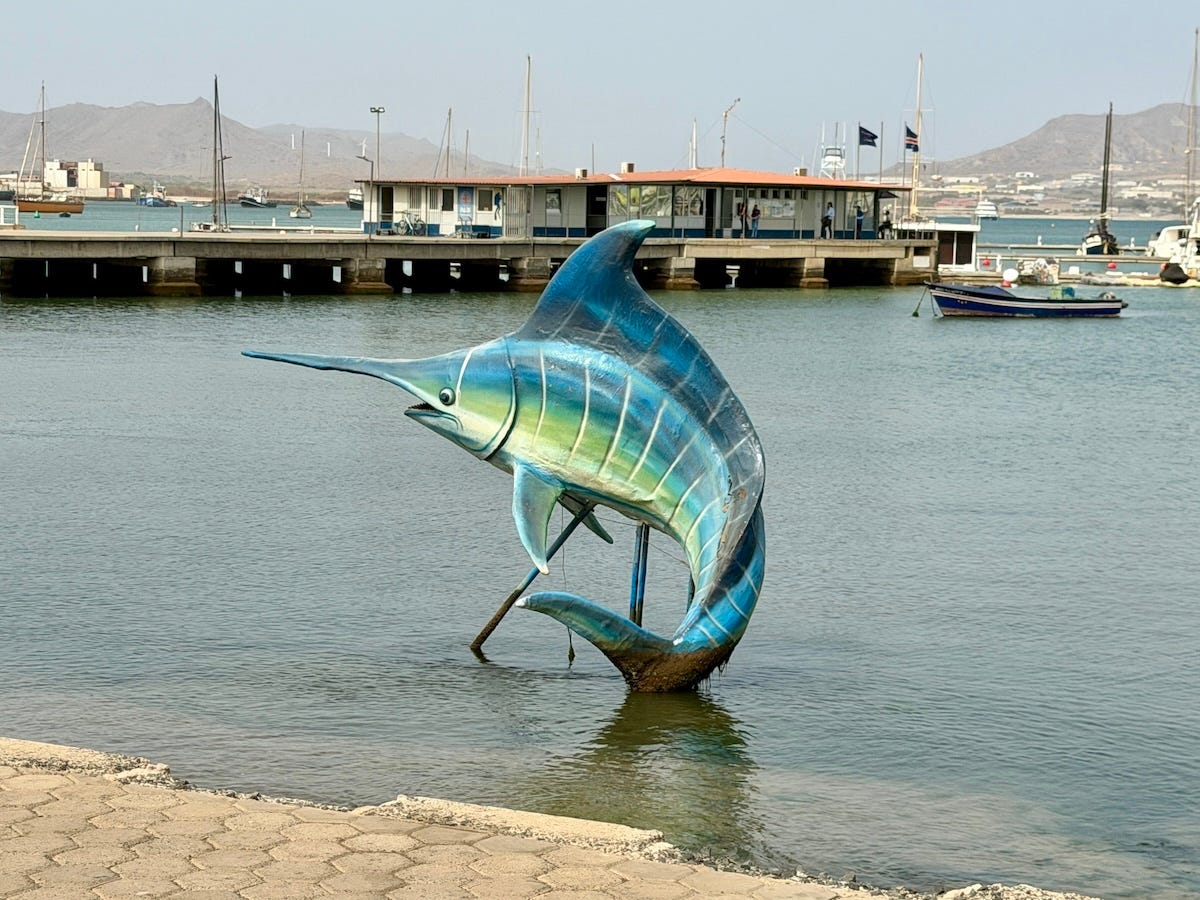
The Blue Marlin Statue is a sculpture of a giant marlin leaping out of the water. The life-sized sculpture celebrates Cape Verde’s status as one of the world’s premier destinations for big-game sport fishing, particularly renowned for record-breaking Atlantic blue marlin.
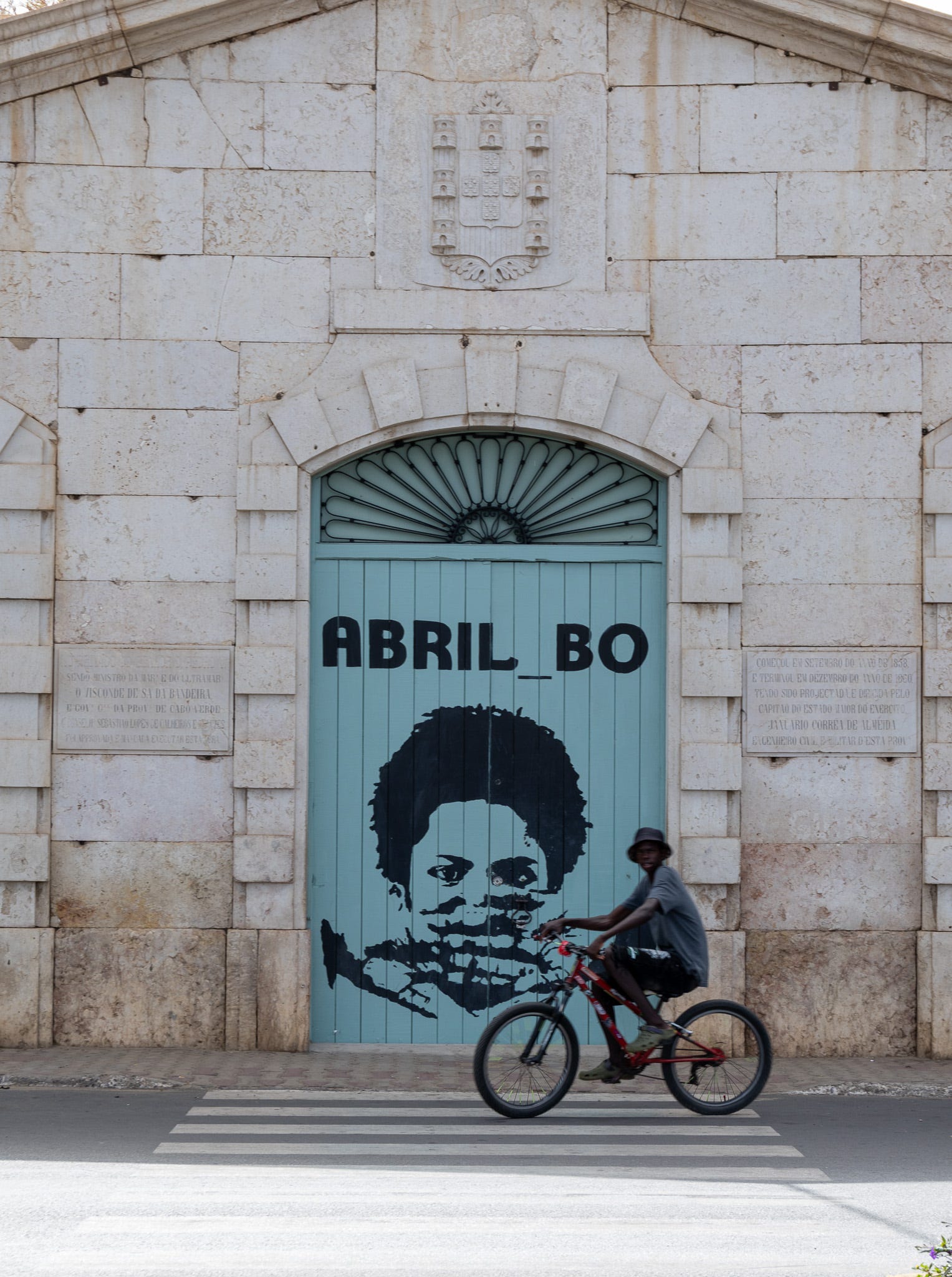
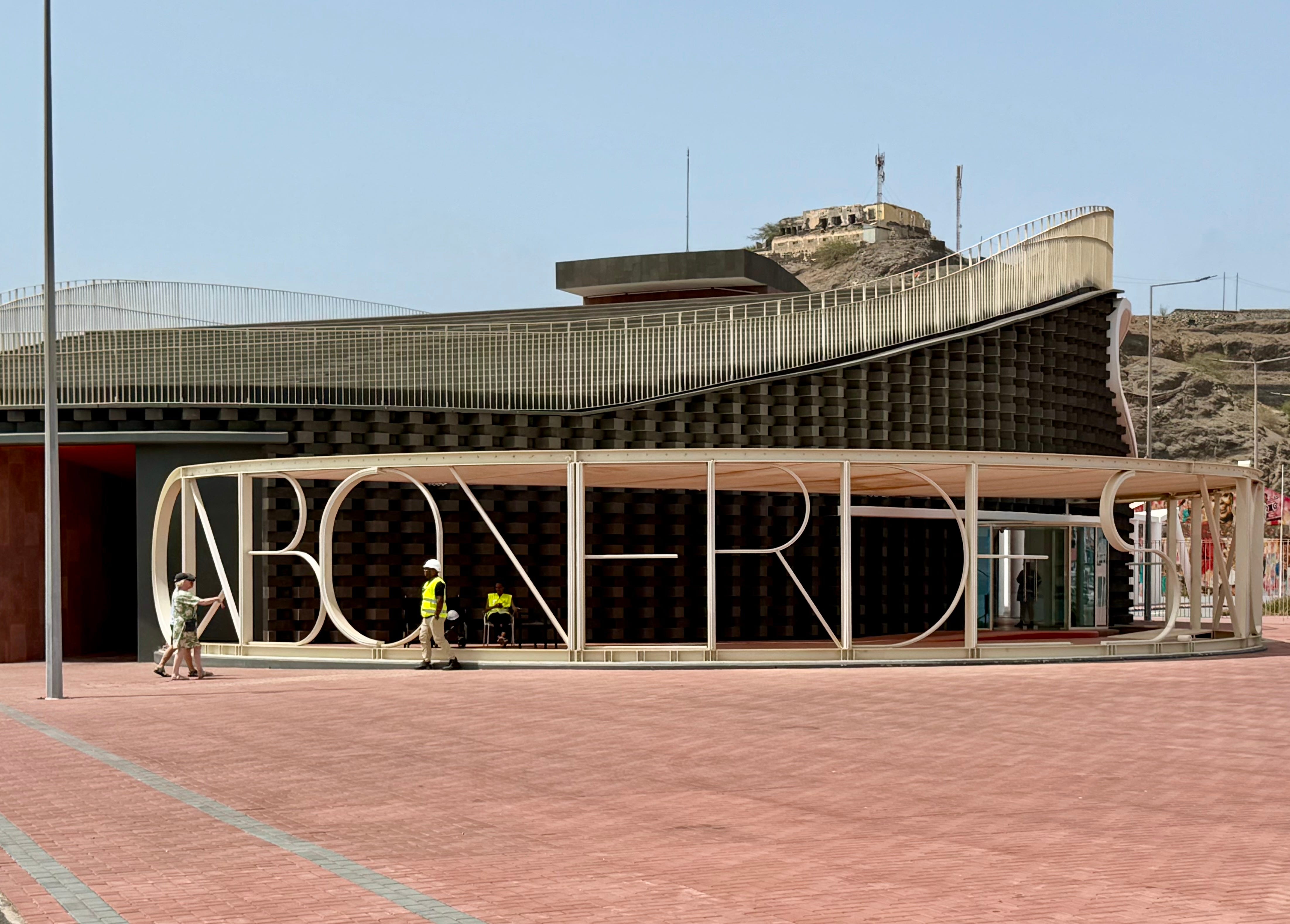
“Abril Bo” translates from Cape Verdean Creole to “You are April” ( which is short for Mindelo, Abril bo é poesia — ”Mindelo, you are poetry.”) “Abril Bo” has become a slogan used throughout the city to celebrate the area’s cultural heritage.
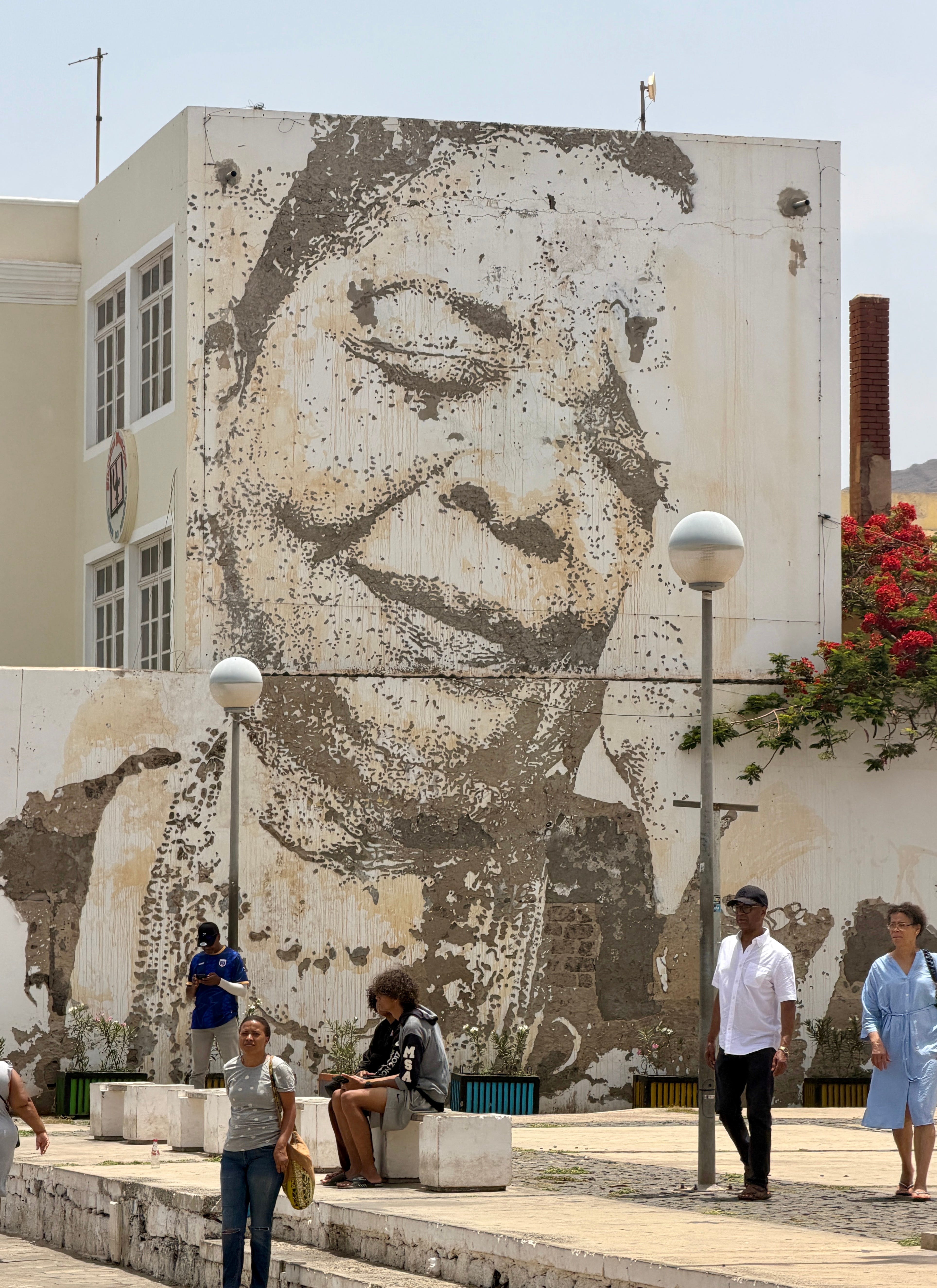
A massive portrait of Cesária Évora, Cape Verde’s legendary “Barefoot Diva” and Grammy-award-winning singer, was carved into the side of this three-story building by the world-renowned Portuguese street artist Vhils. Instead of using paint, Vhils used his signature bas-relief chiseling technique to etch the likeness directly into the building’s facade.
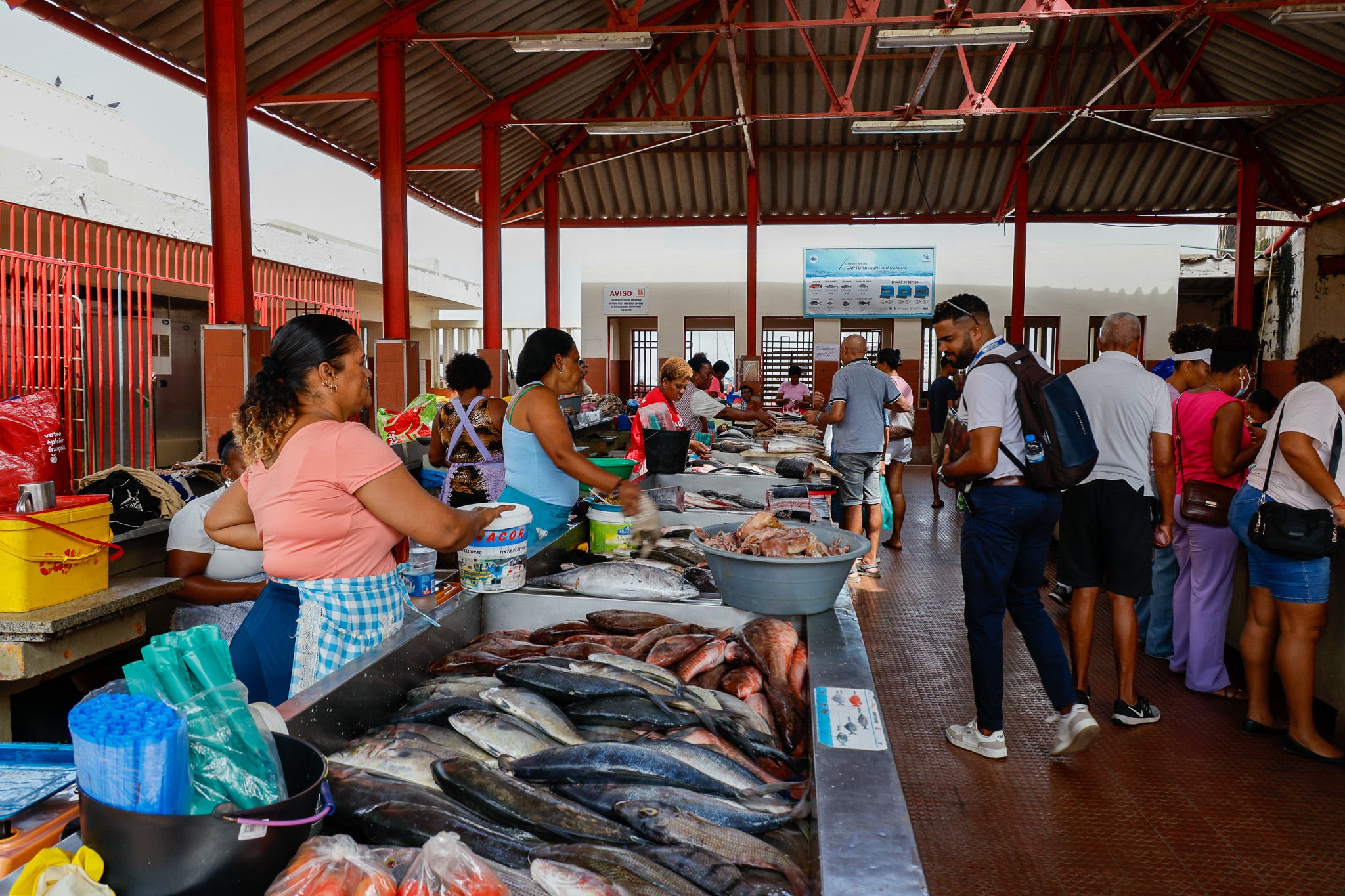
Our next scheduled stop was at the Mercado de Peixe, or Fish Market — a busy, indoor market where local fishermen unload fresh daily catches from the dock, and they are either sold or processed.
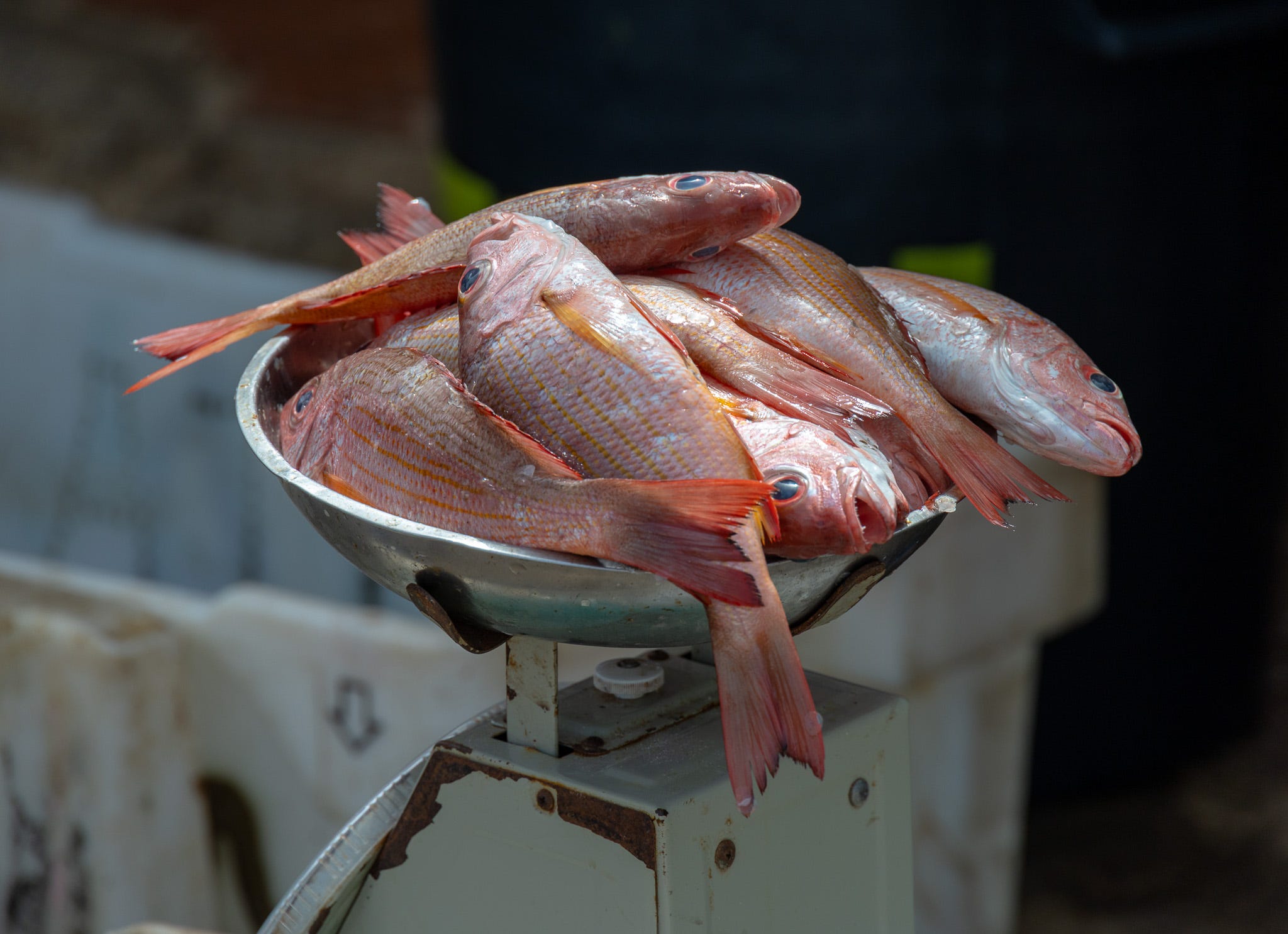
I’ve got to admit, if you’ve seen one or two or maybe even a half dozen fish markets, there isn’t much need to see another one. We have visited fish markets from Asia, South America, Australia, and Europe. On this cruise, we’ve added several more stops at African fish markets. I may have seen as many fish markets as I need to see in my lifetime. Not that you can’t get an interesting photo of a pile of fish, but I’ve reached my quota.
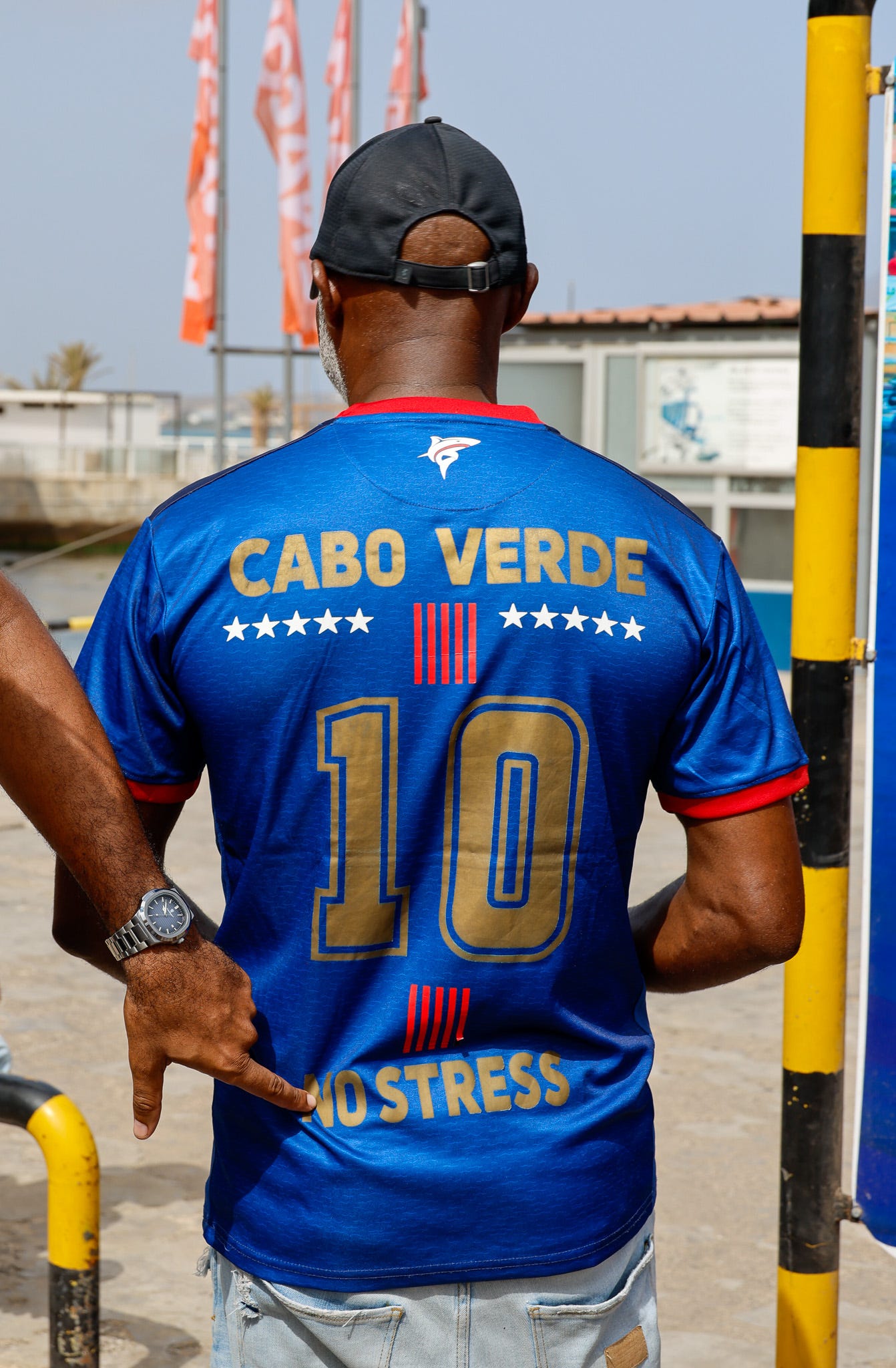
We stopped to chat with a young man eager to show off his football jersey. Perhaps Cabo Verde’s team motto is “no stress?” Nice! I think I’ll “no stress” about skipping any more visits to fish markets.
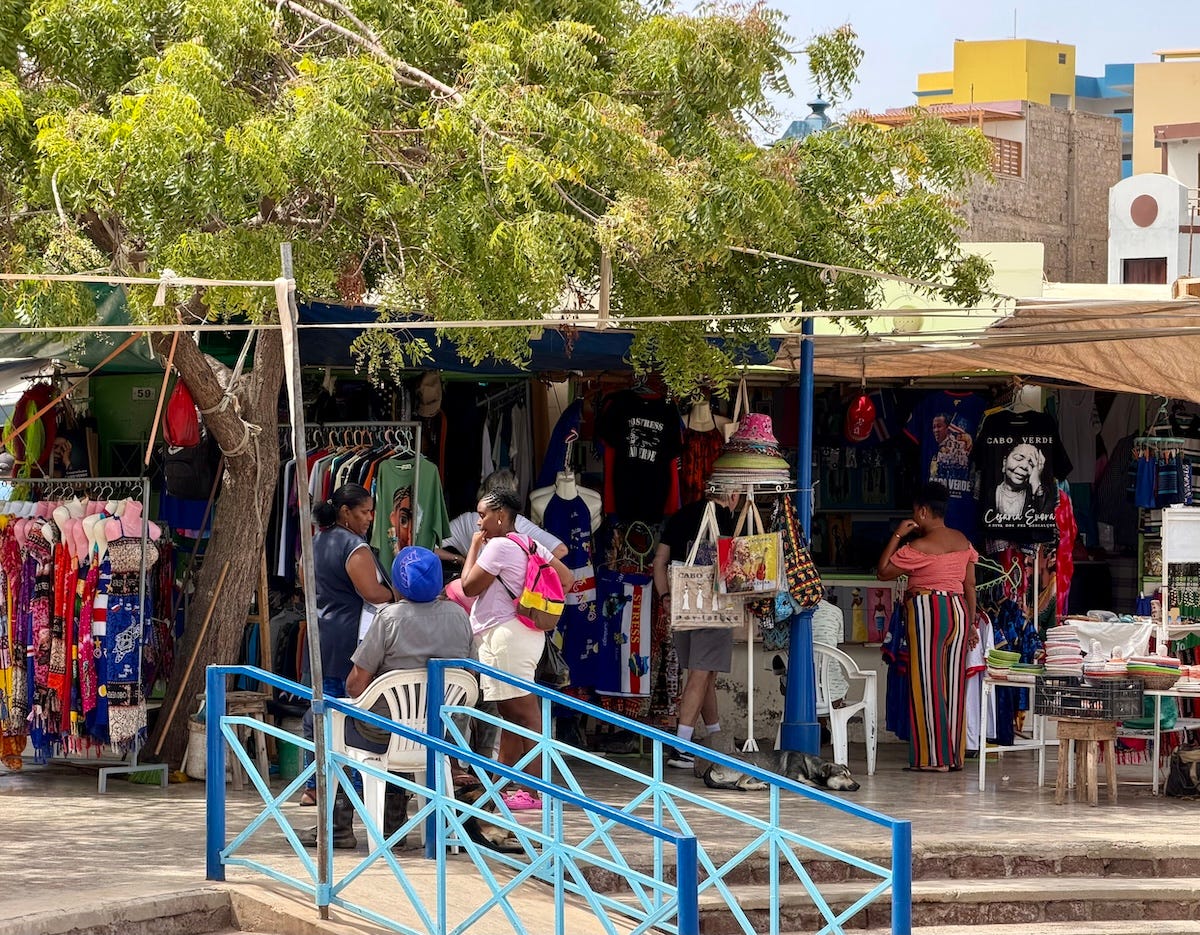
Next stop, the always-included stop to a souvenir place, this one was referred to as “The African Market.” A quick perusal of the stalls showed the same variety of wood, textiles, masks, and fridge magnets we’ve seen at all the markets in Western Africa.
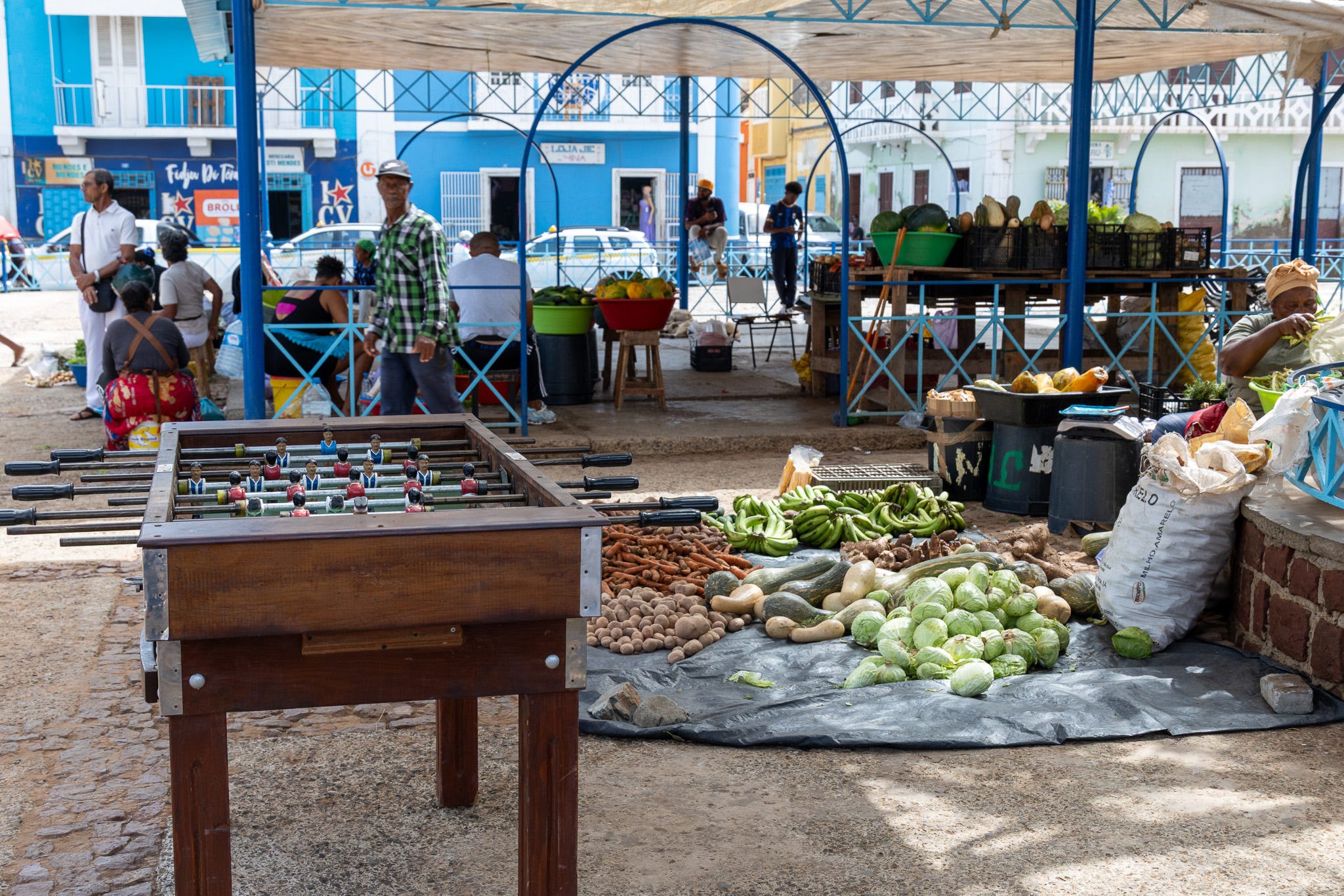
We walked through the adjoining vegetable market instead. Wish we could have challenged someone to a game of Foosball! In Cape Verdean Creole and Portuguese, Foosball is known as matrecos and played everywhere — including, apparently, at this open-air market. Sherpa was quite the foosball player when he was a student in law school. Many a night, he’d hang out at Pippin’s, a local bar on Rush Street in Chicago, drinking beer (no surprise there) and challenging newbies to a game of Foosball (for beer money). Perhaps he could have won a Strela if he’d challenged a local foosballer to a game!
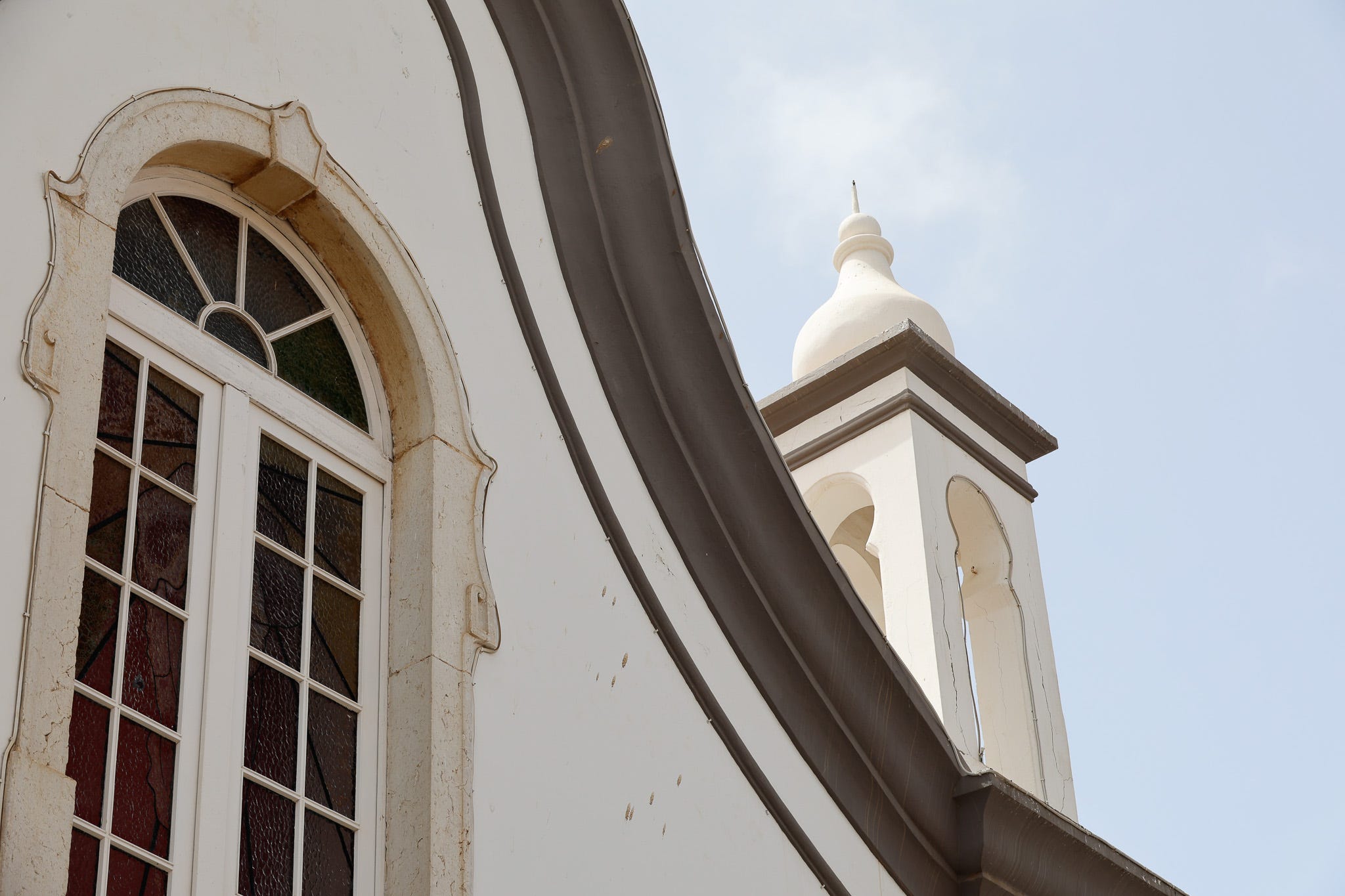
Next stop on our walking tour was the Igreja de Nossa Senhora da Luz (Church of Our Lady of the Light), located just a short walk from the market.


This charming colonial church featured a soft pastel facade with a central bell tower, reflecting classic 19th-century Portuguese styling. Built in 1862, it is the oldest church in Mindelo.
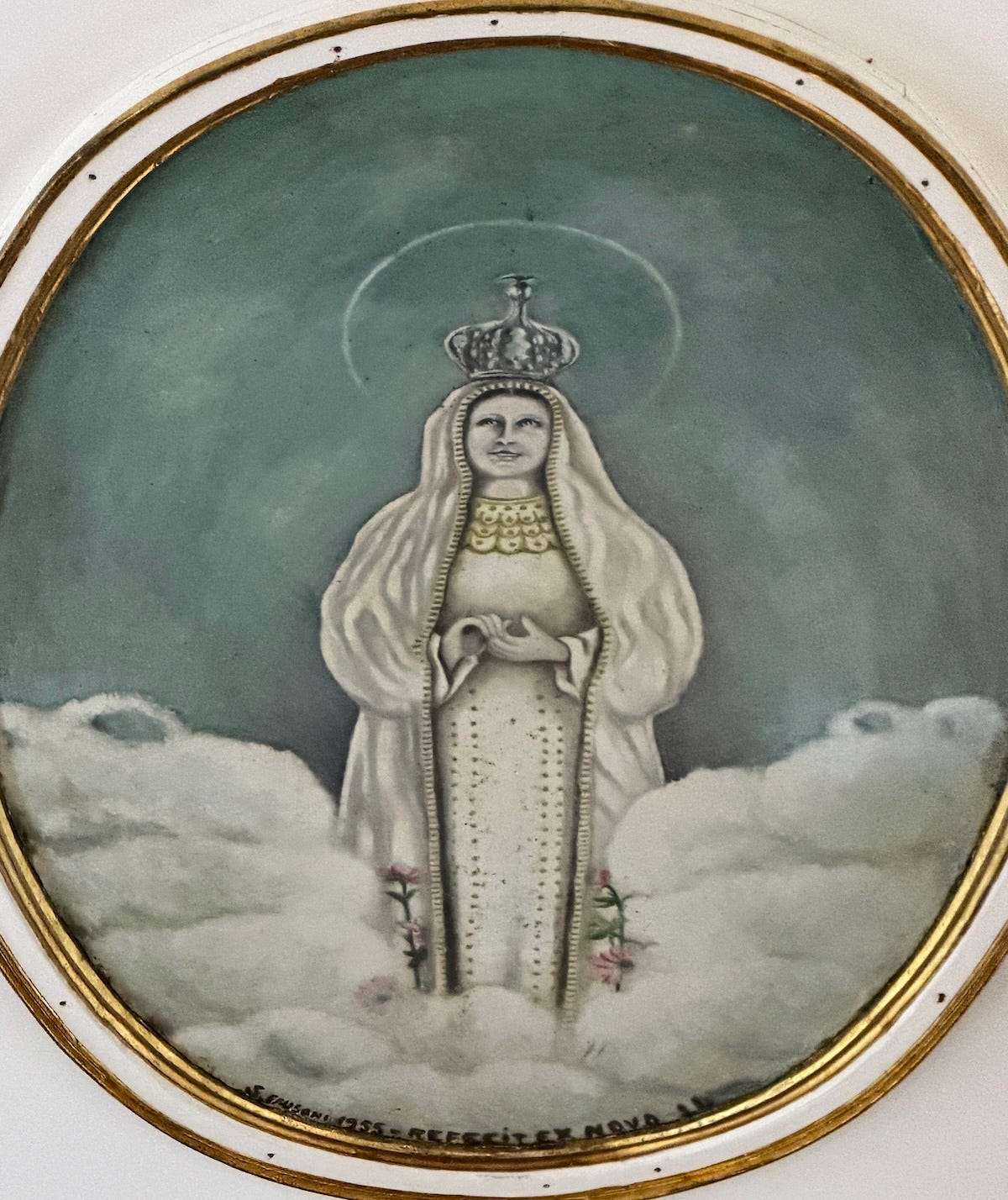
A central medallion, or fresco painting, was painted in the center of the nave’s ceiling. The vibrant blue oval frame stood out dramatically against the wood paneling, encasing a portrait of the Virgin Mary (Our Lady of the Light) looking down upon the congregation. Quite a change from the more typical paintings we’ve seen in most Catholic Churches. Very simple, yet very effective.
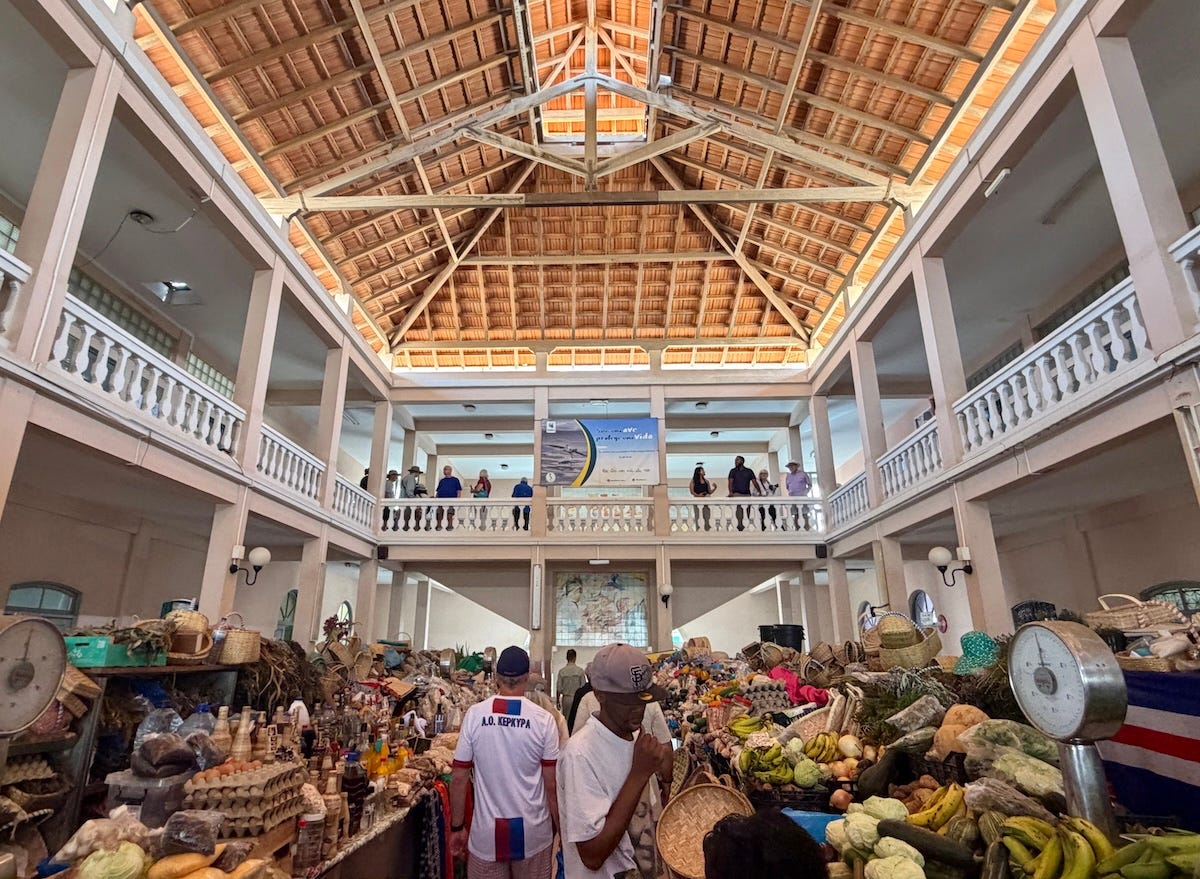
We then took a quick walk along the central aisle of the indoor vegetable market in the Mercado Municipal. Housed in a restored 19th-century colonial building, this well-organized, two-story indoor market was filled with the aromas of fresh herbs and local produce.
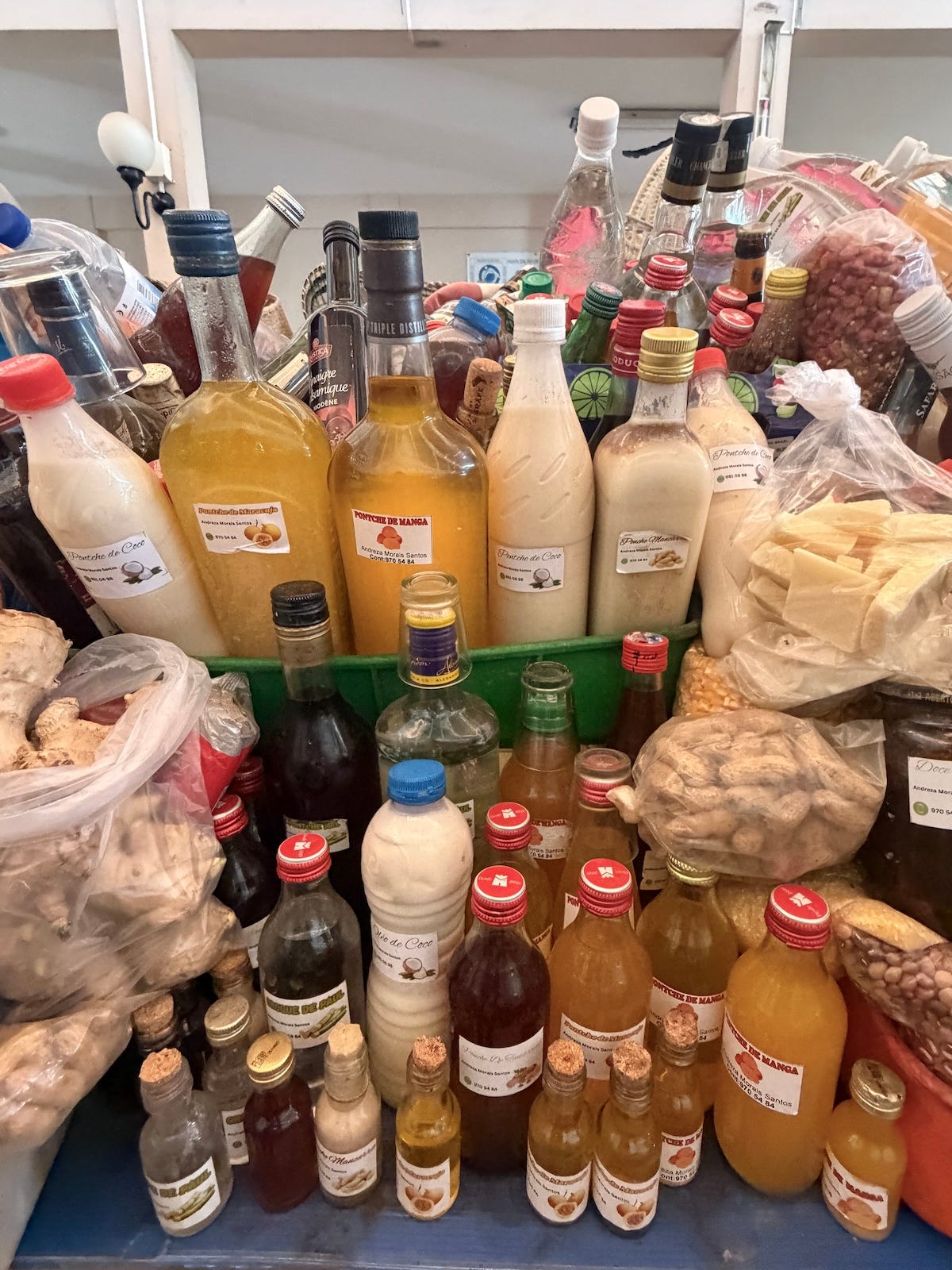
Piles of tomatoes, peppers, yams, bananas, papayas, herbs, and local Cape Verdean goat’s cheese were in abundance. And there were many displays of home-bottled hot sauces, honey, and herbal remedies, too — wouldn’t those be interesting to examine more closely!
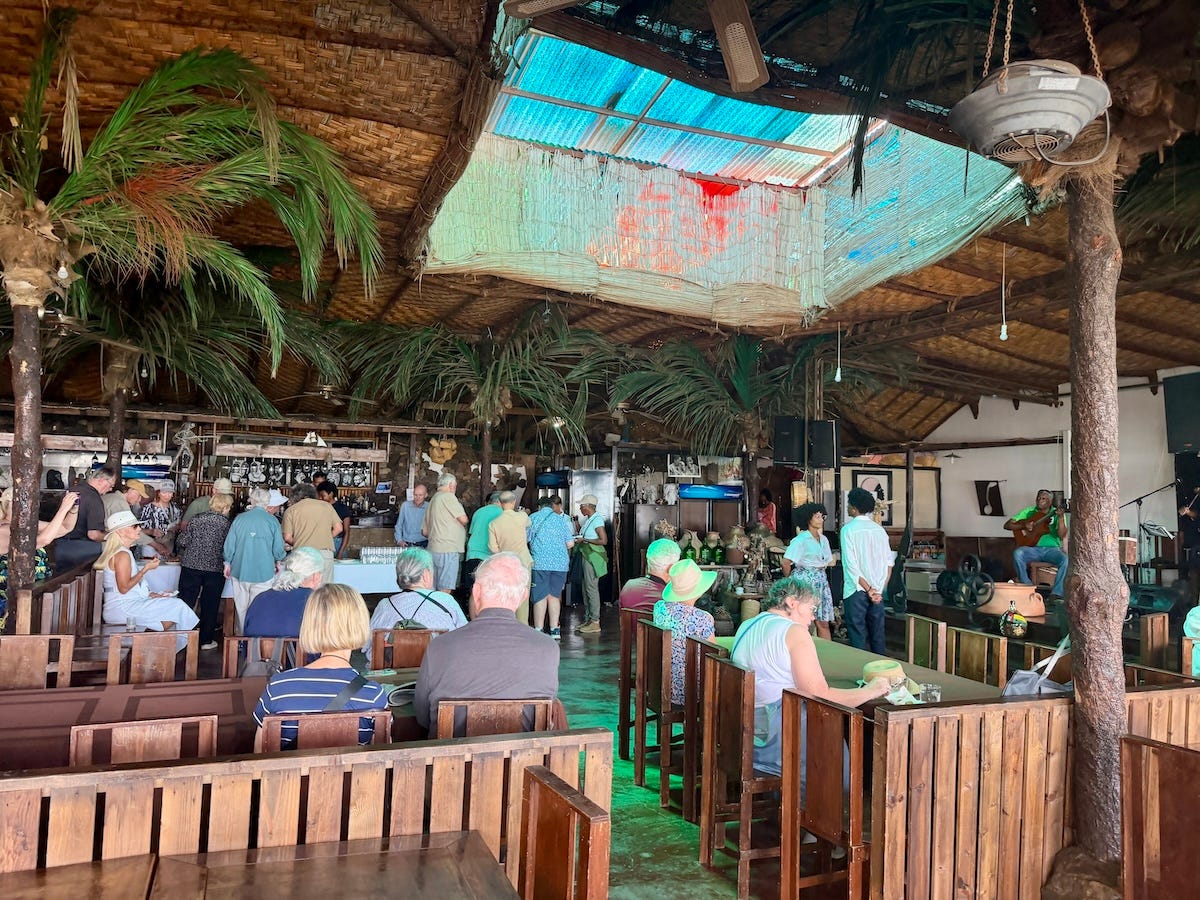
To conclude our walking tour, we stopped at a third-floor venue for entertainment and refreshments. The space was expansive, with windows overlooking the harbor, and a large bar and seating area. This is likely a thriving nightclub at night. But by day, it was a convivial setting for our gathering.
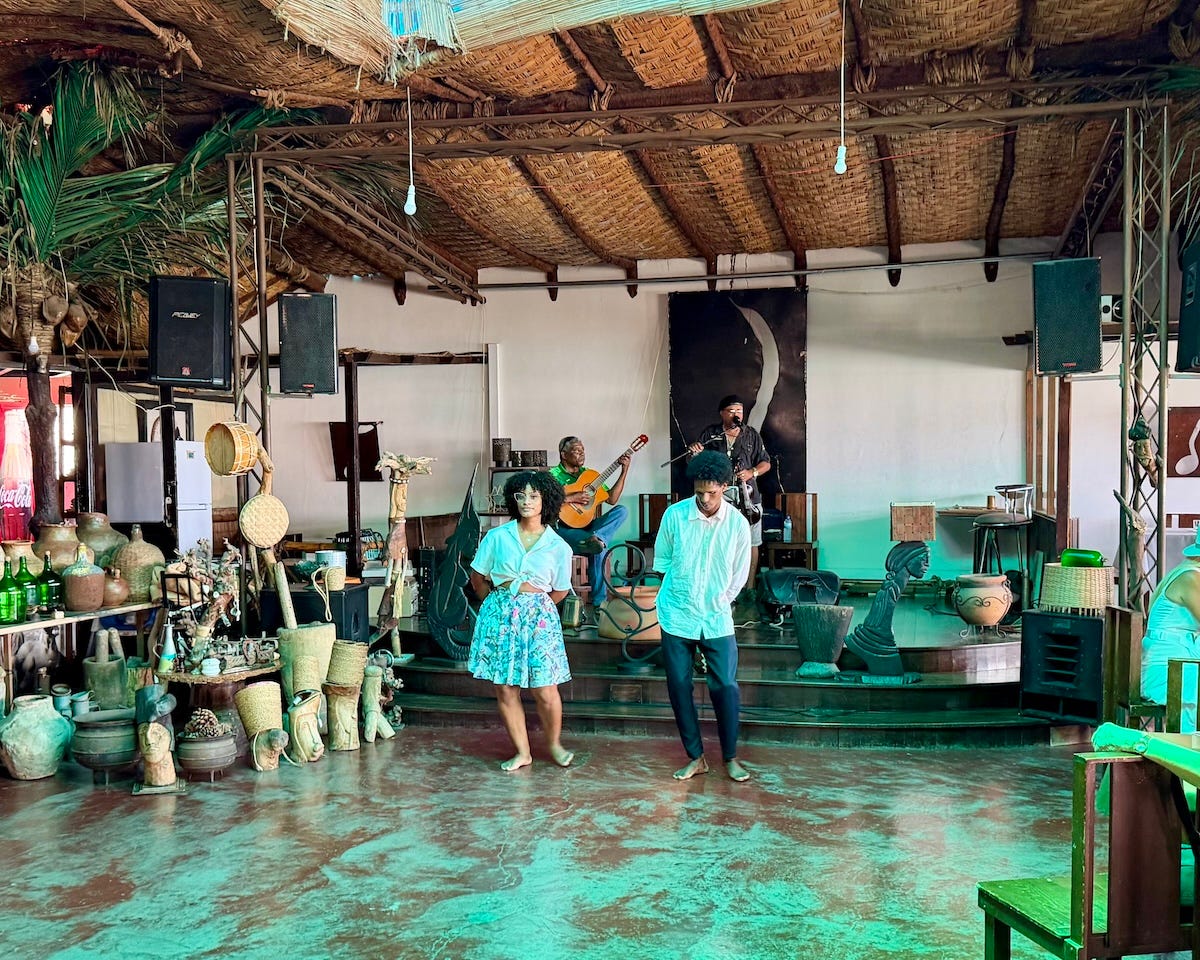
A couple, whose names we did not get, shared traditional dancing while several musicians accompanied them. Their low-key, Portuguese-style music paired well with a variety of savory finger foods and several drink options, including beer, soda, and a traditional local liqueur called Ponche.
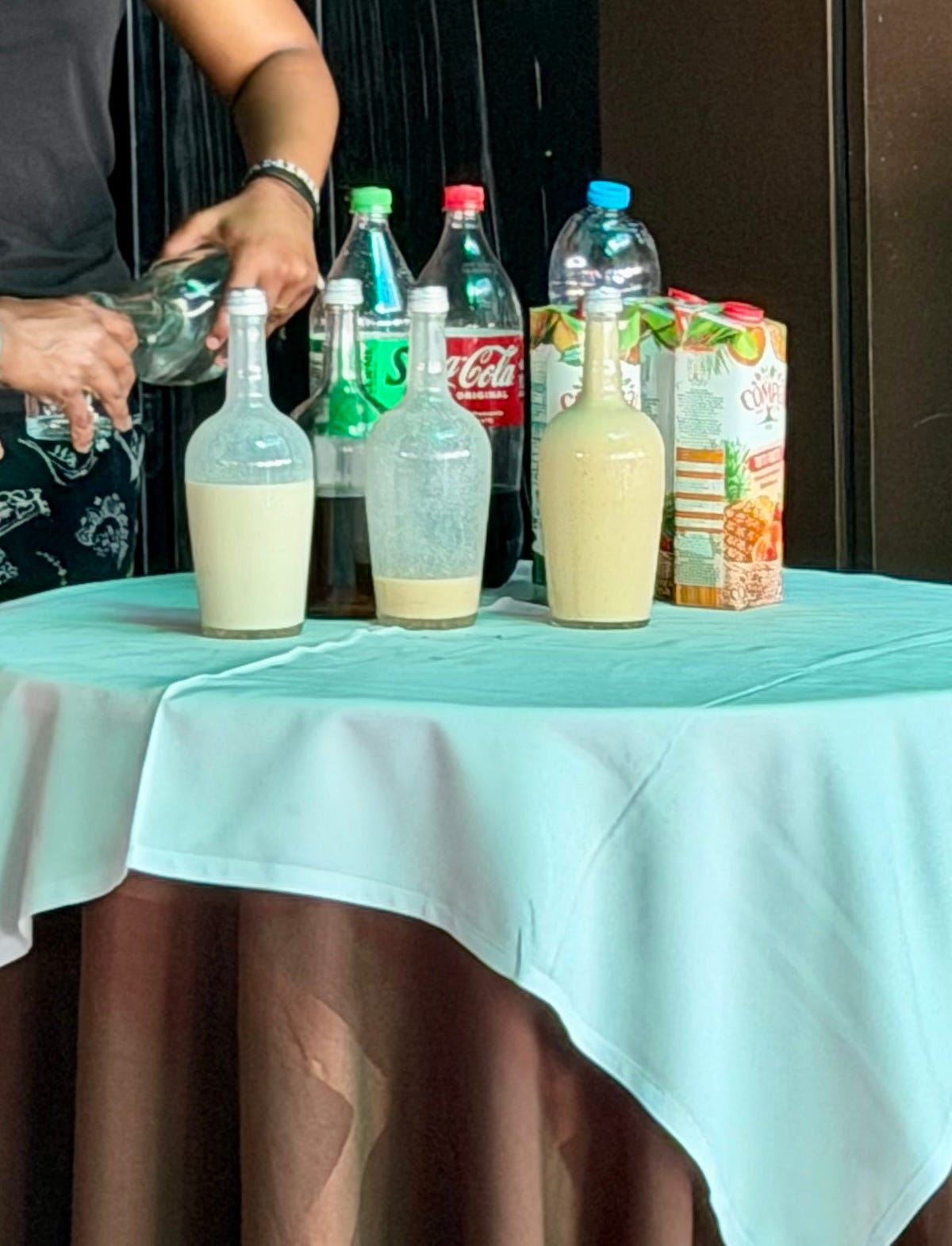
While the standard molasses-and-lime version is the most authentic Ponche, we were also offered a peanut variety and one with tamarind. It was pleasant to try.
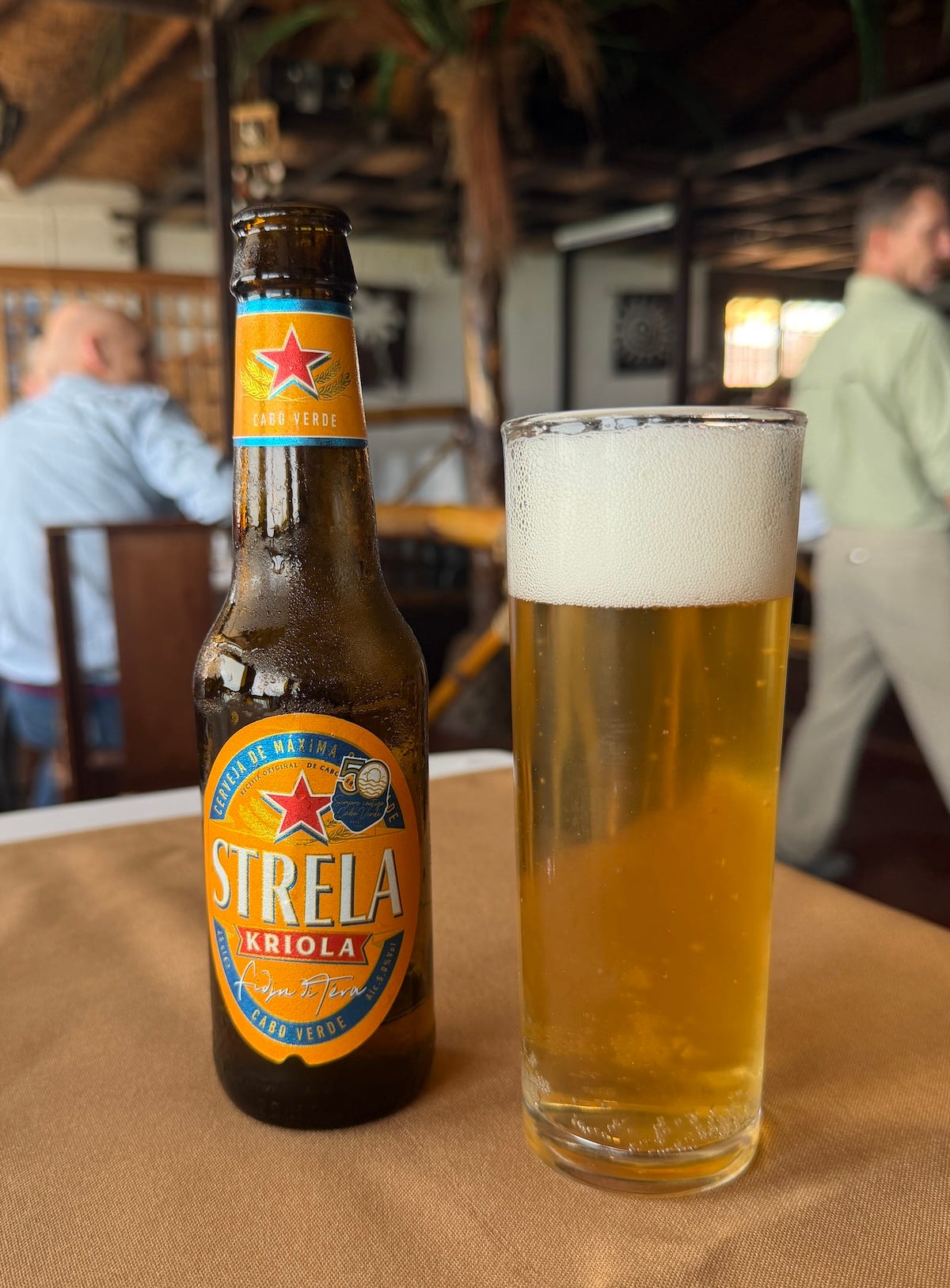
Strela Kriola is Cape Verde’s signature local Pilsner-style beer. Produced nationally by the brewery CERIS, “Strela” means “star” in Cape Verdean Creole. CERIS brewery is located in Praia, the capital city of Cape Verde, on the southern island of Santiago. 5% ABV and N/A IBU.
Sherpa’s Take: “A refreshing, light-bodied beach beer with a bit of sweetness and fruity overtones. I’d drink it again, especially in the tropics on a hot day. Others in our group (who favor this type of beer) proclaimed it a 6.5 or 7. For me, it was a solid 6/10.”
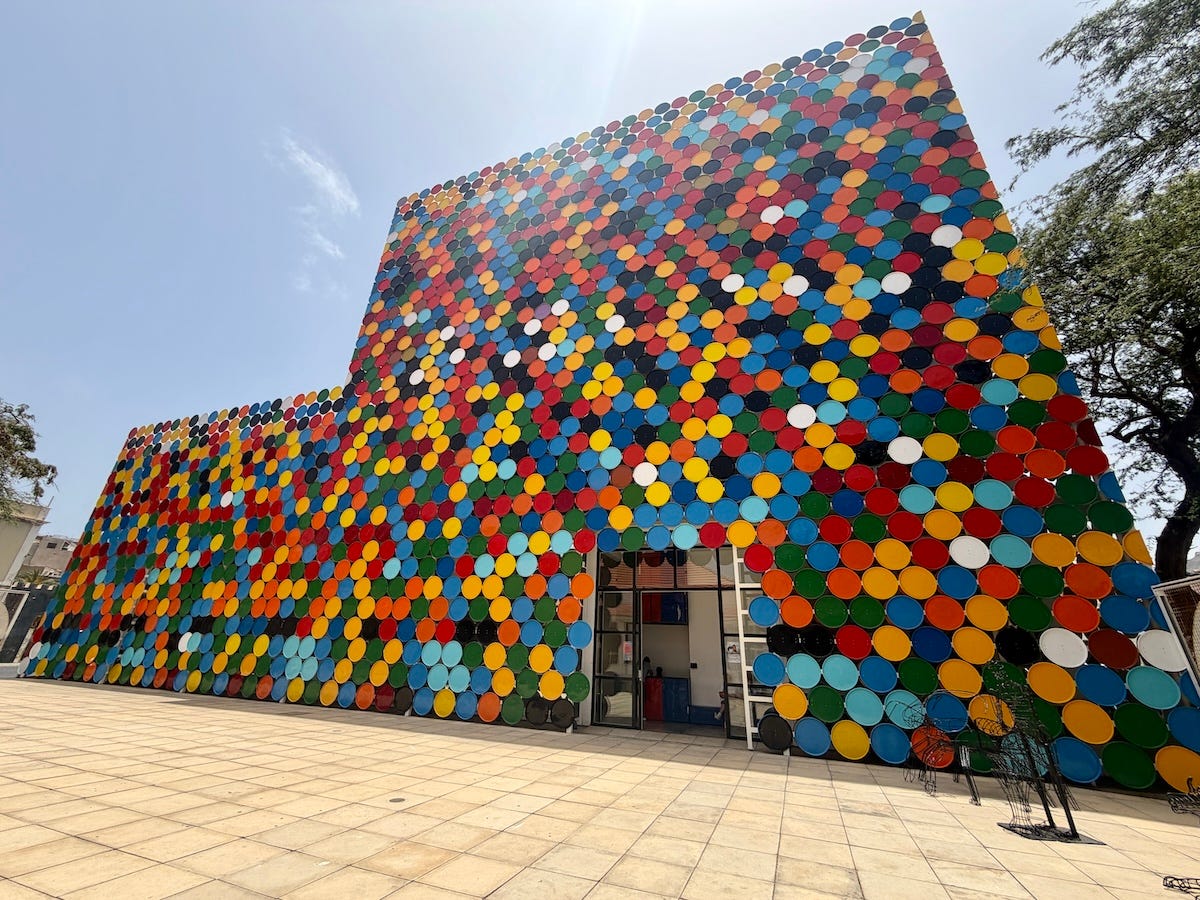
The final stop of our comprehensive tour was a visit to the Centro Nacional de Artesanato. The country’s premier art hub is immediately recognizable by its exterior wall, which was created from 2,500 colorful barrel lids. It functions as a world-class archive, exhibition space, and a workshop dedicated to preserving local panaria — or weaving — traditions, alongside modern African art.


The institution was originally founded with the motto “não deixar morrer a tecelagem”—“don’t let the weaving die”. The museum’s permanent exhibitions’ major focus is all about preserving Pano di Terra, the traditional Cape Verdean textile handwoven from cotton threads on narrow strip looms, sometimes hung alone and sometimes sewn together to create large blankets or other weavings.
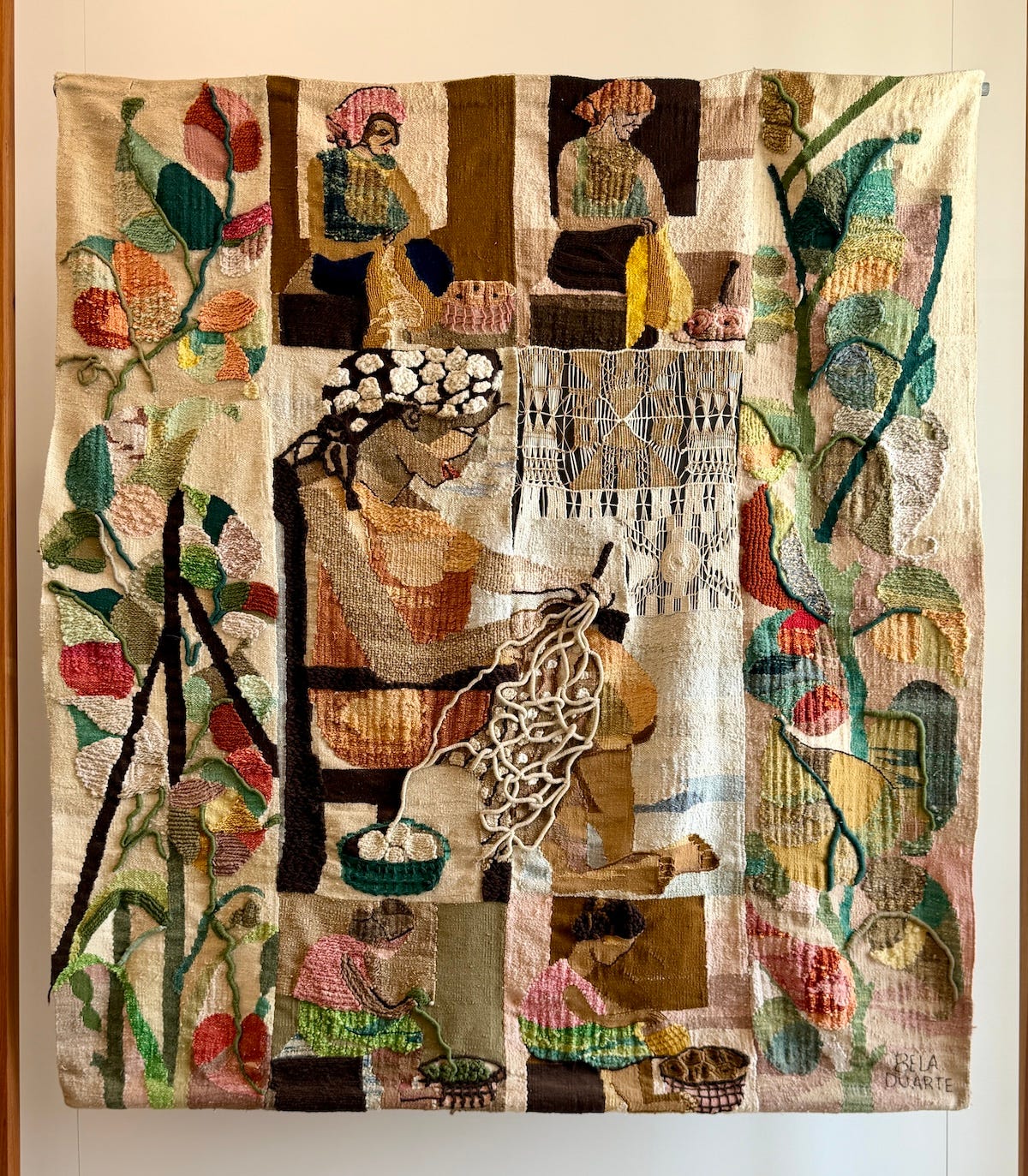
Artists weave the traditional panels and then add elaborate details to create unique pieces of art.
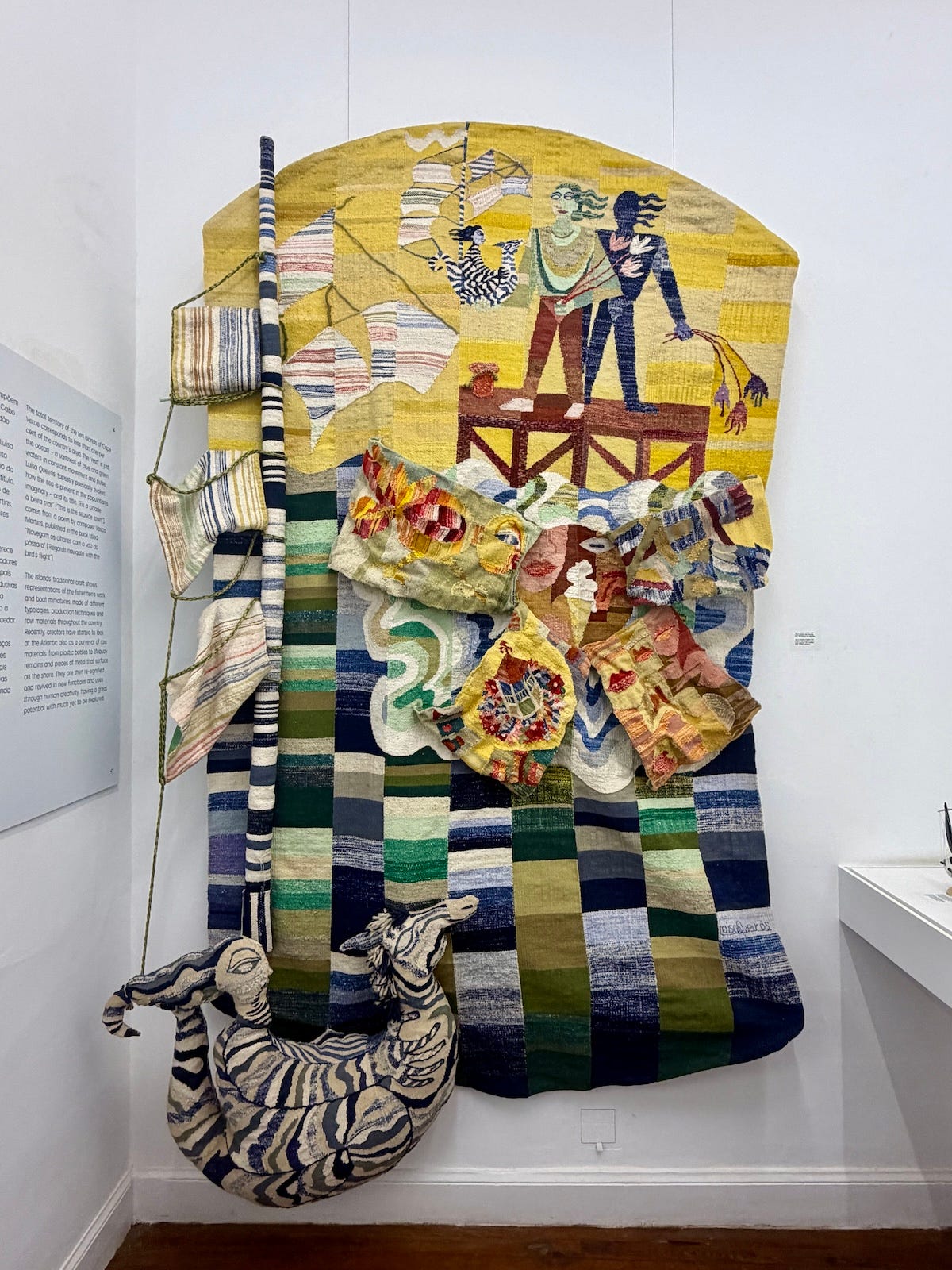
Aren’t they gorgeous? See the strips?
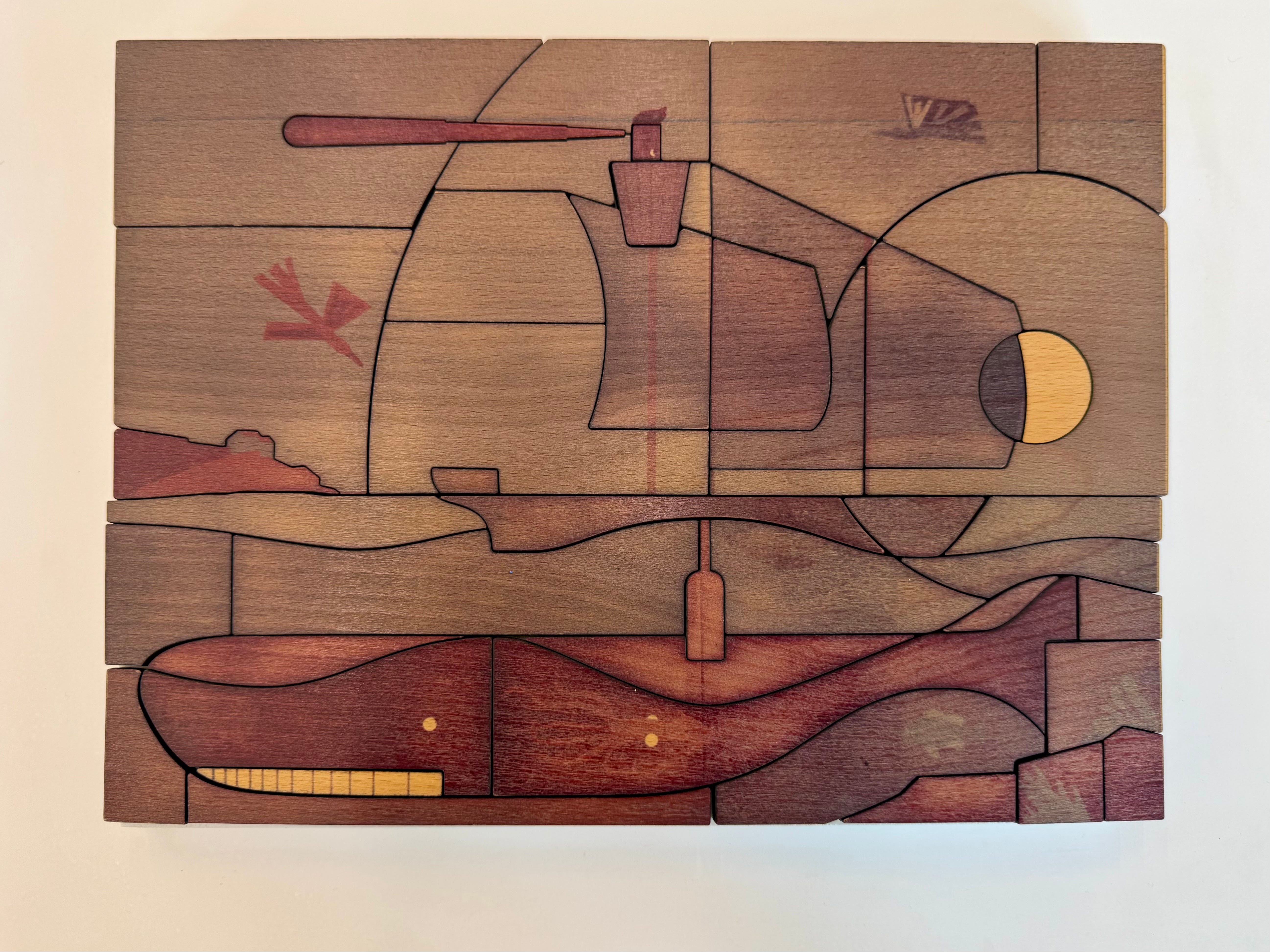
Another room held a display of wooden household items, highlighting how islanders historically fused utility with fine artistry. This tray is an elaborate wooden puzzle with an embedded story.
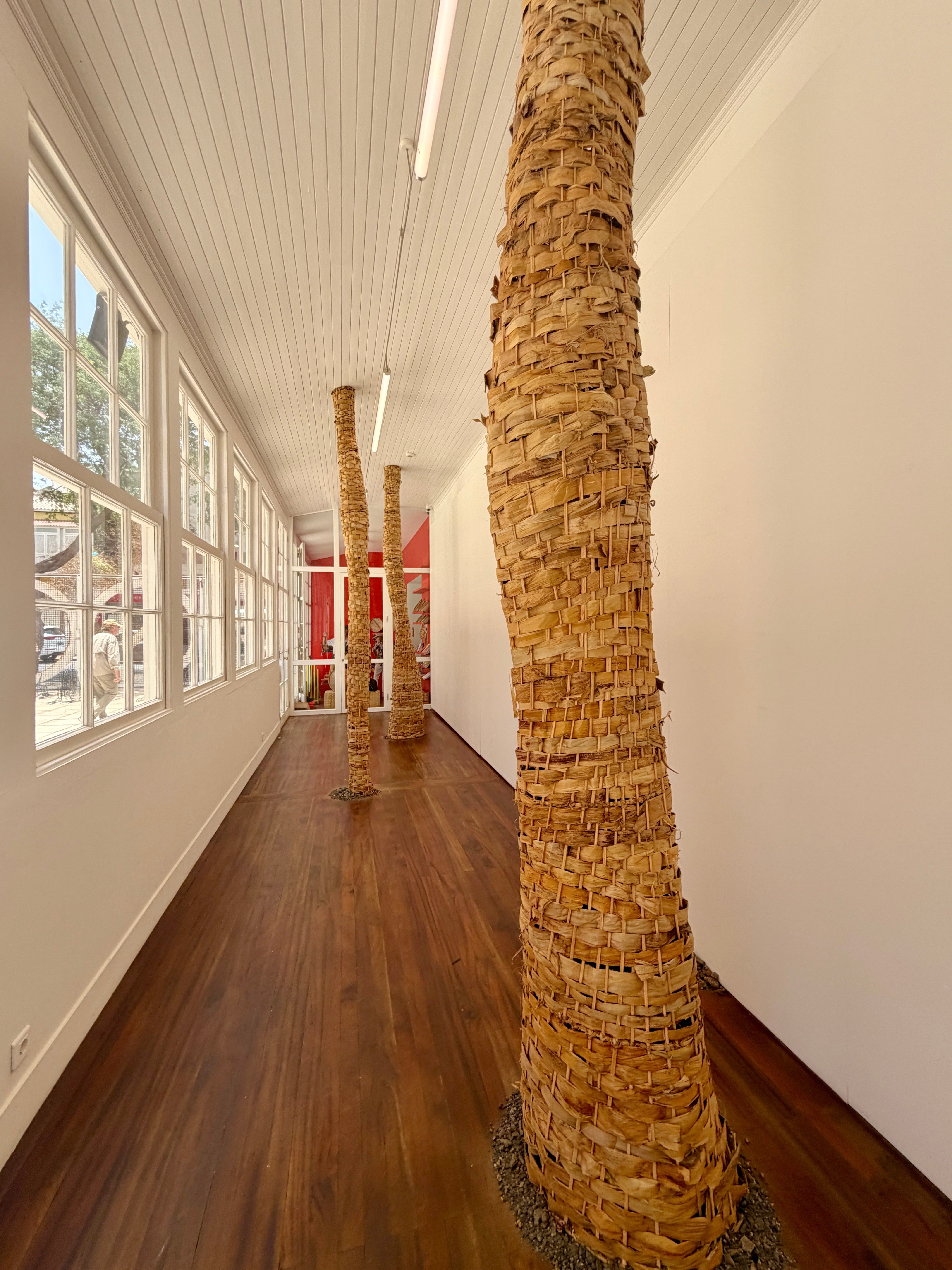
These rows of textured tree trunks are large-scale examples of traditional basketry and wicker weaving, each one handwoven from local fibers, such as dried banana tree stalks or coastal reeds. The columns represent Cape Verde’s historical reliance on the land, showcasing how early islanders used the vegetation to make functional containers, mats, and thatch.
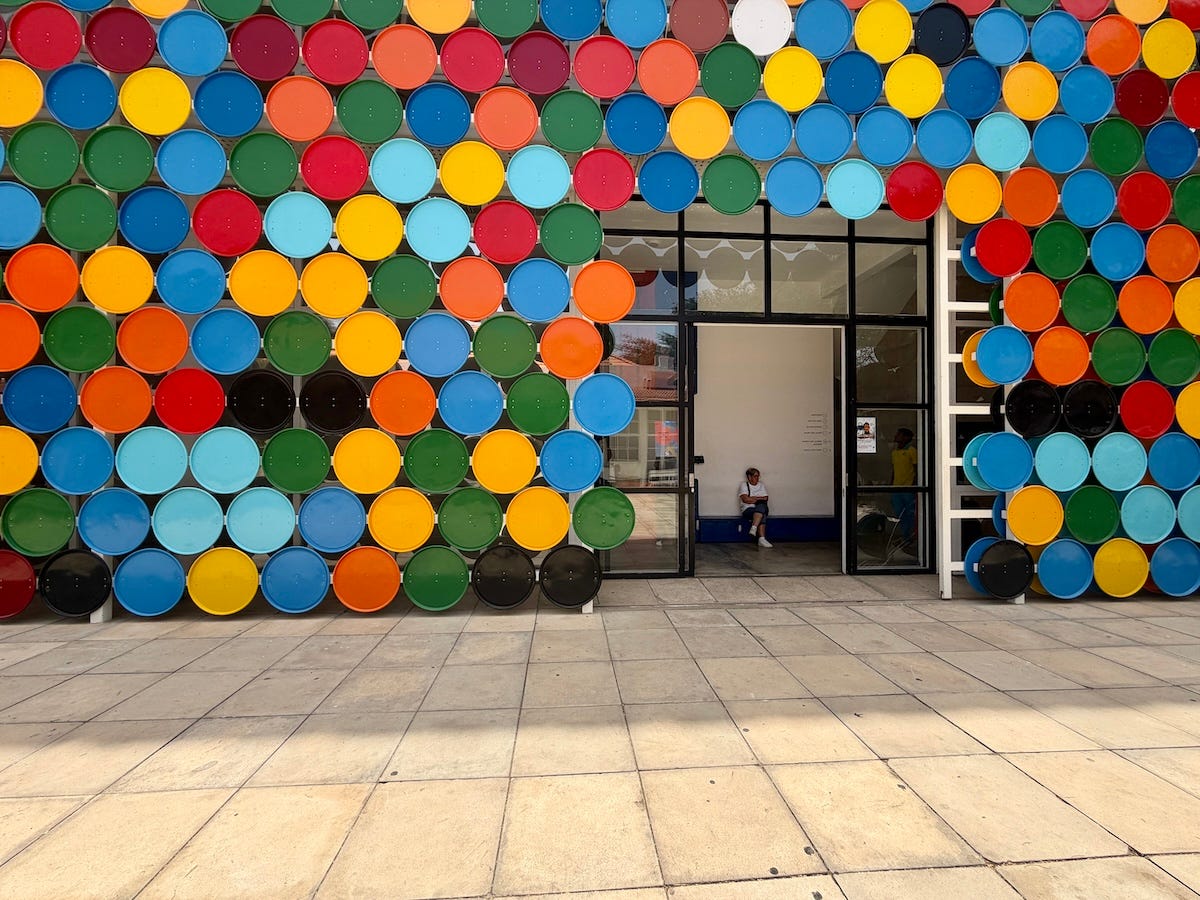
The architecture of this art museum is an internationally celebrated masterpiece of sustainable, low-impact urban design. Completed in 2022, it bridges Mindelo’s past and future using incredible structural details.
The entrance and front galleries were created in the renovated rooms of Casa Senador Vera-Cruz—one of Mindelo’s oldest, most formal 19th-century colonial residences. A courtyard connects the historic house to the new, five-story gallery tower built right in its former backyard.
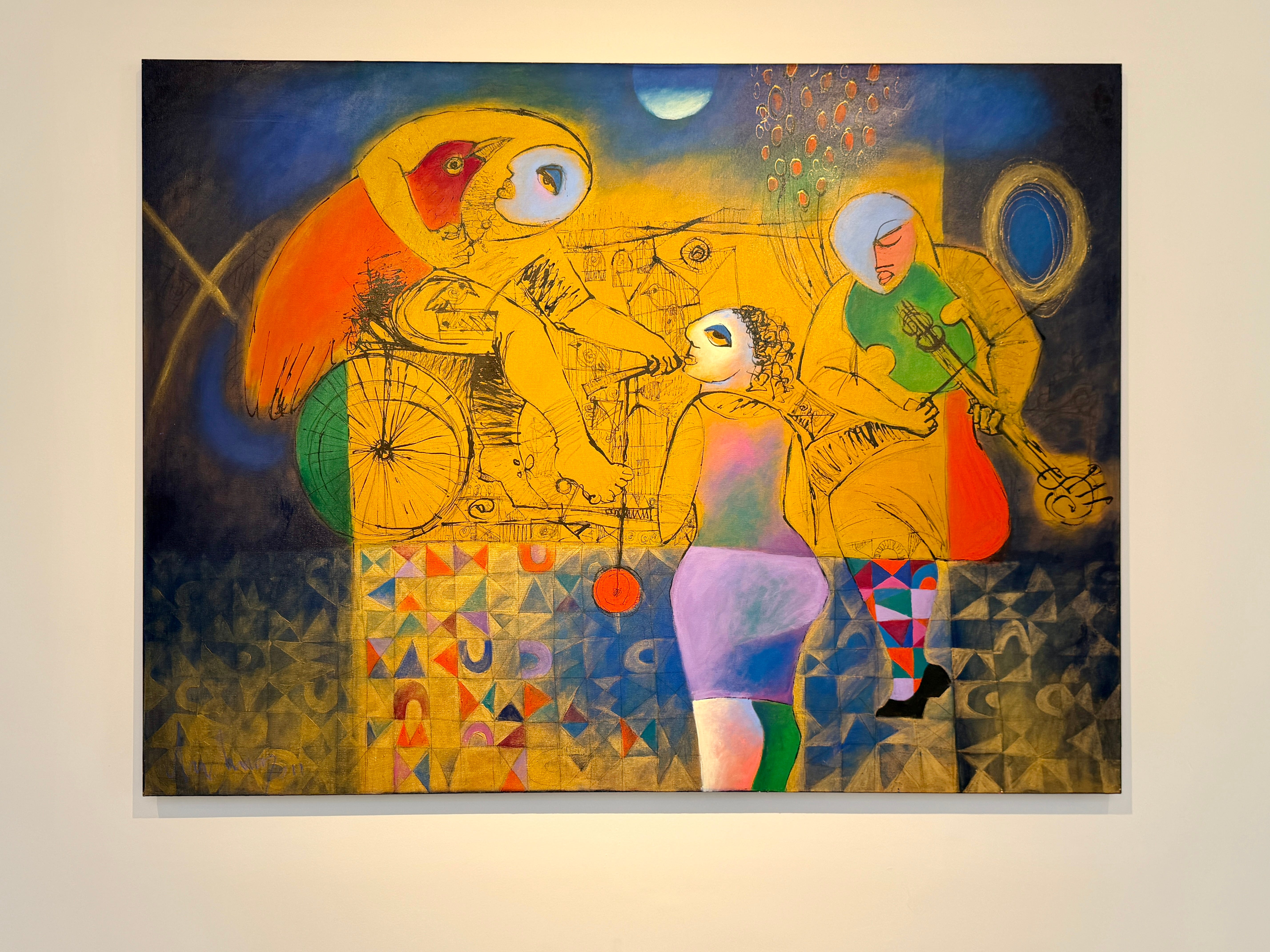
The back gallery hosted a painting exhibit. By now, we were running out of our allotted time, so we only had a glance. We were grateful to visit, and as always, there wasn’t enough time for our art explorations.
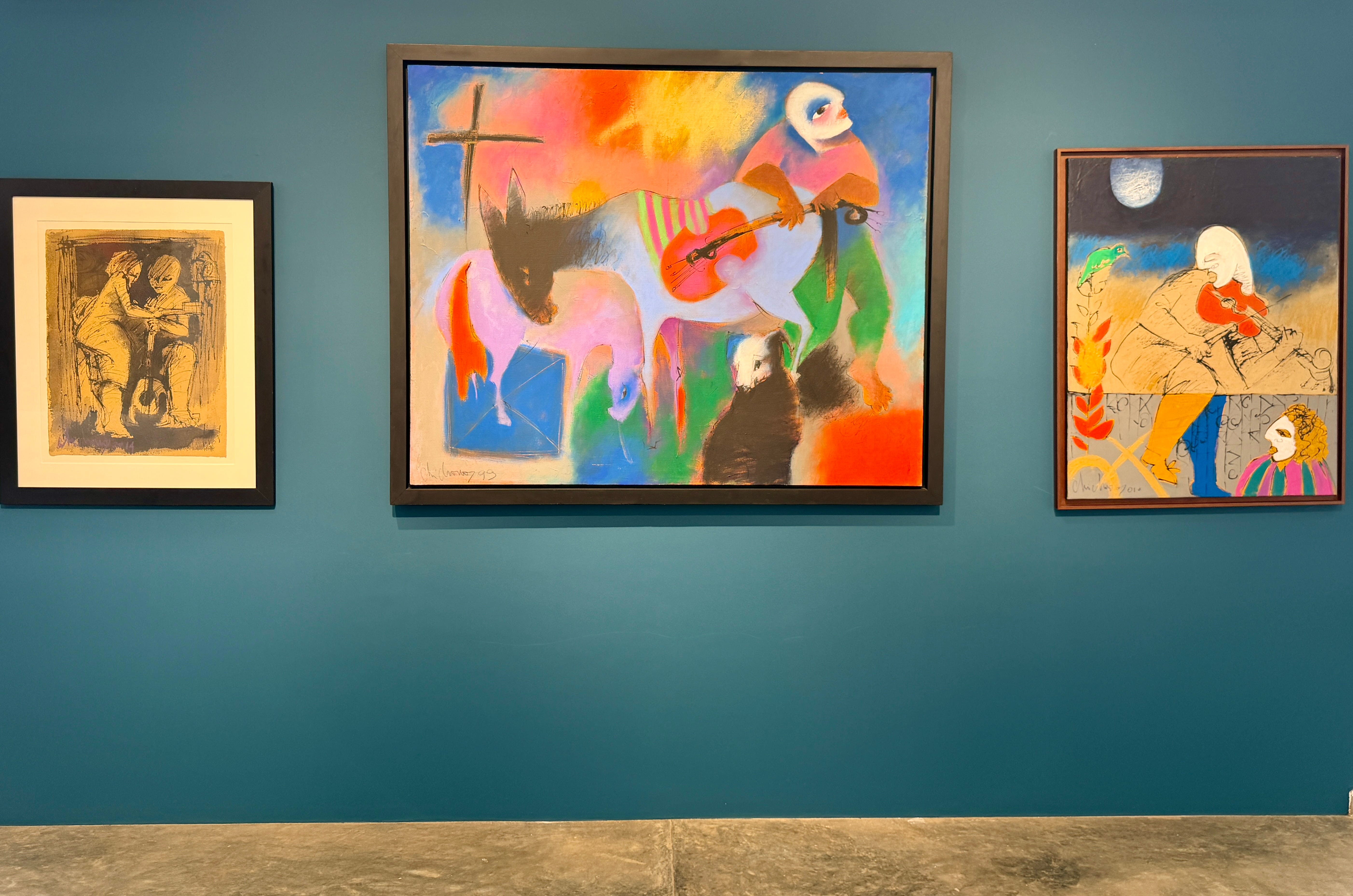
(We know that “more time for art” is a specific issue of ours, but not everyone. Some folks on the tour chose to forgo looking at the art entirely, commenting that they “hate all art.” Luckily, there is usually enough variety on excursions to satisfy everyone.)


We admired small ceramic figures, carved wooden sculptures, and metal-and-glass orb creations — so much personality in each one. And we purchased a locally-crafted, six-inch-tall figurine, similar to the first figure (on the left).
After our visit to the art and design museum, we boarded our bus and returned to the port. A nicely executed, included tour.
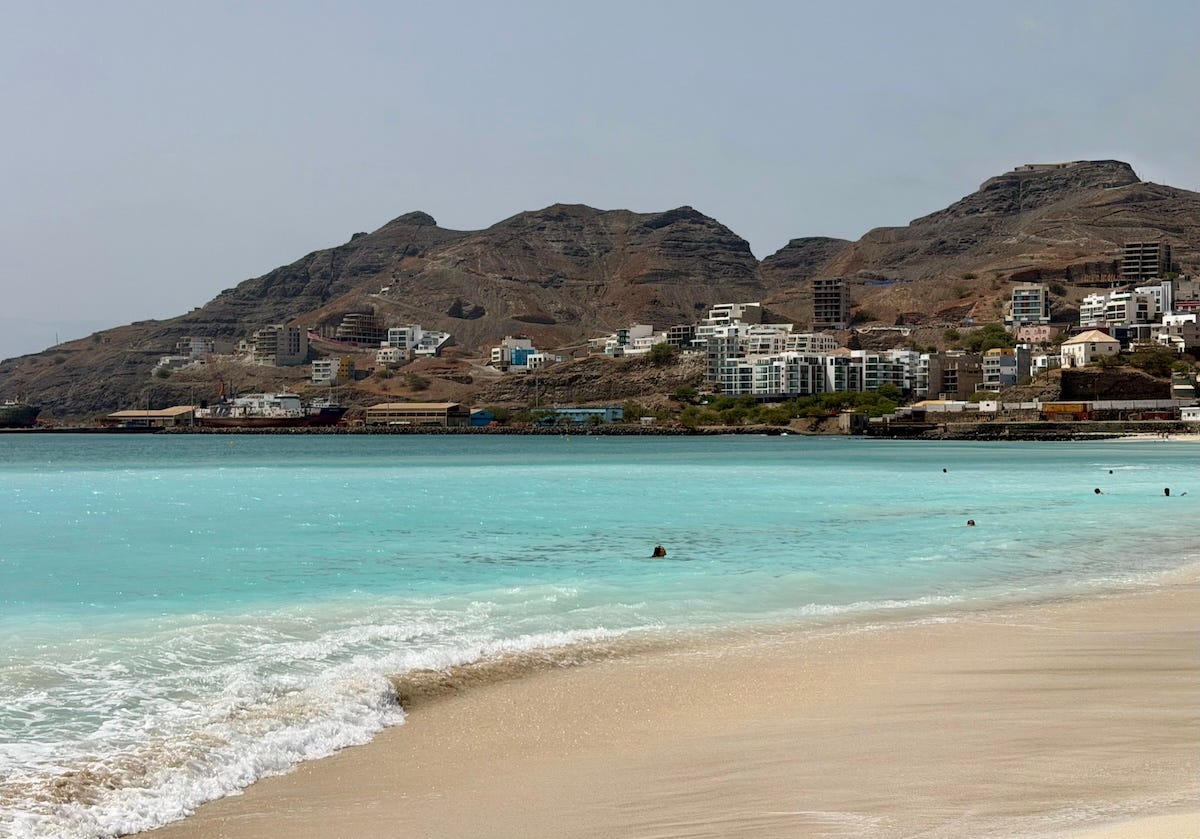
After we returned to the ship, Sherpa walked back into town. He was in search of another local beer. Along the way, he visited the expansive beach we had driven past earlier. Laginha Beach featured incredibly clear, turquoise water and soft white sand, set against the backdrop of the mountains. Gorgeous!
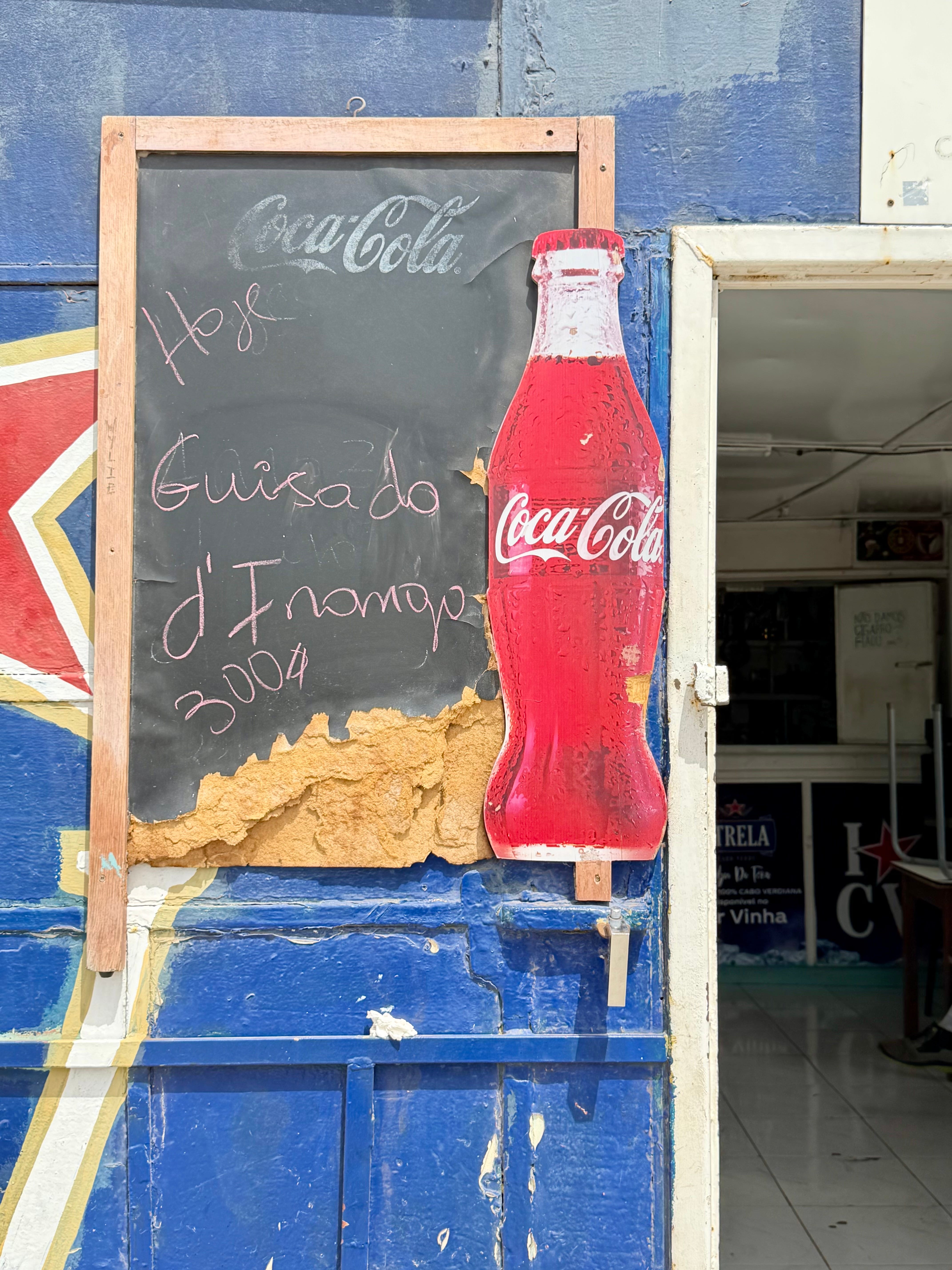
Sherpa took a photo of the Coca-Cola signs that we searched for at each port of call. (I’ll have to do a post on the ubiquitousness of Coca-Cola throughout the world once we return home!)
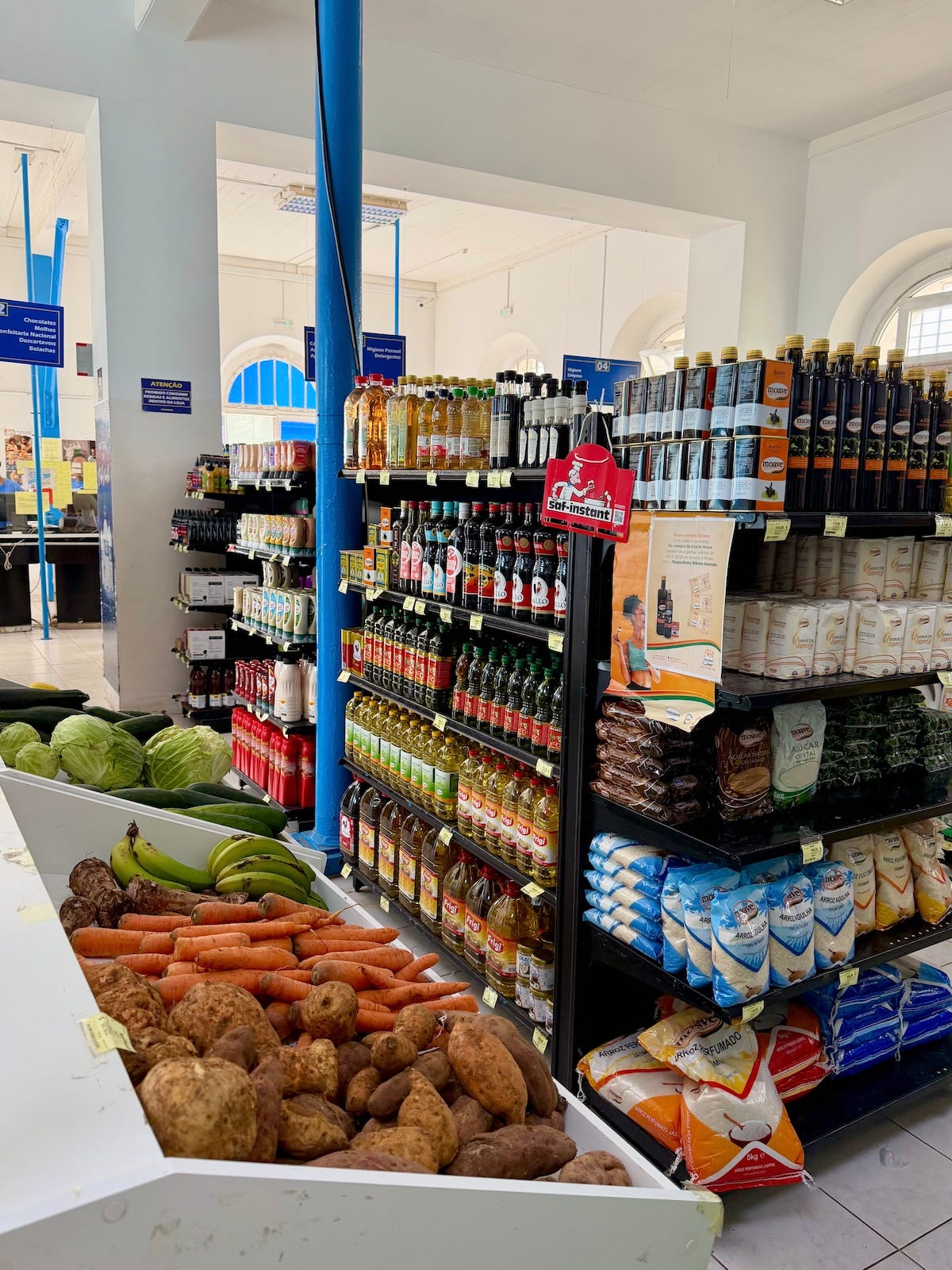
Grocery stores are always powerhouses of cultural insight. When we step inside a local grocery store, we bypass the tourist facade and see how the locals actually live, eat, and celebrate. Plus, supermarkets often sell the local beers. Sherpa picked up a couple of bottles for another upcoming onboard beer tasting party.
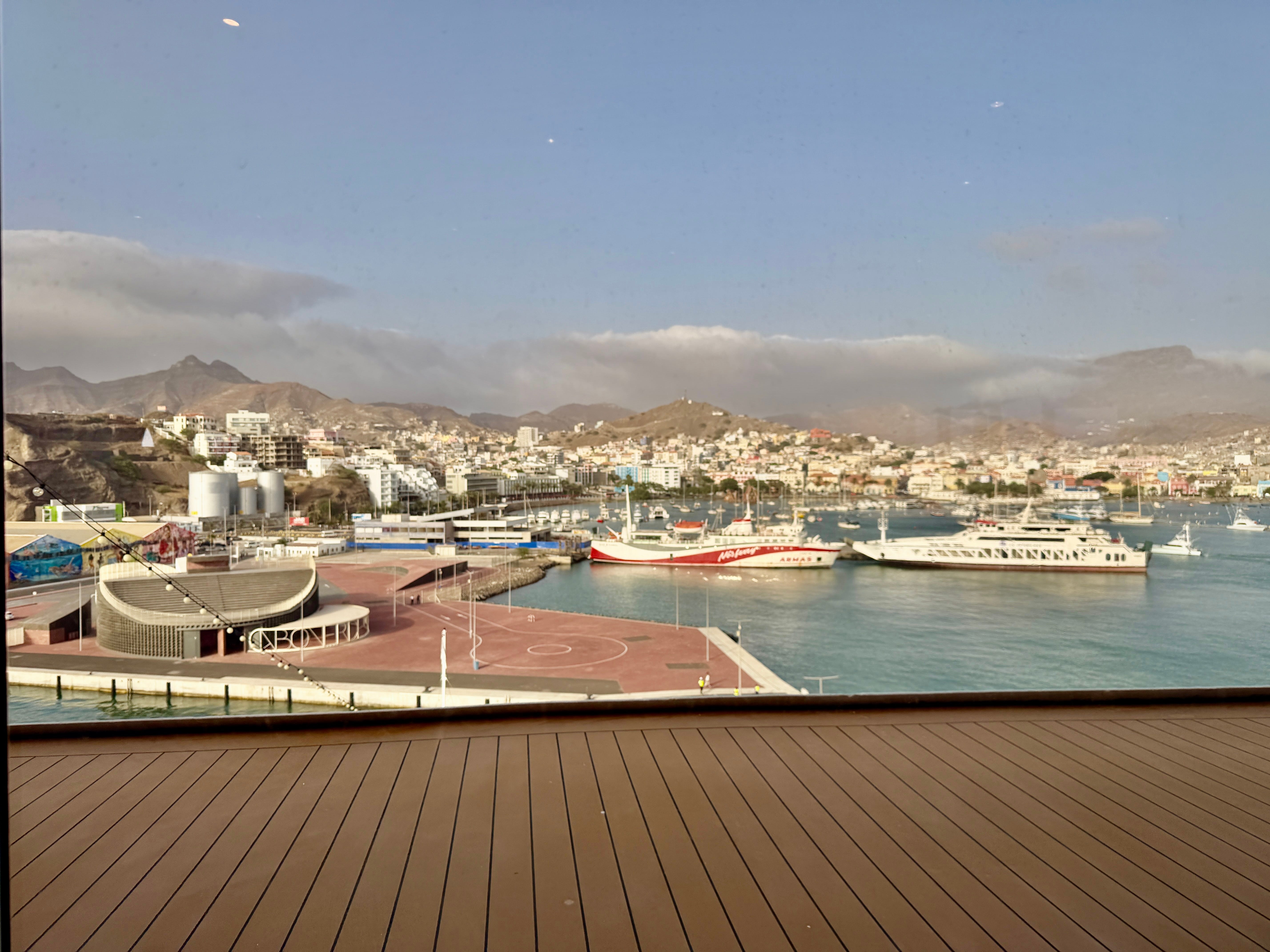
Goodbye, Mindelo! We enjoyed our excursion, getting to know the downtown area on foot, and our stay. This would be a delightful place to return for a longer visit.


We enjoyed drinks in the Observation Lounge as we watched the Mariner sail away from Mindelo, Cape Verde… and Africa! We arrived on the continent of Africa on April 25 (Seychelles) — our seventh continent! — and set foot on the mainland of Africa on May 2 (Mozambique). Since then, we have visited thirteen African countries, gone on a five-day safari, walked the Namib Desert, visited world-class art museums in Cape Town, South Africa, voodoo sites in Benin, and UNESCO World Heritage sites related to the history of the slave trade in Benin and Senegal, plus we’ve added 195 species to our birding Life List and Sherpa added 17 Destination Beers to his World List of Beers.…and we’ve seen and done so much more.
We bid farewell to Africa — and toast her hospitality and generosity — as we now sail to the Canary Islands and Madeira (and then a few stops on mainland Europe.)
I love the sculptures in the art hub. As for fish markets, I thought I had my fill of them on all of our adventures until we visited the fish markets in Japan. Truly a must see, because they are so fresh there is no smell. Thank you again for all your posts, I feel like I am there with you!
WoW, what adventurous journey! Love all the pictures. Thank you for taking me along with you, I look forward to your daily posts as I look forward to being on the Regent 2028 WC on the Splendor. I hope it will be as phenomenal as your cruise and adventure!