
Maputo, Mozambique
We set foot on mainland Africa for the first time -- our 7th continent. It’s been a long time coming, a long-hoped-for dream destination.


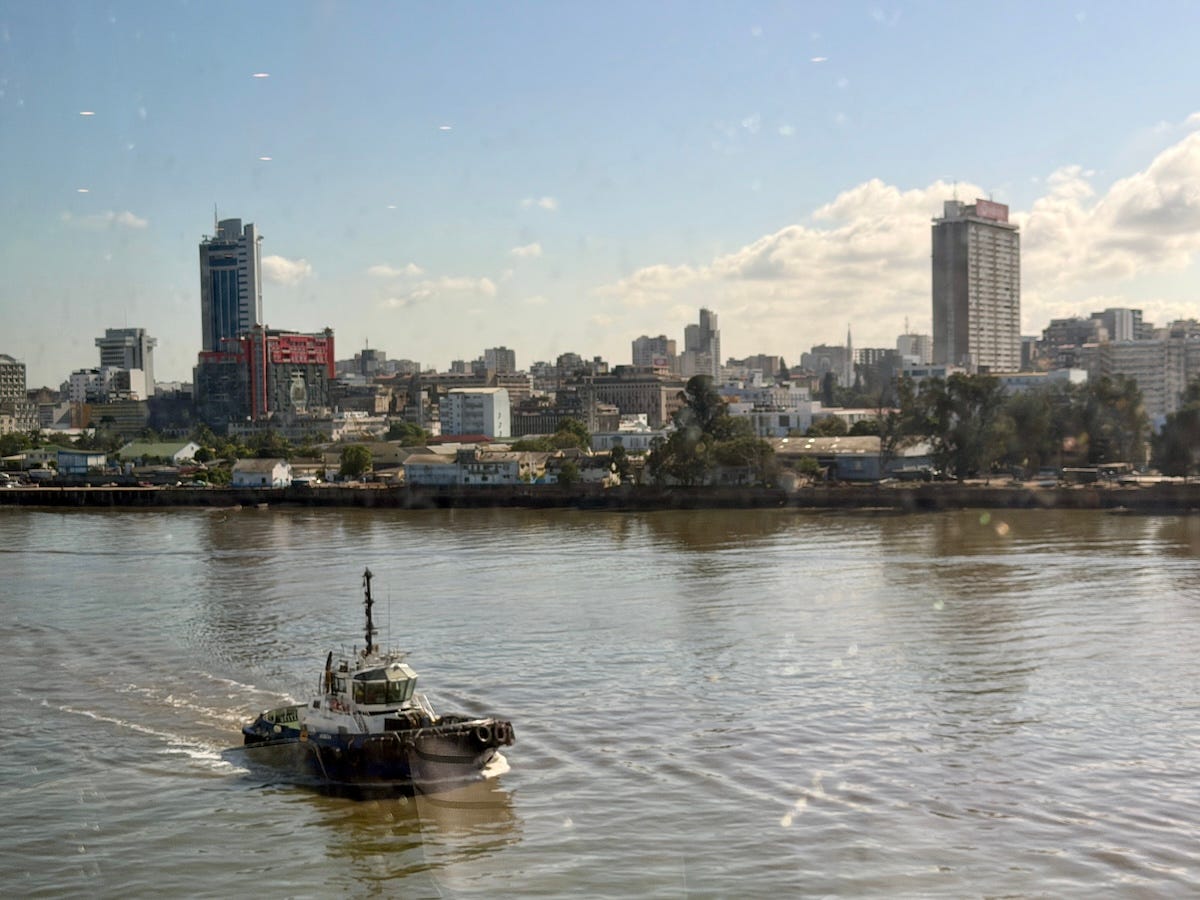
We docked in Maputo, Mozambique. There was a short delay with immigration, but we were soon ready to set foot on the African mainland and explore!
Discover the relaxed charm of Maputo with its wide, European-style boulevards, lush with jacaranda, bougainvillea, and other tropical foliage, where old colonial palaces are mixed in with modern high-rise buildings. Visit the Cathedral, built in 1944 in the shape of a cross, then the lively Mercado Central. Enjoy a snack of freshly roasted cashews and a cold bottled drink. Look for African waxprint and woven fabrics, beautiful wooden boxes, and picture frames. Seek out the surreal Pancho Guedes buildings, reminiscent of Gaudí. Visit the Praça de Trabalhadores, designed by Gustave Eiffel in the late 19th century. — Regent
Our Research Pre-Cruise:
Daytime High: Approximately 81°F to 82°F.
Nighttime Low: Around 61°F to 64°F.
Rainfall: Very low probability. May is the start of the dry season, with rain typically limited to very light, short-lived coastal showers.
Humidity: Significantly lower than in summer months, averaging around 66%, making the air feel clear and comfortable.
Sea Temperature: A pleasant 75°F to 77°F.
Sightseeing: This is widely considered one of the best times to visit Maputo due to the lack of heat-related “mugginess” and the abundance of sunny days.
Daylight: Expect roughly 11 hours of daylight, with sunrise at around 6:15 AM and sunset at around 5:15 PM.


Although we had originally signed up for Maputo’s Art and Culture Tour, an art-intensive excursion featuring visits to art galleries, an art museum, and a sculptor’s studio, it was canceled due to low participation. We didn’t learn about this until the evening before we arrived in Mozambique, and the only excursion still available was Discover Maputo, a 5-hour, Regent-choice tour with a non-discounted price of $109 USD per person. We typically avoid booking excursions that include a sit-down meal, as it tends to take a lot of time away from touring, but we made an exception in this case.
Highlights:
Delight in Maputo’s sensational Beaux-Arts Central Railway Station and Railway Station Museum.
Witness the lively barter of food and goods at the bountiful Maputo Central Market.
Visit Independence Square, ringed by the city’s arresting cathedral, neoclassical City Hall, and the French-Mozambican Cultural Center. Stand in awe of a house made entirely of iron designed by Gustave Eiffel for the island’s governor. Walk through the Botanical Gardens.
Stop at the renowned FEIMA artisan market for shopping.
Relish a delicious lunch buffet at a local hotel in the city.
Tour description: Appreciate a multi-faceted look at Maputo that showcases the city’s history and includes a delicious lunch. Pass the striking Beaux-Arts Central Railway Station and visit the CFM (Train Station) Museum before continuing your way to the Maputo Central Market, where you can watch locals bartering for a variety of goods and food. You’ll continue to Independence Square, a city focal point and home to a statue of Samora Machel, the country’s first president, the gleaming white Roman-Catholic Cathedral of Our Lady of the Immaculate Conception, the neoclassical City Hall, and the splendid Colonial-style French-Mozambican Cultural Center. You’ll marvel at a house built entirely of iron designed by Gustav Eiffel as a governor’s residence, but ultimately uninhabitable due to the tropical climate. Walk through the nearby Botanical Gardens. Then travel to a local hotel, where you’ll sit for a flavorful buffet lunch before returning to Maputo. — Regent
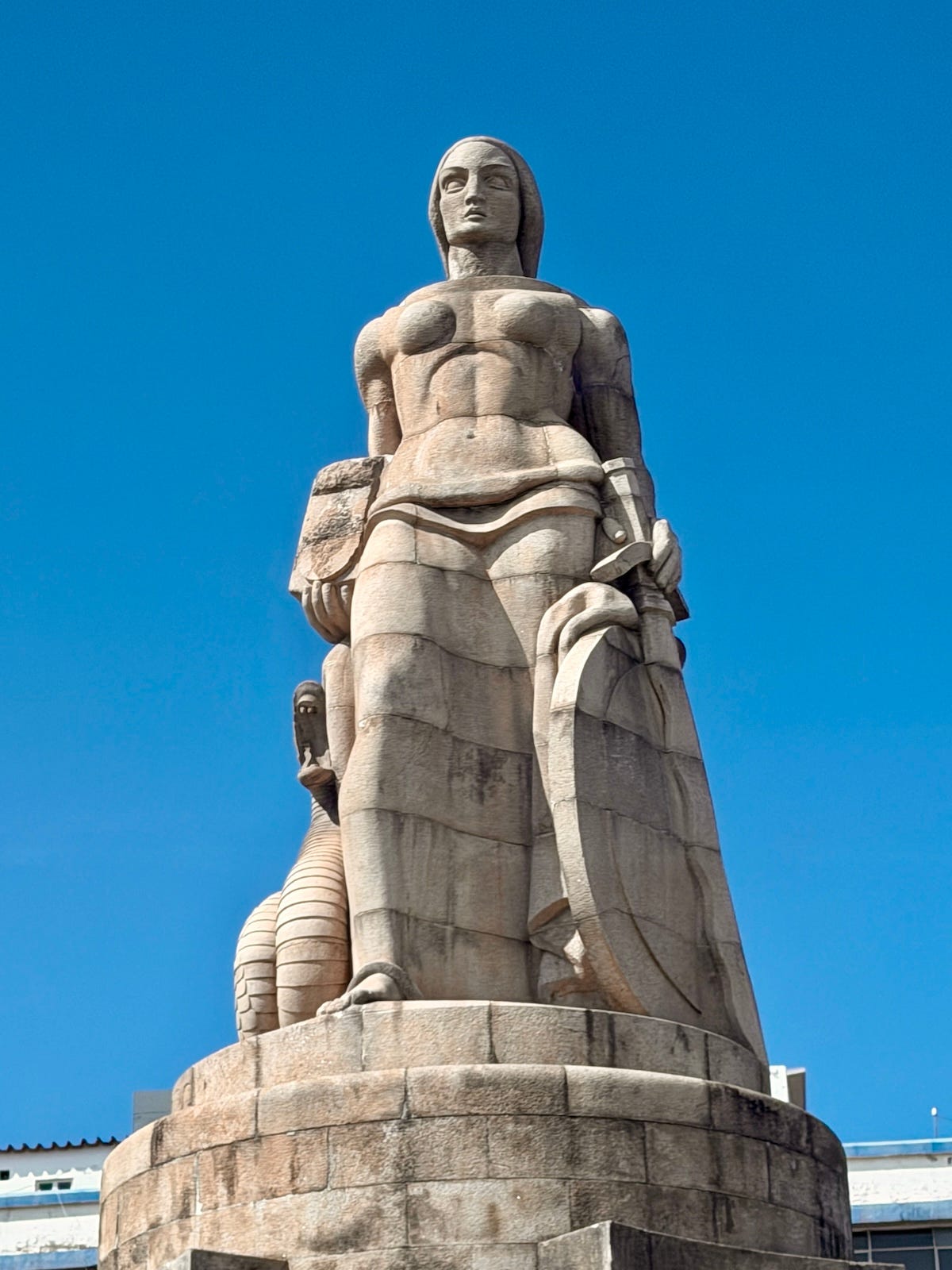
Our first stop, only a five-minute bus ride from the port, was the Maputo Central Railway Station. We paused at the "Snake Lady" located in Workers’ Square directly in front of the station. Our guide gave us a summary of the statue’s supposed legend — a cobra lived in an acacia tree on the square and attacked anyone who tried to rest there. A woman decided to end the terror. She cooked a pot of boiling stew and balanced it on her head as she walked under the tree. When the snake attacked, it plunged into the scalding stew and was killed. Snake lady is now the heroine!
(I approve of any excursion that begins with art! So far, so good.)
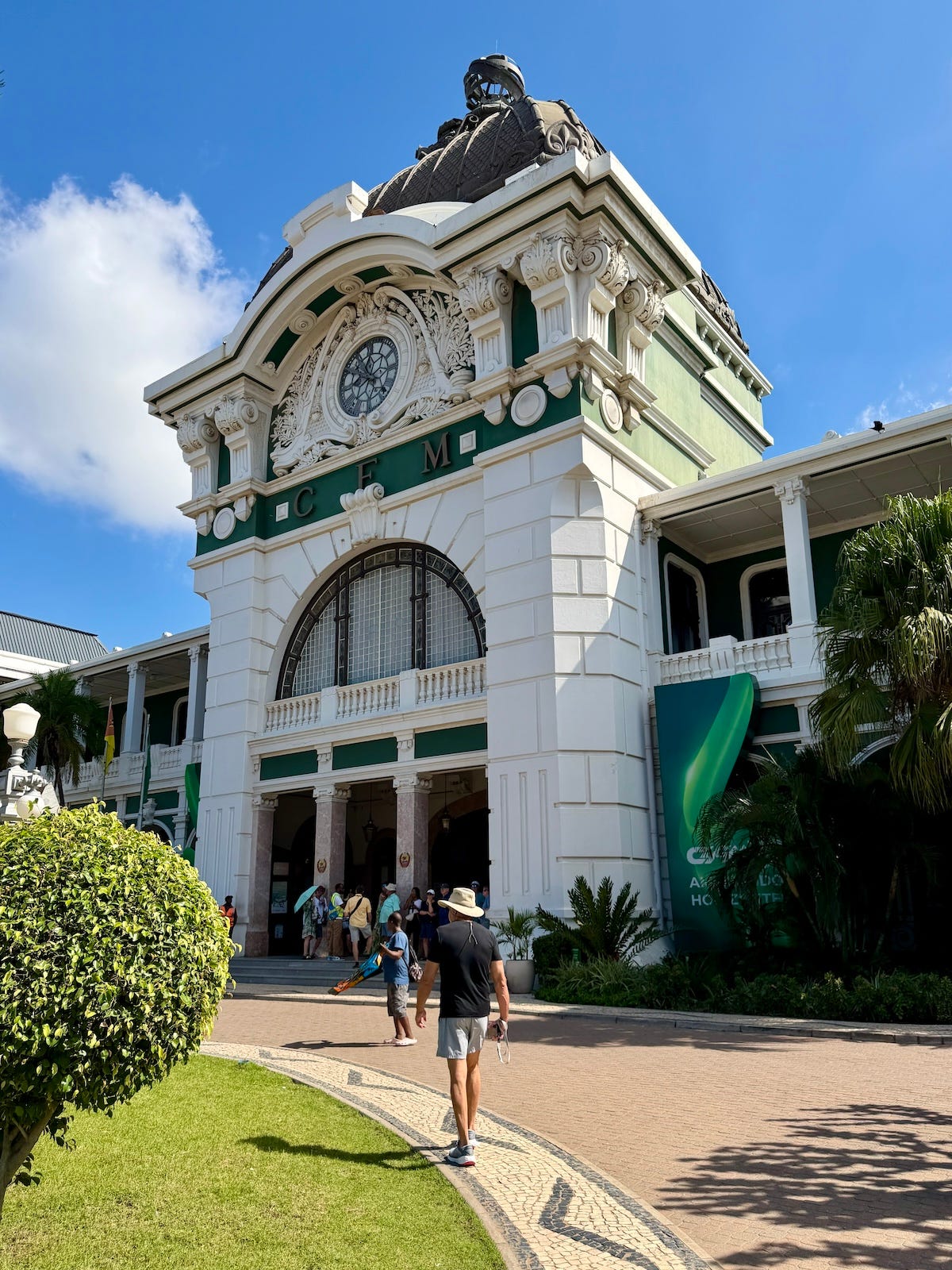
Then we did a quick tour of the exterior and interior of the Maputo Central Railway Station, considered one of the most beautiful train stations in the world. Built between 1908 and 1916, the exterior is still quite extraordinary — a Beaux-Arts masterpiece with a pale green facade, a massive copper-clad central dome, and wrought-iron latticework.


The interior, more utilitarian, still features distinctive details — carved metal supports, and a vast space with high ceilings, vintage glass doors that let in a lovely filtered light, and dark-green accents that match the exterior’s color palette.
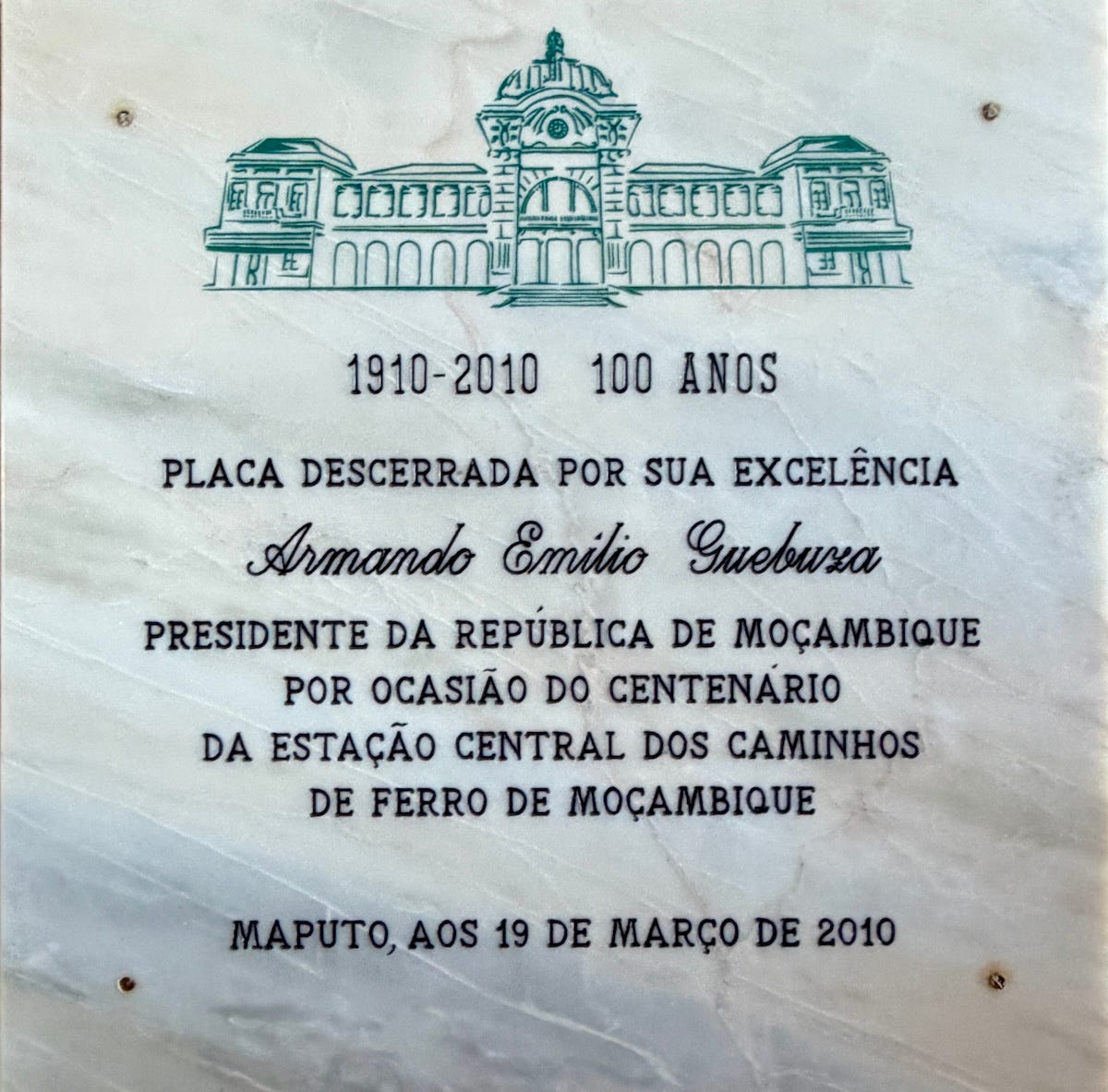
There was a big celebration for the 100-year anniversary, led by then-President Armando Emílio Guebuza, who unveiled a commemorative plaque to mark the milestone and also initiated a new campaign to preserve the country’s historical landmarks. Our guide said the historical preservation campaign has had some wins, but there’s still room for improvement.


We were fascinated by all the textures on the architecture. Maputo is famous for its "Tropical Modernism." Buildings featured textured concrete, perforated breeze blocks, and even mosaic-like patterns integrated directly into the facades.


Next stop — the Central Market, a bustling historic landmark (1901) and hub for fresh produce and local commerce. Piles of mangoes, pineapples, bananas, vegetables, spices, huge prawns, all kinds of fish, cashews in all sorts of flavors, handmade batiks, wood carvings, baskets, and traditional wooden masks, hot sauces, honey — so much to see and (not) buy. It wasn’t for the vendors’ lack of trying. Many were very persistent, especially those selling items outside the market. Belts? Sunglasses? Metal gizmos shaped like motorcycles made from bits and pieces of junk? Hats, tee-shirts, wicker purses? All were available, and there were lots of requests to buy. No eye contact is a primary rule if one really is not interested; that and a firm “no.” Some folks found the constant banter off-putting, but it’s part of the culture, and we kind of admired the tenacity of the sellers.
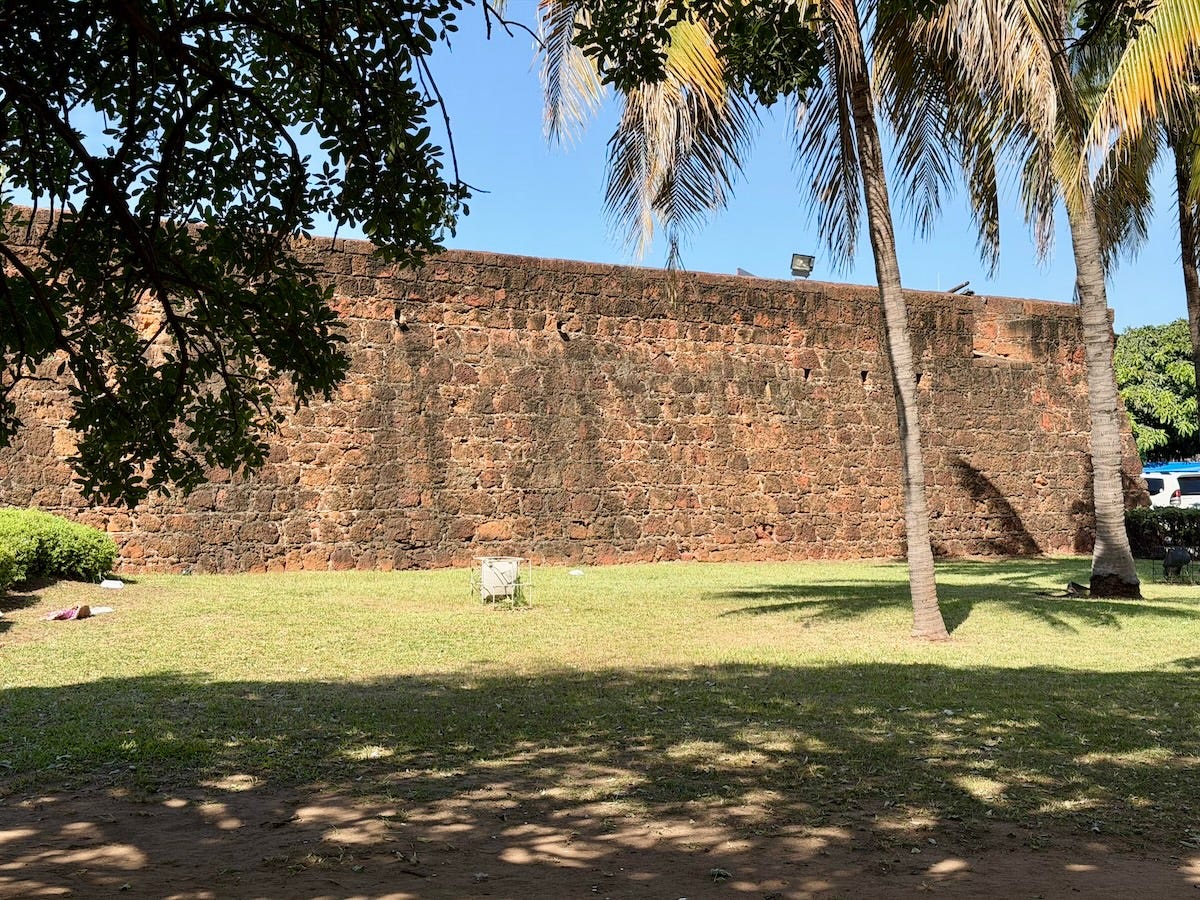
Next stop: The Fortress of Maputo is one of the city’s oldest, most significant historical monuments. The fort featured a quadrangular floor plan with thick masonry walls and arched doorways. It was surrounded by stately trees and a host of noisy birds welcoming us.
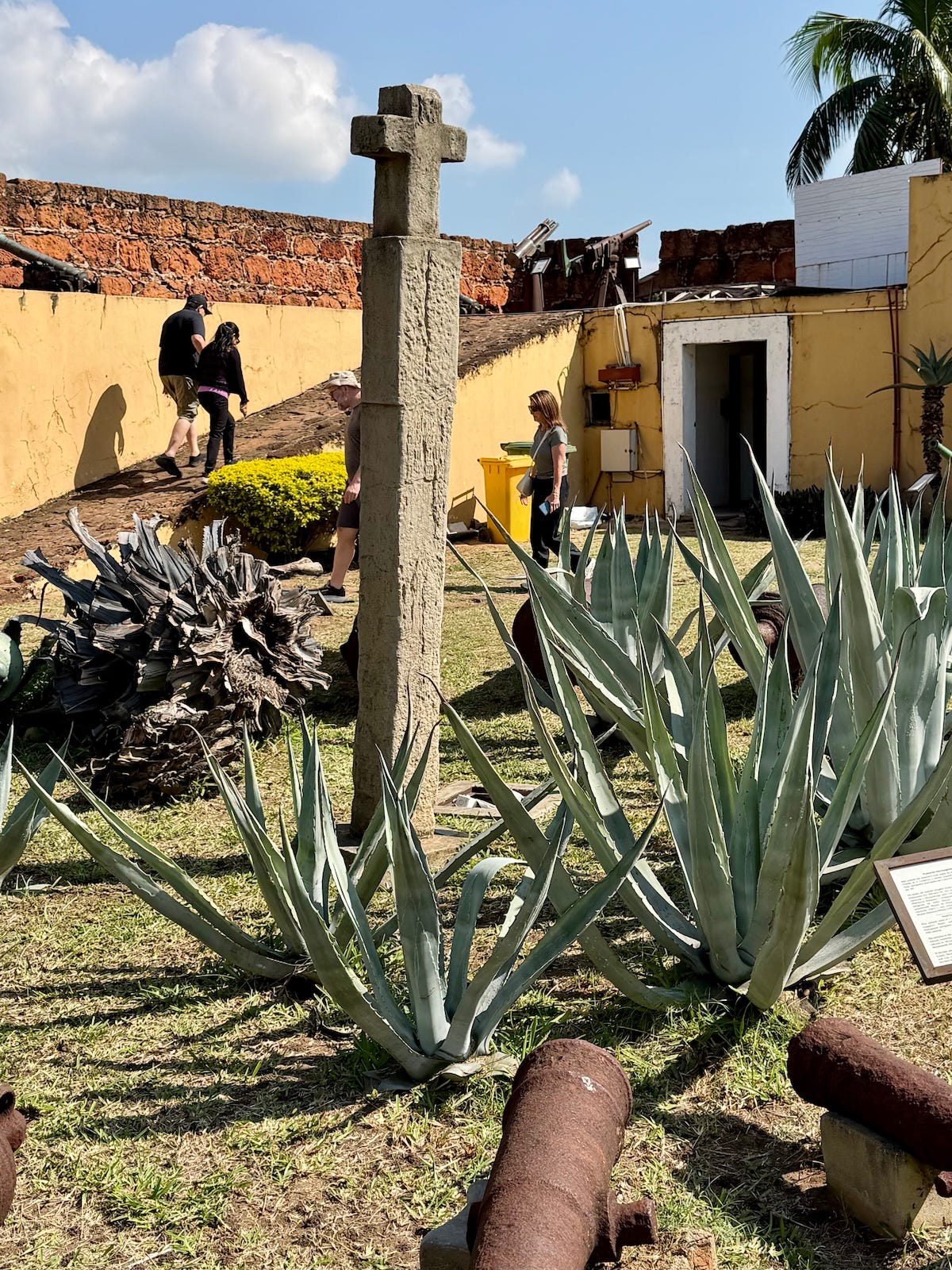
The entrance gate led into a spacious, well-kept square courtyard filled with fragrant frangipani trees, historical sculptures, and a small, shaded seating area.


Even though it had a low profile, a climb to the fort’s ramparts offered a (partial) view of the Mariner in the bay and the city skyline. The Portuguese established this fort on the ruins of old Dutch and Austrian structures, and was built from 1781 through 1787. These walls have held nearly 240 years of history.
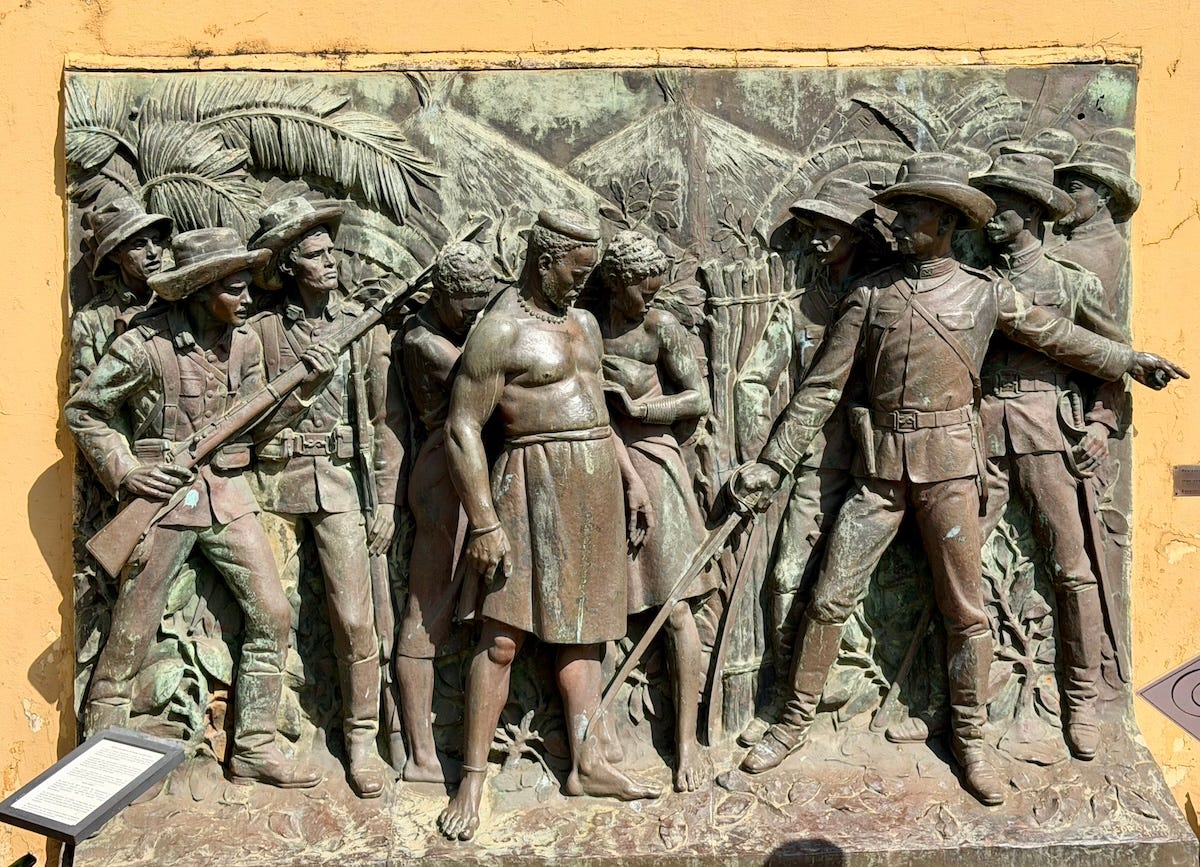
There were several bronze panels that were originally part of a monument to Mouzinho de Albuquerque, but these were moved from City Hall to the fort after independence in 1975.
This relief depicted scenes from a pivotal moment of Portuguese conquest. Our guide explained that these sculptures, once celebrations of the Portuguese, are now presented as part of a re-contextualized museum project. They serve as evidence of colonial occupation and now honor the fierce resistance struggles of the local people.


We stopped in what was once the fort’s chapel to see the coffin of King Ngungunhane, the last king of Mozambique. The coffin was crafted from dark wood and featured relief carvings of scenes of Mozambican life and history, including figures of warriors and farmers, as well as other traditional motifs.
Ngungunhane died in exile in the Azores in 1906, and his remains weren’t repatriated to Mozambique until 1985, the 10th anniversary of the country’s independence. He is now honored as a national hero.


The equestrian statue of Mouzinho de Albuquerque—the Portuguese officer who captured Ngungunhane—stood in the center of the patio, only steps away from the room with the king’s casket. An interesting parallel.


While the rest of the tour group walked up the ramp to the ramparts, I walked into the room filled with art! (The guide totally bypassed it, so I’m glad I went off on my own, or I would never have seen this display. I sometimes have to make an extra effort to see the art that is so easily accessible.)
The little gallery was dedicated to Psikhelekedana, a traditional Mozambican folk art that creates dioramas featuring small, brightly painted wooden figurines. Each tableau depicted scenes of daily life and history — swimming in the bay, fighting a battle, hosting a party. They were quite lovely.
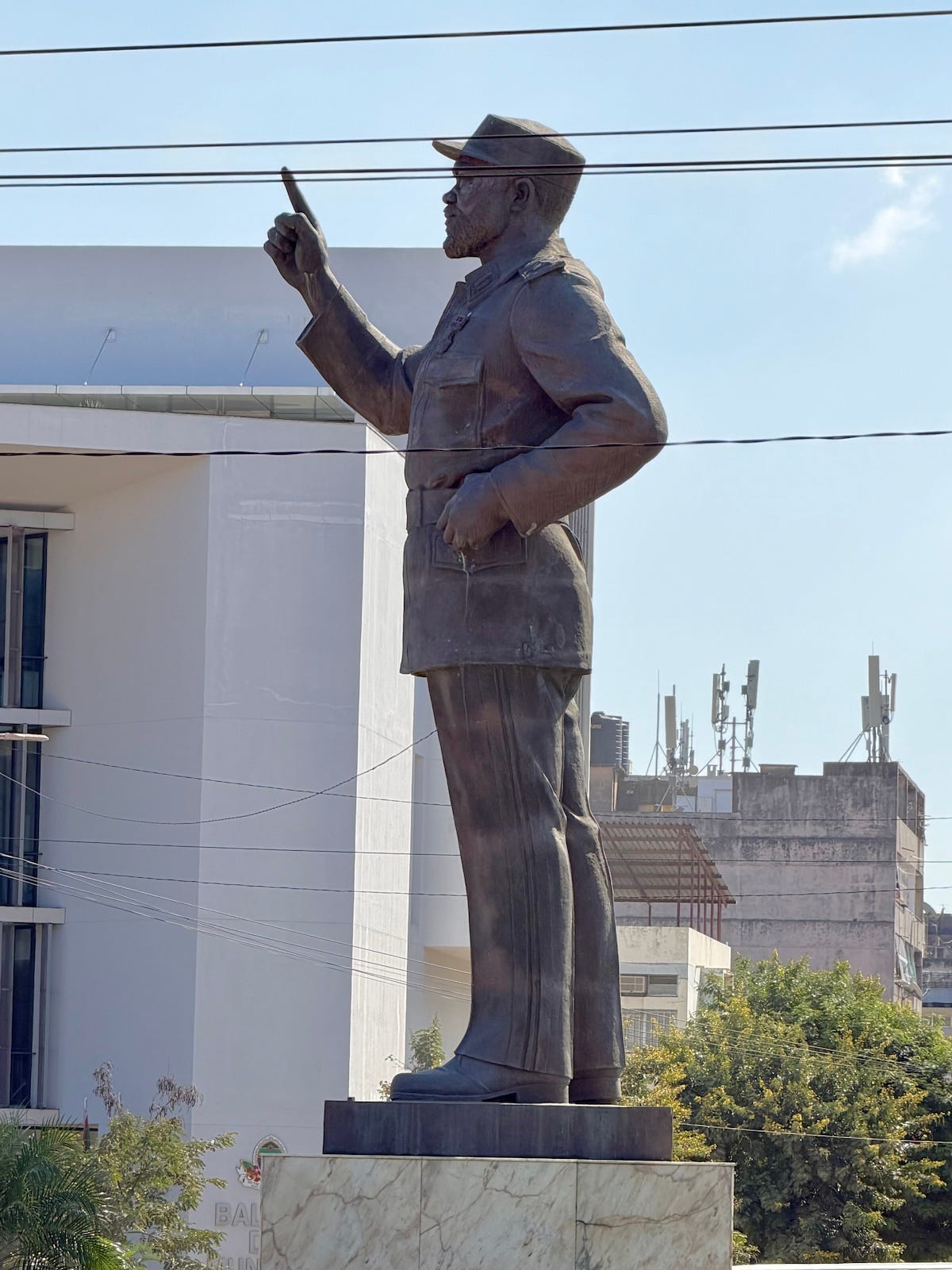
After the fort visit, we drove to Independence Square. The most prominent sculpture in the square, and in Maputo, was the statue of Samora Machel, who was the first President of independent Mozambique and a revolutionary hero.
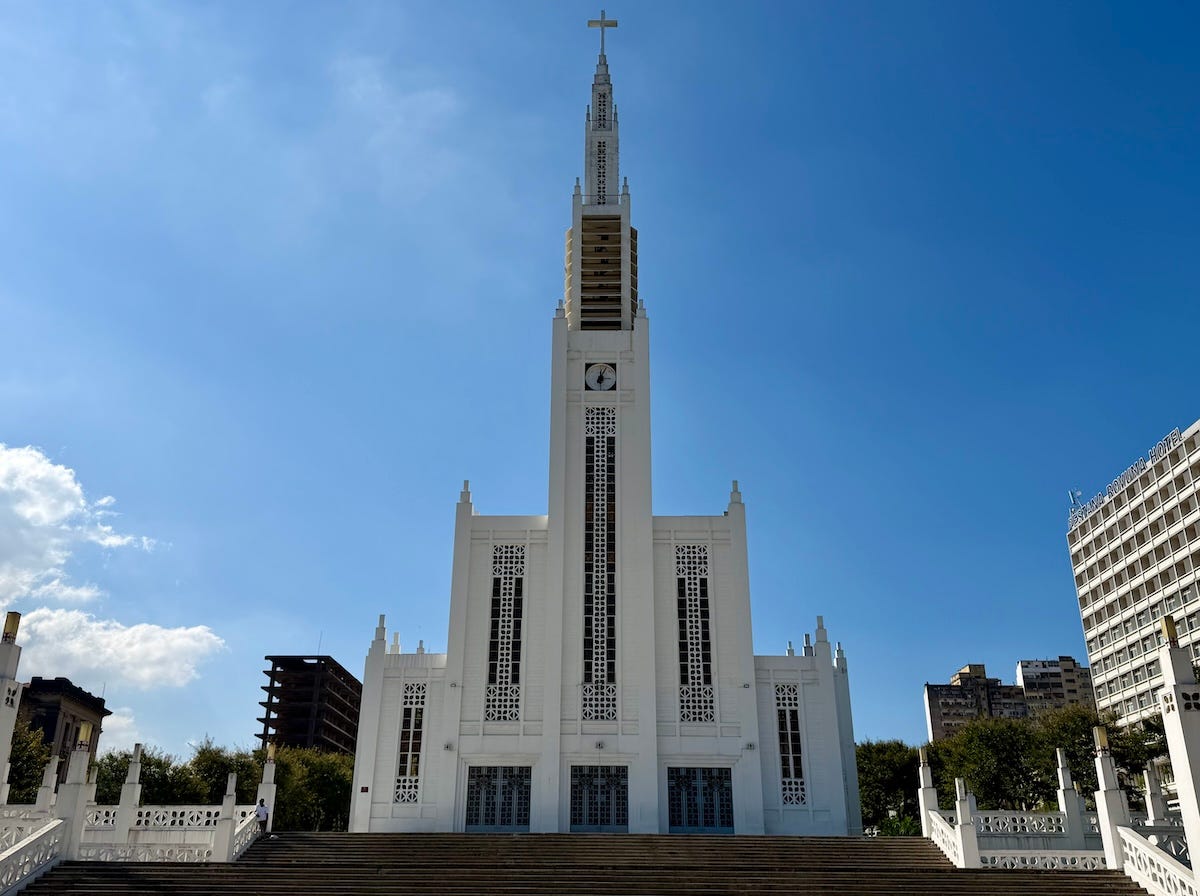
The Cathedral of Our Lady of the Immaculate Conception was also prominently located on Independence Square. Built between 1936 and 1944, and an example of Colonial Modernism and Art Deco architecture, it’s known for its white exterior and minimalist lines. Although the church’s posted hours claimed it was open, it was not. We made do with an exterior view.
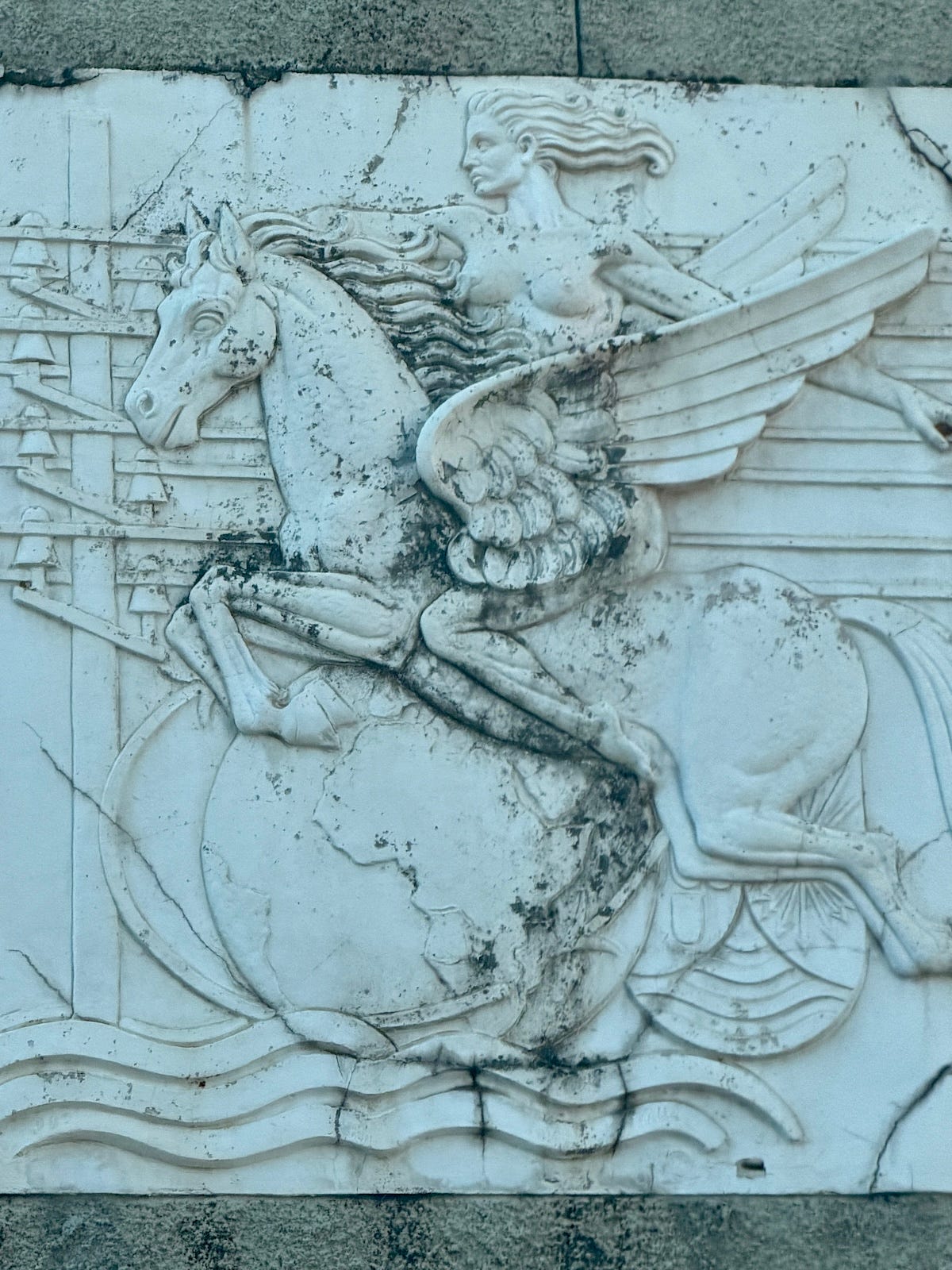
I took a quick photo of this horse as we drove past the the headquarters for the state-owned Rádio Moçambique. This horse relief embellished an Art Deco building that has also witnessed much history within its walls. Built in the late 1940s, it originally housed the Rádio Clube de Moçambique, which was one of the most powerful and advanced radio stations in Africa at the time. It was also the birthplace of LM Radio, which became legendary in the 1950s and 60s for broadcasting rock and roll music into South Africa, where it was banned. I love discovering art and history connections like this one.
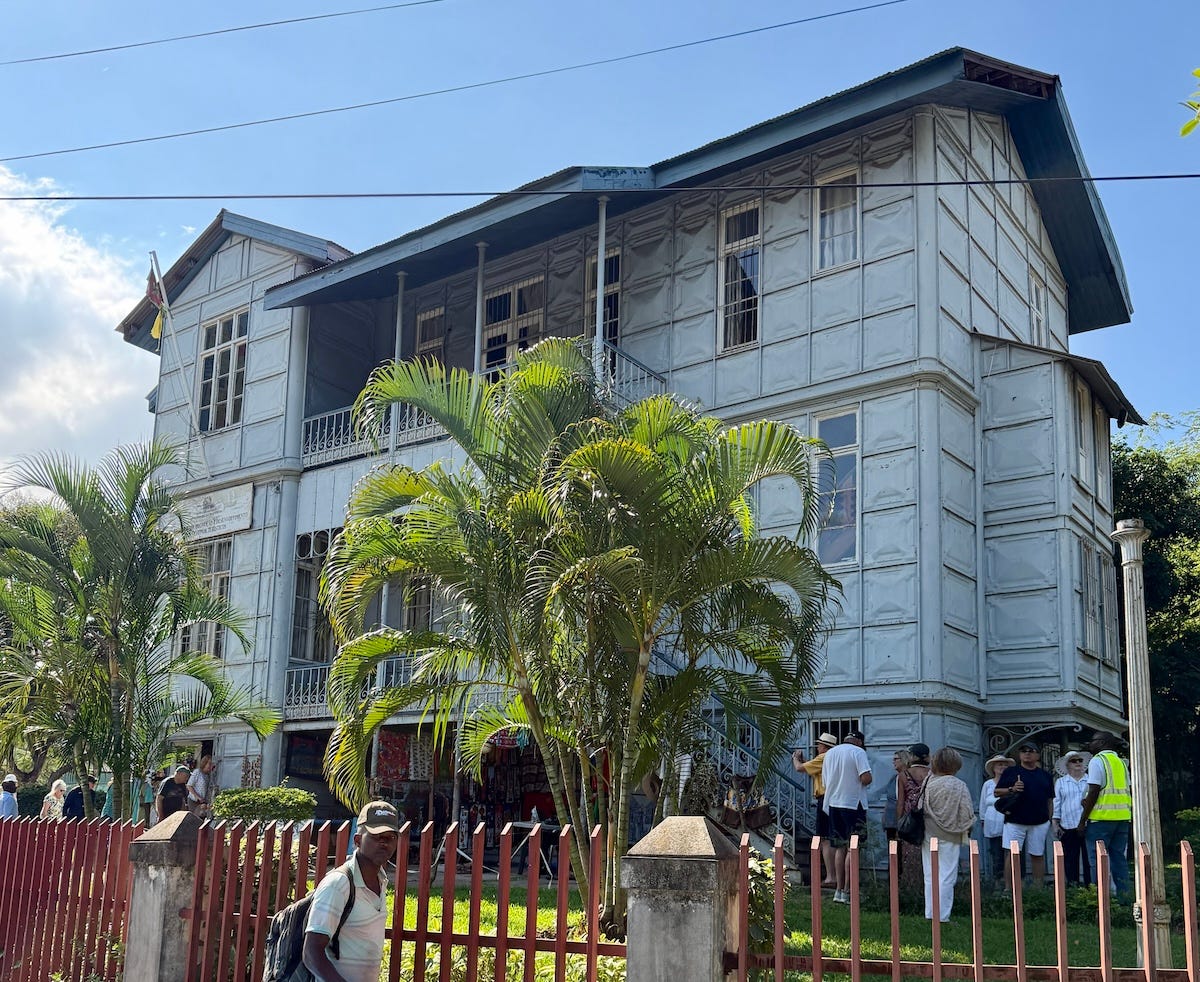
Next stop: the Eiffel House, more commonly known as the Iron House. It’s the historic prefabricated building designed by the legendary French engineer Gustave Eiffel. Built in Belgium in 1892, and shipped to Mozambique, it was to be used as the home of the Portuguese Governor-General.
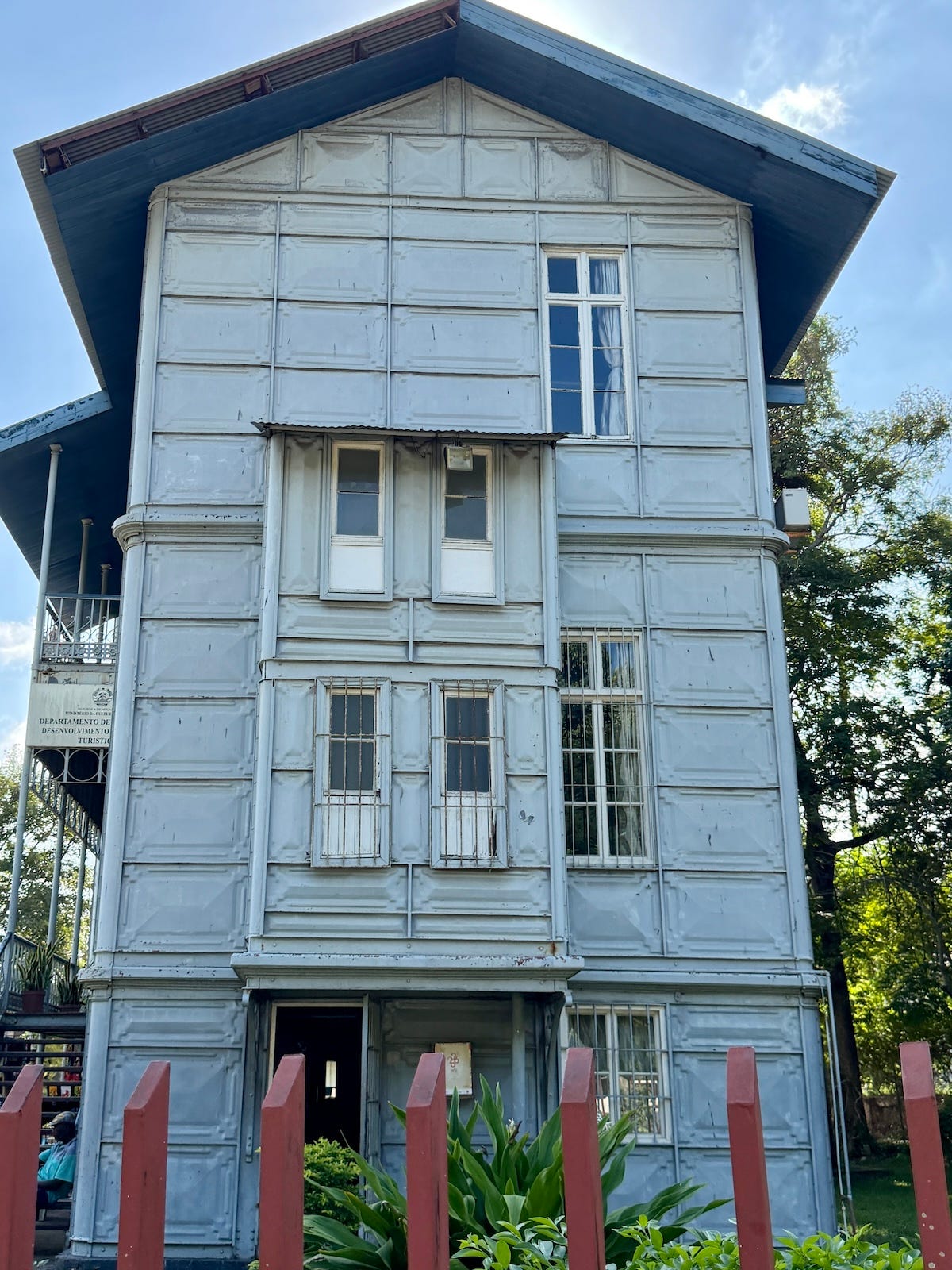
Because the entire structure — including all the walls, floors, and ceilings — was made of iron sheets, the interior turned into an “oven” in the summer, with temperatures reportedly reaching over 111°F inside. It was never inhabited — for obvious reasons. A white elephant? Or perhaps, a grey elephant! Our guide gave us the history of the house while we gazed at the exterior, but we didn’t tour the interior, although other Regent groups were doing so, and while the place was busy, it was not overly crowded. Another instance of trimming minutes from our tour?
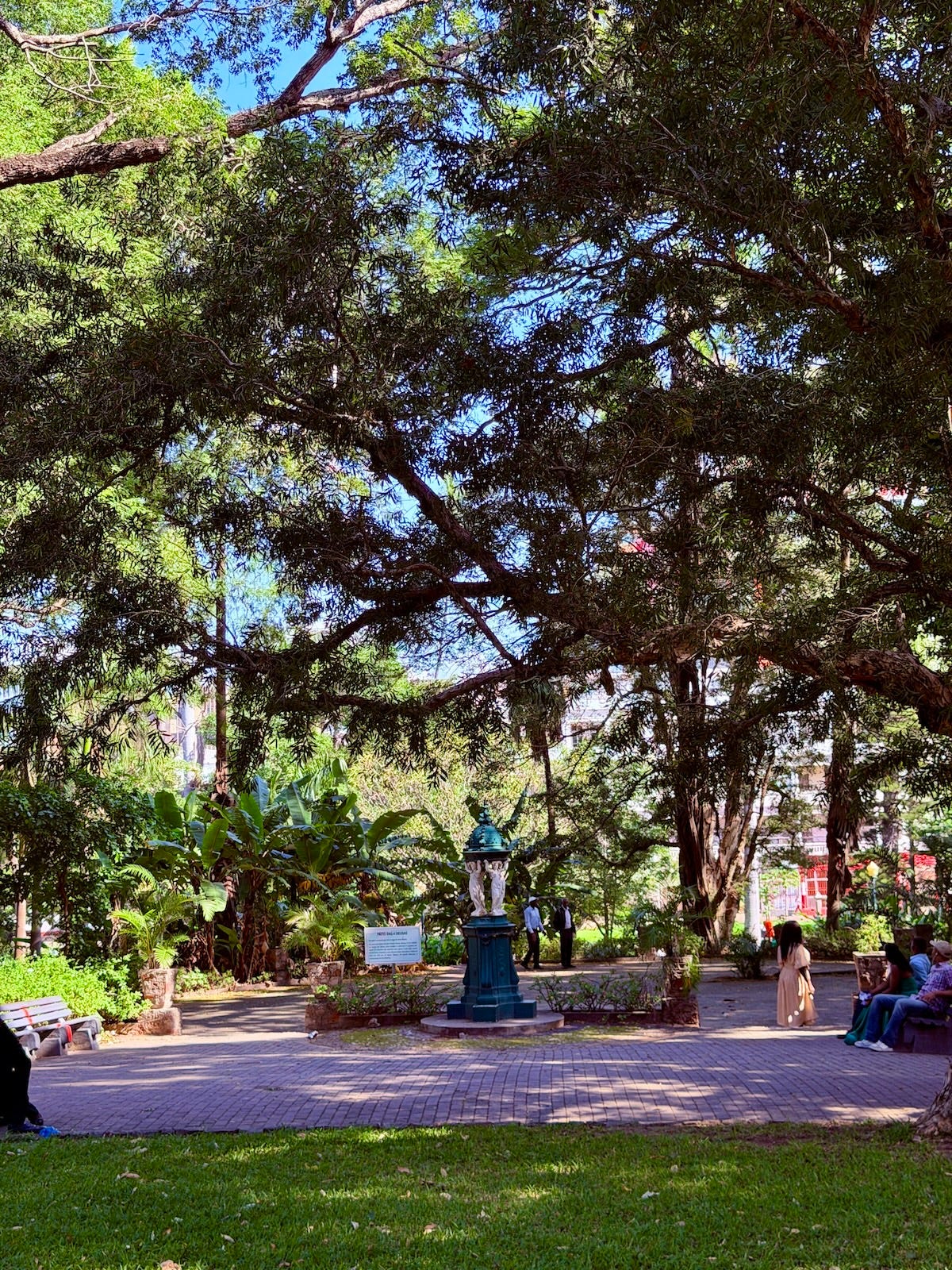
From the Eiffel House, we crossed the street and entered the Tunduru Botanical Gardens, a historic 19th-century park designed by British gardener Thomas Honney. This urban oasis is well known for its massive tropical trees, diverse plant collections, and unique colonial-era features. It truly was an oasis on this warm day and was packed with Maputenses.
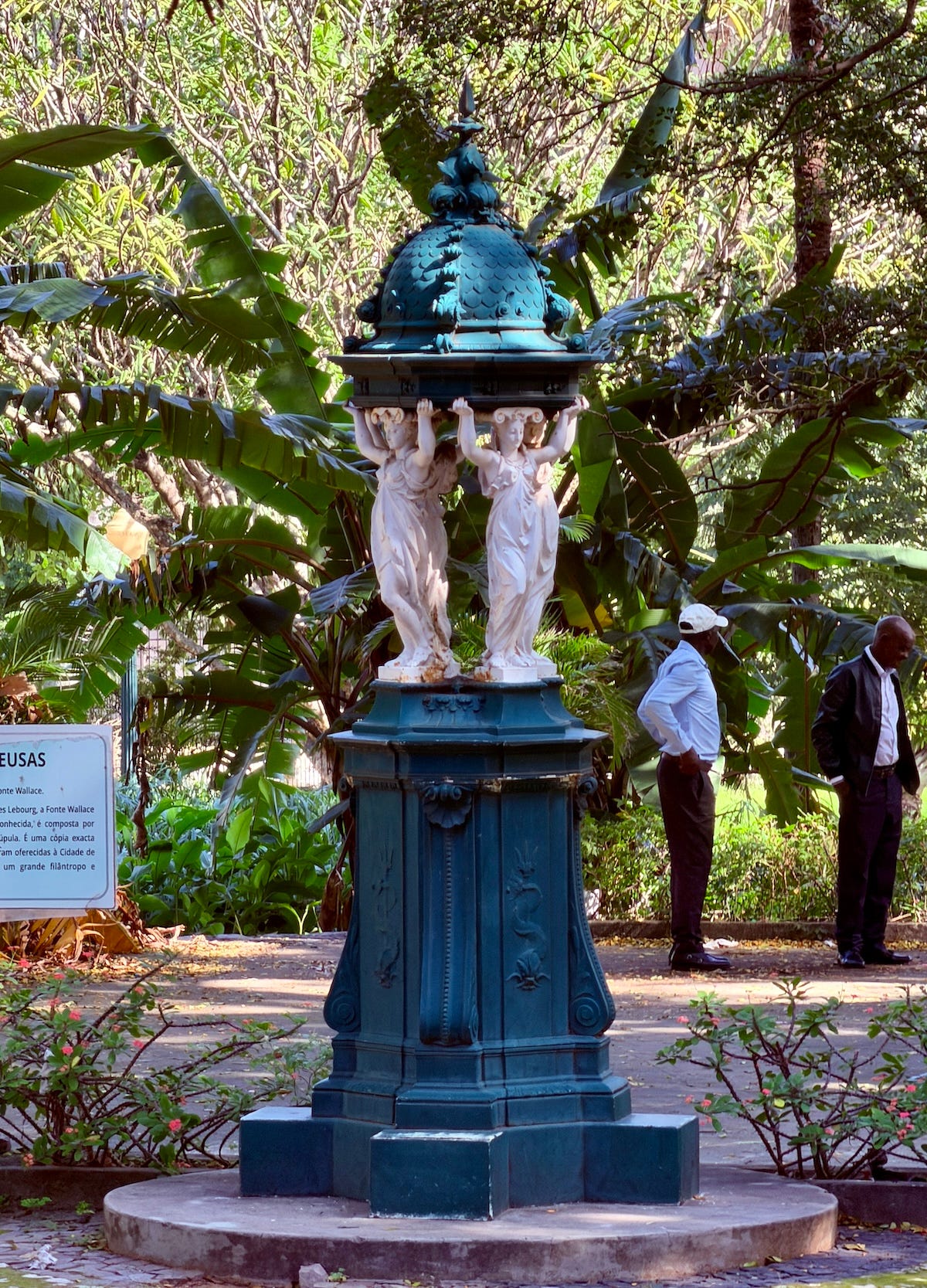
The garden contained a rare, forest-green Wallace Fountain, an iconic 19th-century cast-iron drinking fountain featuring four caryatids representing kindness, simplicity, charity, and sobriety. It’s the rare survivor of the roughly 100 originals that were gifted to cities around the world by Richard Wallace, a wealthy British art collector and philanthropist. After the Siege of Paris in 1870 destroyed the city’s water system, Wallace initiated a project funding fountains that provided free, clean drinking water to the poor. By doing this, he hoped to discourage people from drinking beer or wine as a substitute for water.
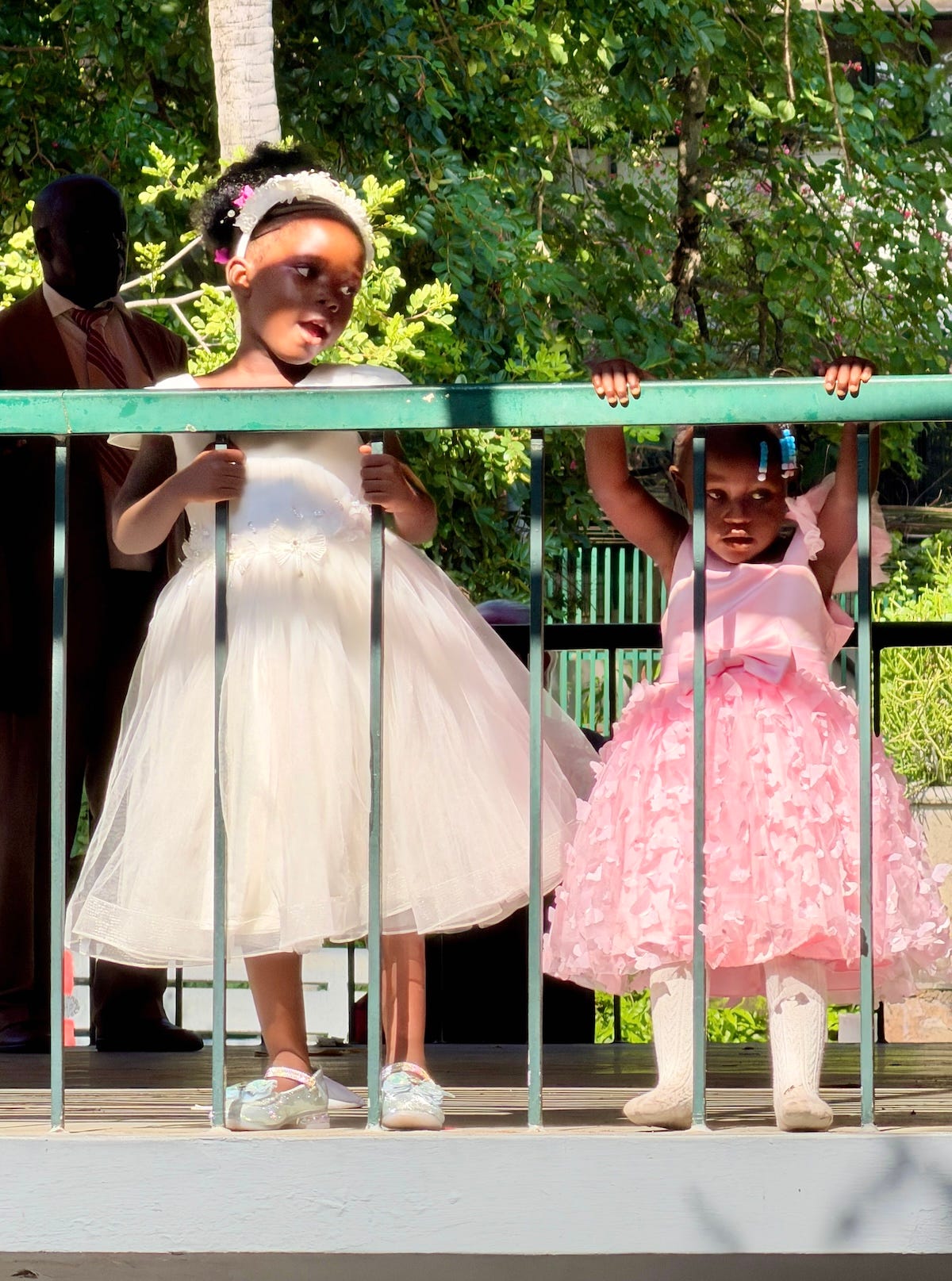
We visited the gardens on a Saturday afternoon, and there were so many groups of people, all in festive wedding garb, all singing and celebrating and taking photos, we barely noticed the plants and trees. Folks were friendly, and the children were all dressed up and yet, they were still being children. These two little girls were swinging on the railing and people-watching, while the adults were doing adult stuff.
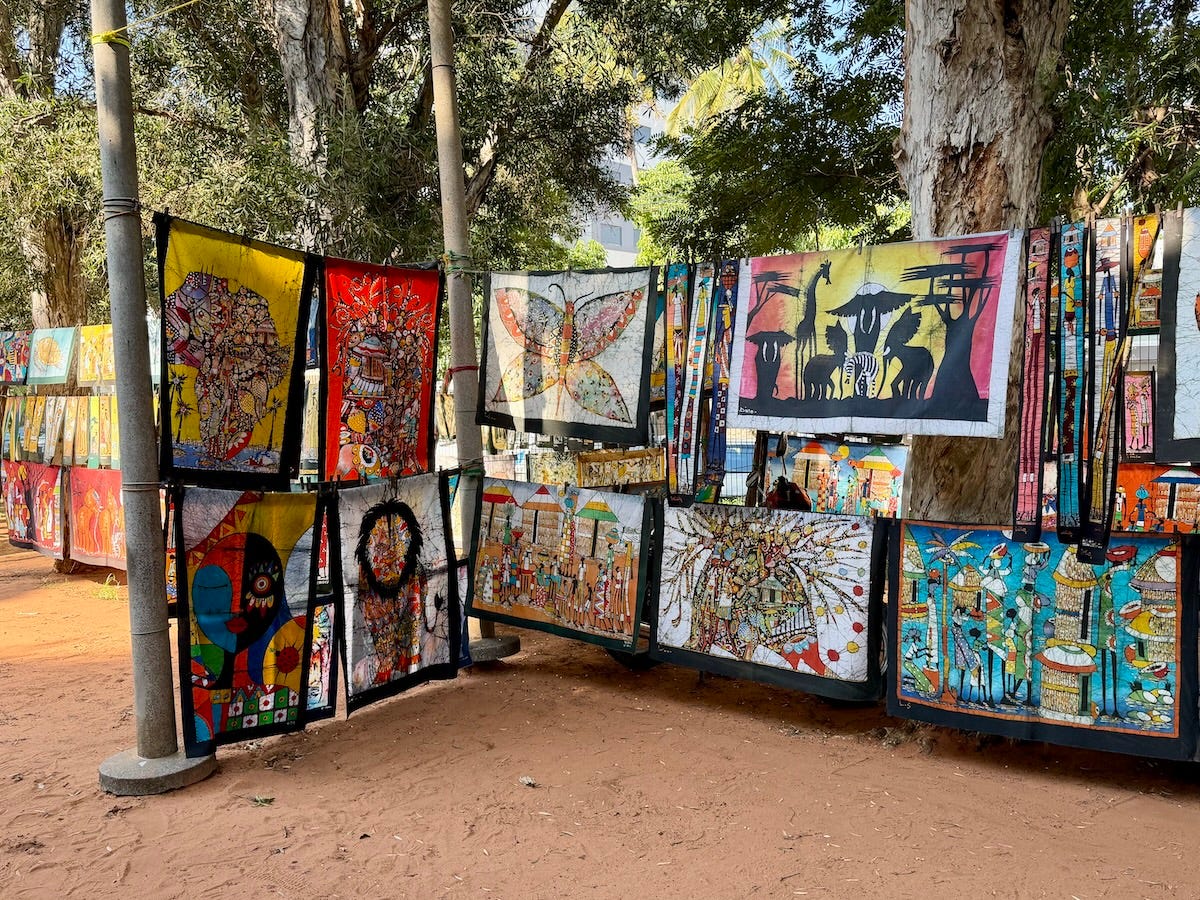
On our last of five stops, we visited the FEIMA (Feira de Artesanato, Flores e Gastronomia de Maputo), the city’s premier artisan, flower, and food market. Batiks took center stage, with hundreds of colorful banners wafting in the breeze. This market was one of the main reasons we booked this tour, and we were promised 45 minutes of shopping time. However, when we arrived, our guide told us we only had 30 minutes because we were “running late.”
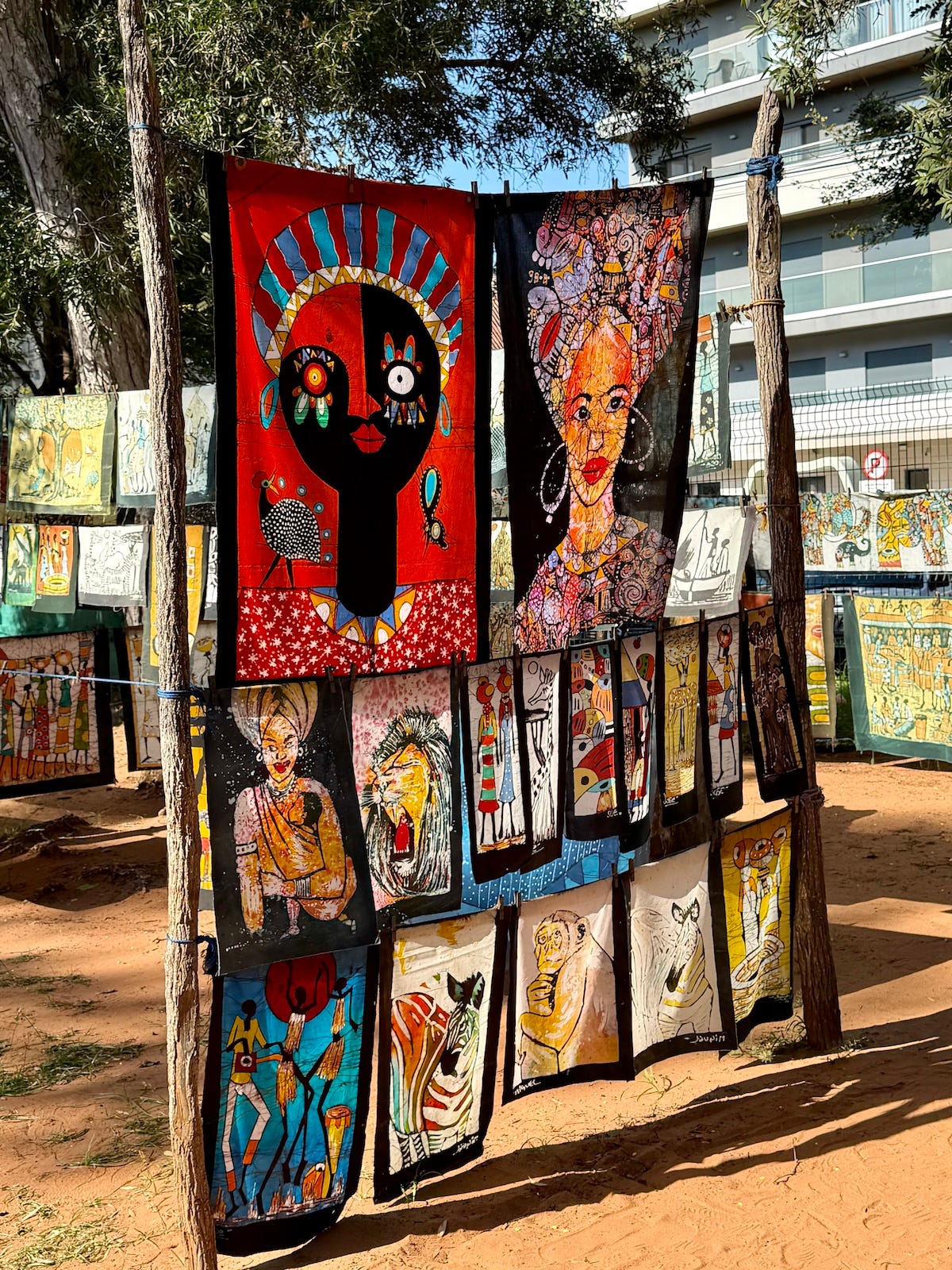
Speed shopping entailed. As I’ve mentioned many times on my Substack platform, one of the main reasons I travel the world is to connect with local artists, and one of my main goals is to support as many artists as possible by purchasing their art. We purchased wood folk art and several batiks.
One older woman in our bus, upon seeing my purchases, exclaimed, “Oh, you got conned!” No, ma’am, I did not get conned. I purposefully and pointedly spent a certain amount of my allocated “art” funds on five pieces of large art, most of which will grace the walls and shelves of my studio, the studio where I spend the majority of my home time, the place that gives me sustenance and joy. I am already imagining the place near my reading chair where I will hang one of the batiks I purchased. I’ve already spent several hours studying a piece of folk art sculpture I bought, and it’s already brought countless smiles to my face.
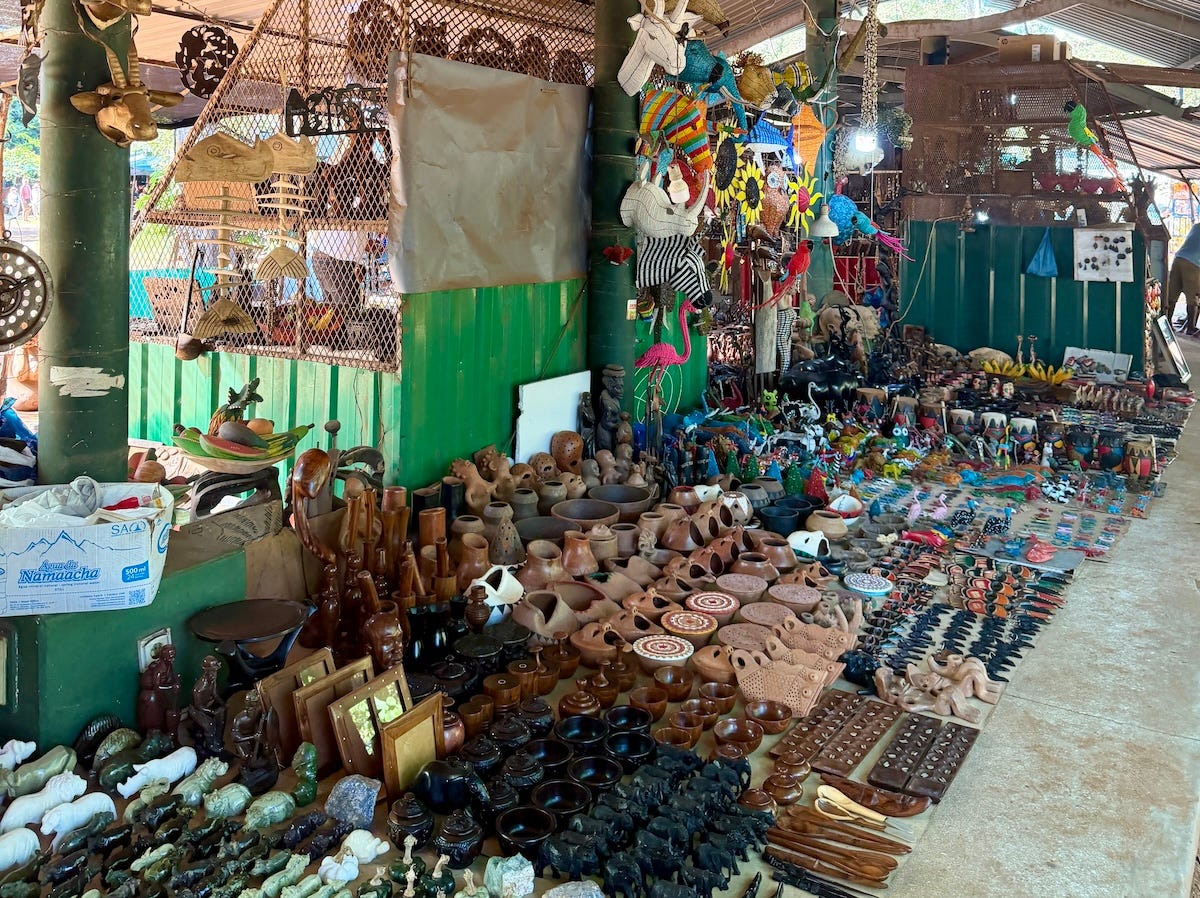
I also purchased a dozen “trinkets” that I will give as gifts to our grandchildren. And in purchasing these pieces of folk art, I helped support five different families who make their livings by creating and selling their art. No ma’am, I did not get conned, but I do wish you had gotten off the bus and at least interacted with the artisans and craftsmen who are so eager to share their livelihood with you.


Here are three of the larger batik pieces I’m bringing home!
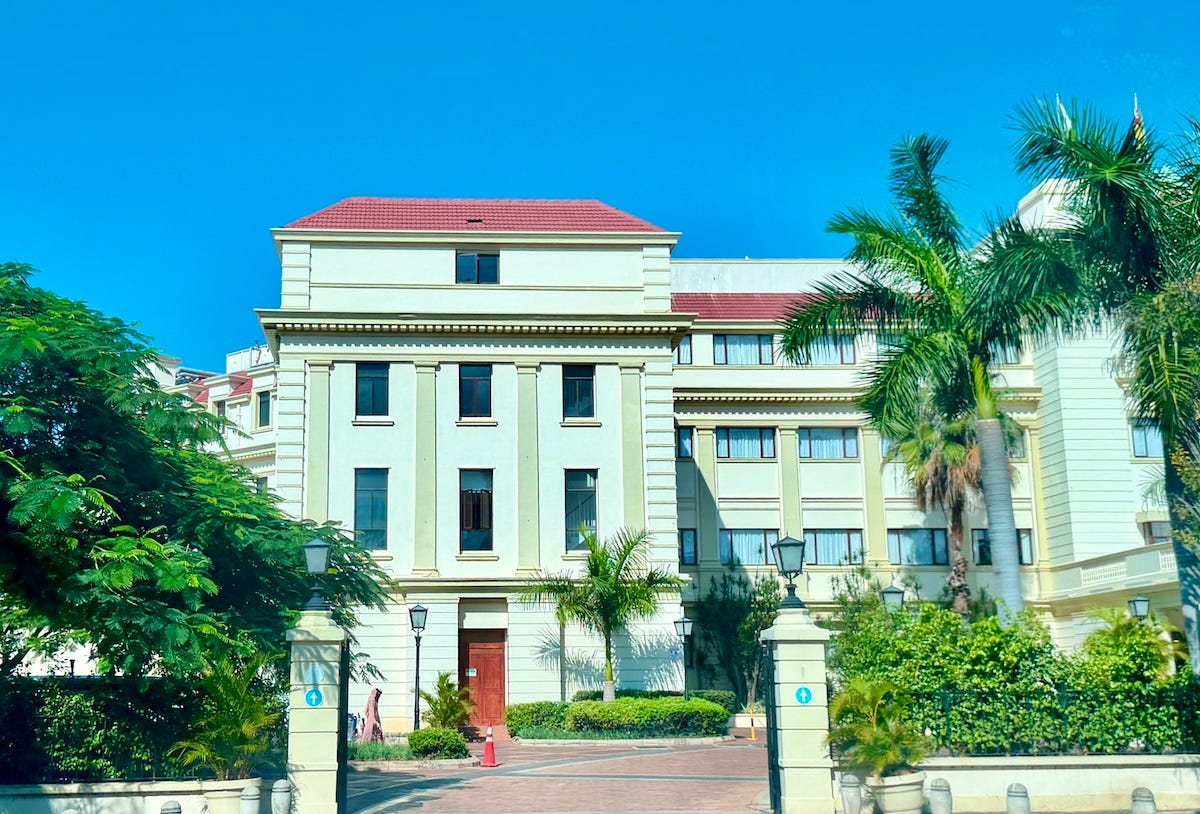
Our final stop was our planned 1 3/4 hour buffet lunch at the Polana Serena Hotel. Known as the "Grand Dame" of Africa. This historic hotel opened in 1922 and is situated high on a bluff overlooking Maputo Bay. According to the website it “features grand palace-style architecture, two ocean-view pools, and refined service.”
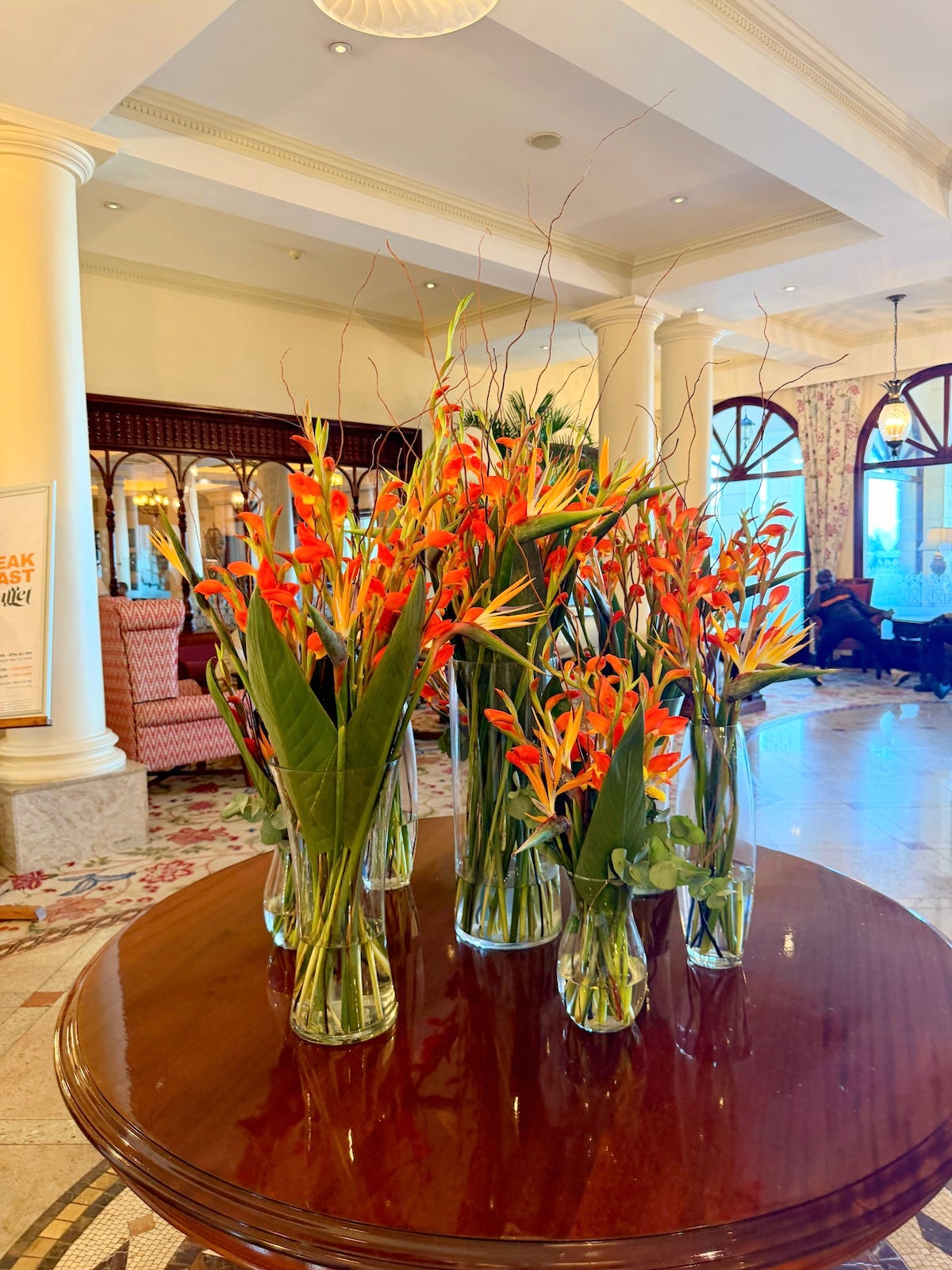
And it was a lovely hotel. We were wowed immediately upon entering the grand front lobby.


The buffet was served at the Varanda Restaurant, which overlooked the gardens, pool, and the bay. The buffet luncheon was certainly varied, and although it was geared to the Western palate, there was still plenty of local foods to try.


Sherpa was able to order a Destination Beer, the locally brewed 2 M. (Review to follow in a “beer” post.)
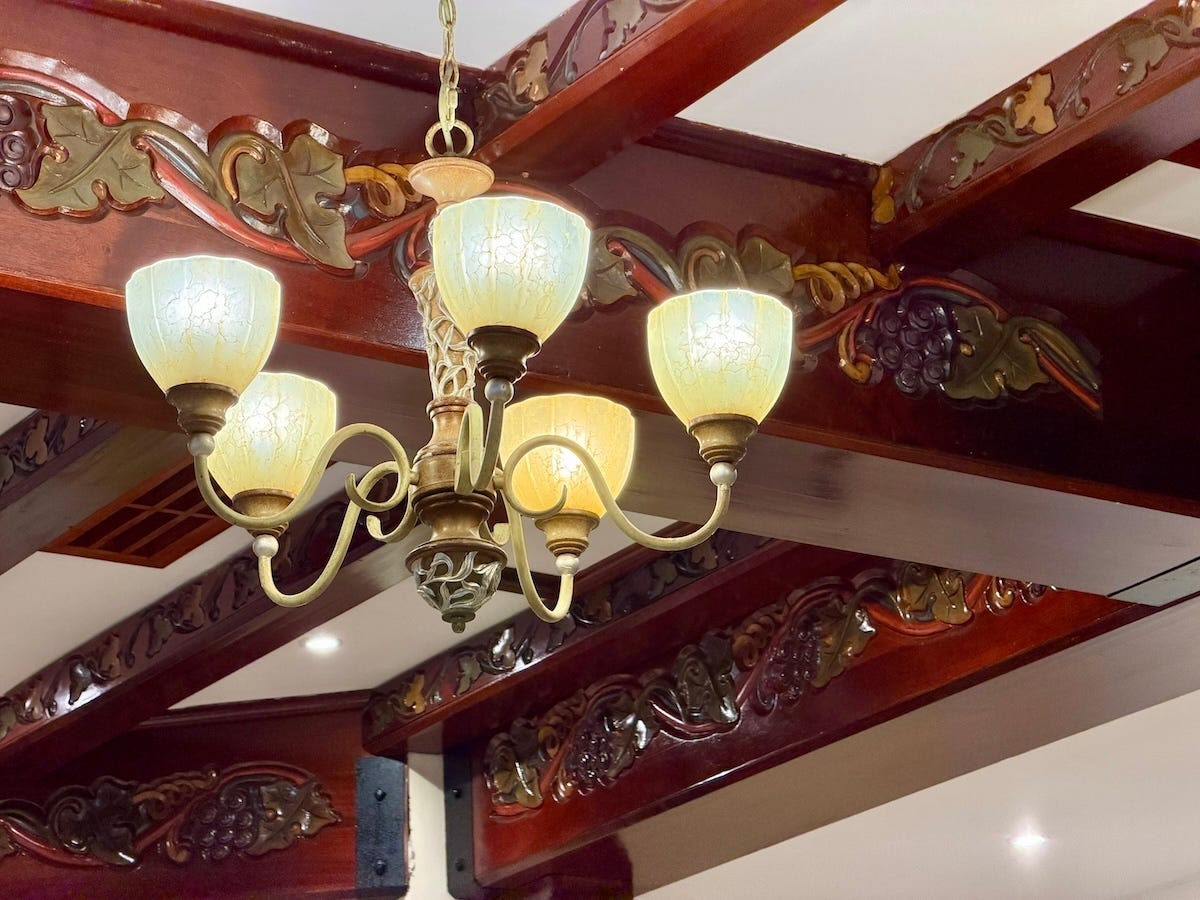
Architectural detailing was noteworthy. Lots of wood carvings and ornate glass.


After we finished our lunch, we left the dining room to wander around the hotel for awhile. According to the guide’s original departure time, we had almost an hour to walk around. Small sitting rooms and lounges were decorated in muted reds and blues.
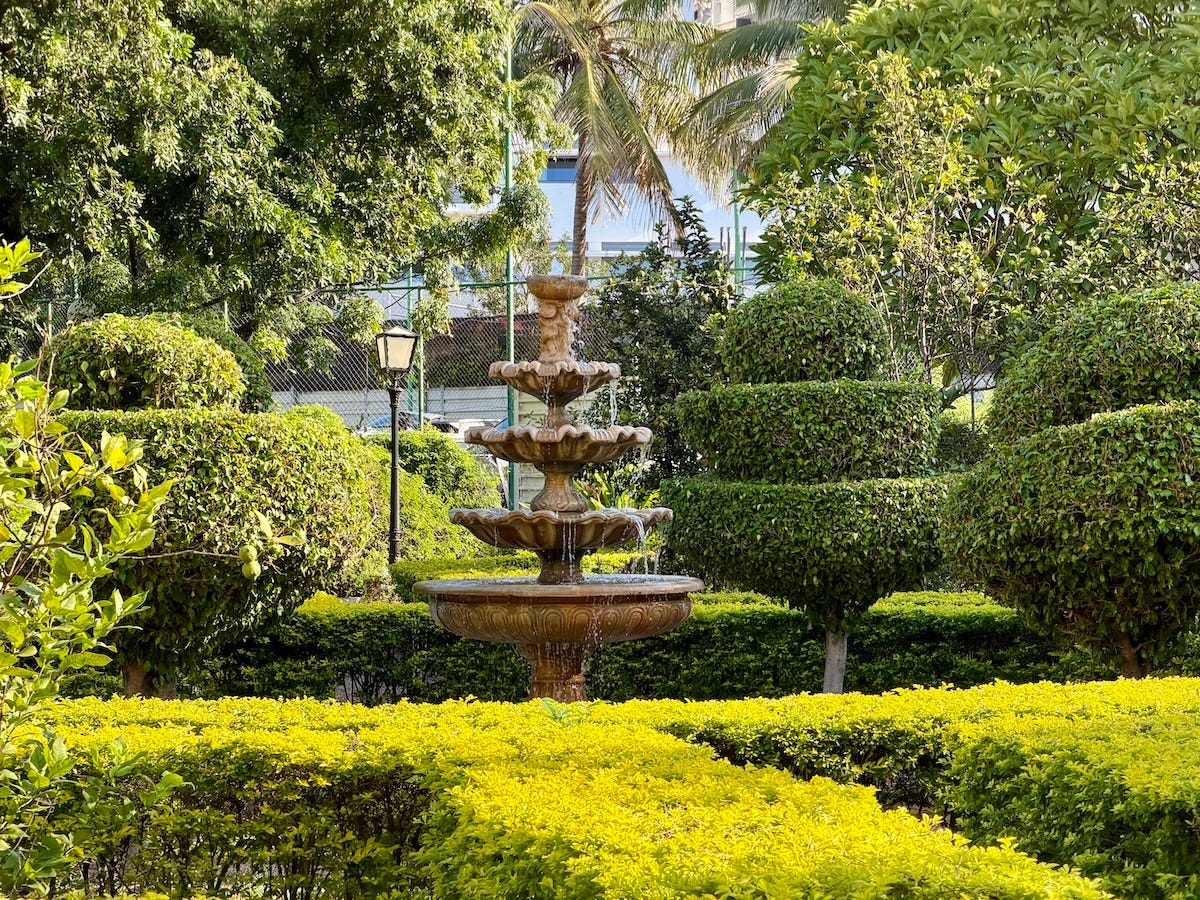
The Polana is famous for its vast tropical gardens, which have been restored to reflect its 100-year history. The gardens featured flowering acacias, hedges of pale-blue plumbago, agapanthus, and colorful hibiscus. There were manicured hedges and tumbling, topiaries, and five-tier fountains. It was a lovely place to simply sit and breathe in the beauty.
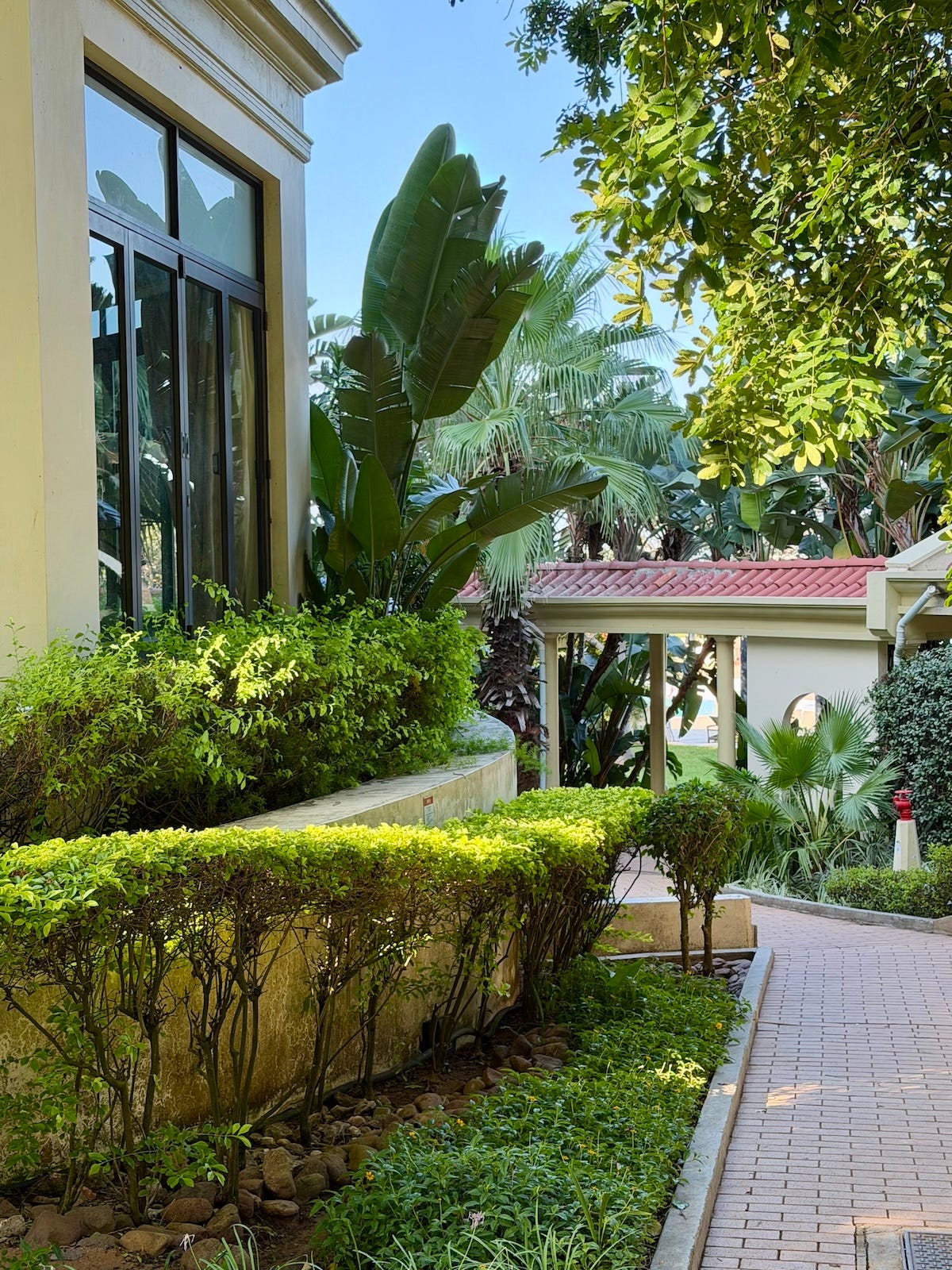
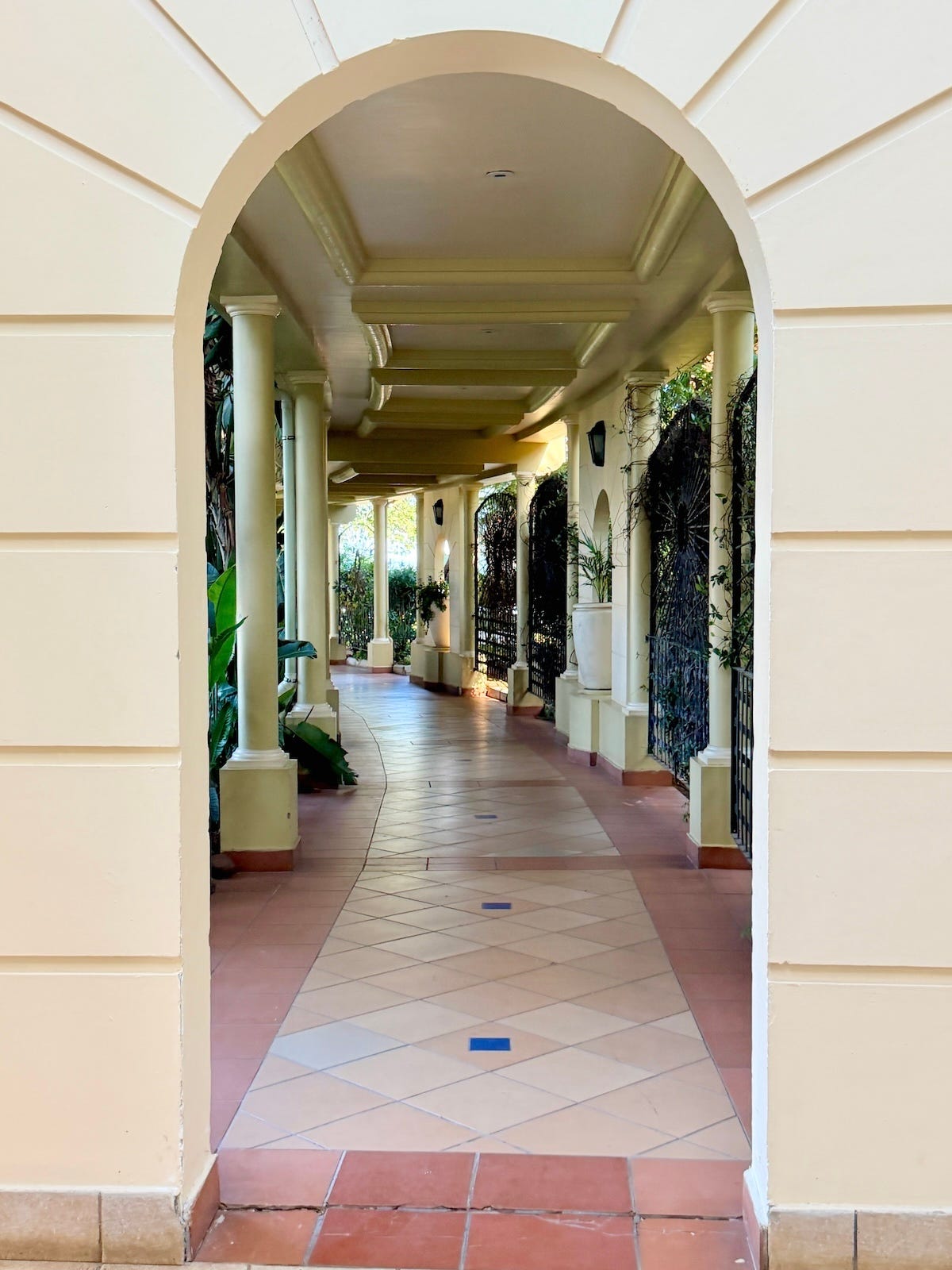
We followed the path around the side of the hotel, through this archway, and onto a covered tile walkway.
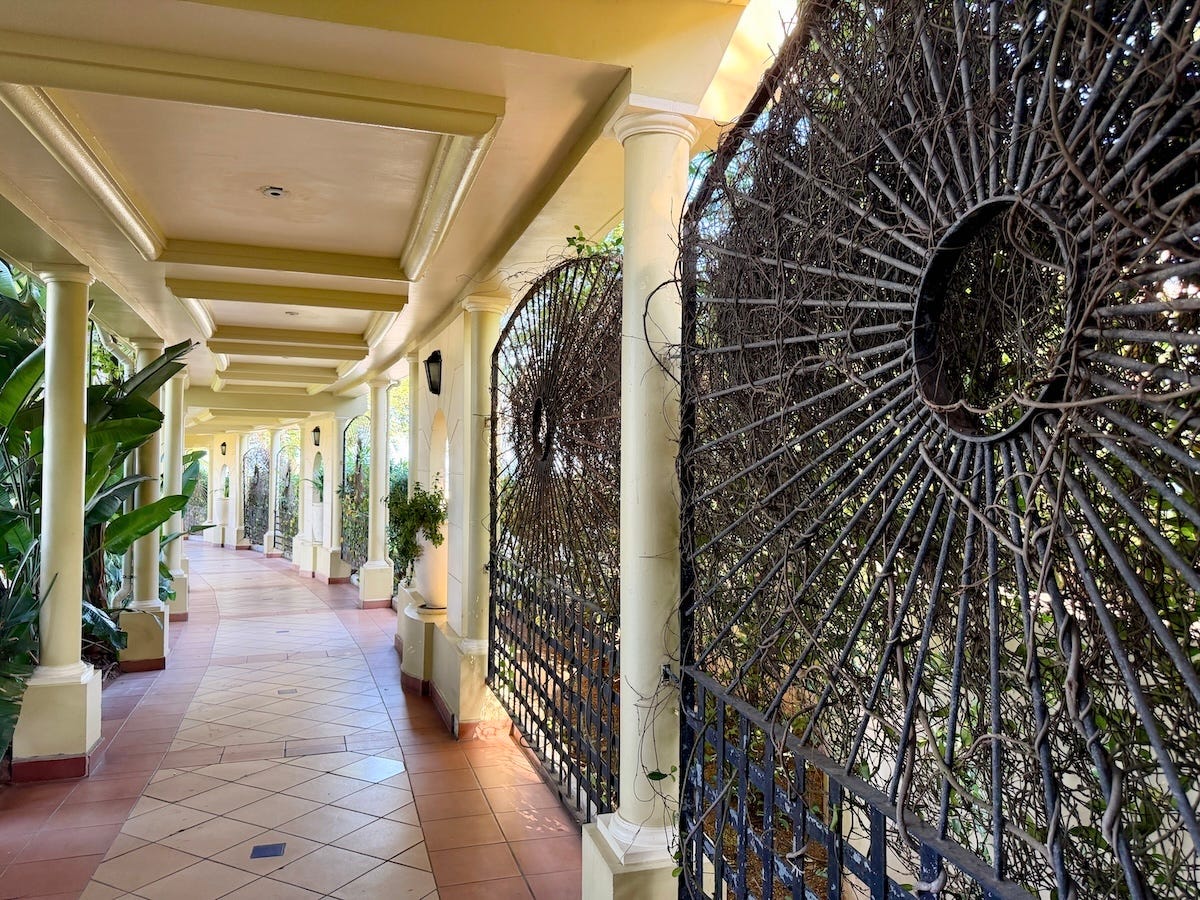
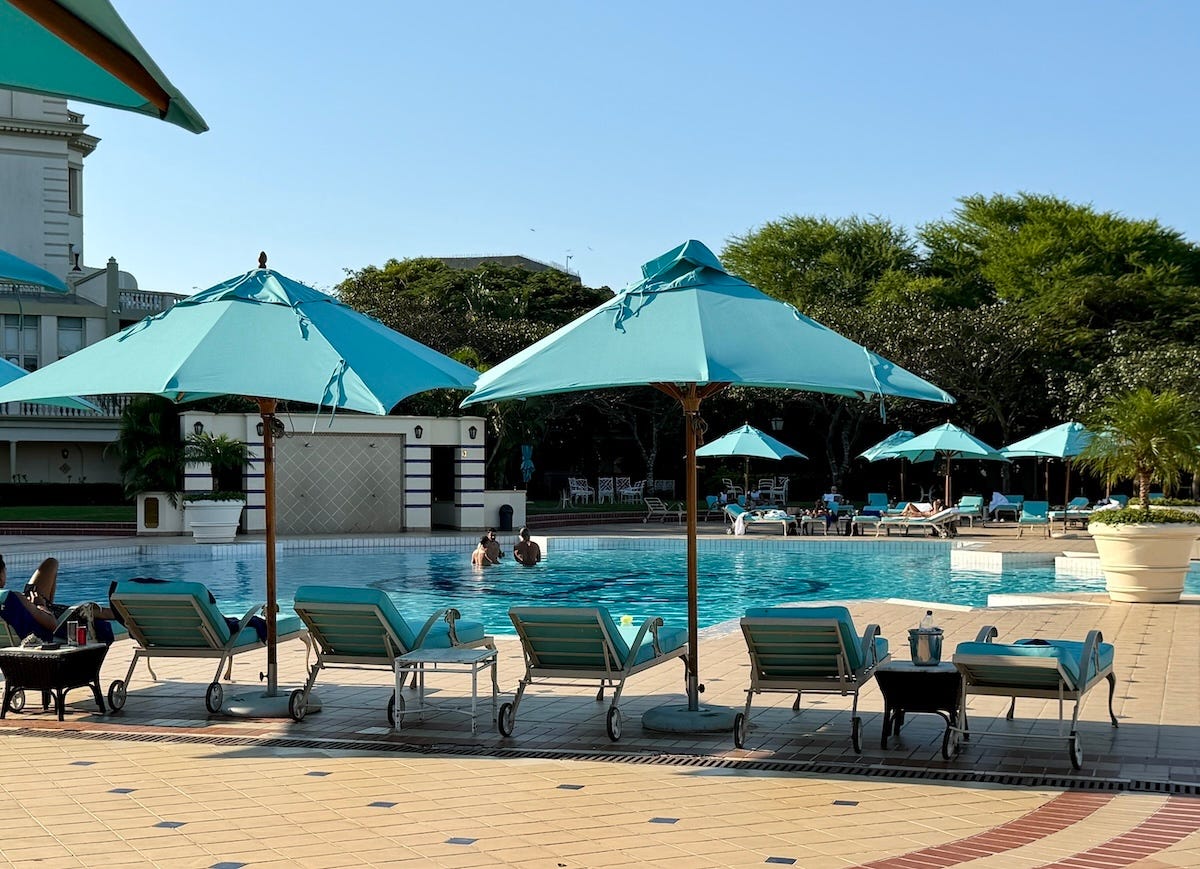
At the back of the property, we discovered a spacious pool, and a wedding ceremony about to begin.
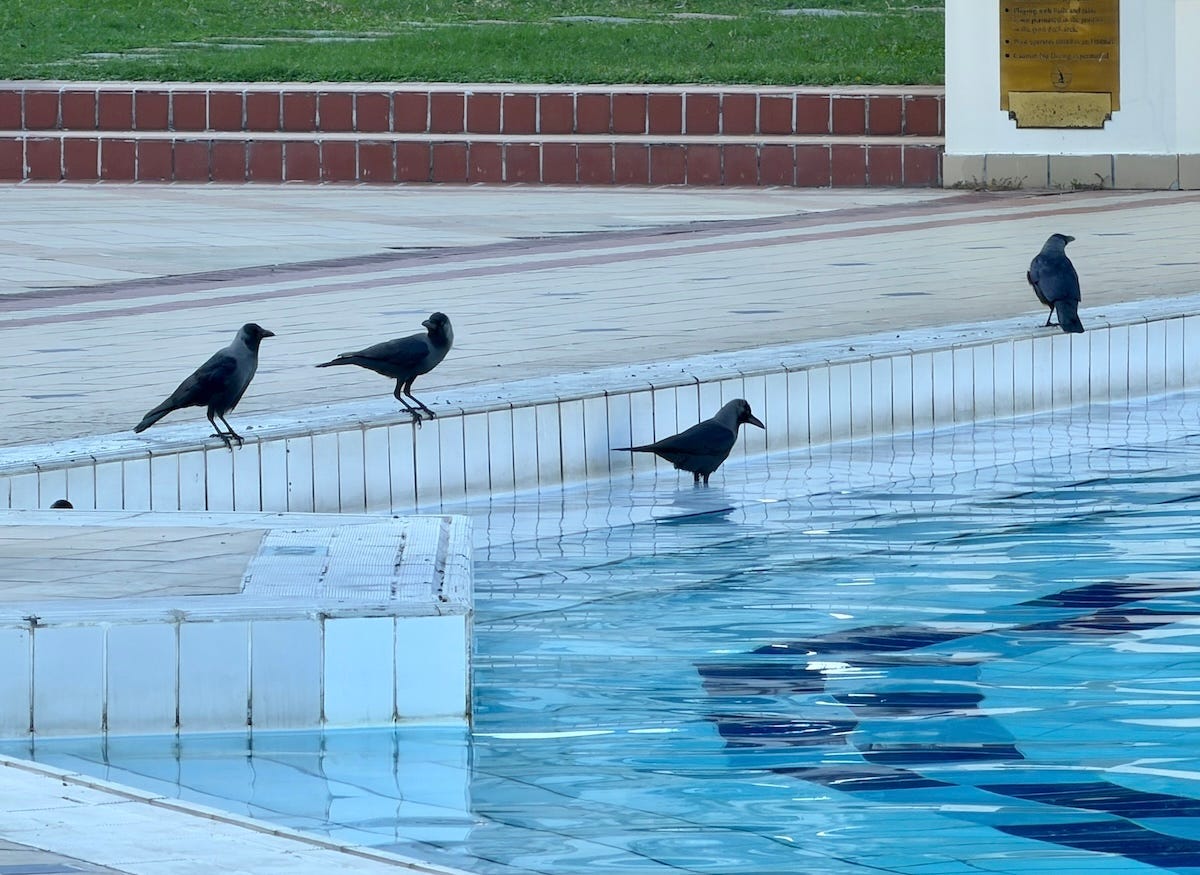
We avoided the wedding site, took a photo of some pool guests, and then headed back to the front of the hotel to find our group. When we arrived at the front door, we found the tour guide who was searching for us. Everyone else was already on the bus, and they were ready to depart. An hour early?
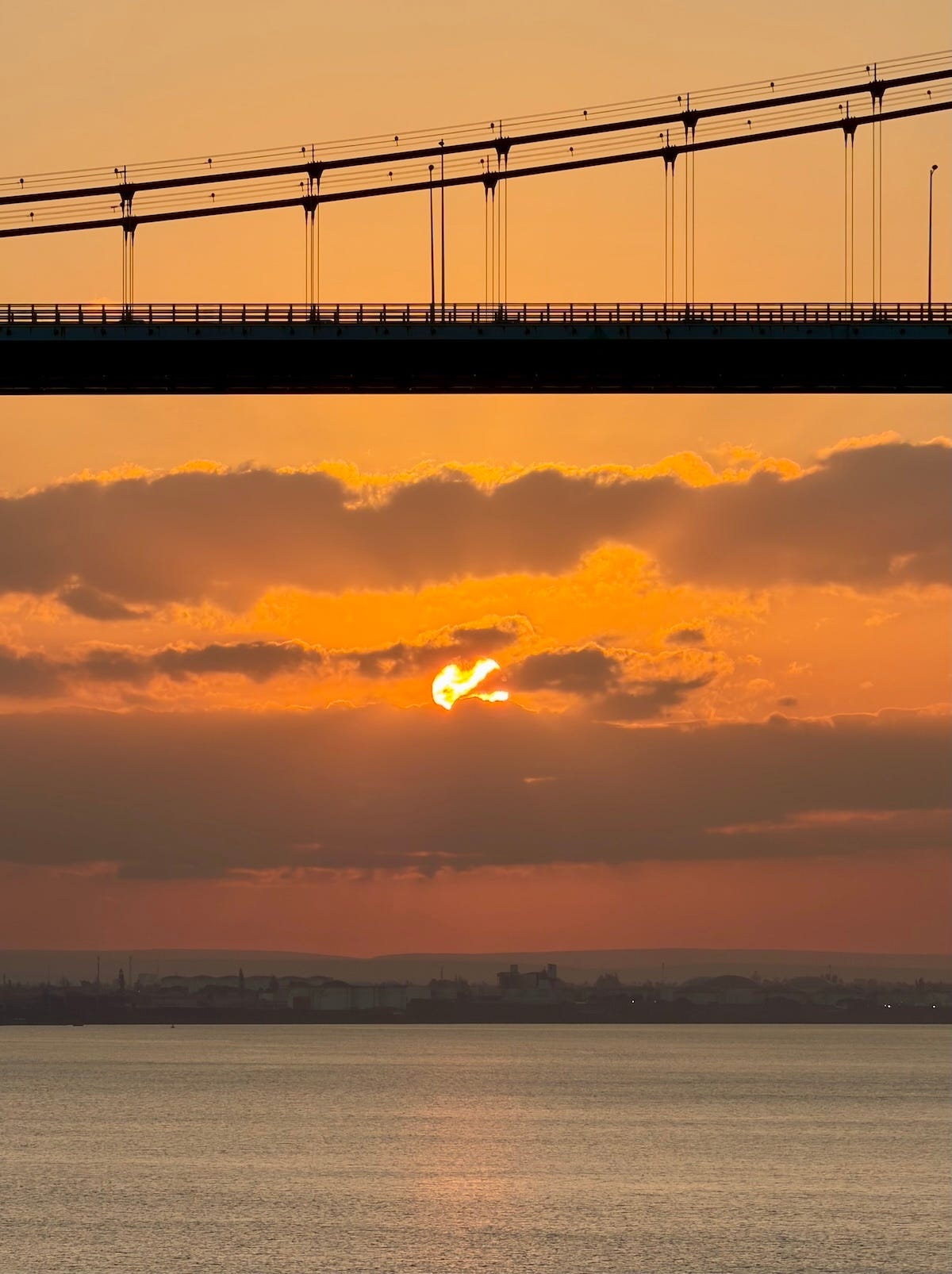
Our tour guide was excellent. We had been warned before reaching Mozambique that the tour guides would be local and that their guiding capabilities would vary. We had absolutely no issues with the quality of the guide experience. Our major issue with the tour was the speed at which we toured all of the featured sites. We signed up for, and paid for, a five-hour tour. In those five hours, there were five planned stops — four with touring components and one photo pause — plus a 1 3/4 hour stop for lunch. Already an ambitious plan! For some unknown reason, our guide cut the art market visit from 45 minutes to 30 minutes, and we spent only an hour at the hotel. The entire tour lasted 4 hours, from the moment the bus left the parking lot to our return.
If we had toured the expected five hours, we would have had a more leisurely, though by no means slow, touring experience, and the enjoyment factor would have increased exponentially. (There are times — extreme temperatures, humidity, precipitation — when tours are cut short for understandable reasons. Our weather was ideal — warm, but not hot nor humid — so weather was certainly not a factor.) We have, therefore, requested a partial refund from Regent.
That’s not to say we didn’t enjoy our first African mainland experience. We did. We enjoyed interacting with the local people, eating local food, and purchasing local art. And we look forward to spending the next 2+ weeks exploring more of Africa.
Next up: We arrive in Richards Bay, South Africa. Sherpa and I will take a break from cruising, as we go on a 5-day, 4-night safari overland in Kruger National Park. We’ll see you on the flip side, when we return to the Mariner in Cape Town, South Africa. For the next few days we’ll be busy, immersed in our first safari experience. Hope to have plenty of safari wonders to show you then.
We enjoy your writing and photos! We had the same experience at the artisan market in Maputo. Guide rushed us. I bought a batik, but had only a few minutes to look. I have the same attitude as you, and I love to support local arts .