
Luanda, Angola
We enjoyed a historically oriented excursion in Angola, visiting many of the city’s landmarks, and then, we returned to the downtown to visit the mall. A satisfying day in Luanda.

Angola’s capital and most populous city, Luanda, has experienced a massive construction boom in the last decade following the end of the Angolan Civil War. Learn about Angola’s history at the many superb museums, historical sites, and monuments throughout the city.


Daytime Temperature Highs: Average around 84°F to 88°F.
Nighttime Temperature Lows: Drop comfortably to 73°F to 75°F.
Comfort Levels: High heat and humidity persist during midday peak hours.
Daylight: Luanda sees approximately 8 hours of daily bright sunshine.
UV Index: The UV index ranks at a 10 — Very High — requiring robust sun protection.
Precipitation Risk: Very low, with only a 9% chance of rain on any given day. Rain averages less than a half inch of rain spread over roughly 2 days.


We chose to go on a Regent-choice excursion, THE CHANGING FACE OF LUANDA, a 3.5-hour tour, priced at $189 (USD) per person, discounted to $152 pp.
HIGHLIGHTS included:
Pause for photos at Iron Palace.
Discover the unaltered colonial architecture of the Church of Our Lady of Remedies.
Understand Angola’s history and traditional culture at the National Anthropology Museum.
See Luanda’s oldest building, San Miguel Fort, which guards the entrance of picturesque Marginal Bay.
Marvel at the rocket-shaped Agostinho Neto Mausoleum, built to honor Angola’s first president.
View the Presidential Palace and other government buildings that showcase Angola’s resurgence.
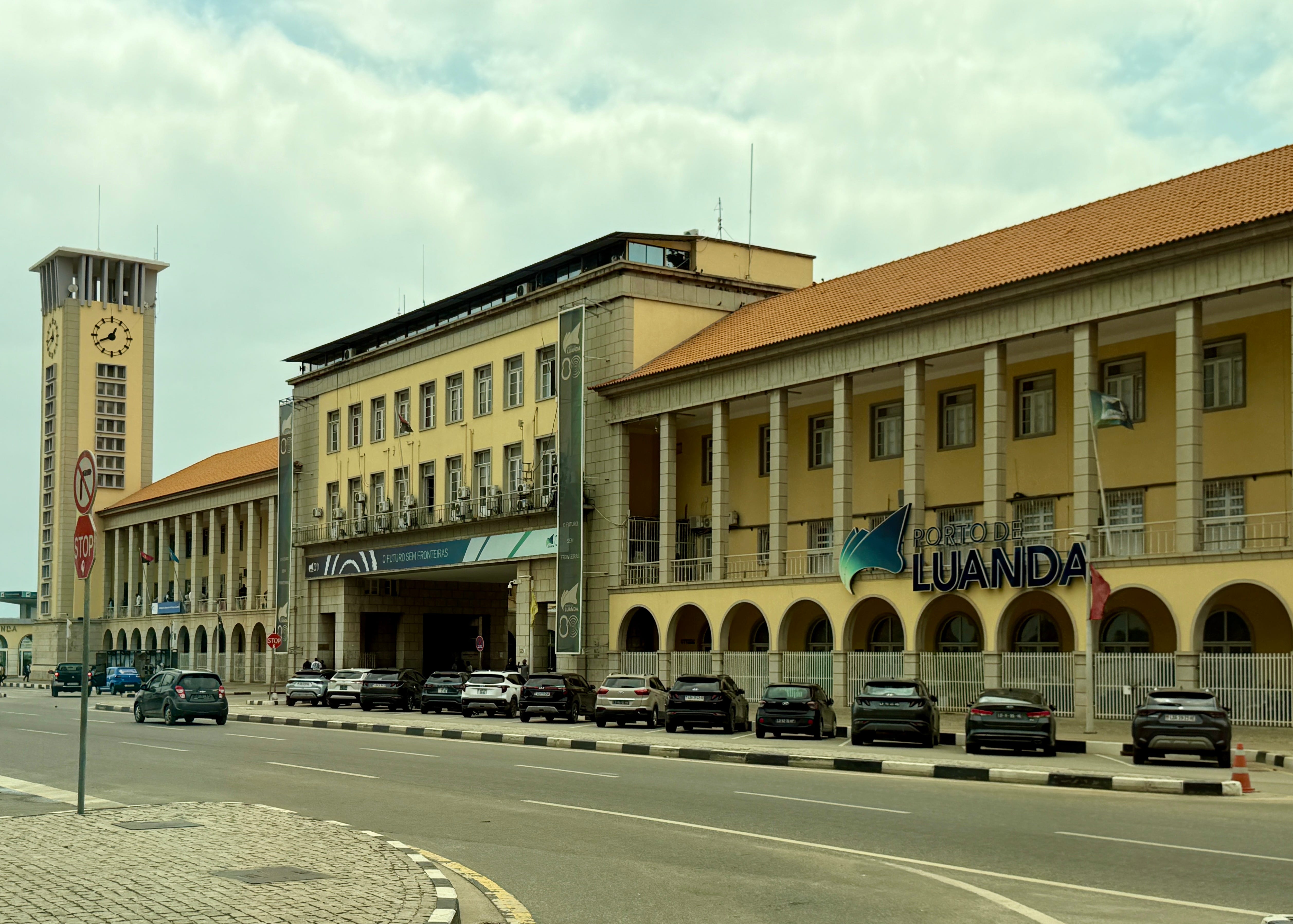
And the full description from Regent:
See the new face of rapidly changing Luanda and its historical landmarks, many built by the Portuguese, who occupied the city during much of its colonial period. Tour Angola’s capital to see the city’s inspiring rebirth and learn how the country’s vast oil and diamond resources fueled much of the growth and affluence evident along crescent-shaped Marginal Bay. You’ll pause for photos at Iron Palace, a prefabricated structure possibly designed by Gustave Eiffel and the renovated colonial Church of Our Lady of Remedies. Visit the National Anthropology Museum to understand Angola’s turbulent history and traditional culture. View Portuguese-built San Miguel Fort, altered in 1664 to a star shape, and the rocket-like Agostinho Neto Mausoleum tower, honoring Angola’s first president. On the way to Uptown, you’ll see the new houses of parliament and other stunning examples of colonial architecture, like the Presidential Palace and the Igreja de Jesus Catholic Church and soon appreciate how this fascinating city is reclaiming its nickname, the Paris of Africa.
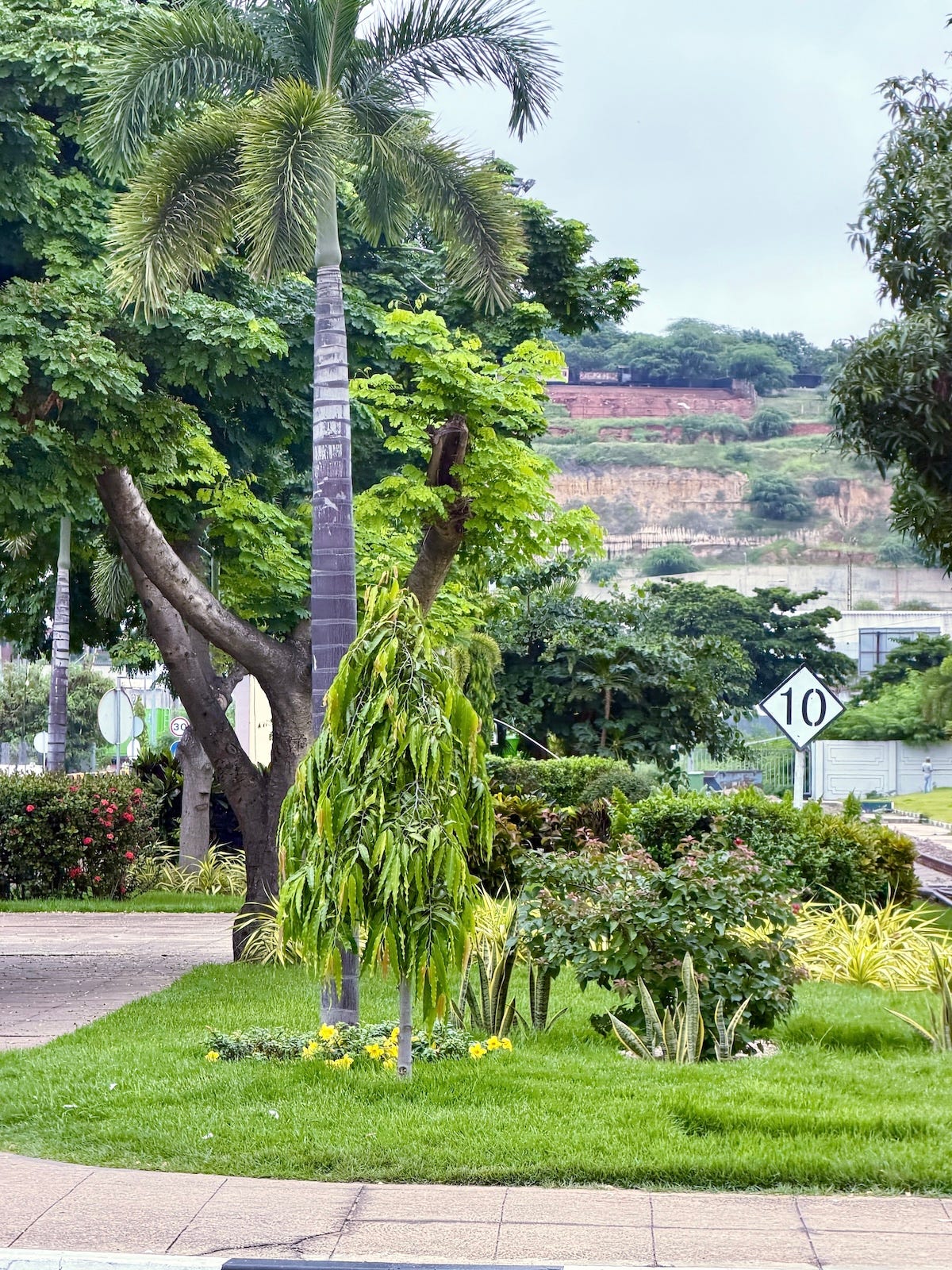
Our English-fluent guide introduced himself and the itinerary as we boarded modern coaches for our morning tour. Two buses with a total of around 80 passengers traveled and toured the sites together.
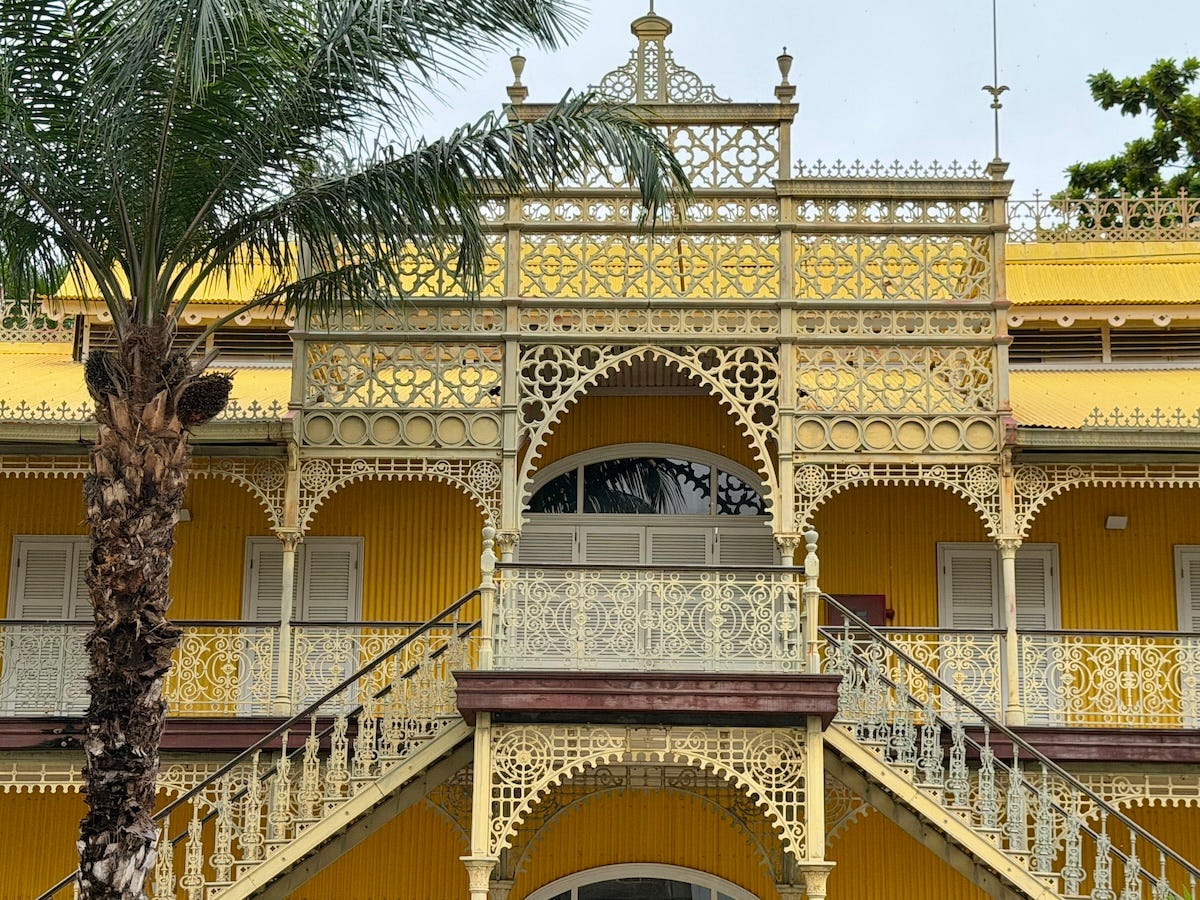
Pause for photos at Iron Palace, a prefabricated structure possibly designed by Gustave Eiffel. Our first stop, described as a “pause” in the description, was actually a 30 minute visit to the Iron Palace which is a striking, yellow-and-black architectural marvel located about fifteen minutes from the cruise port.


Its uniqueness lies in what the building was constructed from — the walls, columns, balconies, and intricate decorative filigree are made almost entirely of prefabricated cast iron. Local legend attributes the building's design to Gustave Eiffel, the French engineer who designed the Eiffel Tower and the framework of the Statue of Liberty. And although there is no official paperwork proving this, the structure was unmistakably manufactured in France during the boom in prefabricated iron architecture, and bears much similarity to Eiffel’s trademark aesthetic.
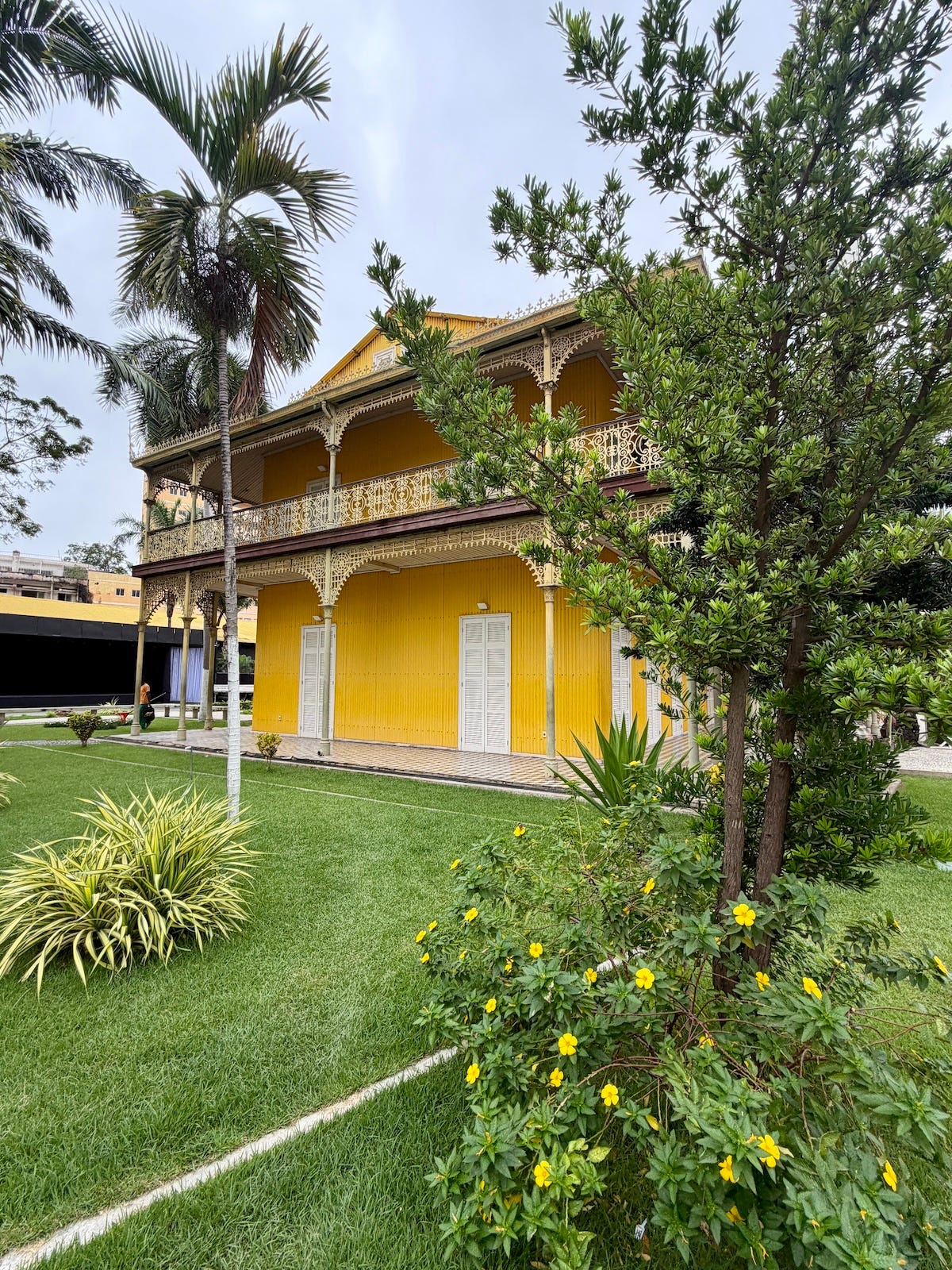
Interestingly, the building was never intended for delivery in Angola. Built in Paris in the 1880-90s, the metal pieces were placed on a cargo ship destined for either Madagascar or possibly South America. A storm blew the ship off course as it sailed past the southwest coast of Africa, and it was grounded off Angola’s Skeleton Coast. Portuguese authorities salvaged the shipwrecked cargo and brought the pieces to Luanda, where it was assembled on its current site around 1902.
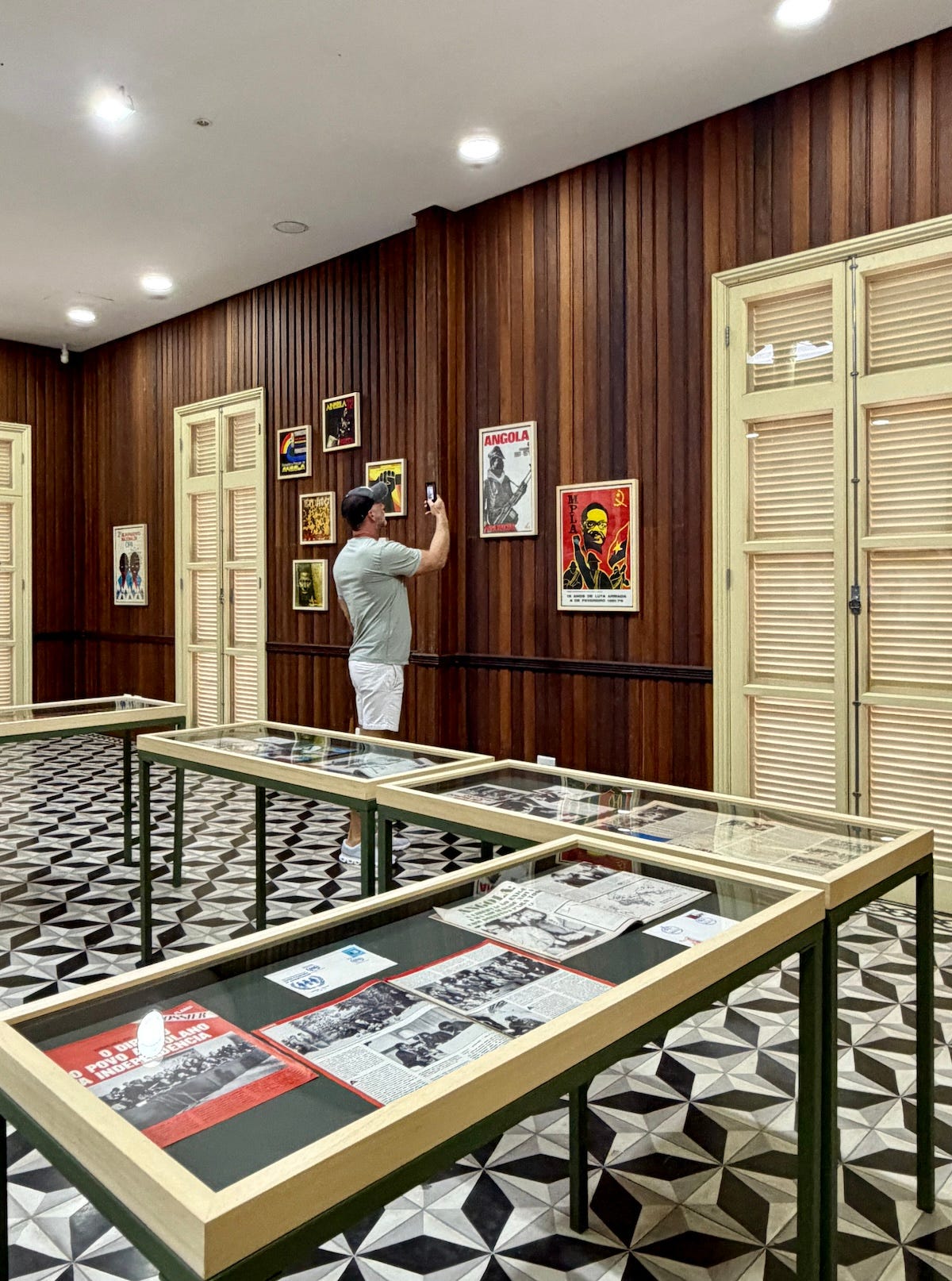
Although we were told there would be no interior visit, the first floor had an exhibit called “ANGOLA 75 — The Graphic Expression of Independence,” and we were invited to walk through the displays.


The exhibit’s promotional material says it “revisits the country’s visual memory by showcasing rare, historic posters, original flyers, and printed national documents tracking the cultural and political narratives of Angola’s transition to independence.” We had plenty of time to walk through the three rooms of well-curated historical items and get a brief Angolan history lesson from our guide.
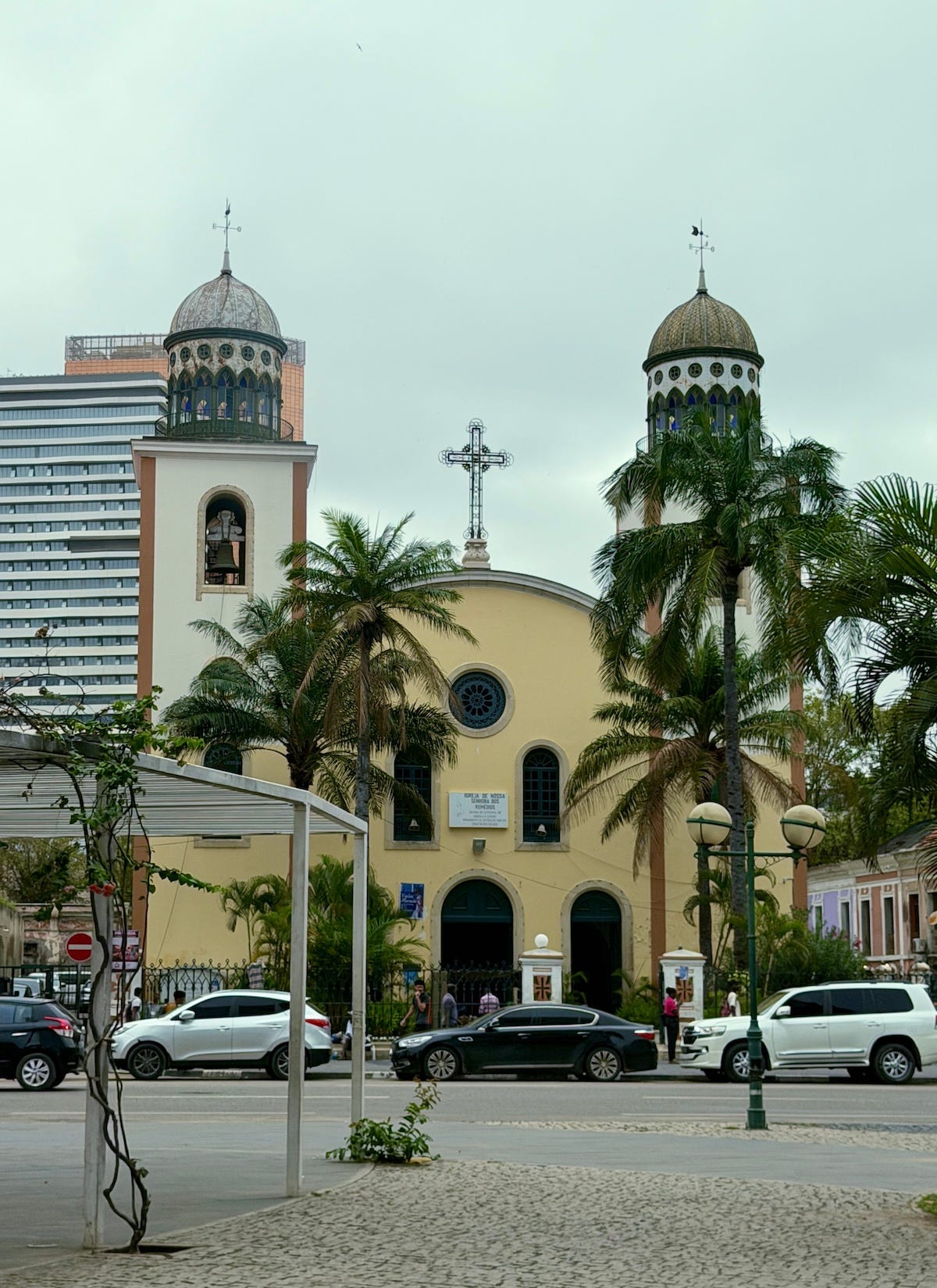
Then stop for photos at the renovated colonial Church of Our Lady of Remedies. Our next stop, only a few minutes from the Iron Palace, was the Church of Our Lady of Remedies, also known as the Luanda Cathedral. The church is a 17th-century Catholic landmark located in the heart of downtown. Built by Portuguese colonists between 1651 and 1670, the church was once a symbol of Angola's colonial history and religious heritage, but the local population has now made it their own.
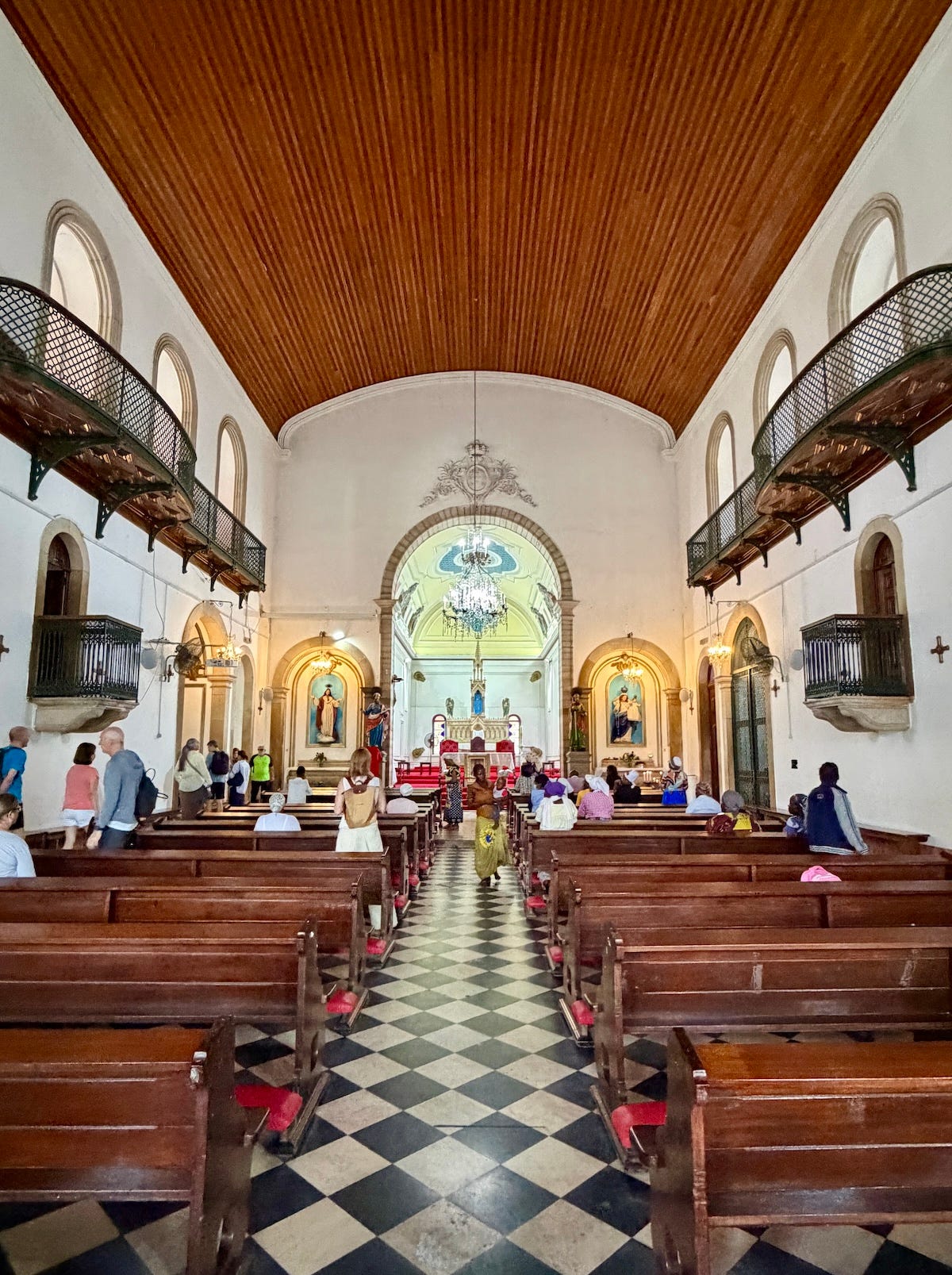
We visited mid-morning on a weekday as a women’s group was saying the rosary. The interior has had several restorations, that last one about 30 years ago, and continues to show evidence of being well cared for. The interior is modest but subtly colorful, with a wealth of textures and patterns.


The church’s exterior has a simple stone plaster facade with three wooden entrance doors; the rounded roof is graced with two square bell towers. It’s quite simple, yet still elegant.
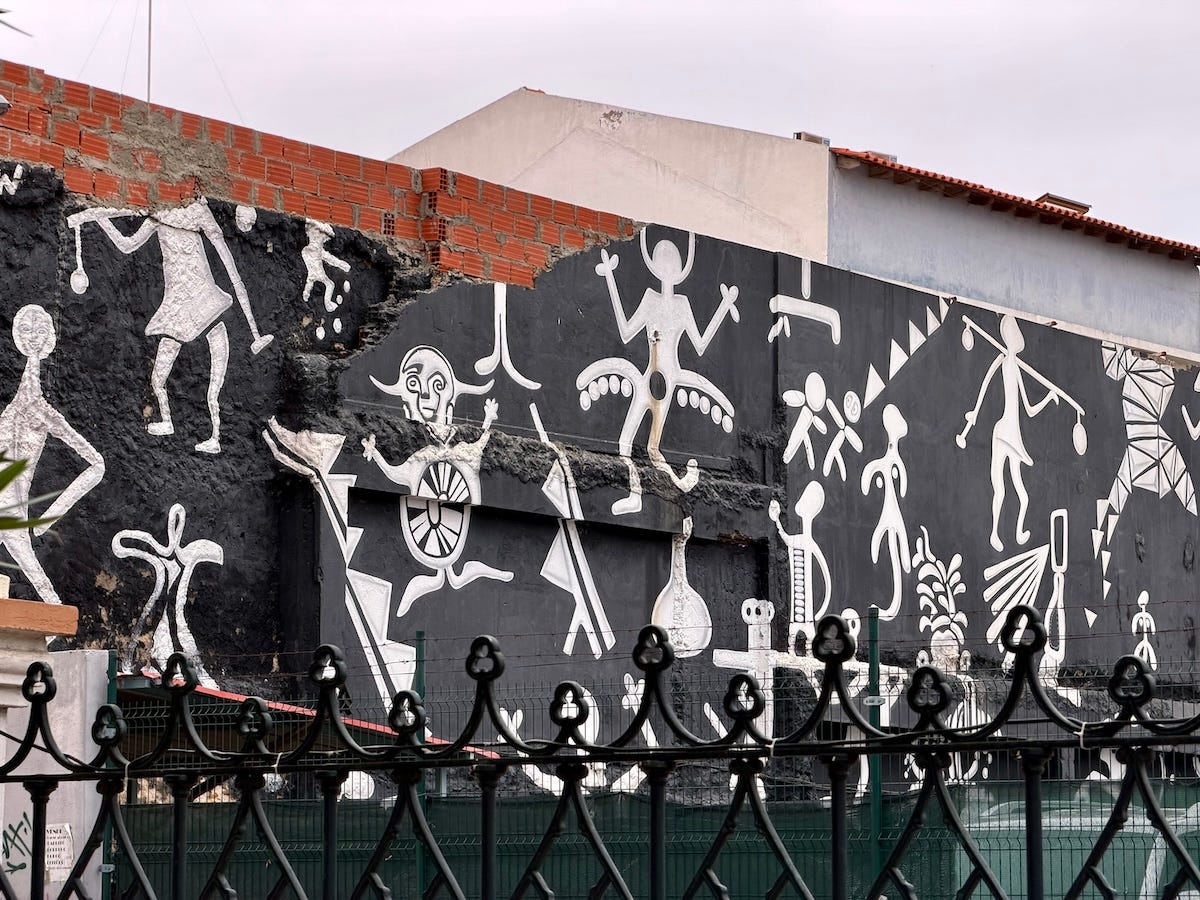
We noticed this geometric and abstract black-and-white mural across the street from the church. Stylized human silhouettes covered the walls of an old brick building. This mural is the work of Colectivo Verkron, an influential Angolan urban art group.
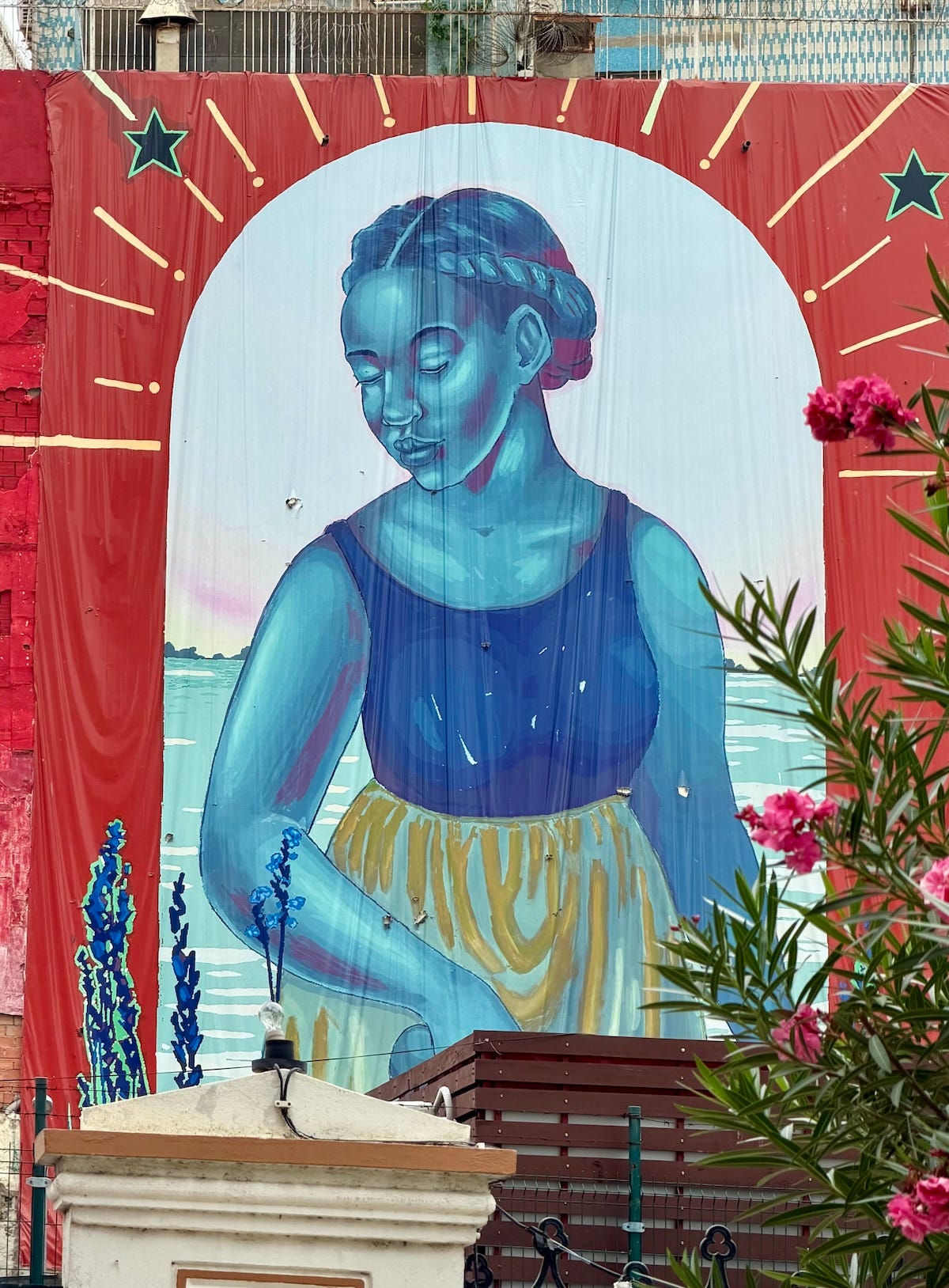
We also couldn’t help but notice the vibrant blue African woman mural which was also located across from the Church of Our Lady of Remedies. The multi-story installation portrays a close-up portrait of a contemporary African woman. Local street artists have been deliberately juxtaposing colorful modern-themed art against colonial architecture as part of an urban revitalization project, another way Angolans are reclaiming Angola as their own after centuries of Portuguese rule.
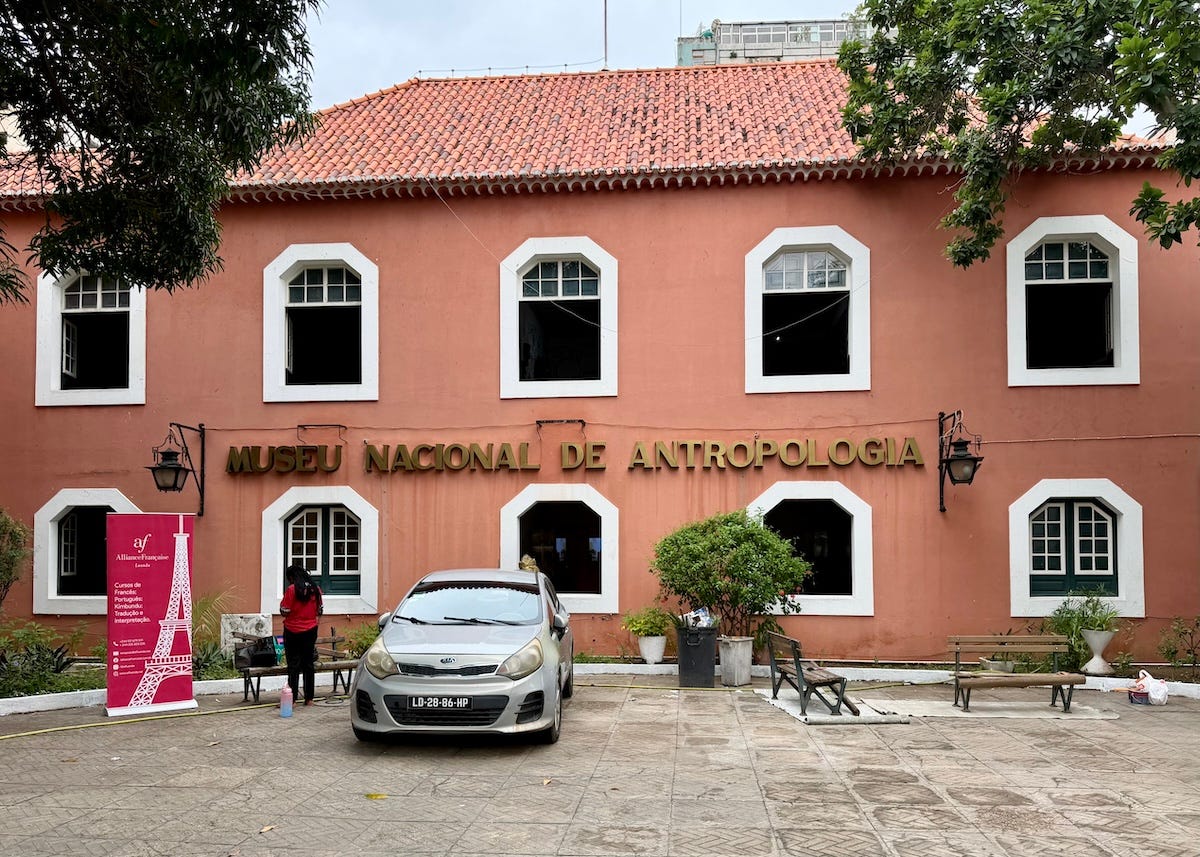
Visit the National Anthropology Museum to understand Angola’s turbulent history and traditional culture. Our third stop was at the National Museum of Anthropology, Angola's premier institution for preserving indigenous tribal culture, precolonial history, and ethnographic art. Founded in November 1976, it was the first museum established after the nation gained independence.
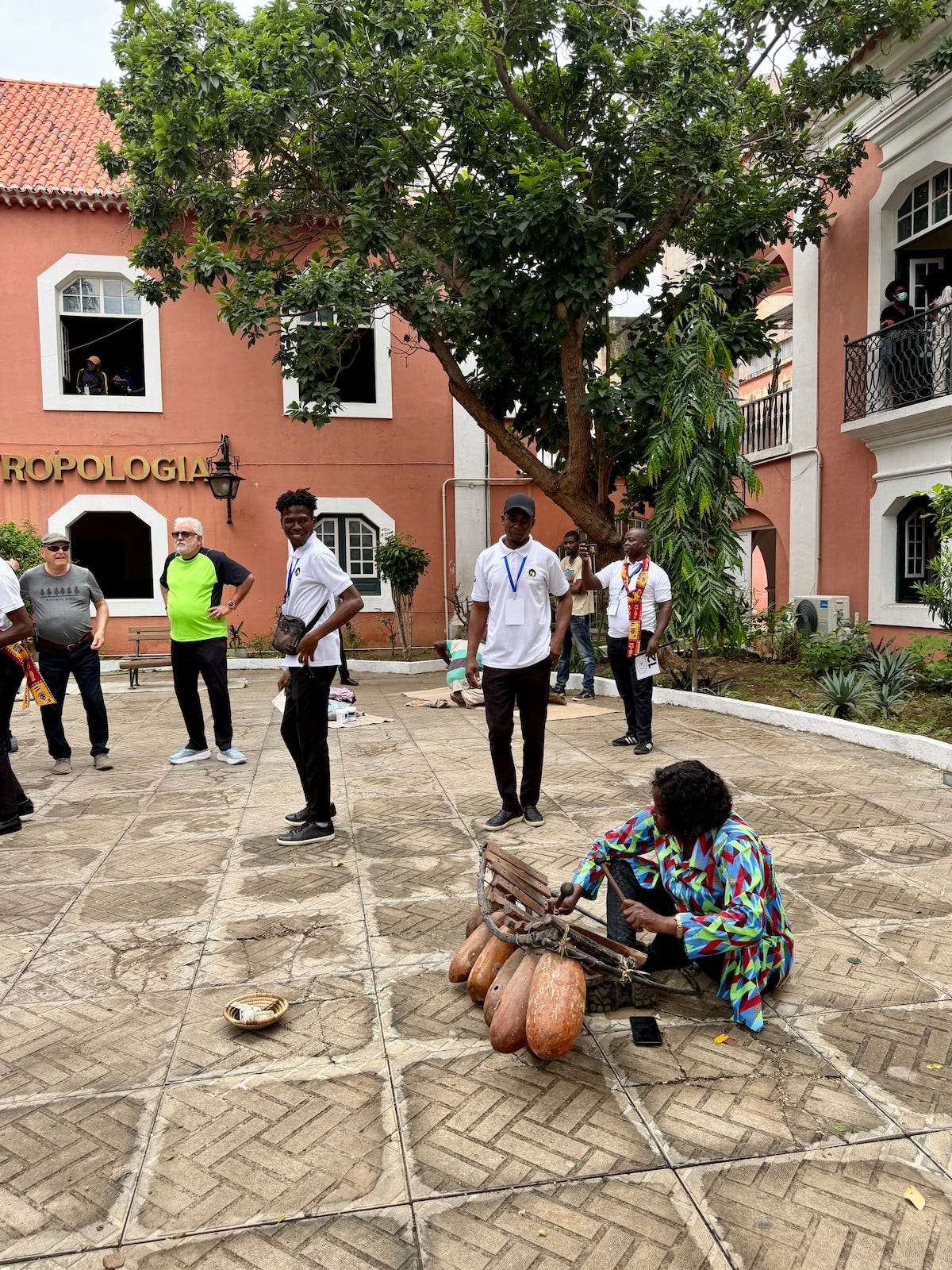
There was a local ethno-musician who played poly-rhythmic Bantu melodies on a traditional marimba for our tour group. She got a rousing round of applause when she was done.
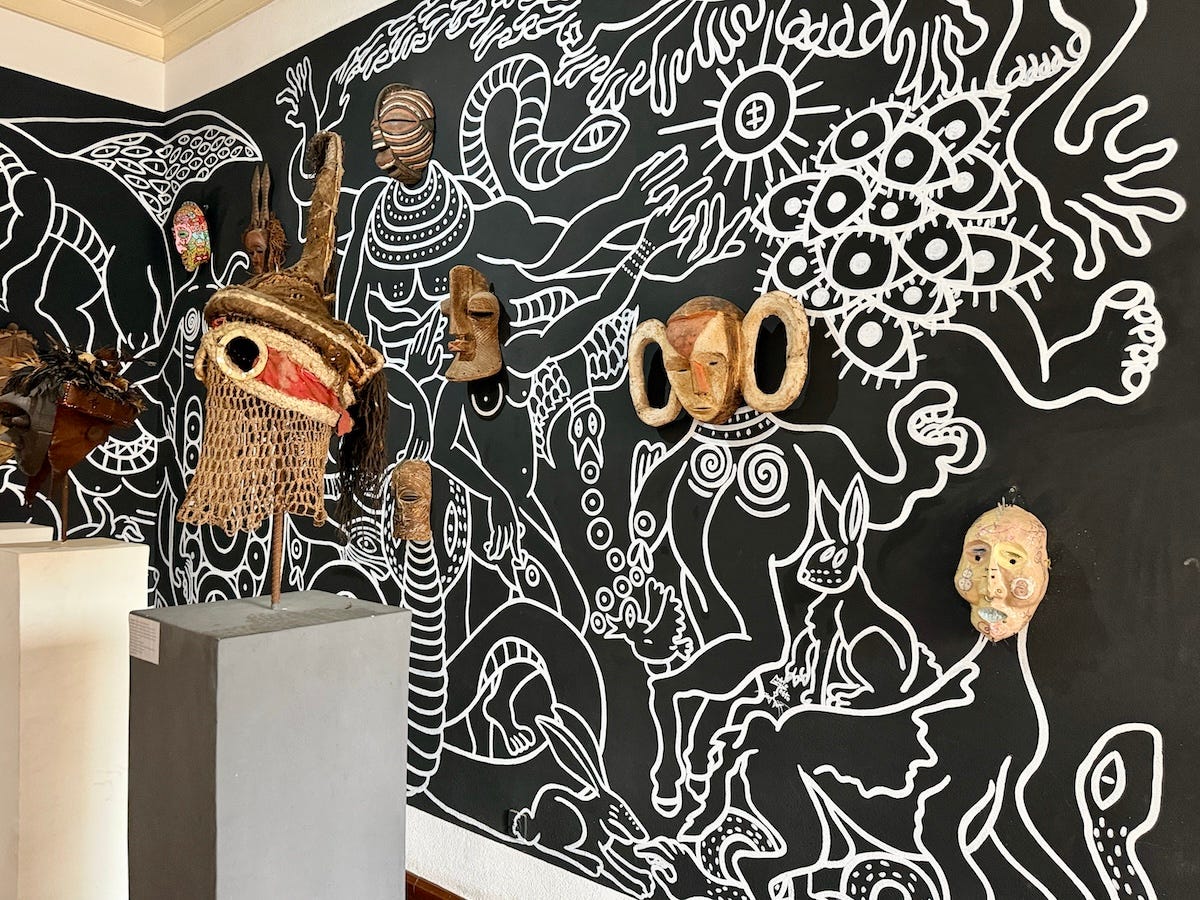
The Mask Room is the institution’s most celebrated permanent exhibition. Several rooms of mask displays showcased sacred and ritual headpieces that illustrated the spiritual beliefs, governance, and social standings of the Bantu people and other local ethnic groups.


The masks were crafted from a variety of natural, locally sourced materials. Each element was selected for both its durability and its spiritual meaning. Dense hardwoods formed the bases of most of the facial carvings. Pounded inner bark was shaped over flexible wicker frameworks to create lightweight helmet masks, while thick plant fibers were knotted together to form flexible masks that conformed directly to dancers’ heads.
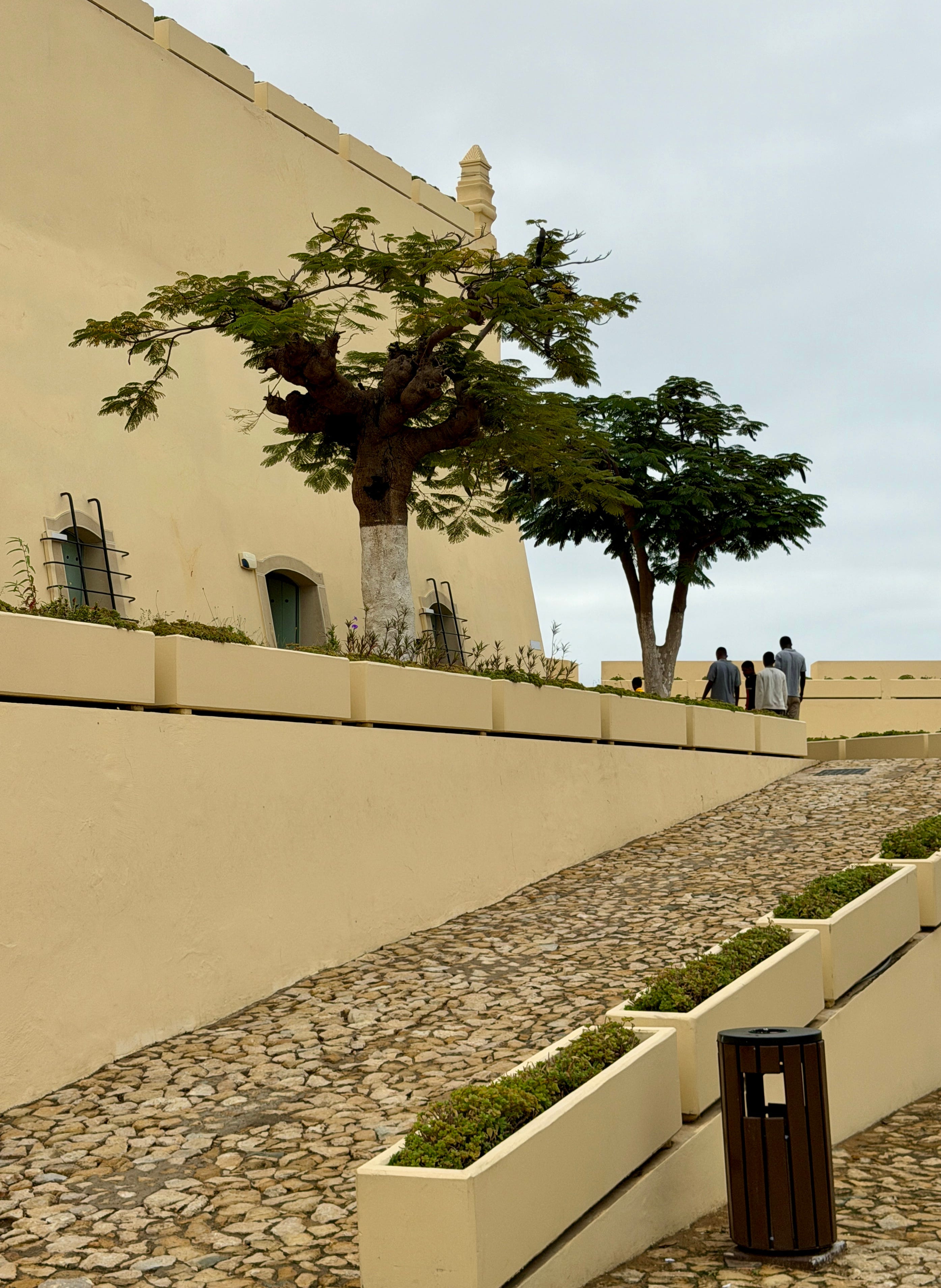
View Portuguese-built San Miguel Fort, altered in 1664 to a star shape. We next stopped at the nation’s oldest surviving European structure and fortification, the Fortress of São Miguel. This historic 16th-century stronghold was built by the Portuguese in 1576. Perched on a hill, it served as Luanda's primary defense structure, colonial administrative capital, and a major transit prison during the transatlantic slave trade.
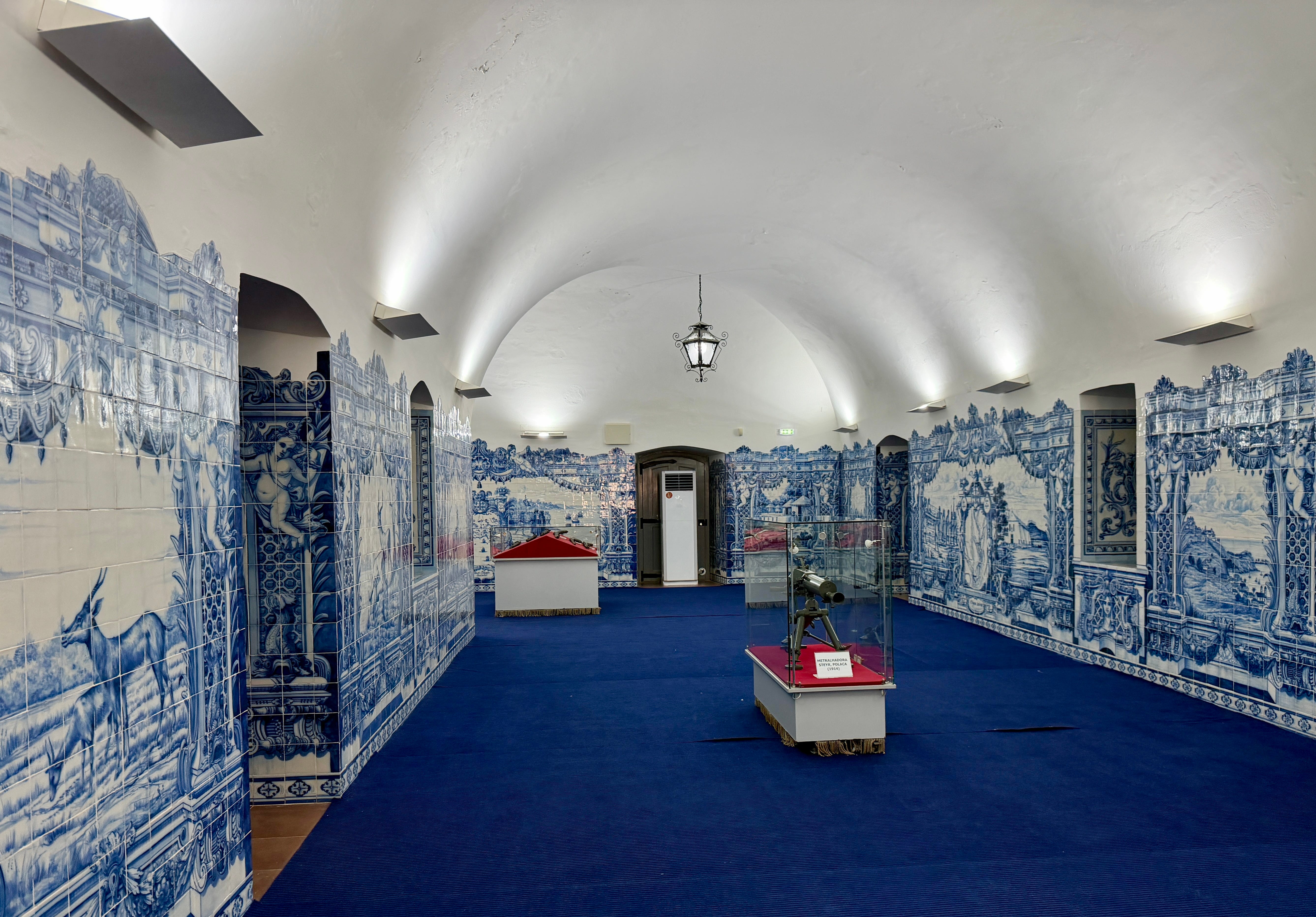
In 1938, the colonial government decommissioned the fortress as a prison depot and designated it a protected National Monument. The building was then modified to house the Museu de Angola. The tile murals were commissioned during this time as decoration for the interior walls.
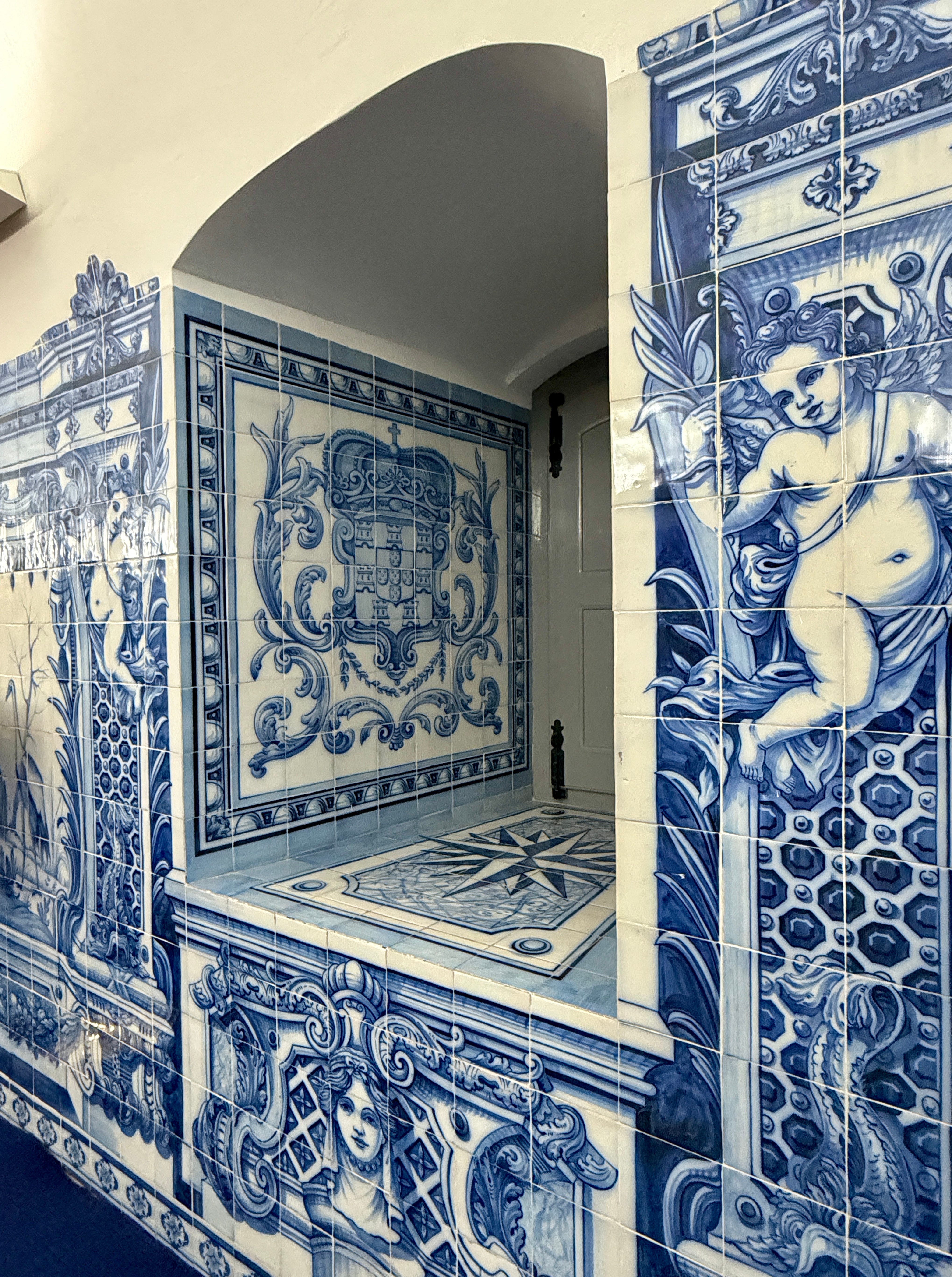
The tile artists intentionally replicated the distinct look of traditional, 17th-century Portuguese tiles.
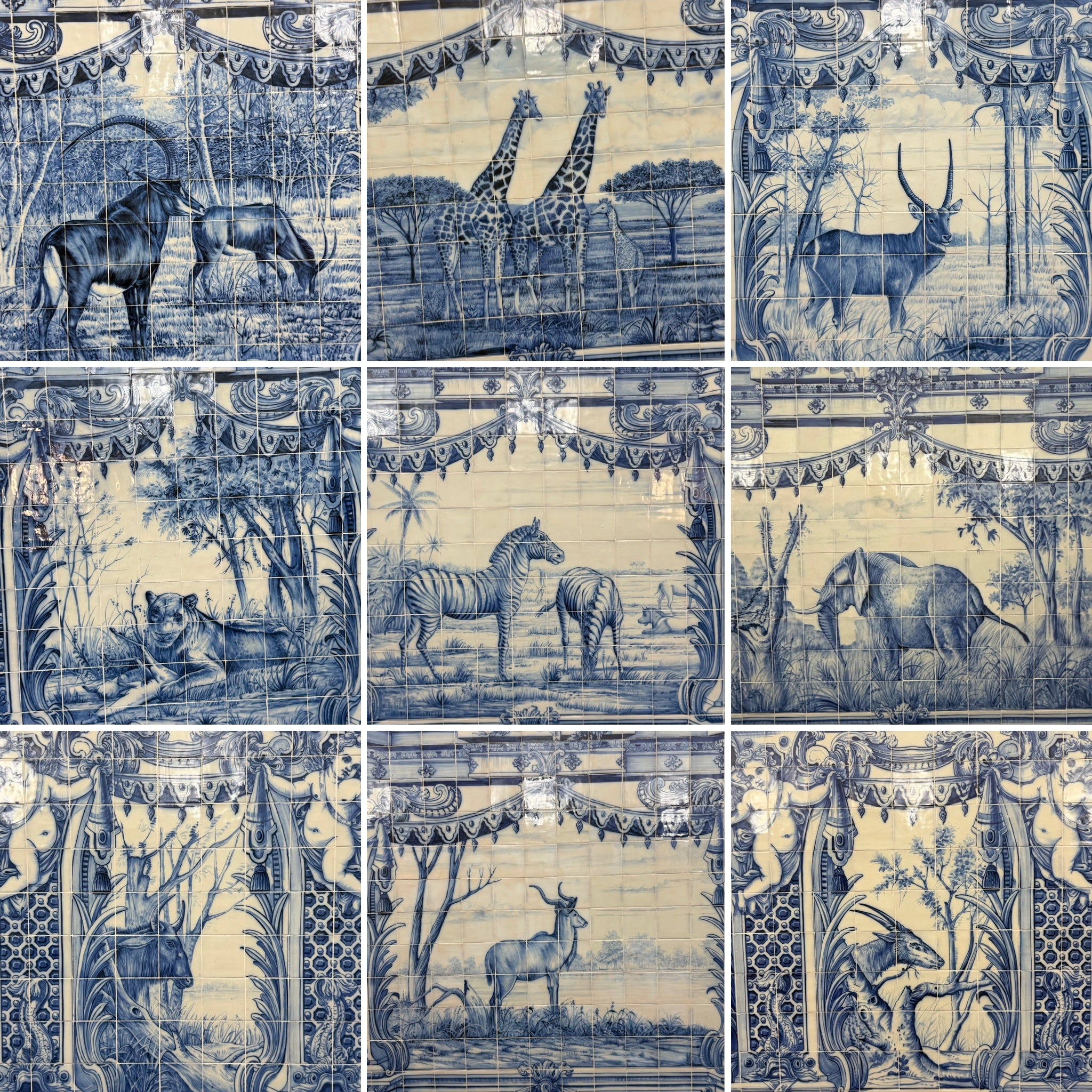
The tiles were never meant to be merely random decorations. The panels were specifically designed as permanent, visual history books to educate visitors on the native flora, fauna, and early regional history of Angola.
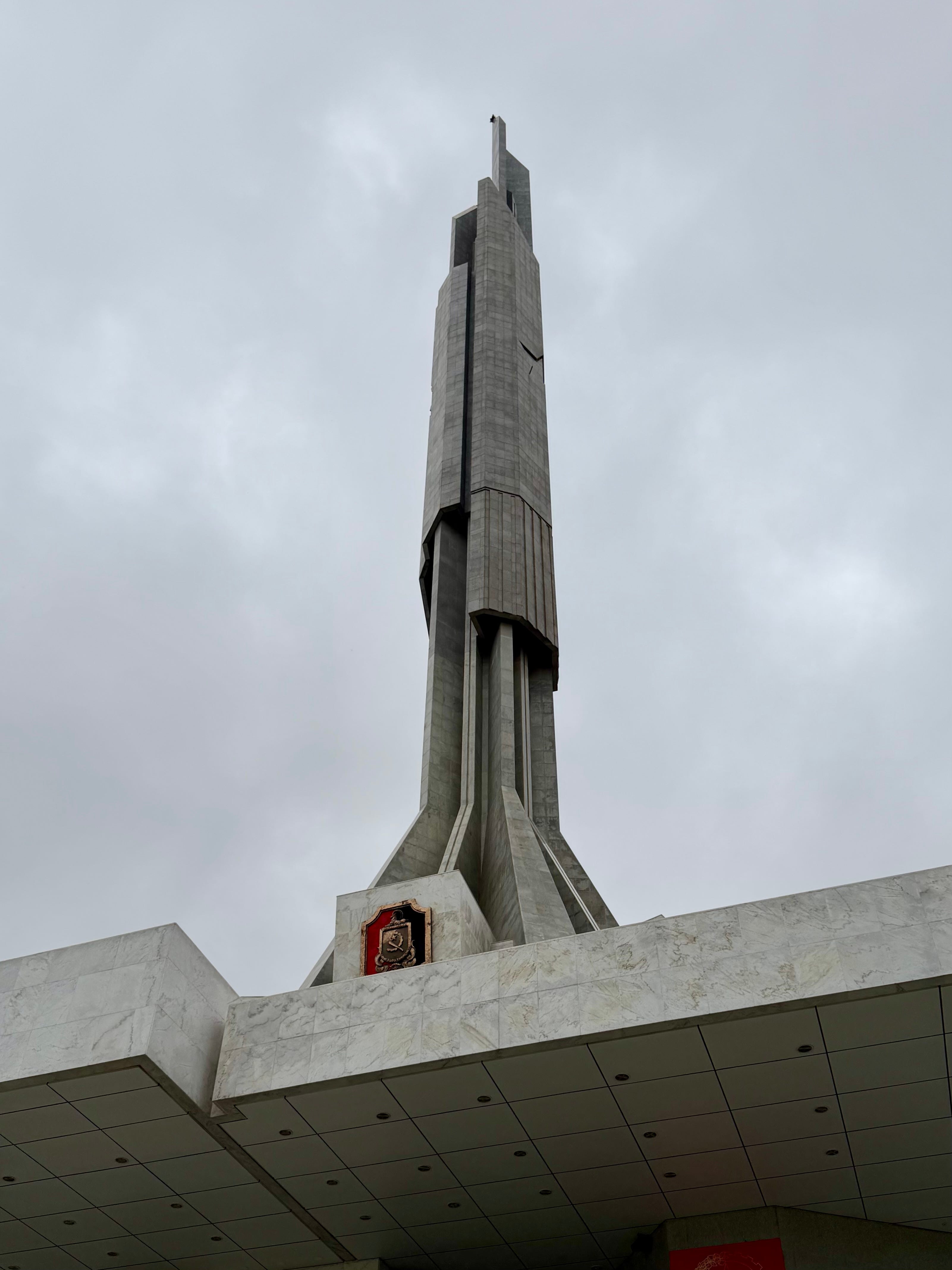
View the rocket-like Agostinho Neto Mausoleum tower, honoring Angola’s first president. On our final stop of the tour, we visited the interior of the Mausoleum of António Agostinho Neto, officially known as the Memorial António Agostinho Neto. It’s a massive, 393-feet concrete spire that dominates the skyline of Luanda. The monument is dedicated as the resting place of Dr. António Agostinho Neto, the poet-physician who served as Angola's first president following independence from Portugal. (Photography is forbidden in the mausoleum out of respect.)
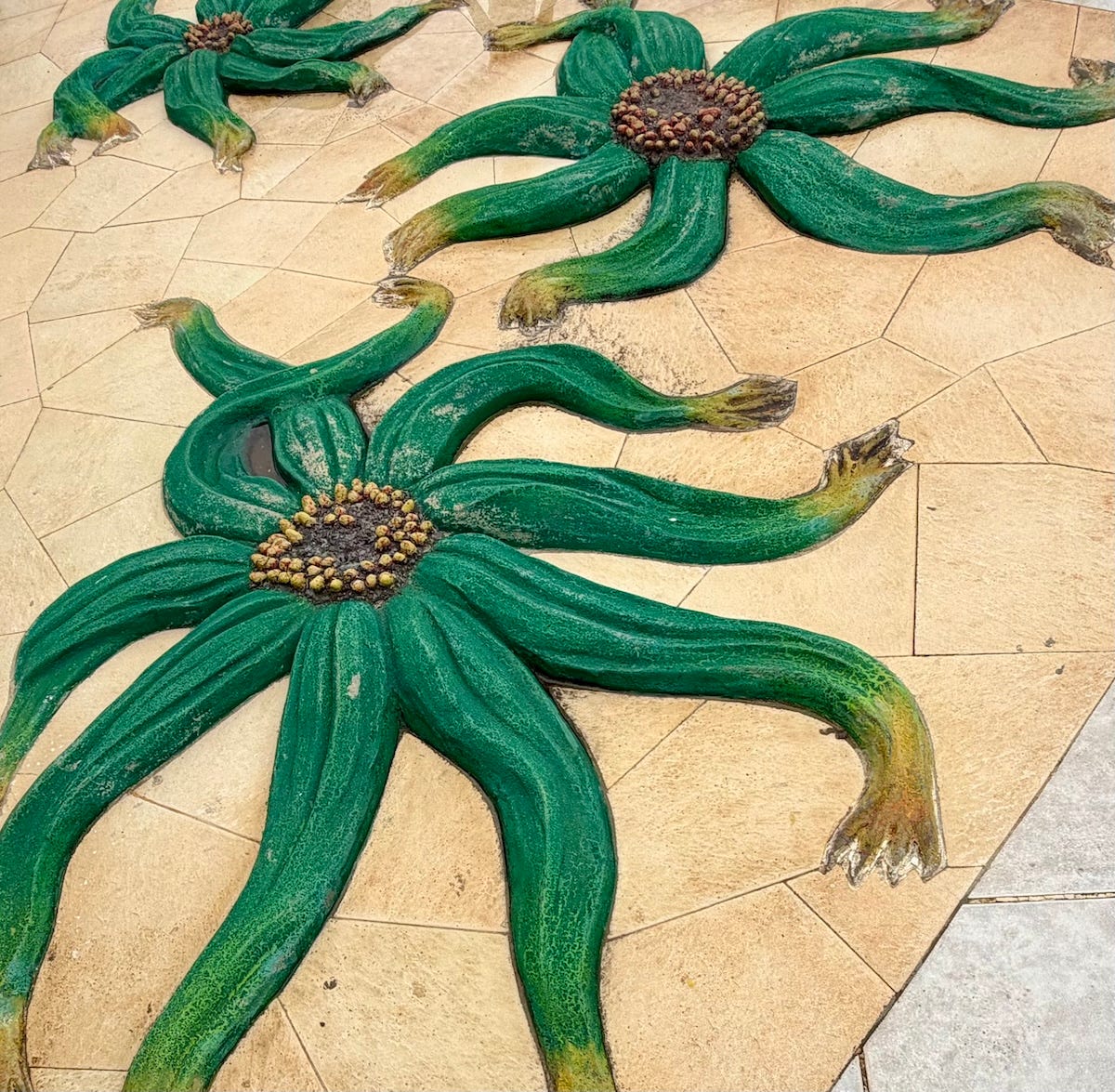
We had another run-in with this most favored plant of the Namib Desert, the Welwitschia plant. It’s featured as a porcelain tile mosaic floor installation on the terrace near the first president’s final resting place. The plant is considered a state symbol, and it’s also a metaphor for the endurance of the Angola as a nation and the immortality of Neto’s legacy.
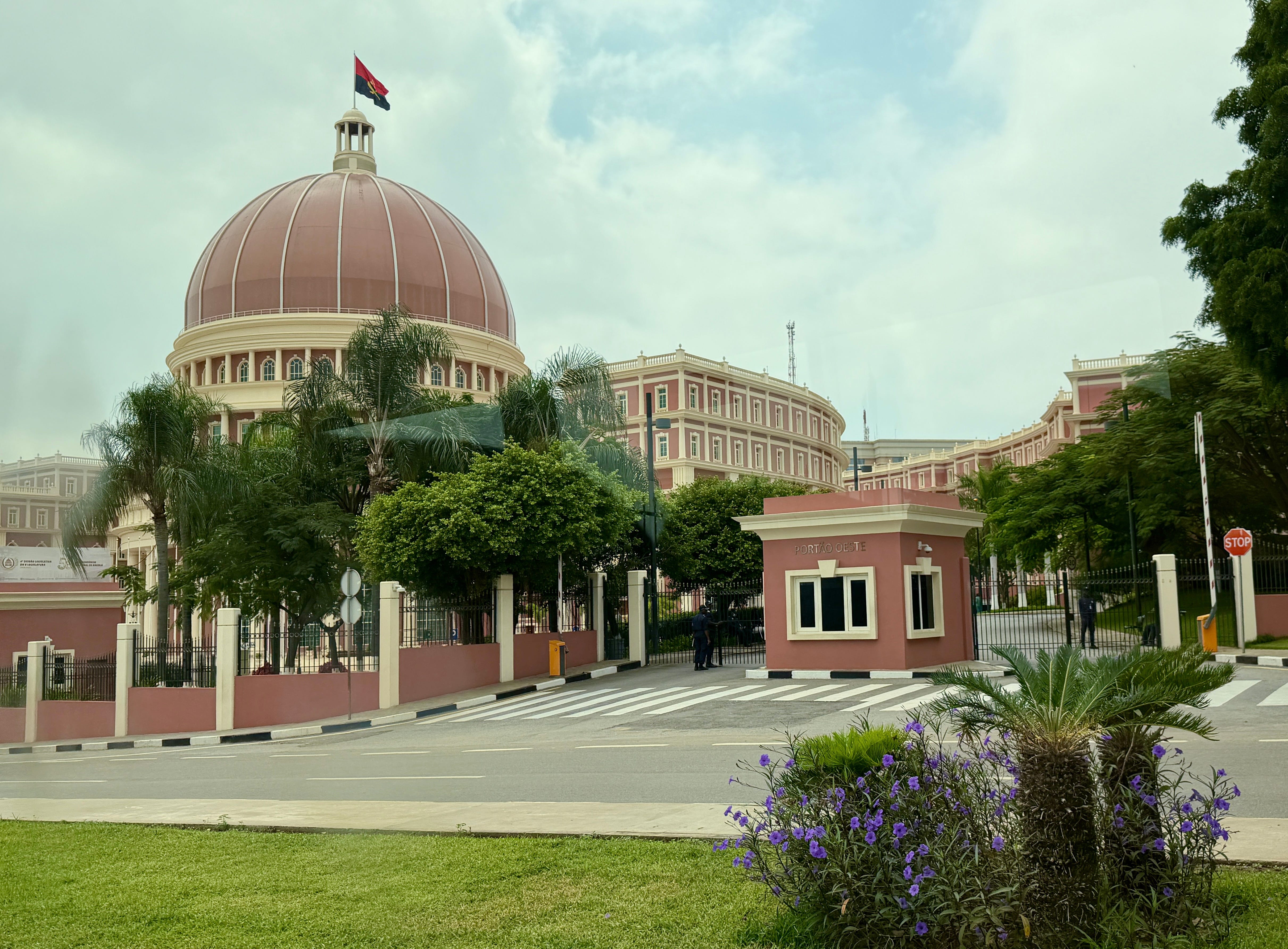
On our return drive to the port, we passed the National Assembly Building of Angola, a massive complex located near the Mausoleum. This grand building with a central dome and surrounding arched buildings serves as the official seat of the country’s legislative branch.
We also drove past the Presidential Palace, the Igreja de Jesus Catholic Church which serves many of the country’s high officials, and other legislative buildings, but we were told not to take any photographs in those areas due to security restrictions.
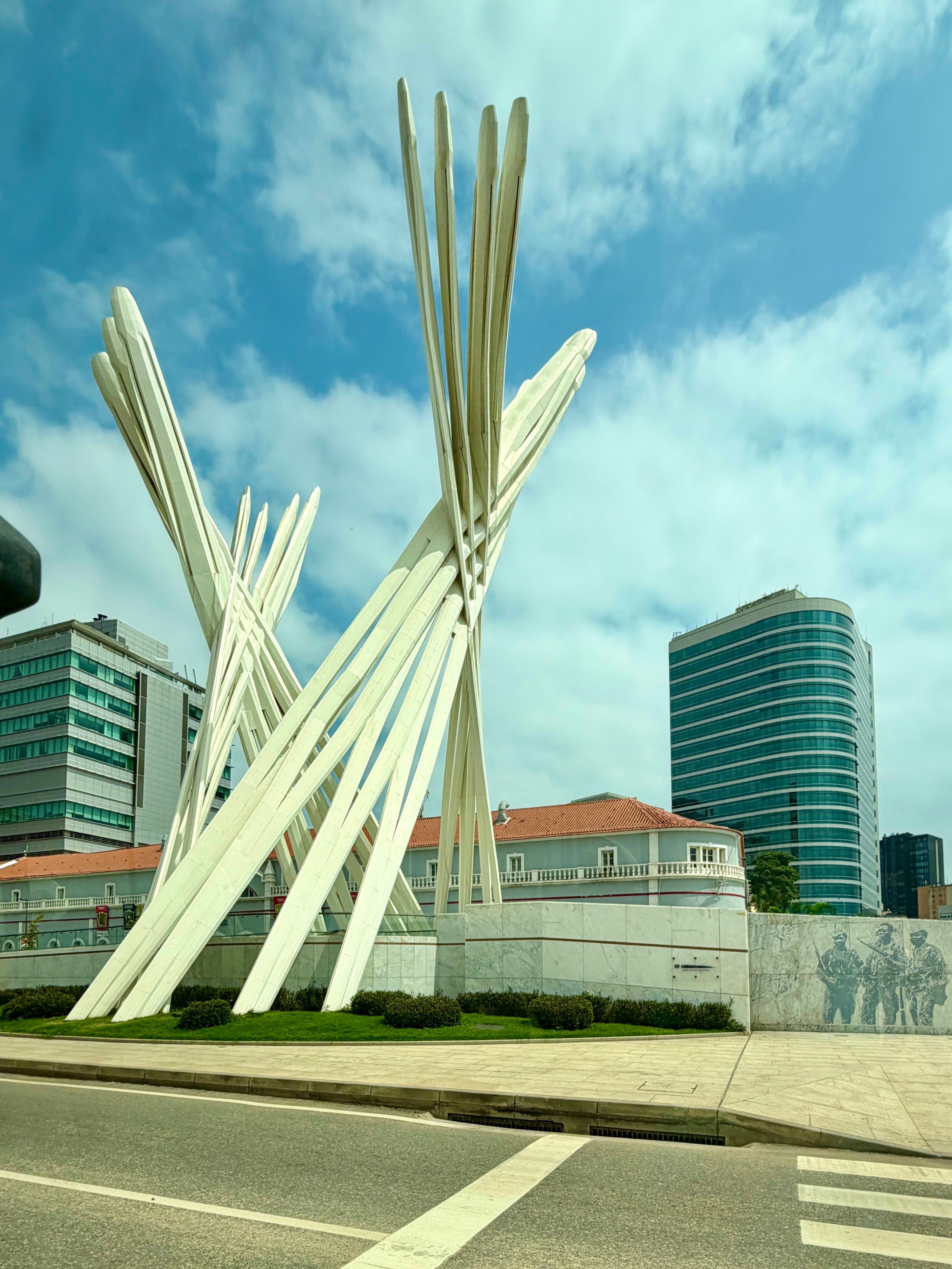
We passed this striking white bridge sculpture every time we drove into the downtown and returned to the port. It’s a Monument to the Unknown Soldier and was built on the concrete overpass bridge that links the city’s historic urban center to the main pedestrian walkways of the Marginal waterfront.
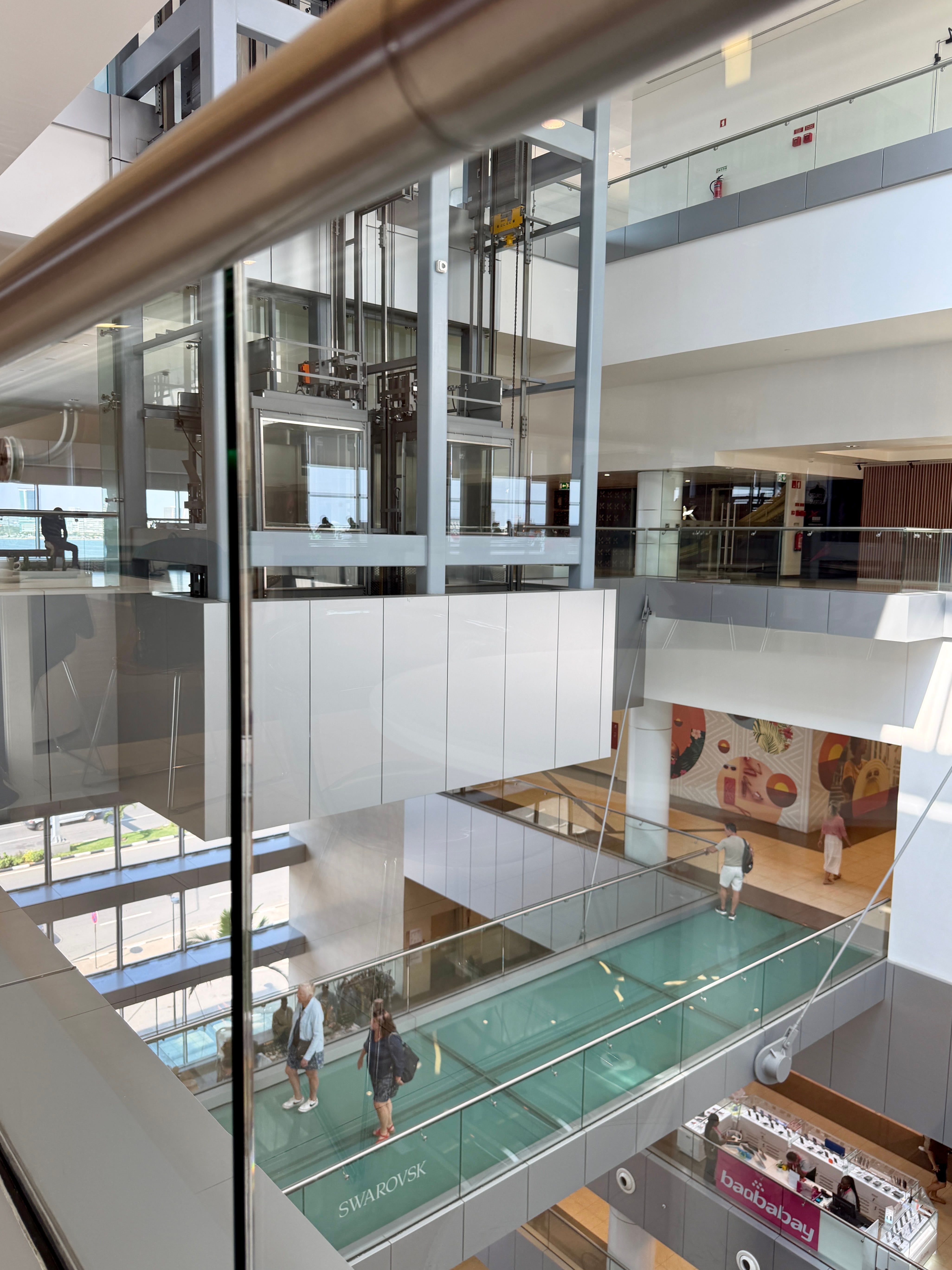
Regent provided a shuttle bus service to Shopping Fortaleza, a modern, 5-story mall on the Marginal waterfront promenade, so we took advantage of this transportation after our morning excursion. The mall has about 80 stores, mostly international clothing, apparel, and shoe brands, but we also shopped at several booths of local vendors who sold Angolan handcrafted items. I bought a 6-yard length of Angolan wax-dyed fabric for 10 Euro.
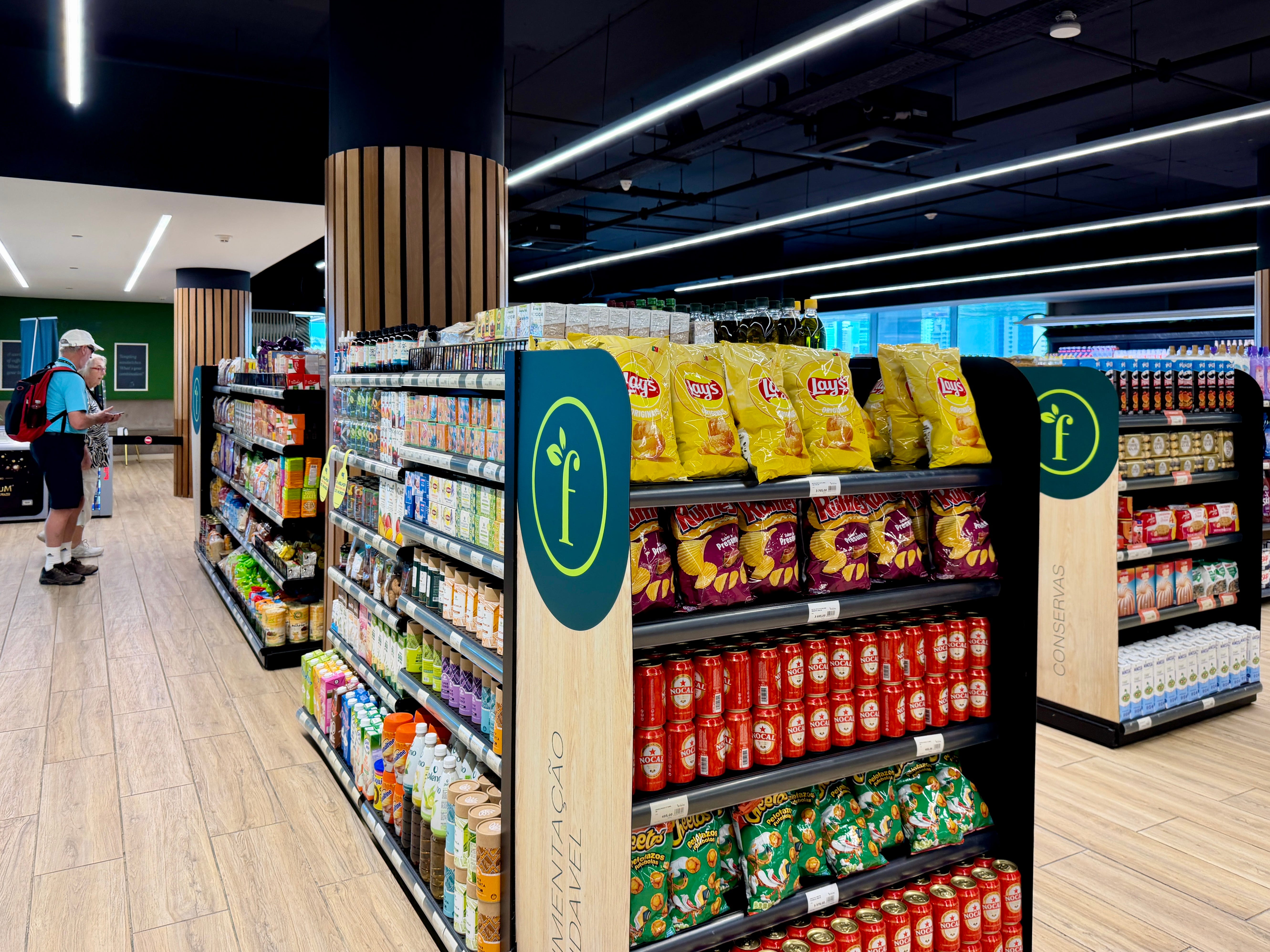
We walked through the large, well-stocked supermarket and bought some snacks for our suite.
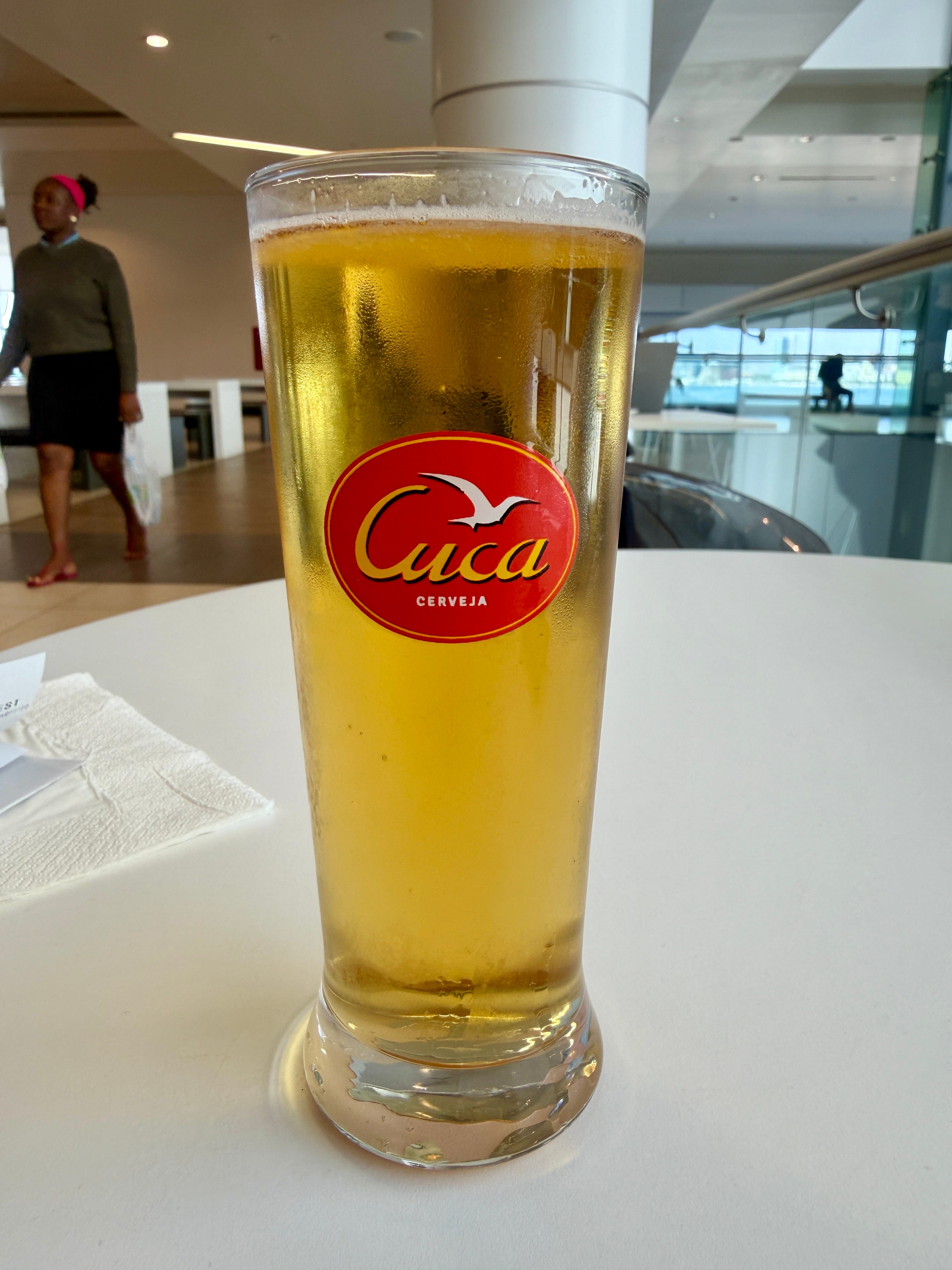
Then we visited the mall’s top-floor food court and outdoor terrace, and Sherpa ordered a Destination Beer. Cuca is Angola’s most iconic, ultra-popular national beer brand. Established in 1947 during the colonial era, it’s a fundamental part of Angolan daily life, culture, and national identity.
According to the brewery, Cuca is a classic European-style pale lager with an alcohol content of 4.5% ABV. It is specifically brewed to be clean and highly refreshing to combat Luanda’s intense tropical humidity. Sherpa’s Take: “Not my favorite beer. Light bodied, smooth beach beer - comparable to Bud Light. I found it rather bland.” 4/10
It was incredibly cheap, though. Sherpa paid 50 cents (USD) equivalent at the supermarket for a 330 ml bottle.
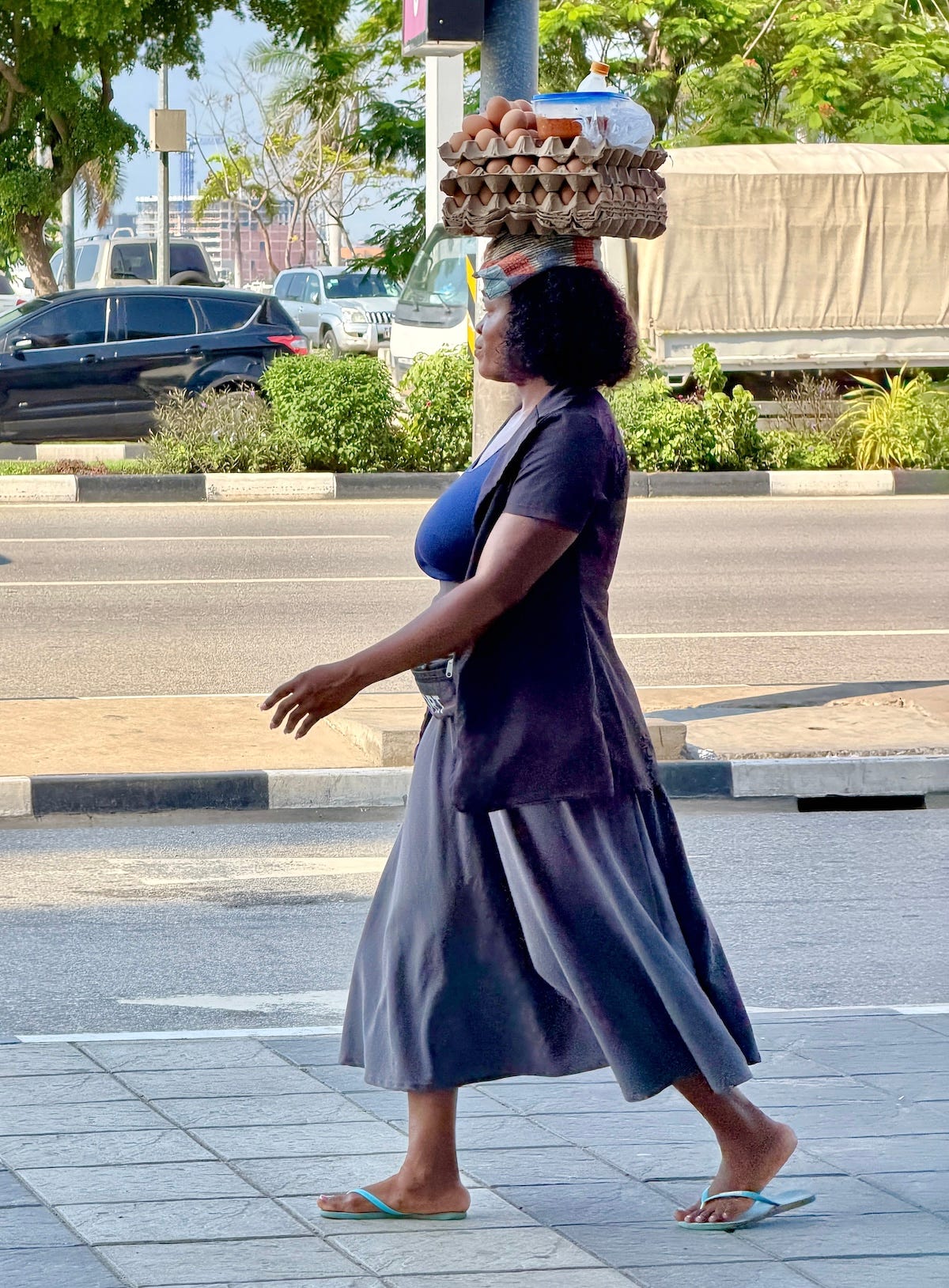
While we were waiting outside the mall for the shuttle bus, we enjoyed watching this young saleswoman — selling one or two eggs at a time! We noticed how erect everyone’s posture was, and of course, we understood why!
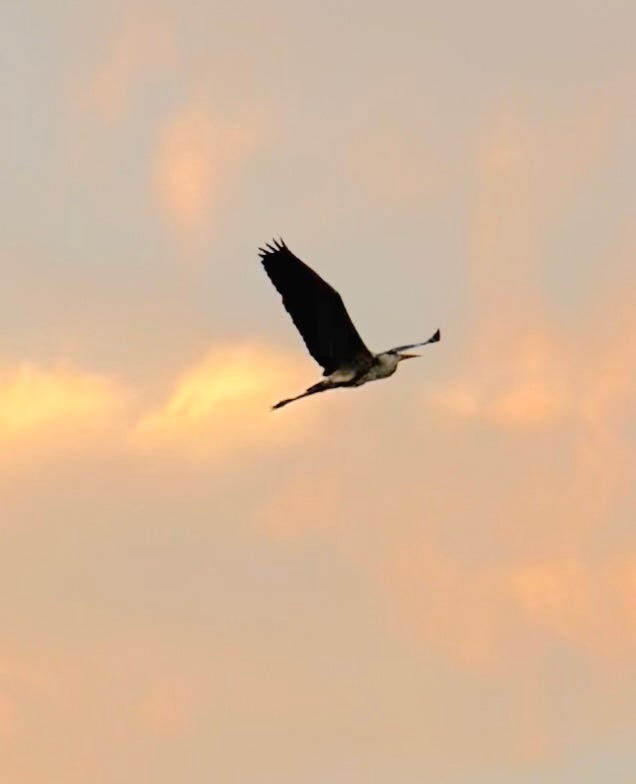
This Gray Heron bid us goodbye as the Seven Seas Mariner pulled out of the harbor.
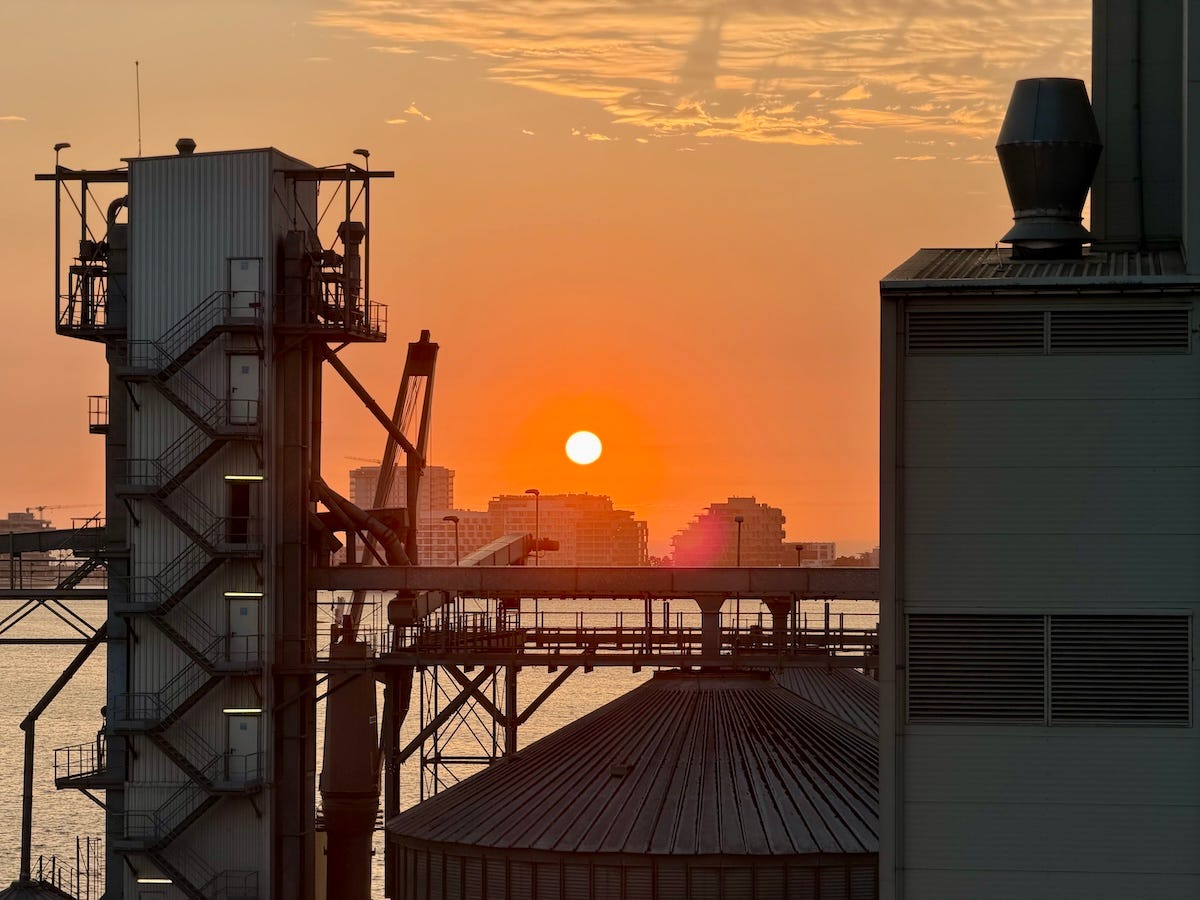
And as the setting sun lit the sky and surrounding a brilliant orange, we sail north towards our next port of call, the island of Sao Tome.