
Lisbon, Portugal
As some of the Mariner passengers disembarked, other cruisers boarded for the 11-day Lisbon to Miami cruise - Heaven Across the Seas. Meanwhile, we explored Lisbon during the changeover.

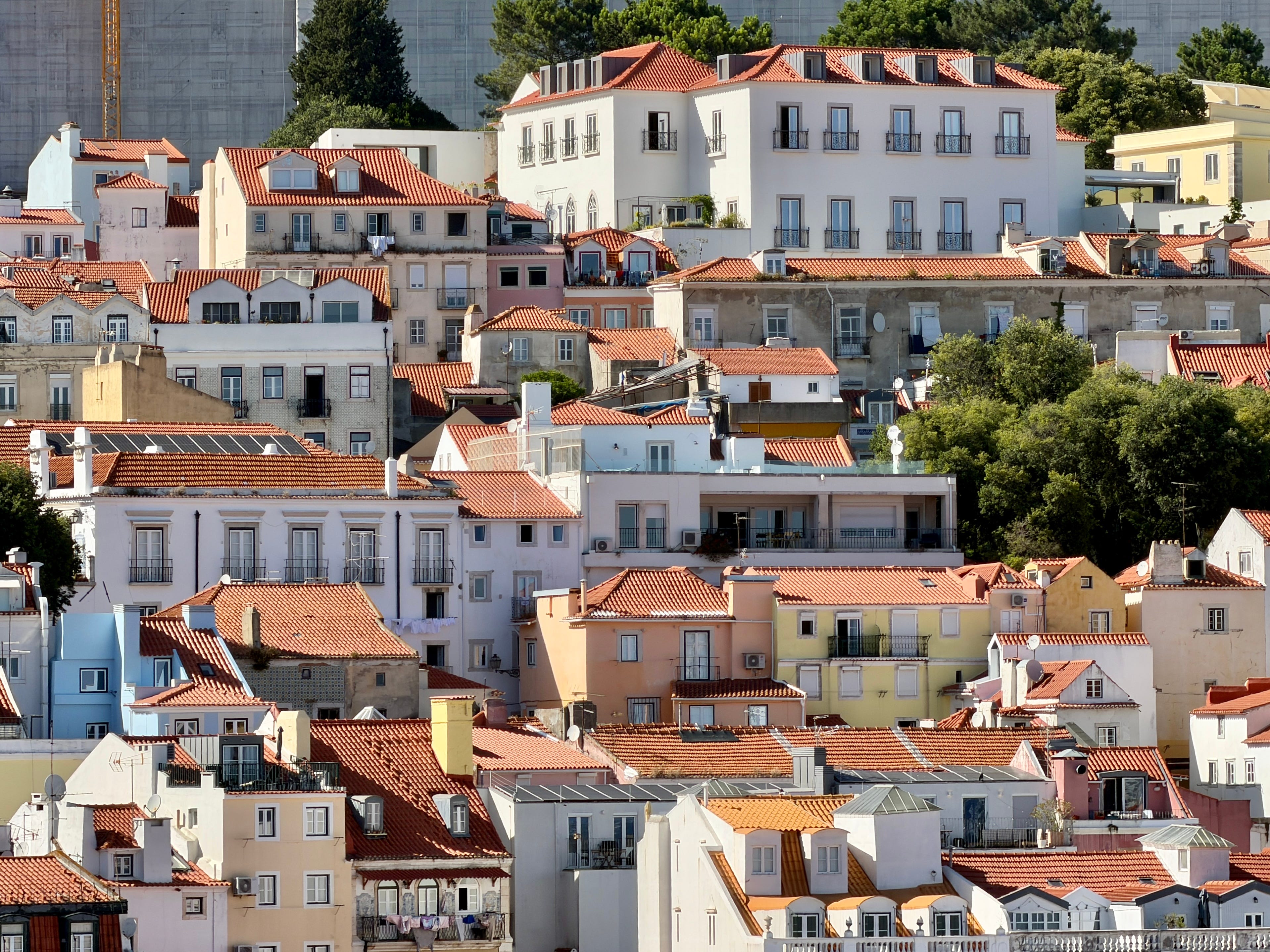
Legend states that Ulysses founded Lisbon, calling it Olisipo. Others claim that the name is Phoenician, but all agree it’s one of Europe’s most fascinating destinations. On All Saints’ Day in 1755, a devastating earthquake destroyed much of the city. The Baixa (Lower City) was rebuilt along neo-classical lines and still forms the heart of the city. The elegant ‘City of Explorers’ overlooks the River Tagus and offers a number of distinctive neighborhoods to discover. Tour the Alfama, where the winding streets still retain much of their Moorish atmosphere. Stroll to Bairro Alto and hear the melodious sounds of Portugal’s Fado music. Nearby excursions transport you to the lavish 18th-century palace of Queluz and Sintra’s Royal Palace. — Regent
Pre-cruise Research:
Daytime High Temperature: Approximately 77°F to 81°F.
Nighttime Low Temperature: Around 63°F to 66°F.
Precipitation: Extremely low probability of rain (approx. 1% chance). June is one of Lisbon’s driest and most reliable months.
Humidity: Moderate and comfortable (around 65%).
Sea Temperature: The ocean temperature will be cool, around 64°F.
Daylight: Enjoy long summer days, with sunrise around 6:11 AM and sunset around 8:48 PM local time.


We arrived in Lisbon early, around 7 AM — this was the day of disembarkation for the Western Africa and Isles of Wonder cruise, which had begun in Cape Town, South Africa, 24 days ago. About 340 passengers departed the ship, and a similar number boarded the ship for the next segment, the 11-day Lisbon to Miami - Heaven Across the Seas.
Four excursion options were offered to cruisers who were either on the World Cruise or on back-to-back voyages. Two of the excursions featured tours to nearby towns, but since Sherpa and I had never been to Lisbon, we wanted to explore the city. Our other options were Scenic Lisbon, a bus tour with several photo stops, or Lisbon’s Hop-On, Hop-Off Bus excursion. We hadn’t planned on taking our third HOHO tour in as many ports, but it seemed our best choice, and so we booked this Regent-included excursion.


LISBON HOP-ON, HOP-OFF BUS
Description: Ride double-decker buses around Lisbon and enjoy the sights along the way. Hop off at the stops that you find most intriguing and stay as long as you like. Hop on another vehicle whenever you wish and ride it to the next interesting stop. Hear commentary for each stop so you can easily pick your favorites.
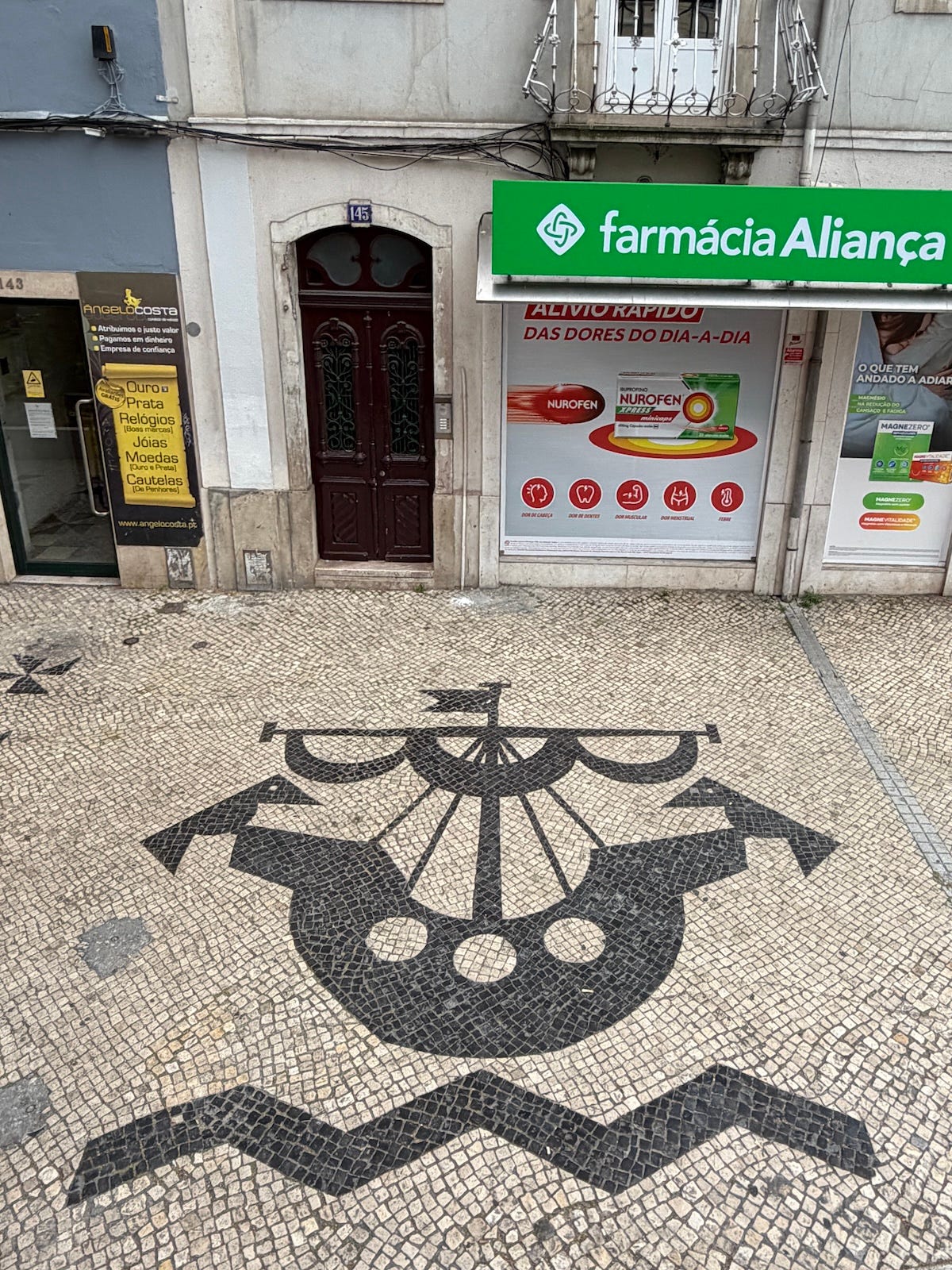
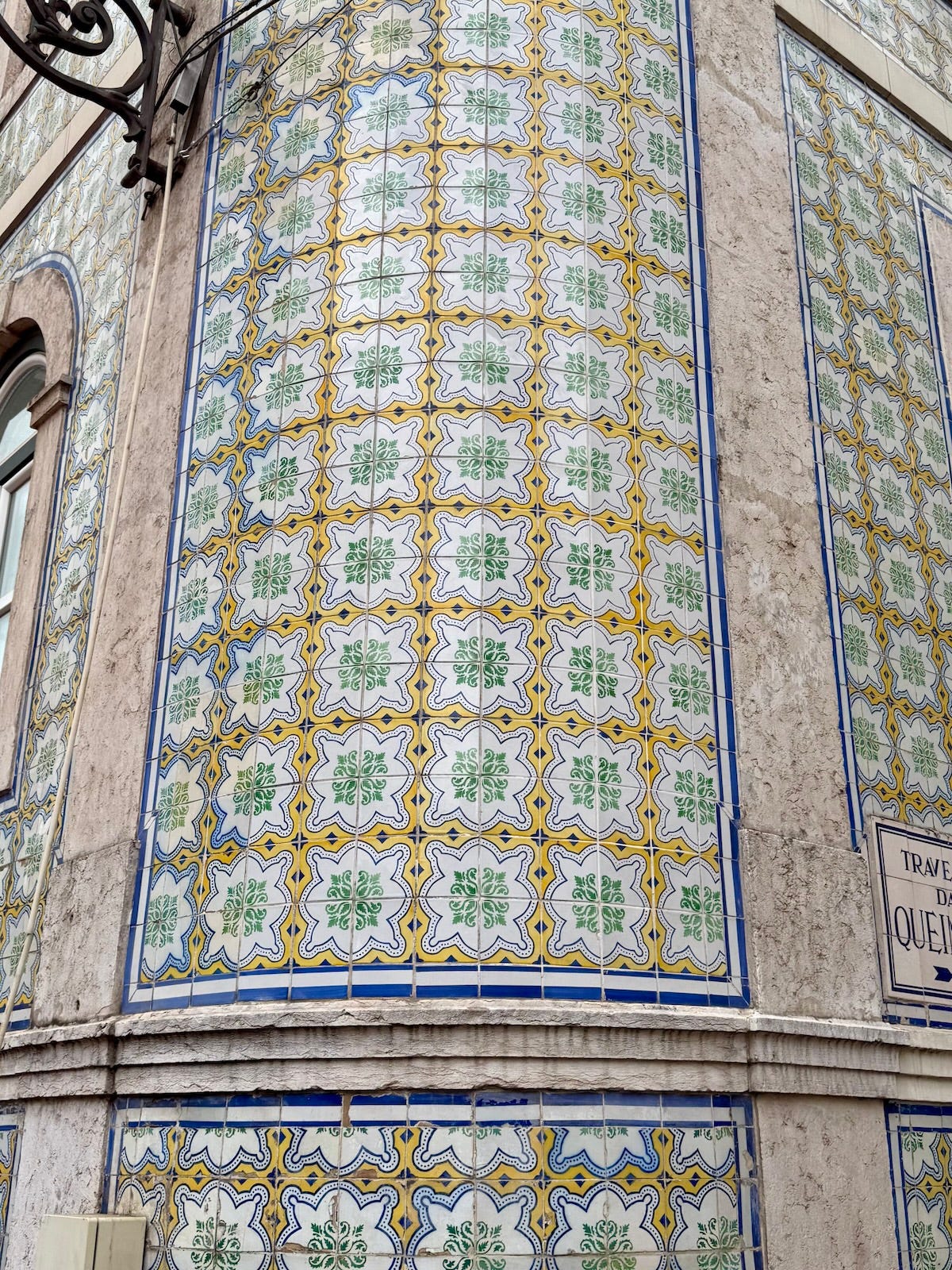
The first things we noticed, as we began our bus ride on the open-air top floor, were the preponderance of buildings with tile facades and wrought-iron balconies, and the distinctive black-and-white Portuguese sidewalk pavement.
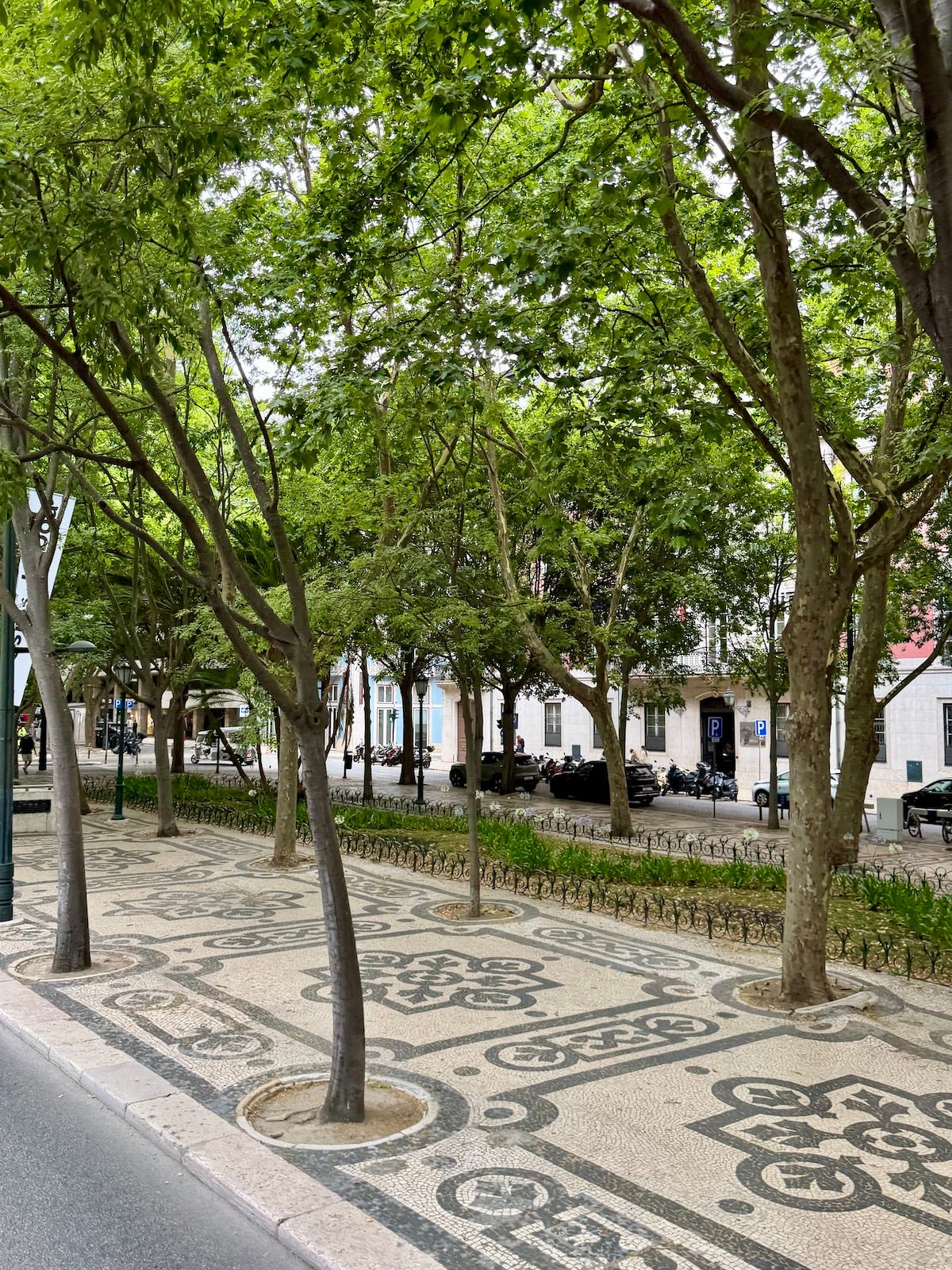
These intricately carved and pieced black-and-white tiles transform the city's sidewalks into extensive tapestries depicting its history. We spotted zigzagging wave patterns, sailing ships, and compasses, along with other decorative designs, as we traveled along the streets of Lisbon.
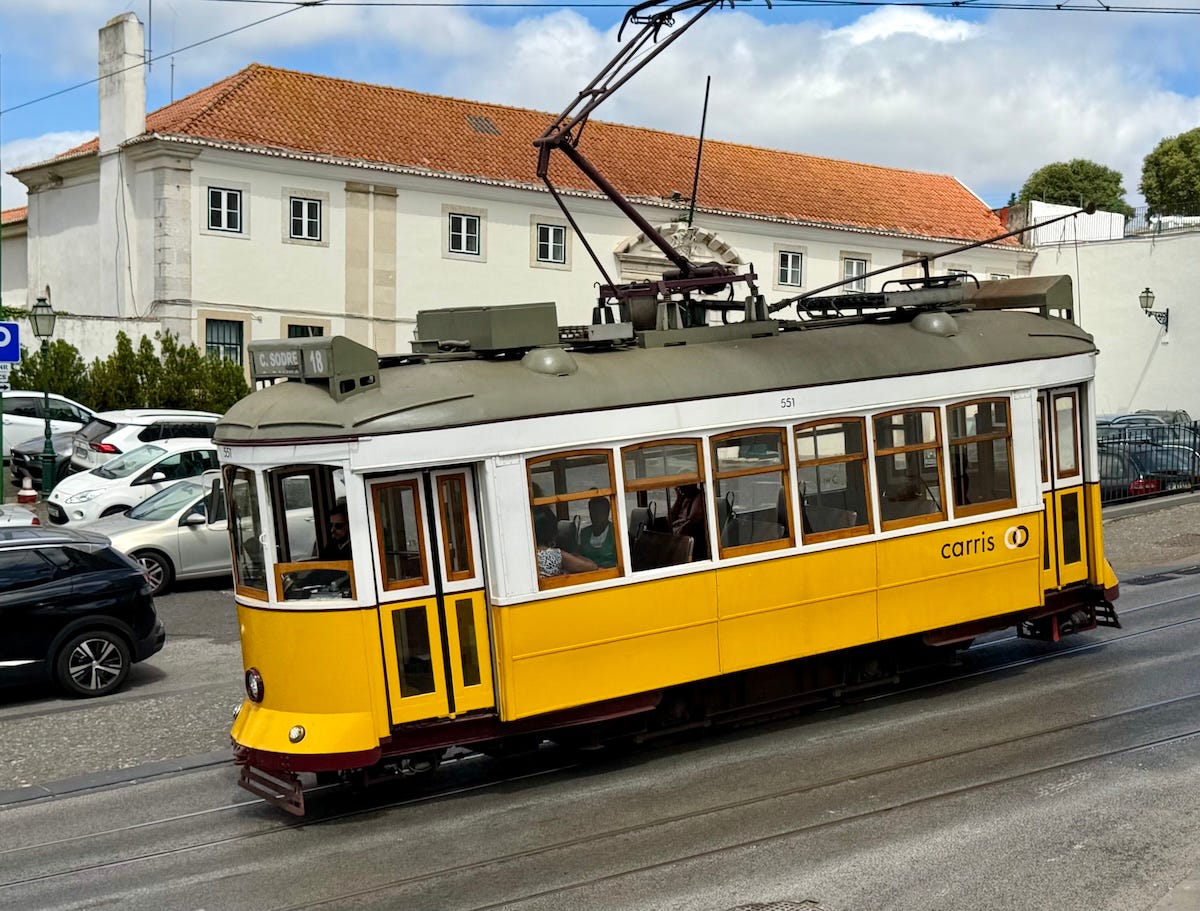
Lisbon’s iconic yellow trams date back to the early 20th century and are famous for their ability to easily navigate the city’s steep hills and narrow cobblestone streets. Although our excursion ticket included access to these vintage yellow trams and also the city center’s funiculars, we weren’t able to take advantage of those options. We would have tried both, had time allowed.
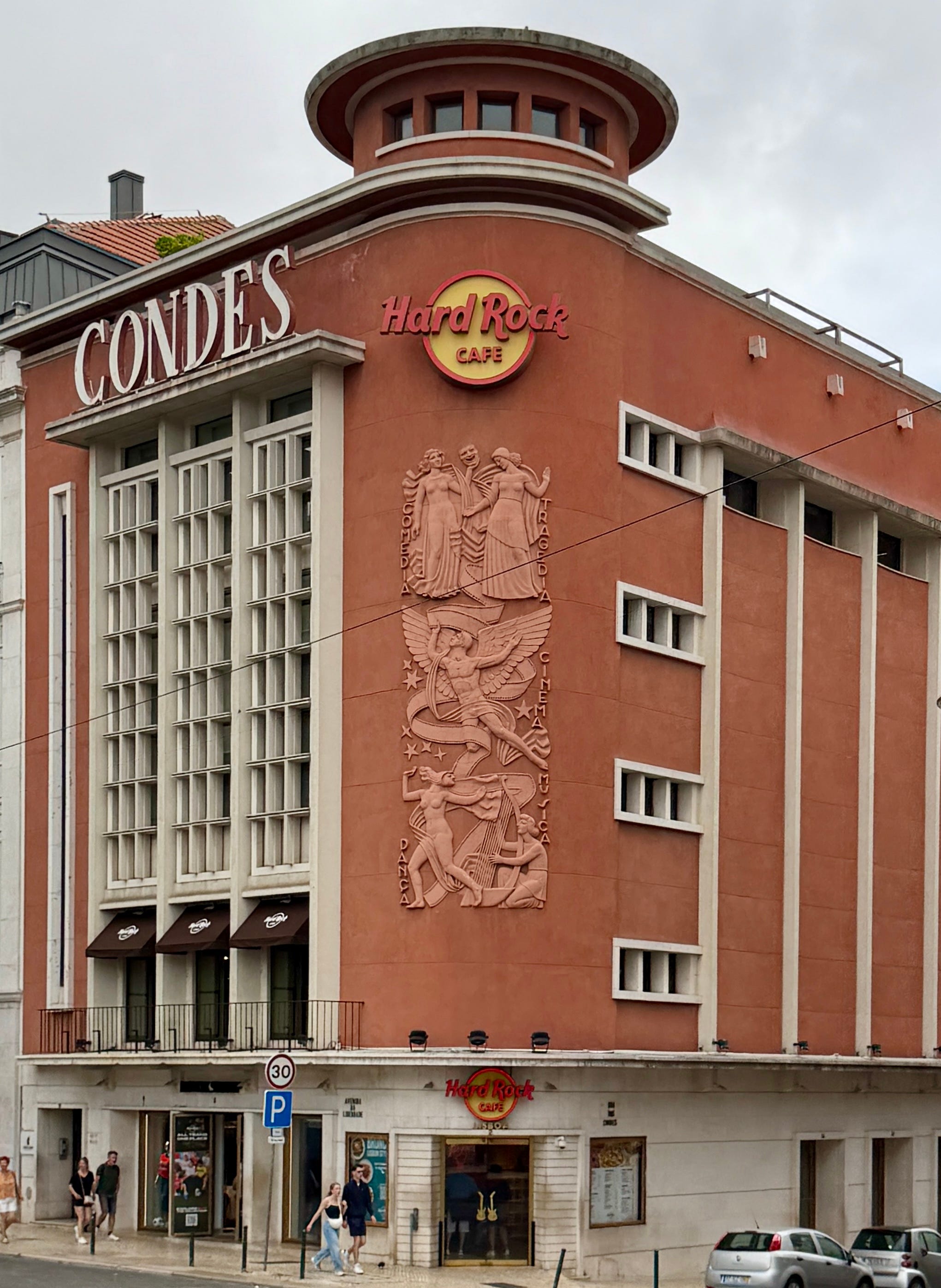
The Hard Rock Cafe is located in a city-center building that features a distinct Art Deco design with bas-relief elements on the curved corner. The building, built in 1951, was originally the Condes Cinema, and the interior of the restaurant features iconic memorabilia from that era.
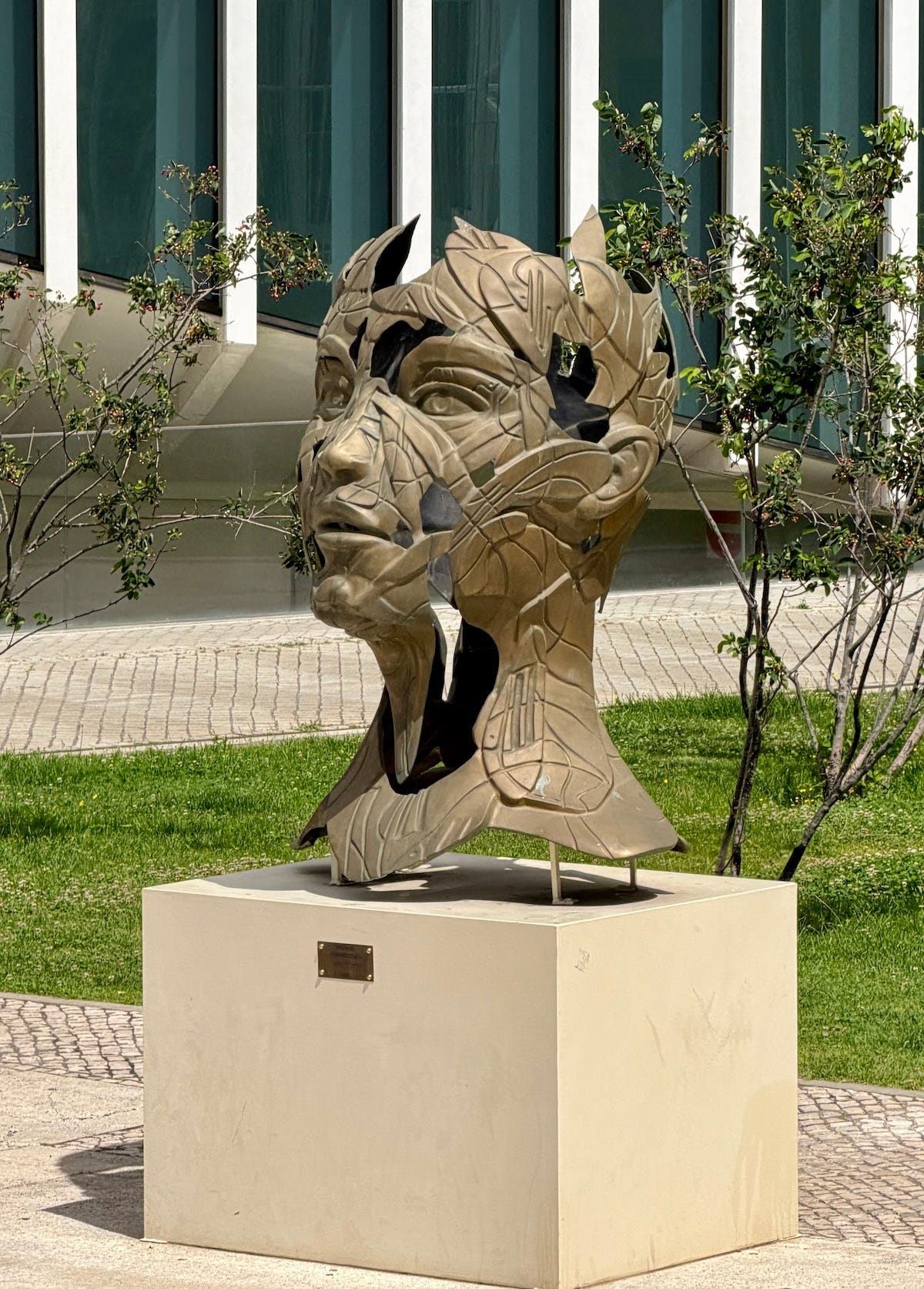
Look carefully, and you’ll notice that this sculpture of a human face is actually created with bronze fragments of botanics — leaves, branches, seed pods. It’s by French street artist Alexandre Monteiro.
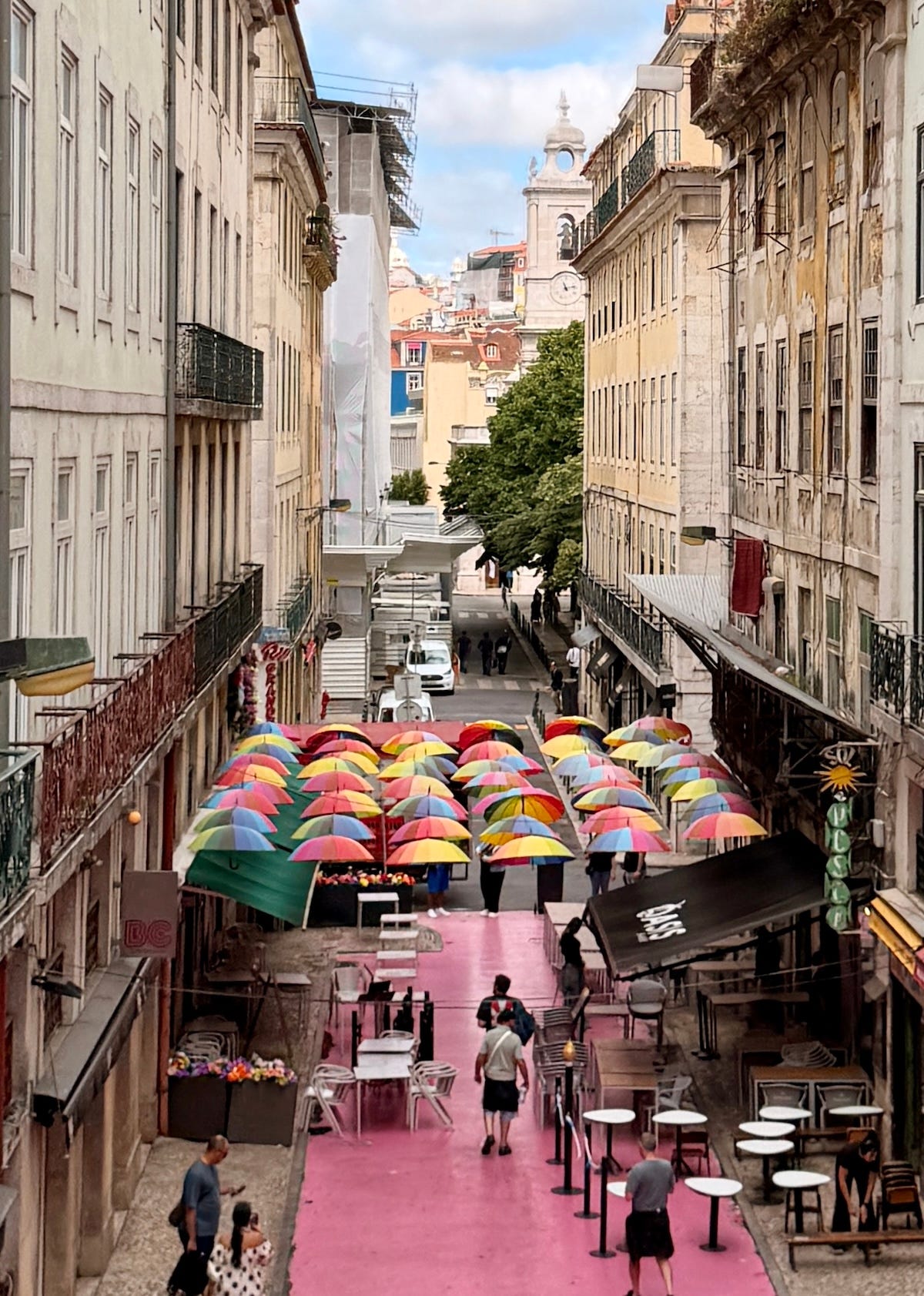
We had just enough time to grab this photo of Pink Street as the bus zoomed past. Pink Street, officially known as Rua Nova do Carvalho, features bright pink pavement and a canopy of pastel umbrellas strung overhead. The street was once the city’s red-light district, but it’s transformed into one of the city’s trendiest nightlife hubs.
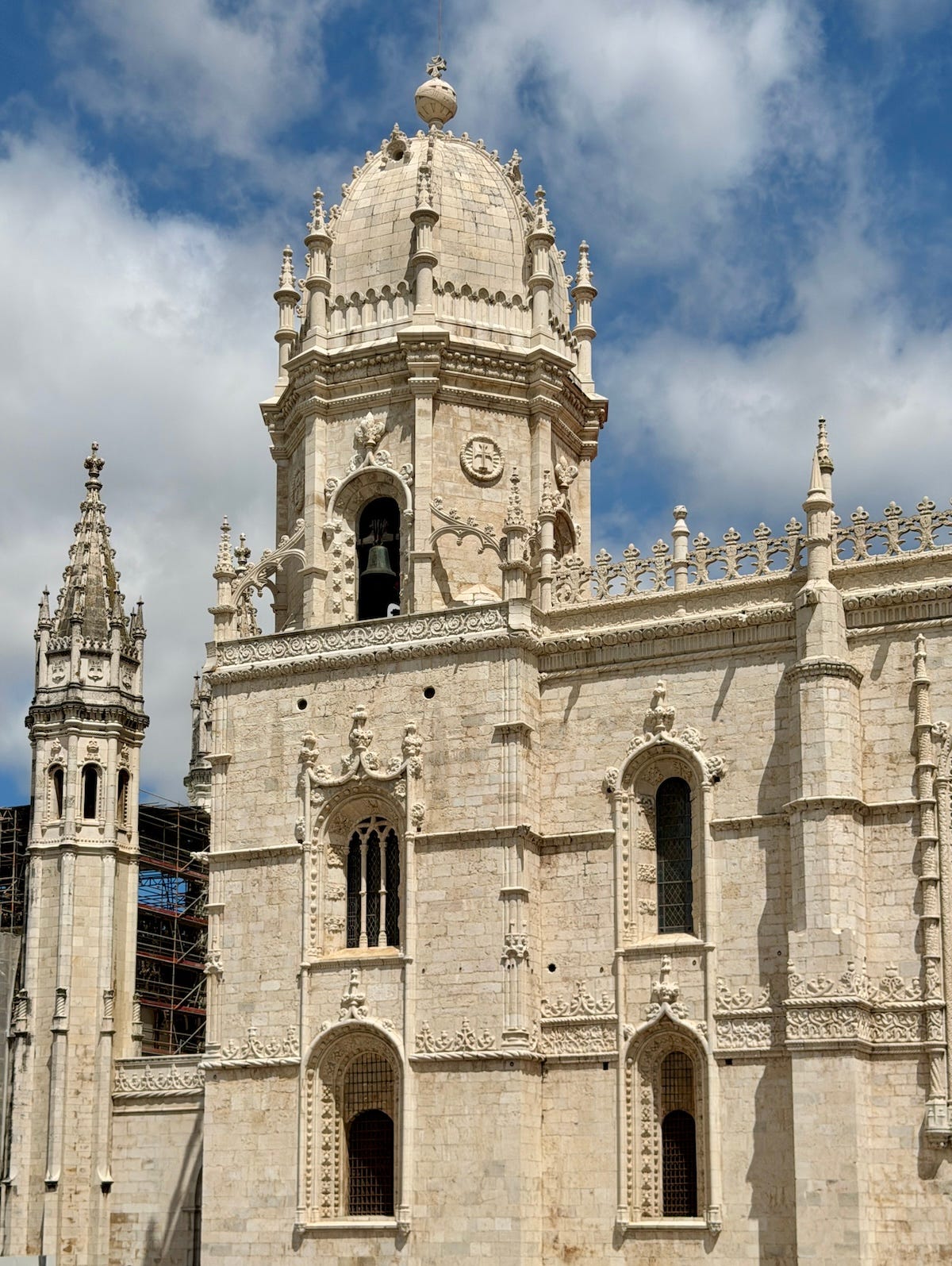
The Jerónimos Monastery serves as a national pantheon and the final resting place for some of the most influential figures in Portuguese history, including world explorers, literary icons, and royalty. As one of Lisbon’s UNESCO World Heritage sites, it’s an architectural masterpiece, intertwined with the history of Portugal’s Age of Discovery.
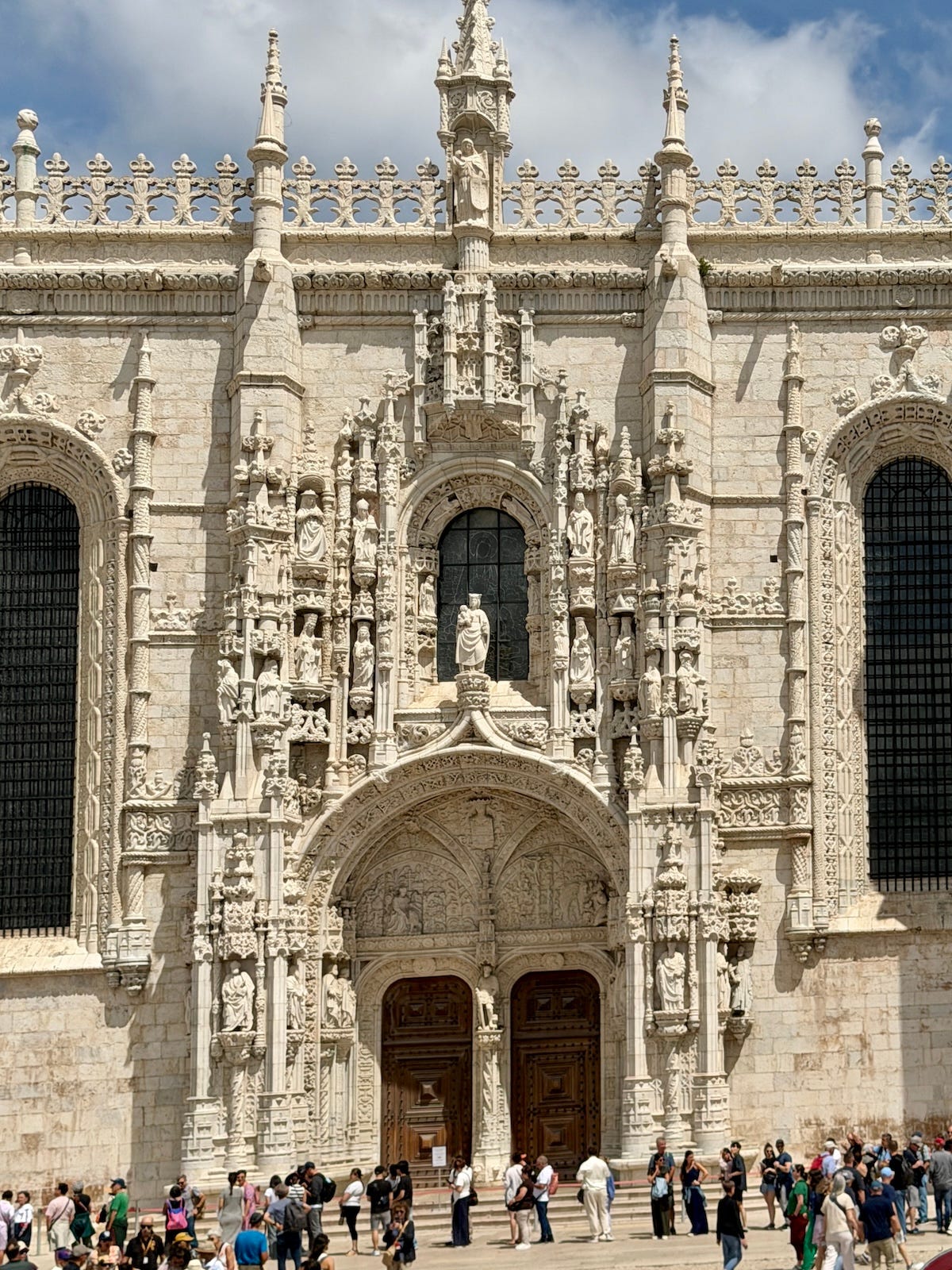
We were tempted to get off at this stop, but one look at the crowds on a Saturday at noon, and our enthusiasm waned. We reminded ourselves that we had little more than time enough to get a lay of the land, and trying to visit any of the major attractions could complicate our plan. Since we hope to return in 2027 for an extended visit, our best option was to get a feel for the city and catalog the sites we wanted to visit “next time.” (Not our favorite way to travel, pushing things off to “next time,” but we’ve discovered a day visit to a major metropolitan city affords very limited options.)
We admired the enormous monastery’s exterior as we passed by the ornate side portal. The two-story entrance stands 105 ft high and 39 ft wide. Its ornate features include an abundance of gables and pinnacles, with many carved figures standing in niches around a pedestaled statue of Henry the Navigator between the two doors. No wonder an edifice as grand as this one took a century to build!
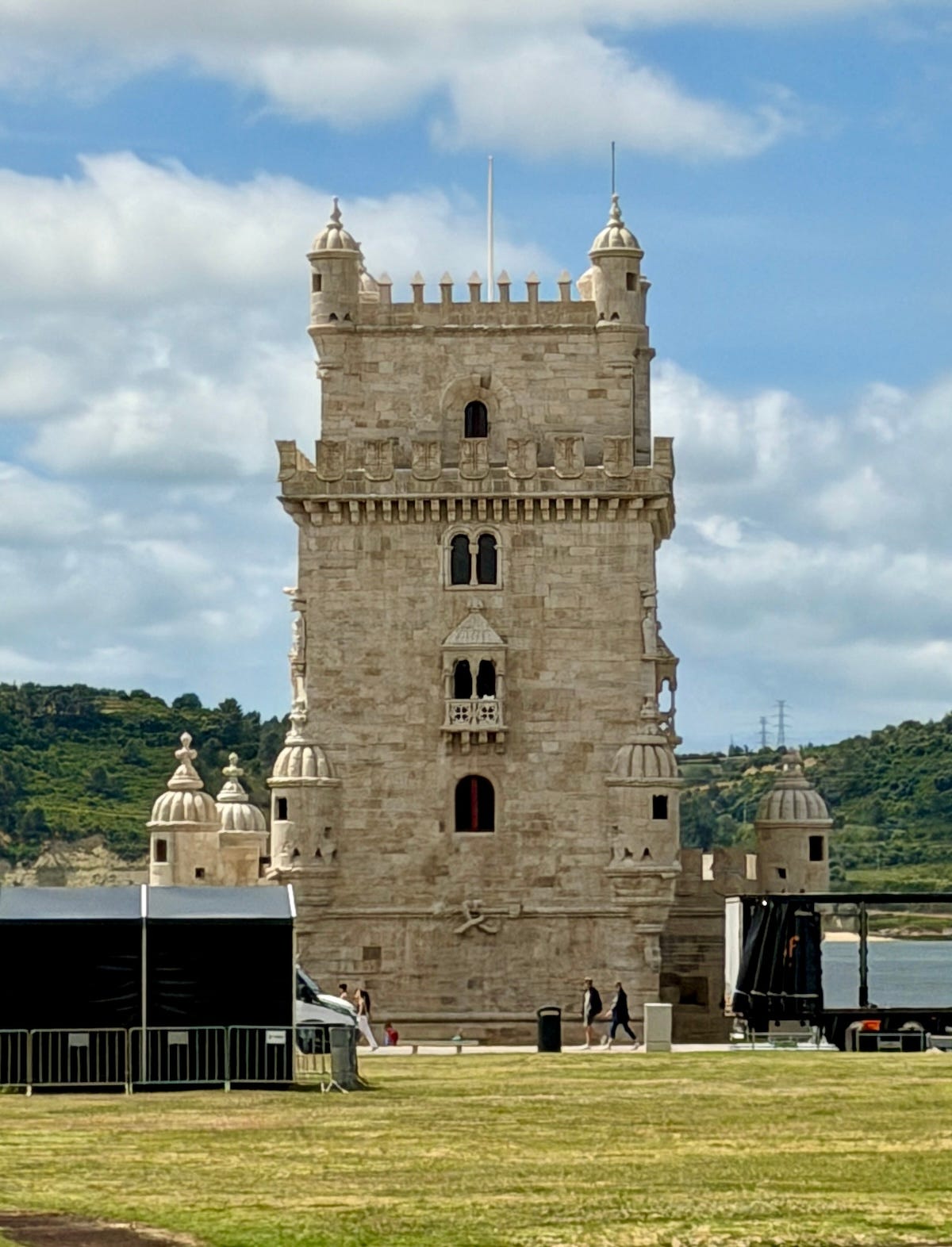
The Belém Tower, another UNESCO World Heritage Site in Lisbon, is a 16th-century fort located on the banks of the Tagus River. Another one of the country’s most iconic landmarks, it serves as an architectural symbol of Portugal’s maritime power during Europe’s Age of Discovery.
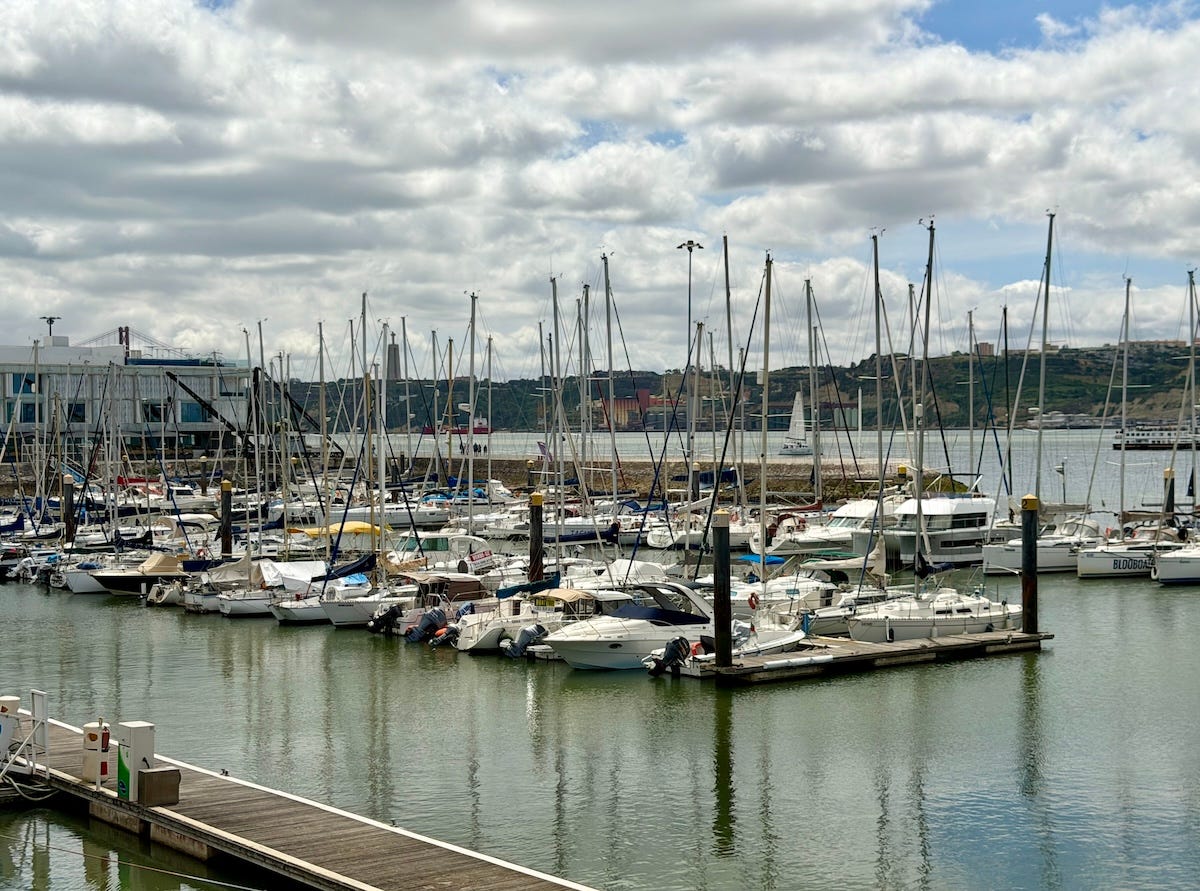
Lisbon’s monument district, primarily located in the Belém neighborhood, sits on the banks of the Tagus River. This historic estuary is the longest river in the Iberian Peninsula and served as the starting point for Portugal’s legendary Age of Discovery. Now it’s a hub for leisure activities, too, with a busy marina and a jam-packed riverside pathway used by bicyclists, joggers, and walkers. This was obviously the place to be on a sunny Saturday afternoon!
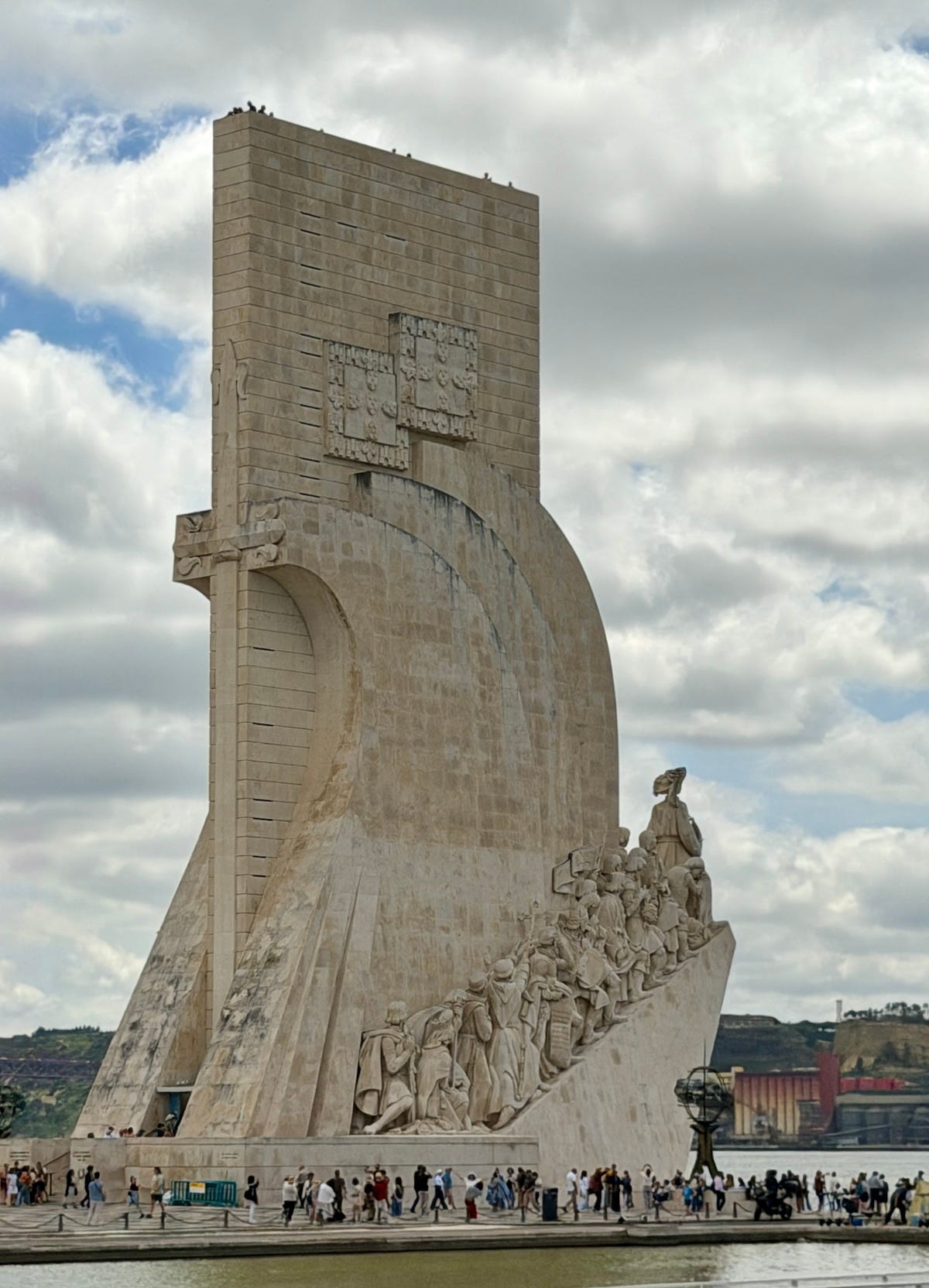
The Monument of the Discoveries was erected to celebrate the Portuguese Age of Exploration during the 15th and 16th centuries. It was first erected as a temporary exhibit in 1940 and rebuilt in its current form in 1960. Inside, you can enjoy the ship-like architecture, ascend the rooftop for panoramic river views, or explore historical exhibits. There’s even a sidewalk map mosaic to explore with your feet! (Yes. A stop at this monument is on our to-do list!)
Now that Sherpa and I have encountered repeated mentions of the Age of Discovery while traveling along western Africa and the Cape of Good Hope, our curiosity has been piqued. We’ve added several books about the subject to our summer “beach read” list… or maybe we’ll do an audiobook, instead!
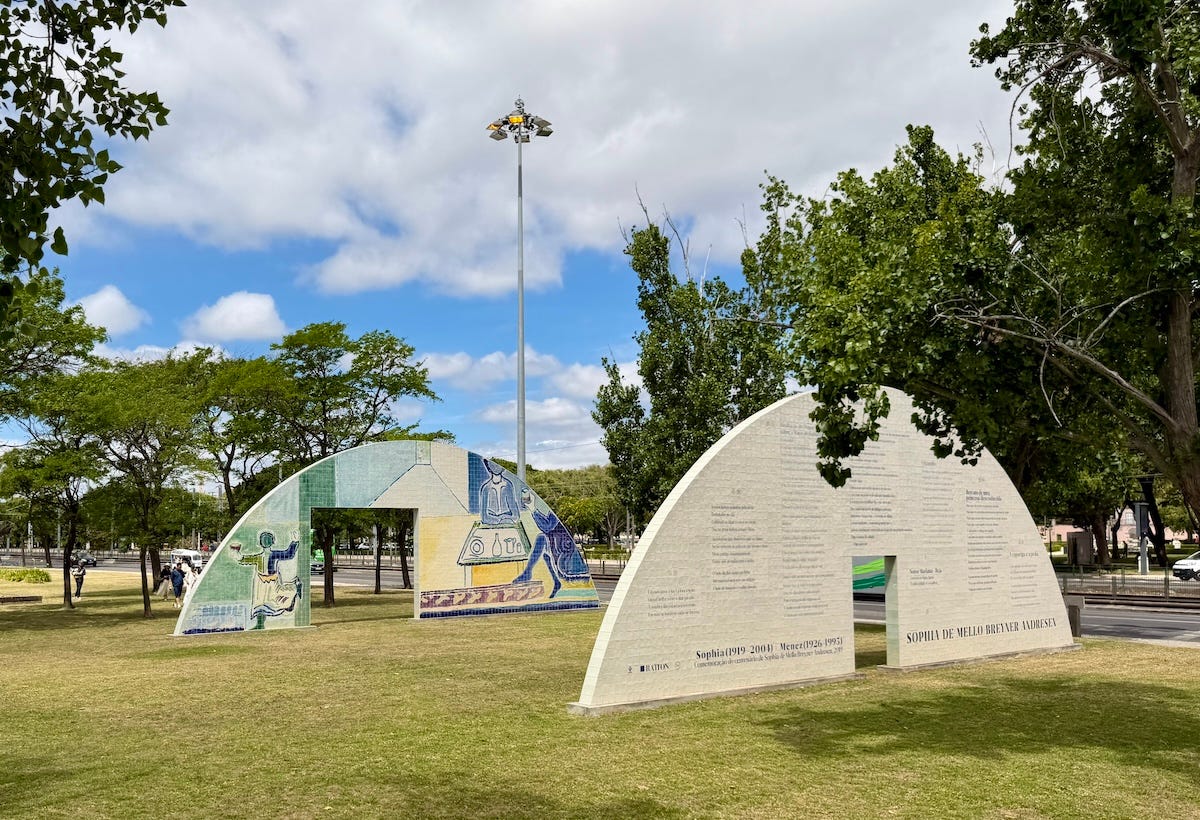
In a small garden in the Monuments District, I noticed this small art installation dedicated to the poetry of Sophia de Mello Breyner Andresen.
Once again, as we travel, I am reminded of how much there is to discover in this amazing world — and I’m thinking only of a small niche: the worlds of art and literature. I devour both art and poetry. They are my loves. Yet, as we’ve traveled the continents of Asia and Africa, and now touched briefly in Europe’s Spain and Portugal on this three-segment cruise, I repeatedly come into contact with well-known artists, writers, and poets, of whom I’ve never heard. How wonderful is this! There is a vast world of creative folks whom I can continue to learn about once I return to the US.
Here is one such person, poet Sophia de Mello Breyner Andresen, who, according to Wikipedia, is “considered one of the most important Portuguese poets of the 20th century. She published fourteen poetry books between 1944 and 1997, covering themes such as the natural world, the search for justice, Ancient Greece, and the importance of poetry.”
Here are the first lines of one of her most beloved poems that I read on her website:
The Garden (O Jardim) by Sophia de Mello Breyner Andresen, translated from Portuguese by Colin Rorrison.
The garden is brilliant and in bloom.
Over the weeds, among the foliage,
The wind passes, dreamy and distracted,
Pilgrim of a thousand pilgrimages.
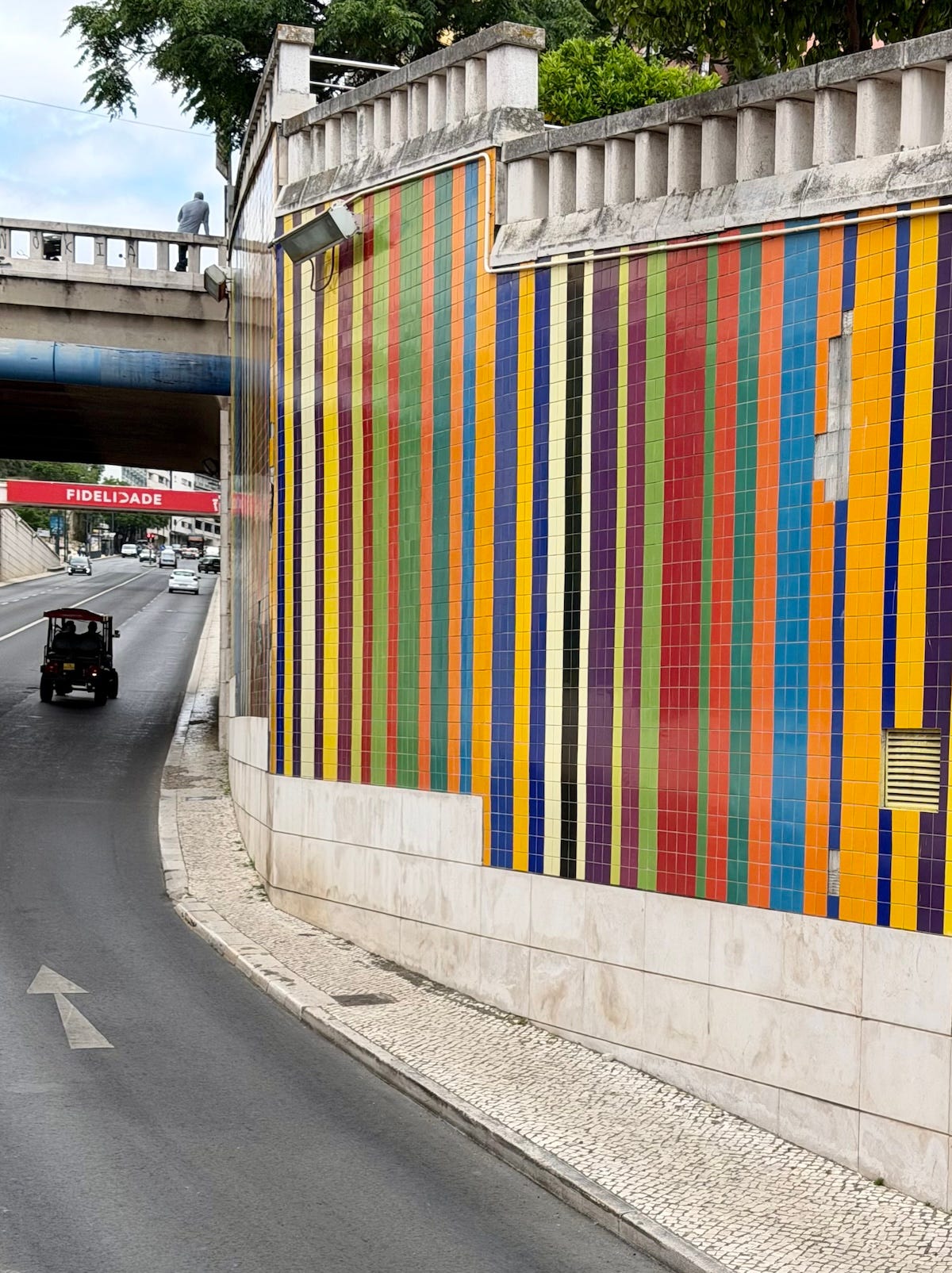
This stunning span of geometric tiles was designed by Portuguese artist Eduardo Nery and is located along a busy, steep thoroughfare we traveled as we headed from the Belém district to the City Center. Installed in 1993–1994, it was created during Lisbon’s tenure as the European Capital of Culture — a surefire way to add an infusion of color to a rather boring stretch of highway.
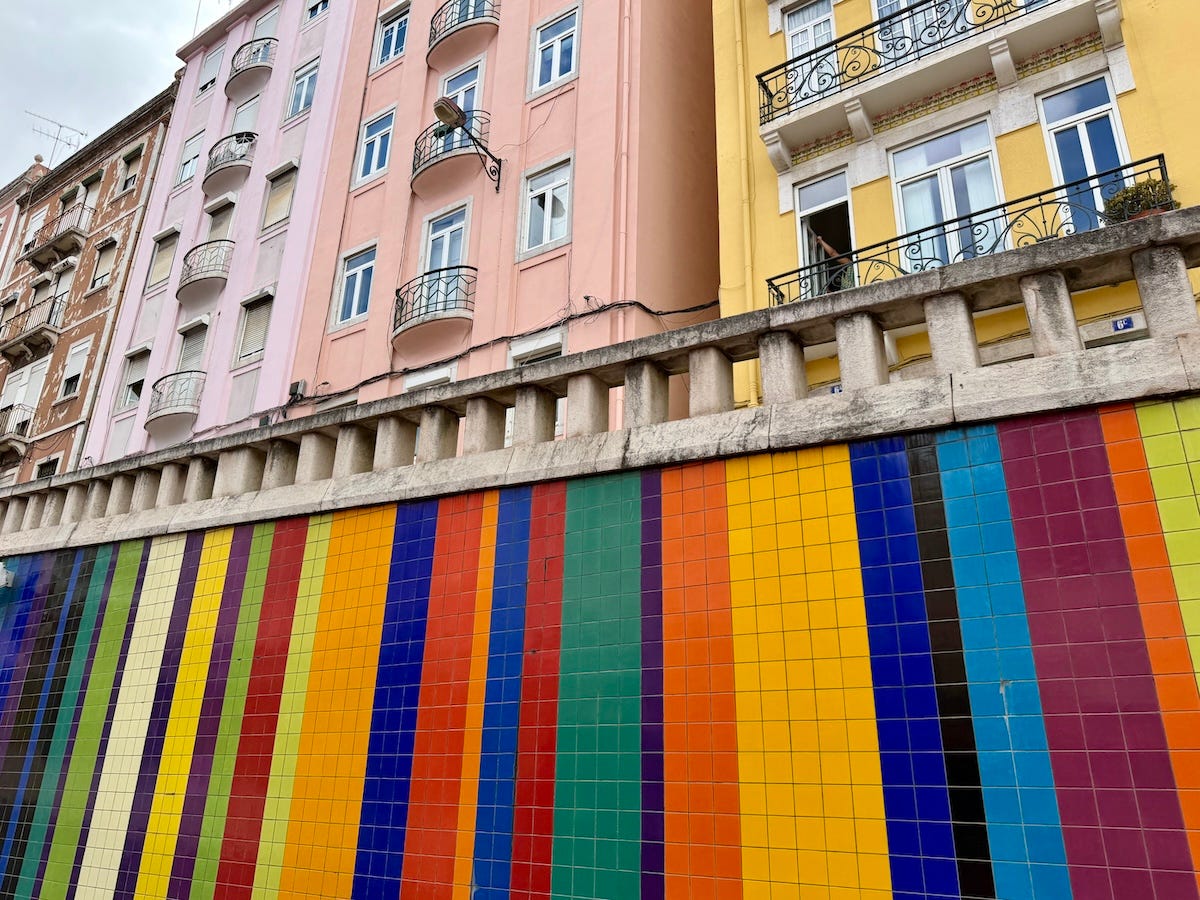
I love the juxtaposition of the pastel-colored apartment buildings with their classic wrought iron balconies and three-pane windows, overlooking the bright stripes of the highway art wall.
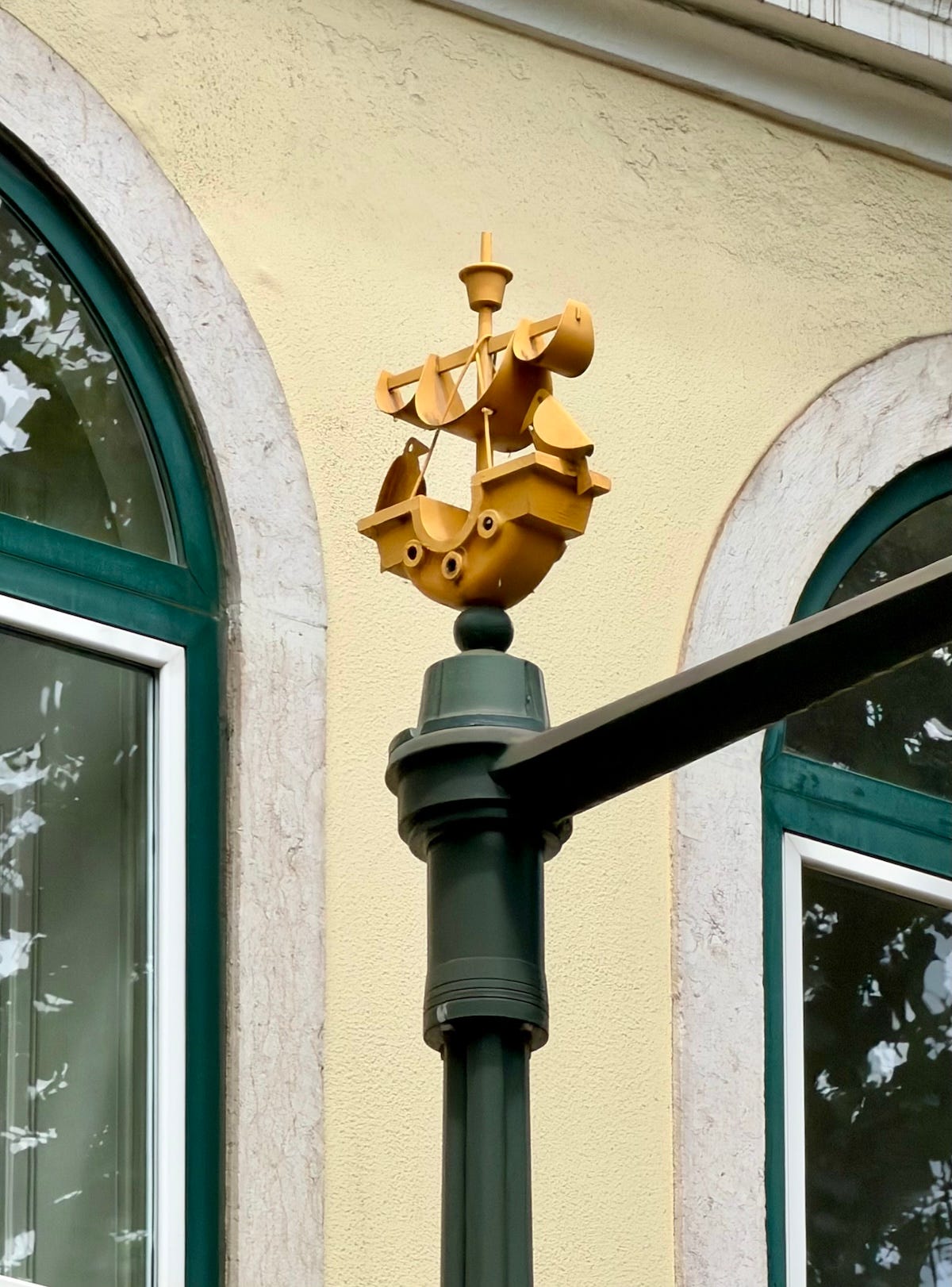
Since we were traveling on the top floor of the double-decker bus, we often had “top of the street sign” views of the urban setting. We started seeing sign toppers — metal ships carrying birds as their only passengers. (Later, we looked it up and discovered that this ship — a sailing ship flanked by two ravens — is a symbol of Lisbon. According to legend, the holy relics of Saint Vincent — the patron saint of Lisbon — were returned to the city by boat from southern Portugal in 1173. The boat was accompanied by two ravens who kept guard for the entire journey.)
Now the boat-and-raven symbol can be seen throughout the city and is integrated into the urban infrastructure — on streetlights, plaques, manhole covers, and even on the city’s coat of arms! Ya gotta love the history of objects such as this…


As our bus climbed the steep Avenida Infante Santo and repeatedly stopped in traffic, we had just enough time to photograph a few of the large-scale azulejos, or tile murals, built into public stairways along the street. This public-arts walkway spotlights 20th-century and contemporary tile masterpieces, carefully integrated into the steps and handrails of a retaining wall that separates the busy street from a block of apartments.
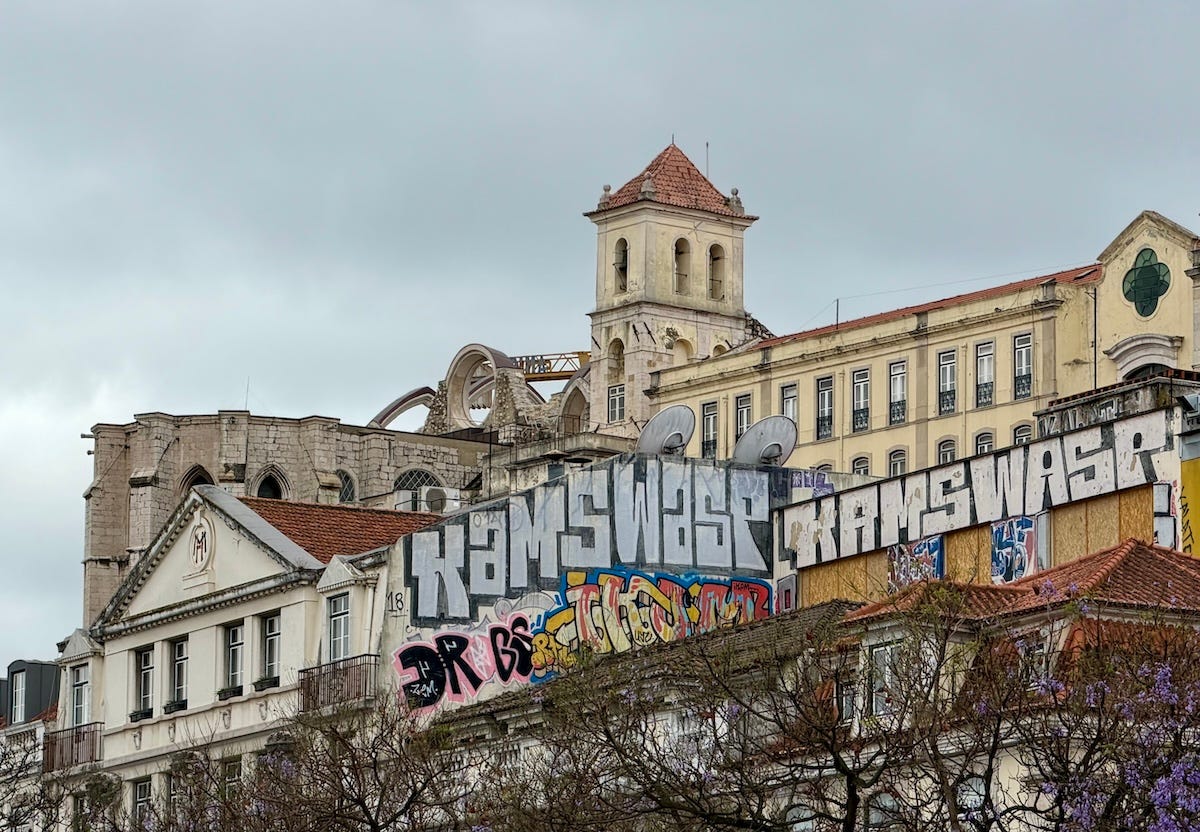
There is a lot of graffiti on the buildings in Lisbon, mostly on aged buildings scheduled for demolition or on derelict ruins. The square tower and red-tiled roof are a part of the Gothic ruins of Carmo Convent, and have been tagged by graffiti artists. The city, which has had a problem with indiscriminate tagging, has expanded its street arts program to encourage legal urban art while limiting unauthorized work.
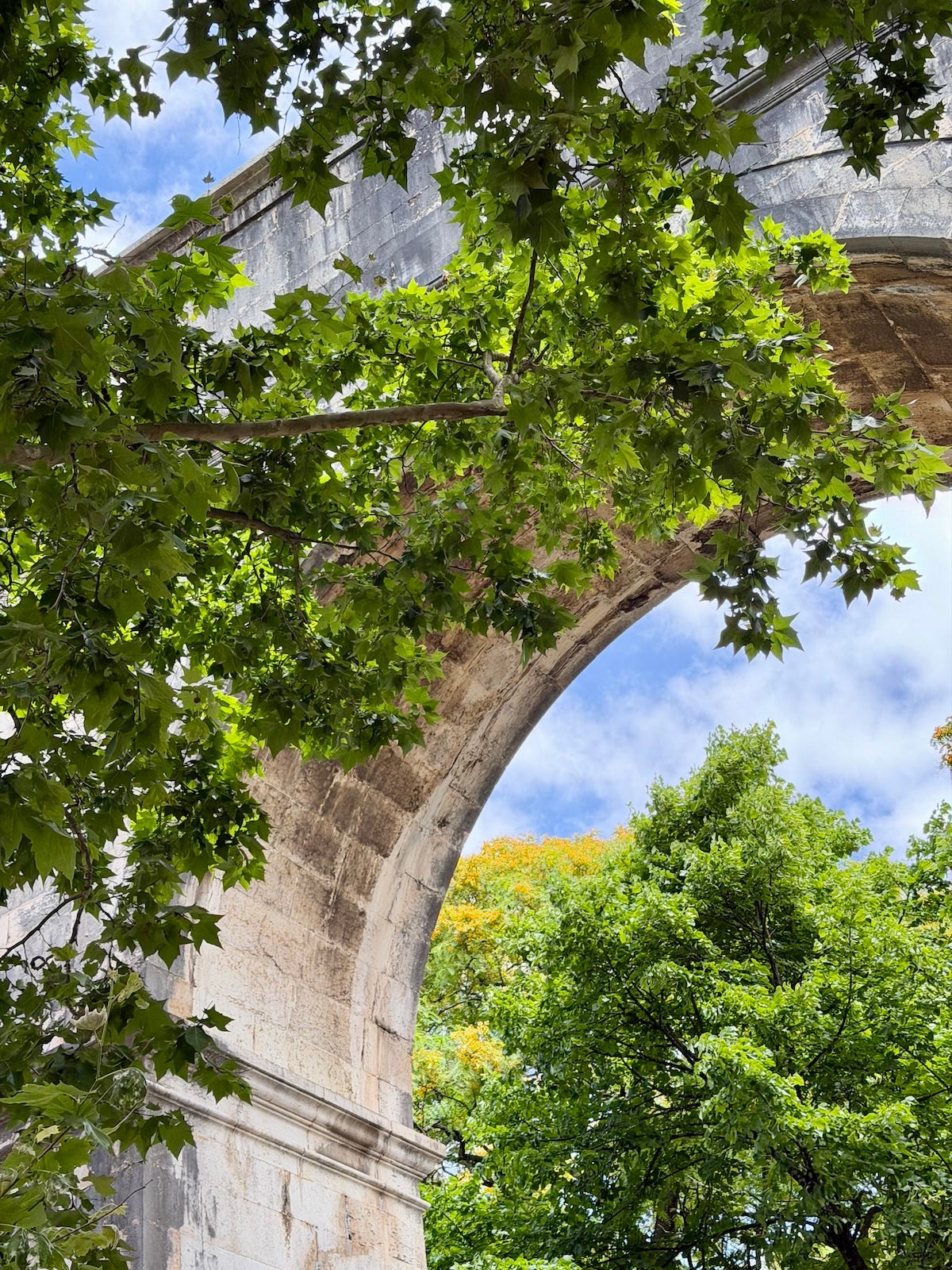
Águas Livres Aqueducts are a series of 35 stone arches, the tallest rising to 214 feet, that were part of an 18th-century engineering marvel that survived the 1755 Lisbon Earthquake. The aqueducts are part of the Water Museum, and visitors can walk across the section spanning the Alcântara Valley.
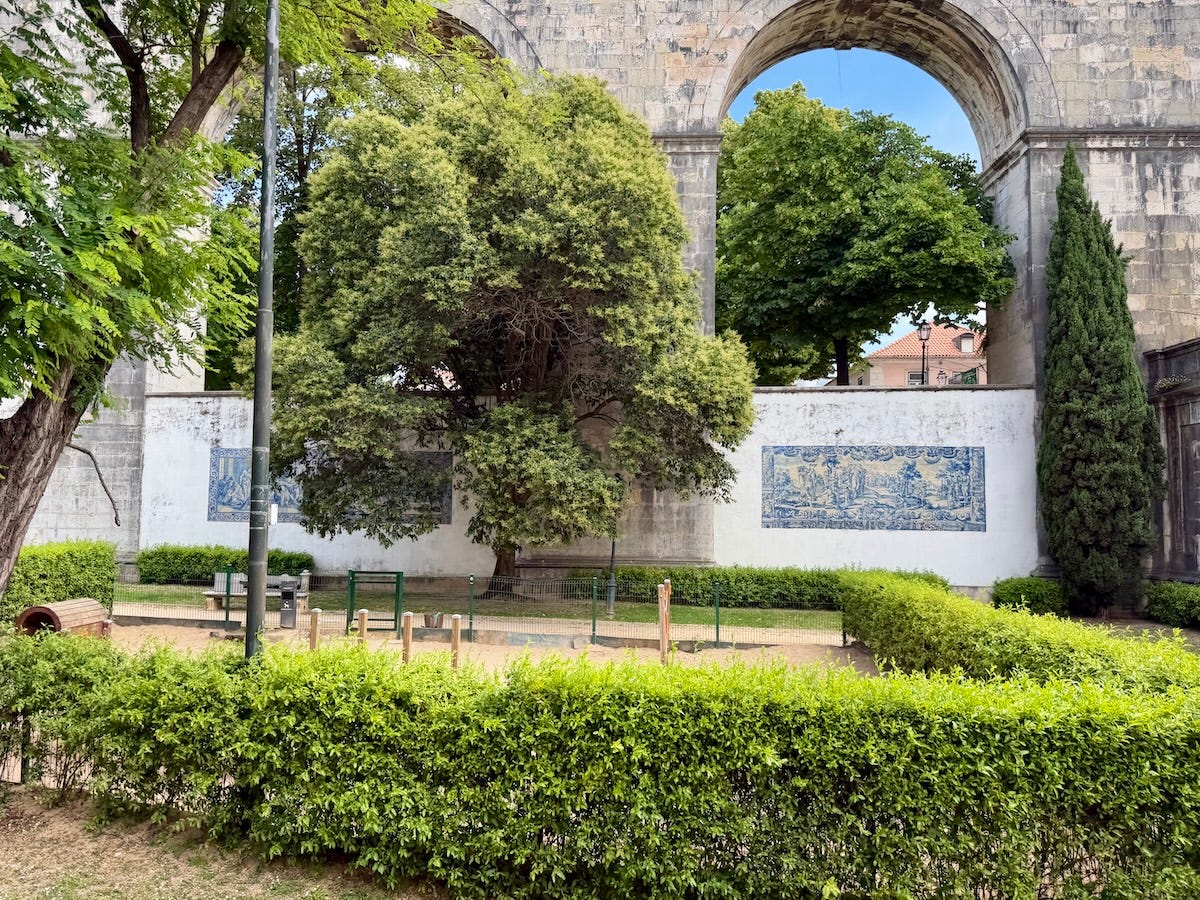
The lowest arches of the aqueduct, also part of the Water Museum, terminate near the Jardim das Amoreiras and are decorated with historical tile panels depicting the history of water in Portugal. The Water Museum is an unusual, niche museum, and it’s supposed to be great if you like out-of-the-ordinary experiences. Since it’s spread out over four locations, it didn’t fit into our time-limited day in Lisbon, but we’re adding it to our “next time” to-do list.


As we approached the terminus of the HOHO bus route, we went through Lisbon’s modern city center, where dozens of skyscrapers towered over our heads. A huge change from the old-town vibes we first experienced, and the historical monuments area we passed in the middle of the tour.
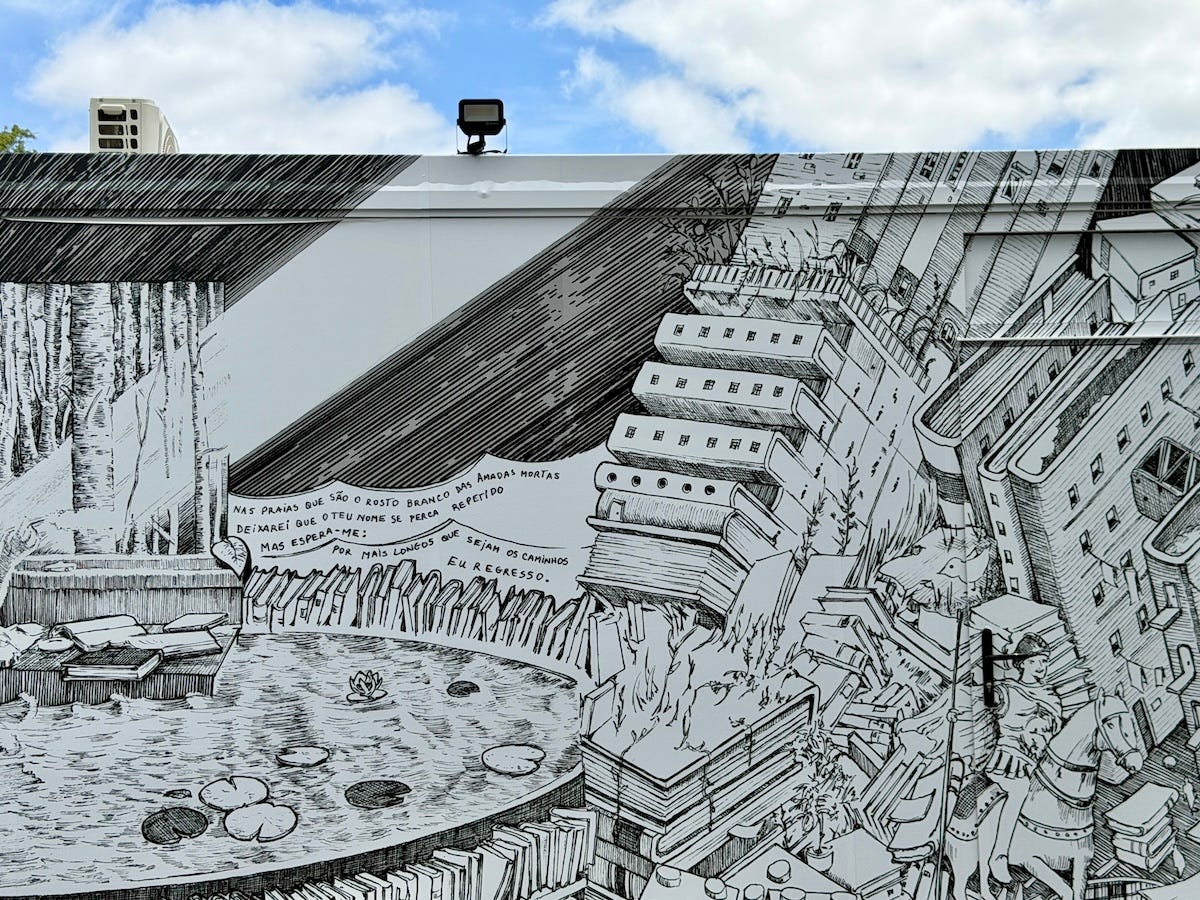
We had to disembark from the “red route” HOHO bus, which had made a two-hour loop through the highlights of Lisbon, at a roundabout in Parque Eduardo VII, and transfer to a “blue route” bus, which would take us to the cruise terminal. But we’d been on the bus a long time and needed to stretch our legs, and perhaps find something to eat, before boarding another bus. Plus, we were distracted by several huge black-and-white billboards across the street from the parking area, featuring… BOOKS!
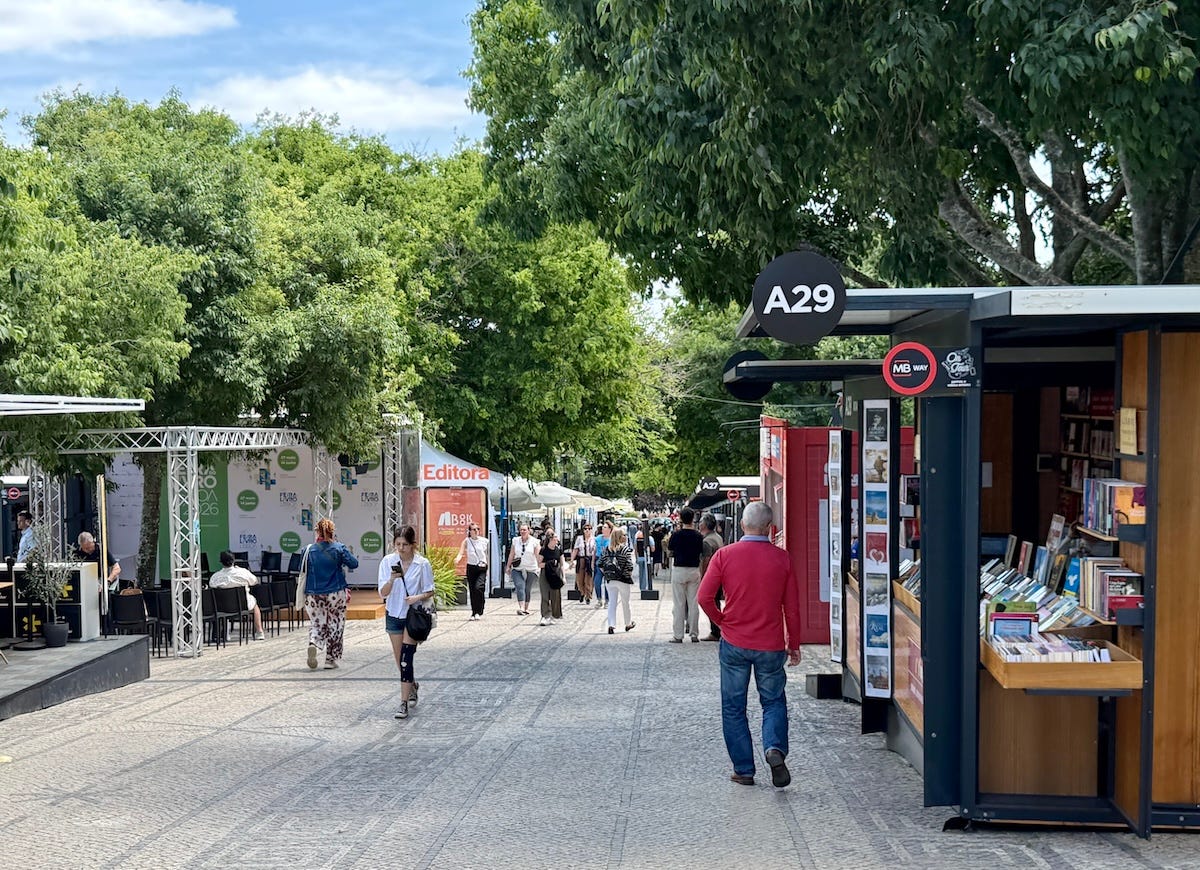
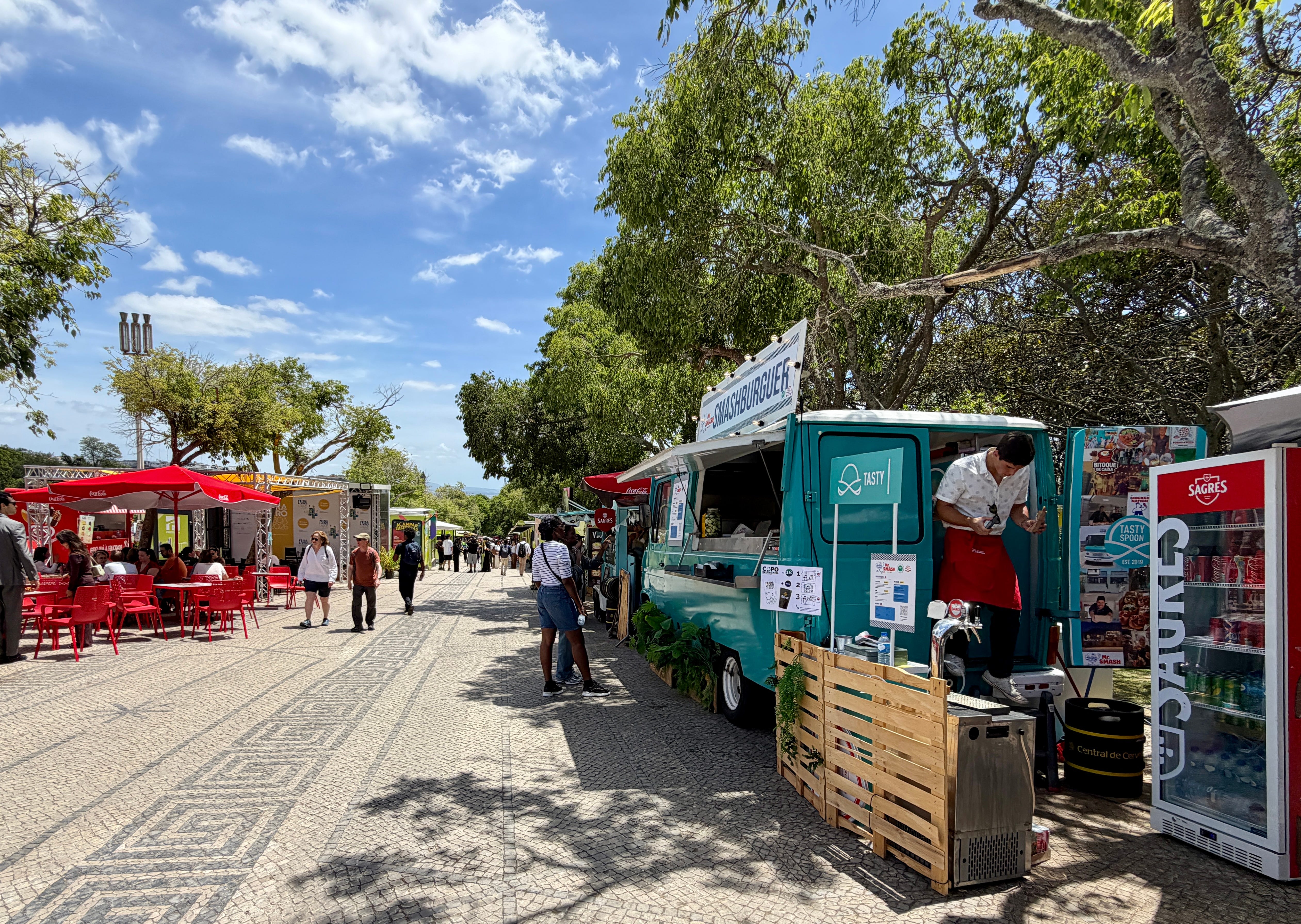
We had stumbled upon one of Lisbon’s premier springtime events! The Lisbon Book Fair! For 19 days, the sloping paths of Parque Eduardo VII are transformed into an open-air literary festival. Hundreds of pavilions represented publishers, independent bookstores, and major retailers. Plus, happily for our growling stomachs, the park was lined with food trucks offering everything from hamburgers to vegan meals.
Of course, we headed up the hill to check out all the books! Of course, the catch we had already deduced was the language issue. Almost all of the available books were published in Portuguese. Almost heaven, but more like an English-only speaker’s purgatory! Still, we had a marvelous time!


Never fear! We were able to find a couple of wordless children's books for our 3- and 5-year-old granddaughters. The booksellers were amazing, BTW. Such excellent service, and they bemoaned the lack of English books, saying we were not the only folks wishing we could find foreign-language offerings.


Sherpa first had a Sagres beer at a cafe in the Monte Palace Tropical Garden in Funchal, Madeira, just a few days ago. He enjoyed it then — gave it a 6/10 — but said it “might be growing on him.” Today, as we munched on burgers and fries and did a lot of people-watching, he said: “It might warrant a 6.5 or even a 7!”
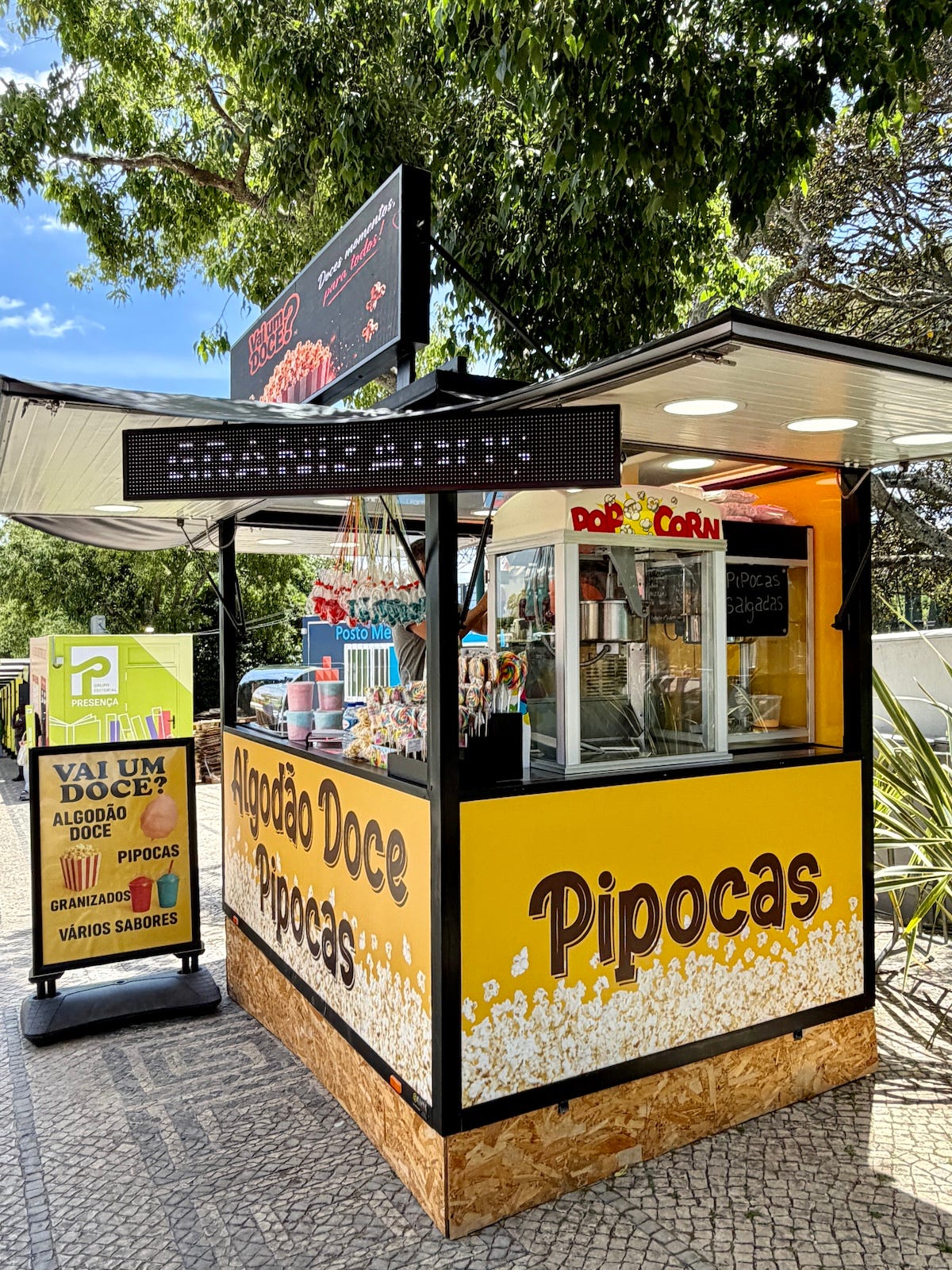
Curious, but not tempted! This cute pop-up stand sold gourmet popcorn — flavors included powdered milk, peanut brittle, and caramel. If none of the popcorn flavors appealed to your little kid’s palate, how about some gourmet cotton candy? The traditional flavors were available, as well as more unusual ones like watermelon, blueberry, grape, and pineapple. Any takers?


We didn’t need to search for our iconic Coca-Cola advertisement in Lisbon. The seating area at the book fair was sponsored by Coke, and we sat at a Coca-Cola-embellished table, shaded by Coca-Cola umbrellas. And yes, I had my daily ration of Coke Zero, my go-to drink for the times when Sherpa is taste-testing one of his Destination Beers.
Finally, it was time to return to the HOHO hub and find the right bus to drop us off at the cruise terminal. There was quite a crowd trying to find out which bus went where, but a friendly driver directed us to the “blue” line and told us it departed every half hour. Helpful info to know. We only had a few minutes’ wait. A blue bus pulled up, which we boarded, grabbed a seat on top, and settled in for the last half-hour of our tour.
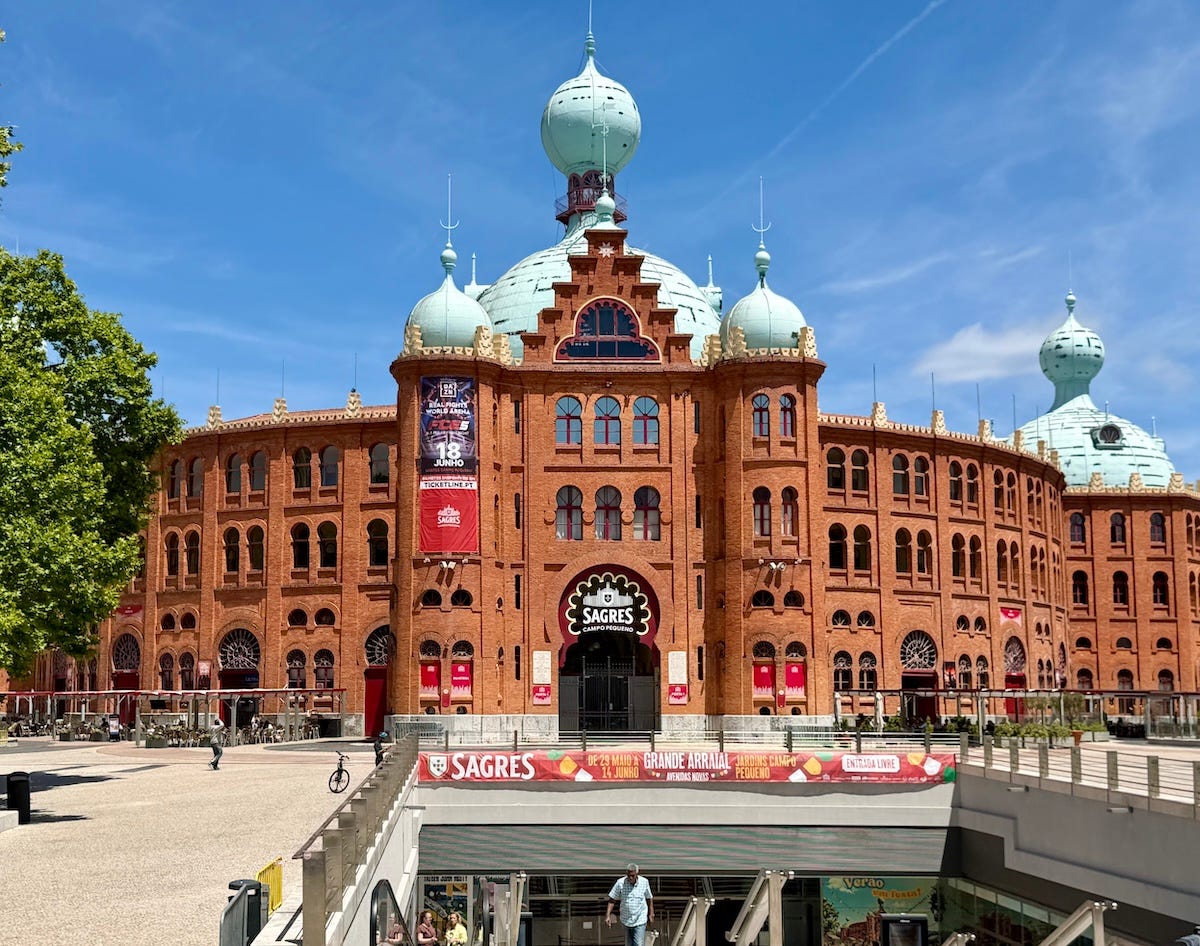
We drove past Campo Pequeno, a multi-tiered stadium built in the orange-brick Neo-Mudéjar (Moorish Revival) style, and originally completed in 1892. This is the only venue that still allows traditional bullfighting, but unlike the Spanish tradition, the bull is no longer allowed to be killed in Portugal. Even so, the event is highly controversial because of the physical injury and stress inflicted on the animal. Today, the stadium also operates as a multi-use center which hosts international music concerts and fairs; it also has an underground shopping mall and a cinema. Sounds like progress!
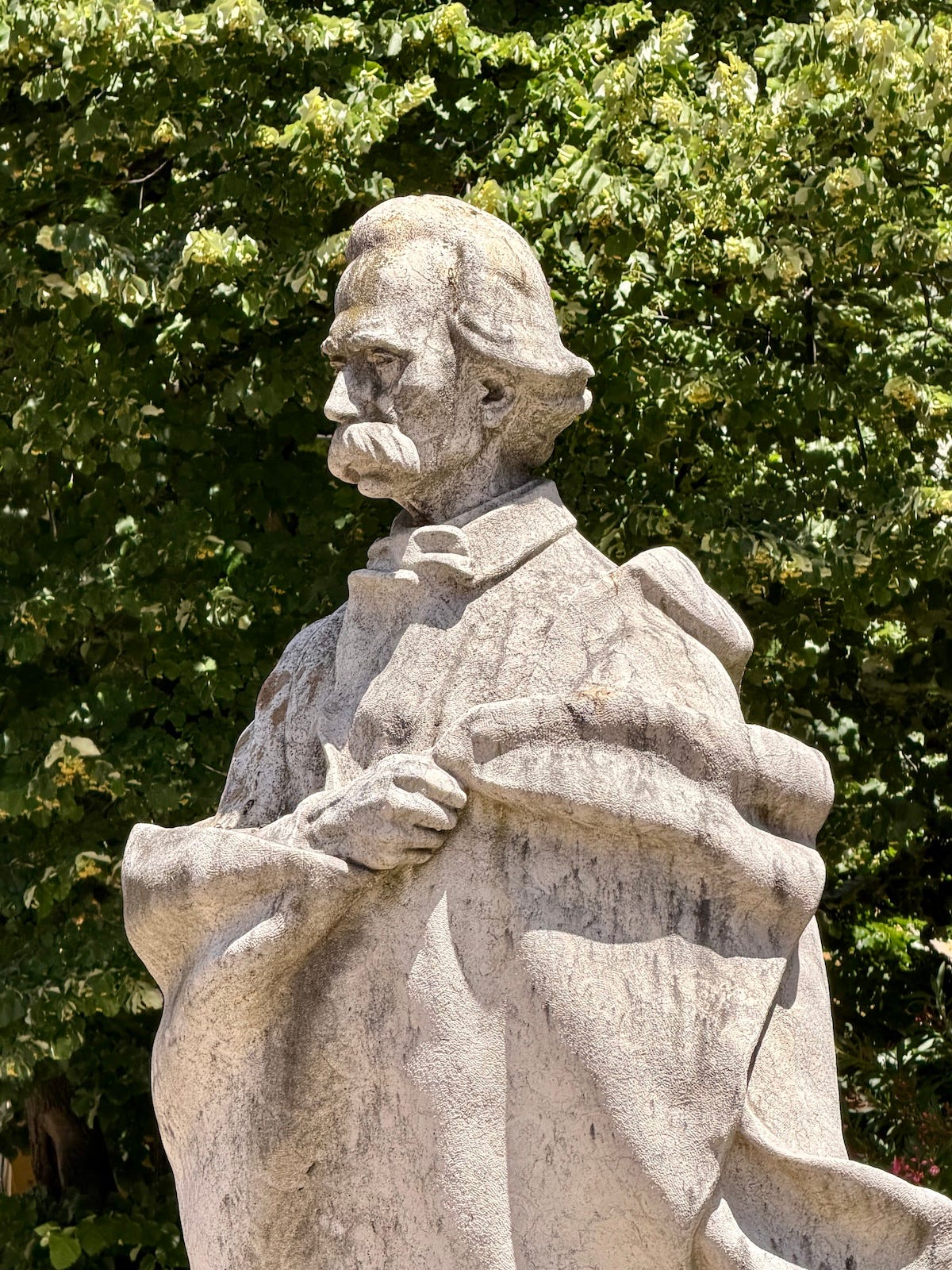
Lisbon evidently loves its literary heroes. I haven’t noticed any statues of military leaders atop rearing horses or politicians glaring into crowds, but we’ve seen plenty of statues of poets and writers! (And now we are learning about them as we see them!)
Here’s a statue of Camilo Castelo Branco (1825–1890), one of the most prolific and celebrated novelists in Portuguese literature. A master of Romanticism and early Realism, he led a tumultuous, rather scandalous lifestyle that influenced his dramatic stories. He is best known for his 1862 tragic masterpiece, Love of Perdition. Another one of his more famous books, Portuguese Romeo and Juliet, he wrote in only 15 days. (Maybe he always knew the plot?)
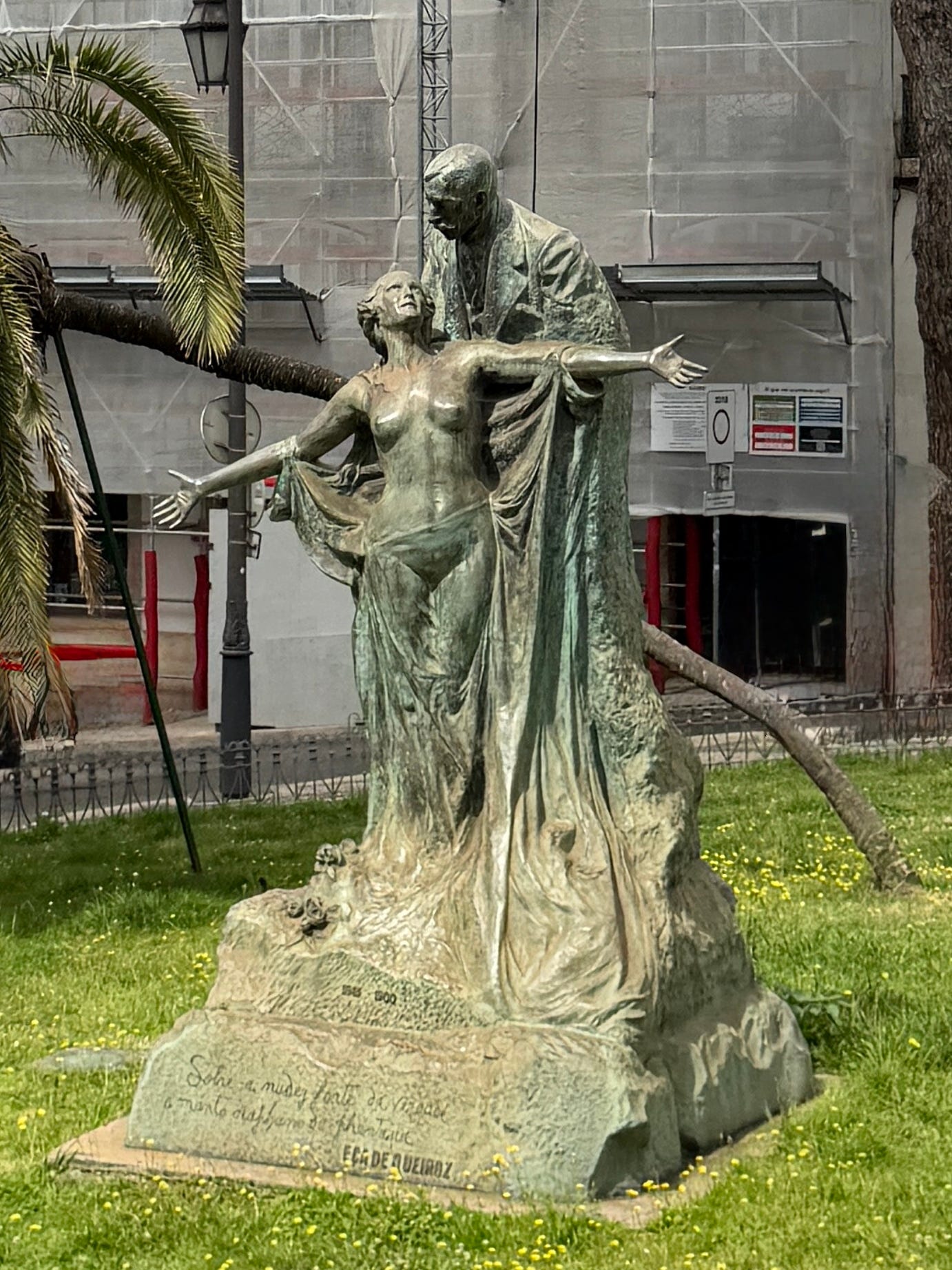
The HOHO guide emphasized the importance of this statue, so I researched it when we were off the bus. “The iconic sculpture honoring the renowned Portuguese writer Eça de Queirós is located in the Chiado neighborhood. It depicts the writer holding a partially nude female figure in his arms. This represents an allegory of Truth — a prominent protagonist character from his novel A Relíquia.” - Wikipedia
At the base of the statue, his words proclaim:
On the strong nudity of Truth,
the diaphanous cloak of fantasy.
Perhaps I should read some Portuguese literature once we return home!
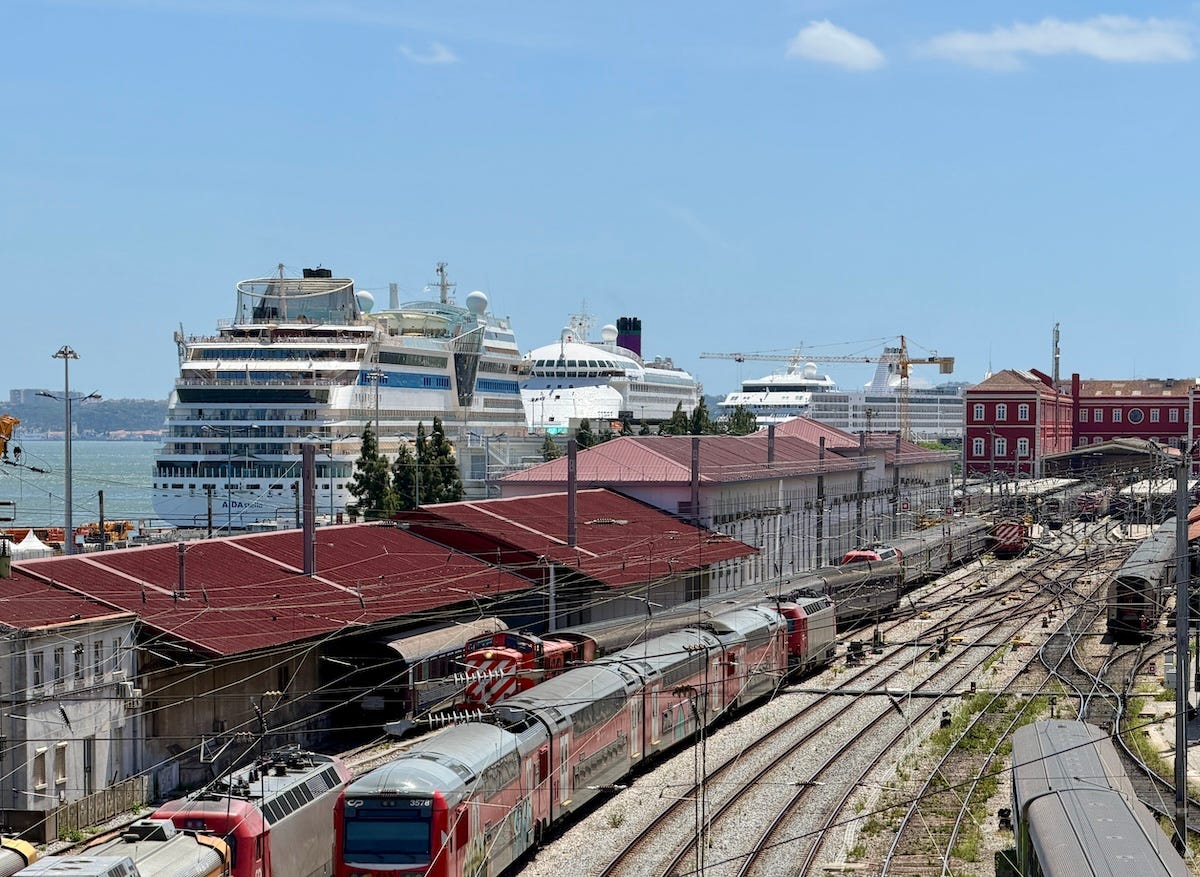
Approaching the port as our HOHO excursion drew to a close, we could see rails, roads, and rivers — the three main modes of transportation — in close proximity to one another. Sherpa and I had a “moment” — when our children were in primary school and younger, we had family game night every Friday. After a quick pizza supper, we’d play board games around the kitchen table. And one of our family’s favorites was a Ravensburger game called Rivers, Roads, and Rails. Now, whenever we spy terrain that features the three transportation “Rs” all together, it brings back the fondest of memories!
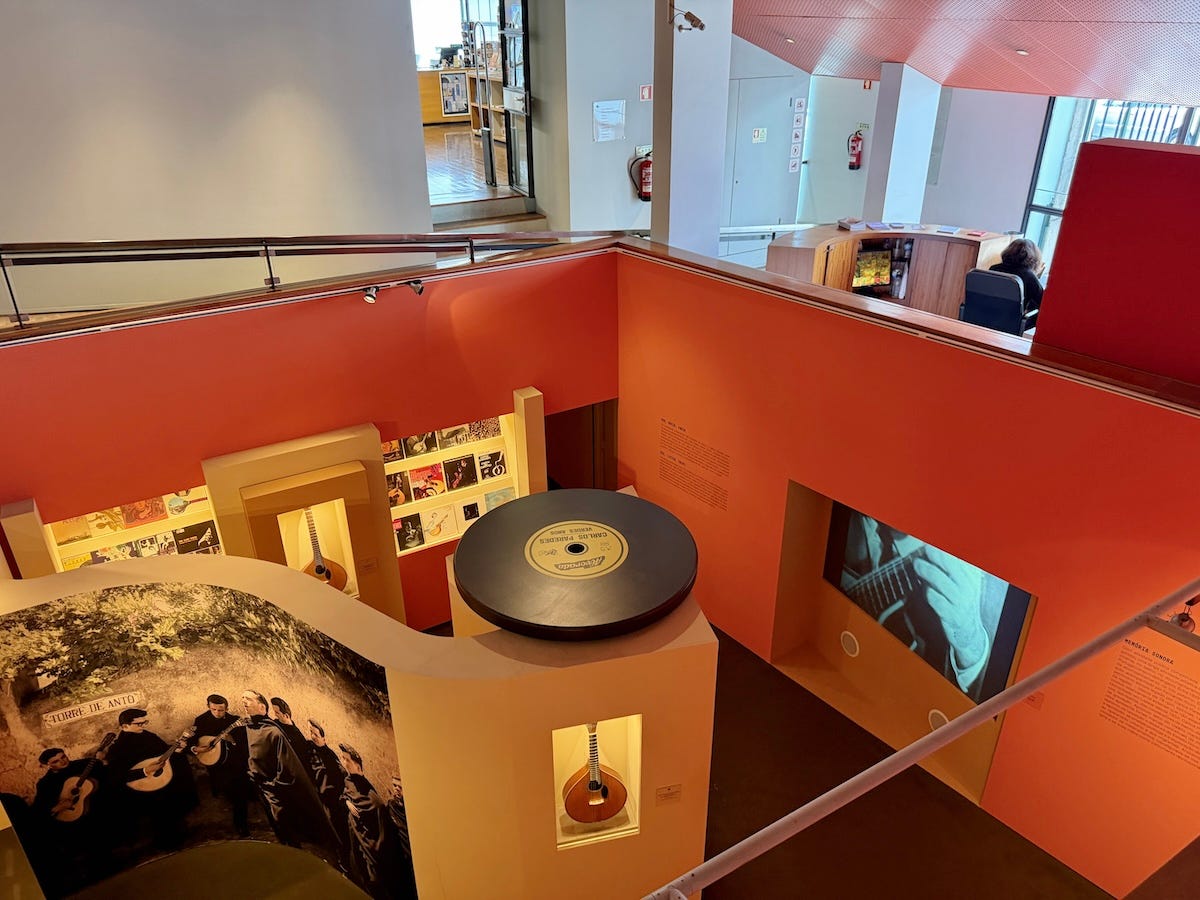
The HOHO bus dropped us off across the street from the cruise terminal. Convenient! But before we could cross the street, we noticed a sign for “Fado Museum.” When we discovered it was only a block away, and we still had two hours before “back on board” time, we took a detour to the museum. The Museu do Fado is an interactive museum dedicated to Portugal’s musical genre, Fado.
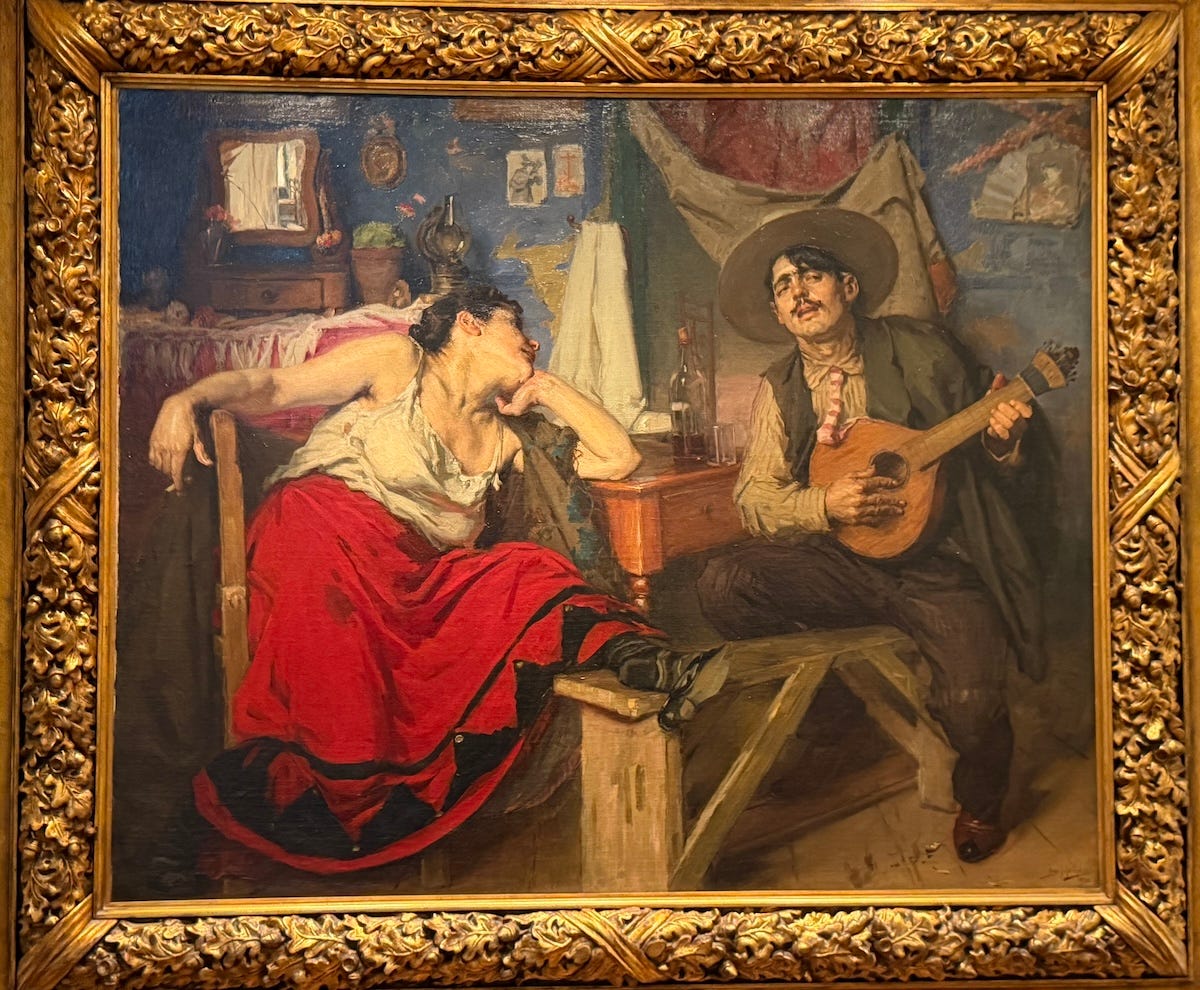
The small, two-story museum explores the history of fado from its 19th-century working-class roots to its current status as a cultural musical treasure. Admission was only €4 per person, so even if we didn’t want to spend much time here, there was little downside. Some of the earliest exhibits showcased works of art featuring fado. This painting, O Fado, is a famous 1910 work by Portuguese artist José Malhoa, and is one of the earliest representations of Fado.
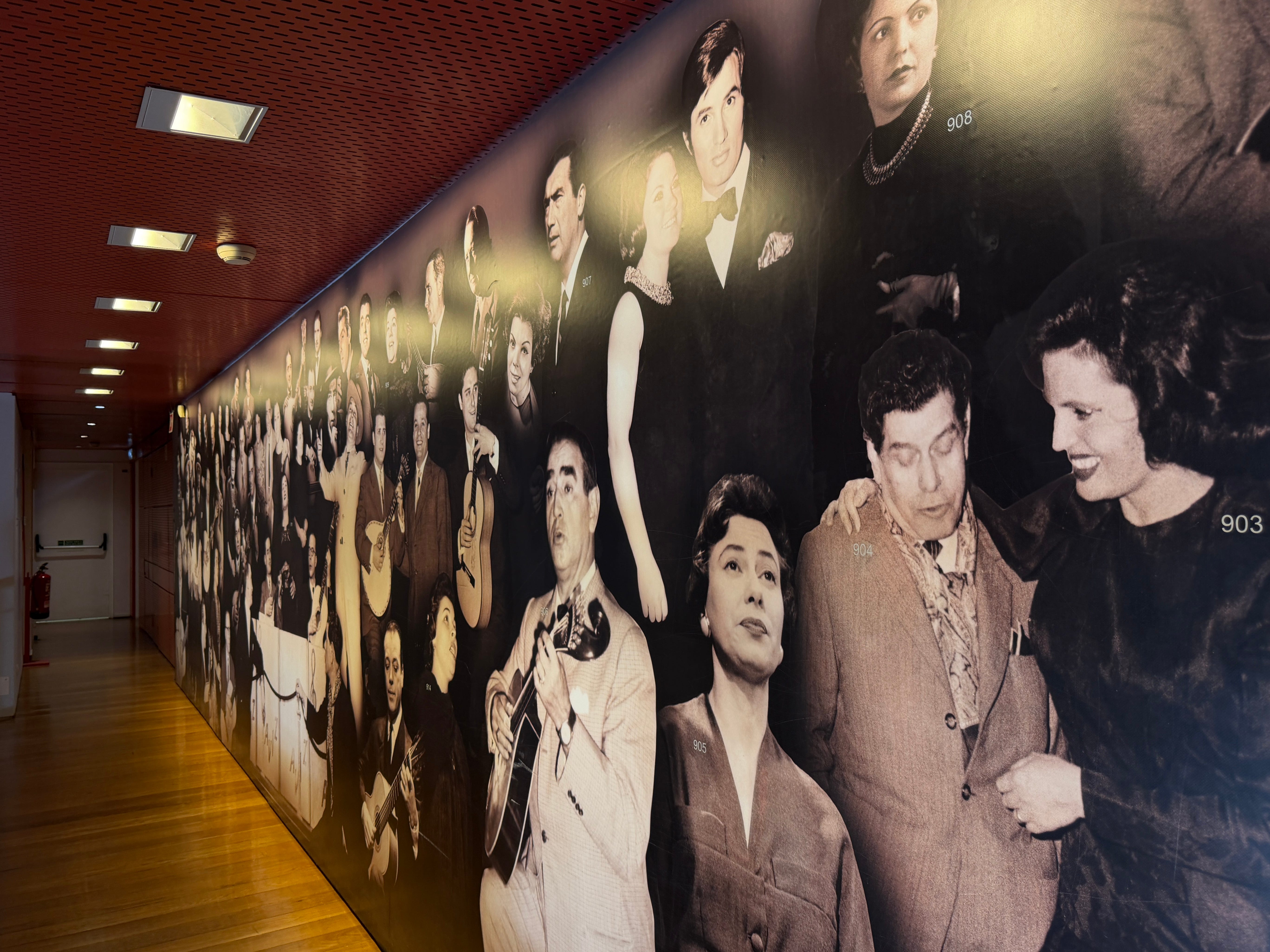
One of the interactive exhibits we most enjoyed was the panel of famous Fado singers. We were able to enter a code and listen to various individuals sing their most famous songs. Since we weren’t very familiar with the genre, it was a welcome introduction.


Another piece of art, Pieces of Wood by Pedro Guimaraes, which is intended to represent, through abstraction, a character of Fado culture. And sometimes objects that aren’t exactly art still look like art. Such was the case when I saw the brass tuners of a Portuguese guitar — don’t they look like a metal sculpture?
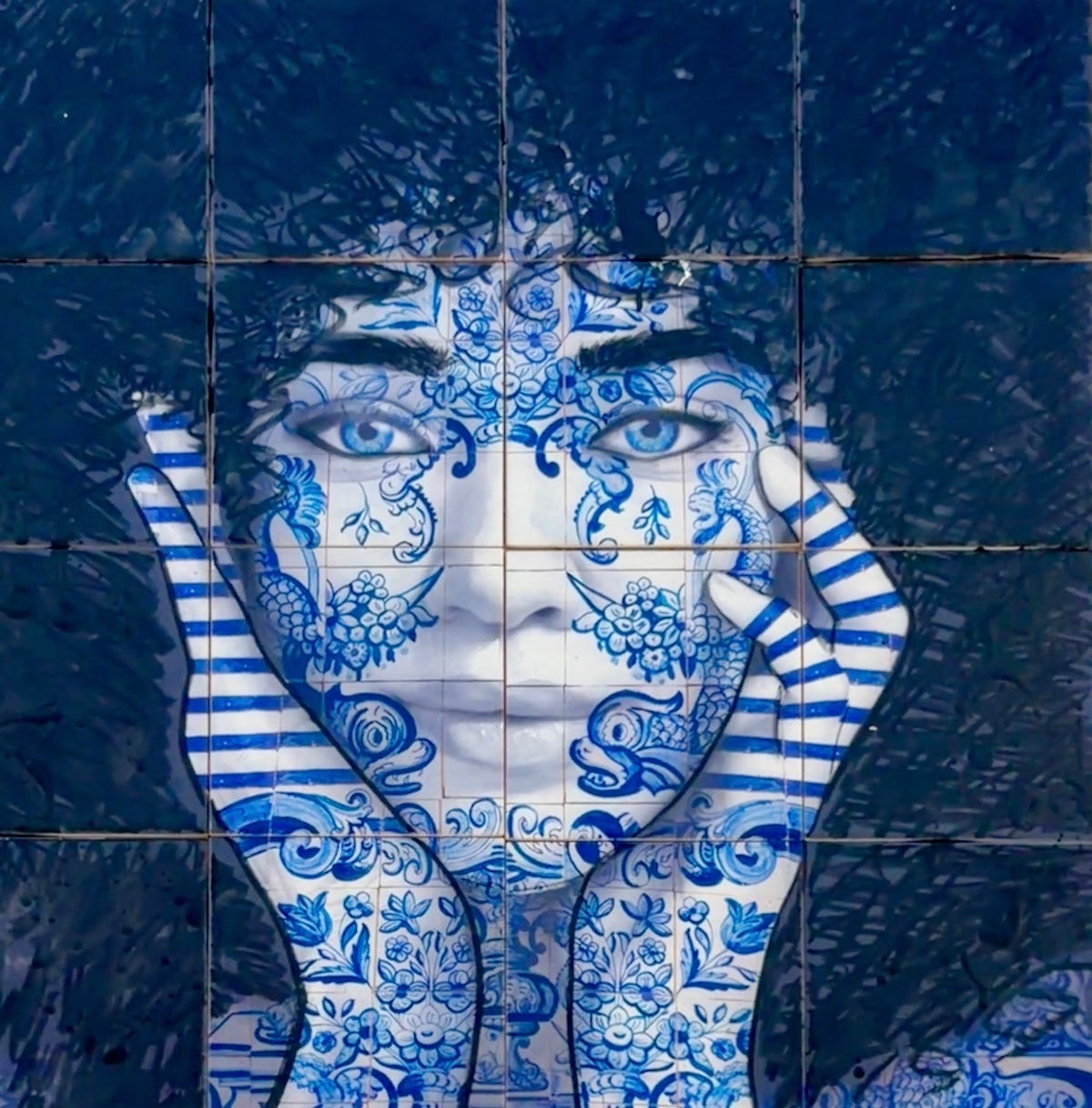
As we left the museum for the five-minute walk to the cruise terminal, Sherpa spied this modern azulejo, a square of blue-and-white tiles featuring a young woman. My travel motto, “Art is everywhere!” is certainly true in Lisbon. Everywhere we went, there was some sort of creative urban art — be it city-sanctioned public art projects, azulejos, both old and modern, or the less accepted but still vibrant and ever-present graffiti. Art truly is EVERYWHERE!
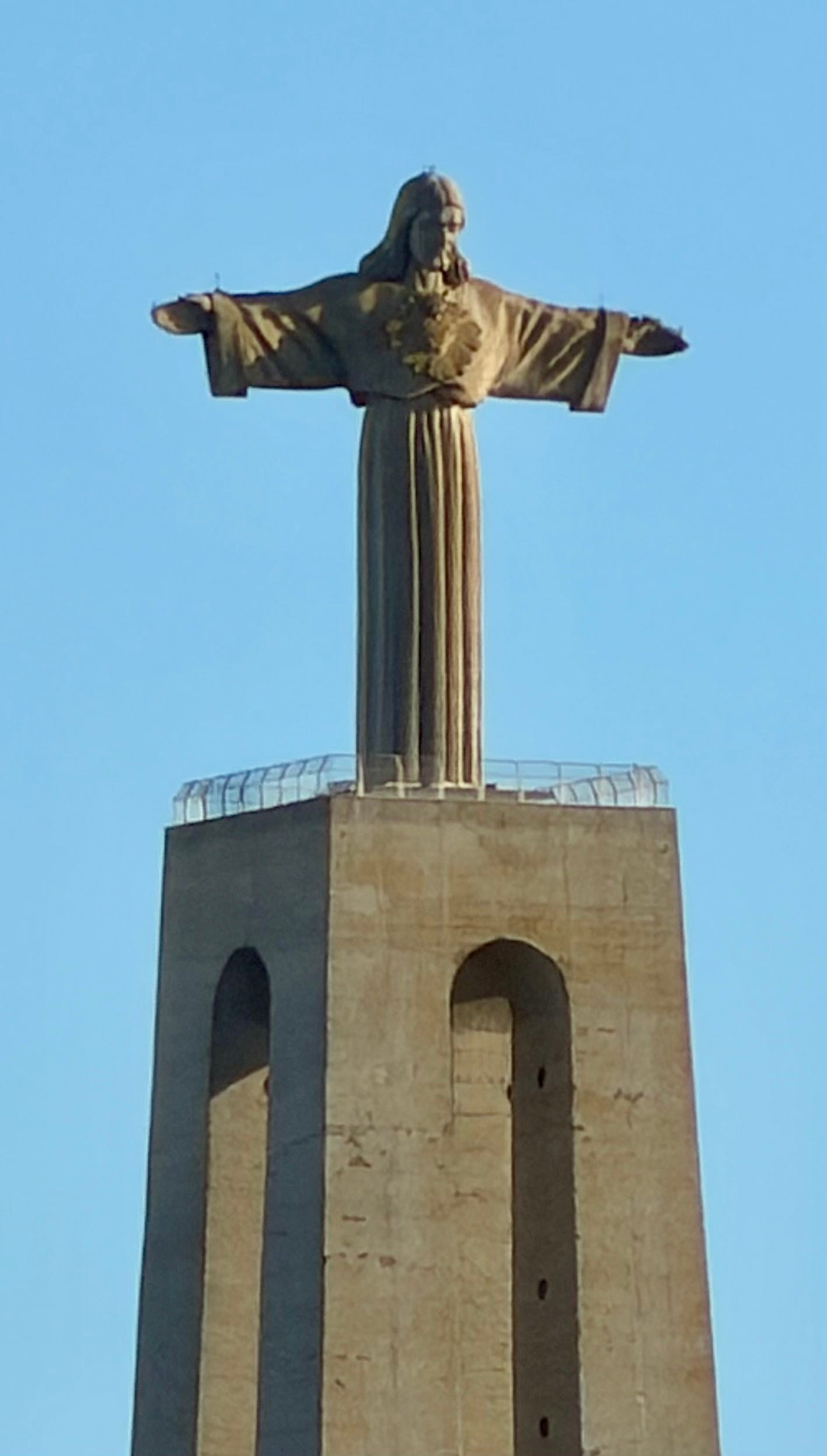
One of the last things we saw as we sailed away from Lisbon was the Sanctuary of Christ the King — locally known as Cristo Rei. Located across the Tagus River from Lisbon, this 360-foot-tall, Art Deco monument was inspired by Rio de Janeiro's Christ the Redeemer. Although Rio's figure is 6 feet taller than Lisbon’s, Lisbon’s structure is nearly three times higher due to its extremely tall pedestal.
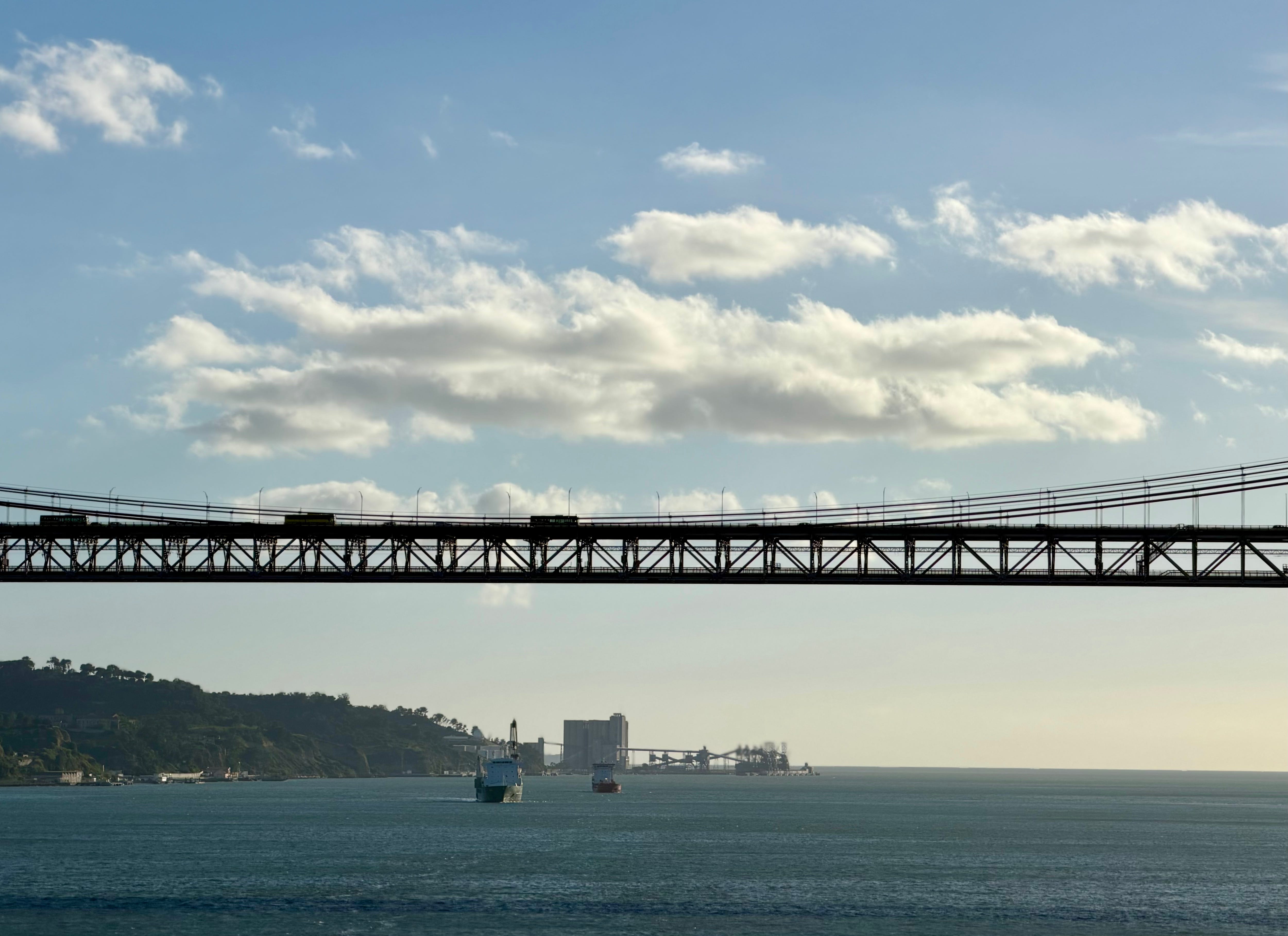
We sailed under the Ponte 25 de Abril (25th of April Bridge), an iconic red suspension bridge spanning the Tagus River, as we left the mainland to begin our 11-day Lisbon to Miami cruise - Heaven Across the Seas.
What a wonderful day in Lisbon. We hope to come back!
Our next port of call — the Azores, Portugal.