
Hamilton, Bermuda
What a beautiful way to end our 65-day journey! Our last port of call before we disembark in Miami was a visit to an island in the Atlantic rich in heritage, culture, art, and traditions.

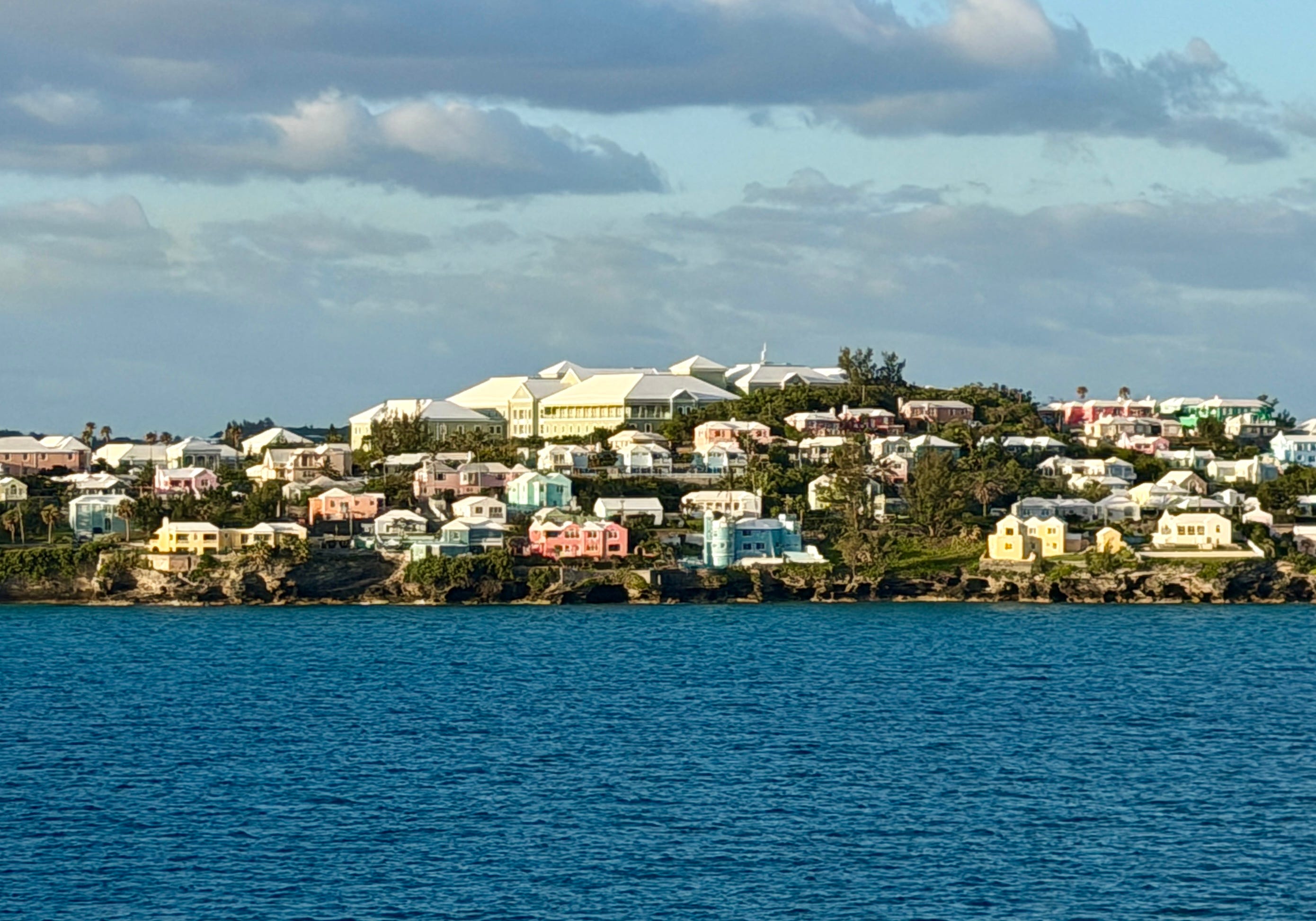
The island has been continuously inhabited by the British since the Sea Venture, captained by George Somers, was shipwrecked here in 1609, an event that inspired Shakespeare’s play The Tempest. Hamilton is the capital and heart of the island. Excellent shopping and dining venues are right on Front Street, opposite the pier. Among the attractions not to miss are: Bermuda Aquarium, Museum & Zoo, all conveniently located in a complex on North Shore Road; St. Peter’s Church, believed to be the oldest Anglican church in the Western hemisphere, and stunning in its simplicity with its rough-hewn pillars, exposed cedar beams, and candlelit chandeliers; and St. Catherine Fort, well-preserved and a great vantage point for photos. — Regent
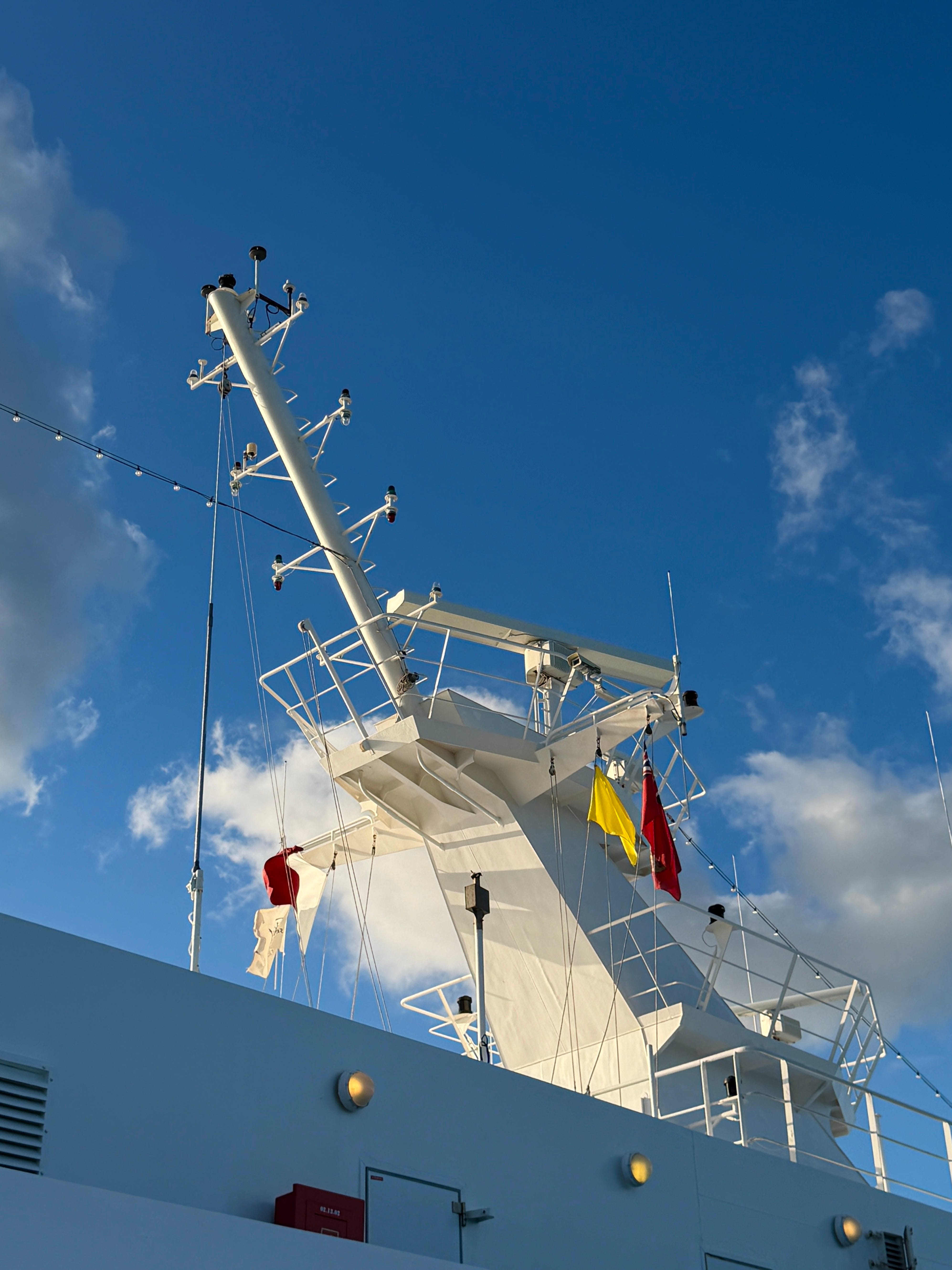
Pre-Cruise Research:
Daytime High Temperature: Approximately 77°F to 81°F. (Accurate.)
Nighttime Low Temperature: 70°F to 73°F.
Precipitation: The chance of rain is low. (No rain.)
Humidity: Moderate and comfortable. (It was comfy.)
Daylight: The sun will rise around 6:13 AM and set around 8:23 PM local time, providing long days for exploration. (So much lovely sunlight.)
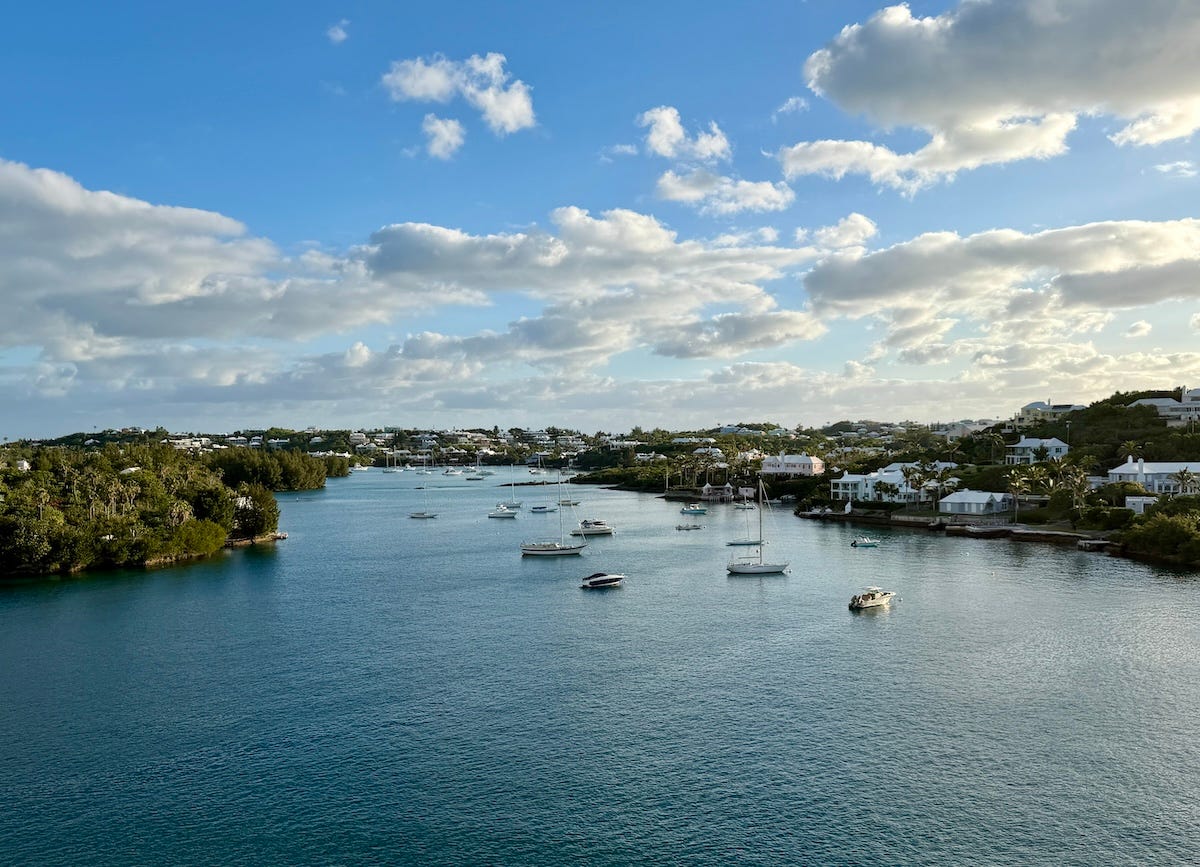
We sailed right into downtown Hamilton, passing larger cruise ships that were berthed miles away at the Royal Naval Dockyard on the western tip of the island. Since the Seven Seas Mariner is a smaller ship — about 700 feet in length — we were just small enough to dock in the center of the city, giving us easy access to Front Street, shopping, cultural and historic sites, and plenty of restaurants.
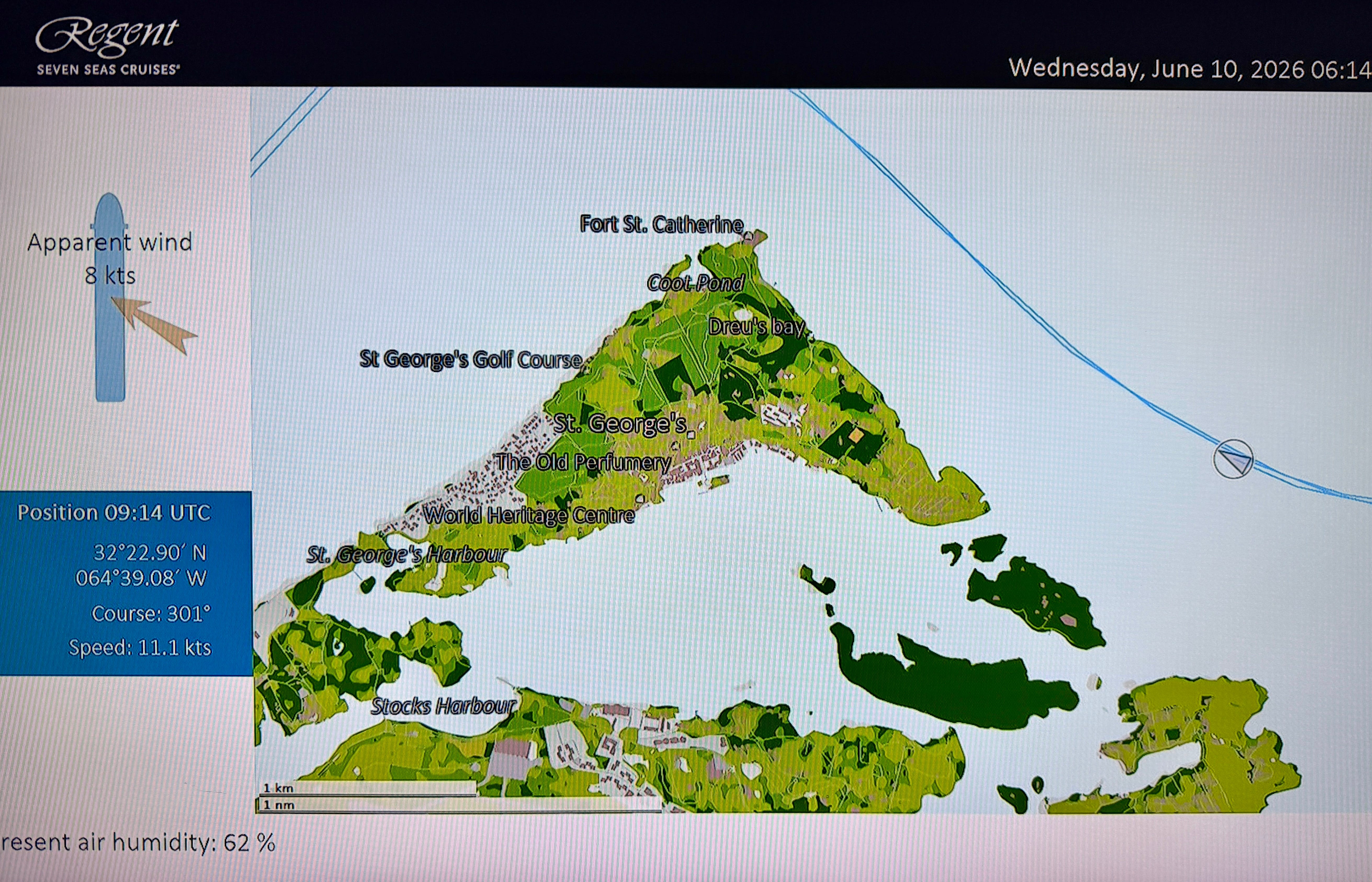
We opted to go on QUINTESSENTIAL ISLAND DRIVE, a 4-hour, Regent-included morning tour to St. George, then spent the rest of the day exploring Hamilton on foot — a plan that worked out well.
Description: Tour picturesque Hamilton as you travel the North Shore Road with the opportunity to view the Governor’s Mansion before crossing through quaint Flatts Village Bridge. This narrow channel, where the waters of Harrington Sound and the Atlantic Ocean merge, makes for a spectacular sight as the tides rush in and create swirling riptides. Carrying on through winding roads to the old town of St. George’s, for your first stop. The history of Bermuda truly begins in St. George’s, the oldest inhabited town of English origin in the New World and a UNESCO World Heritage Site. The Town Square offers a favorite photo opportunity at the Stocks, beside the Ducking Stool, and at the steps of St. Peter’s Church, the oldest Anglican church in the Western Hemisphere. This enchanting town is lined with cobblestone streets and boasts over 400 years of culture and history. View a wonderful inland lake, Harrington Sound, before arriving at John’s Smiths Bay to pause to take in the sweeping view of Bermuda’s legendary pink-hued beaches. The tour’s final stop, Gibbs Lighthouse, is a picturesque site with spectacular views of the island. A perfect opportunity to capture a truly memorable image before your return to Hamilton and the ship. — Regent
We hopped on a small tour bus with about 18 other guests around 9 AM. Our tour guide was a bit salty, but thoroughly experienced and highly entertaining. He knew how to deliver information with a side of humor and some attitude. The tour was mostly a bus tour with an hour DIY stop in St. George’s, plus two shorter stops at a beach and a lighthouse — a good way for newbies like us to get a feel for the island.
(We were not the only cruise ship in Bermuda — there were two megaships berthed on the other side of the island with a combined passenger count of about 5,000! Because of that, we intentionally avoided booking a tour to the western part of the island, even though the Royal Naval Dockyard & The West End have lots to see and do, thus we never did experience overcrowding.)
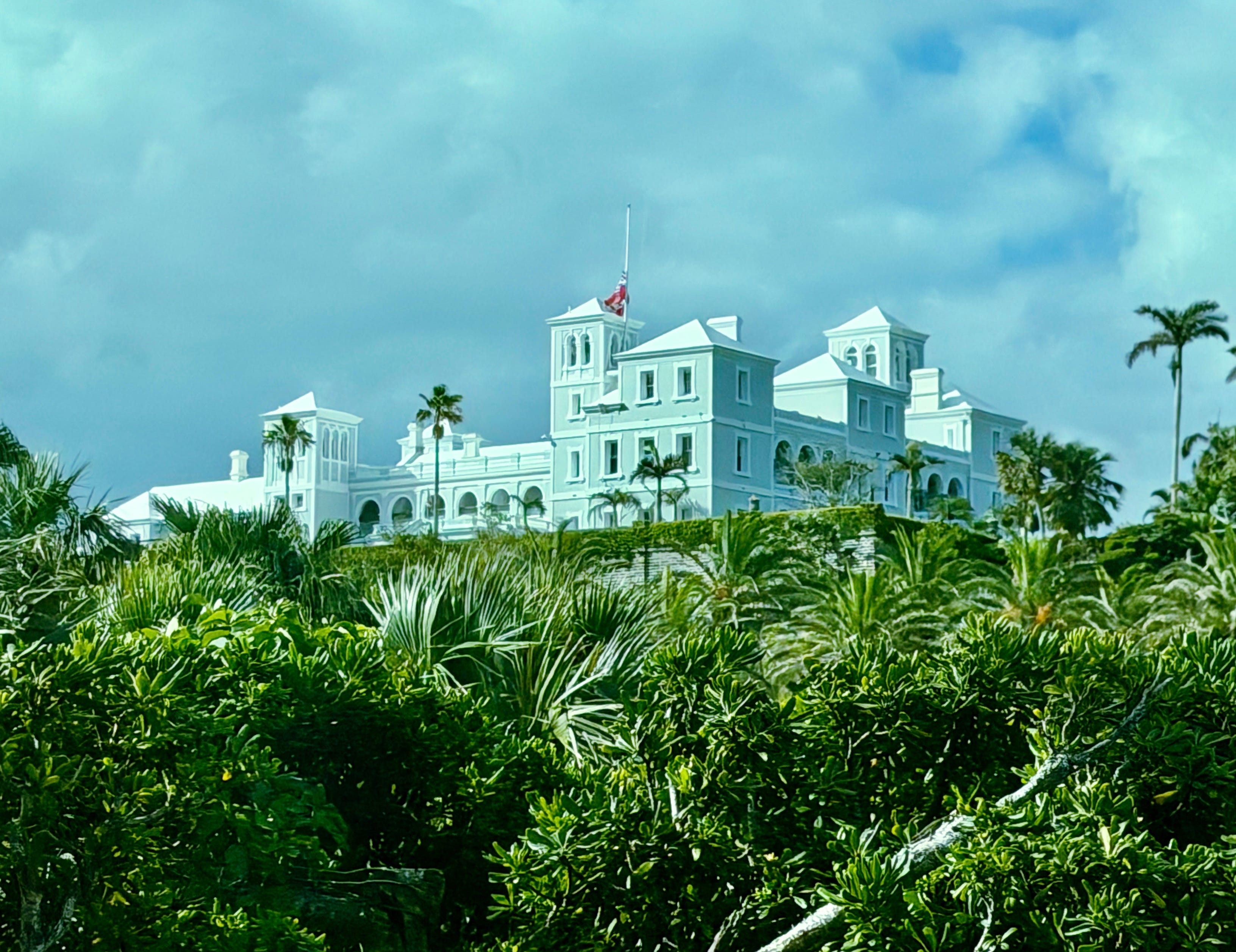
As we rode to St. George’s, a drive of about 30 minutes, we passed many sites of interest. One such place was the official residence of the Governor of Bermuda, called the Government House. Following a two-year renovation, the Governor and staff returned there in April. The residence sits on an estate of approximately 33 acres and has more than 30 rooms. Not only is the site nicely landscaped with lawns and bordered by woodland, but it also has stands of protected native cedars, plus fruit orchards, flower and vegetable gardens, and even official beekeeping hives.
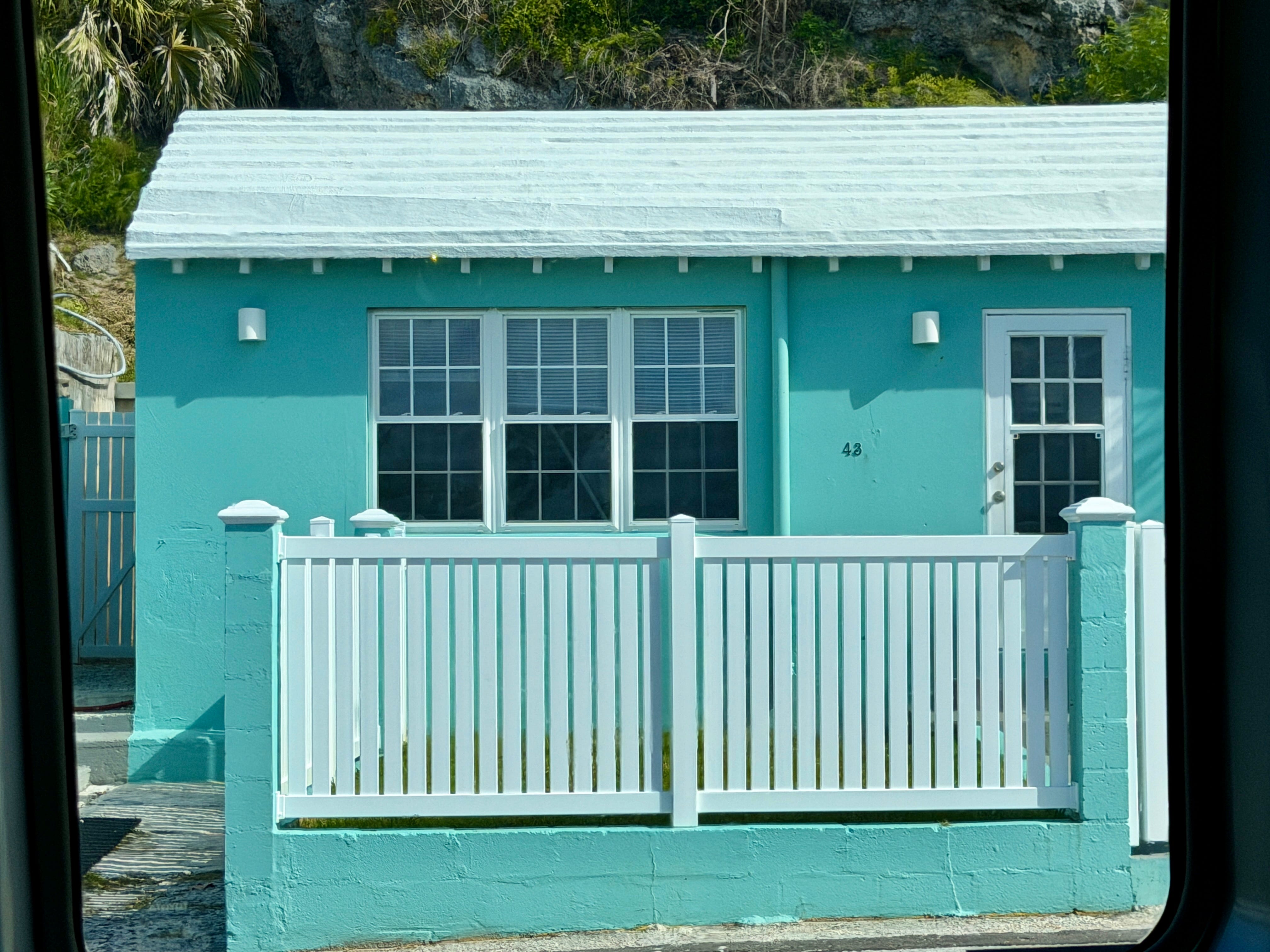
Another architectural highlight of Bermuda is not a specific building, but is true about every building on the island. Bermuda’s white, stepped roofs are an ingenious building design intended to harvest rainwater, and are mandated by law. Because Bermuda has no fresh water lakes, rivers, or streams, residents must act as their own water company. Settlers in the 1600s developed this trickle-down design to trap water before it seeped into the highly porous limestone and disappeared. Every building has an underground reservoir where water is stored and further purified before use.
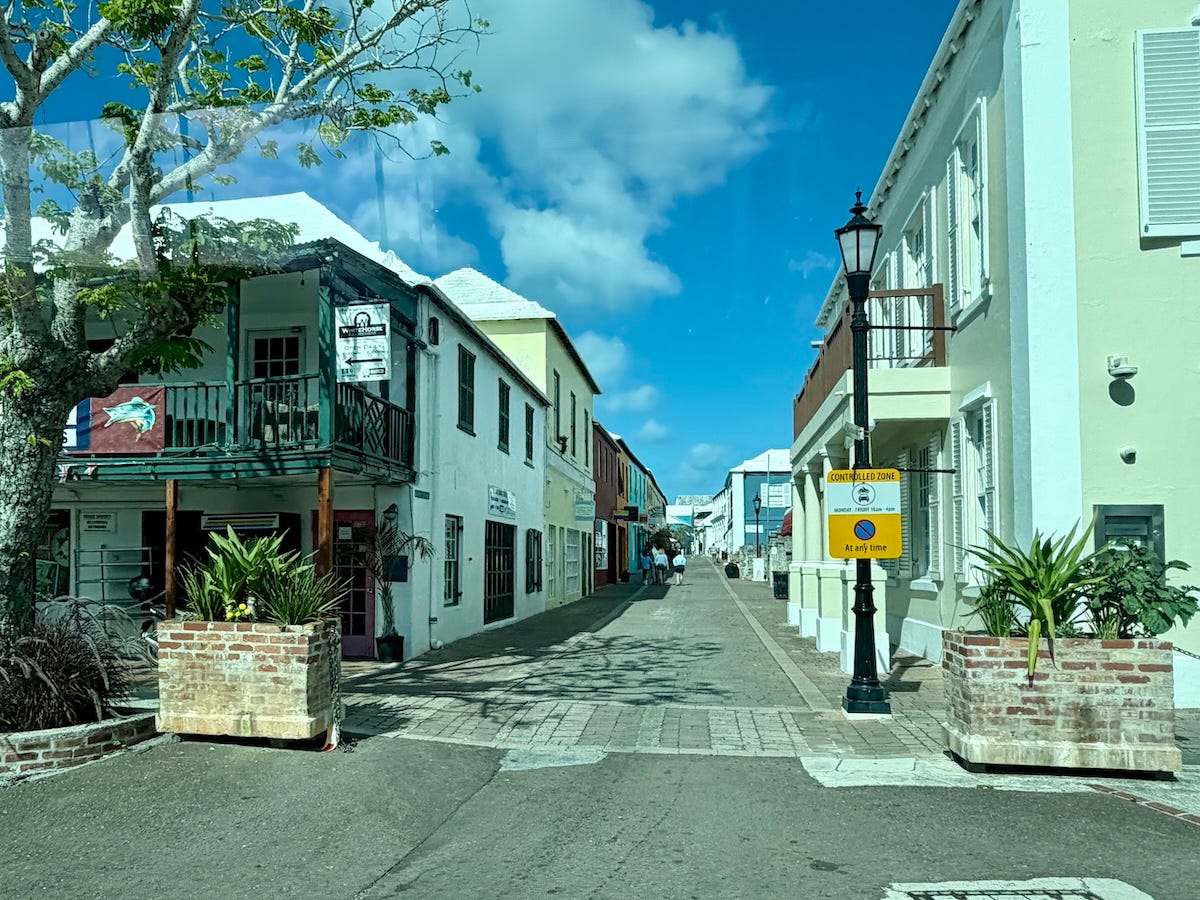
The Town of St. George’s is a small town with a pleasing mix of the old and the new. Founded in 1612, this UNESCO World Heritage Site features 17th-century architecture, narrow winding lanes, and immersive historical reenactments.
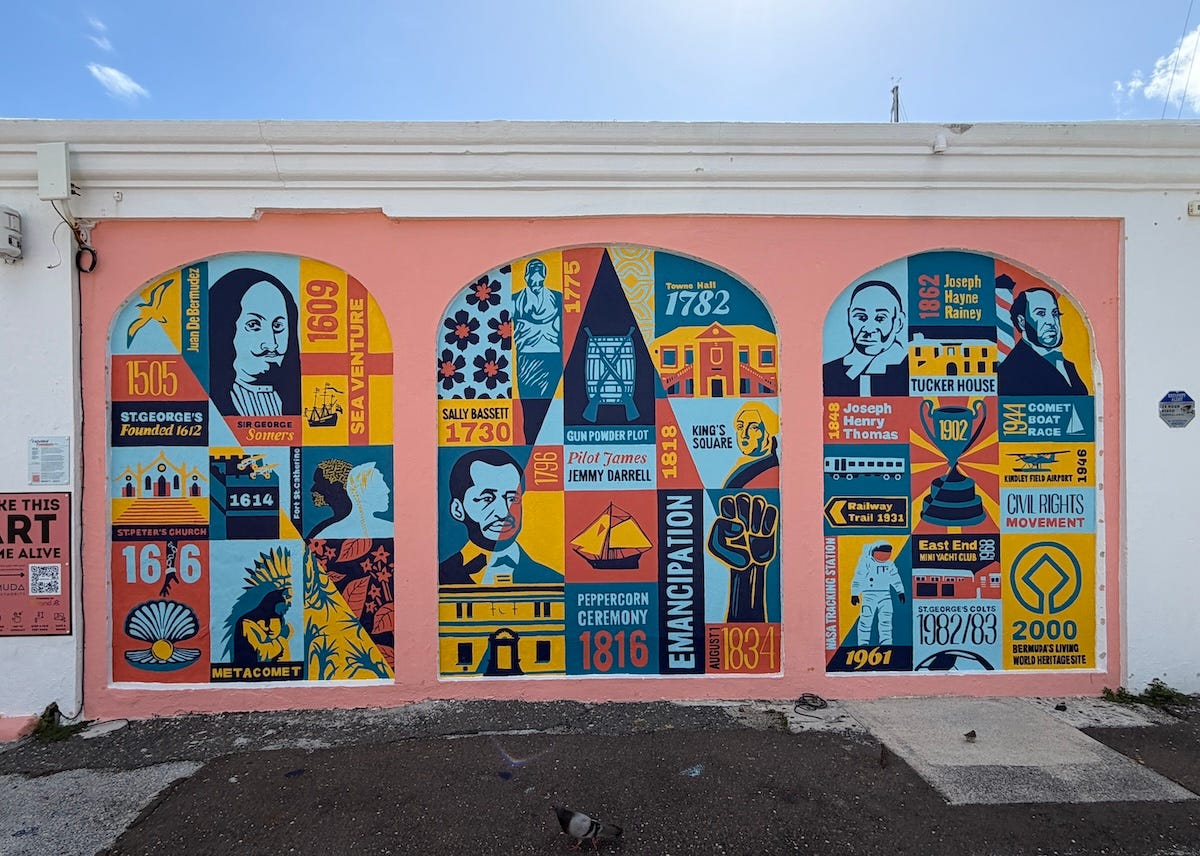
It also has new public art, excellent museums, and notable restaurants. One such artwork is “UnSettled Freedom,” a vibrant augmented-reality mural located in King’s Square. Local Bermudian artist Shanna Hollis illustrated this visual timeline of the island, spanning from its discovery in 1505 to its UNESCO designation in 2000.
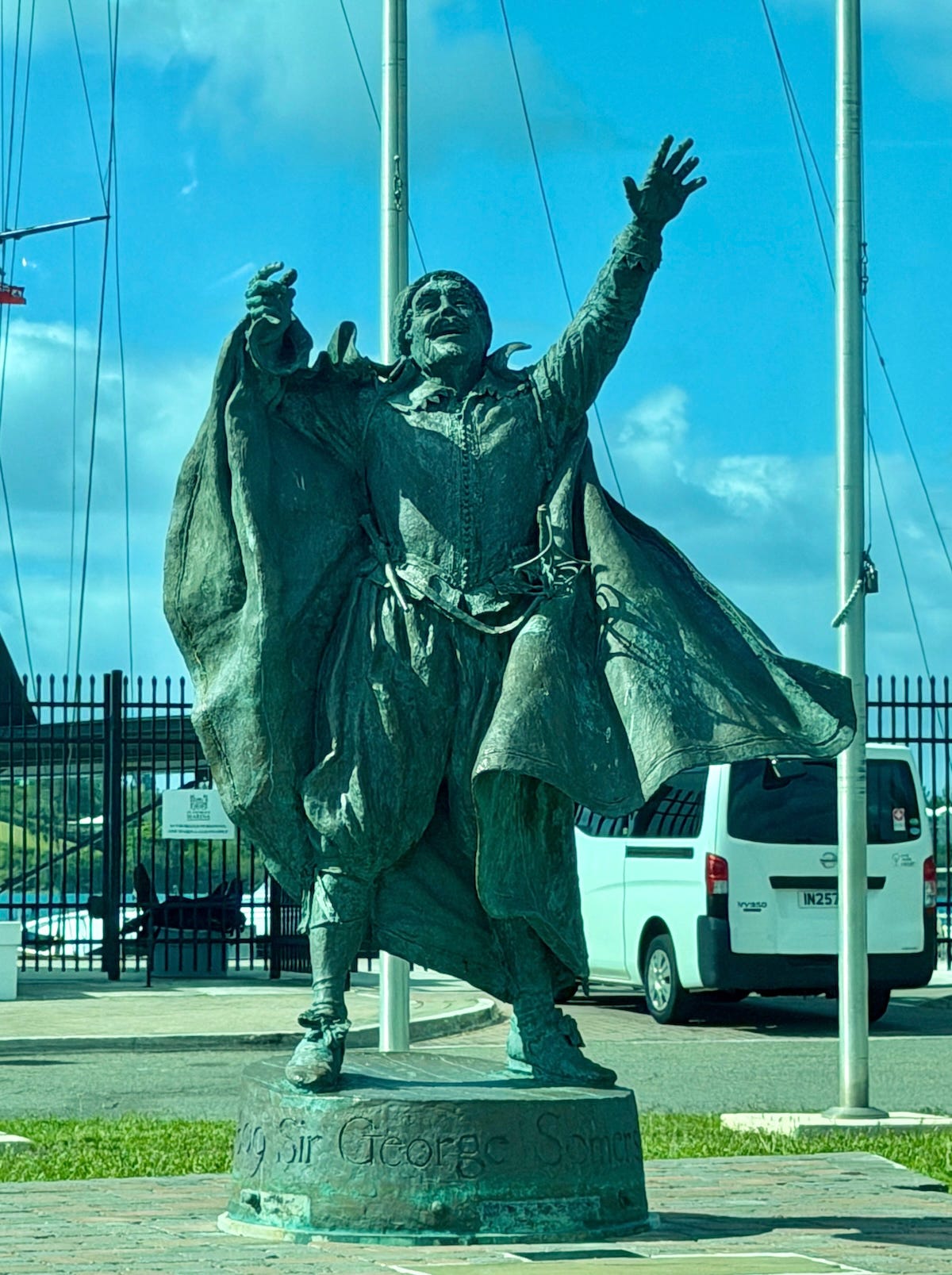
There’s also some old-style art — this statue, for example. Local sculptor Desmond Fountain crafted the statue of Sir George Somers. Sir George was a naval hero whose ship, the Sea Venture, was blown off course during a hurricane while he was heading to Jamestown, Virginia, and he had to land on these uninhabited islands. Somers and his crew were stranded here for about 9-10 months while they rebuilt their ship. However, before he left, Somers claimed the territory for England. Three years later, the Virginia Company sent 60 settlers to establish the Town of St. George. It’s now the oldest continuously inhabited English-speaking settlement in the Western Hemisphere.
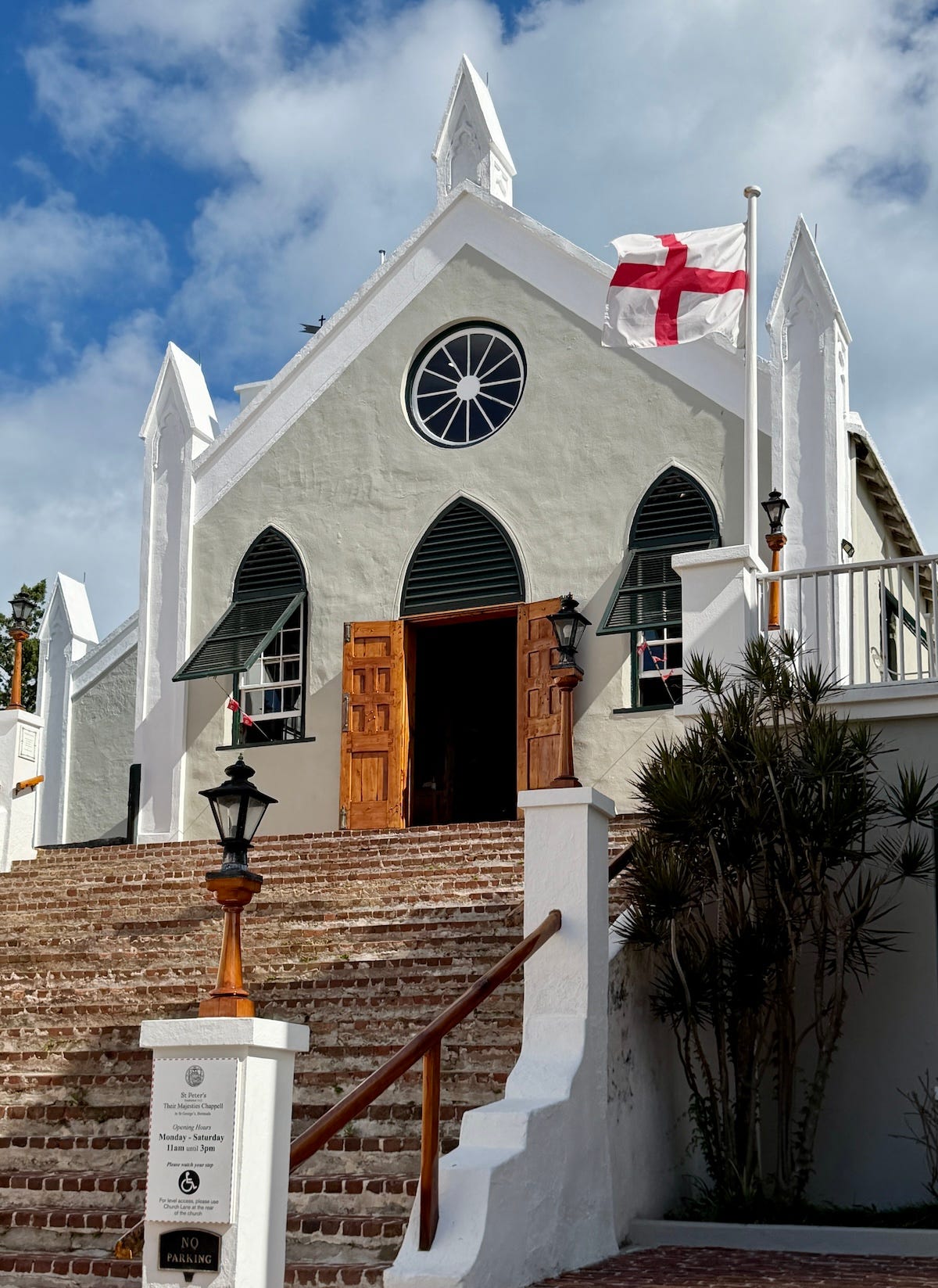
We visited this historic church, a five-minute walk from the main square. St. Peter’s Church was originally built in 1612, soon after the first settlers arrived on the island, and is therefore the oldest continuously used Protestant church in the New World.
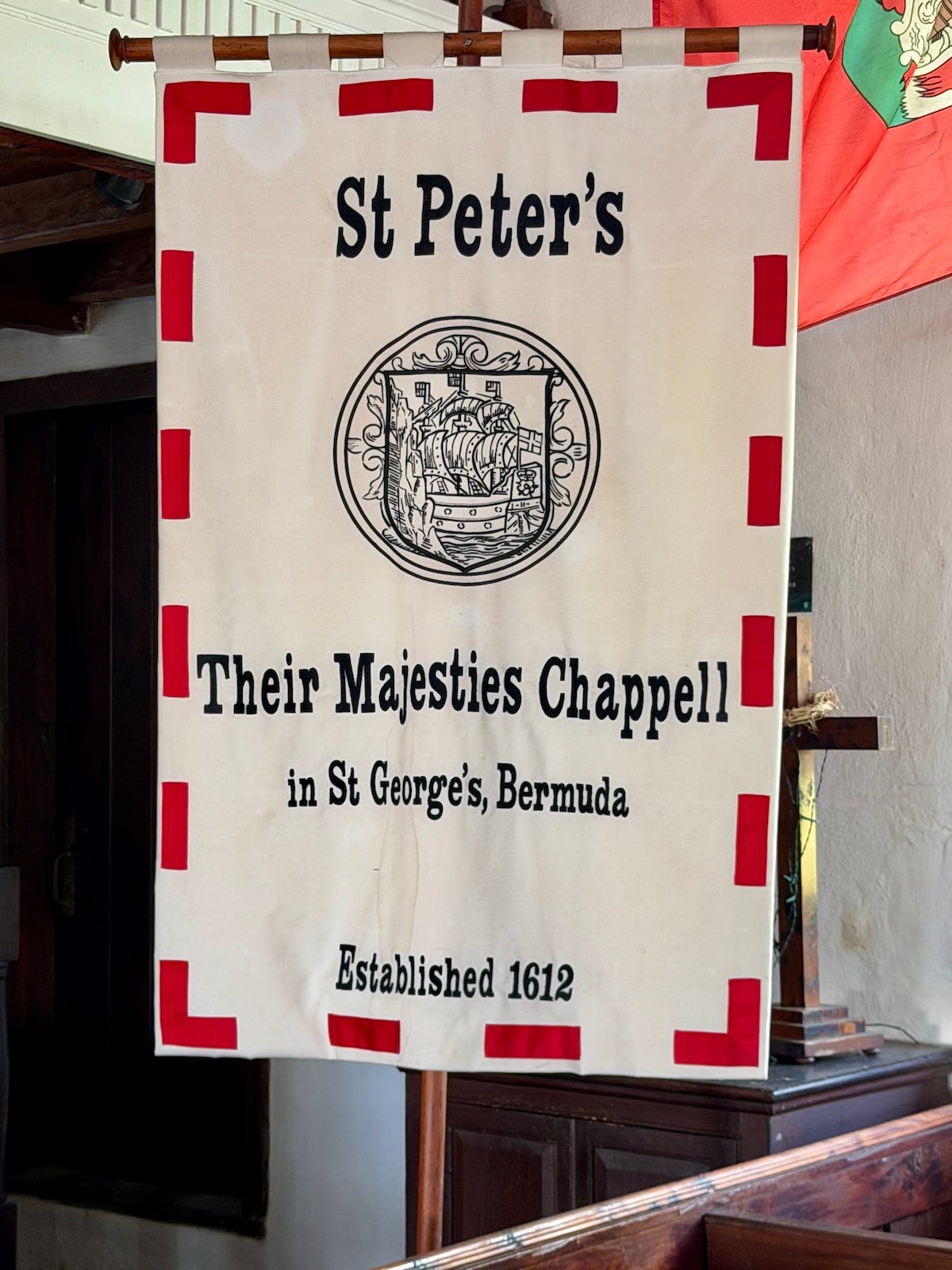
A designated UNESCO World Heritage Site, the church has a quintessential Early English Parish style, adapted meticulously for sub-tropical weather.
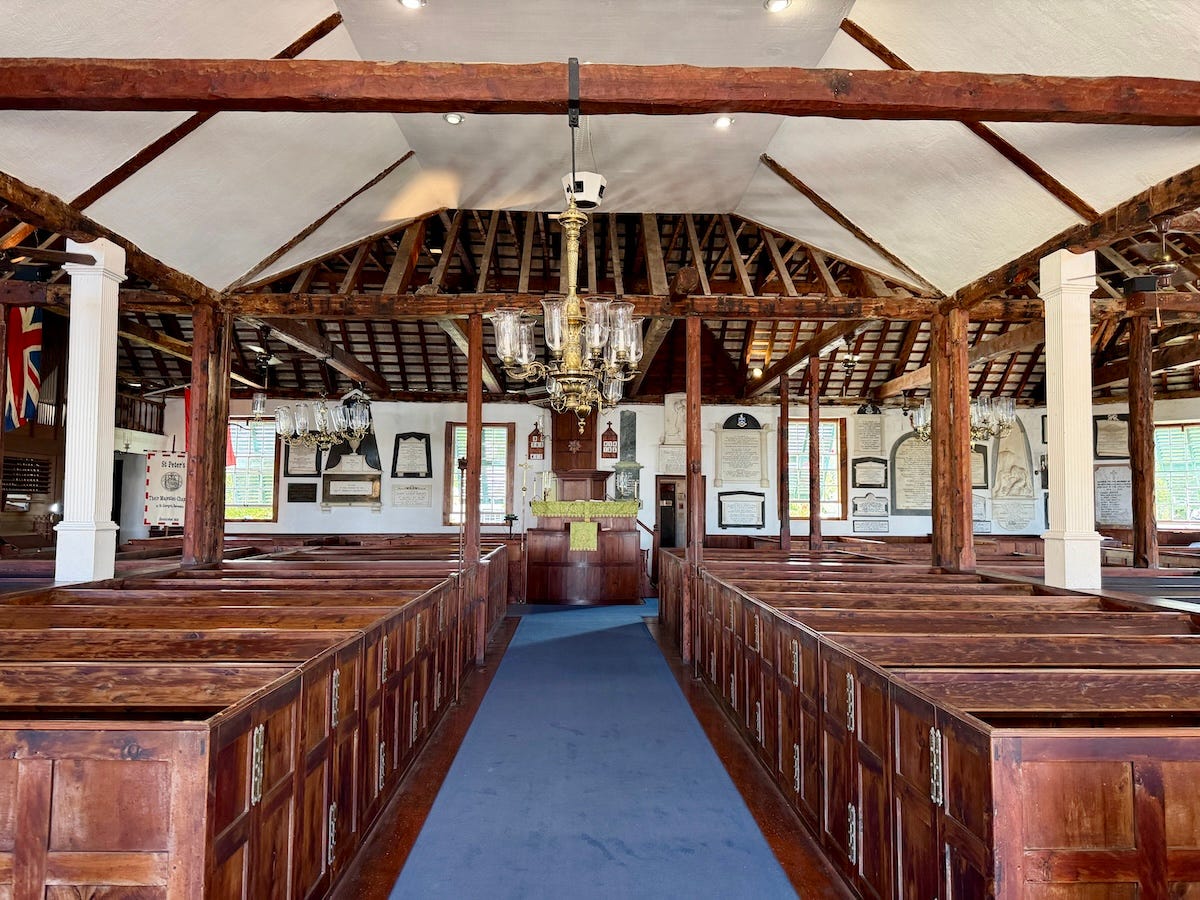
The current structure dates back to 1713 and was built to replace the original 1612 framework of cedar posts and palmetto thatch, which was destroyed by a hurricane. It’s been repeatedly expanded during the 18th and 19th centuries, and is a fascinating patchwork of early colonial architecture.
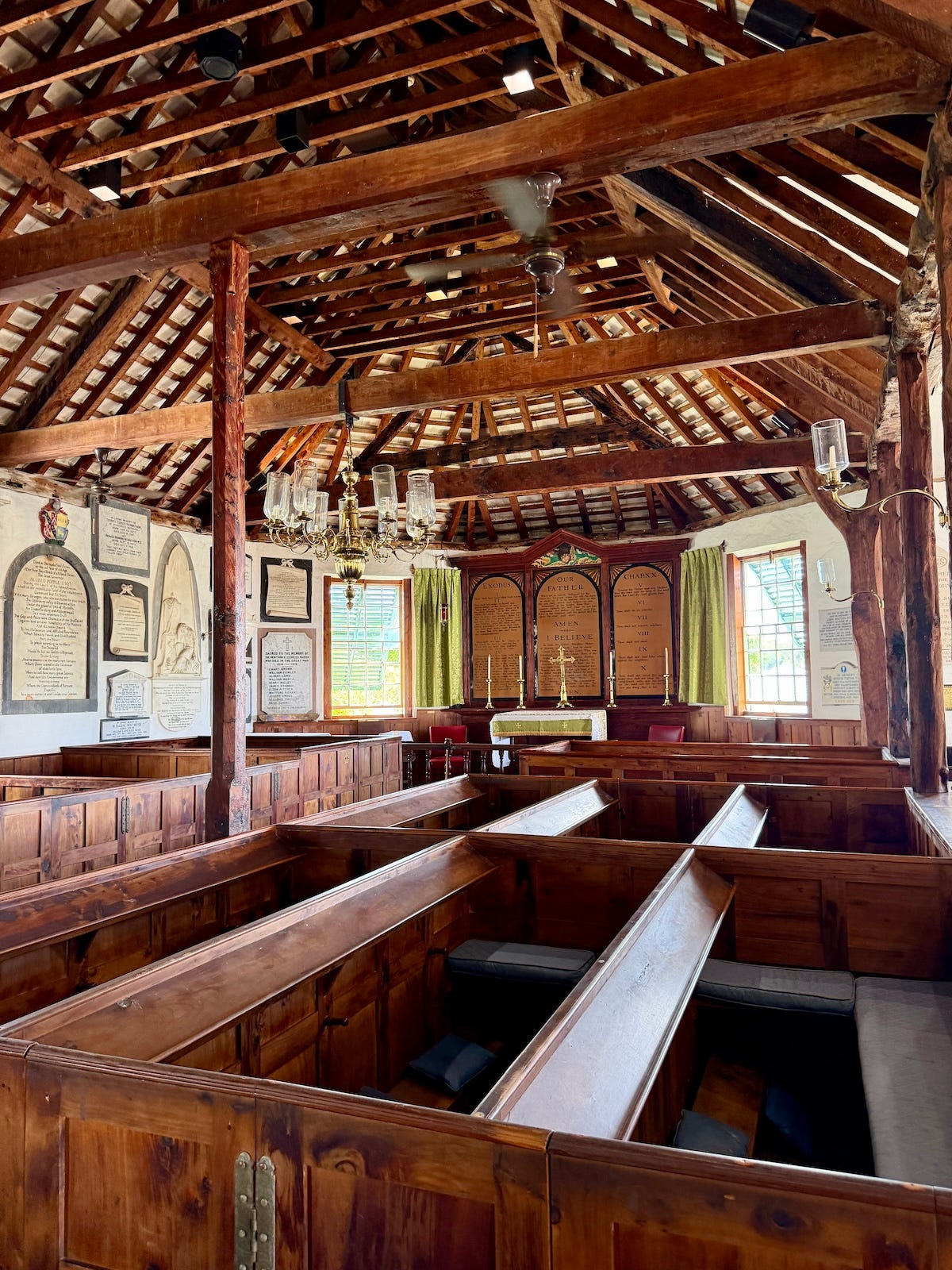
The cedar altar, built in 1615, is officially the oldest surviving piece of woodwork in Bermuda. The interior ceiling has a magnificent, exposed timber framework made entirely of dark, endemic Bermuda cedar. I loved the “pew boxes” — those would be useful when attending services with young children, rather like a pew-pen.
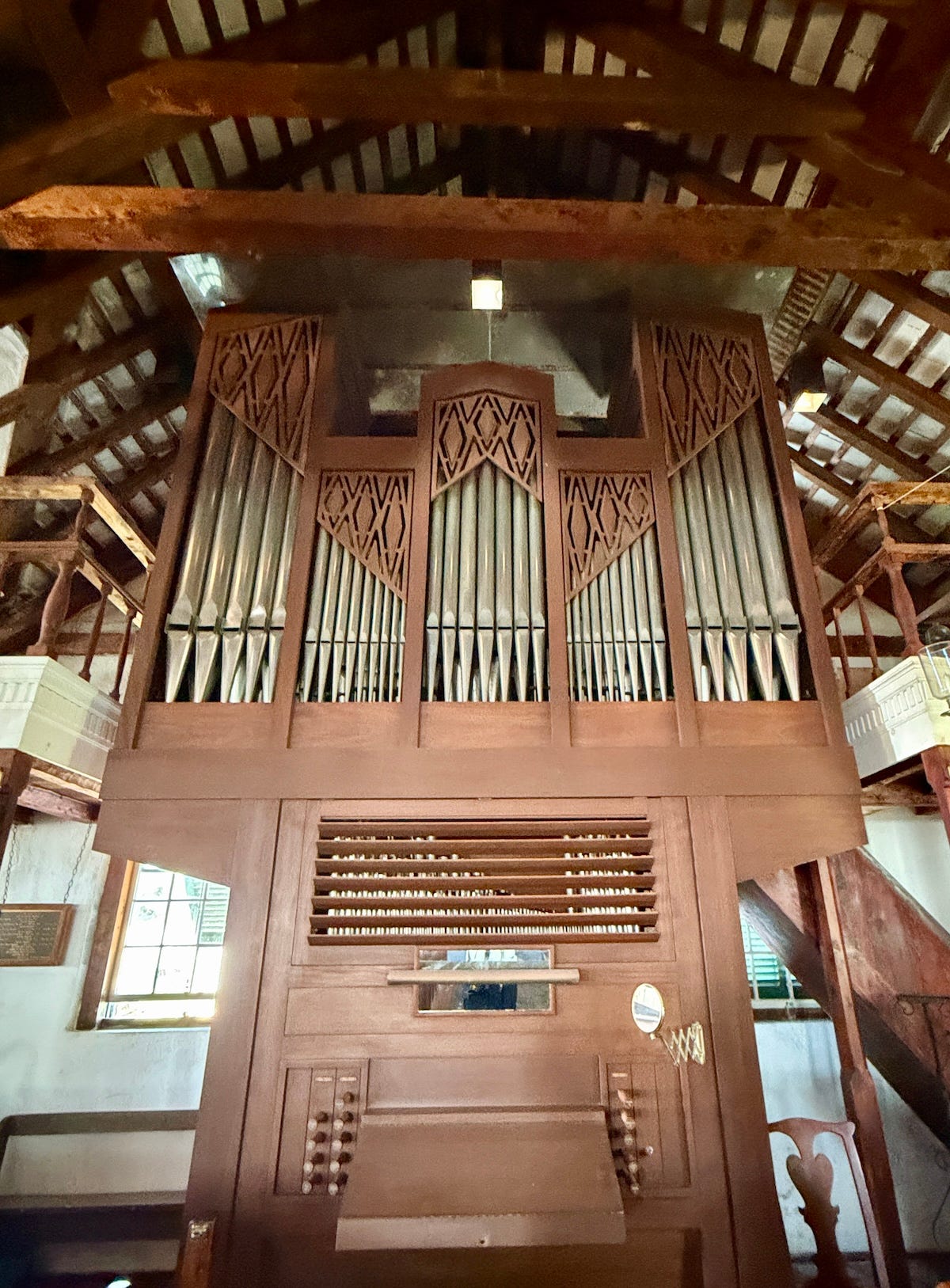
This 900-pipe organ, which is only 40 years old, was specially built with metal pipes rather than wood to better survive Bermuda’s climate. It’s a beauty!
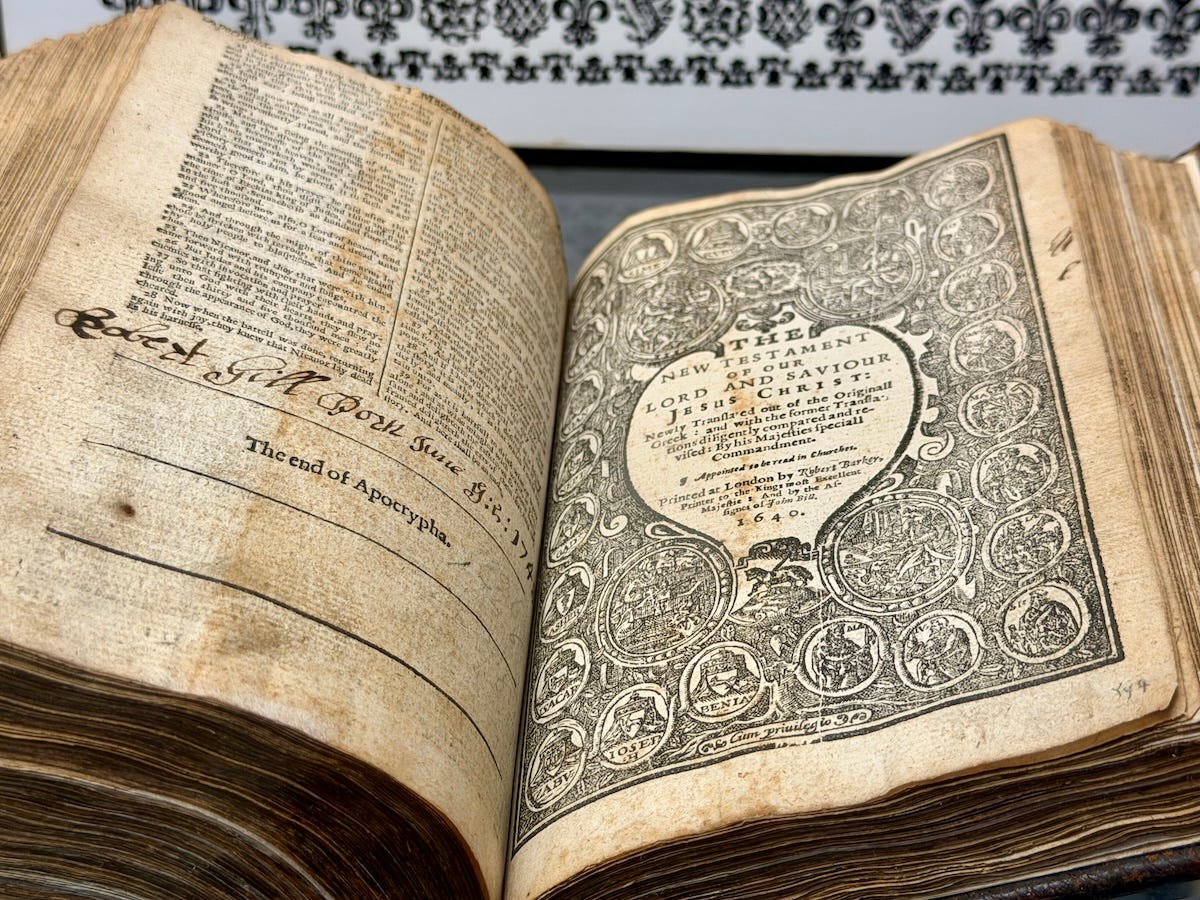
There’s a small museum inside the church with a substantial collection of historic texts. A rare 1594 Geneva Bible predates the settlement of Bermuda itself, and there are also several early editions of the King James Bible. The parish meticulously restored these to mark the global 400th anniversary of the text’s translation.
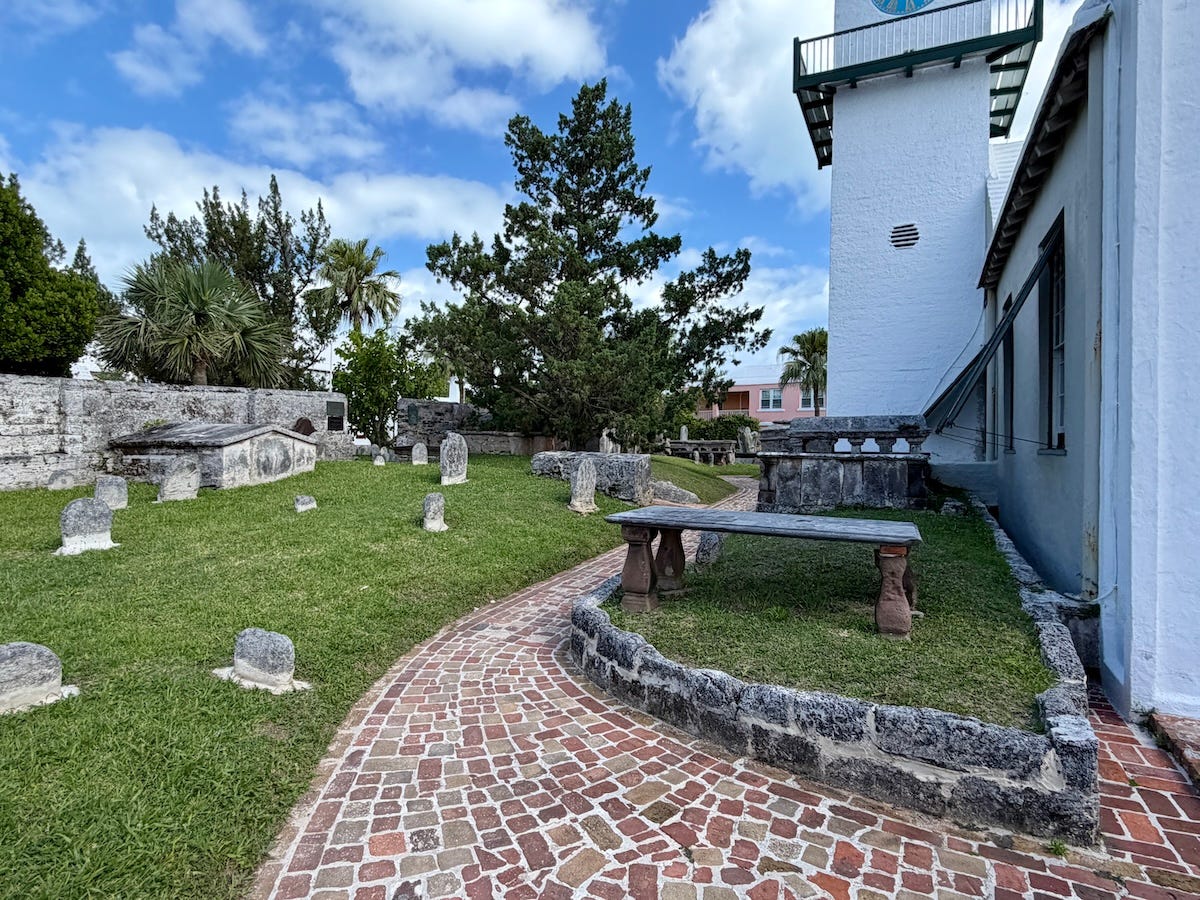
The graveyard to the west of the church was specifically for enslaved people and free Blacks, and today it serves as an historic stop along Bermuda’s African Diaspora Heritage Trail.
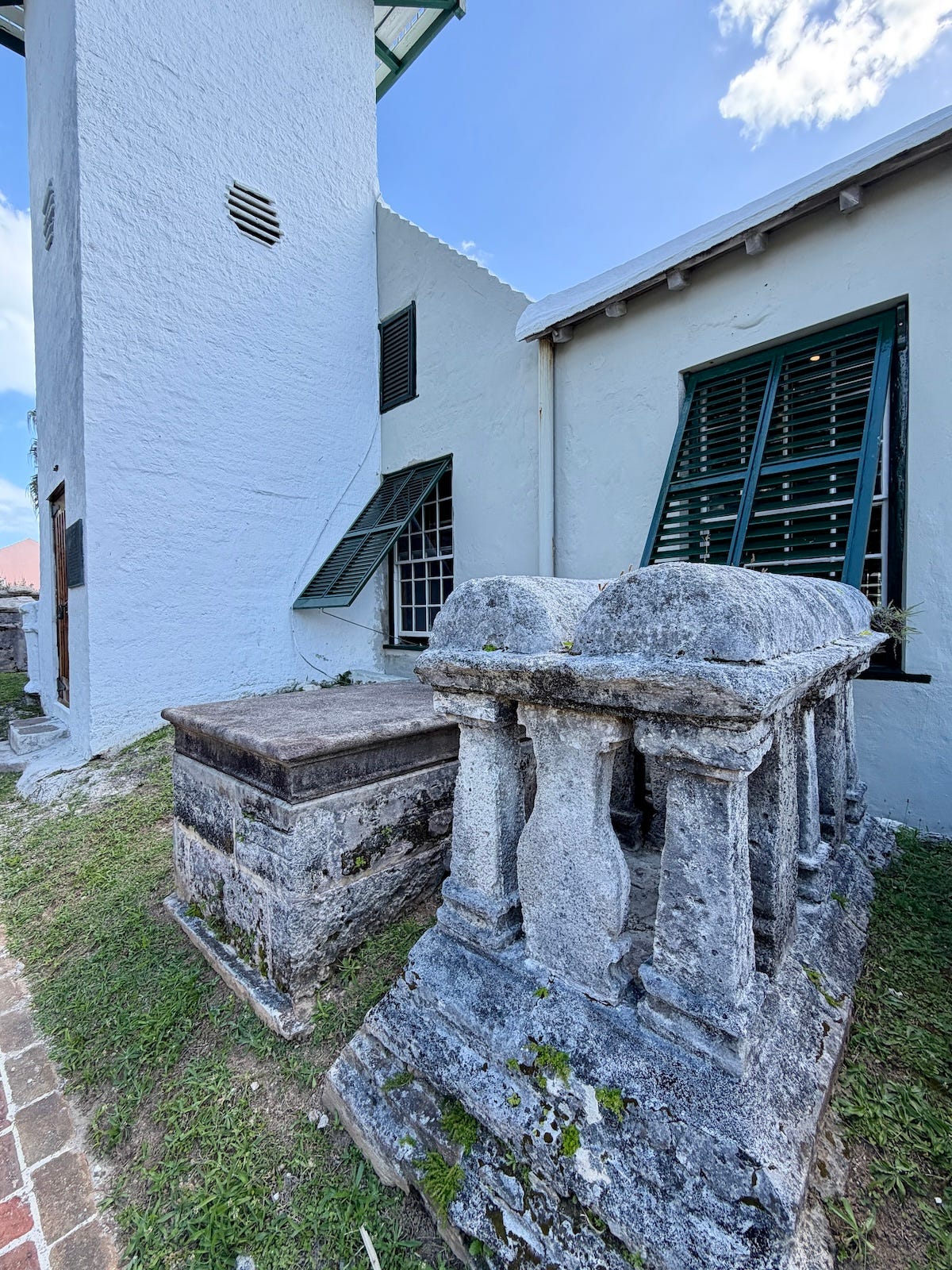
The exterior walls are thick and built from hand-hewn Bermuda limestone coated with white stucco to withstand storms. It features the classic layered, lime-washed stone slate roof for water retention, which is required for all Bermudian buildings.
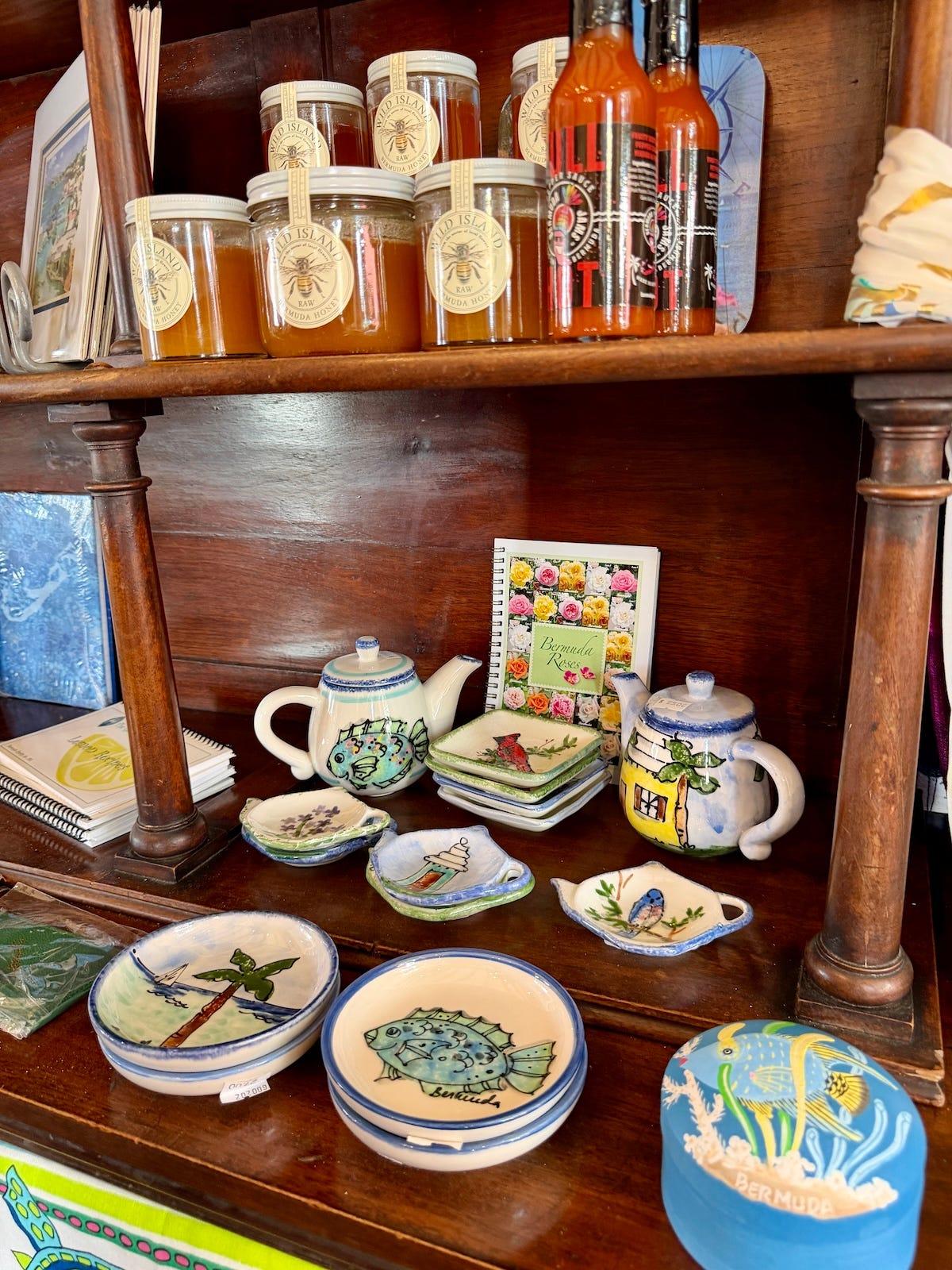
After we visited the church, we walked across the street and checked out the Trustworthy Gift Shop. It’s the retail outlet operated for the Globe Museum, with plenty of locally made Bermudian crafts, books, and heritage-inspired gifts. A far cry from most of the cheap souvenir shops in town! Highly recommended. (If we’d had more time, we would have toured the museum, but with only an hour in St. George’s, our options were limited.)
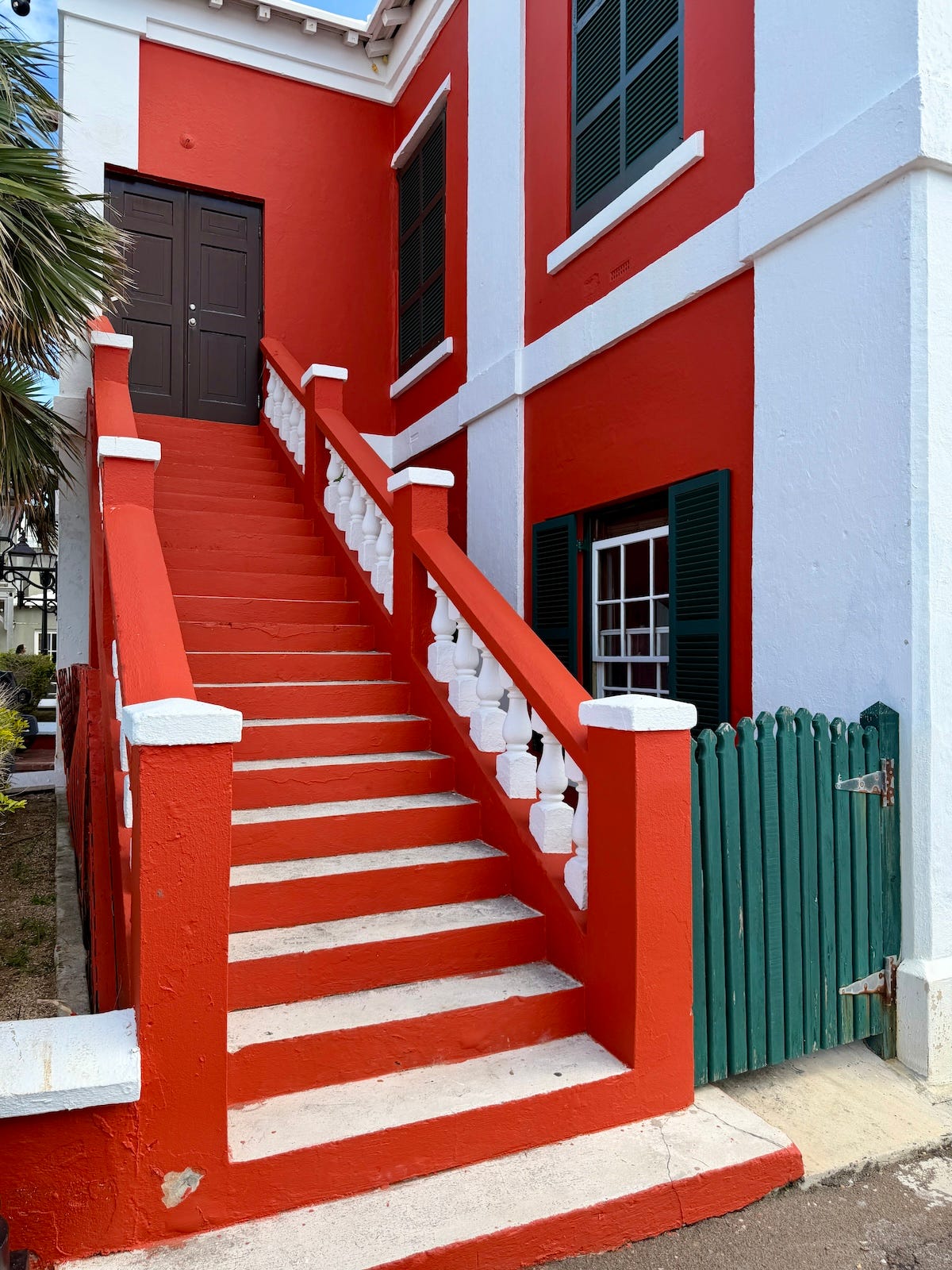
Such an interesting mix of bright colors and white! Everywhere we looked, we saw eye candy!
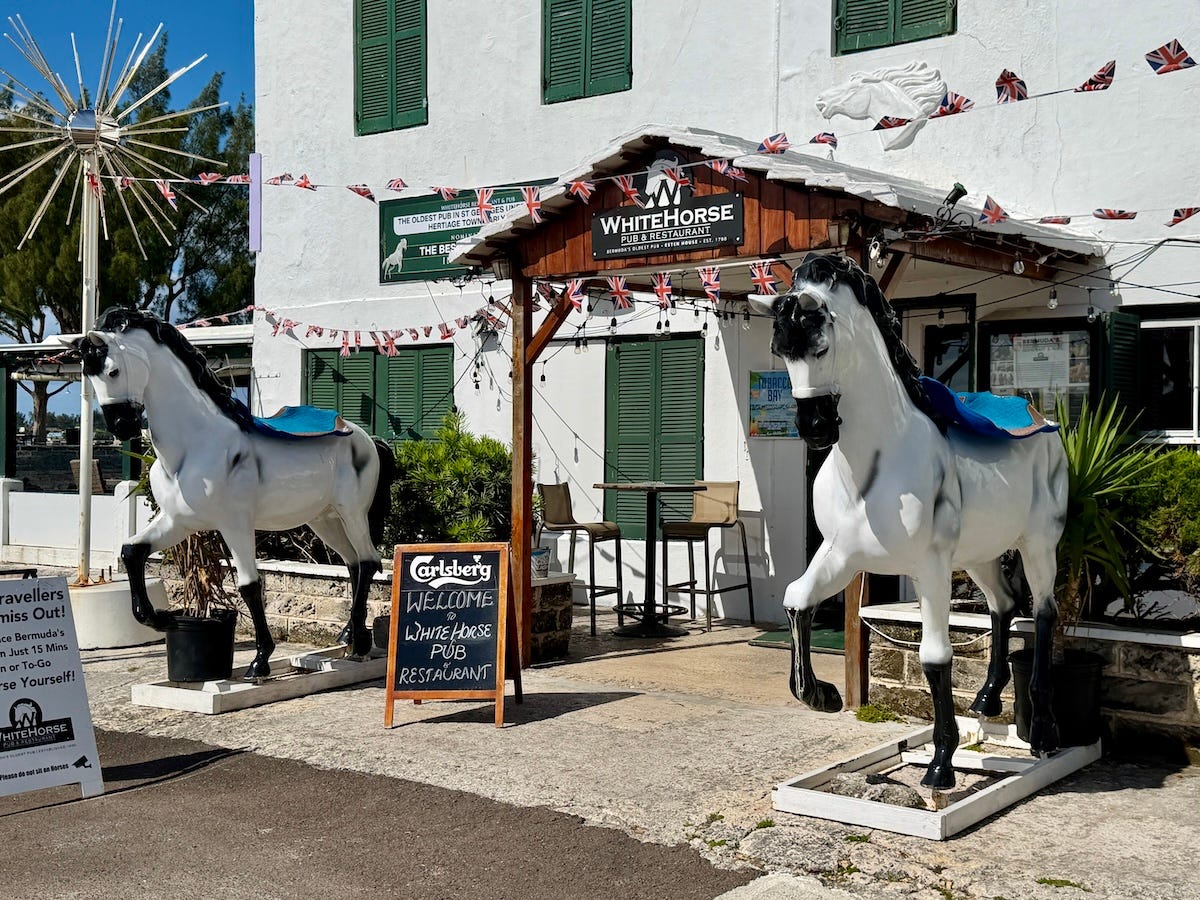
Our last stop in town was at the White Horse Restaurant and Pub. Our guide had mentioned that classic Bermudian cocktails — Rum Swizzles and Dark ‘n’ Stormy cocktails made with local Gosling’s rum — were available here, and so we stopped to sample a Swizzle.
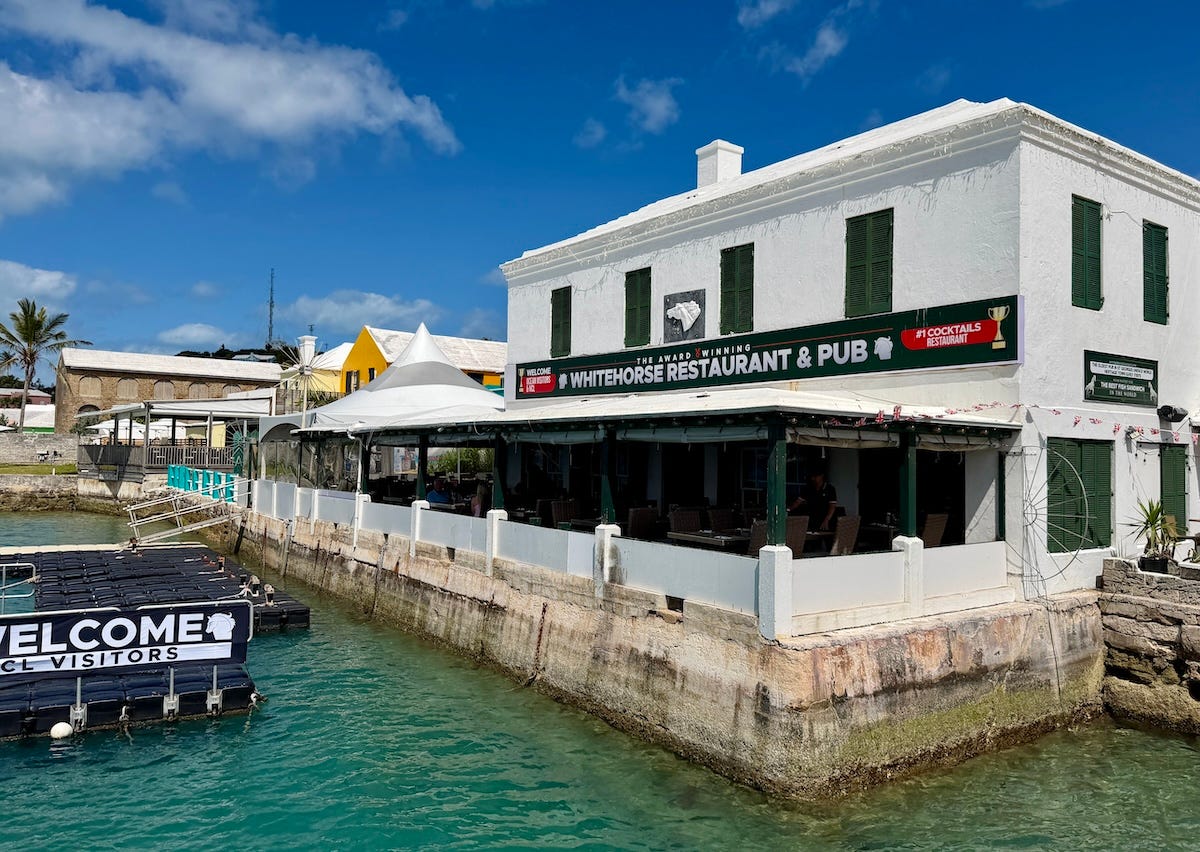
We met ship friends at the bar, and all of us enjoyed our Swizzles on the outside patio overlooking the water.
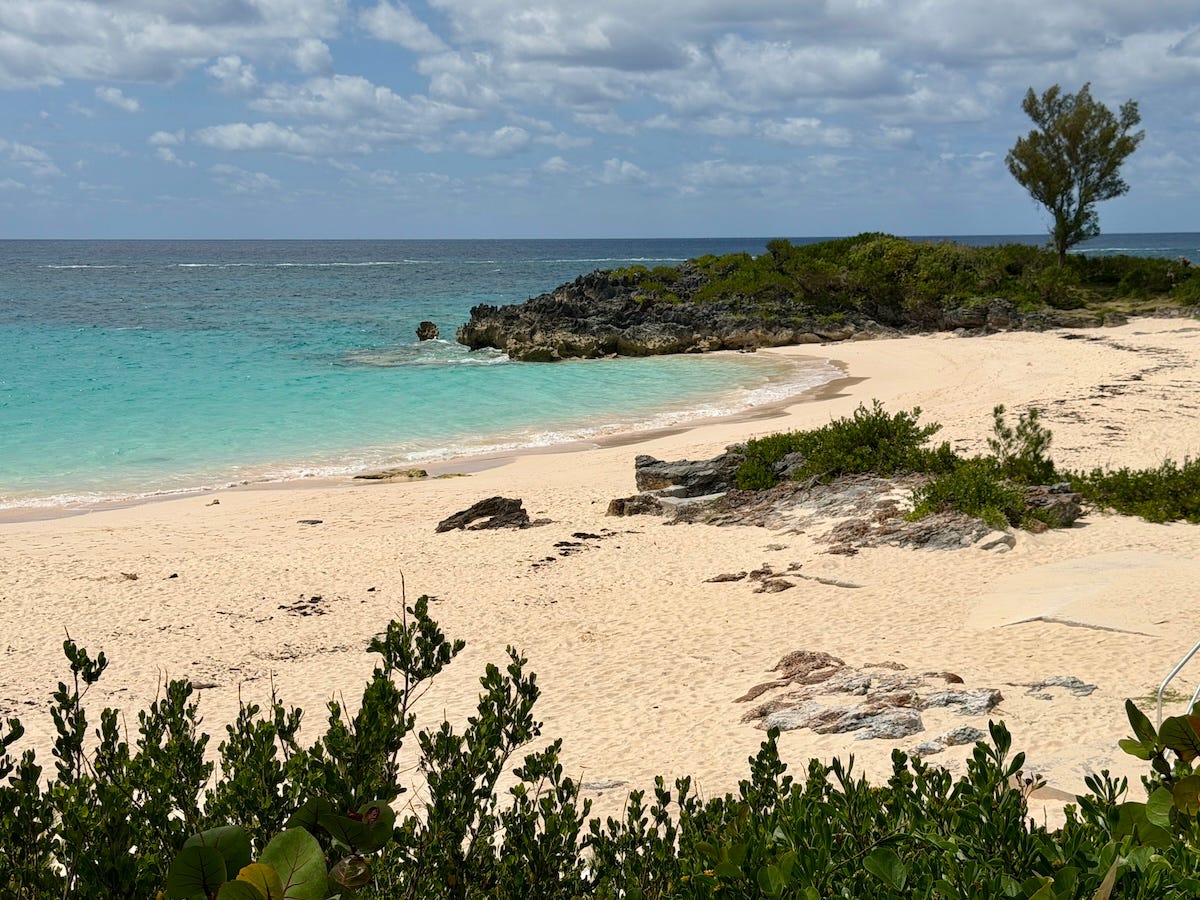
Next stop: Horseshoe Bay Beach, one of the most famous beaches in Bermuda. Supposedly, it has sweeping pink sandy beaches, but the sand is more beige than pink. It does have some tiny pink crystals, if you look carefully, so there is a grain of truth in the statement!
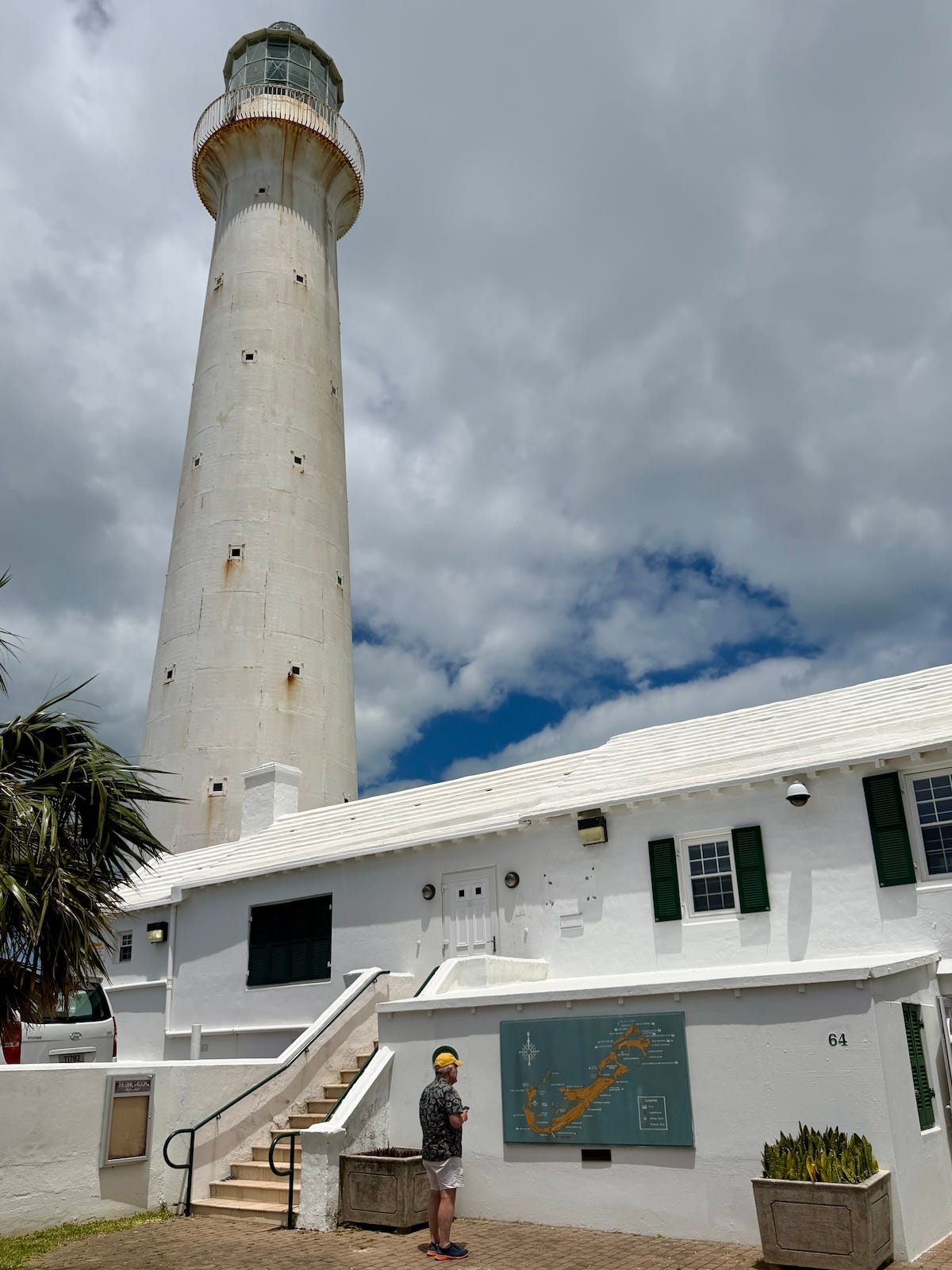
Our last stop before returning to town was at Gibbs’ Hill Lighthouse, one of Bermuda’s most famous landmarks, which stands 117 feet tall on a high hillside. Built in 1846 from imported cast-iron, it’s one of the oldest lighthouses of its kind in the world. The lighthouse is still active today, flashing a powerful beam that ships can see from 40 miles away.
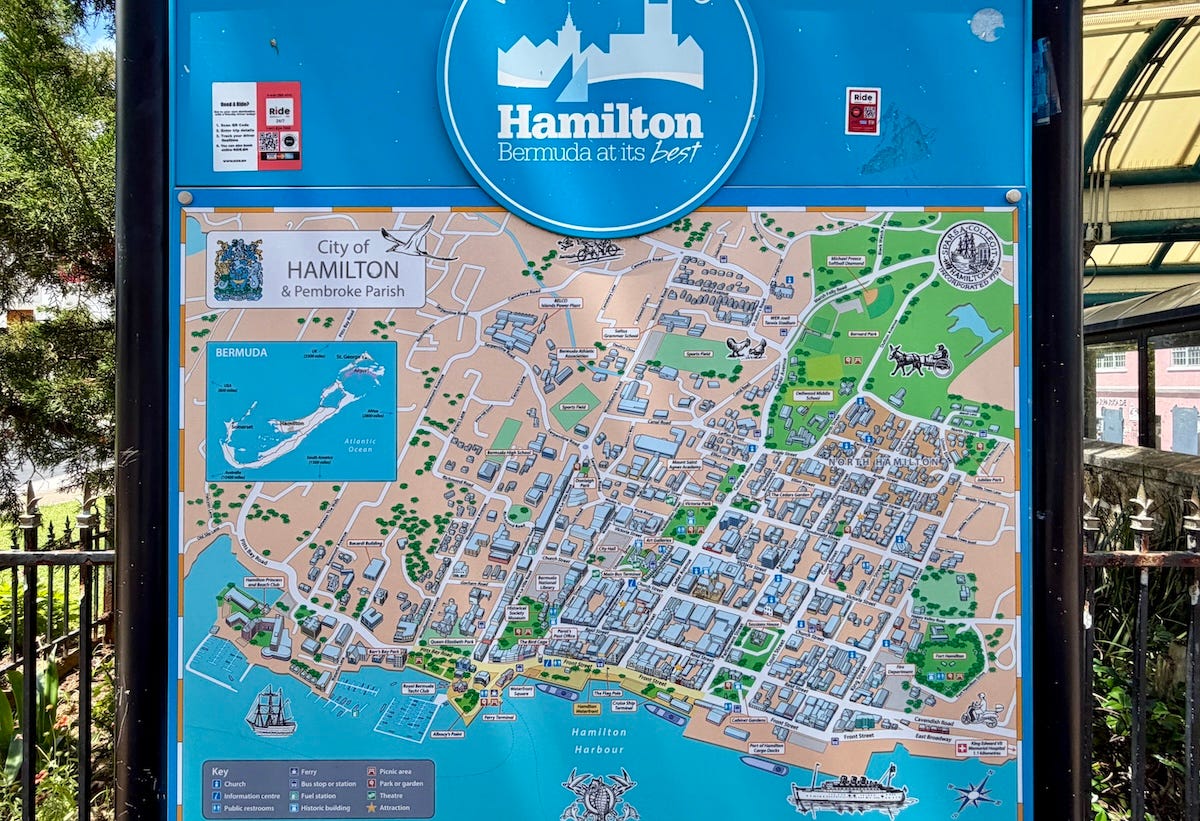
Back in Hamilton, Sherpa and I decided to have lunch, then walk to the historic church and the art gallery. It’s an easy town to explore, although it is built on the side of a hill, and so every sidewalk has a severe tilt.
Lunch first! The Hog Penny Restaurant & Pub is Hamilton’s oldest licensed establishment, and has been welcoming visitors since 1957. Located just off Front Street on Burnaby Hill, this historic, hole-in-the-wall British pub was our first choice for lunch and local beer. We met friends from the ship for food and beverages. The lunch was extraordinarily good bar food — our table shared loaded potato skins, calamari, and pretzel bites, and everything was tasty. Sherpa was less enthusiastic about the beer.
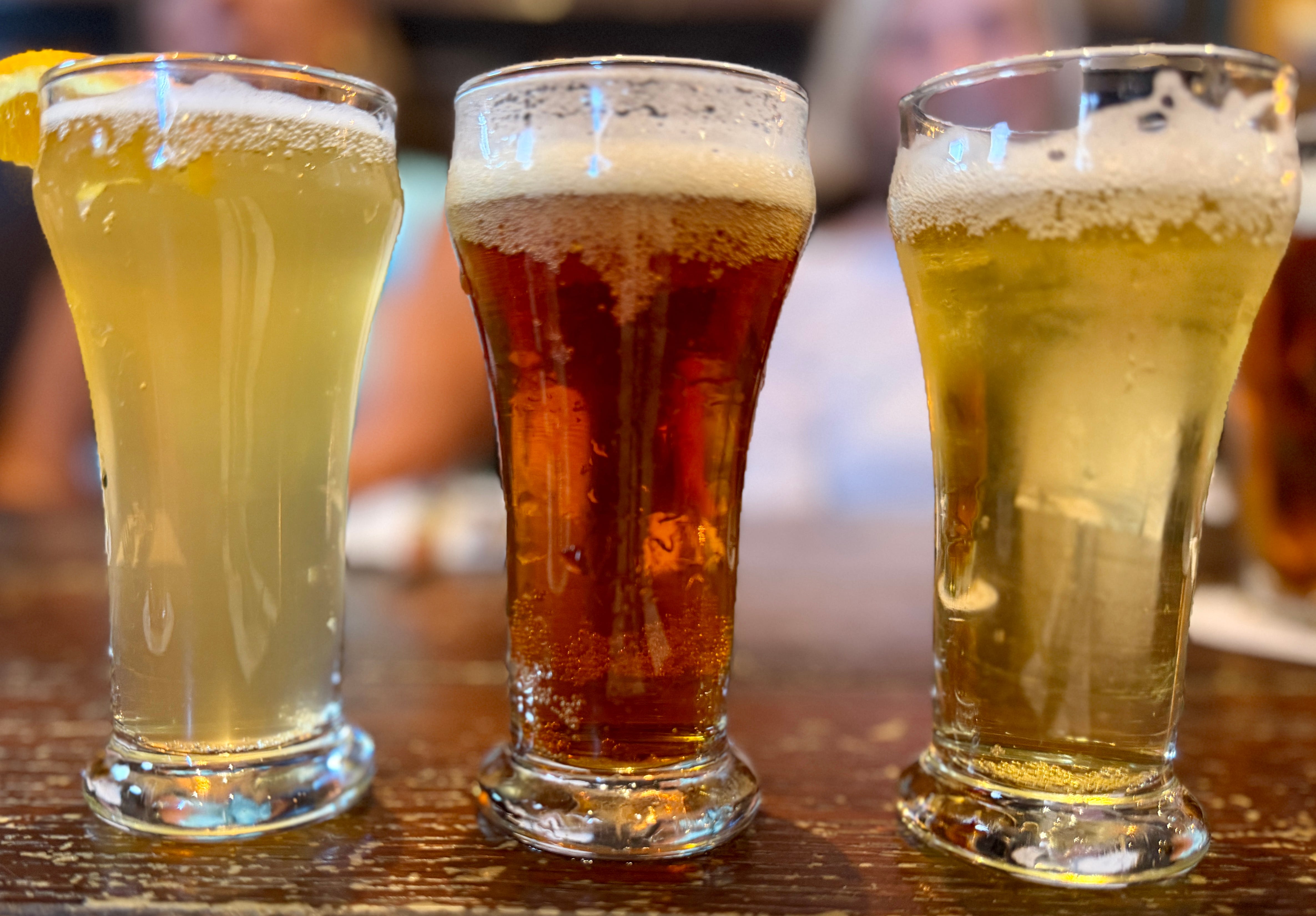
He ordered a flight from Dockyard Brewing. which was advertised as offering “expertly brewed beers at Bermuda’s oldest craft brewery.”
(Left) Whale of a Wheat: 4.3% ABV, N/A IBU. A typical German Hefeweizen. Sherpa’s Take: “Aromatic. Cloudy. Citrusy and lemony.” 4/10
(Right) Trunk Island Pale Ale: 5.7% ABV, N/A IBU. Sherpa’s Take: “Bitter, hoppy, floral.” 6/10
(Center) St. David’s Lager: 5.1% ABV, N/A IBU, Brewed in the Pilsner style. Sherpa’s Take: “Aromatic. Light-bodied. Thin and crisp.” 5.5/10
Overall, Sherpa was disappointed with the beers, citing a lack of complexity in the different styles. But no worries, onward to churches and art!
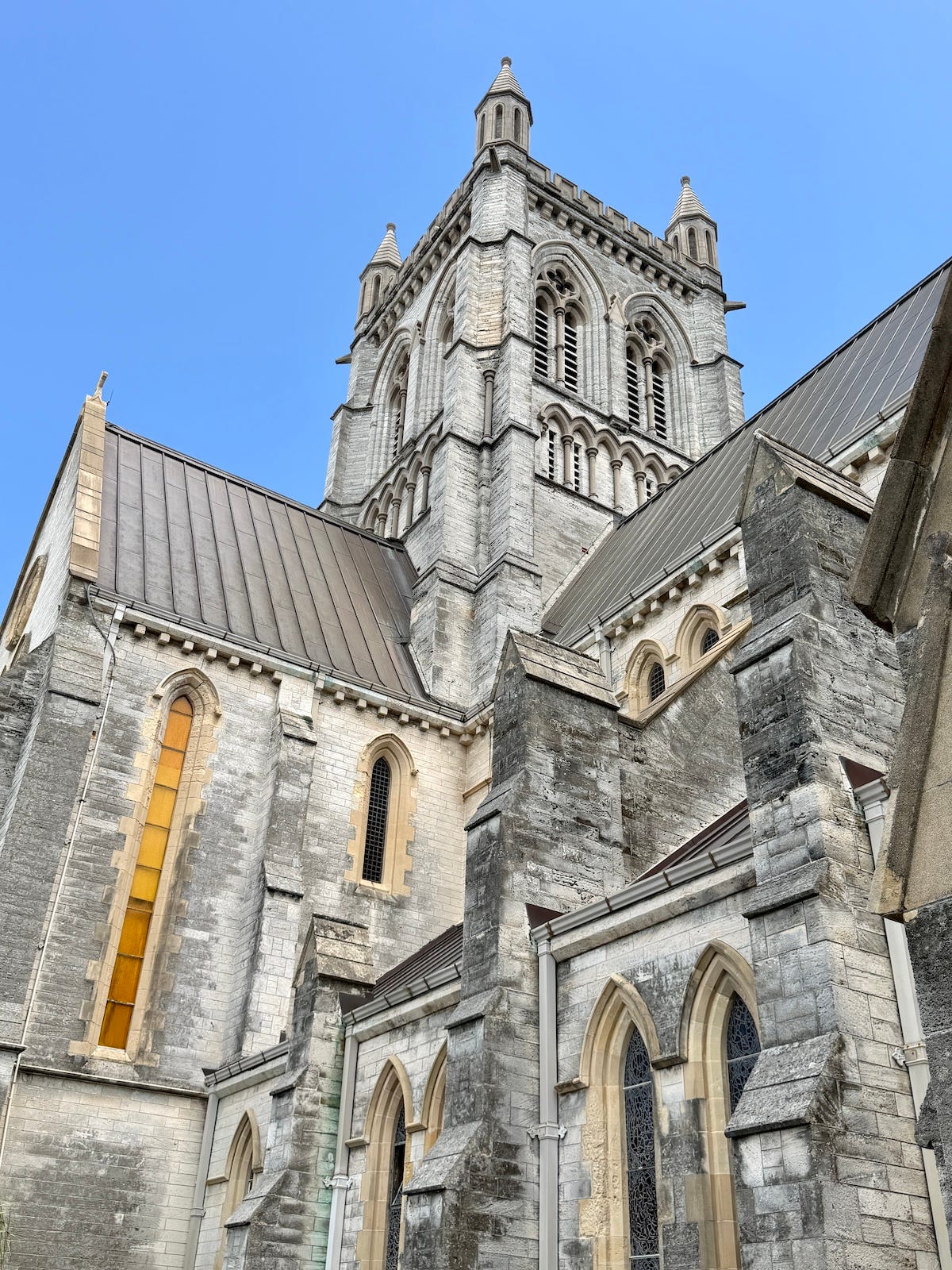
We climbed a hill, walked a few blocks, and found ourselves outside the formidable Cathedral of the Most Holy Trinity, commonly referred to as the Bermuda Cathedral. Truly, it’s an impressive Gothic Revival structure situated in the center of the city.
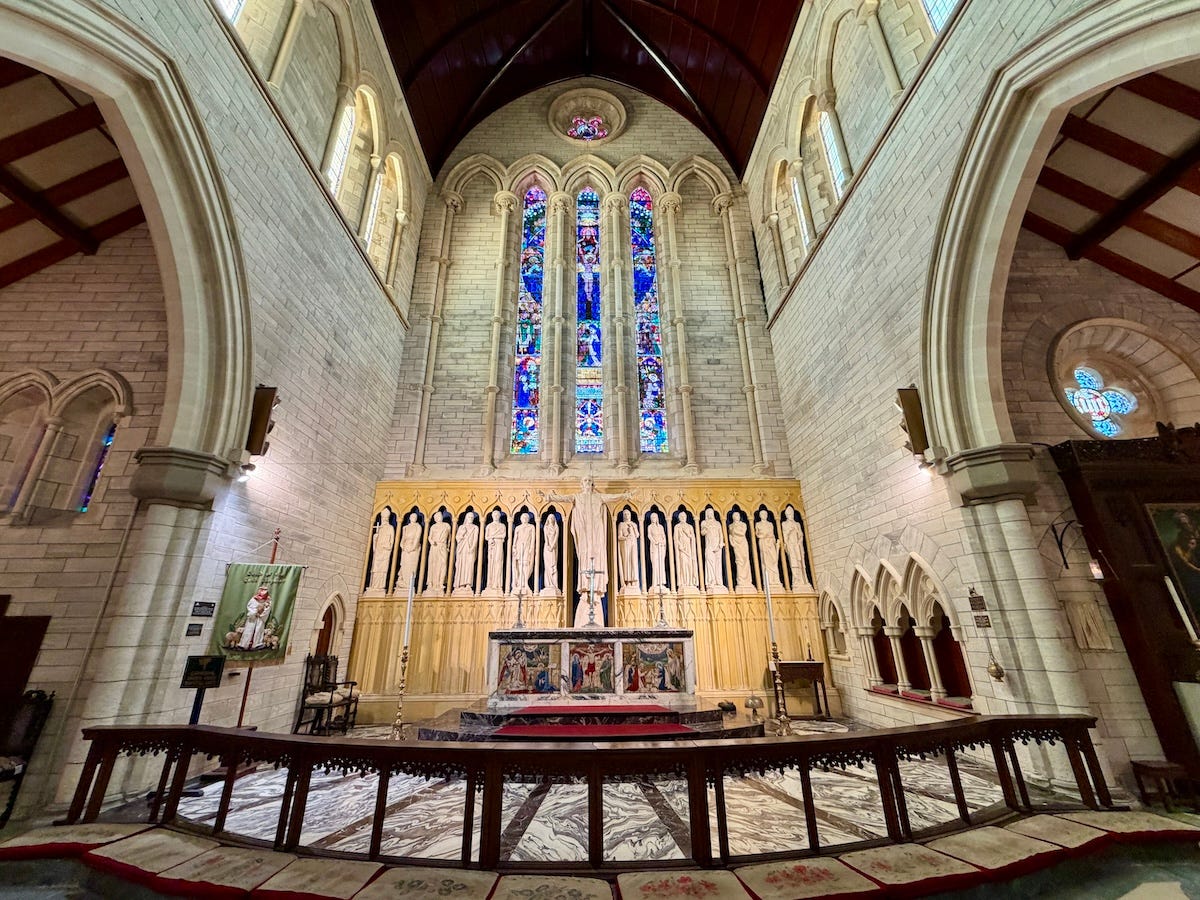
In the sanctuary, there’s a splendid, inlaid masonry altar and a highly detailed, carved wall just behind it. The altar screen features intricate sculptures of Christ surrounded by a dozen or so saints.


We’re accustomed to Anglican austerity in their churches, especially when compared to their Roman Catholic counterparts, and so the splendor of this church’s interior was a surprise.
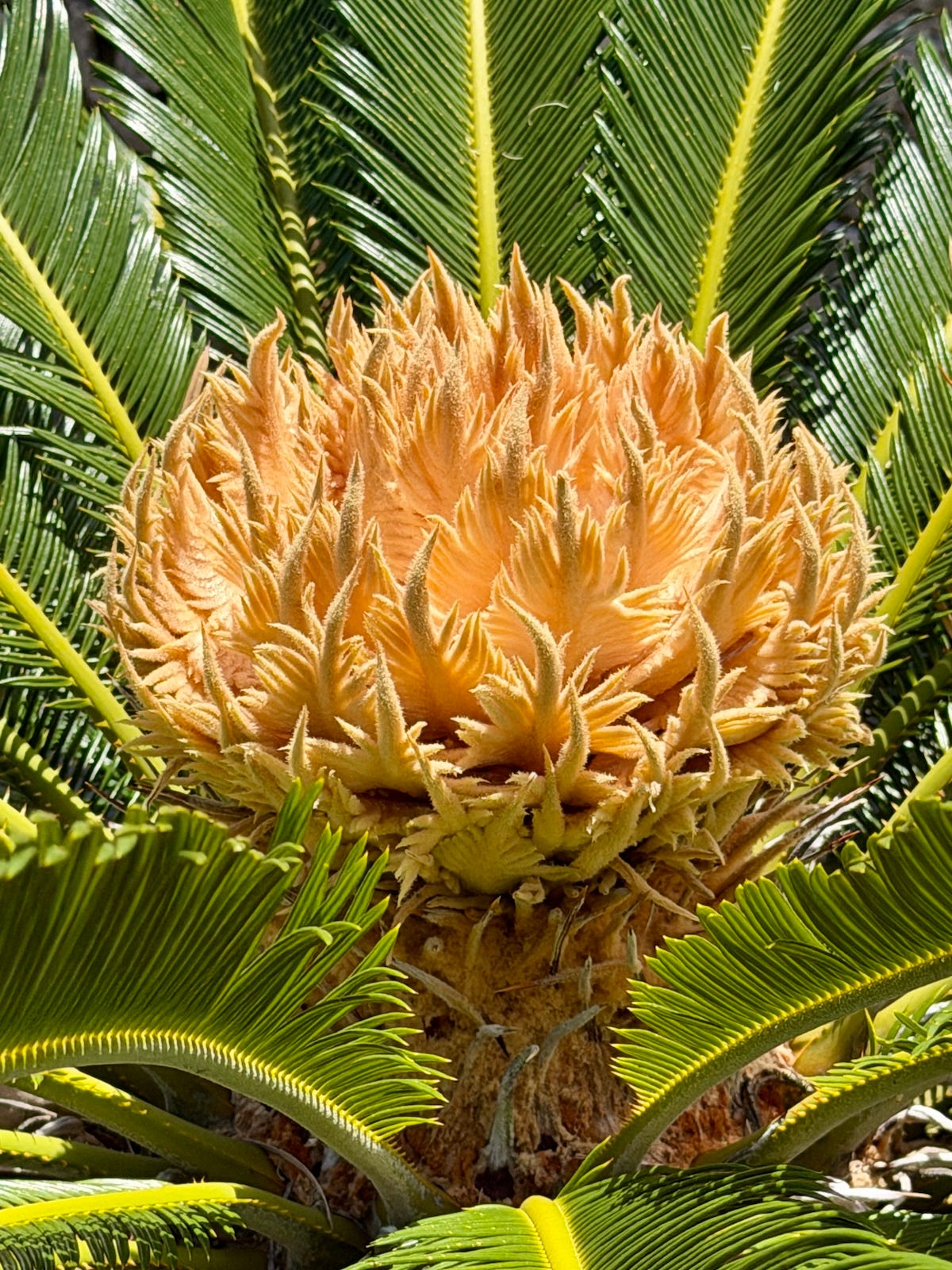
Look what we noticed as we left the rear exit of the cathedral. A sago palm, in bloom!
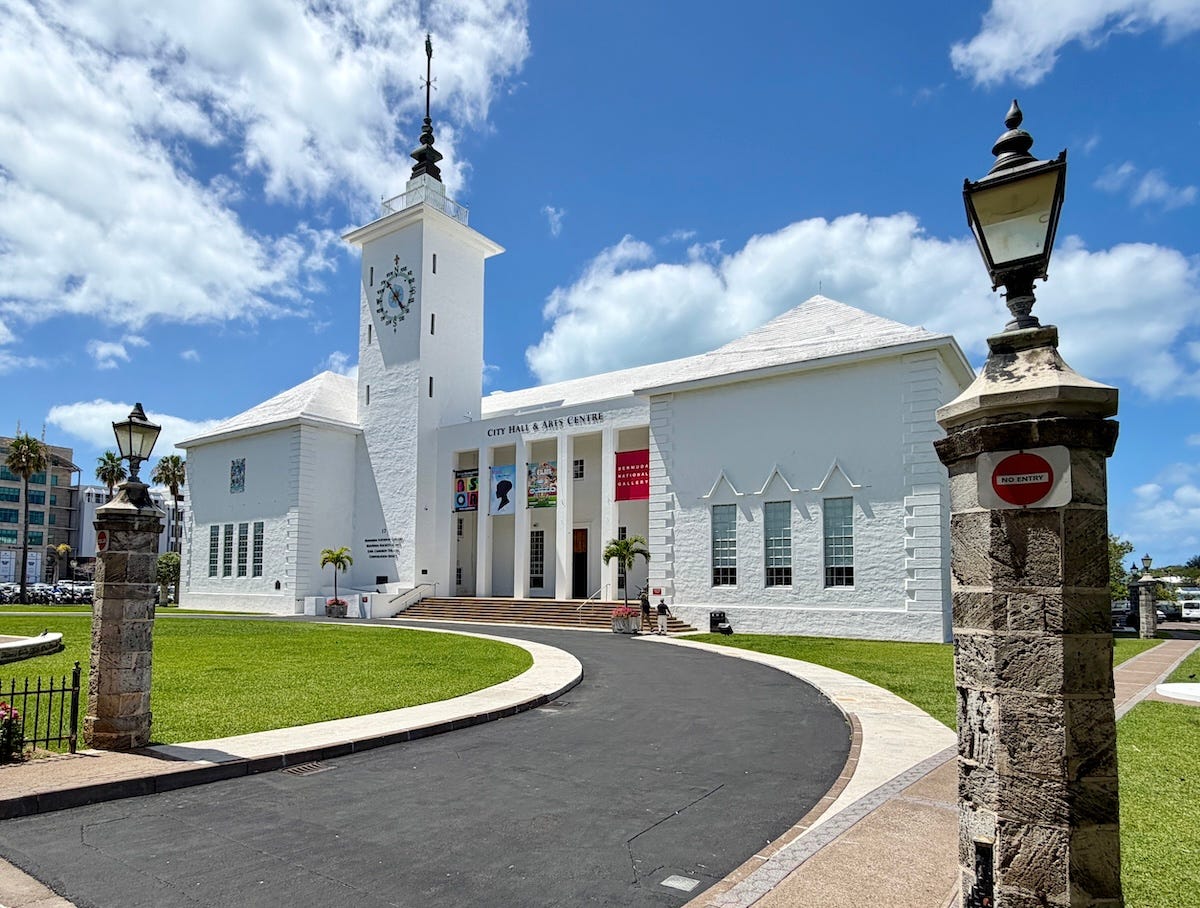
We walked along Church Street and had strolled only a few blocks from the Cathedral when we arrived at the impressive Hamilton City Hall and Arts Center. This building houses the Bermuda National Gallery, the Bermuda Society of Arts, plus a community theatre. Designed by Bermudian architect Wil Onions, it opened in 1960 and was constructed of cedar and limestone. And the exterior highlight? Its 90-foot clock tower featured a bronze weathervane shaped like the Sea Venture.
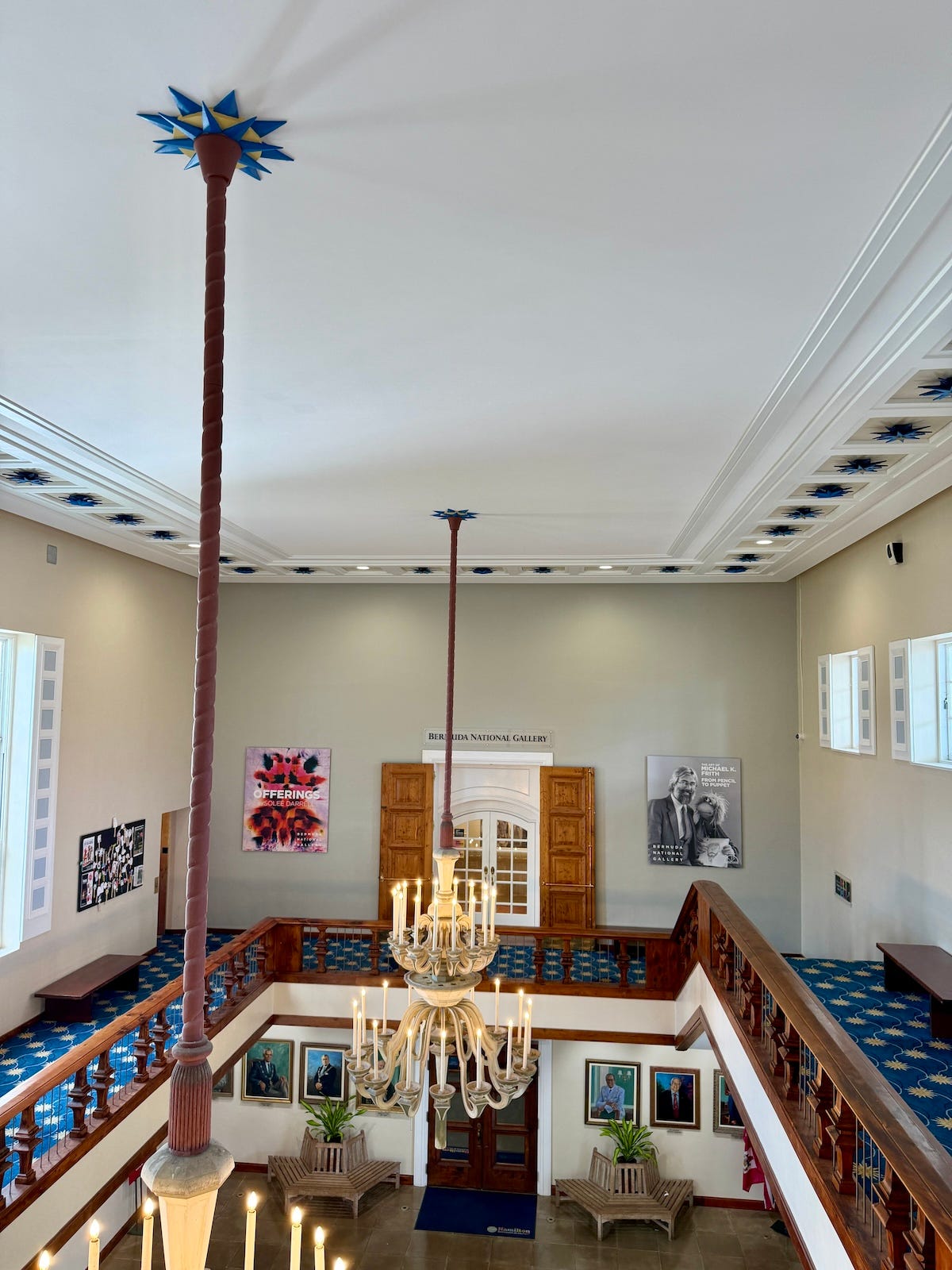
The main foyer has double grand wooden staircases, traditional chandeliers, and blue star decorative elements.

We were pleased to greet some old buddies from our kids’ childhood when we entered the art gallery! The Muppets were front and center!
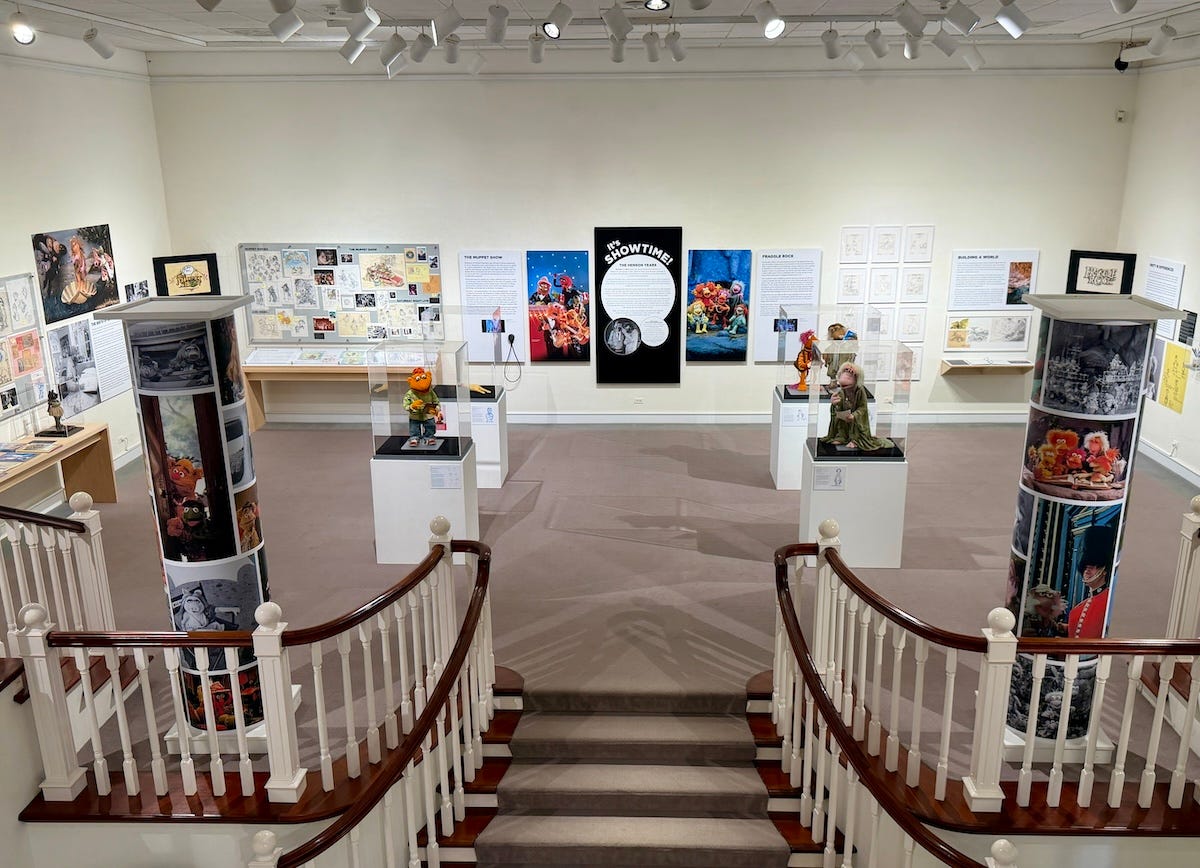
“The Art of Michael K. Frith: From Pencil to Puppet“ is a major career retrospective showcasing the life and work of the legendary Bermudian-born Muppets creative director.
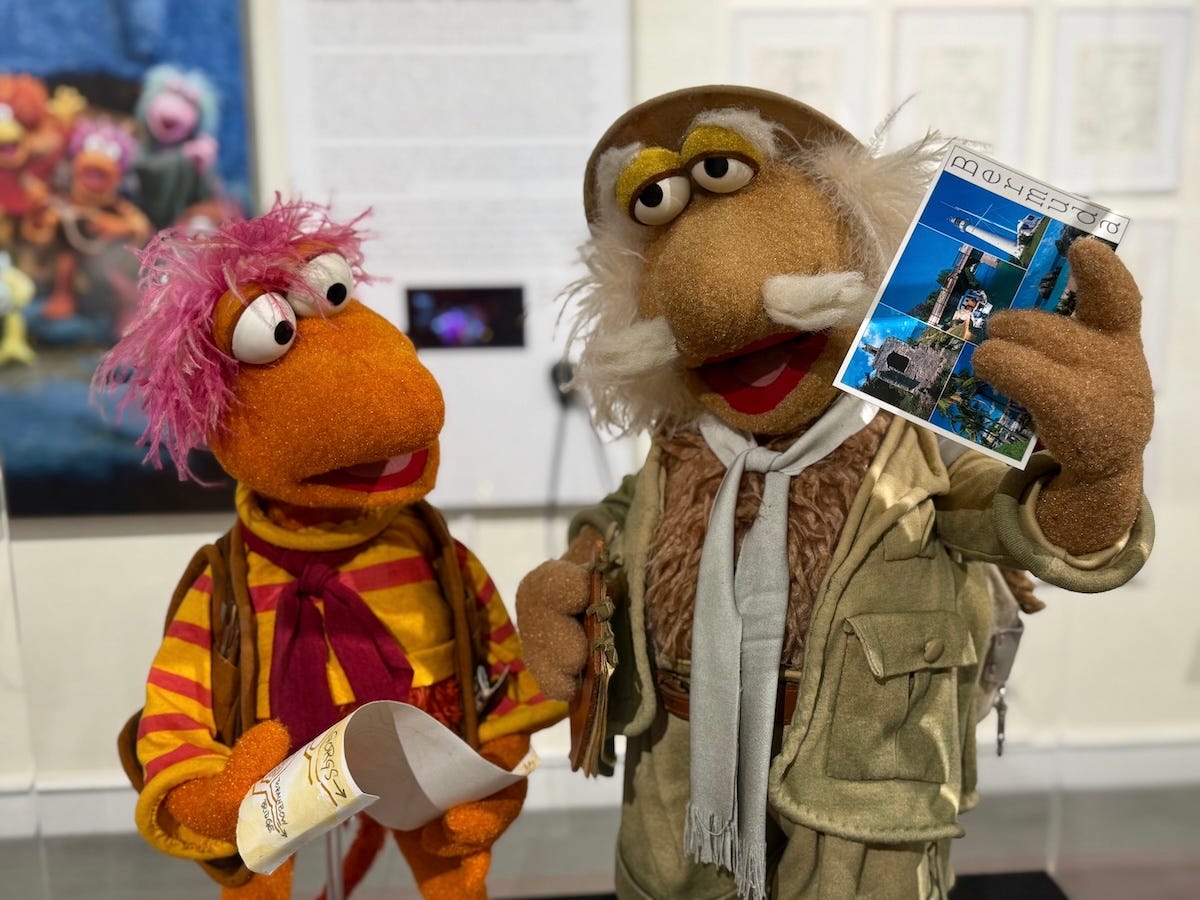
It’s always interesting to discover the source of inspiration for critically acclaimed art. For Frith, he would constantly be aware of using “water as a core element of stories - one that connected the diverse cast of characters in the show, just as catching rainwater from Bermuda rooftops is something that unites the island’s inhabitants.”
“That idea comes from my lying in bed at night as a kid and listening to the music of the water as it ran from the roof, down the pipes, and into the tank. Where so much of the world takes water for granted, in Bermuda, from our earliest days, we’re acutely conscious of how precious it is, and how dependent we all are on it.” — Frith

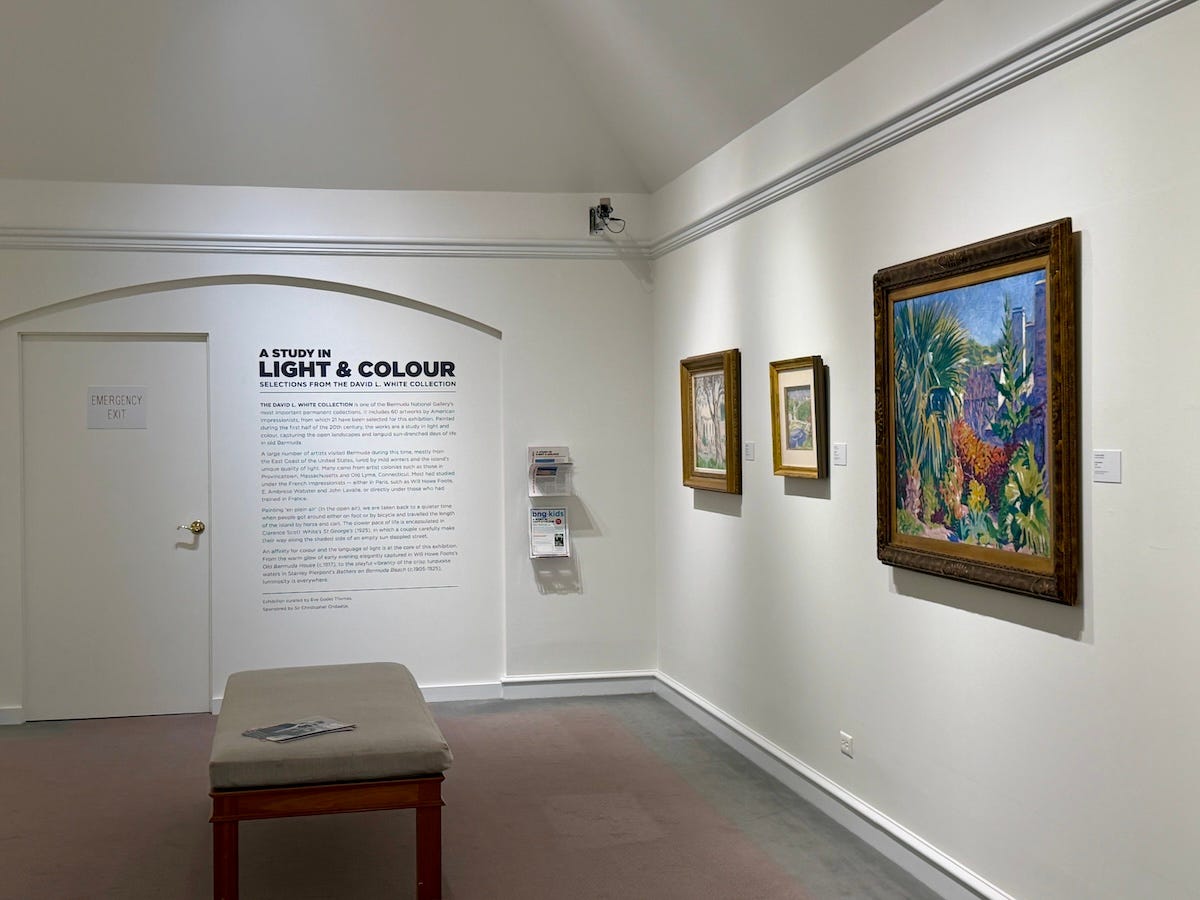
There were several small galleries with other exhibits. One we especially enjoyed was “A Study in Light & Color: Selections from the David L. White Collection,” an exhibition that spotlighted how 20th-century American Impressionists captured Bermuda’s unique, sun-drenched atmosphere.
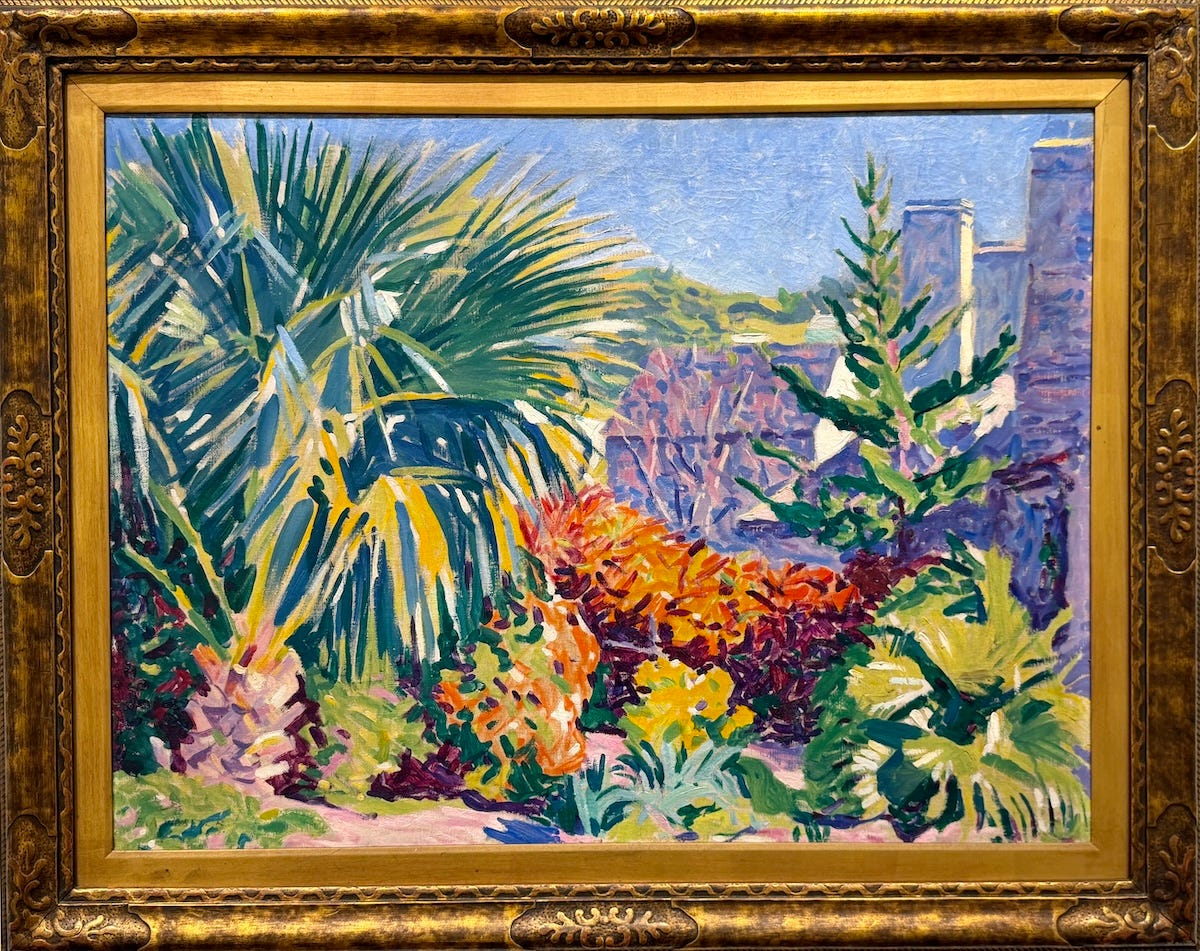
Lovely settings, and colorful renditions of landscapes and sights similar to what we had just seen on our cross-island bus tour. A perfect send-off.

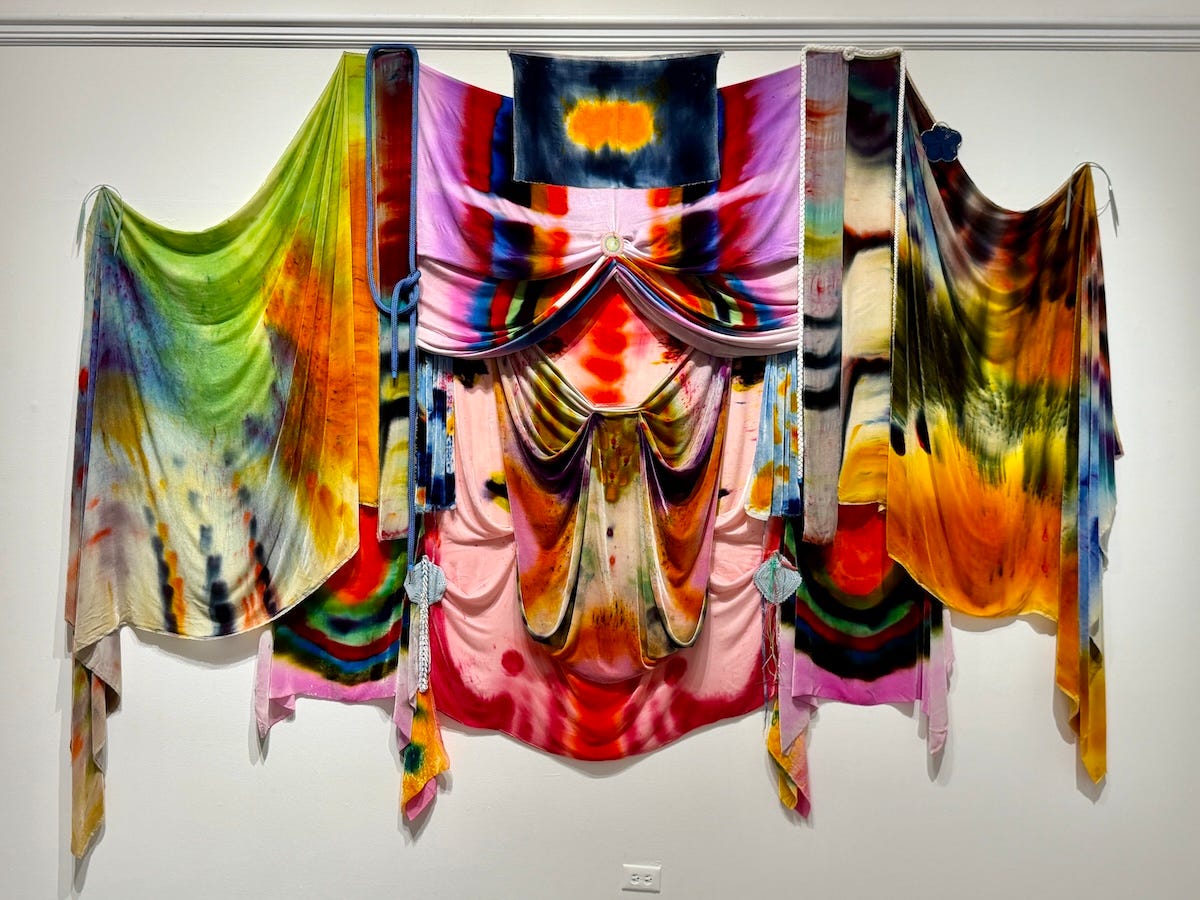
Offerings is a colorful art show by Soleé Darrell, set in a small side gallery, though the exhibit was anything but small. The exhibition featured large, vibrant paintings made on velvet fabric.
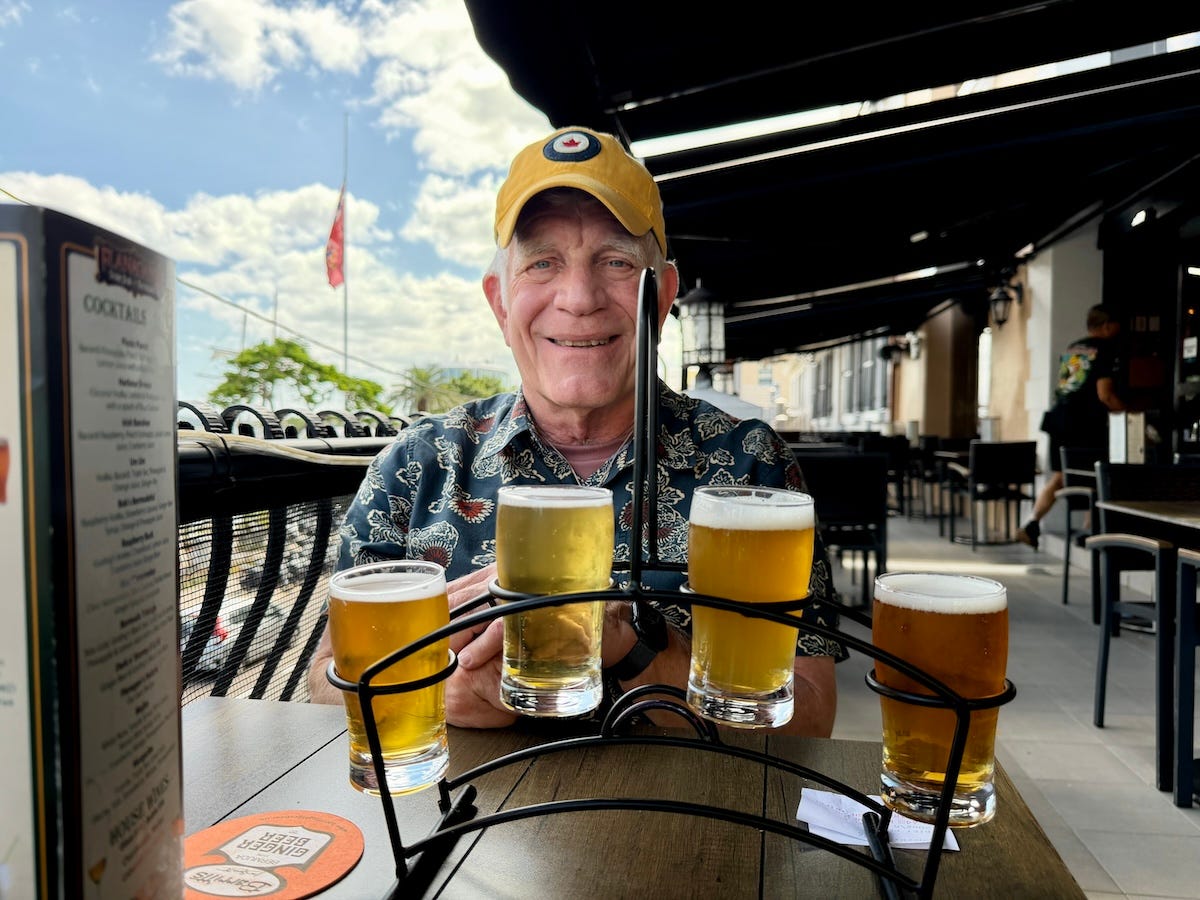
Once we’d finished walking through the City Hall and Arts Center, we headed back down the hill towards the ship. However, we arrived on Front Street and still had 90 minutes before “back on board!” We’d just sailed for 4 days, and we had two more days of sailing before reaching Miami. What to do? Don’t get on the ship until the last minute, that’s what! We had noticed another restaurant with prominent beer signage across from the Mariner, so that’s where we went. And it was a very good decision. Sherpa found some of the best beer he’s had since leaving Singapore!
We stopped at Flanagan’s, and he had another flight of beers, this time from the local brewery, Bermuda Craft Brewery:
64° WEST American Pale Ale, 5% ABV 45 IBU. A “West Coast”- style ale. Sherpa’s Take: “Golden amber. Slight head. Bubbly with carbonation. Persistent bitter finish.” 7.5/10.
Whitecaps Wheat Beer, 4.4% ABV and 18 IBU. Sherpa’s Take: “Golden color. True to style. Has decent substance.” 8/10.
32° North Hazy Pale Ale, 6.5% ABV and 27 IBU. Sherpa’s Take: “Bold, sharp flavor. Strong, bitter finish.” 8/10.
Harbourside Tripel, a Belgian Tripel, 7% ABV, 29 IBU. Sherpa’s Take: “True to style.” 7.5/10.
It’s rare for Sherpa to sample four beers from a single brewery and rate them all 7.5 or higher. Bermuda Craft Brewery joins the ranks of Odell (Colorado, USA), Working Draft (Wisconsin, USA), 3 Sheeps (Wisconsin, USA), Old Nation (Michigan, USA), Ice Box Brewing Co (New Mexico, USA), and Brewerkz (Singapore).
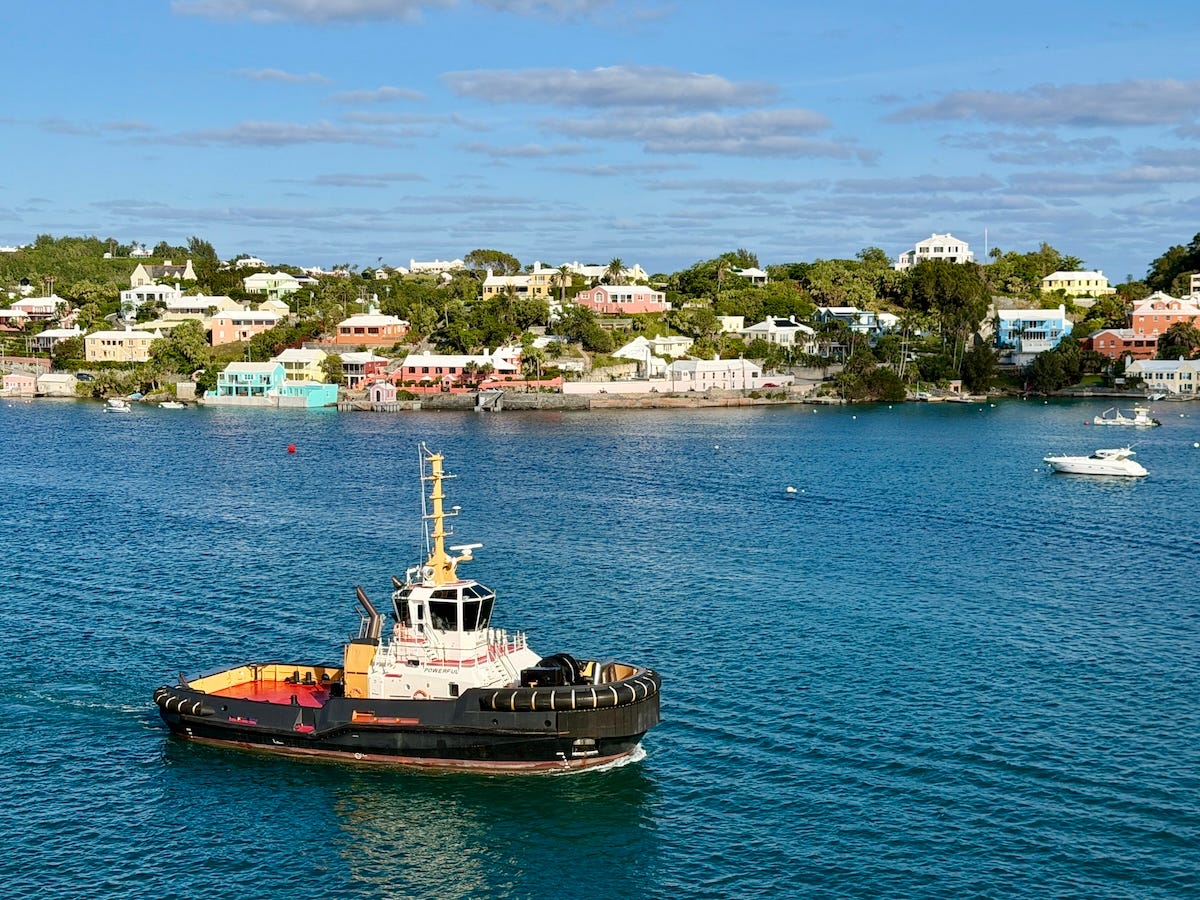
Okay! We’d whiled away enough time that when we finally made our way up the gangplank and got back on board, we were almost the last passengers to board the ship. Excellent time management. The tugs were ready to help as Captain Abhi propelled the Mariner away from the narrow berth, and we were on our way.
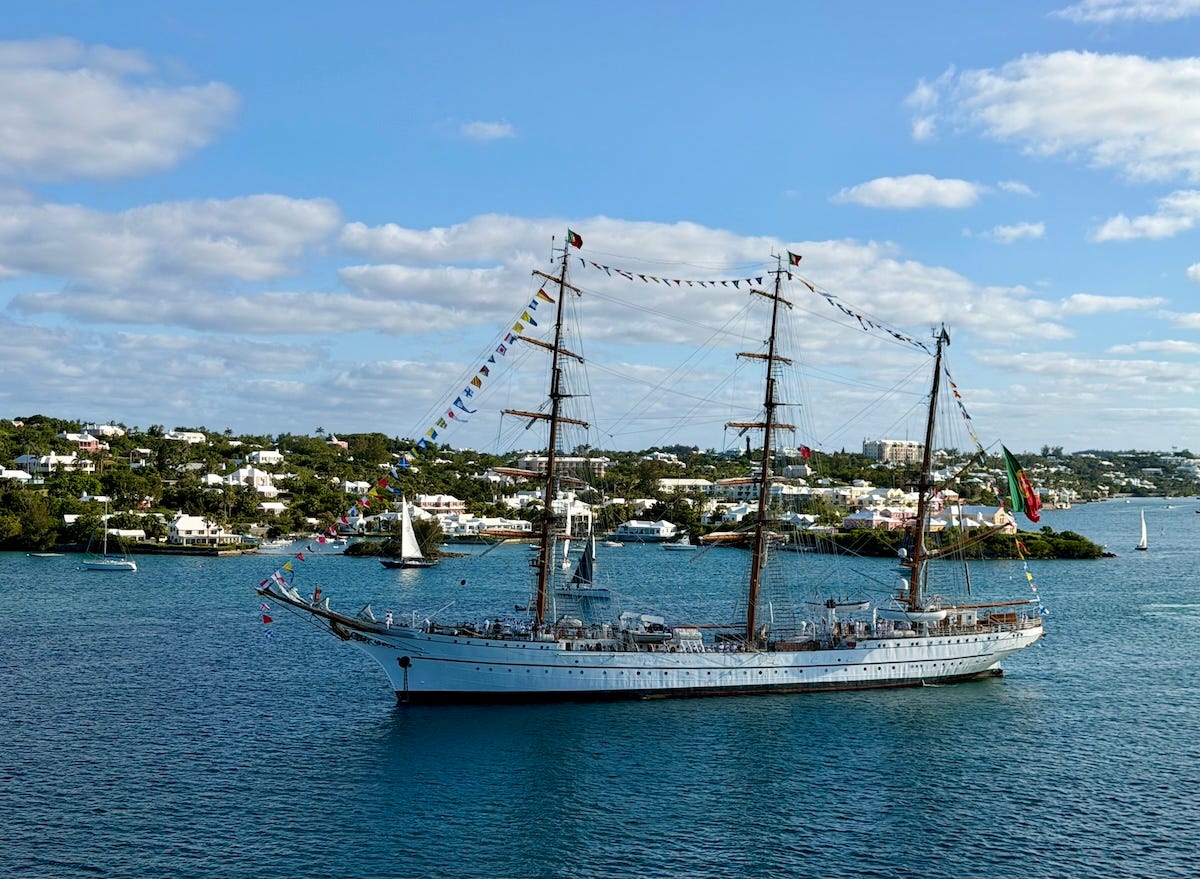
The exit route was as scenic as the morning sail in! Sunlight lit the houses along the Bermudian coasts, the smaller islands’ trees shimmered in the filtered light, and the water was calm. We passed other small vessels as we made our way through the channel and towards the open seas.
Our last stop on our fabulous cruise — Miami, Florida, USA.
Bo, your pictures and description of Bermuda is magnificent! Now I have to put it on my bucket list. Thank you for taking time from your vacation to take me along with you. I have enjoyed your travels. Sherpa, I'm not a beer drinker but now I will have to drink one just to honor your diligence in locating and evaluating a beer in each port of travels. Have a safe trip home.