
Dakar, Senegal
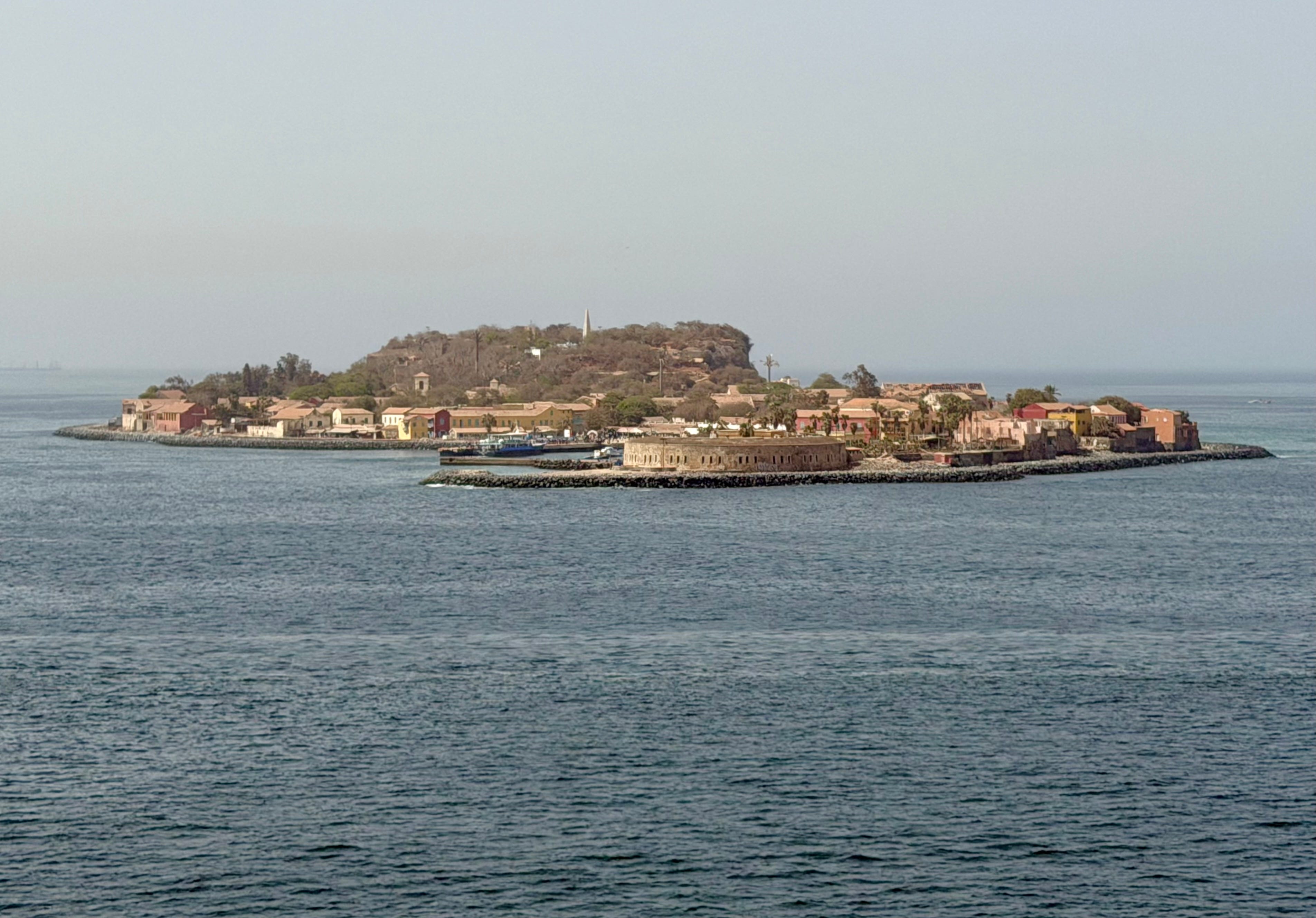
On our final day docking on Mainland Africa, we hopped on a ferry for a sobering visit to Gorée Island, a UNESCO World Heritage site, and a part of the historical transatlantic slave trade route.

Dakar is the capital city of Senegal, located on the Cap-Vert Peninsula at the westernmost point of mainland Africa. Surrounded on three sides by the Atlantic Ocean, this bustling metropolis of over 4 million people serves as the economic, political, and cultural hub of French-speaking West Africa. It is globally renowned for its deep historical roots, striking modern infrastructure, world-class music scene, and the legendary hospitality of its people. — Regent
According to our pre-cruise research, we could expect:
Daytime High Temperatures: Approximately 82°F to 86°F. (Accurate!)
Nighttime Low Temperatures: Around 68°F to 72°F.
Humidity: Moderate to high (around 84%) but generally less oppressive than during the upcoming wet season. (It was hot and sticky when standing in the sun, but pleasant in the shade.)
Precipitation: Very low probability of rain (essentially 0% chance). May is typically a rainless month in Dakar.
Sunshine: Expect about 9 hours of bright sunshine per day with predominantly clear skies.
Sea Temperature: The ocean temperature will be around 70°F. (Lots of people were swimming off Gorée Island!)
Sun Protection: The UV index is expected to be Extreme (11+).
Attire: Light, breathable clothing is highly recommended for comfort in the heat. Remember, this is a predominantly Muslim country, and tradition requires modest clothing. Covering shoulders and knees — for both sexes — is highly encouraged and seen as a sign of respect.
Best Time to Visit: The dry season (November to May) is generally considered the ideal time to visit Senegal, with pleasant conditions and minimal weather disruptions.
Activities: The great weather is perfect for exploring coastal areas or visiting attractions like the Bandia Reserve or Gorée Island.
The African Art Immersion excursion that we’d pre-booked last December, and were really looking forward to, was canceled at the last minute “due to operational issues,” i.e. there weren’t enough participants (nine) to make it worthwhile for the tour operator. Considering our group would have invested the equivalent of almost $1400 USD in this 3.5-hour tour — and given that the average monthly income for a professional Dakarois is about $700 USD — one has to wonder. It does seem that excursions that heavily feature art are frequently canceled — this is our third art-centric excursion cancellation since we boarded in Singapore on April 5th.
There are times when we needed to pivot, and this was one of those times. We were able to substitute a Regent-included excursion, Unforgettable Goree Island, which also sounded interesting. (We got the last remaining tickets.)
The Mariner didn’t dock in Dakar until 11 AM, quite late for a port arrival, and our excursion wasn’t scheduled to meet until 2:35 PM. We were scheduled to leave Dakar for Cape Verde at 9 PM. Odd hours to work around, especially since the excursion met from 2:35 PM to 7:35 PM. I was still pondering the canceled art excursion, and was curious if we could recreate at least part of it independently. Conveniently, a city representative was on board, sharing maps and advice. “Yes, we could walk to the Museum of Black Civilizations, about a mile from the ship.” “No, they would not take credit cards for admission tickets, only the local currency, but we could take the shuttle bus to Independence Square and use an ATM there.” “From the square we could take a taxi to the museum.” “Yes, there would be plenty of taxis available for hire.” “Yes, there would be shops and restaurants open on the square, even though it was the city’s business center and it was a Sunday.”
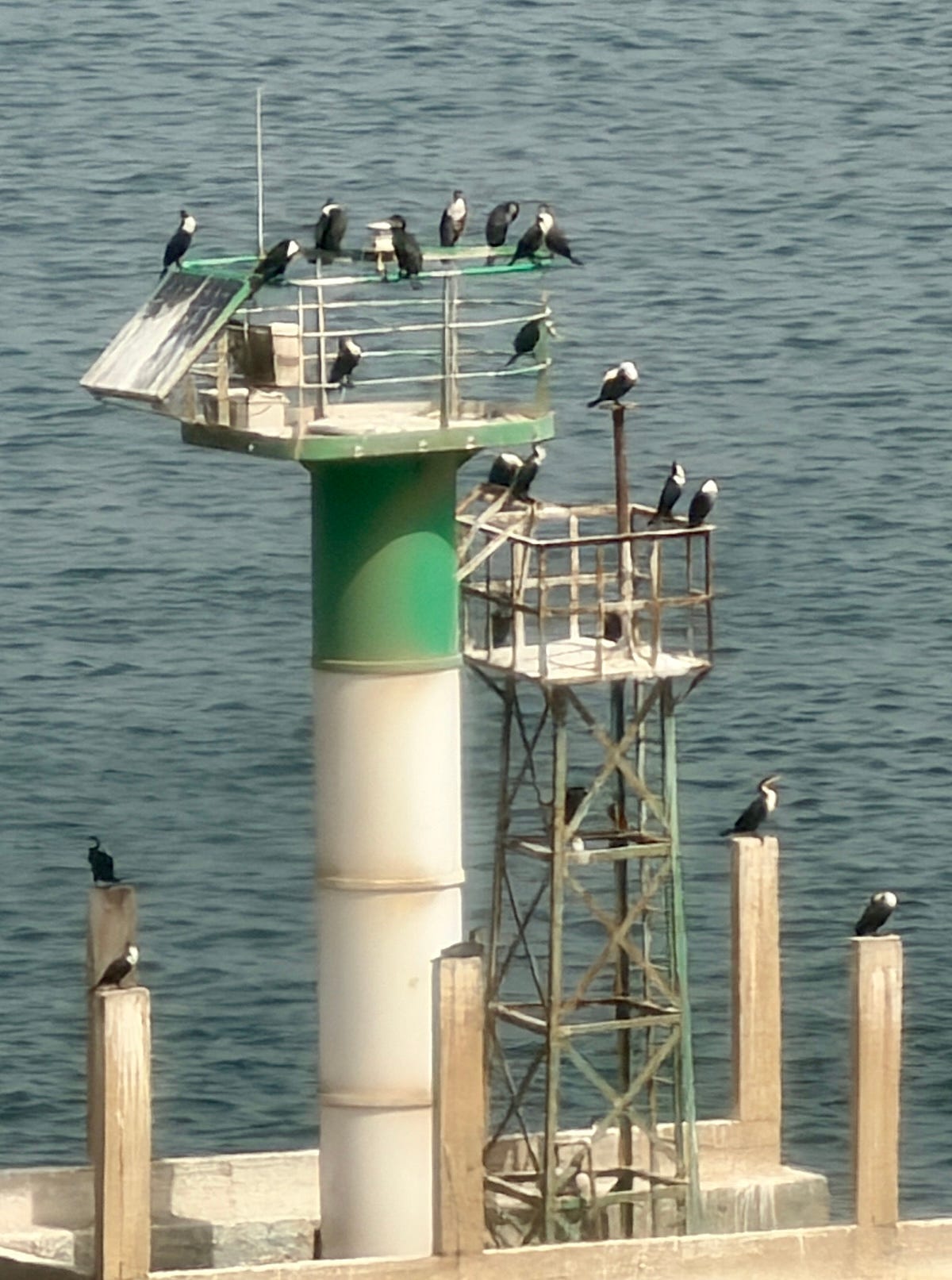
The city representative was correct some of the time, but not always. We could take the shuttle bus to Independence Square and use an ATM there, and we did. From the square, we might have been able to take a taxi to the museum, if there had been one, but none were in sight. No, there were no shops or restaurants open on the square — the area was undergoing a massive rebuilding project.
Considering the inaccuracies in the available information and that few people spoke English, we made what we felt was the most expedient decision. We aborted any thought of independent touring, something we had quite successfully managed throughout North America, Europe, Asia, Australia, and South America, and went on the Regent-included excursion. Travel in Africa, especially on Sundays and in the non-English speaking countries, can feel complicated, especially when we need to meet the ship’s onboard deadlines.
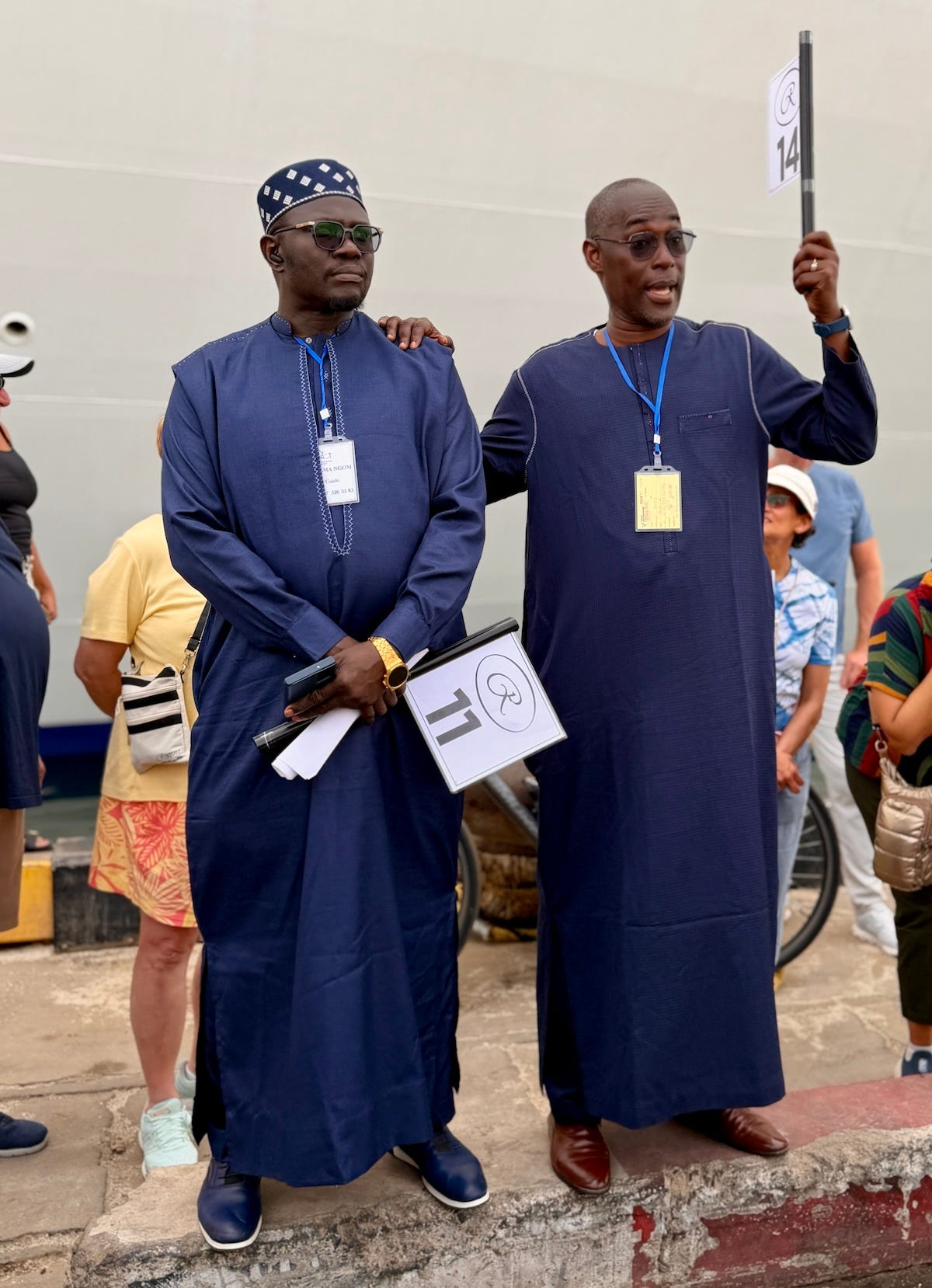
In retrospect, we made a wise decision. We met the Destination Services team on shore at 2:30 PM. It seemed that nearly every passenger on board the Mariner had chosen this particular excursion! (Not every passenger; only 240 of us!) To be honest, the number of excursions available in most ports on this itinerary is limited. Some of the West African cities lack the infrastructure and/or personnel to support a wide variety of tours, and even private options are scarce. However, the local tour operators that show up work very hard to ensure visitors have good experiences, even when options are limited, and they are usually successful!
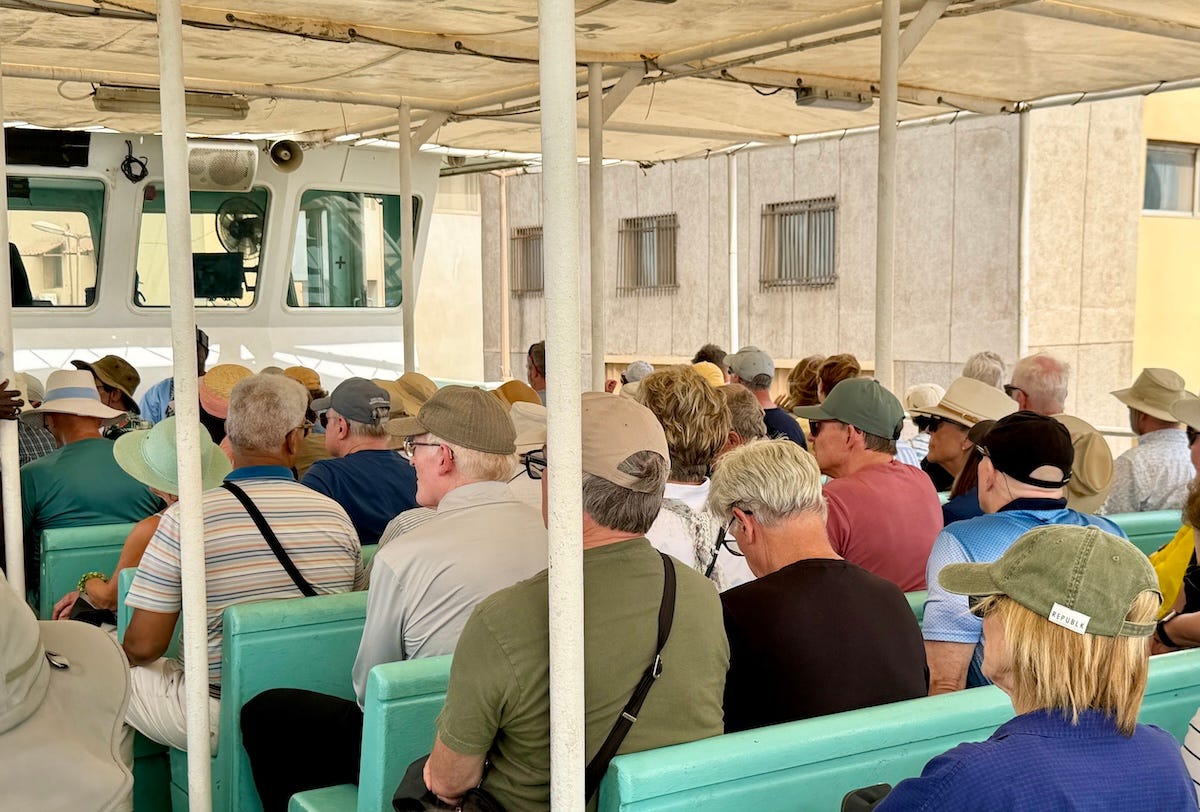
There was a bit of a snafu at the beginning. The chartered ferry — only one of the two island ferries was operational, and Regent had booked a private crossing for our large tour group — was an hour late. The guides did a quick calibration and began the tour on the dock. We had an introductory “lesson” while we waited, although the heat, humidity, and an hour standing on cement were a bit much for some guests. (Including me!) But finally, 240 passengers climbed onto the ferry’s two decks and off we went!
Description: Take the ferry to notorious Gorée Island, where, beginning in the 15th century, countless slaves were held before being shipped to the New World. Now a UNESCO World Heritage site, this island was once the largest slave-trading center on the African coast. In the House of Slaves, you will hear the curator’s lecture detailing the cruelty of that time period and see the buildings and cells that housed the men, women, and children who were shackled there. See the Gate of No Return, which marks the spot where the Africans saw their last glimpse of their homeland before boarding ships for the New World. You will then visit Saint Charles Borromeo’s Church and a fortress with a towering monument memorializing the Africans who were brutalized during the slave trade. During free time, you can wander about the stark island. Your time on Gorée Island will be unforgettable.
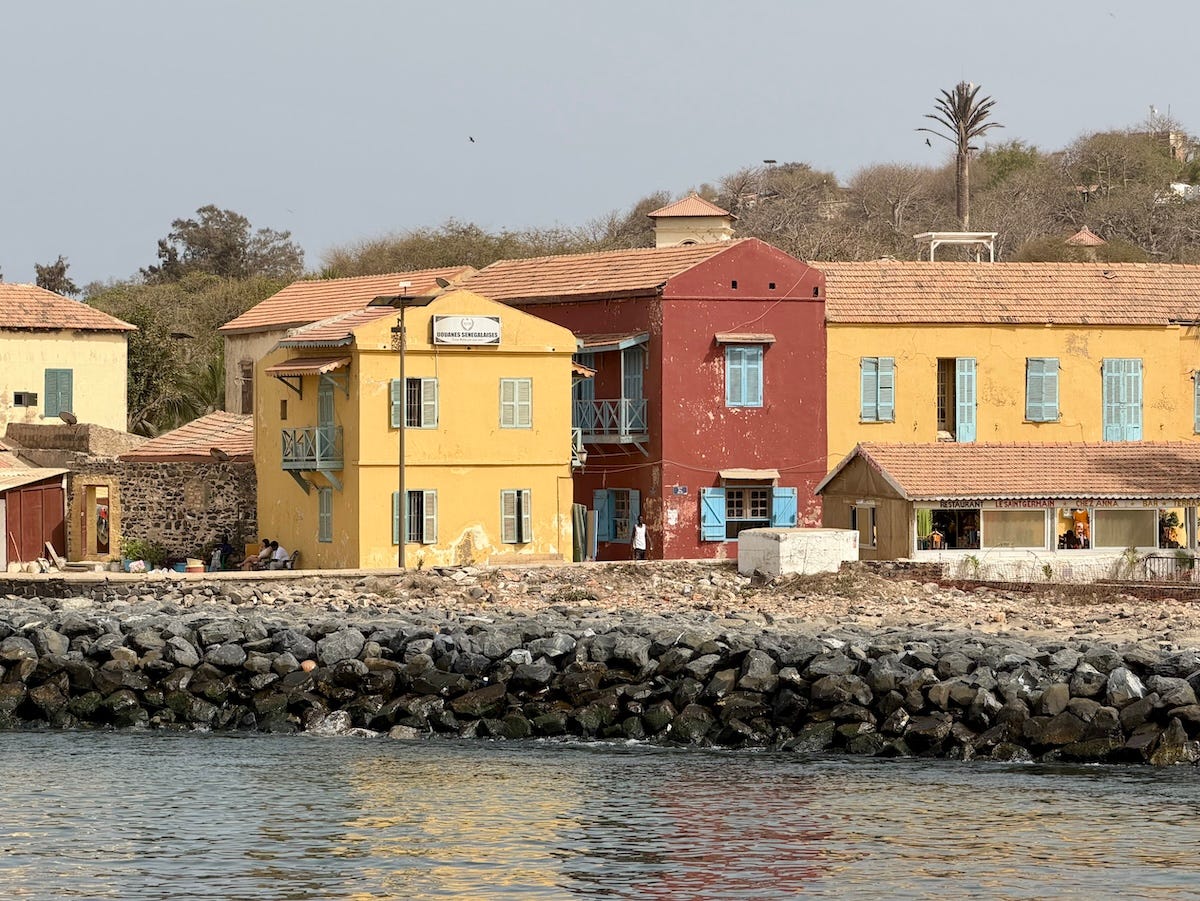
Gorée Island is a tiny island located only 2 miles off the coast of Dakar. Our ferry took only twenty minutes to transit the bay, but it felt like we were traveling to a different world and a different century — the buildings were from the colonial-era, the roads were of dirt and cobblestone, there were no vehicles on the island, and the vast majority of local men and women were wearing traditional flowing robes worn over matching trousers for men or wrapped skirts for women.
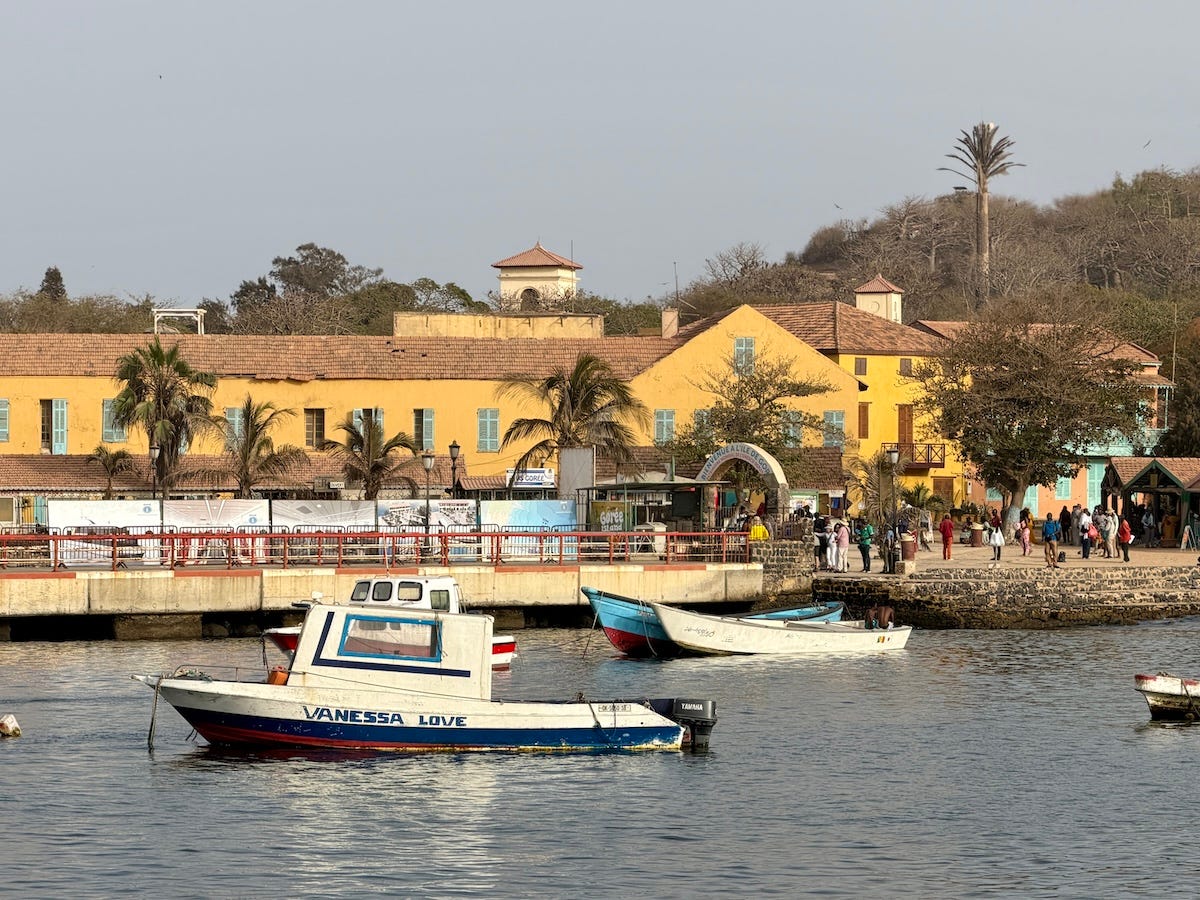
But there is more to the island than the step back in time. Enclosed on this 70-acre island is the UNESCO World Heritage site serving as a somber symbol of the transatlantic slave trade.
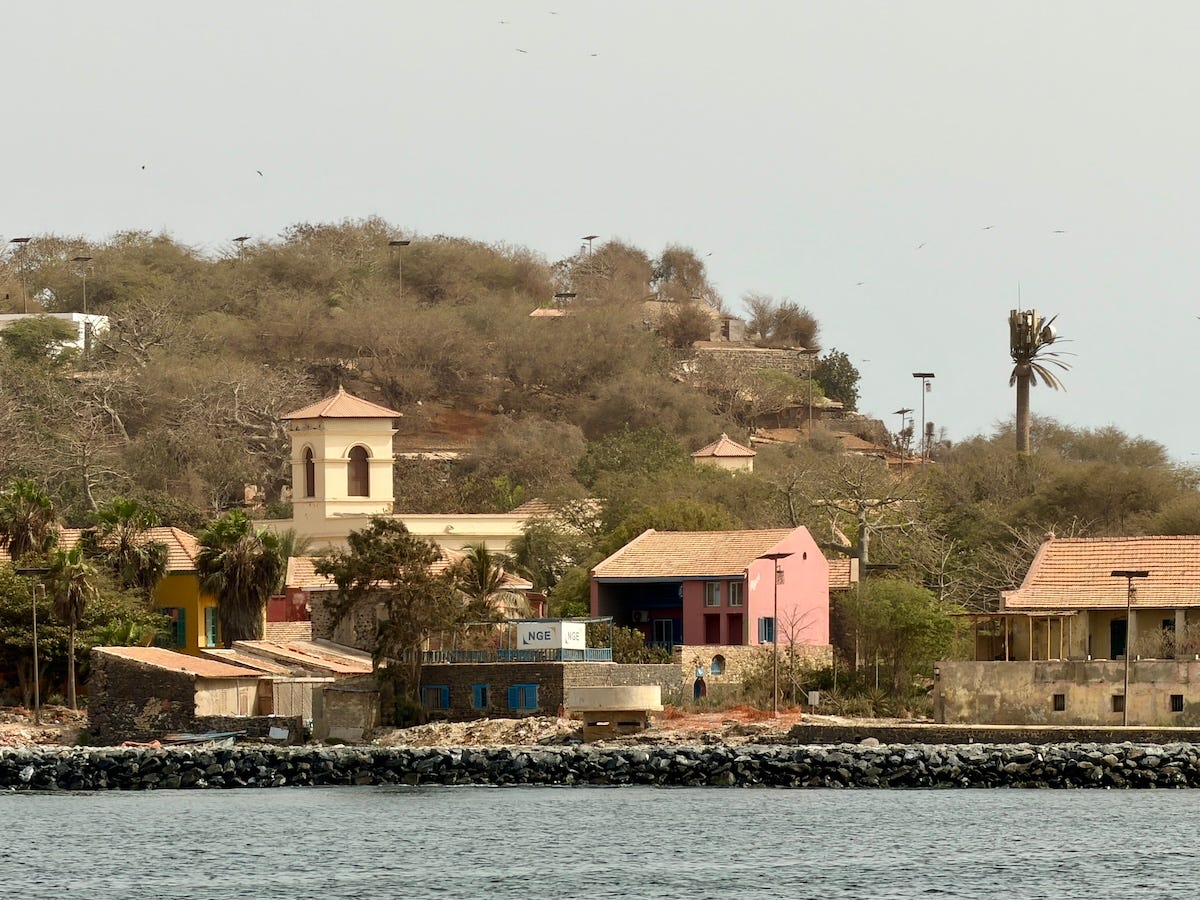
The pastel-painted colonial buildings, clean, sandy beaches, and bougainvillea-lined paths offer a stark visual contrast to the island’s dark and painful past.
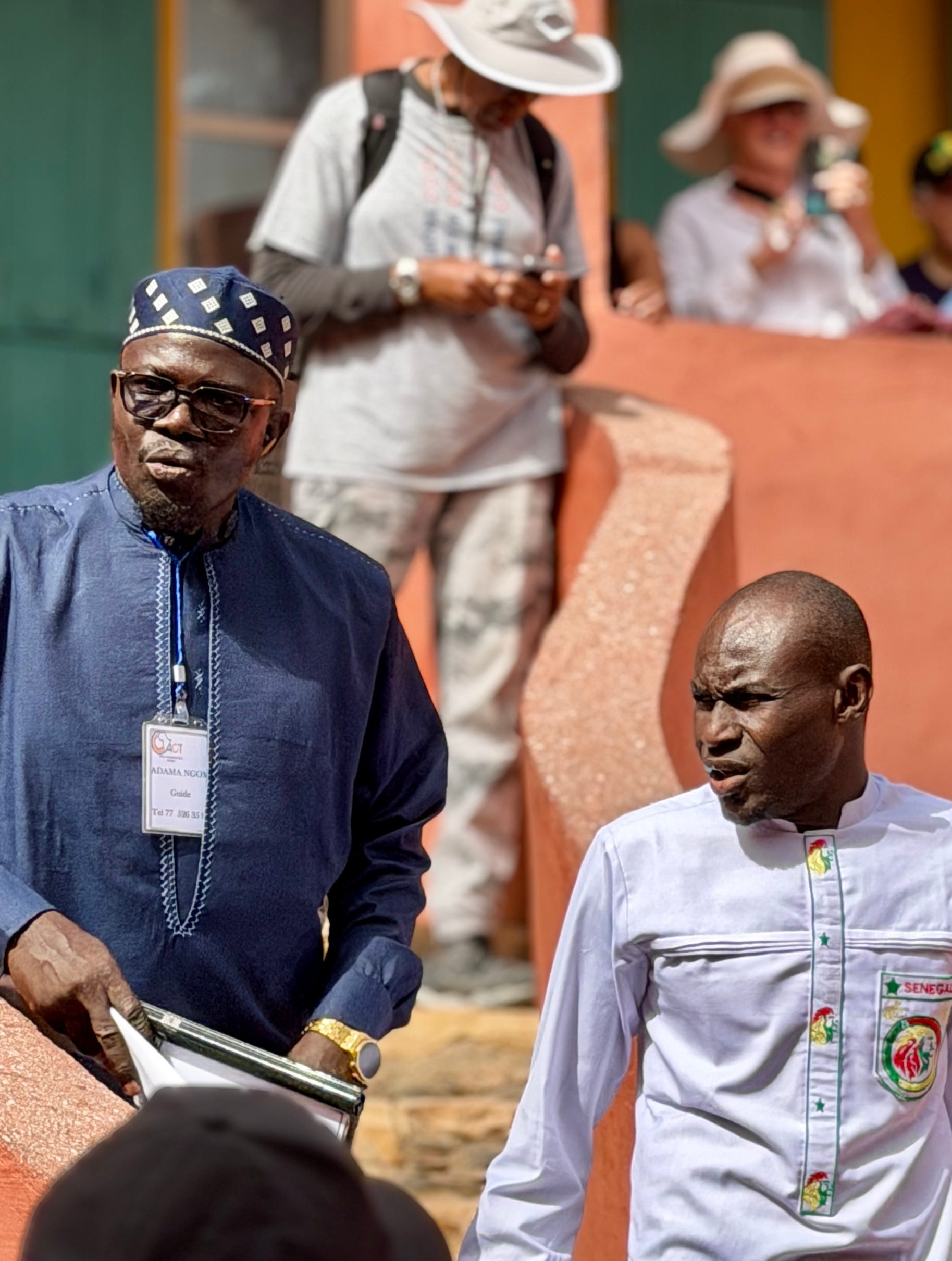
Our large group of 240 was divided into smaller groups, led by two men who were not only history lecturers, but also English teachers, translators, and interpreters. We were in good hands. Our first stop was at the House of Slaves, the most visited historical museum on Gorée Island. A museum curator gave a lecture about the structure, its history, and its inhabitants. Since the curator spoke French our tour guide, Adama, translated the lecture into English.
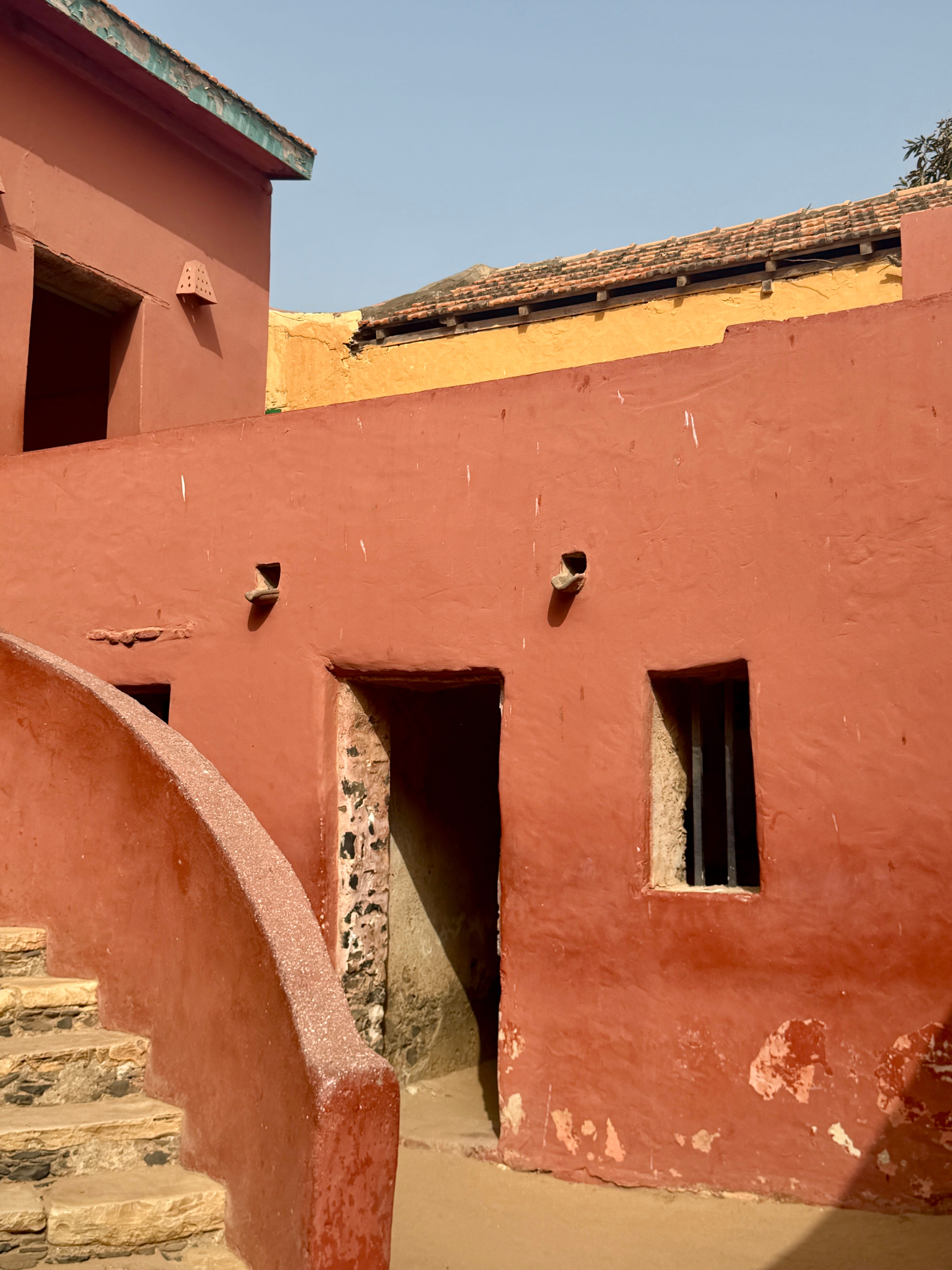
Built by the French in the late 18th century, the two-story building featured a dramatic double-horseshoe staircase. The spacious second floor, where the wealthy traders lived, had high ceilings, large windows to catch the ocean breezes, and elegant verandas. The basement level, where the enslaved were imprisoned, consisted of a series of low, damp, windowless stone cells with rough volcanic rock floors. The courtyard in the middle of the structure was where the captives were paraded, inspected, and weighed, all fully visible to the traders looking down from the upper balconies.
A tour of the building offerd a horrifying glimpse into the vast divide between the wealthy European traders and the captured Africans.
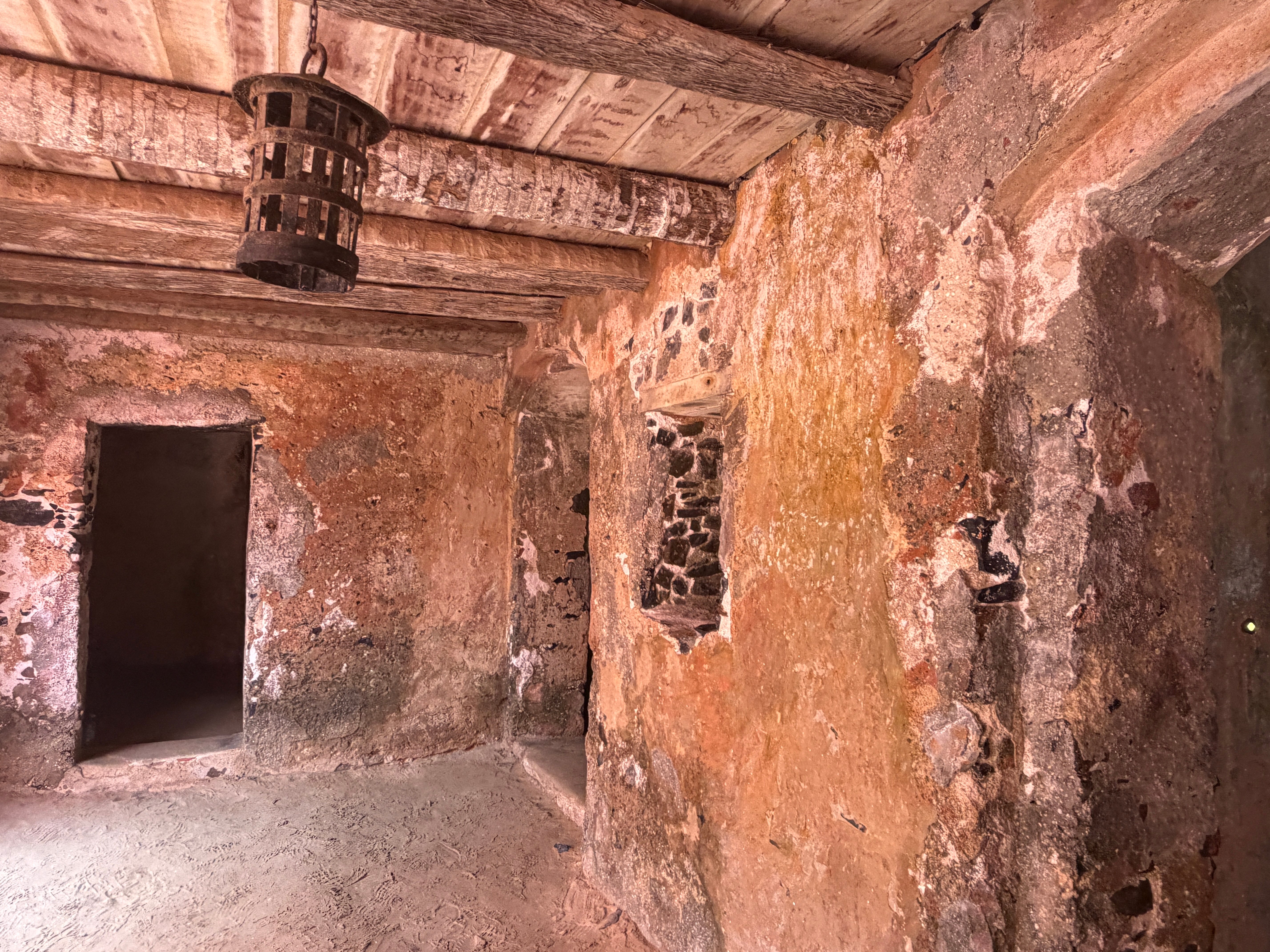
Prisoners were cruelly separated into cramped stone cells based on age and sex, including specific rooms for men, women, and young children.
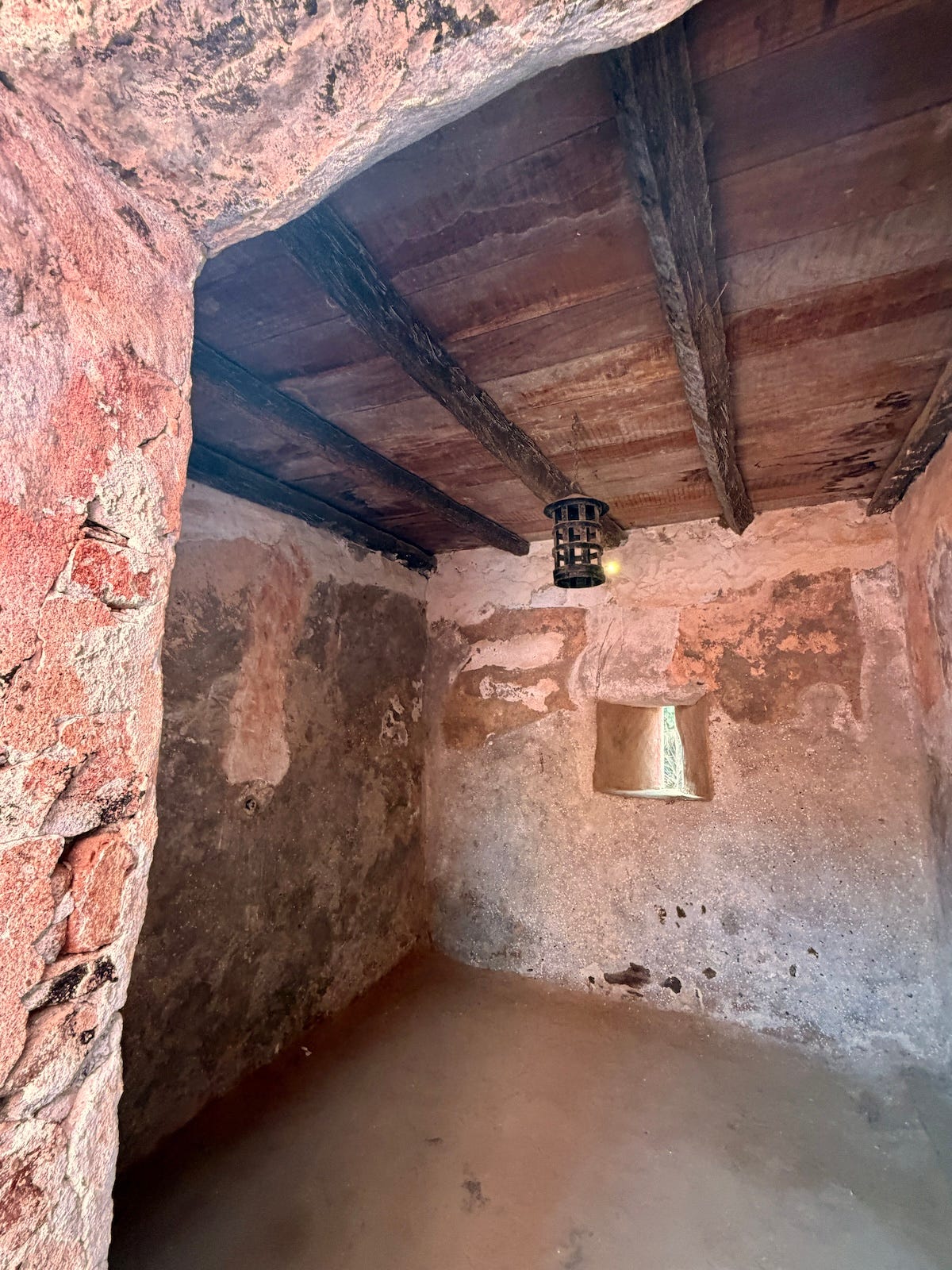
Windows in slave cells were designed to get smaller toward the outside to prevent escape while letting in minimal light and air. The tiny openings restricted the captives' view of the outside world, too, enforcing a sense of isolation and disorientation.
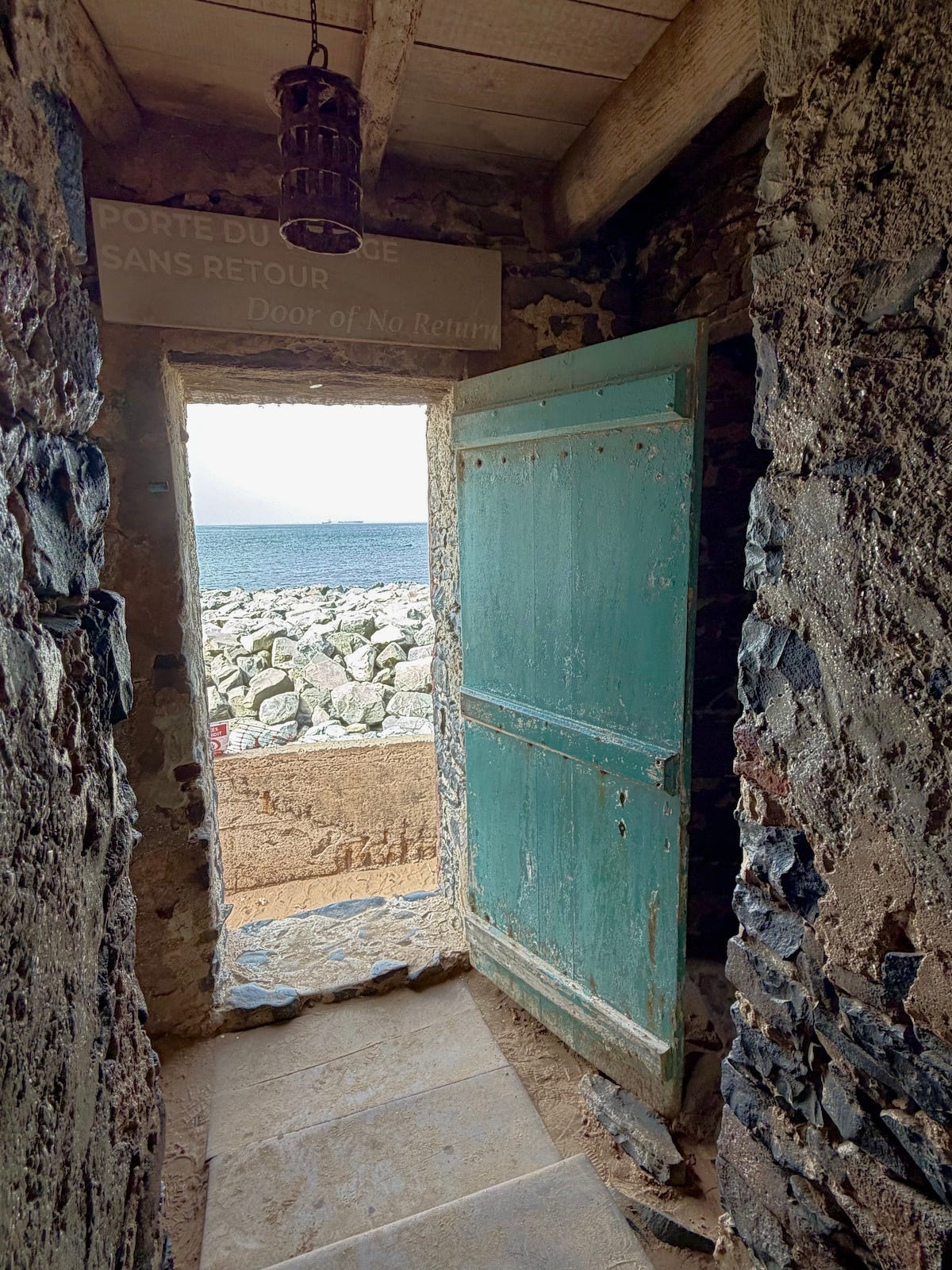
The Door of No Return is the most infamous part of the House of Slaves. Located at the back of the dark stone basement, this narrow opening looked directly out onto the vast Atlantic Ocean. The enslaved were forced through this door, loaded onto small boats, then transported to the massive slave ships anchored offshore. Most were sent to either Brazil or the Caribbean to work on coffee or sugar cane plantations.
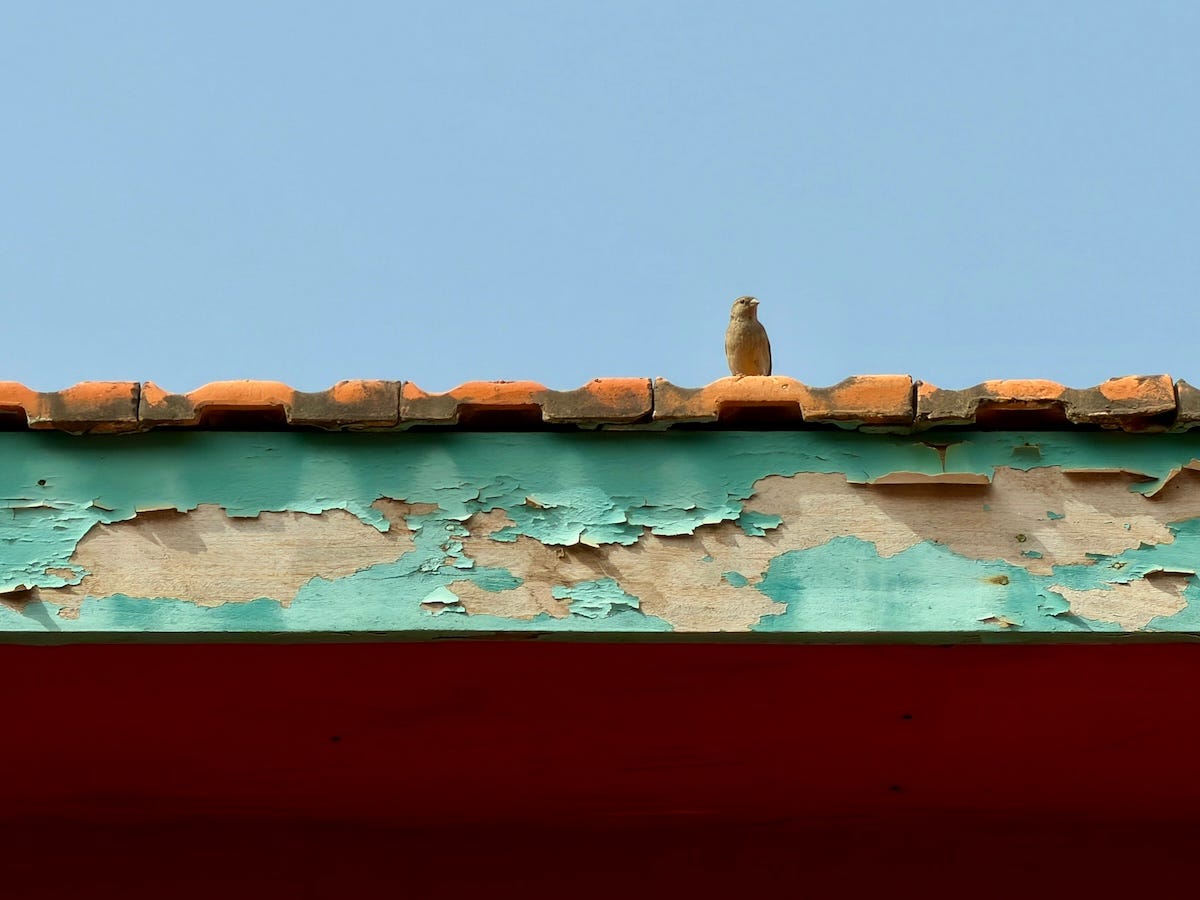
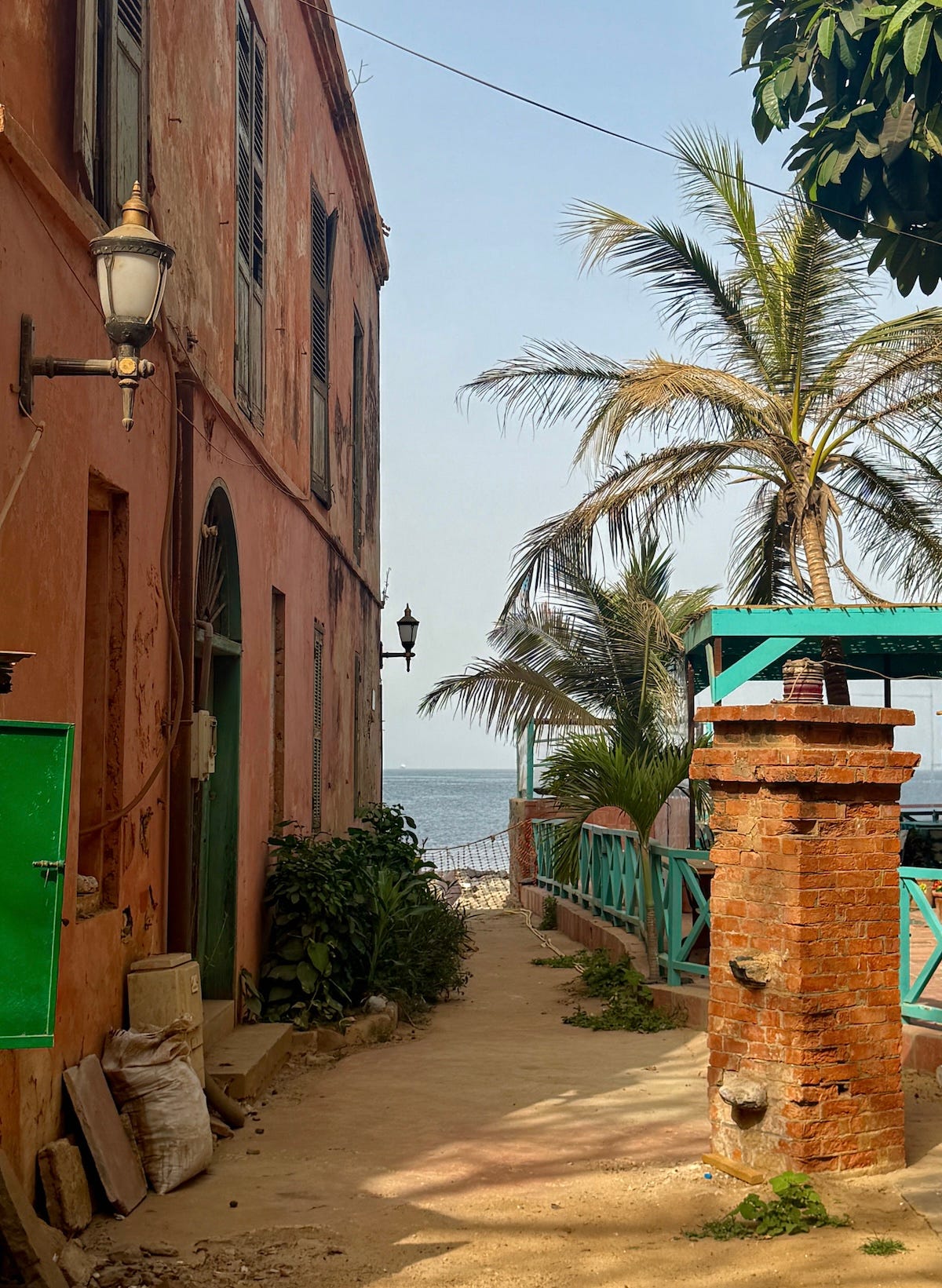
The streets of Gorée Island offer a parallel story —they function as a maze of narrow, peaceful pedestrian alleyways lined with sandy paths, cobblestone passages, and pink flowering bougainvillea bushes. One can get a sense of the lives of the 1600 residents, living behind the colorful walls, just out of view.
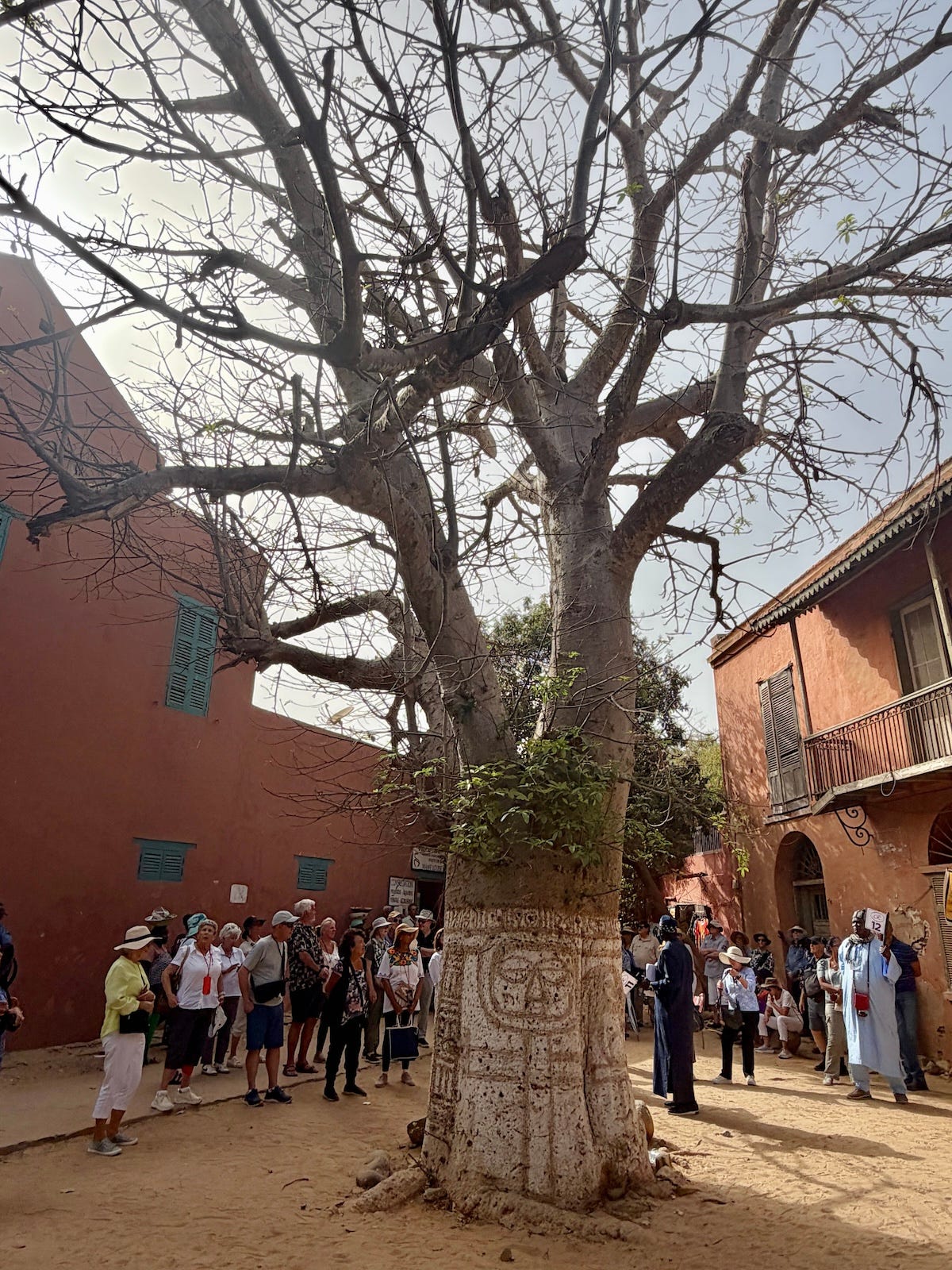
After leaving the House of Slaves, we paused at this huge baobab tree. In Senegal, the baobab is a deeply sacred symbol of resilience, longevity, and community strength. Local sand-artists on the island actually harvest the natural sap and gum from the island’s baobab trunks to use as a glue in their creations.
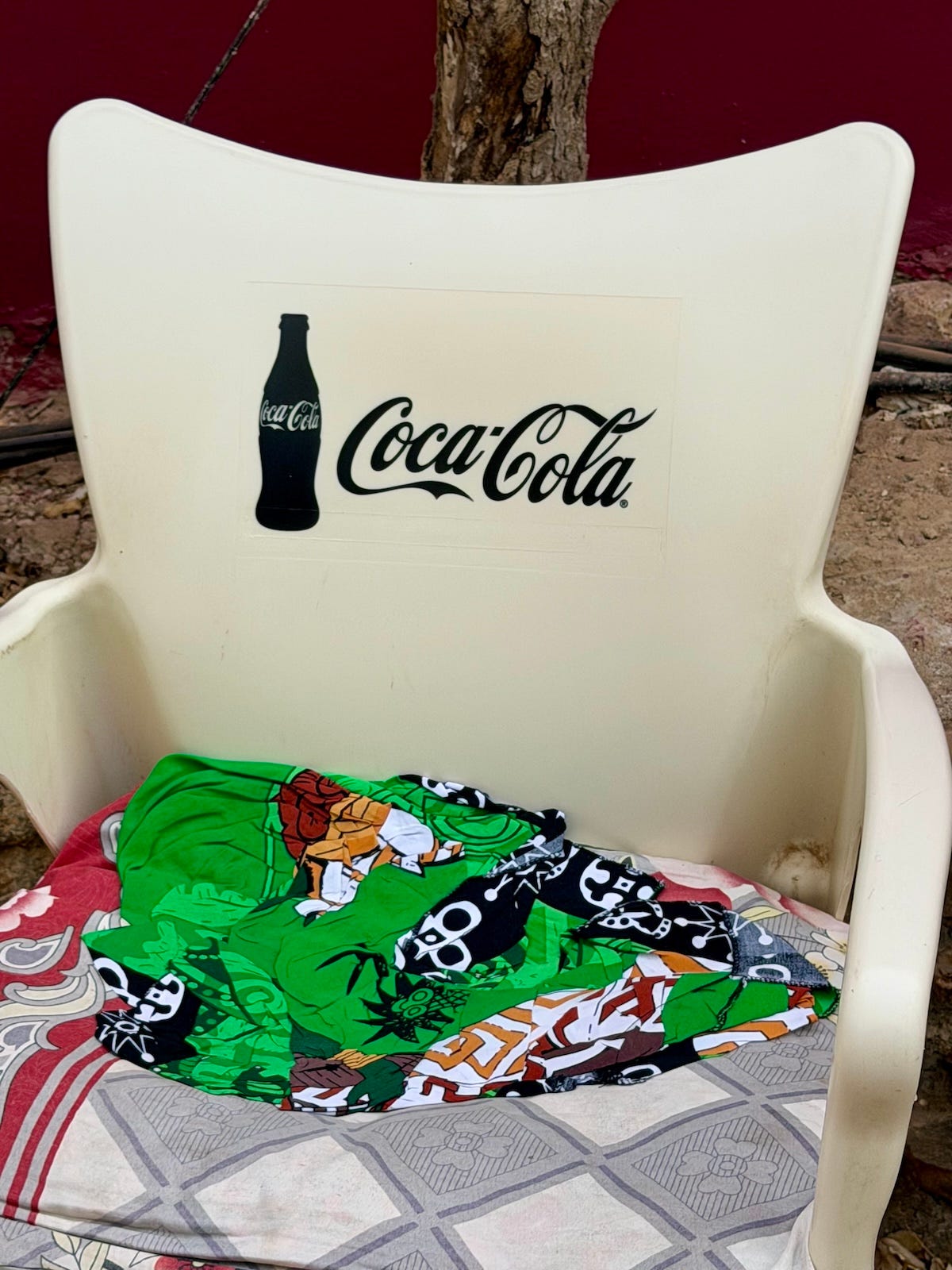
Of course I had to take a photo of this Coca-Cola advertisement — and the only evidence I noticed of Coca-Cola on the island.
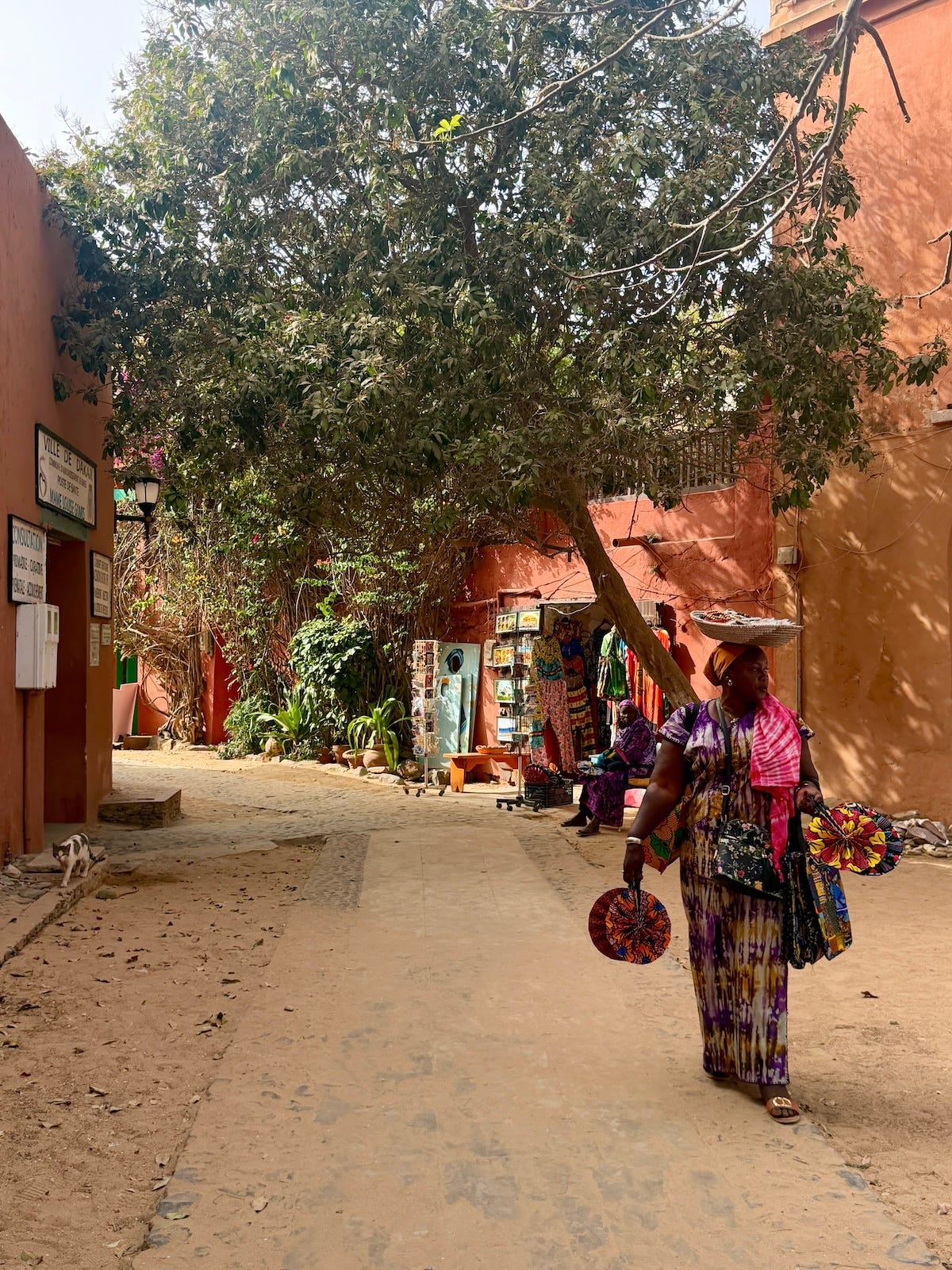
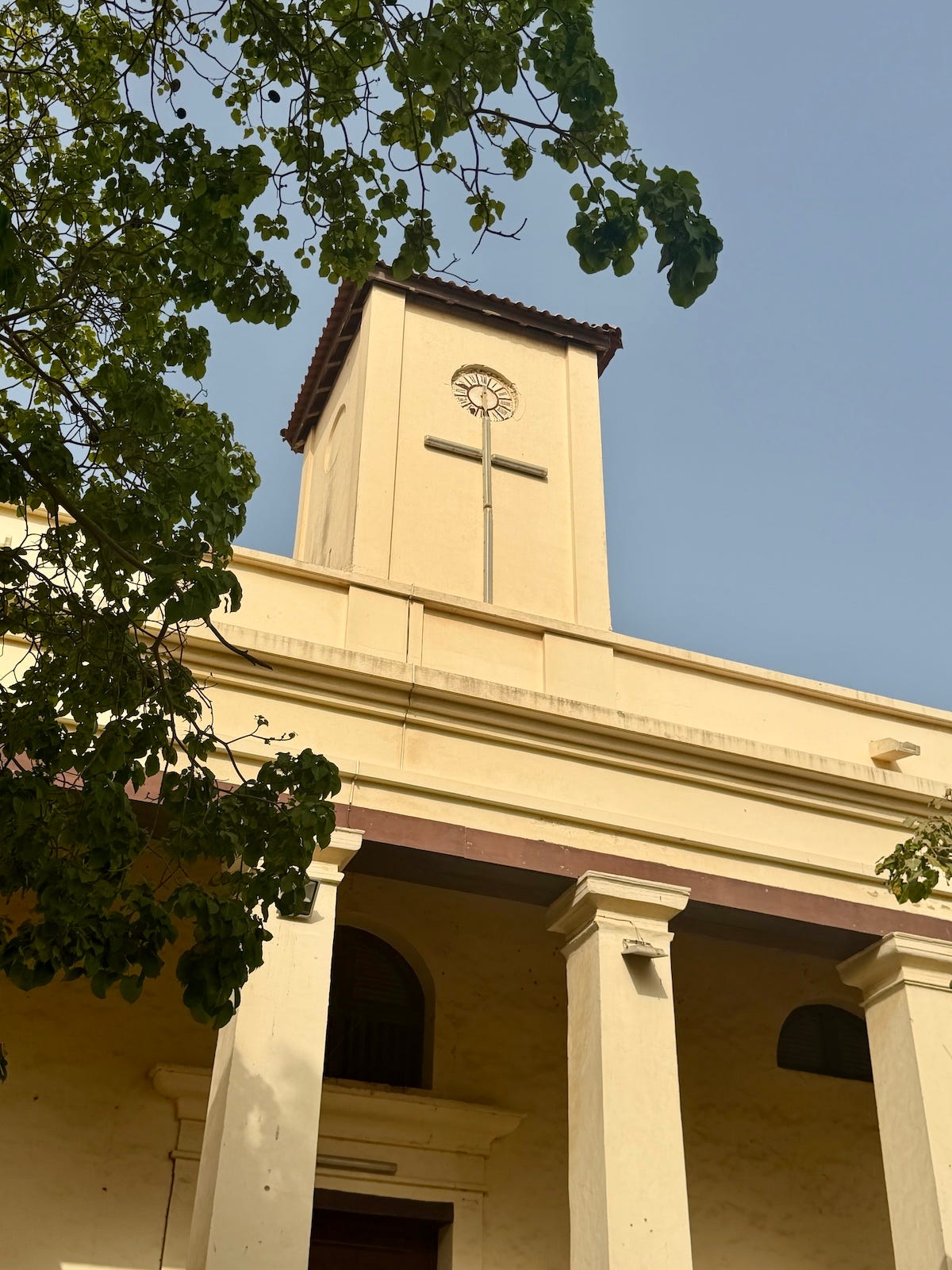
We next toured the interior of the Church of Saint Charles Borromeo. Occupying a prominent position in one of the central plazas of the island, this historic Roman Catholic church was completed in 1830 and is one of the oldest standing stone churches in West Africa.
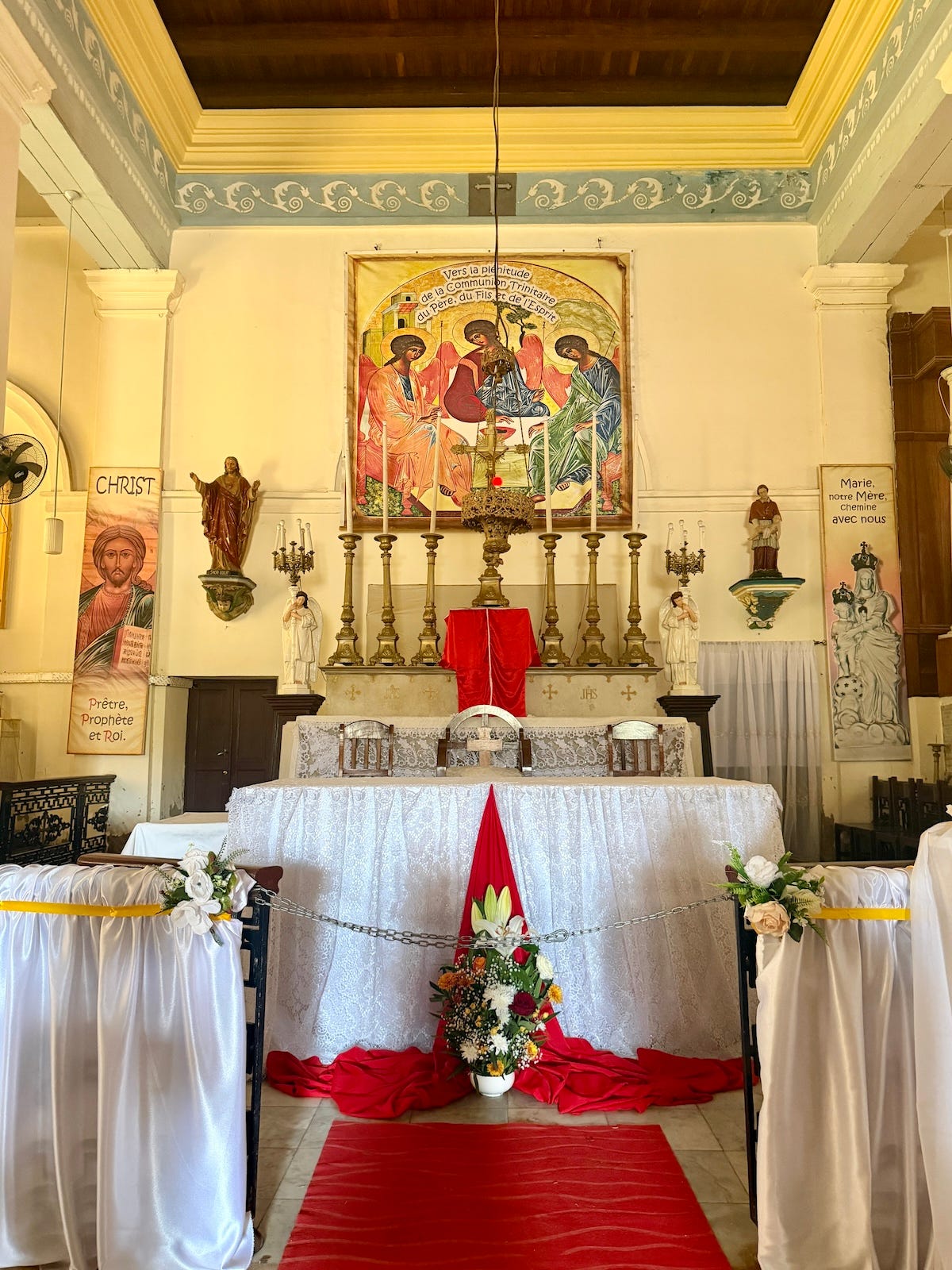
In February 1992, Pope John Paul II visited Saint Charles Borromeo during his pilgrimage to Gorée Island. Standing in this sanctuary, the Pope delivered his historic speech apologizing for the role, complacency, and moral failures of the Catholic Church and Christian traders during the transatlantic slave trade.
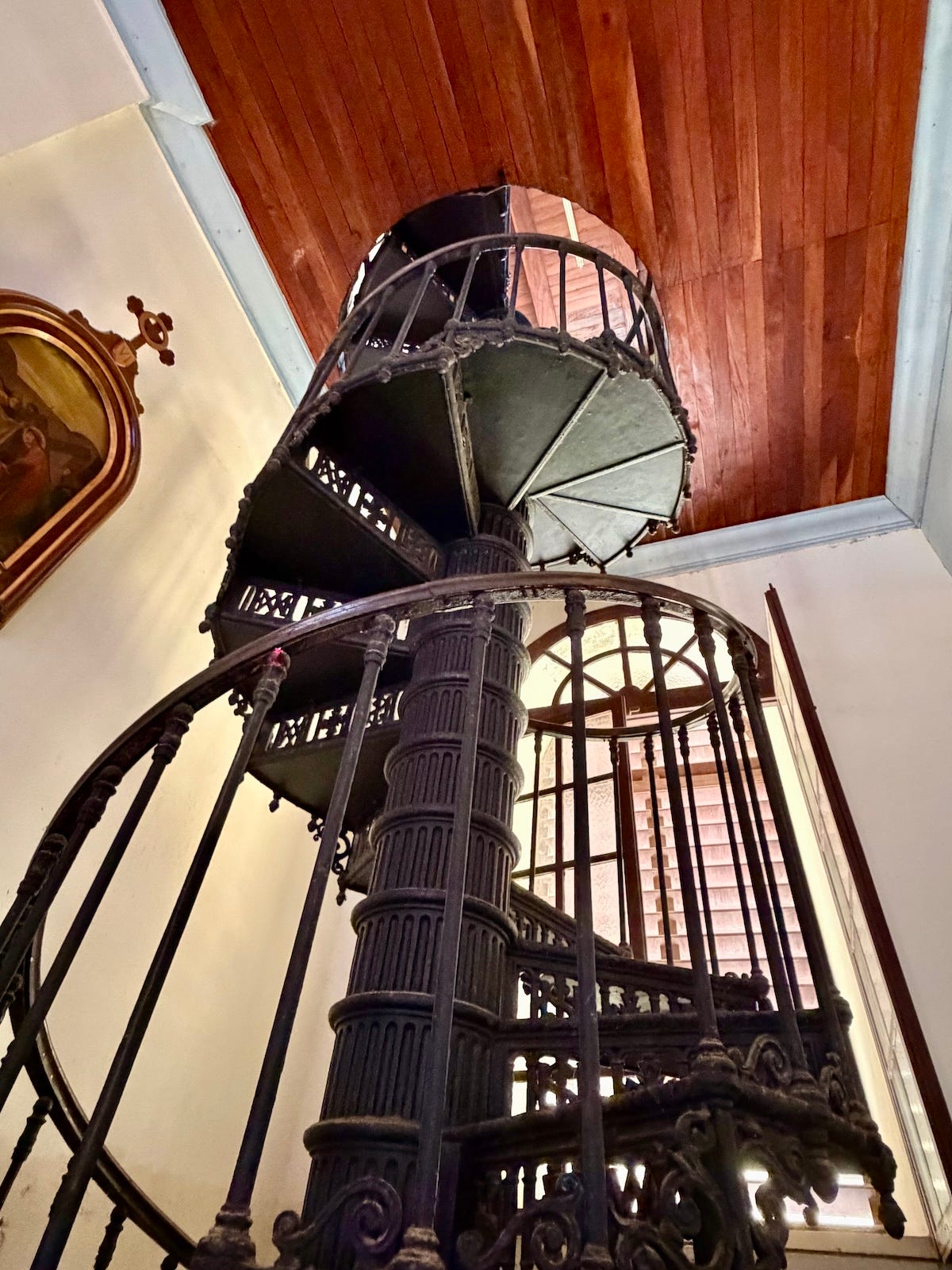
Although the rest of Senegal’s population is roughly 90% to 95% Muslim and only 3% to 5% Catholic, Gorée Island’s Catholic population is about 25%. Yet, the church’s history is complex. Enslaved people built this church, but were denied entry until emancipation in 1848. (They participated in the Mass from the adjoining courtyard.)
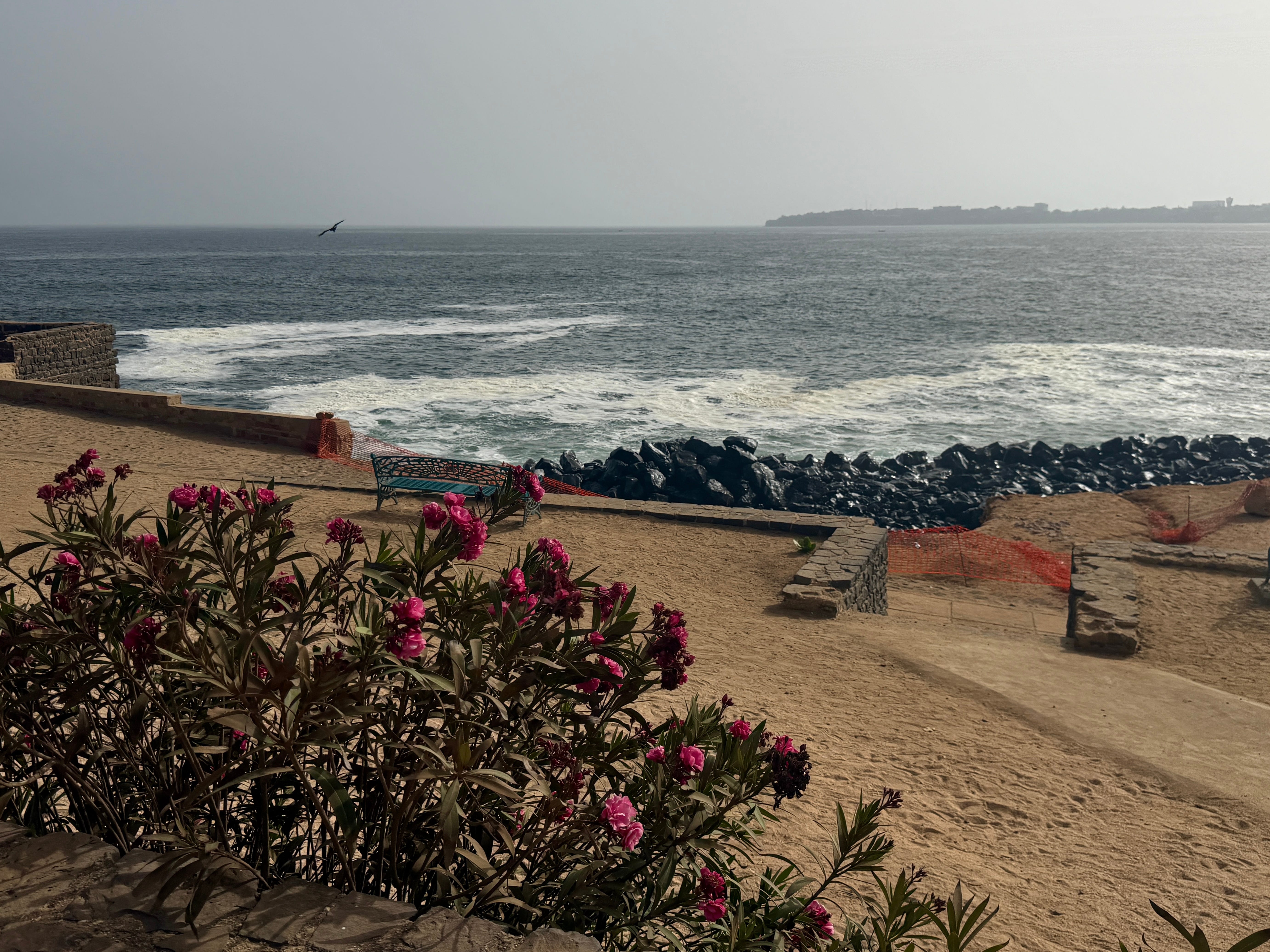
Steps from the church, we paused at this view of the Atlantic Ocean and Dakar in the far horizon. As we listened to our guide discuss aspects of local life, we heard the call of prayer from the nearby Mosque of Gorée, one of the oldest stone mosques in all of Senegal, built in 1890.
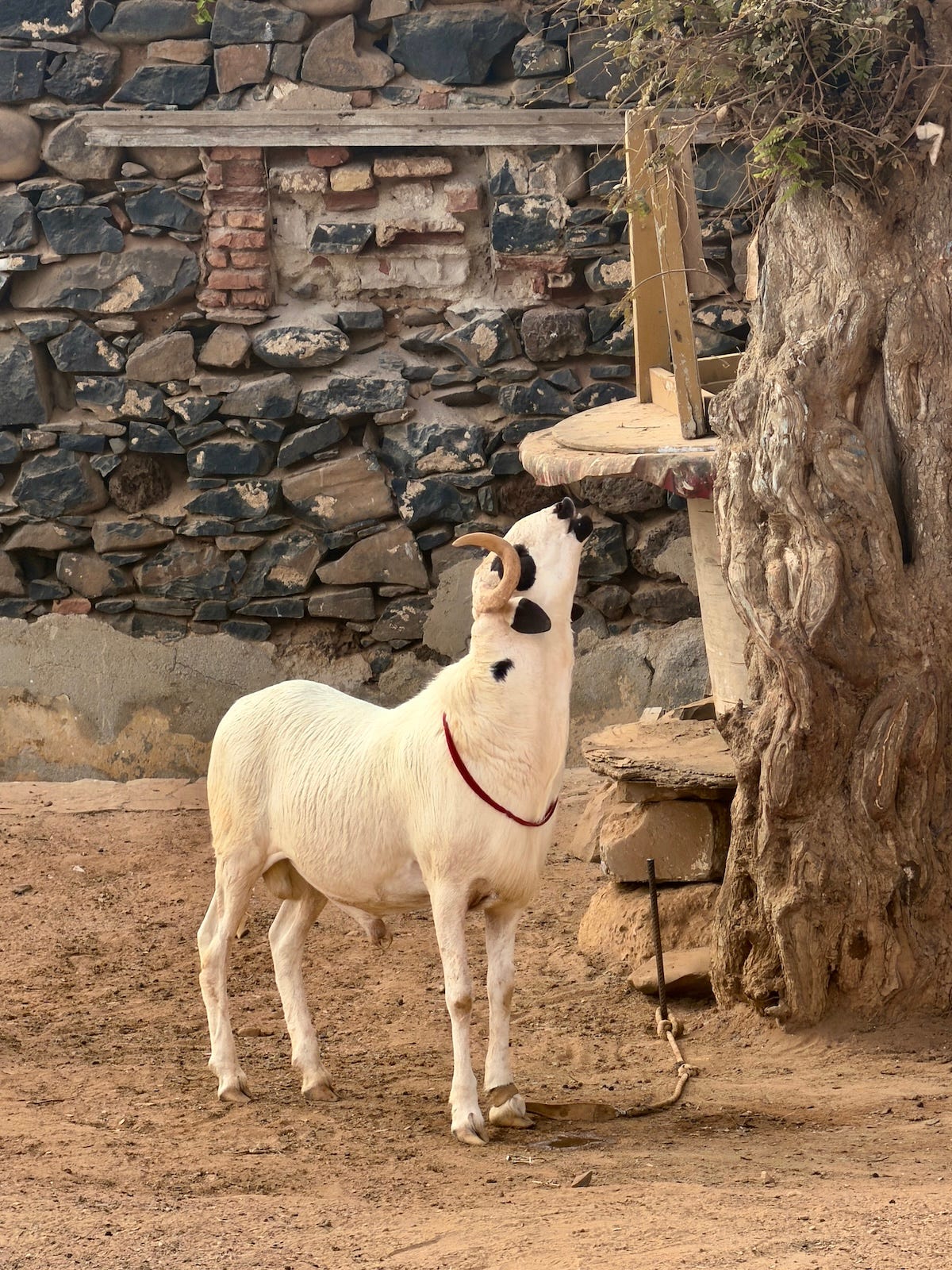
And, as the call to prayer sang out from the east, the bleating of this sheep sounded from the west. “Competition,” called out our guide.
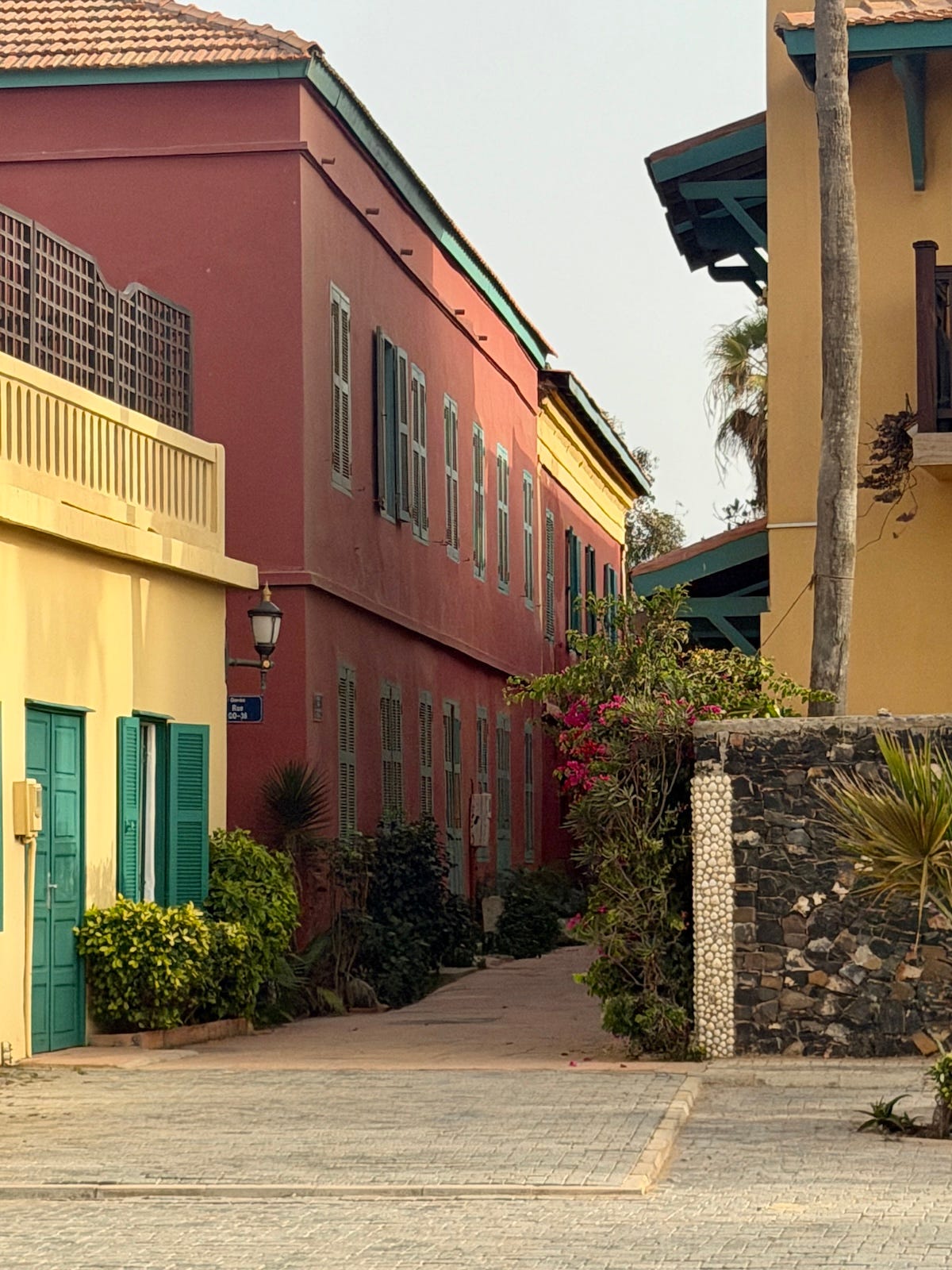
From the coastline we retraced our steps, and headed across the island to the old fort. Along the way, we admired the many buildings painted in various hues of yellow, terracotta, dusty pink, and sky blue, most accented by colorful wooden shutters. Gardens of flowering plants and cacti added beauty and a deep connection to the earth. At times, we felt like we were walking the streets of a European village, not an African island — proof of the lasting French and Portuguese influence on the area.
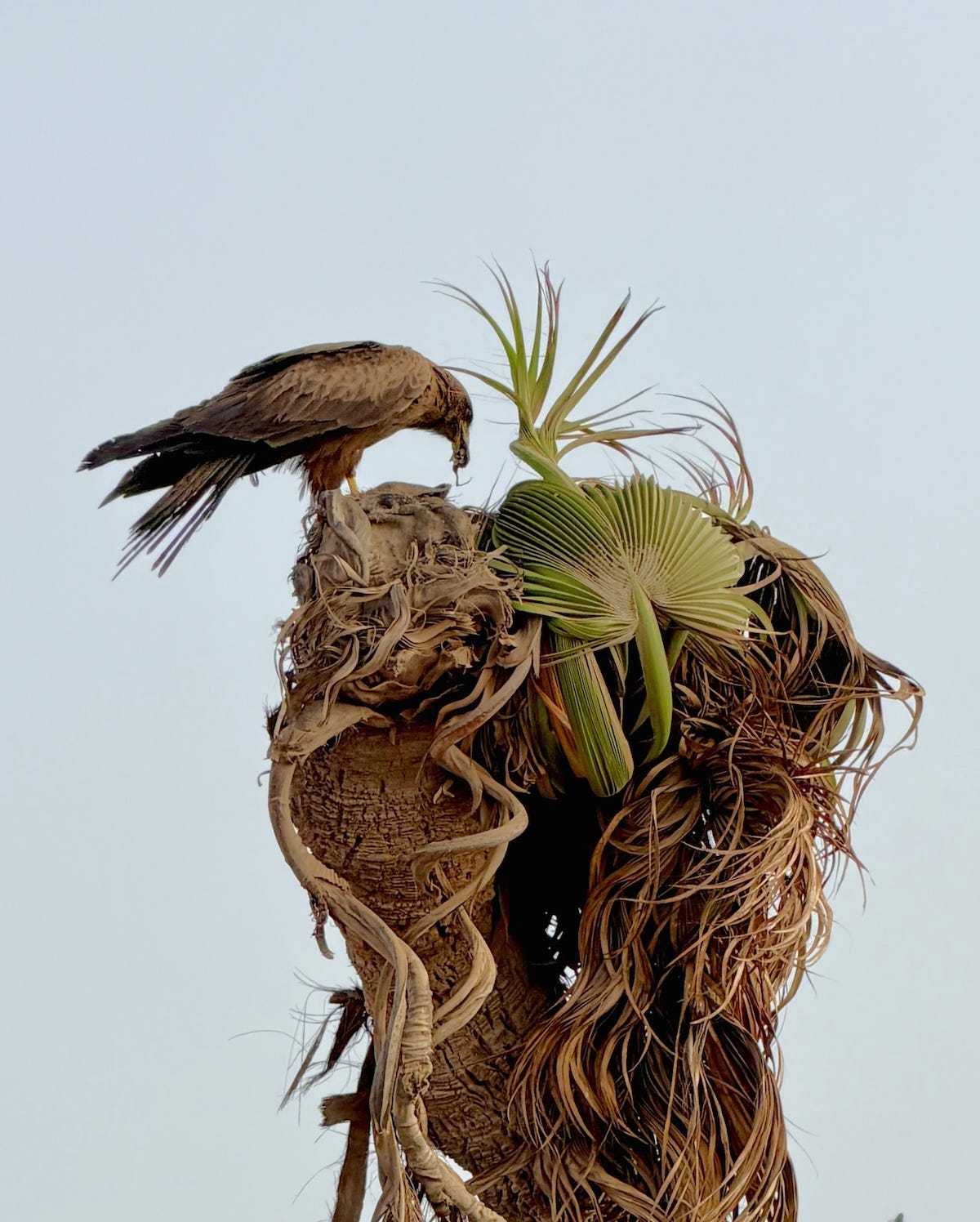
As we walked, we were accompanied by a flock of huge black birds. One settled on a nearby palm tree, and we were able to get a good look! This Black Kite was an impressive sight! These raptors are common across Senegal, with an estimated urban population of around 7,000 birds in the capital area alone. That’s a lot of birds of prey! Because they are highly adaptable, they frequently nest in the island’s palm trees, ancient baobabs, even on building ledges.
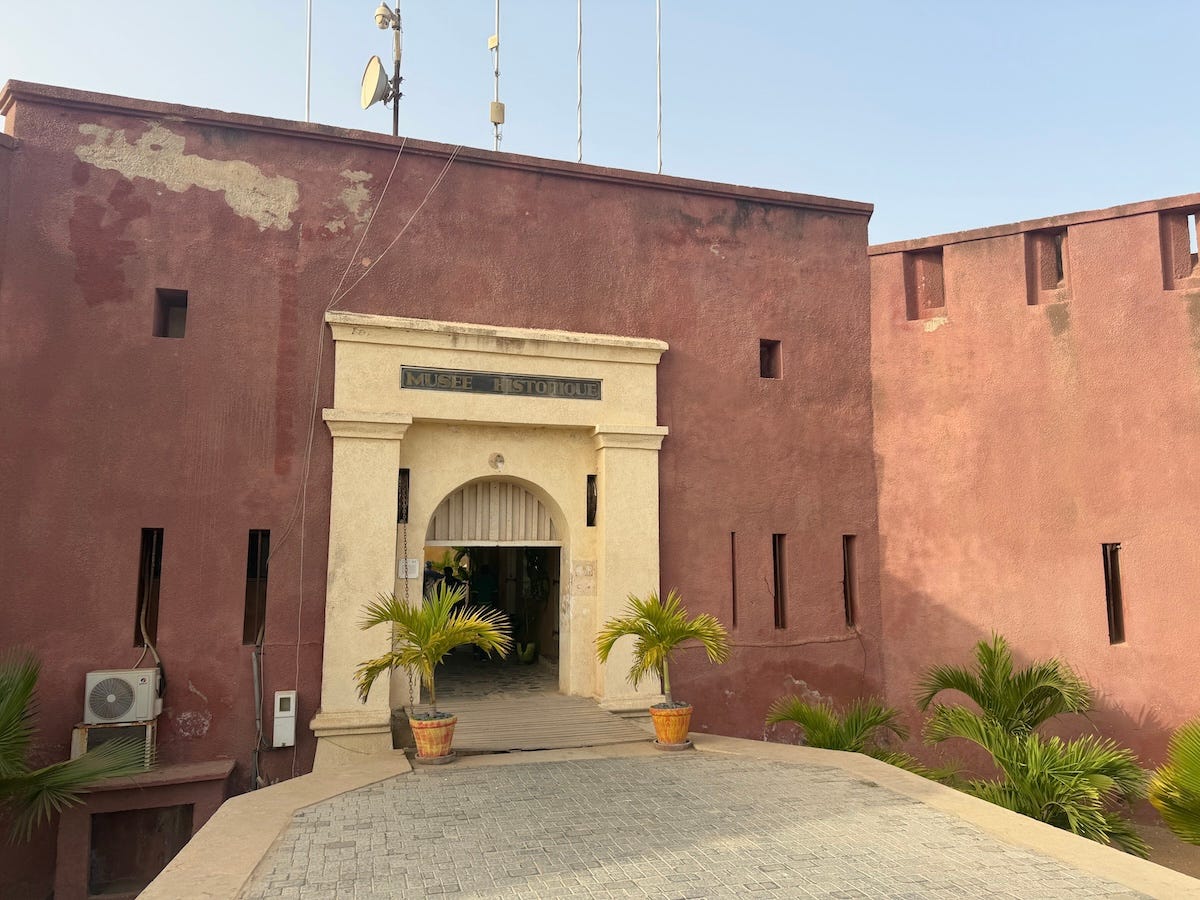
Our final destination on our tour was Fort d’Estrées, built by the French between 1852 and 1856. The circular stone citadel was originally constructed to protect the outskirts of Dakar’s mainland port, but today it houses the Historical Museum of Senegal. Inside its 13 rooms, sparse exhibits offer a glimpse of the country’s history.
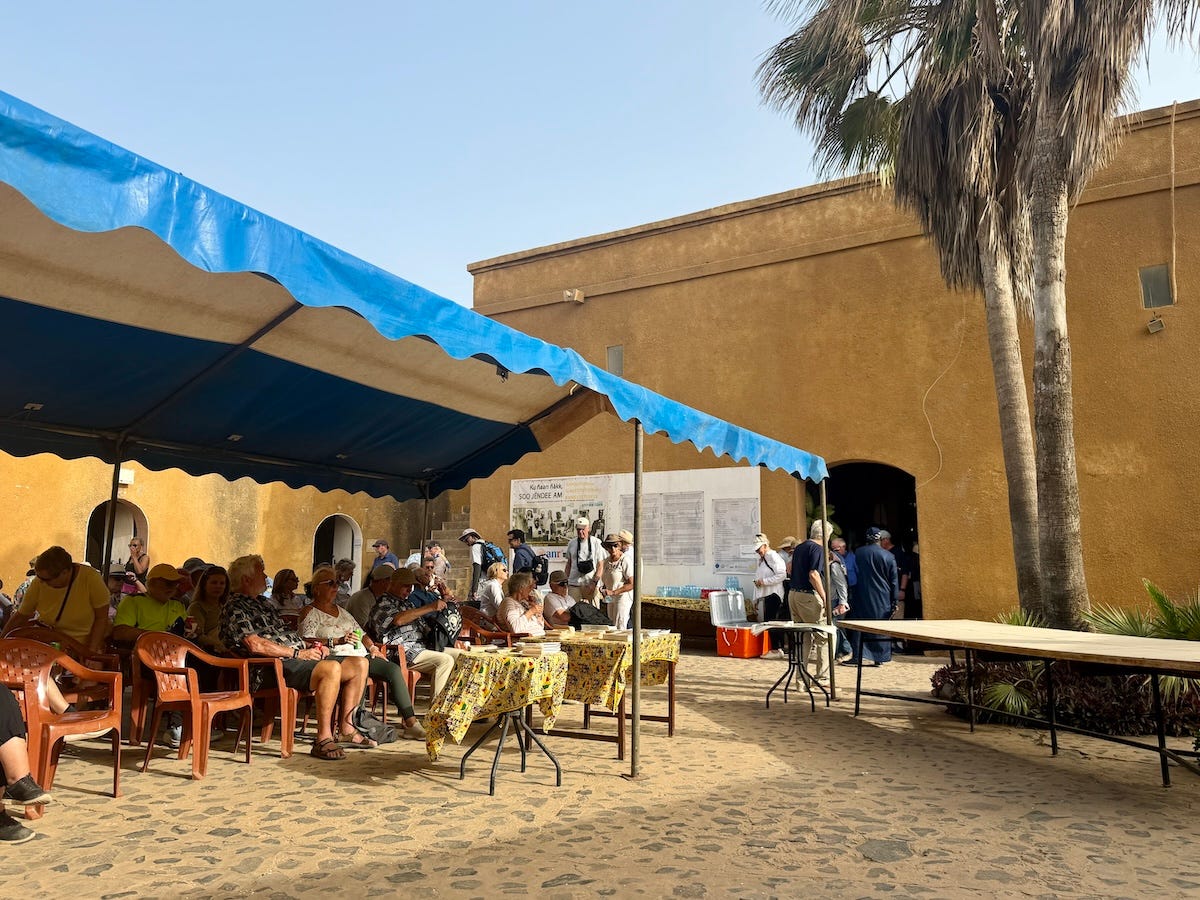
Shaded seating and beverages awaited our arrival. We listened to the last of five lectures as we enjoyed a cold drink — it was warmer on the island than we’d anticipated and we were all happy to take a break. Then we had free time before we were to meet near the ferry dock for our return trip back to the ship.
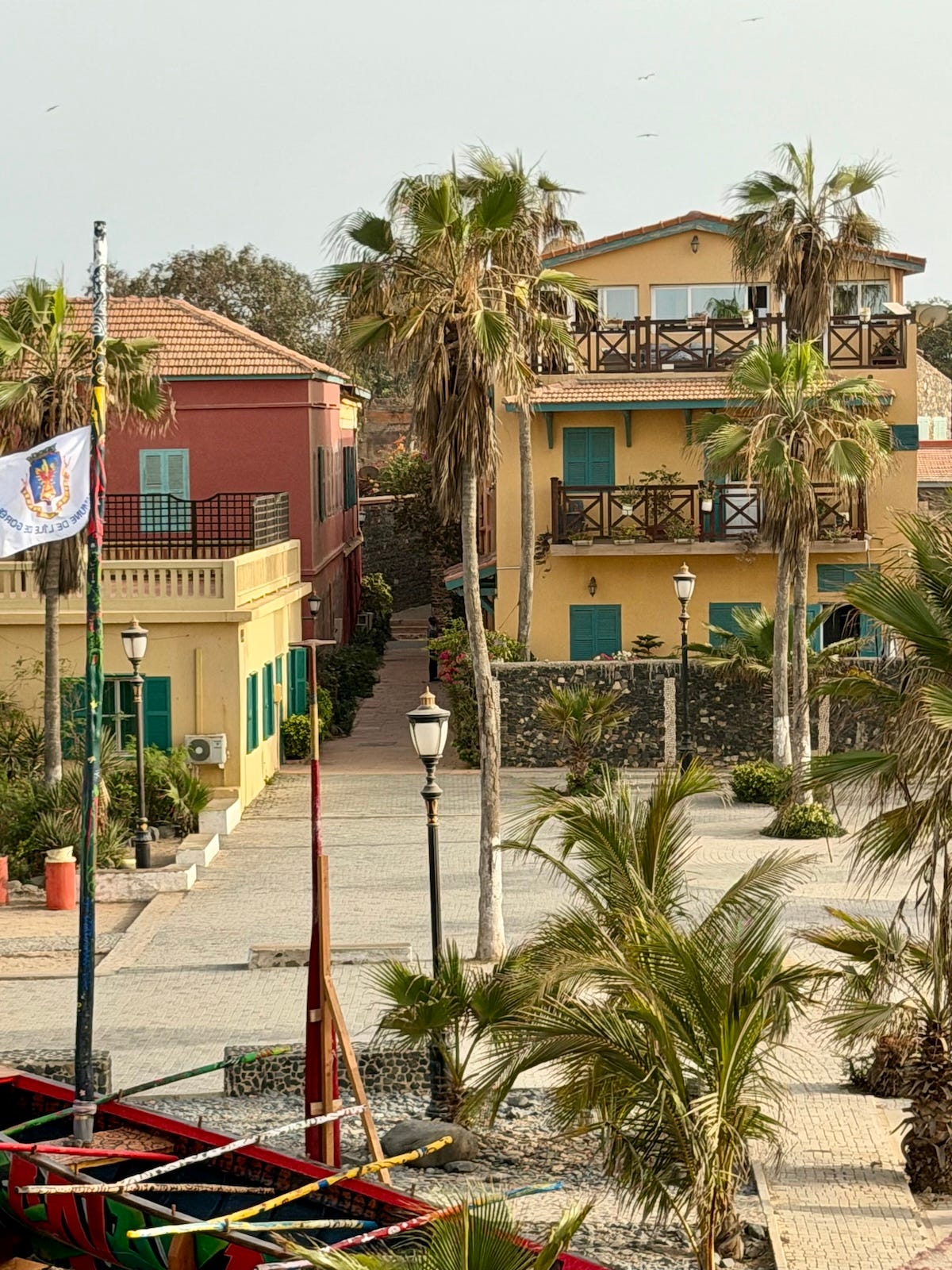
Sherpa climbed to the second level of the fort where he walked along the ramparts and took a few photos of the island, plus panoramic views of the Atlantic Ocean.
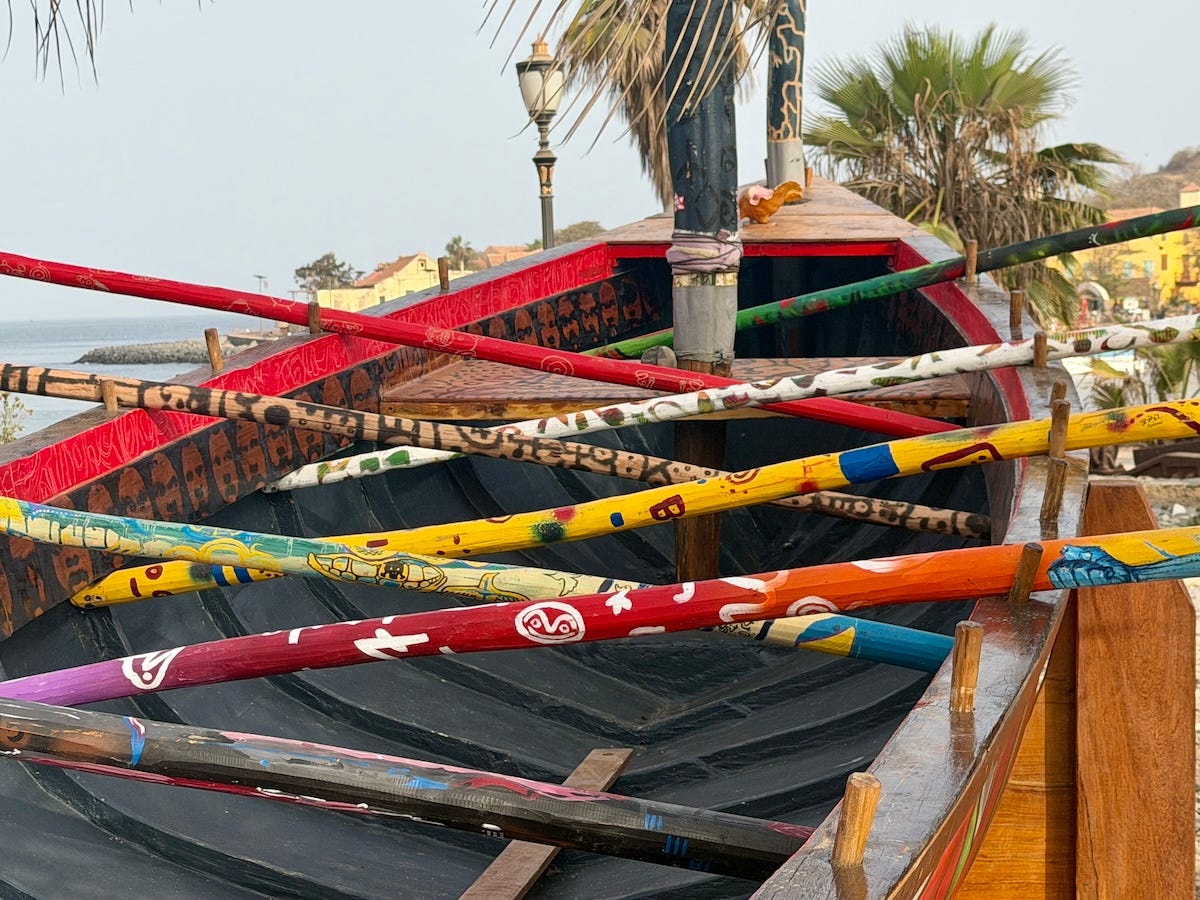
As we left the fort, we had plenty of time to admire this painted boat in the front courtyard. This pirogue was an example of the unique wooden boats that are central to Senegal’s coastal identity.
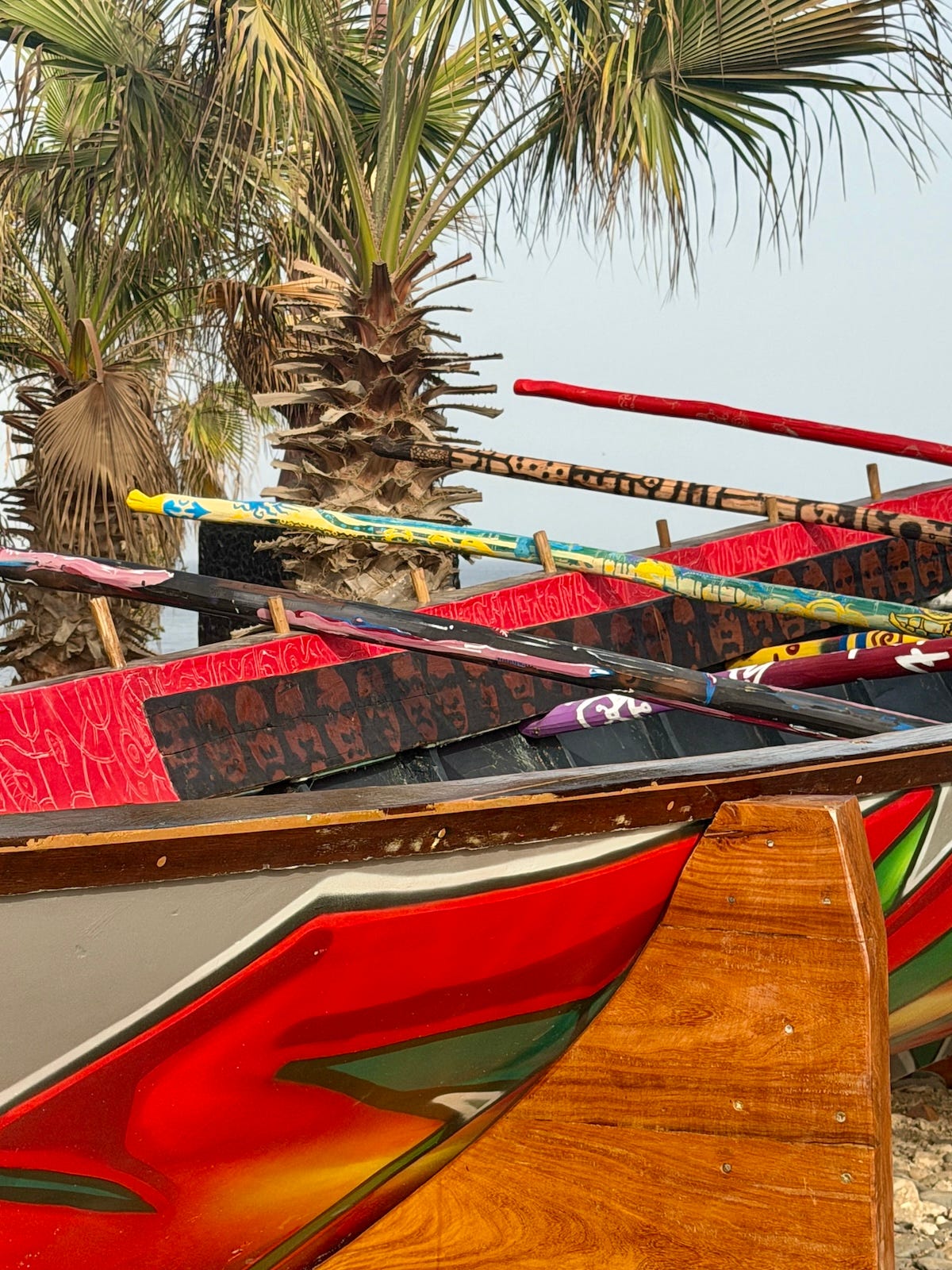
These boats are handcrafted by local builders and covered in vibrant patterns, religious symbols, talisman protections, and in the colors of the Senegalese flag — green, yellow, and red. A functional piece of art!


We stopped frequently as we walked the pathways on the island to admire the colors and architecture.
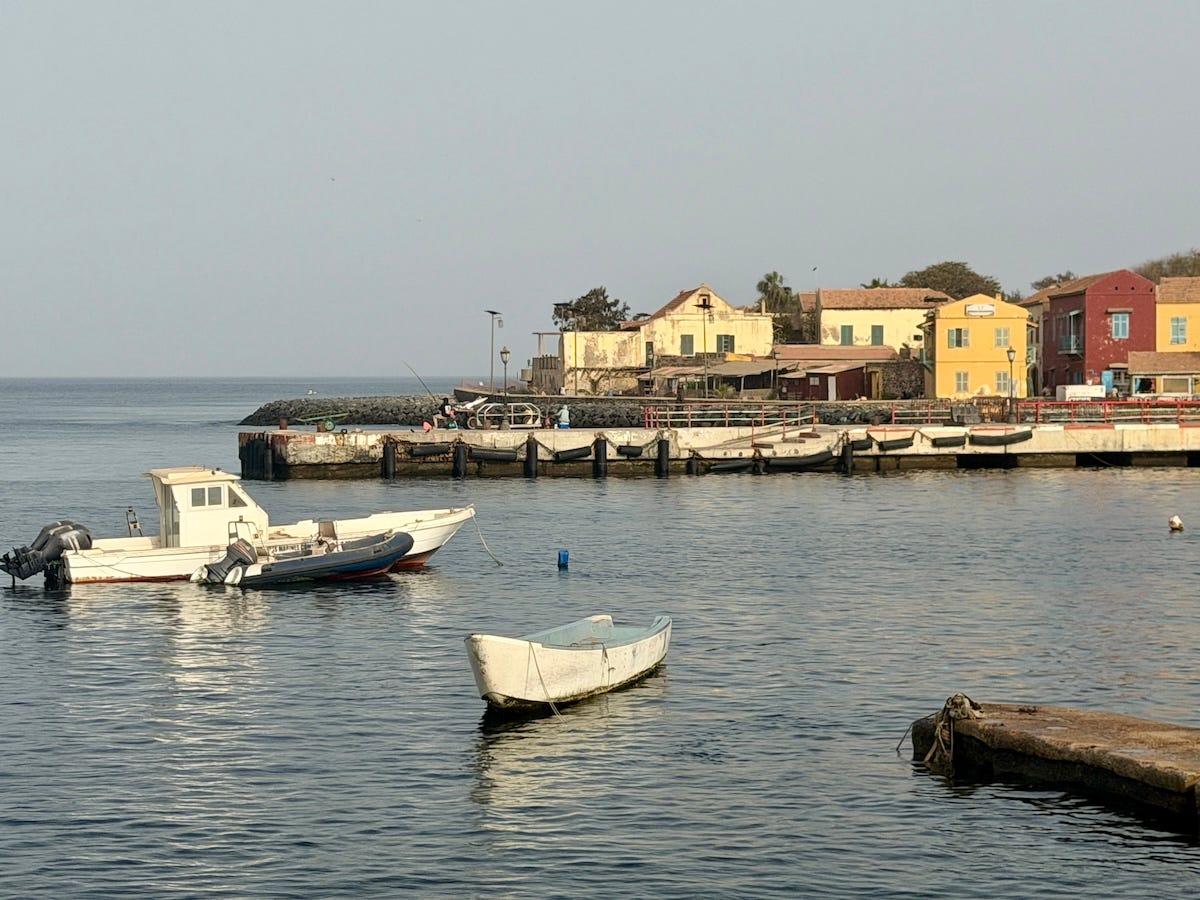
We didn’t have to walk far from the fort to the harbor (pictured above). Originally, we were told to be at the ferry dock by 6:20 PM for a 6:30 departure. But once we arrived, we were told there would be a longer than anticipated wait. We didn’t board the ferry until after 7 — which meant there was plenty of time to sit down in one of the beach-side restaurants and sample one of the local beers!


La Gazelle is Senegal’s national beer. First brewed in 1929 at the historic SOBOA brewery in Dakar’s Bel-Air district, it is deeply embedded in Senegalese culture and functions as a ubiquitous staple across the country’s bars, beaches, and restaurants.
Sherpa’s Take: “A distinctive beer compared to most of the other Beach Beer styles on our cruise. The beer is not a Pilsner, but it reminds me of Pilsner Urquel. It has a crisp bite - not bland. It has some edges to the taste with an overtone of sweetness and morel mushrooms. Very pleasant and refreshing.” 7/10.
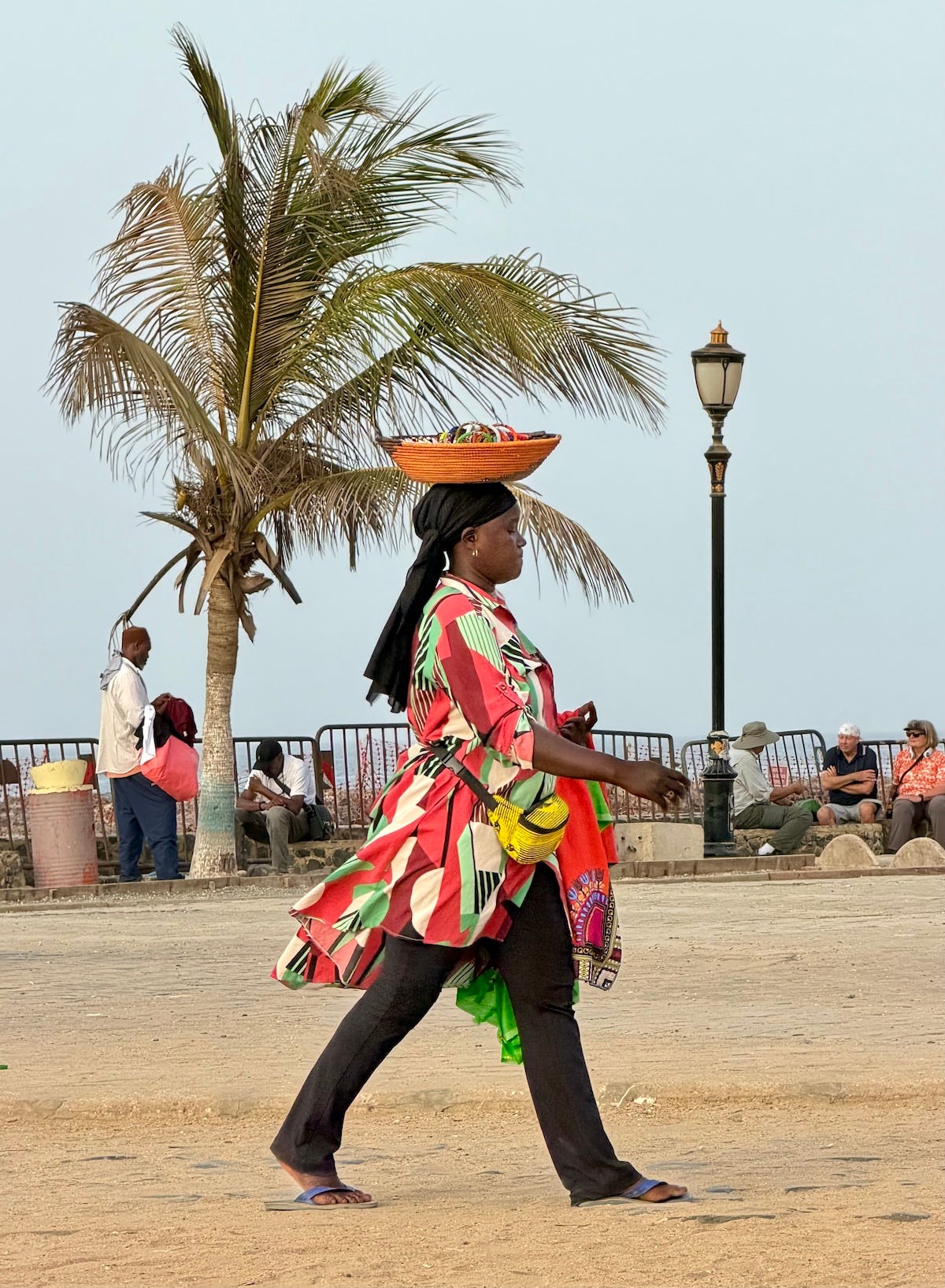
While Sherpa, and quite a few other cruisers, enjoyed sampling the local brew, I enjoyed people watching! I will never lose my sense of awe at the ease in which the local women carry all manner of items on their heads — and seemingly with no effort!
We also had plenty of time to visit with Adama, who sat down at our table as we waited, and shared stories about his life, his family and education, the politics of his country, his many personal successes, and his hopes and dreams. It was a wonderful way to end our tour, adding his personal perspective to the historical one we’d learned about on this five-hour tour. A tour well-done, and highly recommended.
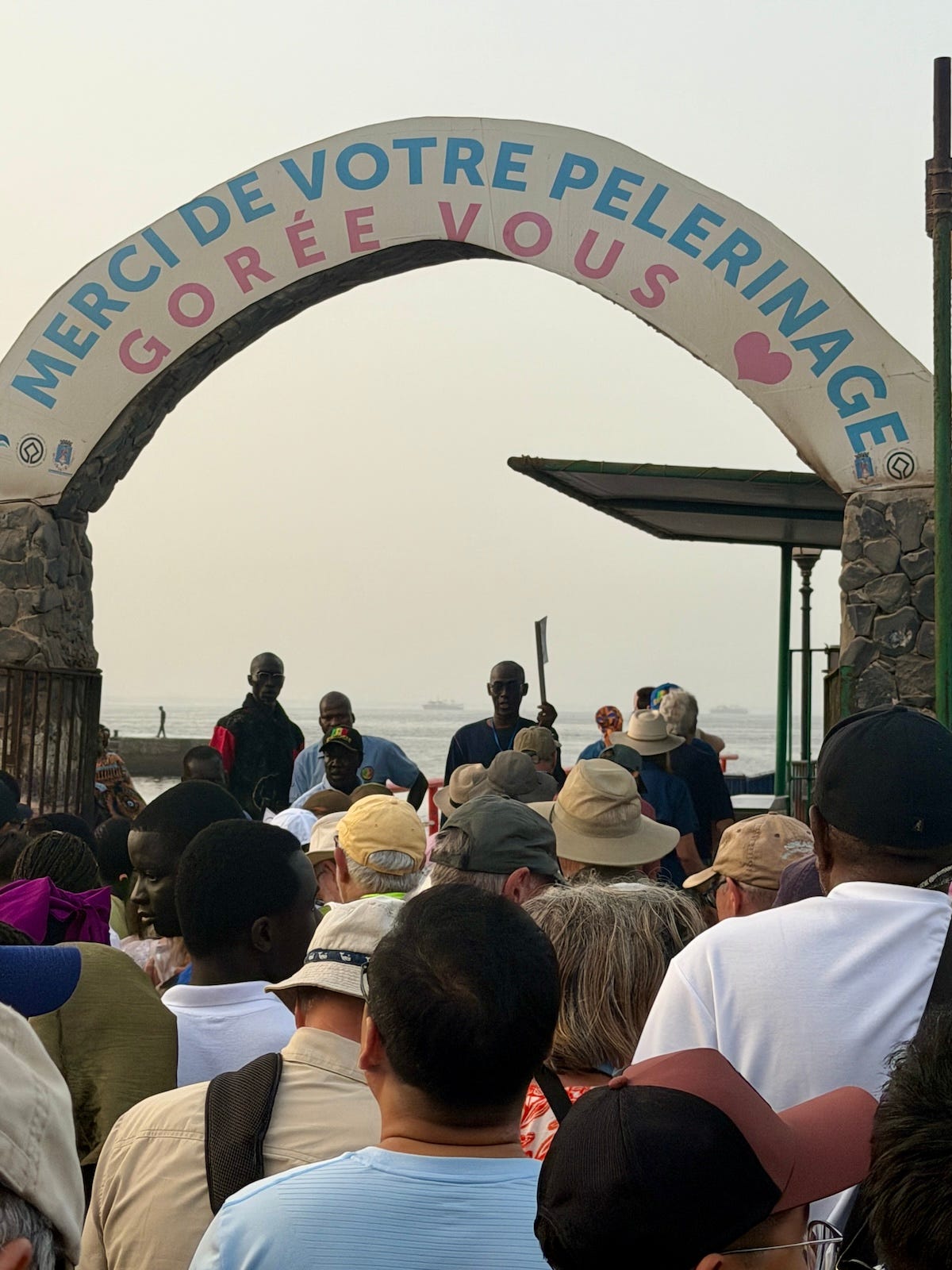
We had quite a wait, but we felt badly for the local folks queuing in line who couldn’t understand why they, too, couldn’t get on our chartered ferry. Some of them had been waiting longer than we had! It was a Sunday evening, and most were anxious to return to their homes in Dakar.
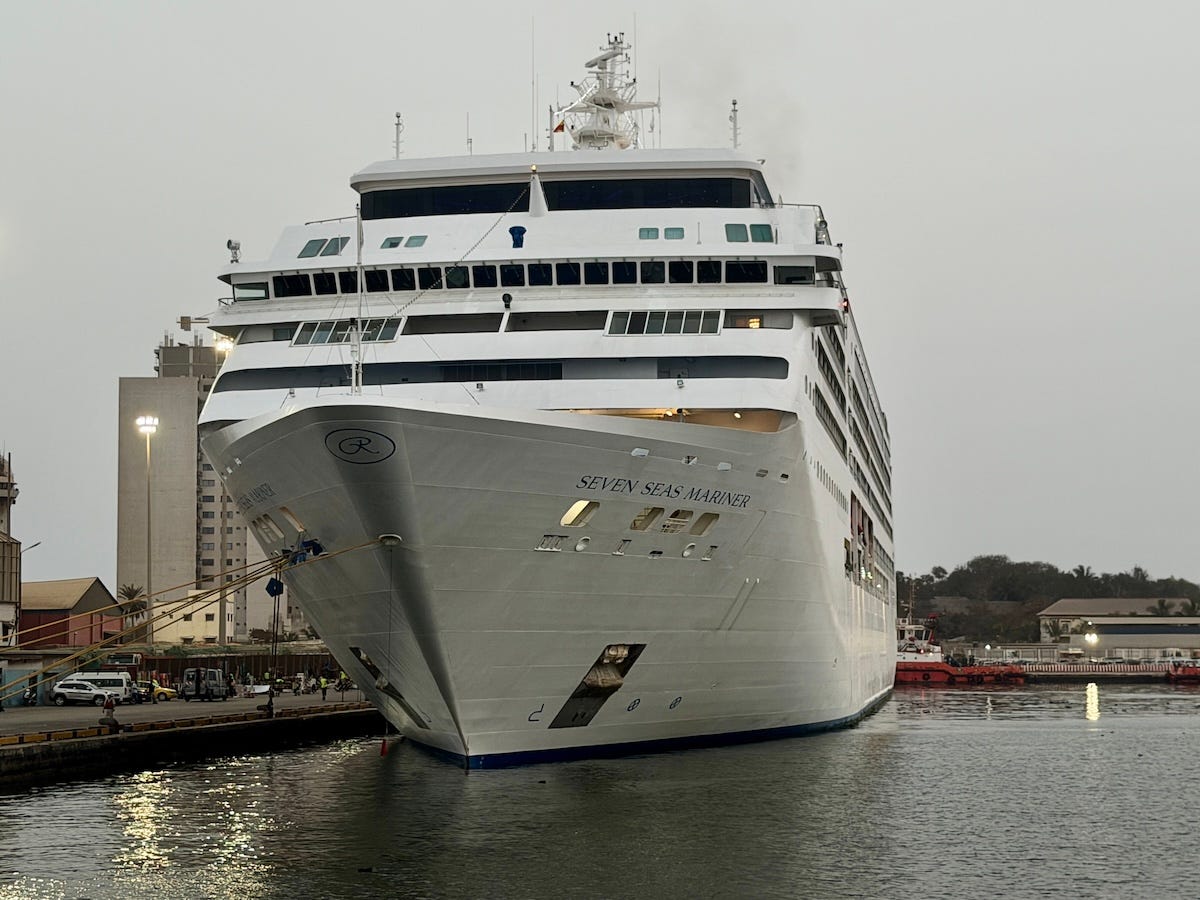
The Mariner was still waiting for us, as the ferry approached the dock with night falling. Once we were all onboard our ship, the crew made preparations for setting sail, and before we’d dropped our belongings in our suite, and arrived at the Observation Lounge to watch sail away, the Mariner was just about ready to pull away from the dock.
We were on our way to our next port of call, and our last stop in Africa: Mindelo, Cape Verde.
How interesting that your visit coincides with Pope Leo’s apology for the role that the Catholic Church played in this horrible history. From Reuters: ”Pope Leo on Monday issued the clearest apology yet from a pontiff for the Catholic Church's role in slavery, acknowledging both its delay in condemning the practice and its historic involvement in legitimizing it.”
Bo, fantastic pictures with excellent dialogue! I felt like I was traveling right next to you!
Thank you again for taking me with you on your adventures!