
Abidjan, Côte d'Ivoire
A new country, but the same weather patterns followed us here from Ghana! Still, we had a great introductory excursion that featured art, architecture, gardens, and more!

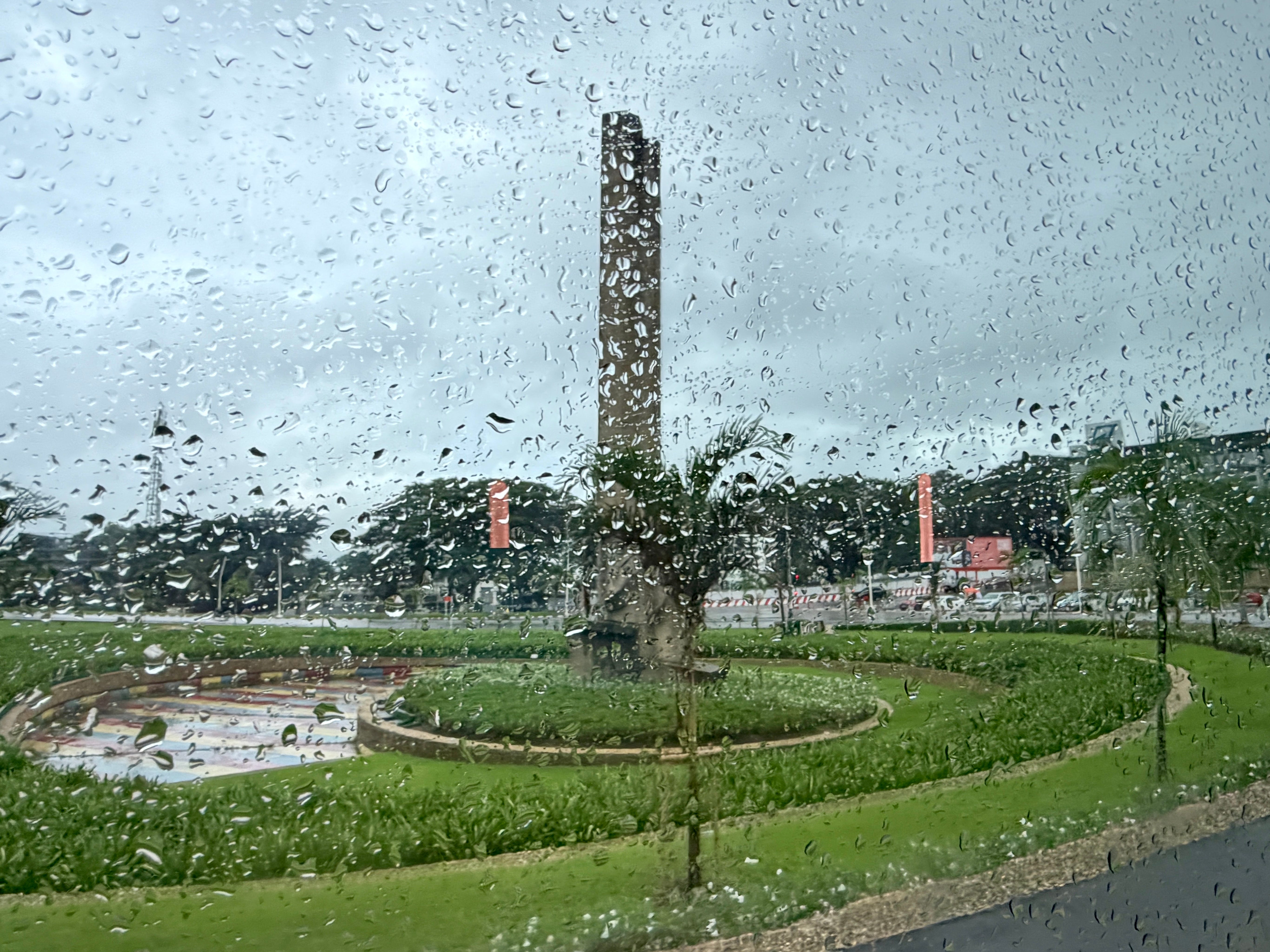
The Côte d’Ivoire’s largest city and former capital, the skyscraper-studded Abidjan, curves around the placid Ebrié Lagoon. Being one of the world’s largest French-speaking cities, it’s often referred to as the “Paris of Africa.” Abidjan’s more affluent Le Plateau and Cocody neighborhoods exude a palpable European ambiance. Take in the city’s modern architecture, whether visiting the Cathedrale St. Paul or La Pyramide. — Regent
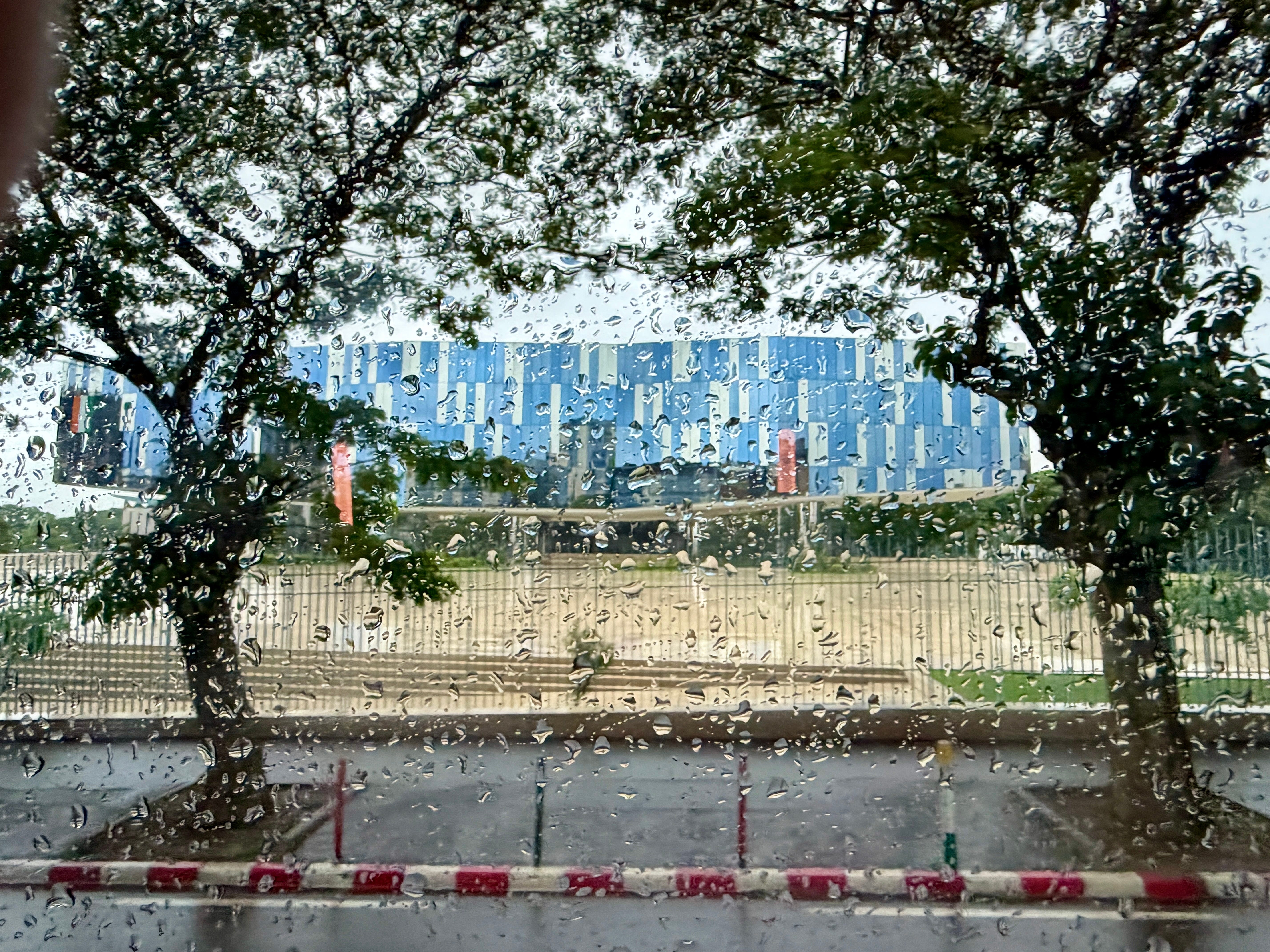
Once again, our pre-cruise research proved accurate. At least we were forewarned about traveling in the rainy season! But did we listen? Our choices were limited, and so we proceeded…
Daytime High: Approximately 84°F to 86°F. (Right on target.)
Nighttime Low: Around 75°F to 77°F.
The extremely high humidity (often above 85%) contributes to an oppressive “feels-like” temperature.
Precipitation: May is the wettest month of the year for Abidjan. Expect frequent, heavy rainfall, often intense thunderstorms. There is a high probability of rain throughout the day. (correctly predicted!)
Sunshine: Skies will be predominantly cloudy, with limited sunshine due to heavy rain and thick cloud cover.
Attire: A sturdy umbrella or raincoat is essential. (No kidding!)
Activities: Be prepared to adjust outdoor plans in response to heavy rain showers. Focus on indoor activities during peak rainfall. (Easier said than done!)
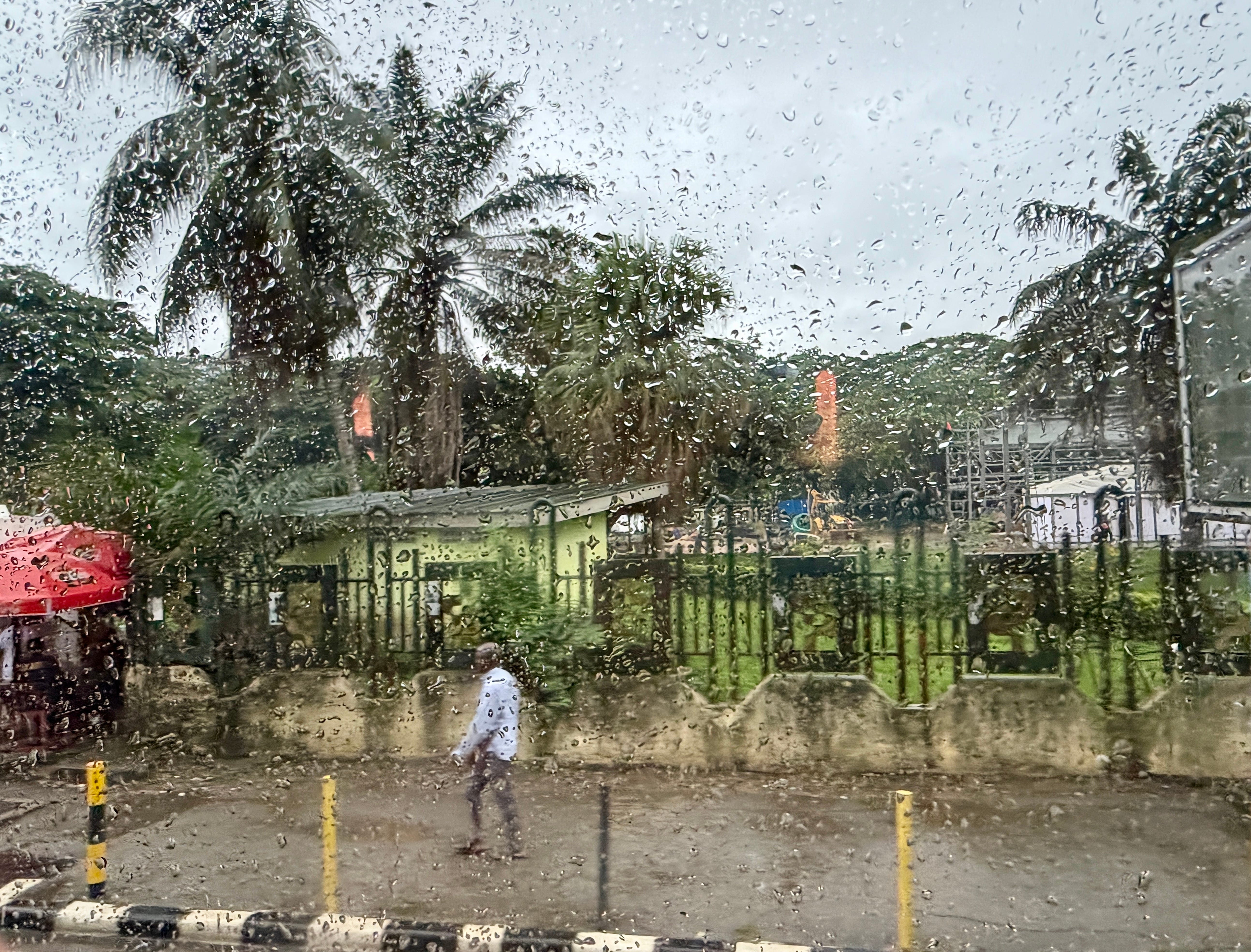
We chose to go on the tour, Akwaba Abidjan to Bingerville, a 5-hour Regent-choice excursion. The non-discounted price was $149 USD per person, and our discounted price — Seven Seas Platinum and Concierge-level discounts — was $126.65 USD.
Description of the tour: Drive to the City Center Plateau and visit the Museum of Civilization for a demonstration of traditional dances. Then drive to and visit the nearby Cathedral of St. Paul. Drive to Bingerville and visit the Charles Combes Museum. Visit the Botanical Garden and the neighboring Governor’s House, which is now a boys’ orphanage. Drive to the Artisanal Center for a short visit and then return to the pier.
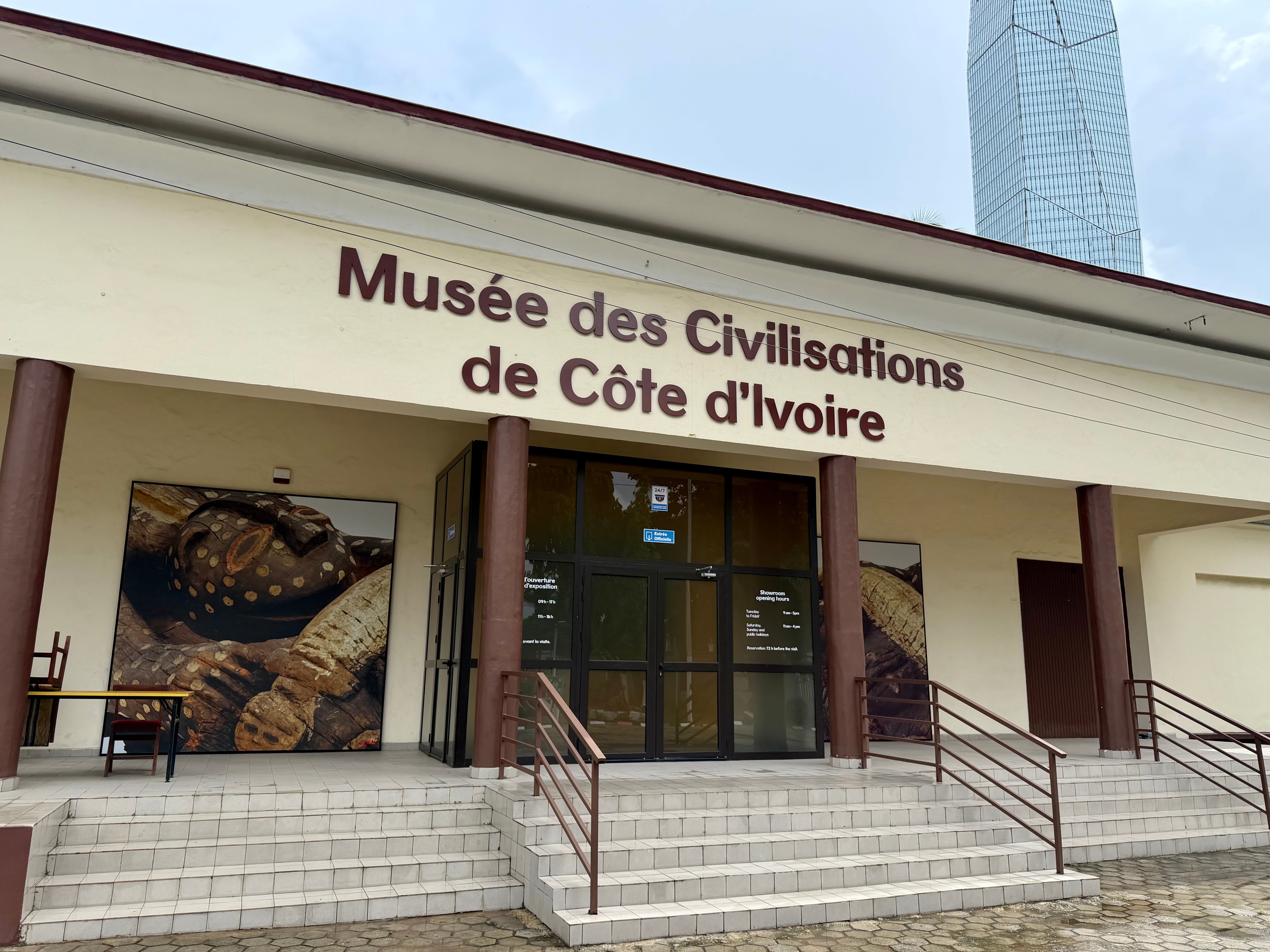
Our first stop was at the city center Museum of Civilizations, a small museum housing a comprehensive archive of about 15,000 historic artifacts. The items represent all five major linguistic groups and various ethnicities across Côte d’Ivoire, and include extensive collections of masks, historic musical instruments, pottery, textiles, and prehistoric weaponry.
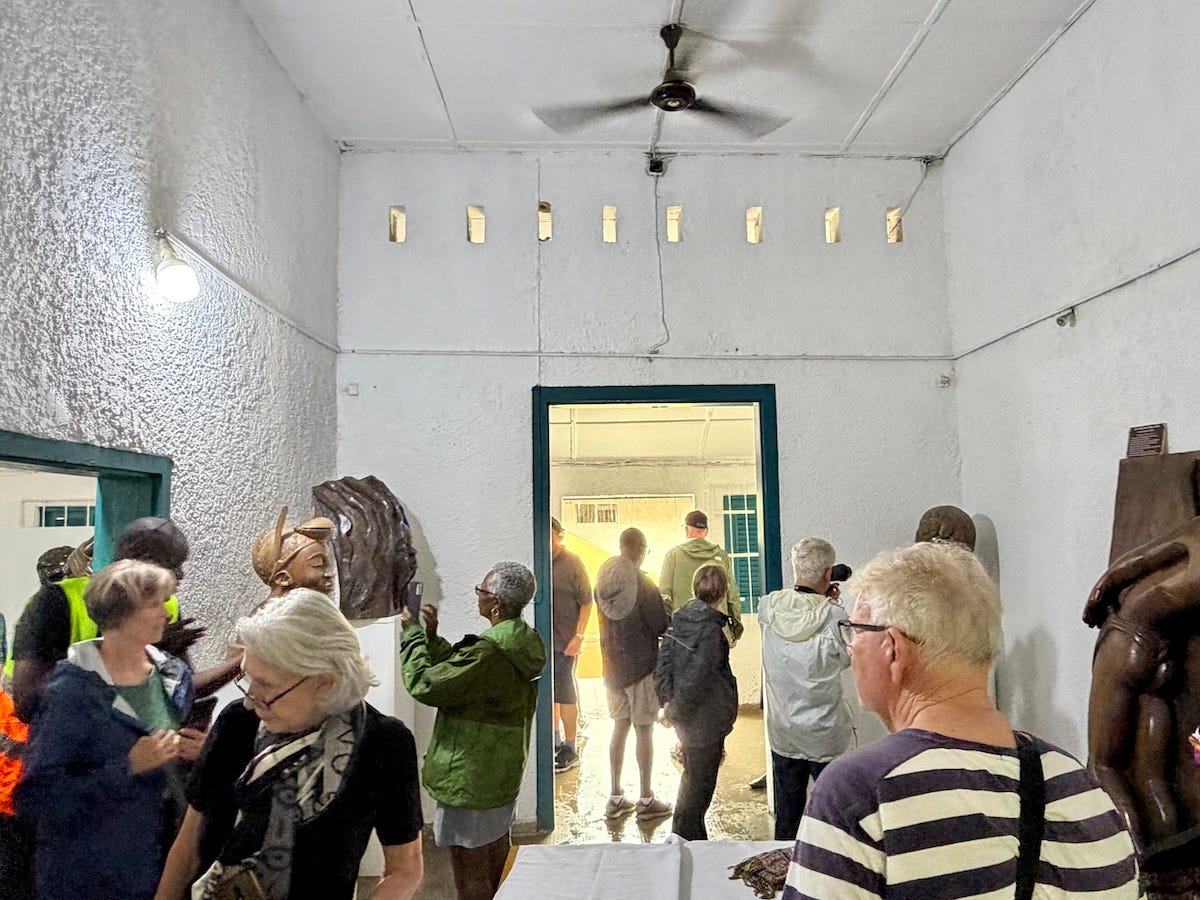
Since the museum was under renovation, our tour was limited to a single room displaying a sampling of their collection. We had a museum docent give our group a thorough introduction to the available art and offer insights into the origins and purposes of the different pieces. Well done.
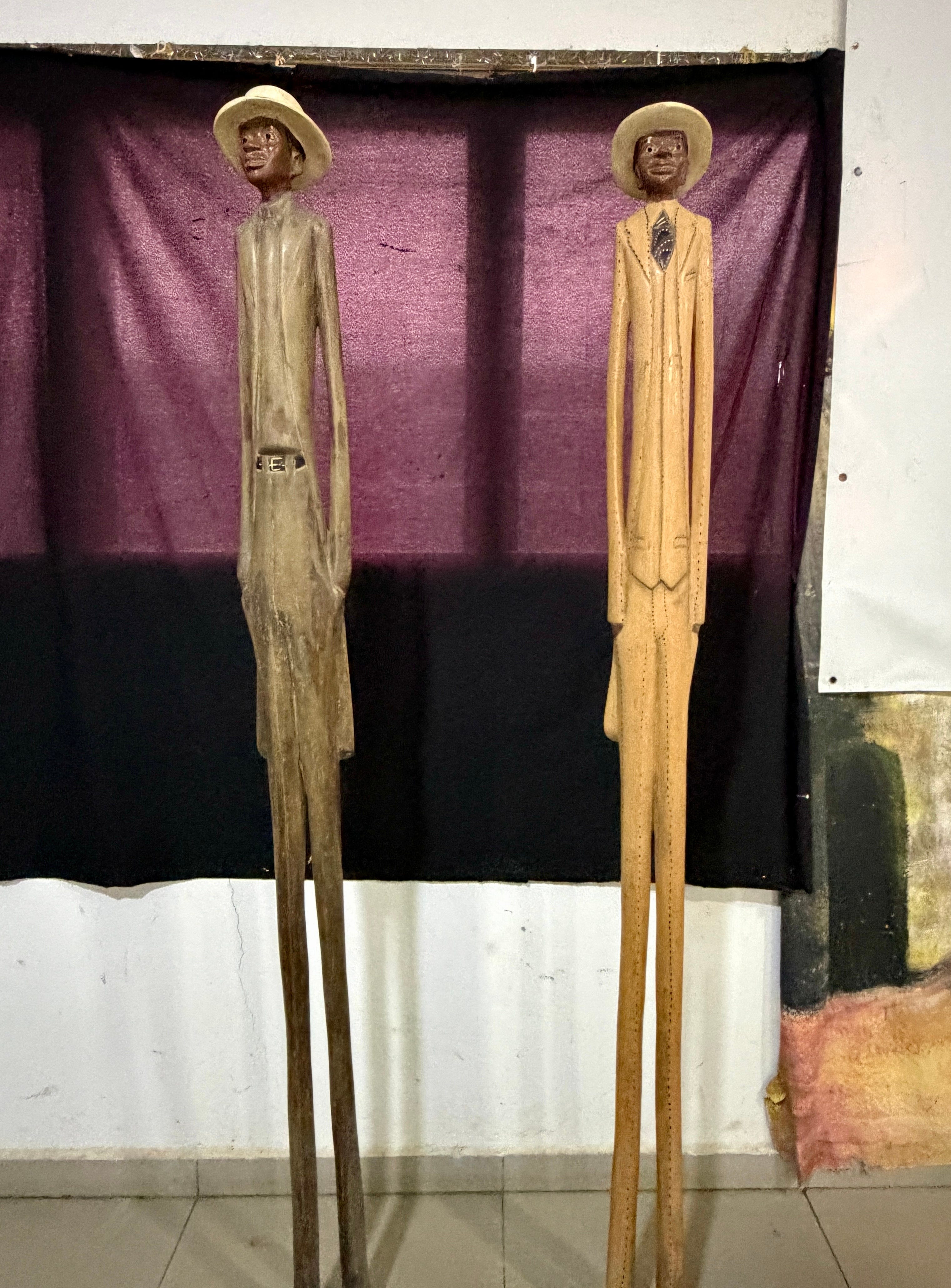
The Statue Colon (colonial statue) genre originated in West Africa during the early 20th century. The style first emerged among the Baoulé people following the collapse of their armed rebellion against French forces in 1911. Local woodcarvers began crafting these figures as a subtle response to foreign occupation.
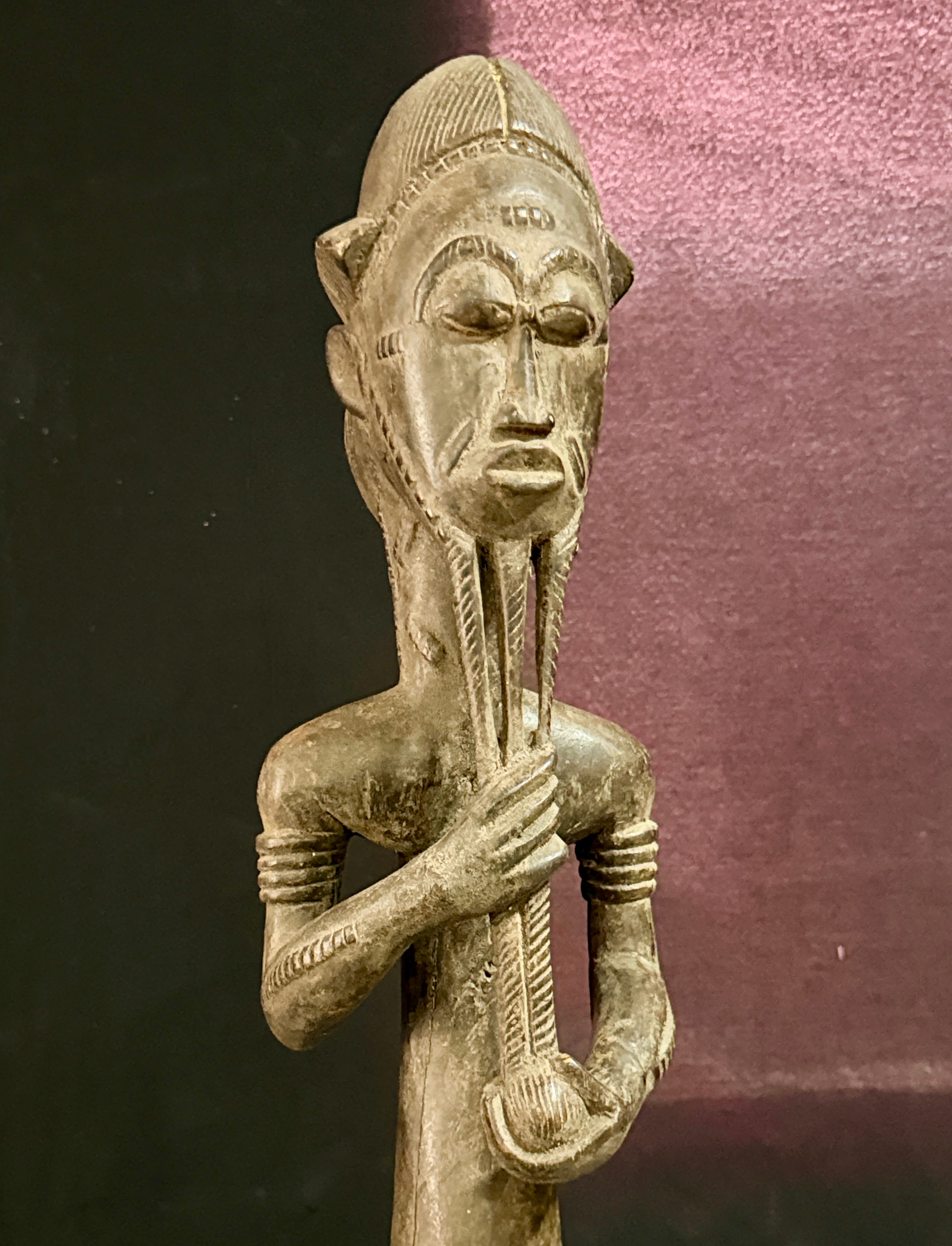
Baoulé statues are highly celebrated works of African art, carved from wood and made to bridge the physical world and the spirit realm. They are recognized for their “highly refined, serene facial expressions, elaborate hairstyles, and detailed scarification patterns.”


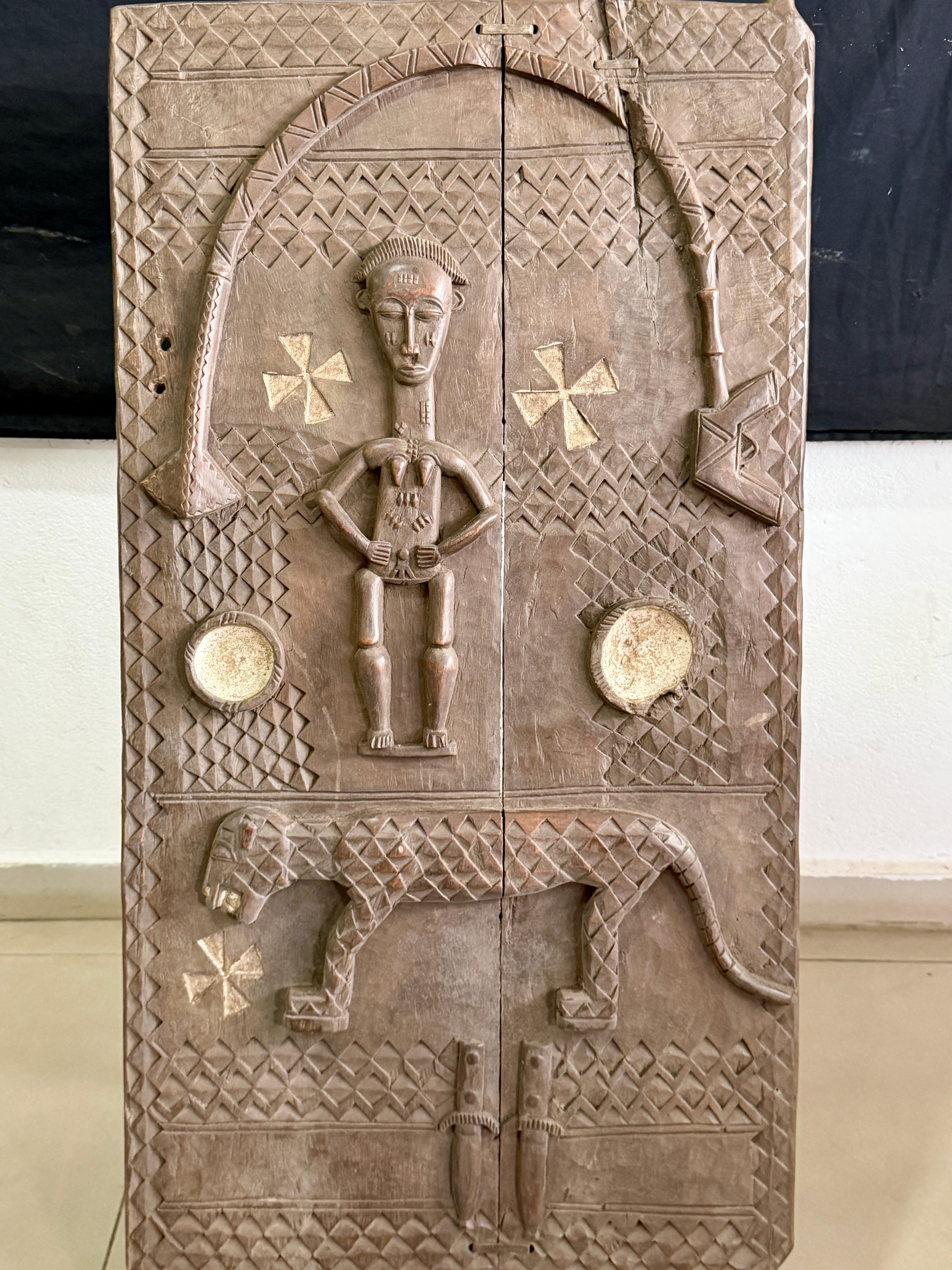
Unlike the sacred masks that are used in secret ceremonies, carved doors were made to be seen by the public. They were typically commissioned by wealthy rulers or chiefs to adorn the entryways of their family compounds.
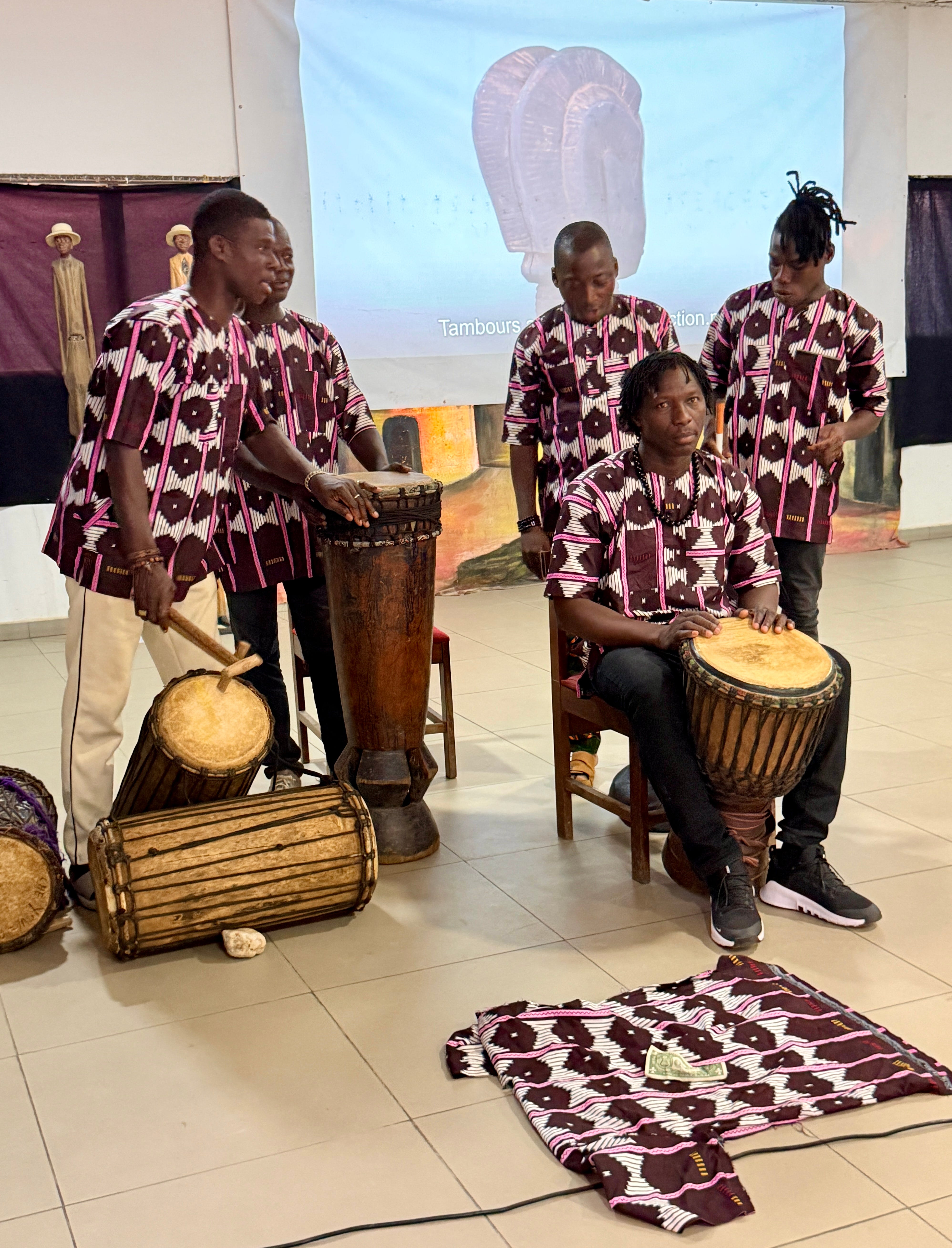
Following the brief art tour, a quintet of musicians used traditional drums and beaded gourd rattles to create fast rhythmic beats.


Then, a single dancer performed a sacred masquerade dance, mimicking the ultra-fast footwork of UNESCO-recognized traditions like the Zaouli and Goli dances. We were invited to step into the circle, learn some basic steps, and experience the physical coordination required for these fast-paced celebrations. Several cruisers accepted the challenge and did an admirable job.
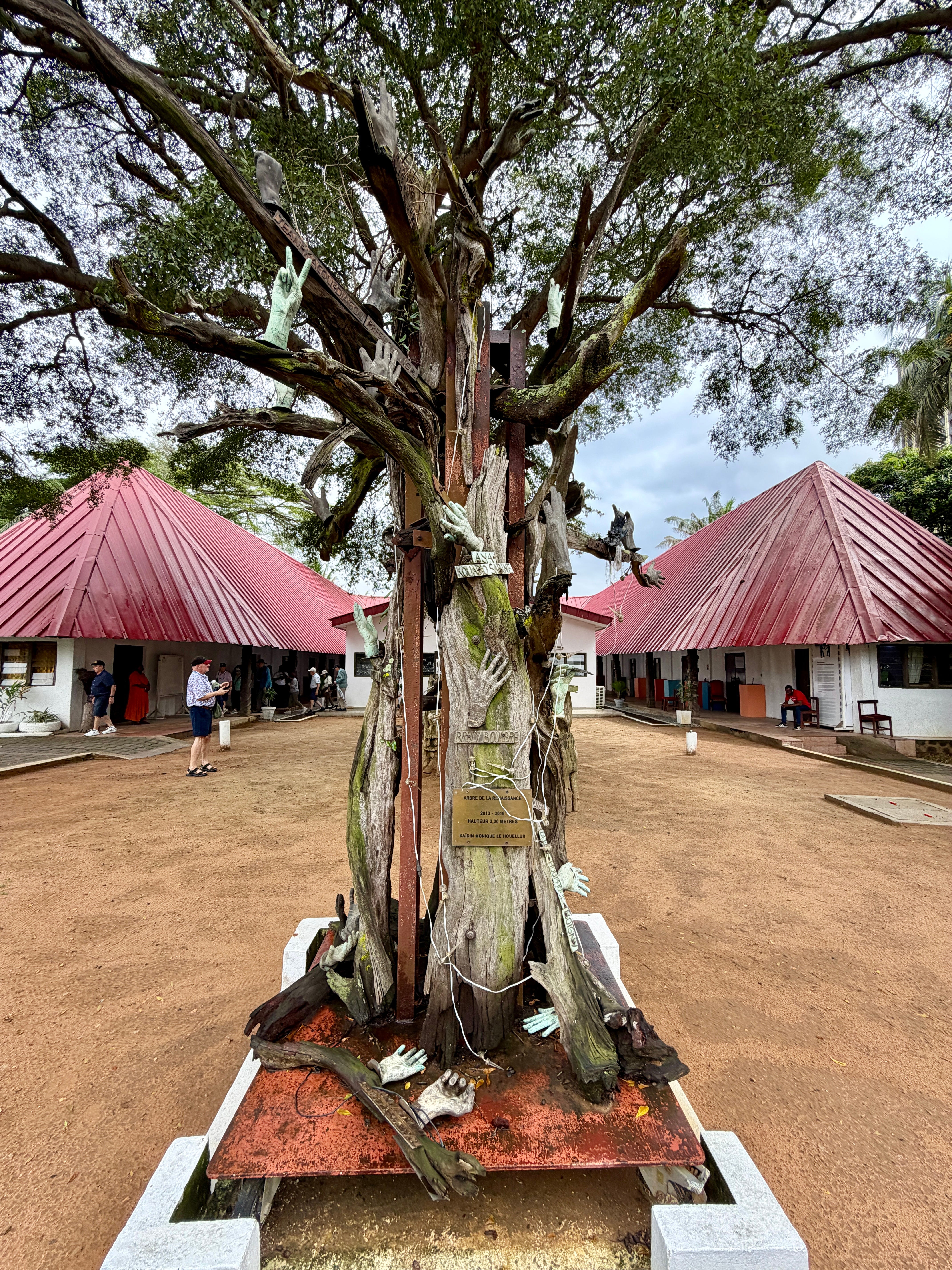
We couldn’t help but admire this decorated “art” tree in the museum courtyard. The “Akwaba” Welcome Tree featured lots of overlapping figures, faces, and outstretched arms and hands, all facing or reaching towards the sky. The tree is one of many Akwaba monuments of the city.
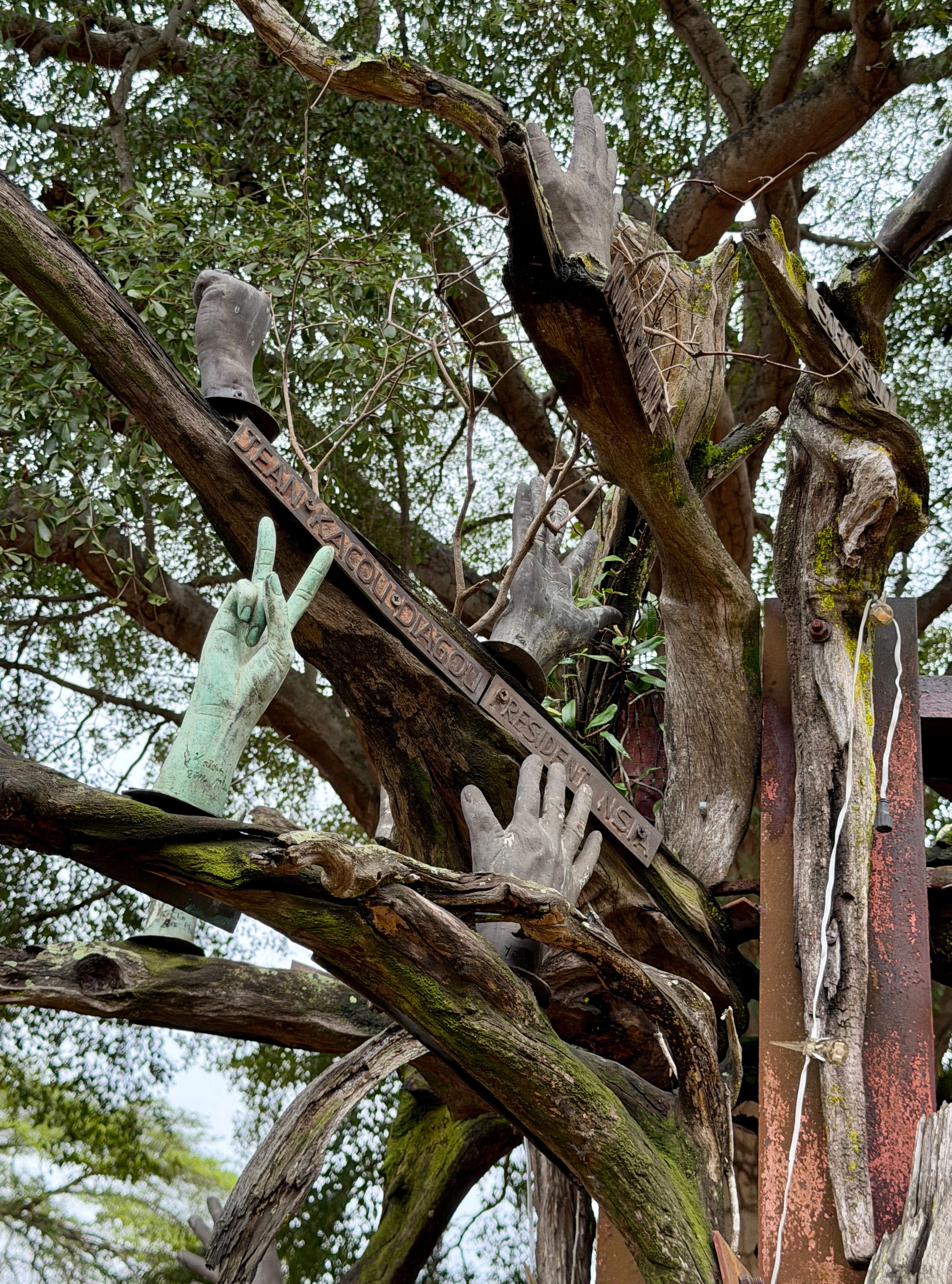
The tree serves as a bridge, welcoming visitors from the busy and noisy streets of Le Plateau into the museum’s calm, historic learning space.
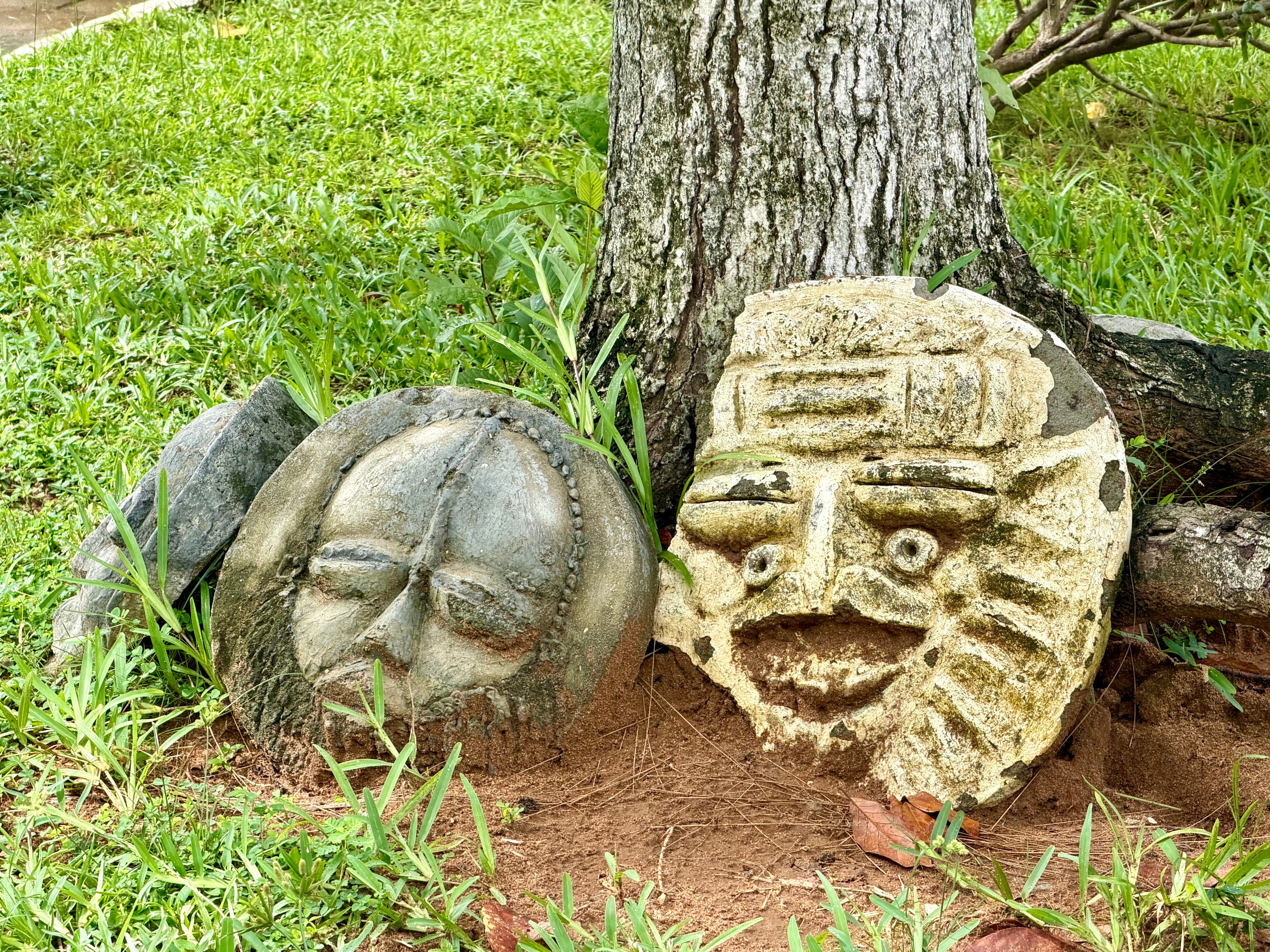
We had a few extra minutes to walk around the outside of the museum while others were getting photos taken with the dancer and drummers. So we took time to admire the ancient, carved millstones and architectural relics arranged on the lawn. An interesting way to exhibit artifacts!
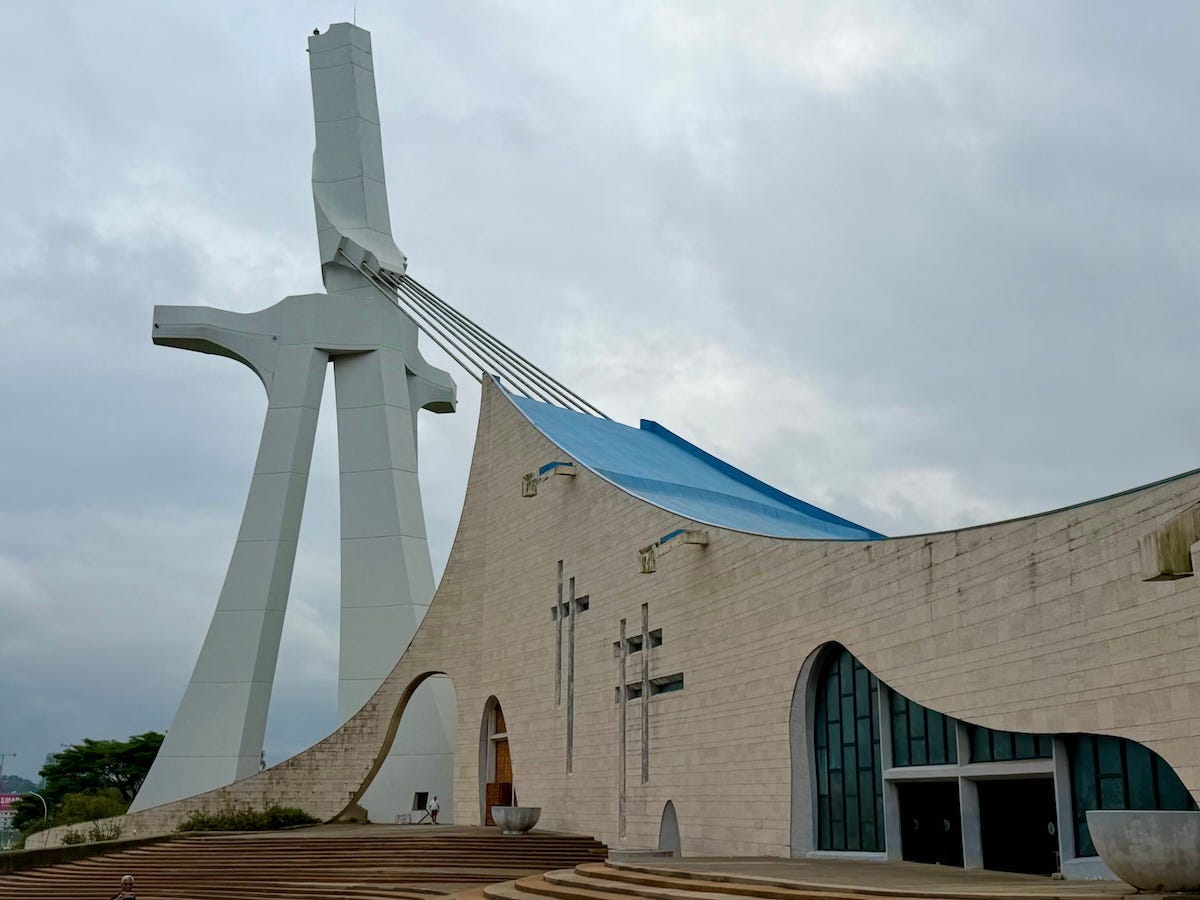
St. Paul’s Cathedral, the second-largest cathedral on the African continent, also located in the Le Plateau business district, was only a short drive from the Museum of Civilizations. The church, built in 1980-85, is famous for its futuristic, ultra-modern architecture.
Its most striking feature is the massive, concrete cross tower that stands apart from the main building. It resembles a giant figure of Christ with outstretched arms. Seven steel cables, representing the seven sacraments, connect the giant cross to the main cathedral roof, creating a dramatic visual effect.
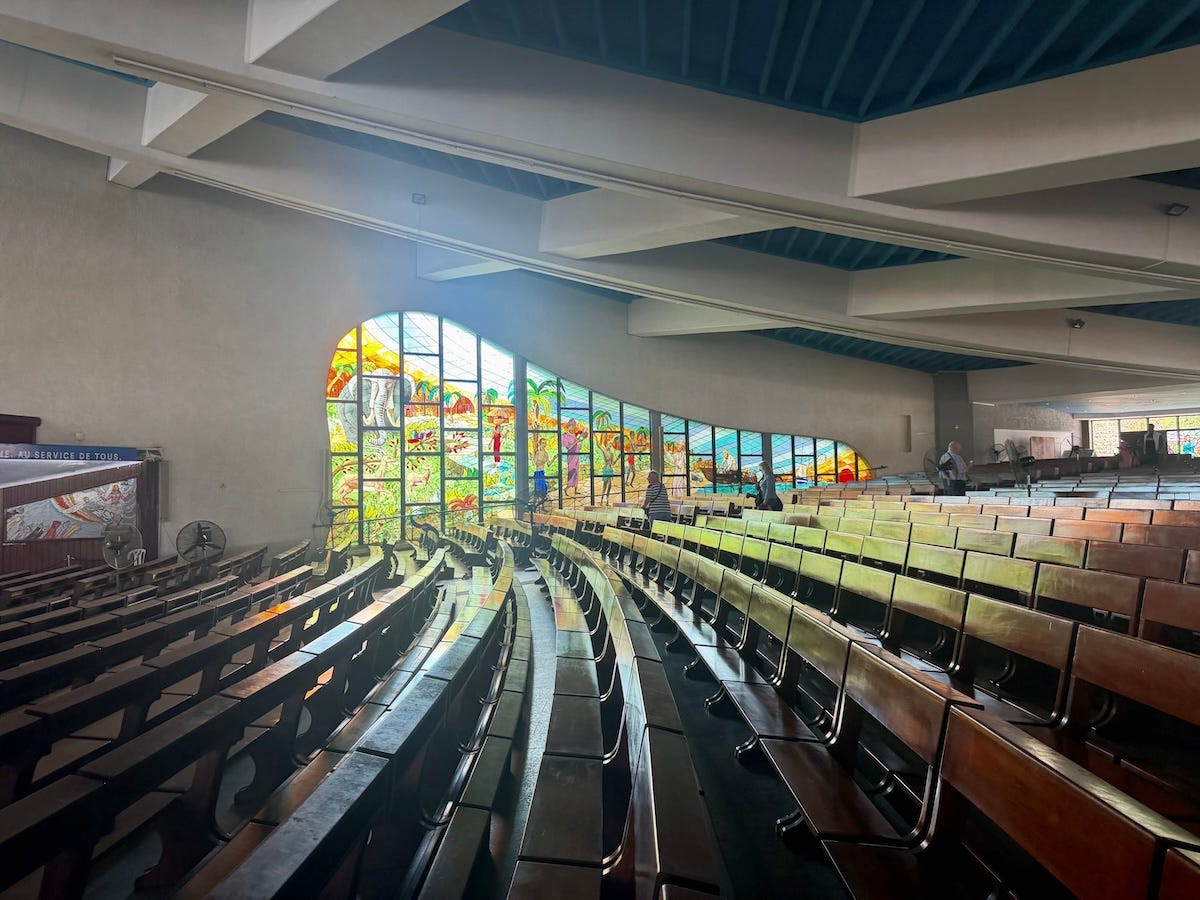
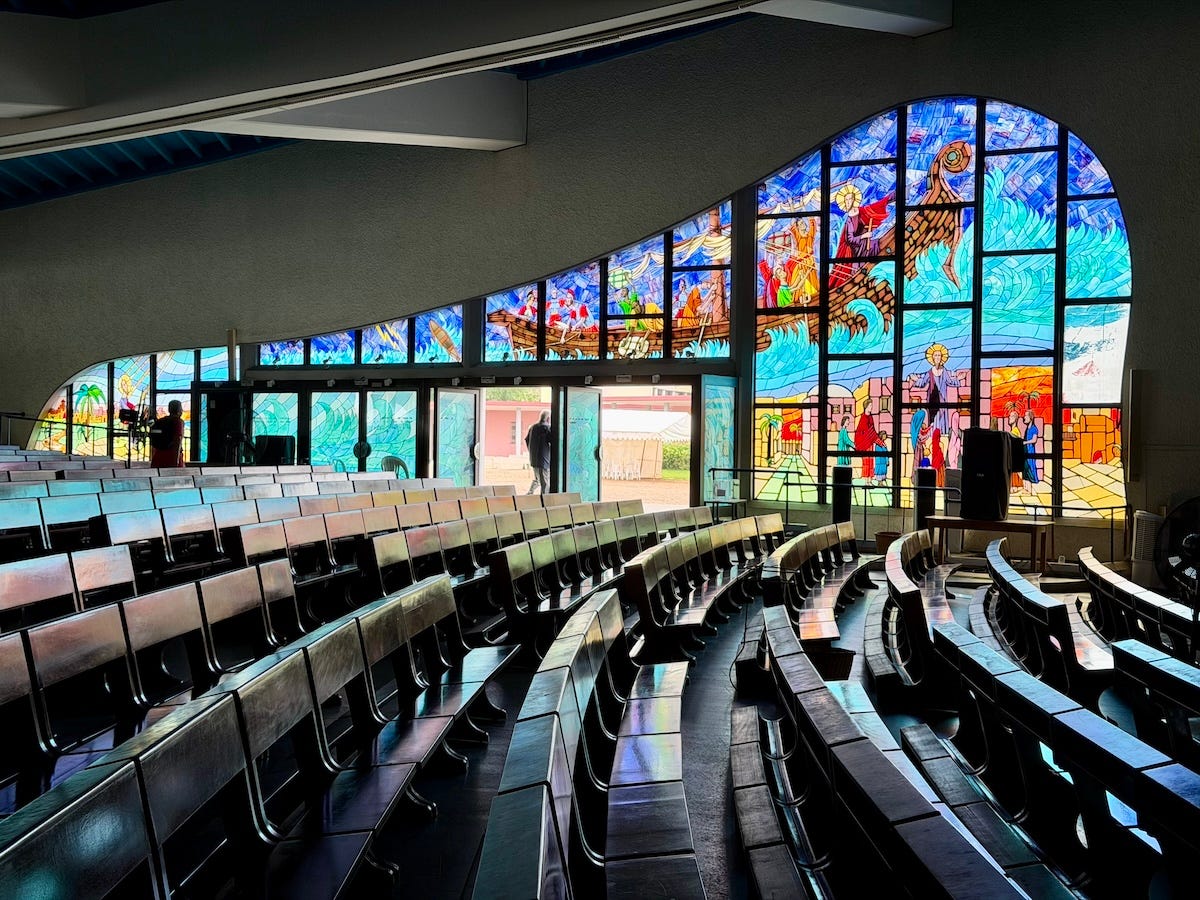
The church’s interior is just as visually dramatic as its exterior. The church, designed to accommodate up to 5,000 worshipers, has a stunning contrast between the rather sparse concrete exterior and the colorful, light-filled interior illuminated by stained-glass windows. Ethereal and spirit-filled! The dark wood pews, all sourced from African hardwoods, add a strong feeling of groundedness. It’s a wonderful worship space!
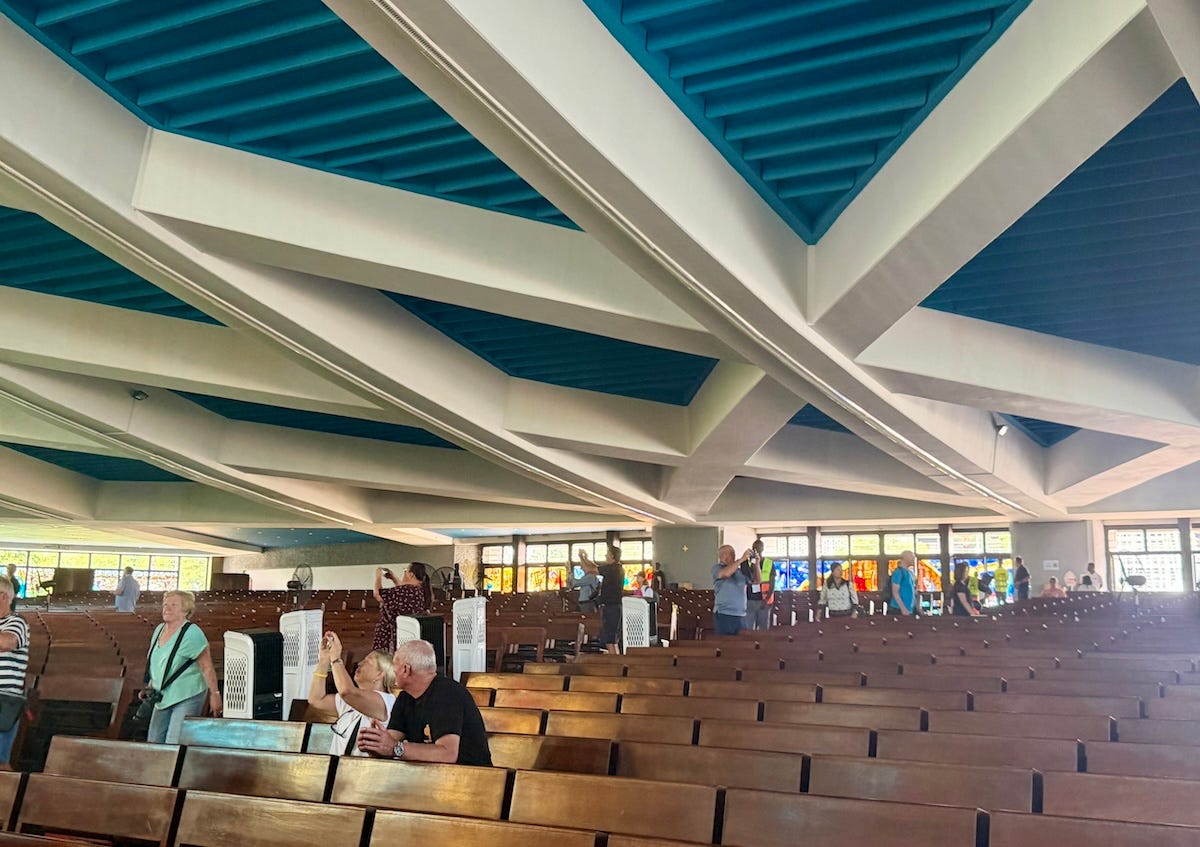
Look at that ceiling! Rather than a flat surface, the ceiling features an intricate latticed network of white concrete beams.
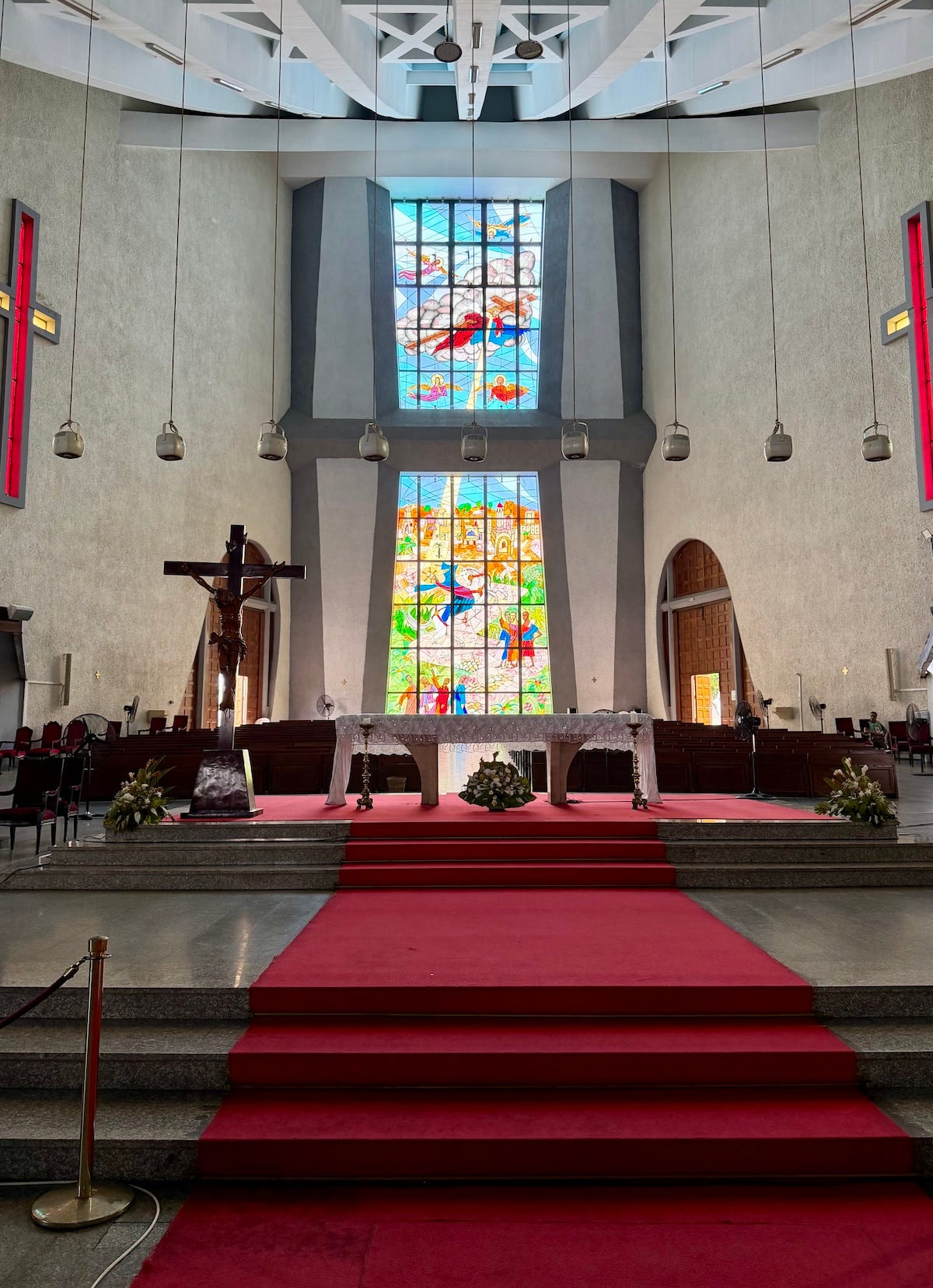
The elevated sanctuary is framed by a stained-glass window featuring St. Paul on his way to Damascus. Quite simple.
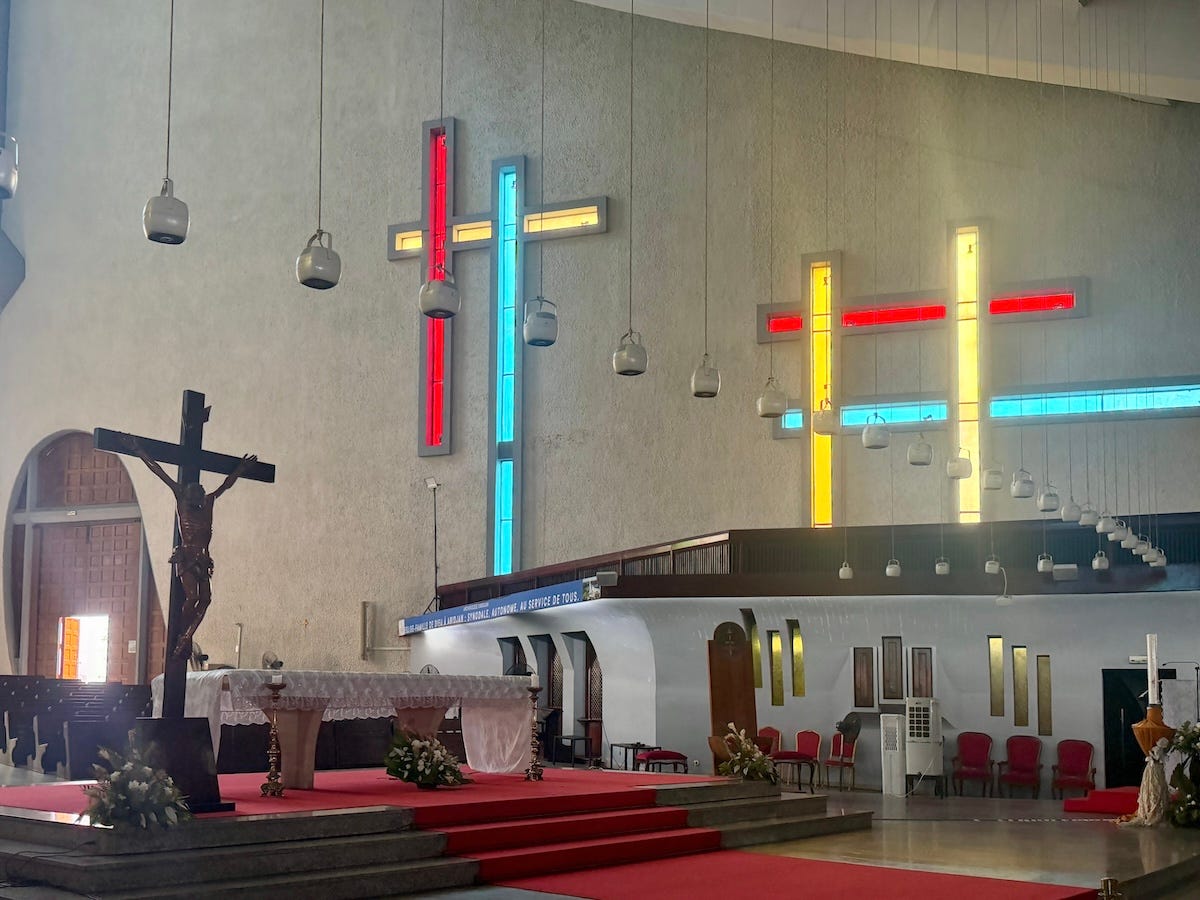
And instead of huge, heavy crosses hung on the walls, the architect Aldo Spirito designed smaller, abstract crosses made from colored glass that dot the inner concrete walls above the sanctuary. A lovely effect.
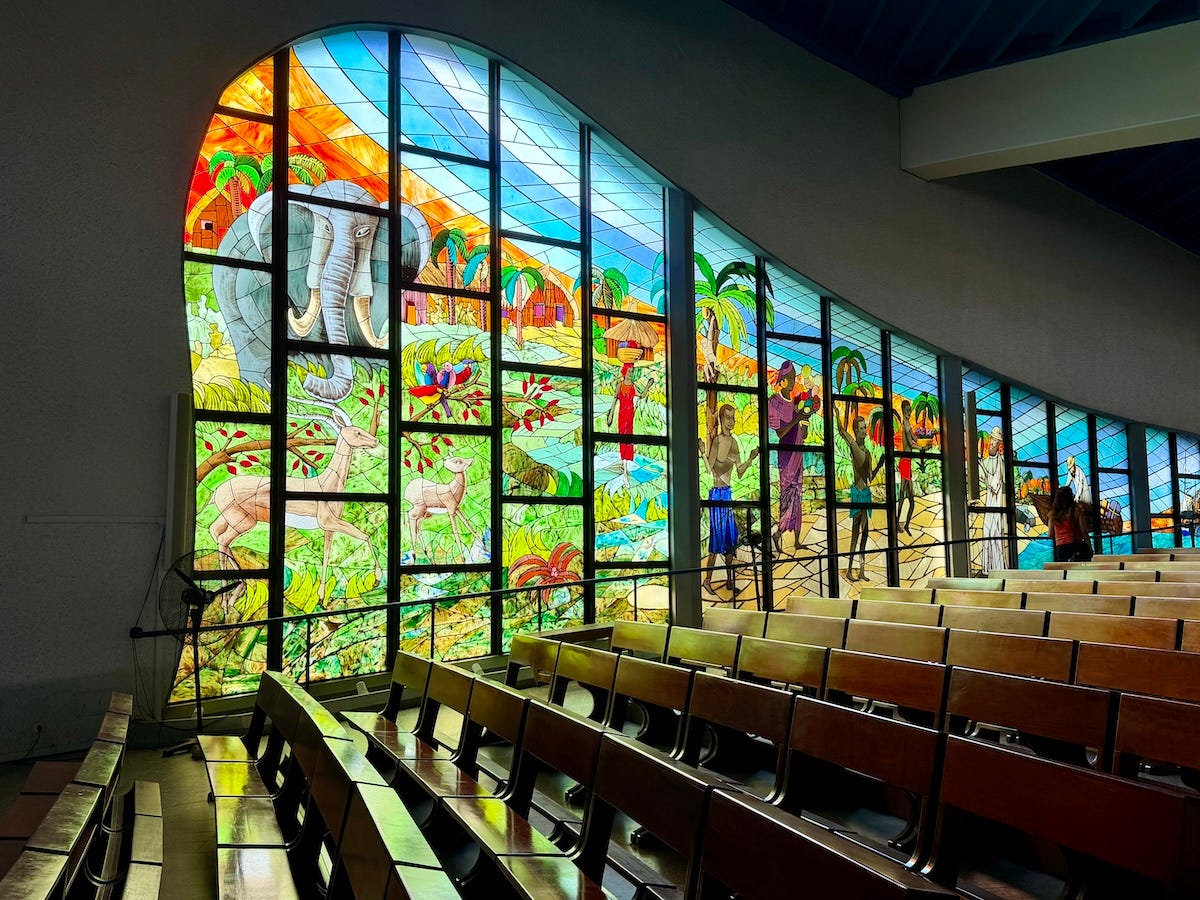
Six floor-to-ceiling stained-glass windows span over 1200 feet of exterior/interior walls and depict biblical stories with African themes, such as wildlife, landscapes, and Ivorian people interacting with the early missionaries.
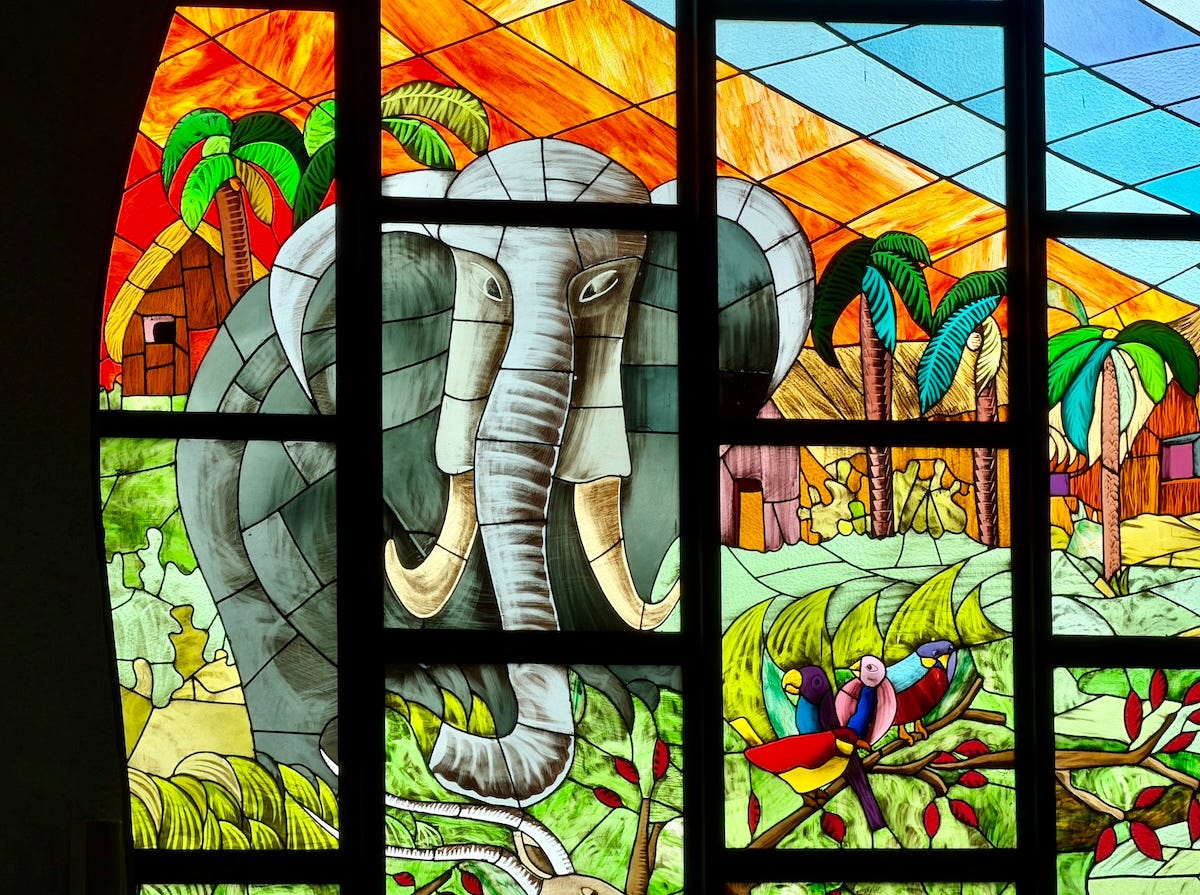
No other Catholic church I’ve ever visited has an elephant prominently displayed in a stained-glass window, but St. Paul’s does! How perfect!
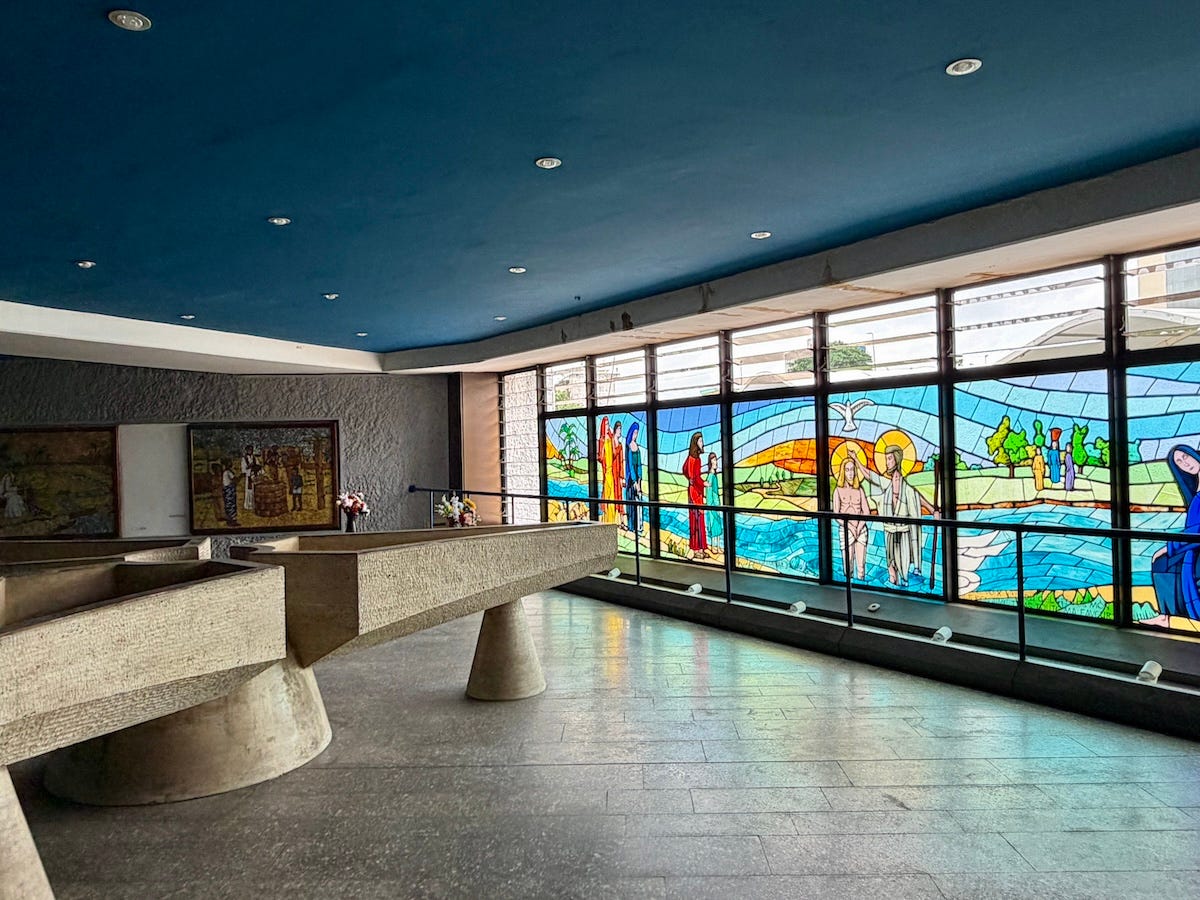
The Baptismal font was crafted to complement the cathedral’s interior materials and features a triangular, poured-concrete basin with limestone footing.
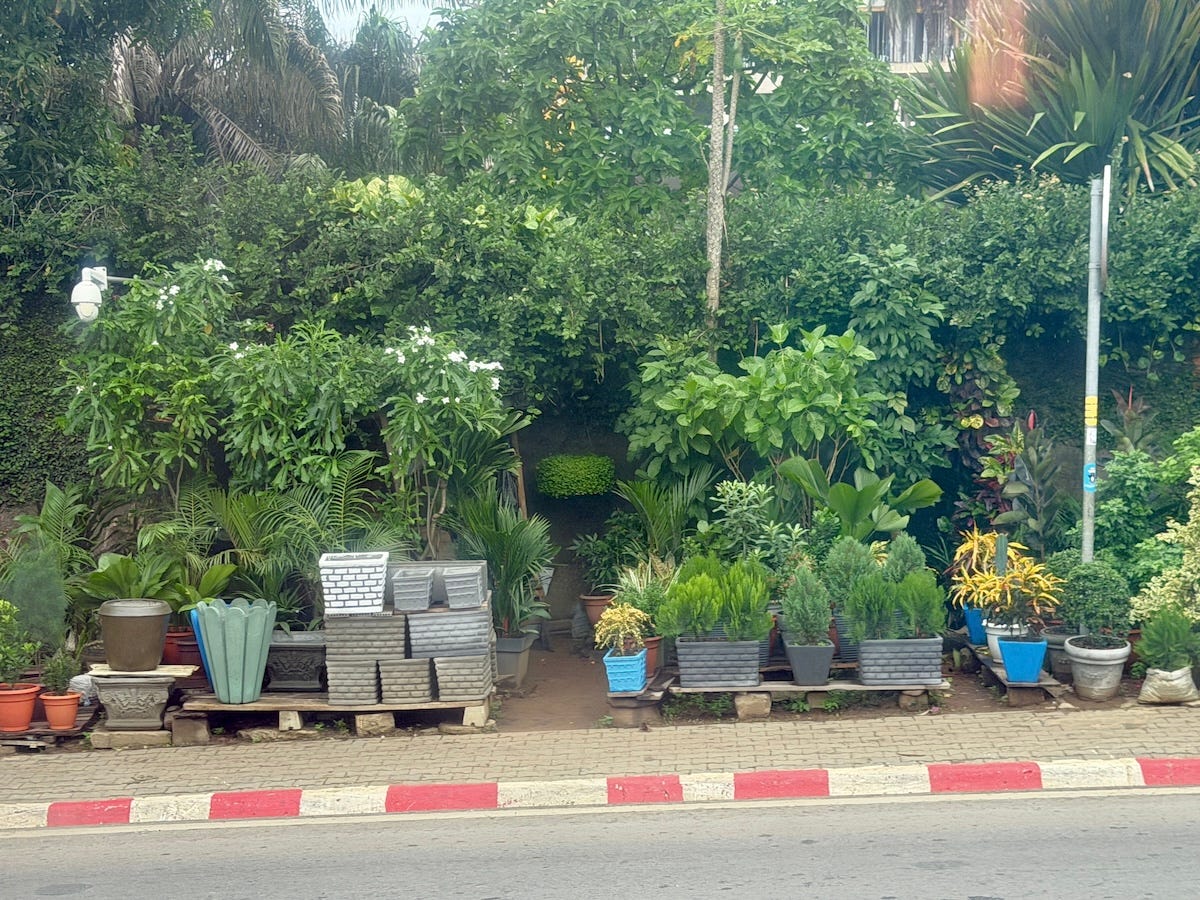
Along the roads of Abidjan, there were roadside plantings and roadside garden stalls everywhere. With the abundant rains, we drove through what was a densely green urban area. It was a refreshing change from the last several ports of call, where greenery seemed to be in short supply.
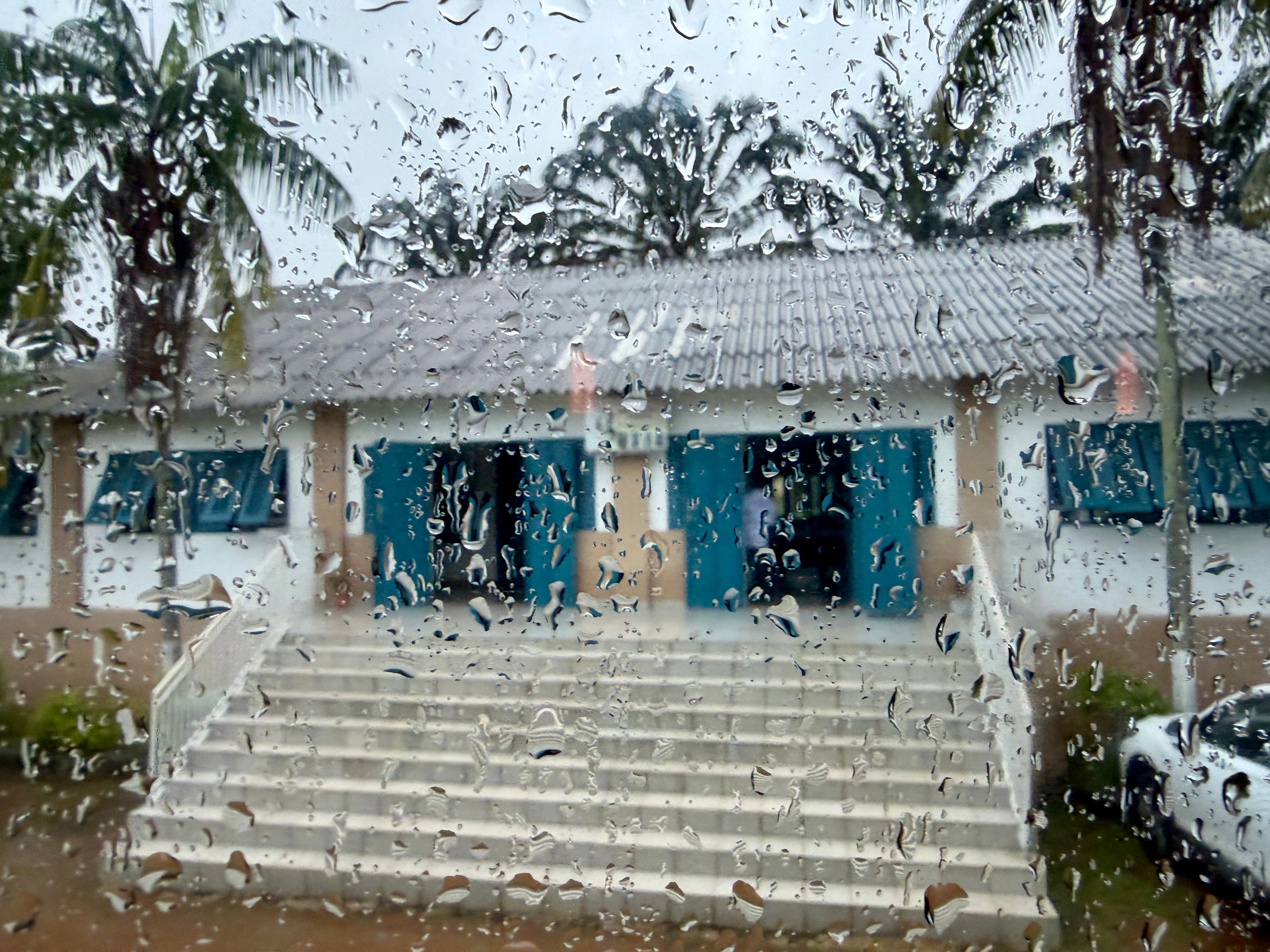
Although Bingerville is only 13 miles from Abidjan, traffic was heavy. Even with a dedicated police motorcycle escort and with extra traffic cops positioned at major intersections to clear the traffic, it still took us 45 minutes of somewhat chaotic driving. Of course, it was raining, and that added to the traffic snarls.
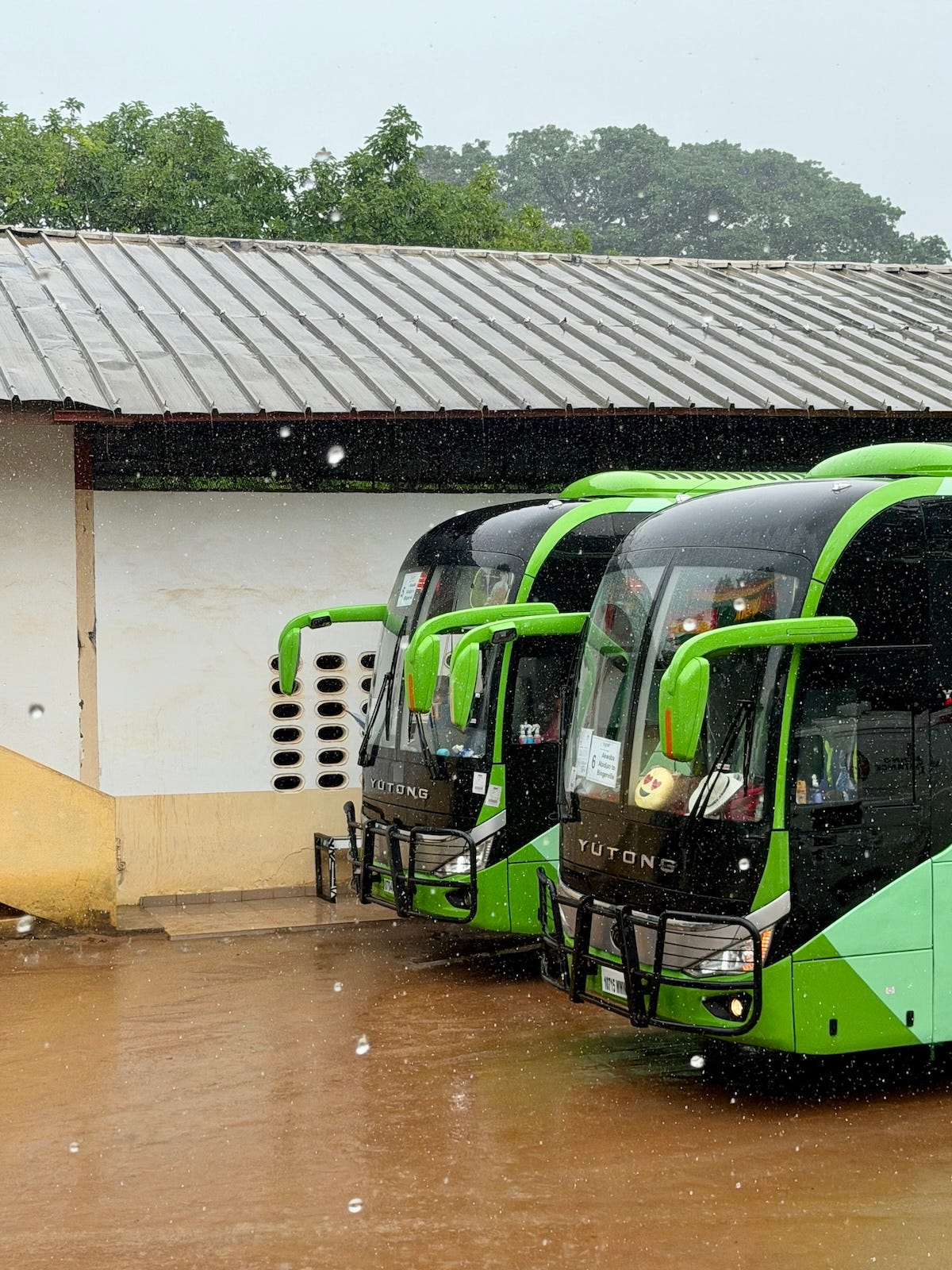
We arrived at the Charles Combes Museum in Bingerville just as the steady rain became a deluge. (And now, a shout out to the bus drivers — they backed the full-sized coaches into a narrow parking lot so that we wouldn’t have to walk to the museum entrance from the street. Above and beyond — and so appreciated! We still got soaked, especially when we had to trudge through deep puddles, but not as wet as we might have been.)
The museum is housed inside the historic 1905 “Pink House,” the small structure which served as the residence and workshop of the French sculptor and painter, Master Charles Combes. (1891–1968)
A few years after his tour of duty in World War 1, Combes, a classically trained artist, traveled to Côte d’Ivoire. He so loved the landscape, cultures, and traditional art forms that he decided to stay. In 1937, Combes opened a private applied-arts workshop to train local students. This studio evolved and became the Bingerville School of Applied Arts in 1958. Combes really loved this country, and so when Côte d’Ivoire gained independence from France in 1960, he became an Ivorian citizen.
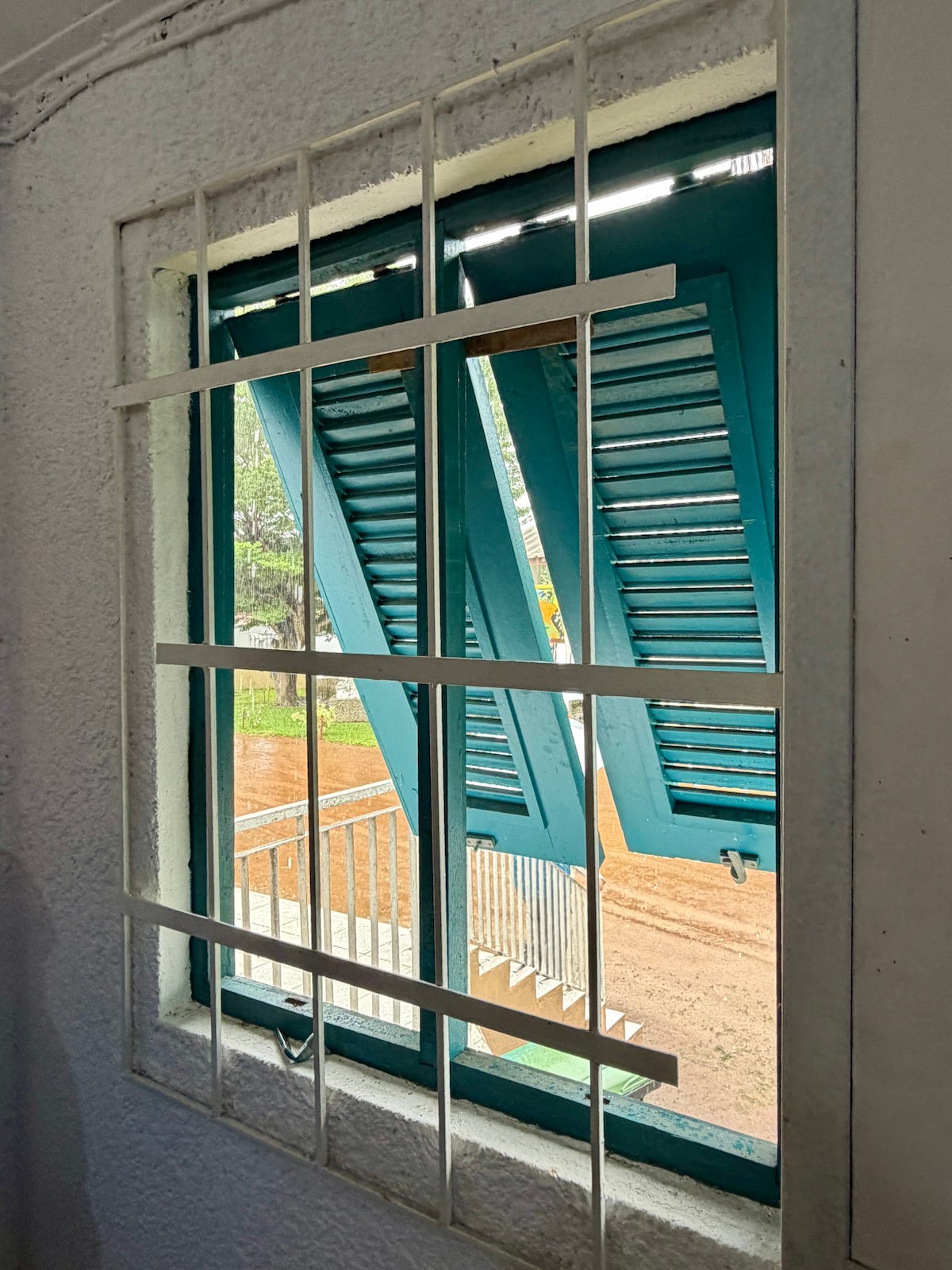
It’s quite easy to imagine the sculptor at work in these rooms, a breeze coming in through the open shuttered windows. He not only lived and worked in this house, but he also provided housing here for some of his students. It must have been a chaotic place, but filled with inspiration and hard work, too.
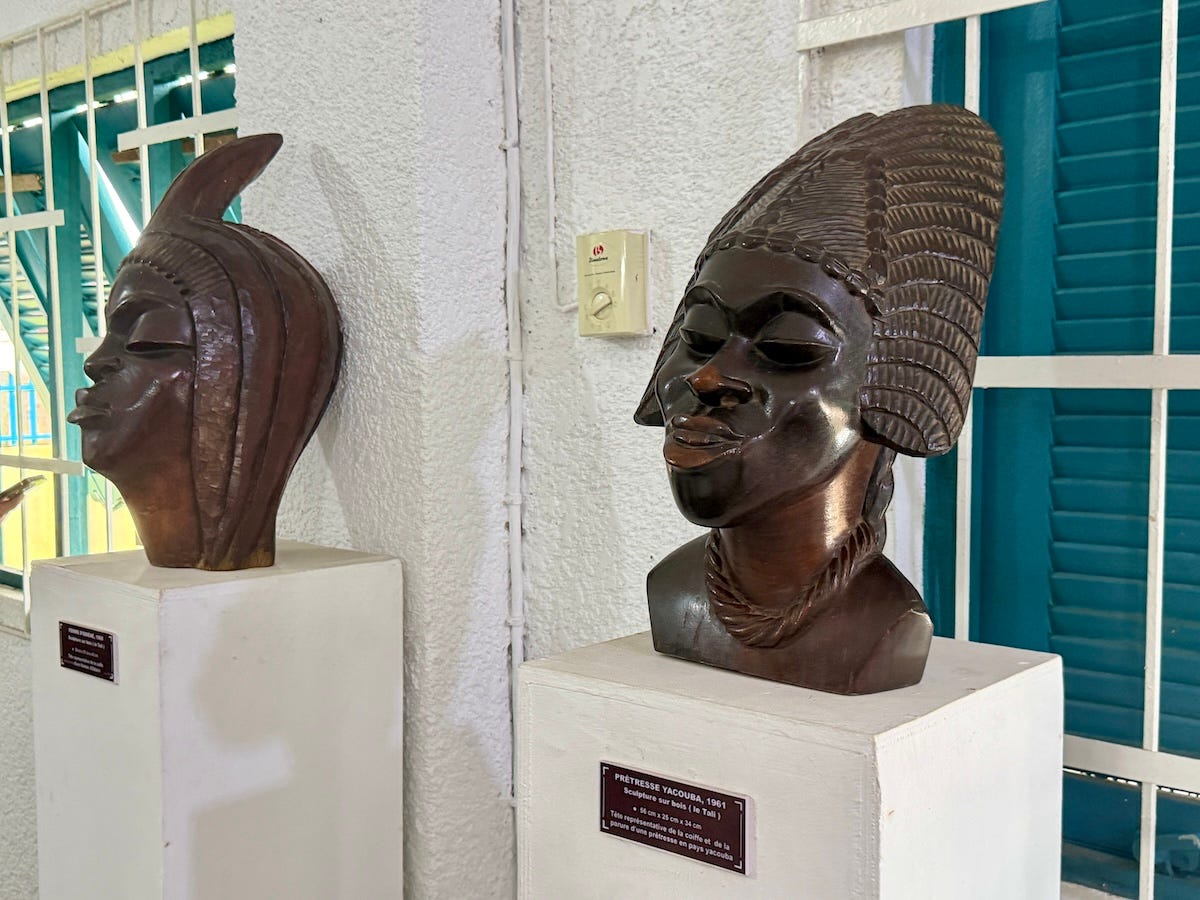
Within four small galleries, a lifetime of work! The permanent exhibition features 91 works of art, including massive hardwood, plaster, and cement sculptures carved by Combes and his students.
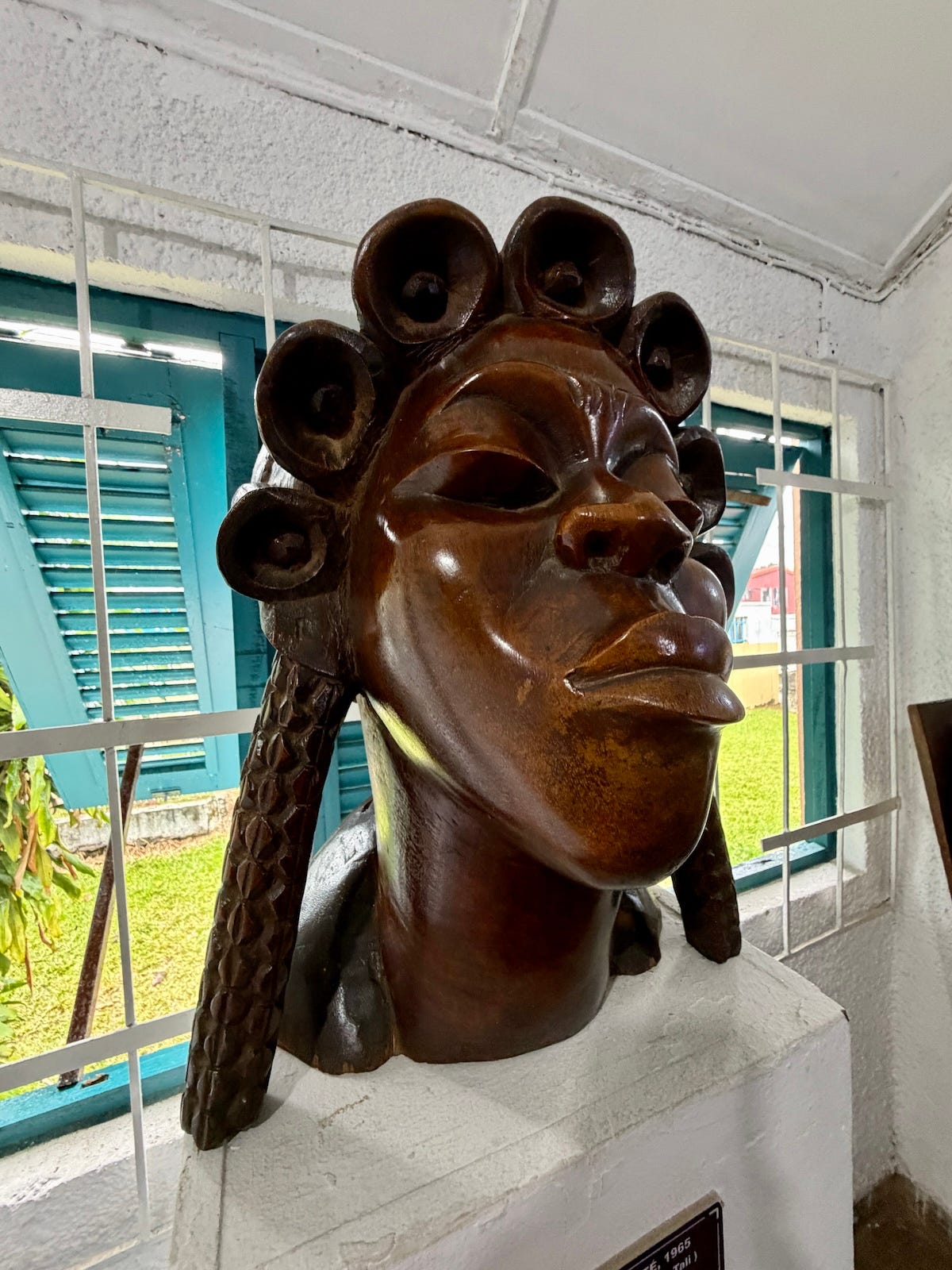
Many of these works capture the traditions, beauty standards, and people of Côte d’Ivoire influenced by Combes’ time spent living in the forest with the Yacouba people.
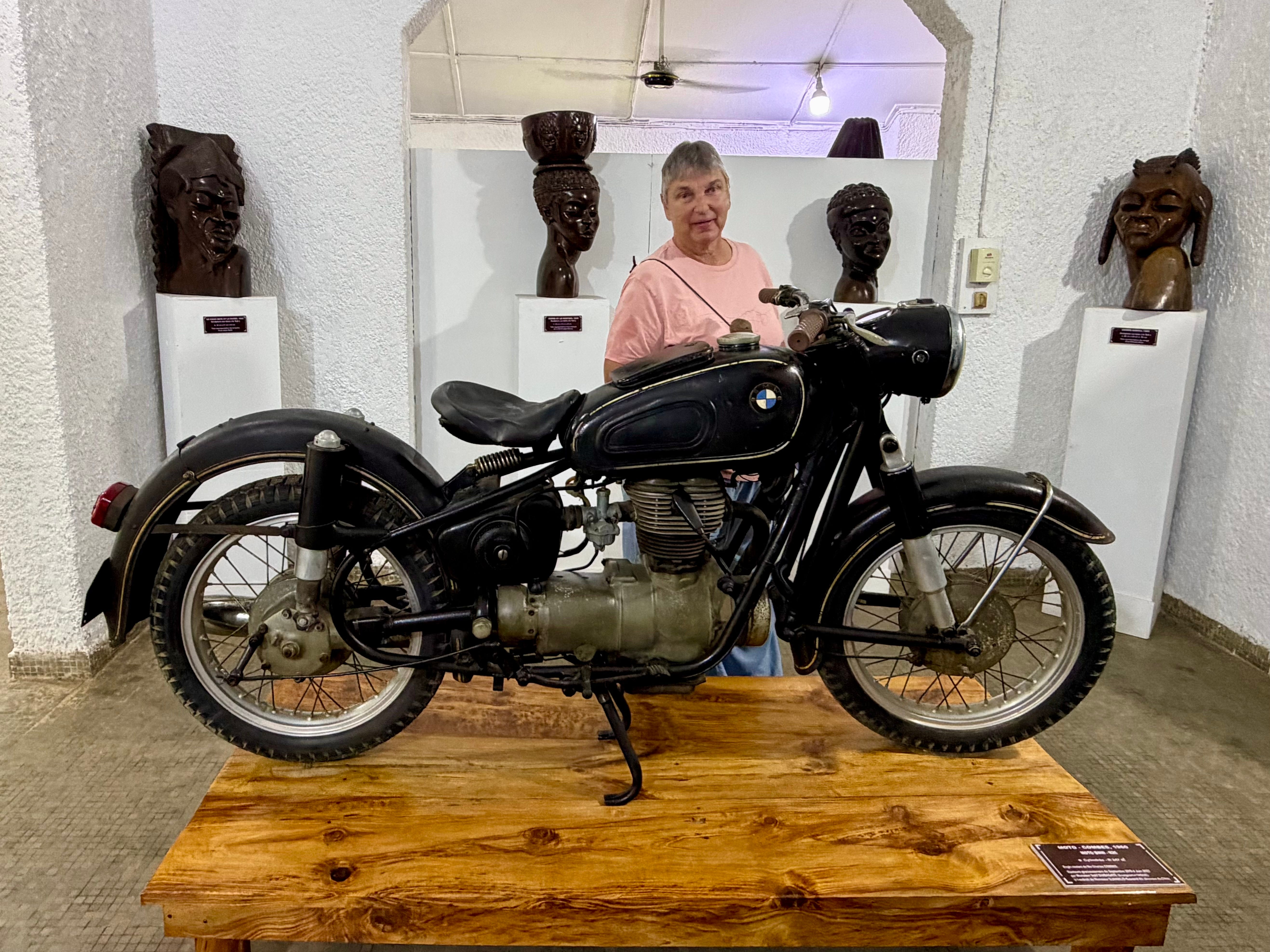
Combes’ antique motorcycle, which he used to travel around the country, is prominently displayed. (Thanks, Sherpa, for getting this photo once the crowds had moved to a different area.) In my youth, I would gladly have hopped on a motorcycle like this for a ride — and I might have been imagining the adventures Combes experienced, traveling the non-existent roads of rural Africa in the 1930s and 40s.


These sculptures are crafted from a dense Ivorian ironwood known for its hardness and durability. Many were created by Combes’ students, who carved them by hand using his original drawings and field sketches. They really capture the facial structures, scarification, and traditional hairstyles of several Ivorian ethnic groups, particularly the Yacouba, Baoulé, and Lagoon peoples.
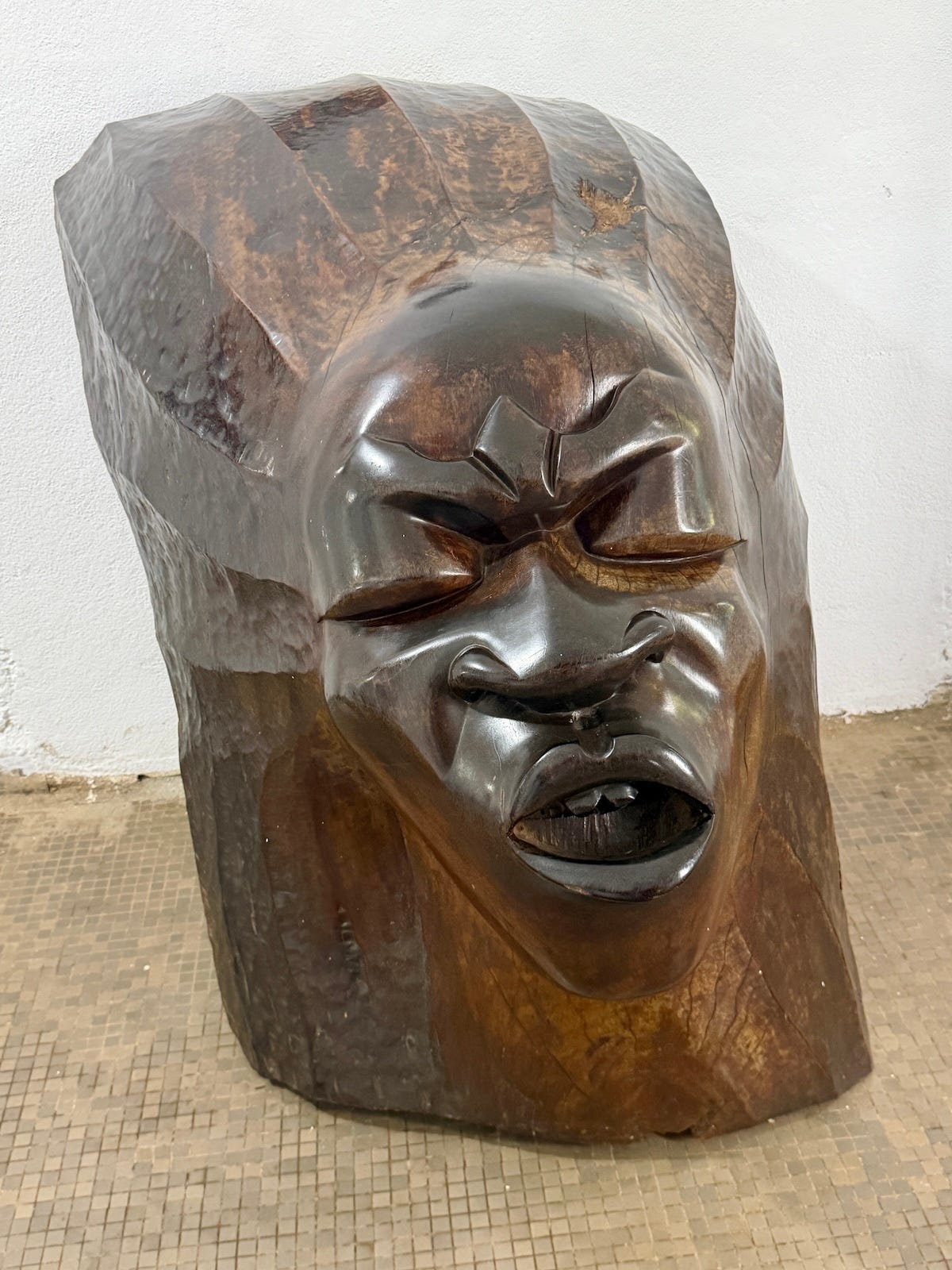
The Dying Warrior, 1962, is a wood sculpture made of native Tali. This sculpture was gifted to the late President Houphouët-Boigny by Combes, but is now a part of the museum’s collection.
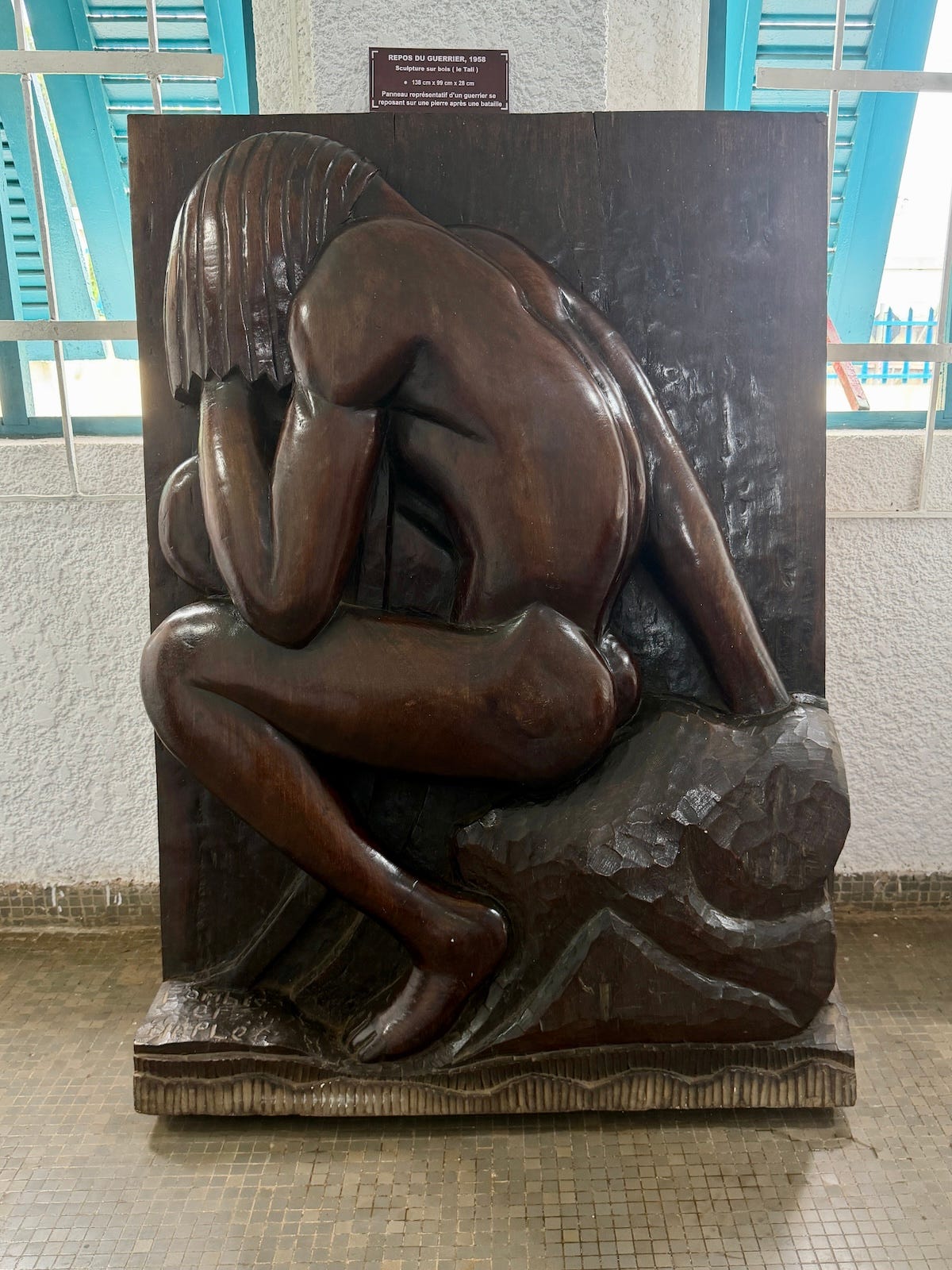
Unlike most of the museum’s solo works, this monument was a collaborative effort, co-created by three of Charles Combes’ Ivorian art students who worked under his direct supervision. This sculpture was created as a memorial dedicated to the African soldiers who lost their lives fighting in World War I and World War II.
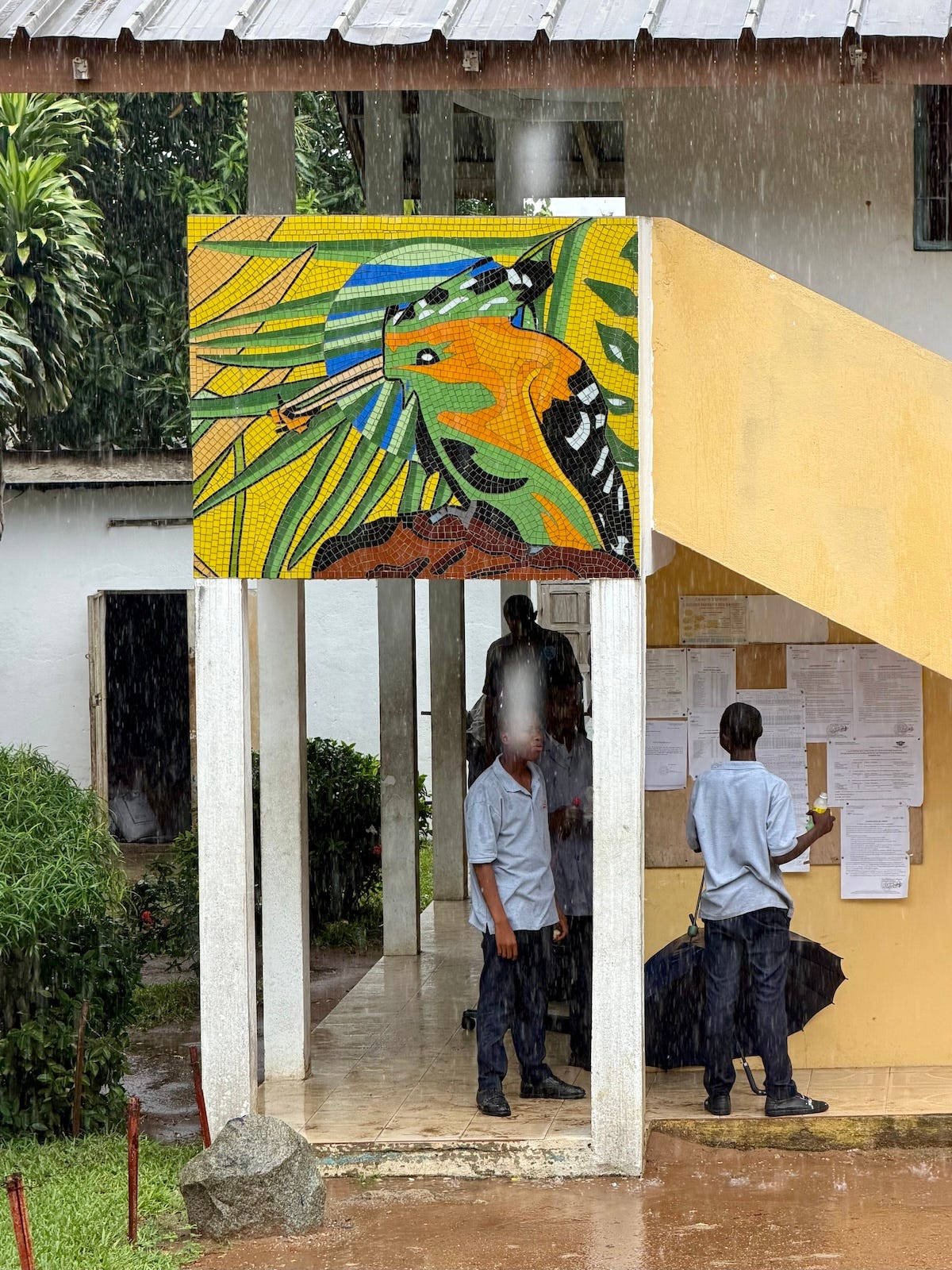
Although we didn’t technically visit the Technical Center of Applied Arts (CTAA), the school was across the parking lot from the museum, and we could see dozens of students diligently working on desk projects as we passed their classrooms or taking breaks under the building’s eaves while avoiding the rain.
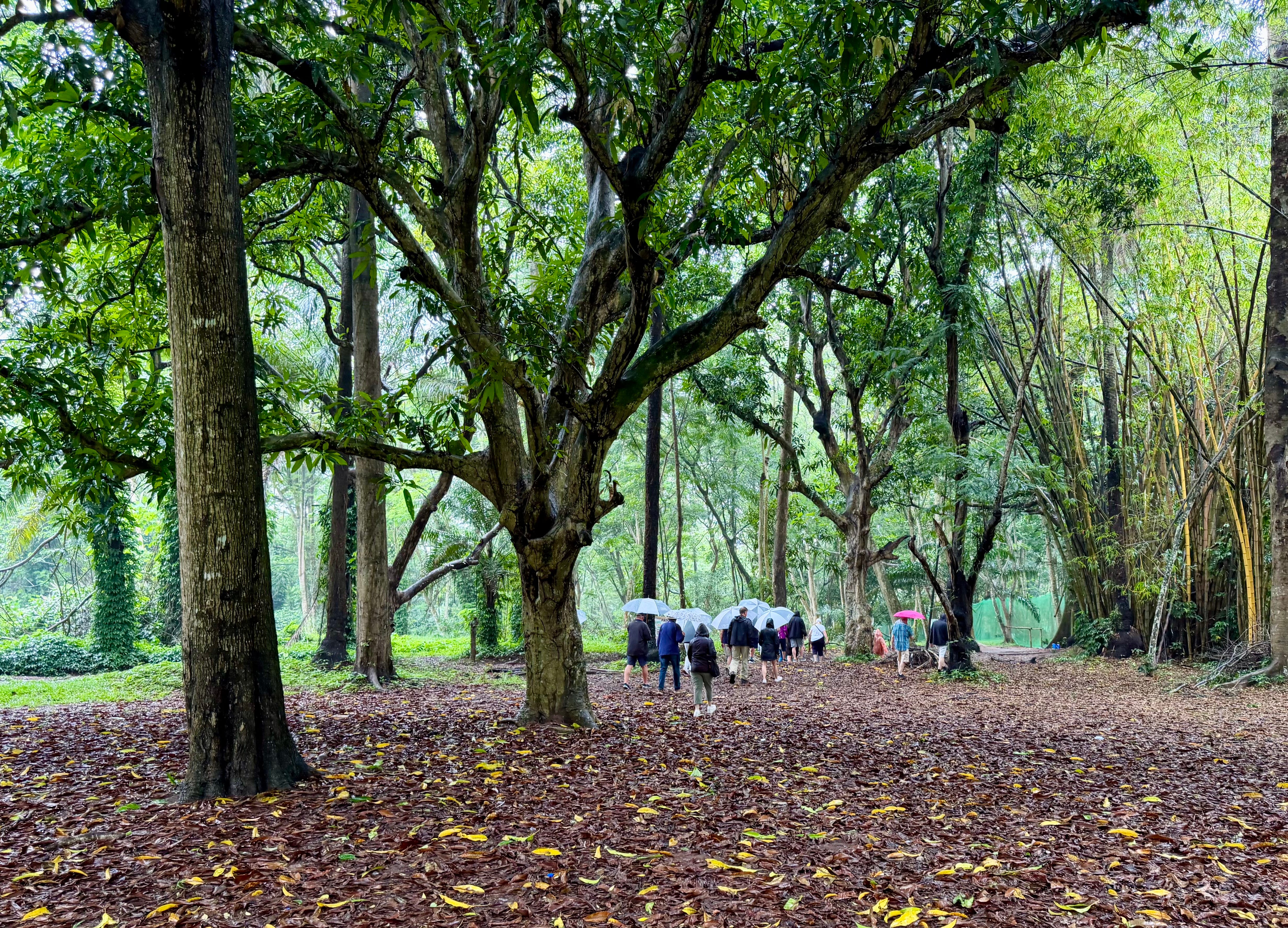
Next stop: the Botanical Garden in the historic town of Bingerville. This 140-acre botanical garden was established in 1904; the outdoor arboretum protects native and exotic trees, including giant banyans, many avocado varieties, towering ancient teak trees, and thick stands of yellow and green bamboo.
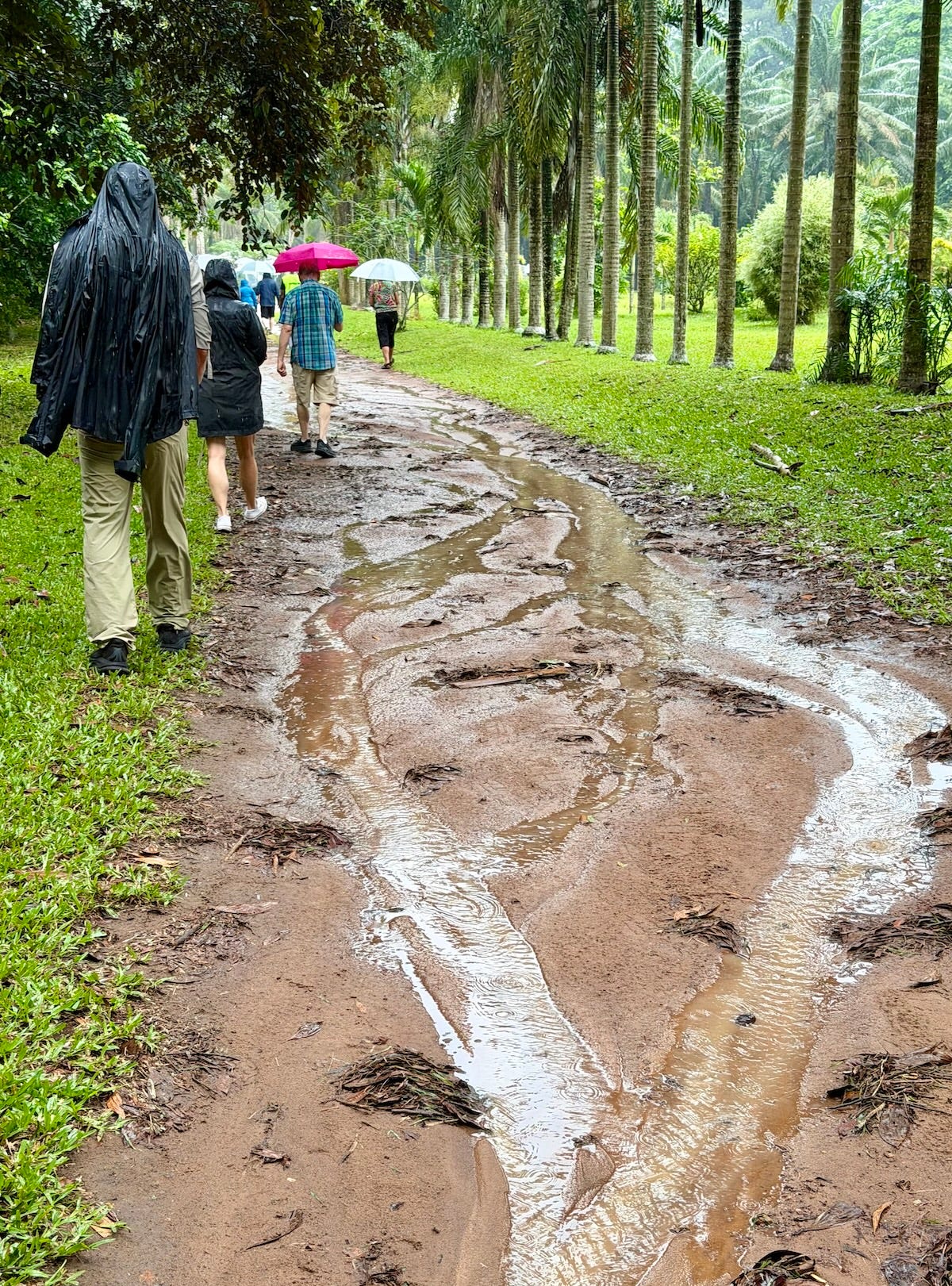
As you can see from the photos, many on our tour braved the rain and, equipped with raincoats and umbrellas, walked through the grassy park-like gardens. Some mud puddle avoidance techniques were necessary!
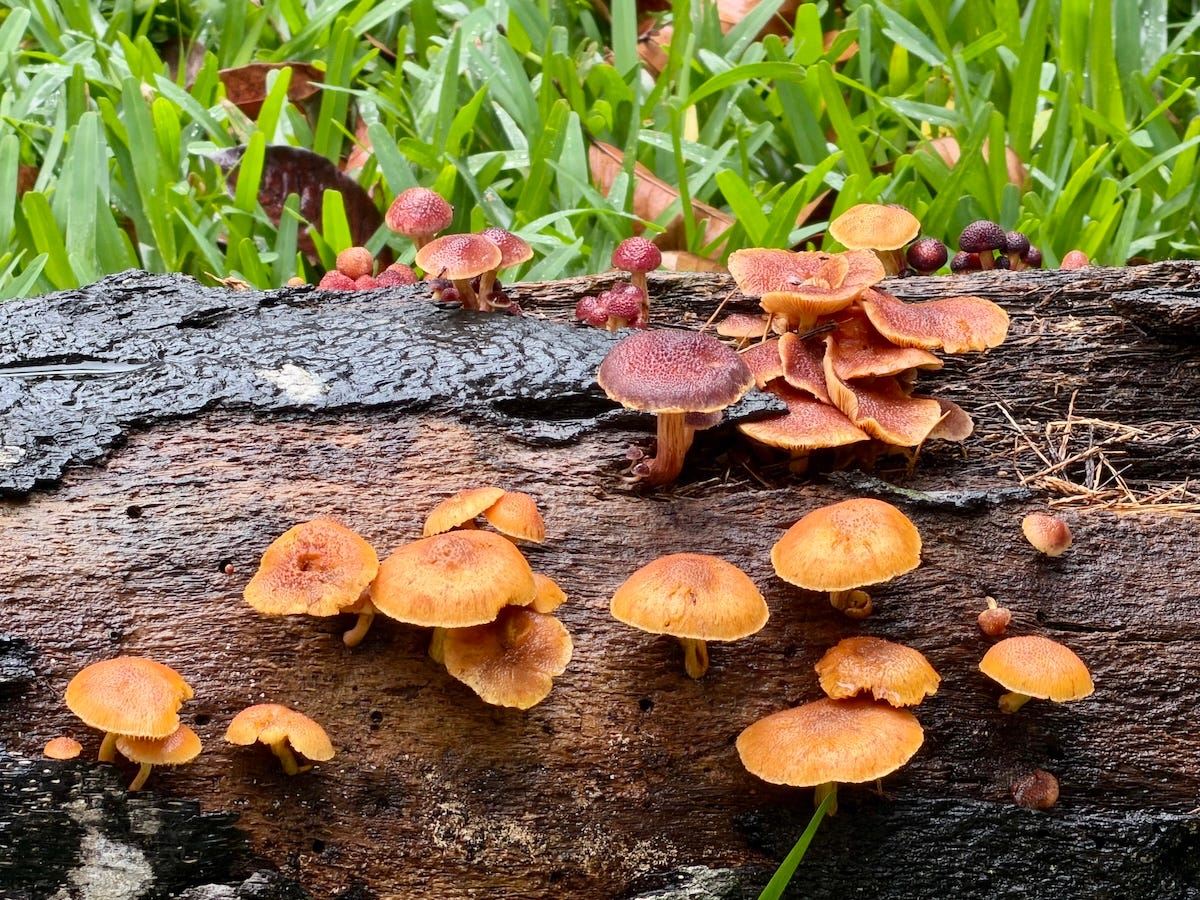
These gardens were quite lovely, and we can imagine they are a great place for nature walks and photography when the sun is shining! There were a few poetic scenes — these orange pancake fungi were artistically arranged on this dead wood!
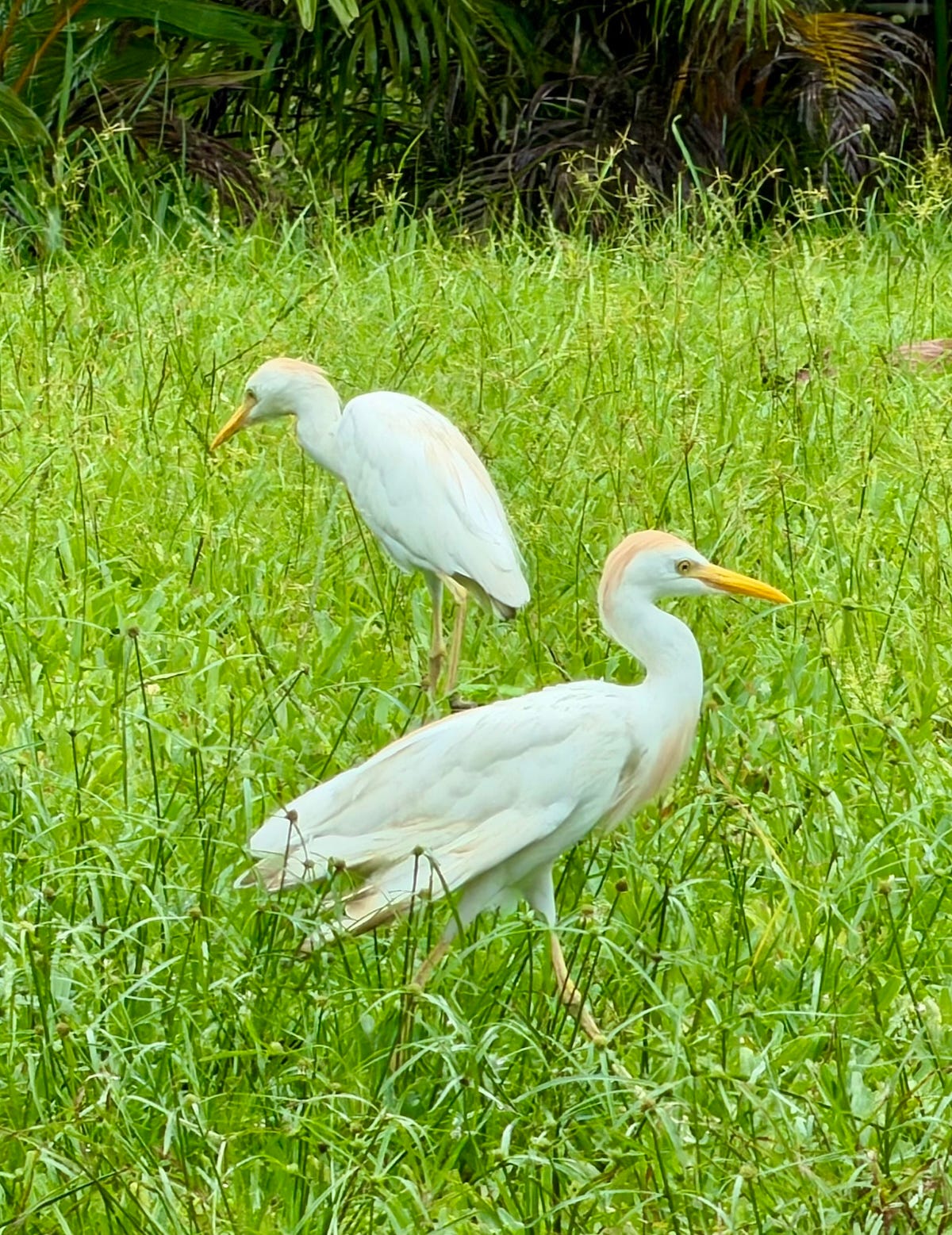
The Western Cattle Egrets, which outnumbered the human arboretum visitors by about 2 to 1, also seemed to pose in pleasing compositions! We’ve been seeing an abundance of these small, compact white herons since we first arrived on the other side of Africa, since we saw our first flock in the lemur sanctuary in Madagascar in late April.
The Botanical Gardens share a border with the Orphanage of Bingerville, which was once the Governor’s Mansion. The botanical garden was originally the formal gardens of the governor’s estate, created by a French Governor in 1904.
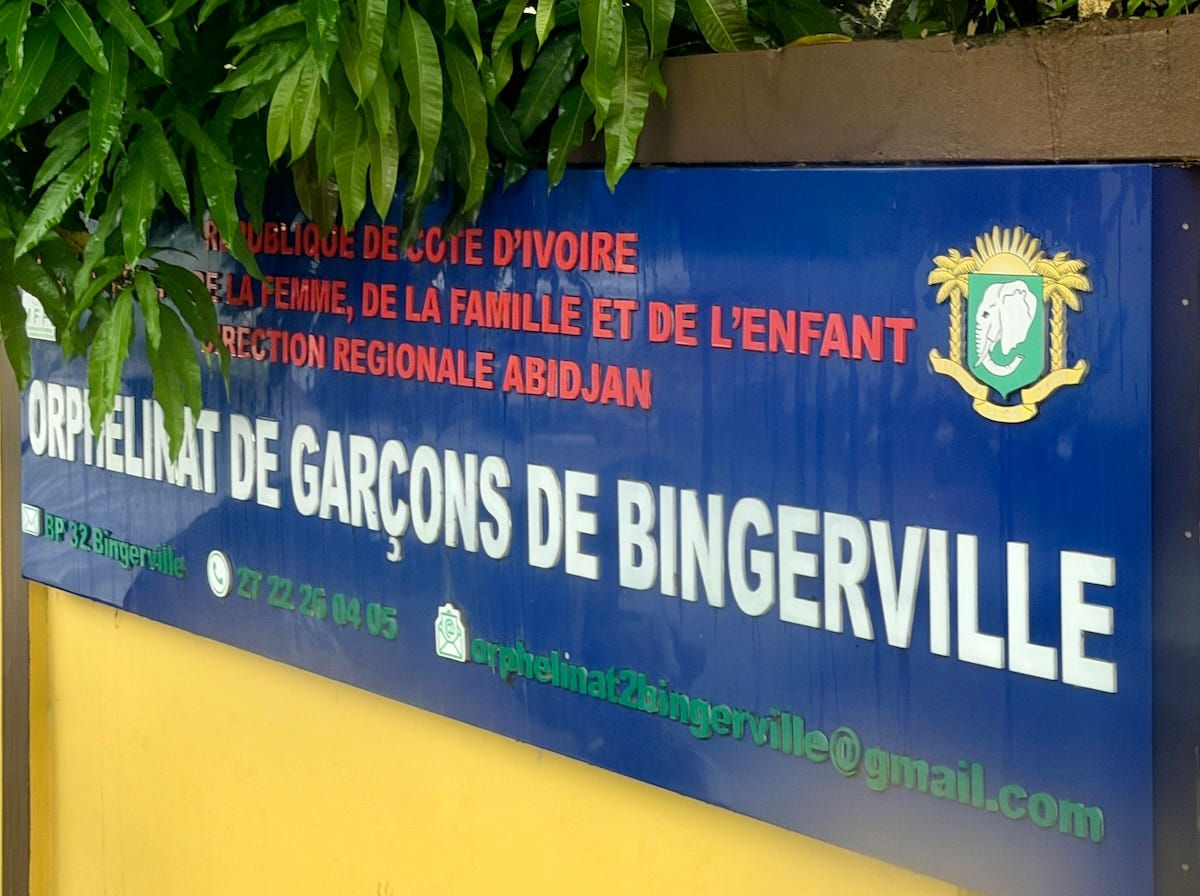
And so our next stop was literally next door, as we were scheduled to visit the Orphanage of Bingerville and speak with one of the administrators. The orphanage is a historic, state-run institution that provides full-time education, care, and accommodation for about 250 vulnerable and disadvantaged boys, aged 5 to 25.
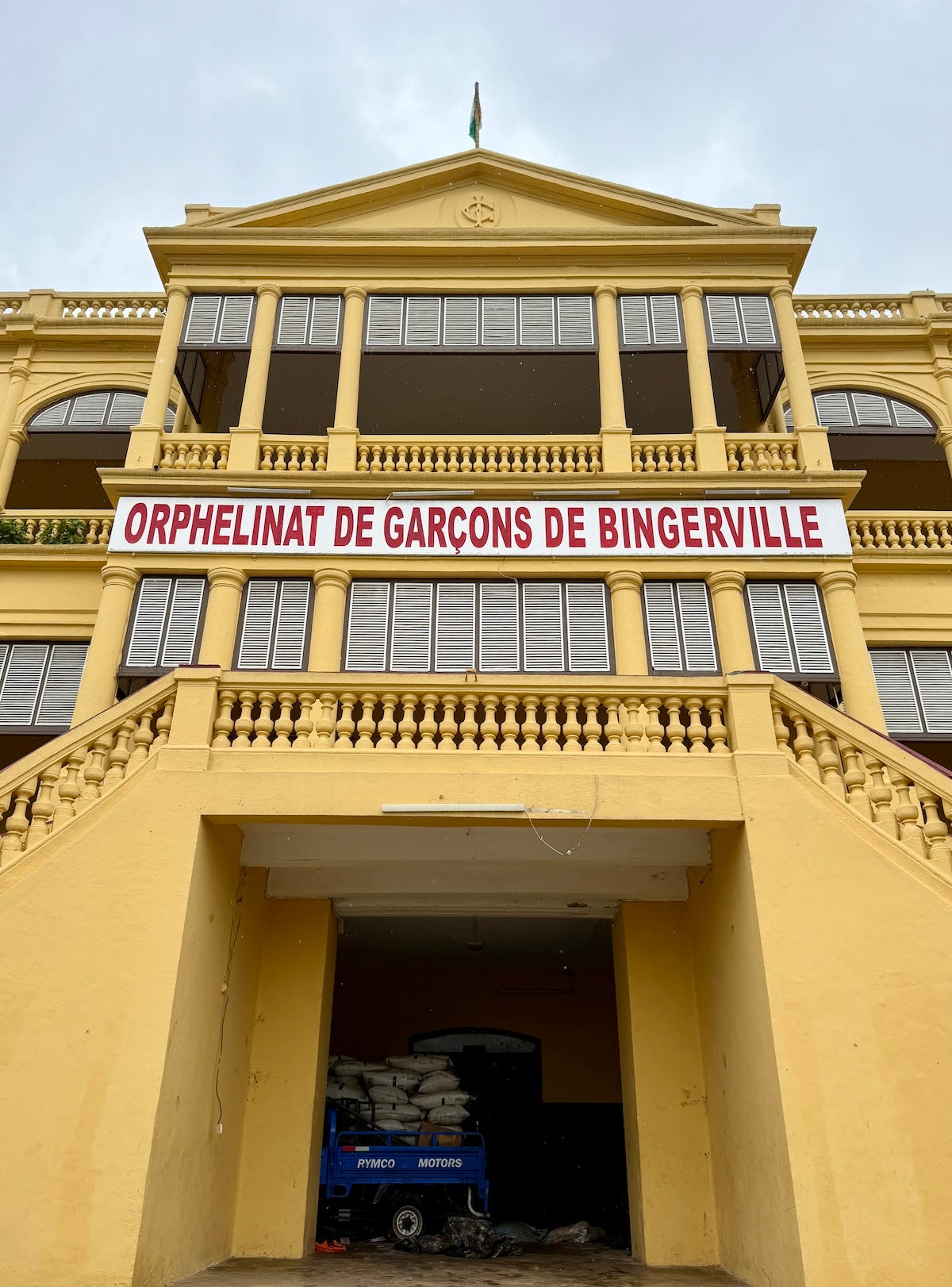
The institution is housed in this historic French colonial building that once served as the Governor’s Palace when Bingerville was the nation’s capital. The building itself, while historic and architecturally interesting, must offer its own set of critical challenges. Imagine maintaining the plumbing, the electric, the roof, or even the exterior in this sprawling, century-old structure! Corporate sponsorships provide some financial support to bolster this government-funded institution.
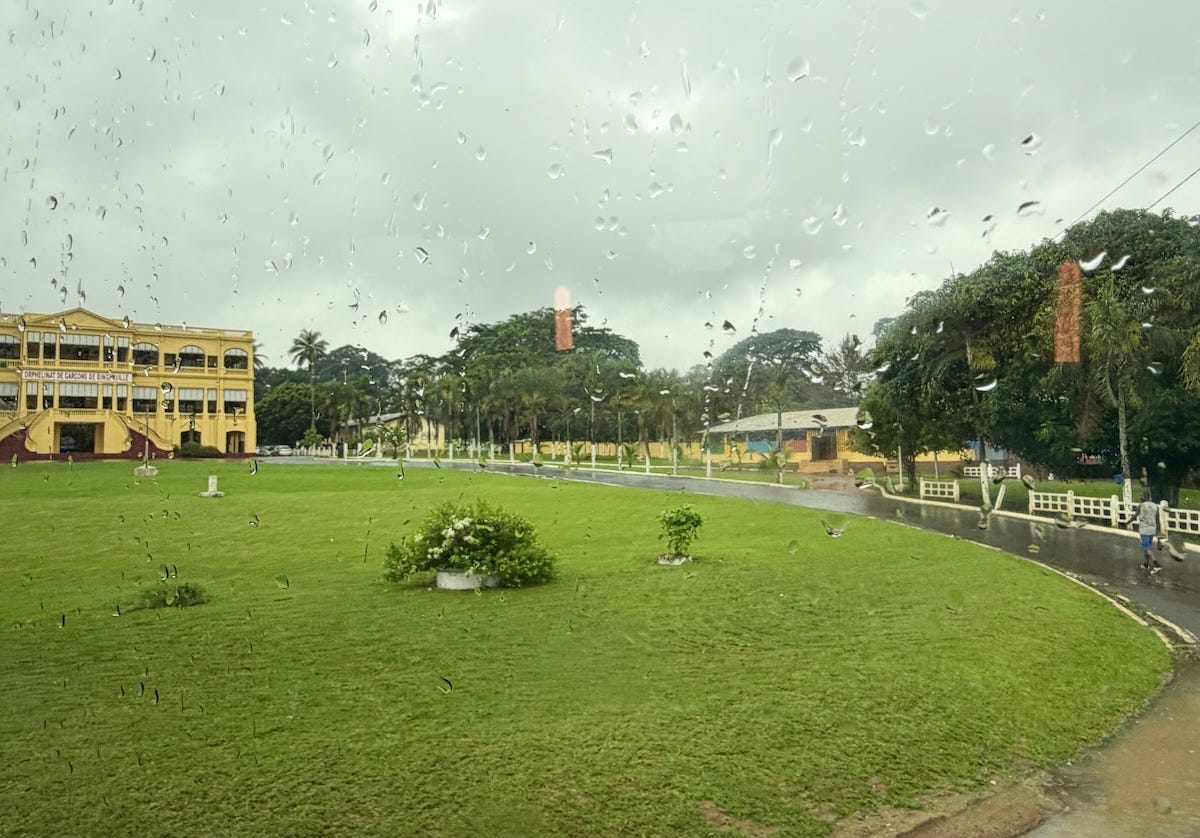
The architecture incorporates rather unique national symbols. The curving double staircase at the front entrance is supposed to imitate an elephant’s tusks. And when standing on the top balcony, the manicured lawn is shaped like an elephant’s head and large ears. (It was pouring when we were on the second floor of the building, and I never did get a photo of that elephant-shaped lawn!)
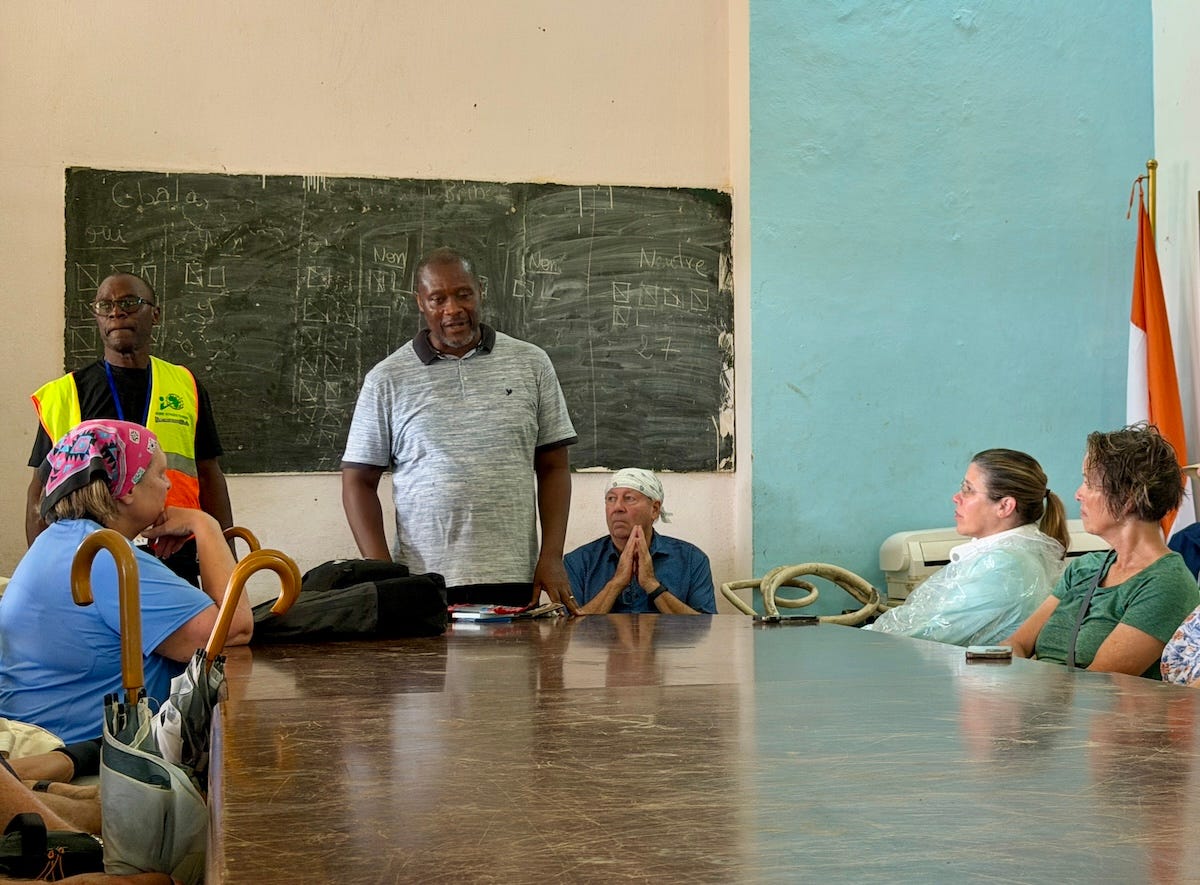
We had a “Q&A” session with one of the administrators of the Orphanage, who highlighted how the facility balances its historical colonial roots with the modern demands of caring for approximately 250 vulnerable young boys. Education is a big priority, and the goal of graduating from secondary school, and even university, is shared by many of the boys.
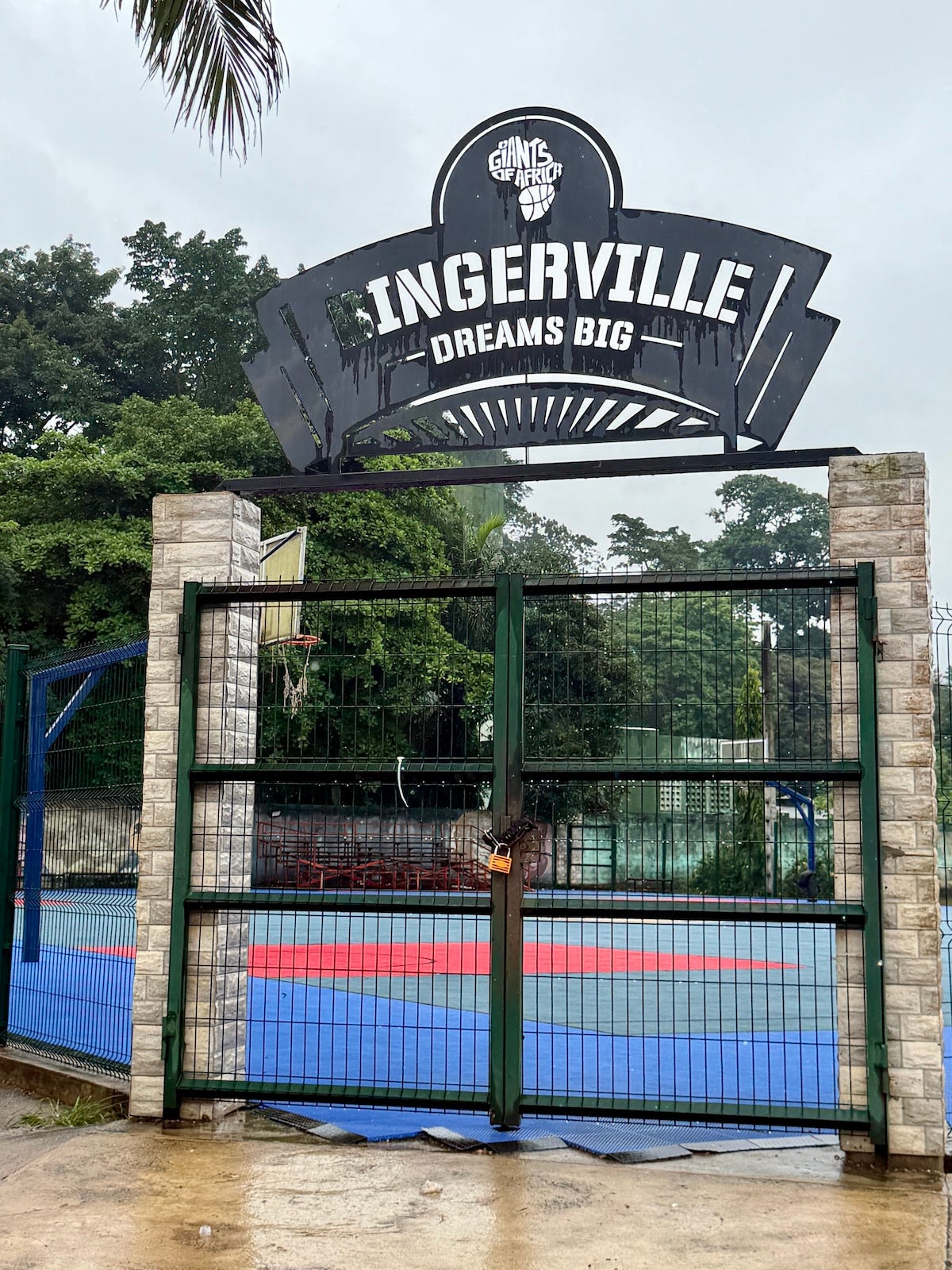
The Giants of Africa court is a state-of-the-art basketball facility on the Orphanage’s premises. It was donated and built by the Giants of Africa Foundation — a youth empowerment organization co-founded by Masai Ujiri, the Vice Chairman and President of the NBA’s Toronto Raptors. The administrator also noted that, in addition to academic success stories, they have also had “superstars” in sports, most notably young men who played on the national football team.
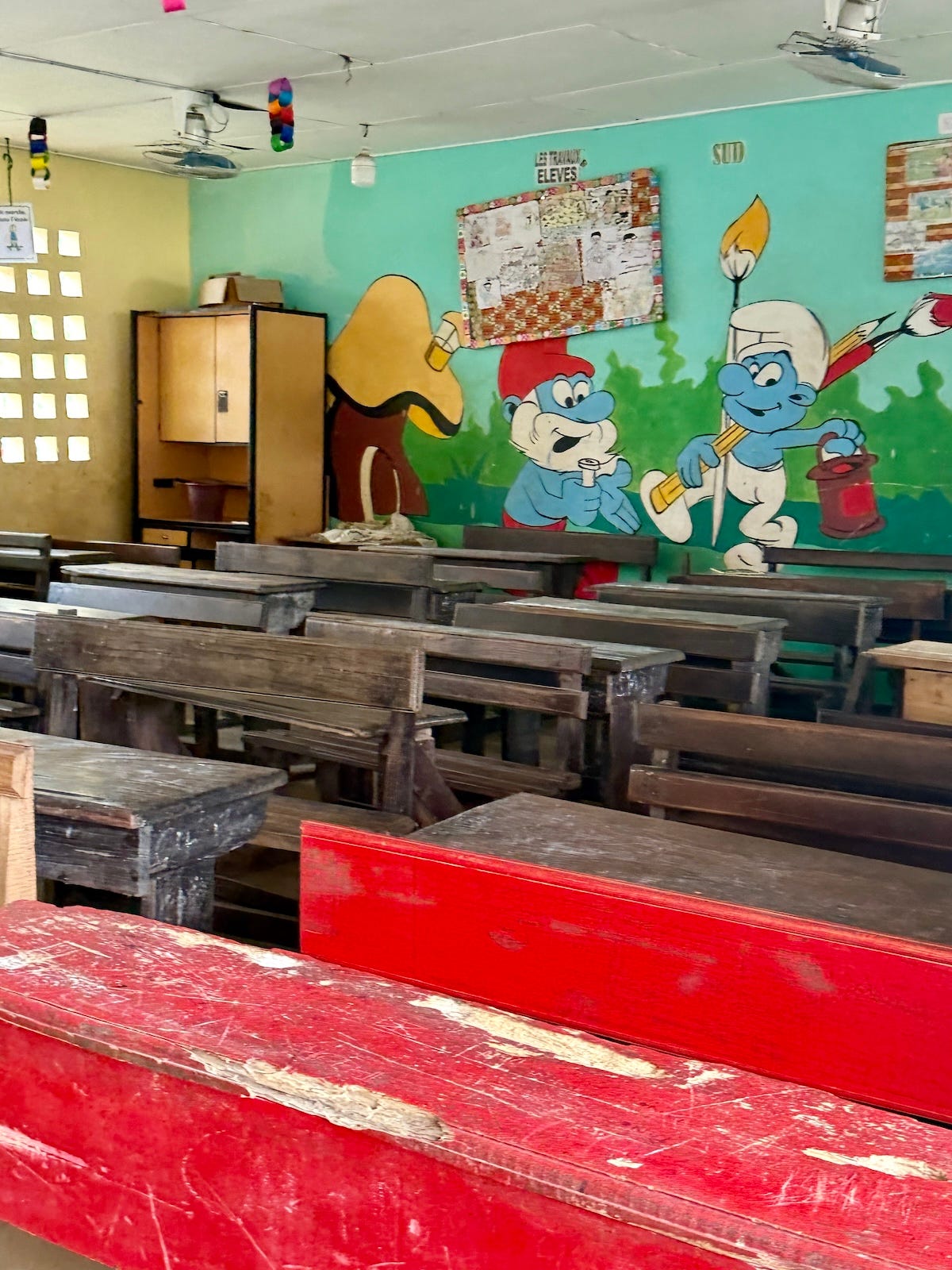
The sparsely furnished classrooms are in the one-story academic wings added to the property over the decades. They serve two purposes: they are the primary school classrooms for the resident boys, but they also provide education to the neighborhood students. This prevents the residents from becoming isolated from society.
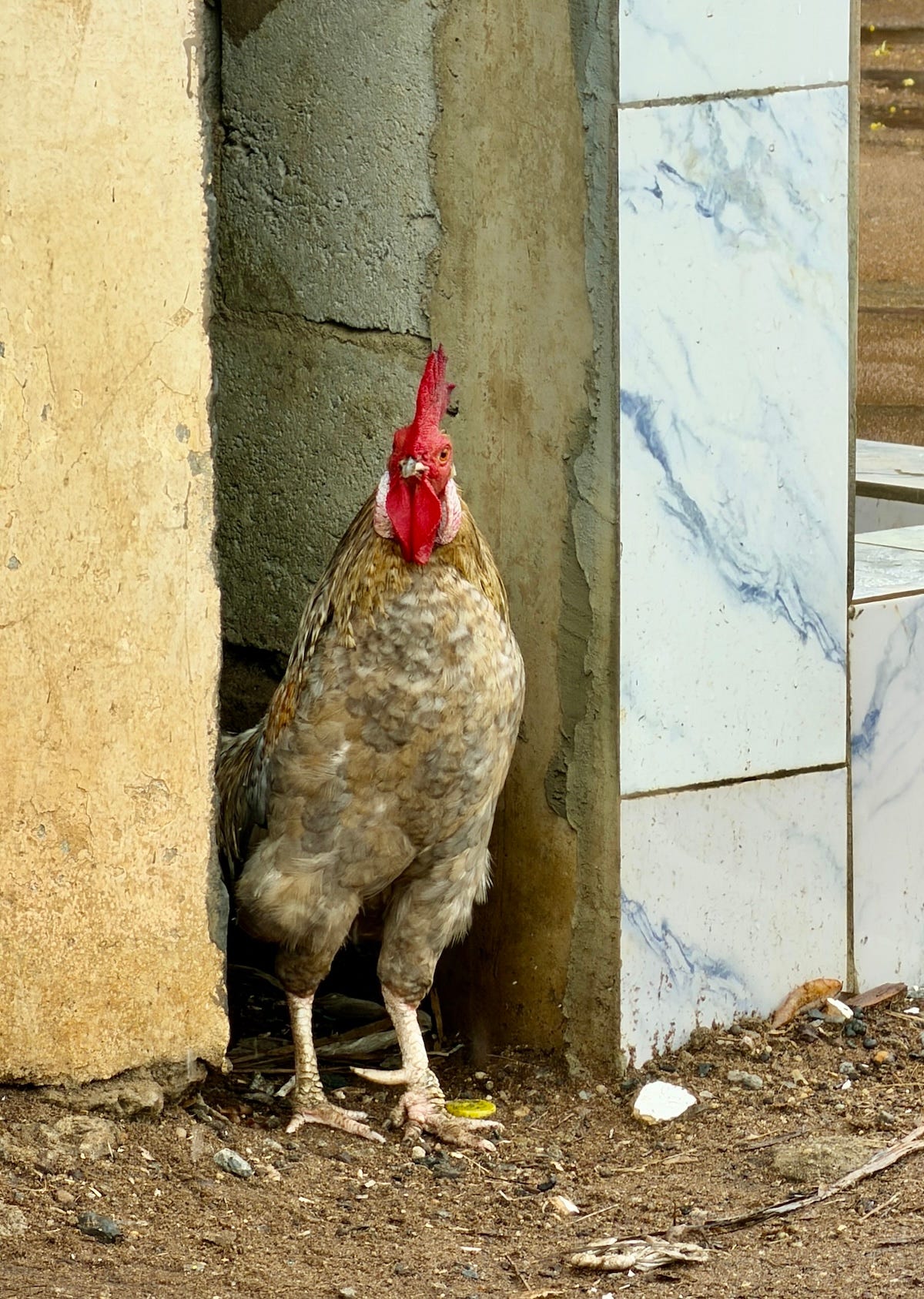
A rooster shared the rainy yard with the residents and our tour group.
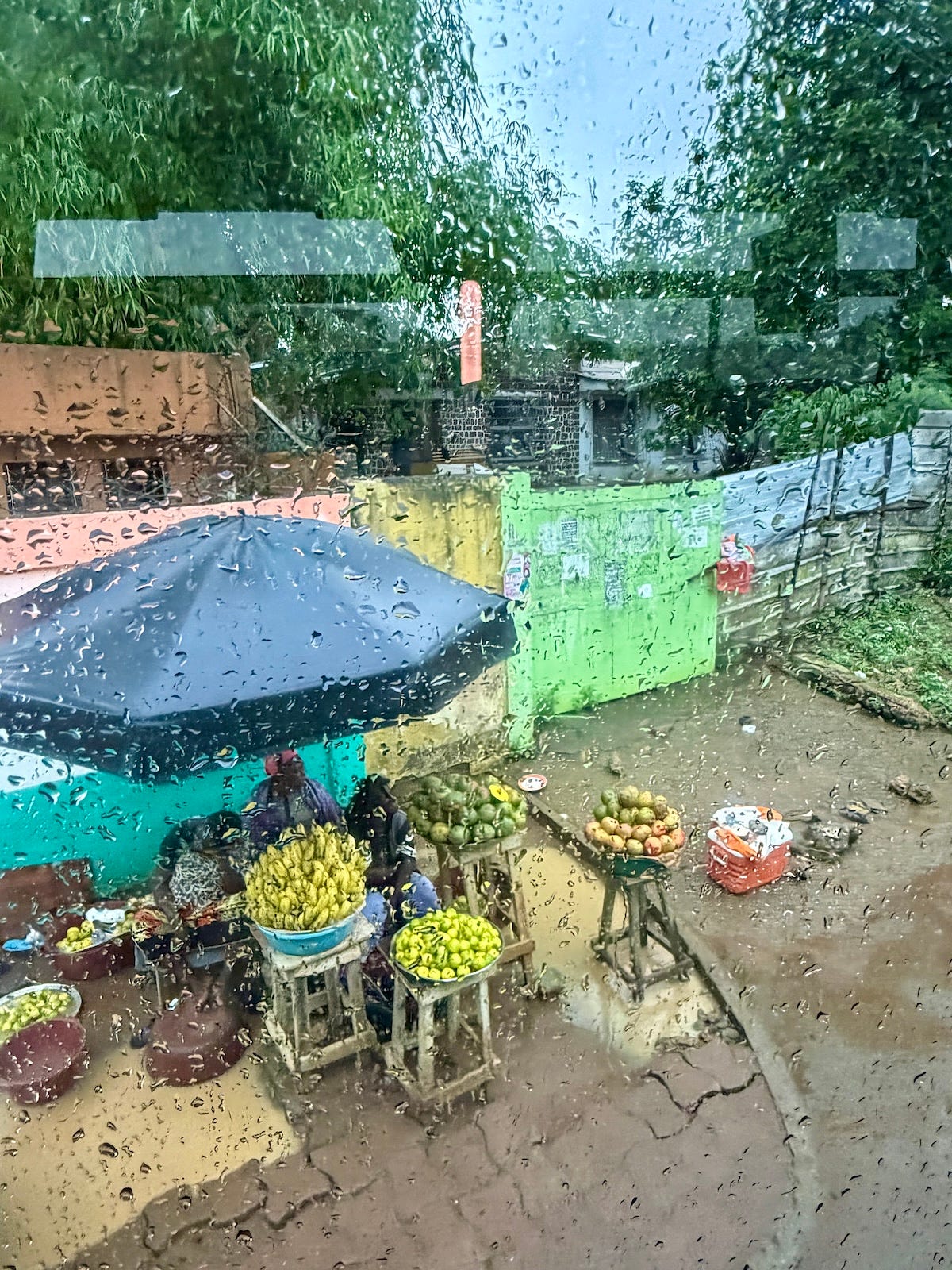
Following the very educational visit to the orphanage, we returned to Abidjan, once again “flying” along the highways and breezing through intersections, courtesy of our police motorcycle escorts. We felt odd, “pushing in front” of all the local vehicles, but our guide explained these tours wouldn’t be possible without escorts like this, since our 45-minute drive could have taken more than two hours!
Before we returned to the port, we made our last, though abbreviated, stop at the Center Artisanal de la Ville d’Abidjan, or CAVA, the region’s largest open-air handicraft market.
We walked through the artist cooperative, where the large mango trees protected us somewhat from the rain, and shopped for traditional West African souvenirs directly from local artisans. Wood, fabric, leather, paper, metal — all sorts of products were available. But since we only had ten minutes — initially, we were to be there for 30 minutes — we picked up a couple of tiny mementos for my studio altar back home, and then Sherpa went in search of a local beer. Once again, Sherpa relied on the helpfulness of our tour guide, who led him to the beer vendor and then used local currency on his behalf.
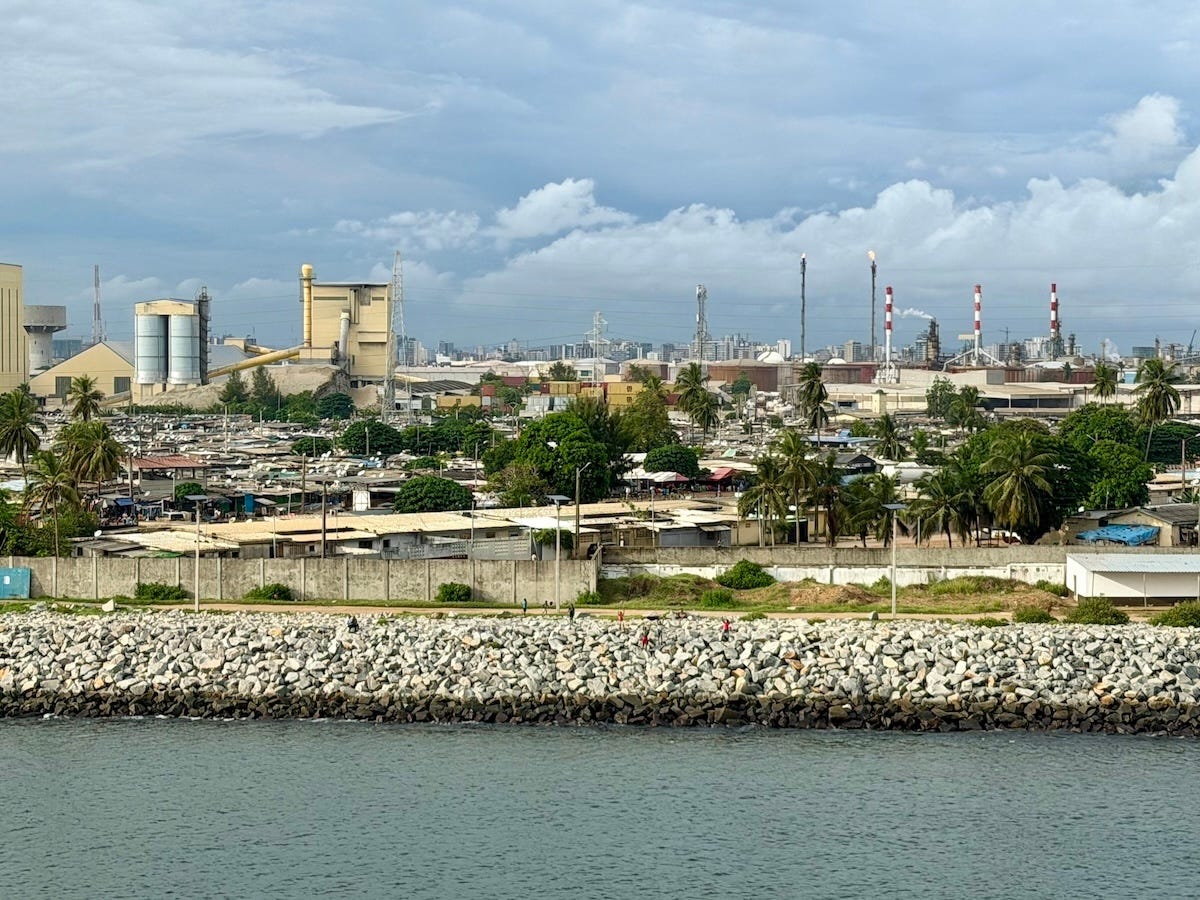
After our half-day tour, we returned to the port and the Seven Seas Mariner. Eventually, the rain stopped, and we were able to sit on our balcony and watch as we pulled away from Abidjan, Côte d’Ivoire.
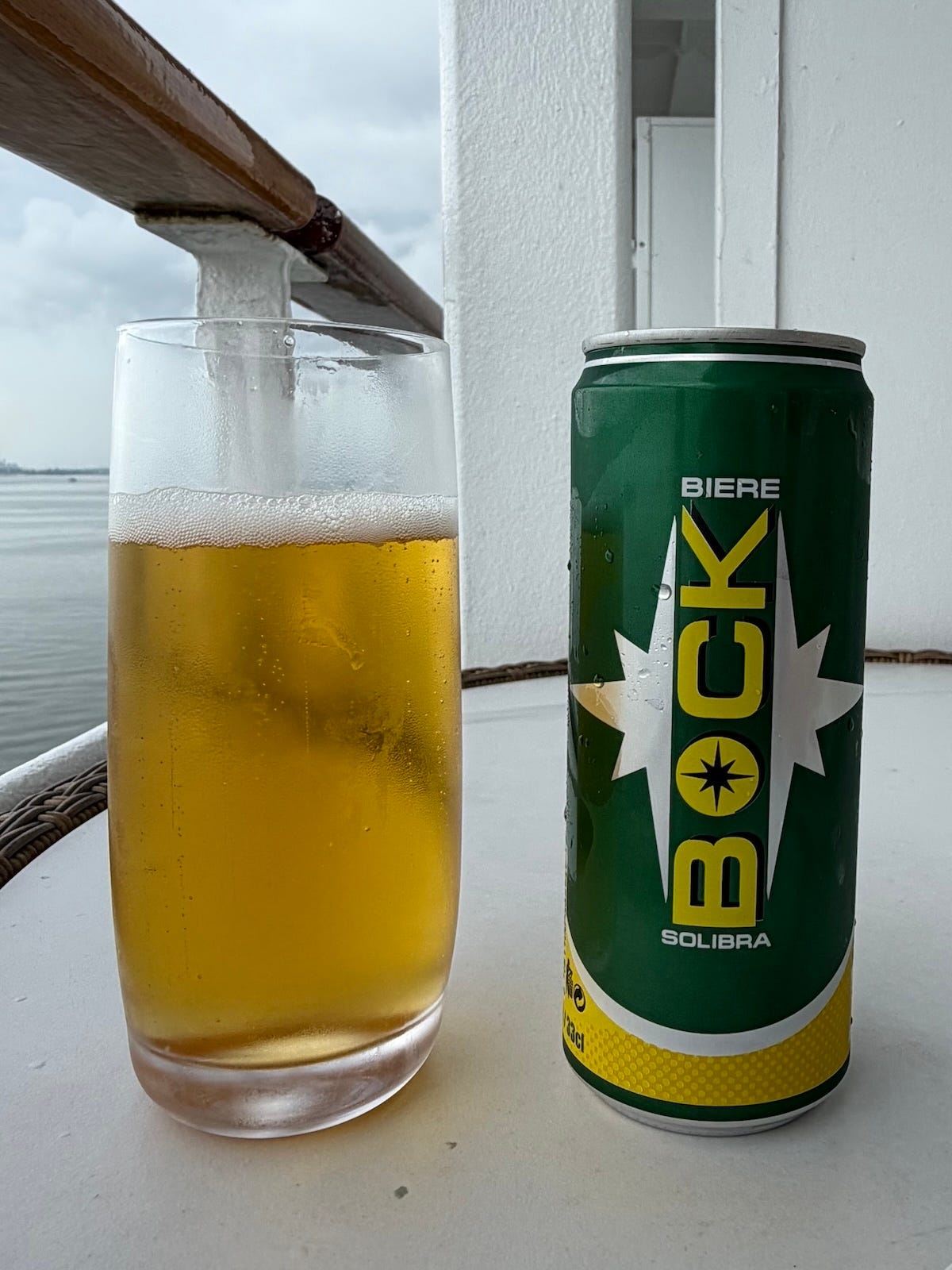
Sherpa enjoyed his Destination Beer on our rain-protected balcony! Bock Beer, a pale lager brewed by Solibra in Abidjan, Côte d’Ivoire. 4.8% ABV.
Sherpa’s Take: “Light-bodied, malty, and smooth. In the beach beer category, — not the complexities of a craft beer that I prefer, but still a very pleasant beverage. Would drink again.” 6/10
All in all, we greatly enjoyed the multi-faceted excursion, even in the rain! Ancient art and traditional dance, modern architecture, a sculpture museum and attached art school, a walk through a botanical garden, a visit to a state-run orphanage, and a stop at an artisan market, plus a drive through neighborhoods and the city center — an excellent introduction to the multifaceted city of Abidjan and nearby Bingerville. Our guides were well-versed in the relevant areas, and also quite good at getting us where we needed to go — not always an easy task. If we were rating this excursion like Sherpa rates his Destination Beers, we’d give it an 8/10. (If we’d had our full 30 minutes at the artist market, it would have been a 9.)
Next stop: Dakar, Senegal
http://www.mattmoberg.net/about-matt?fbclid=IwRlRTSASBeFZleHRuA2FlbQIxMABzcnRjBmFwcF9pZAo2NjI4NTY4Mzc5AAEeatTTcEBMKm_02i-3RAMRjGxuUk2GtiucclT45tjukjNHyy9Ra5W_YjcF8g0_aem_EkqGAUC3Pl7lI7SkOajBlA
Bo. Ran into this guy thru a friend. Brilliant writer and artist and love his life story. Thought you might know of him…